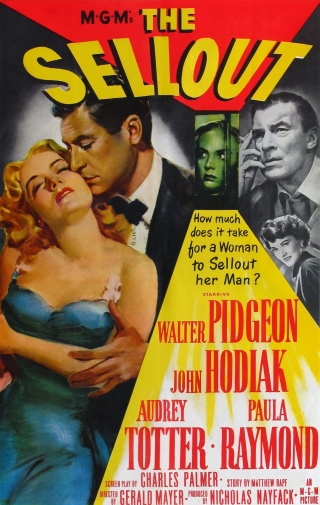
Initially, I had planned to post something different today, but that can wait. Sometimes circumstances just produce odd little coincidences, we end up viewing a movie or reading a book or story that quite by chance seems to hold a mirror up to events unfolding before us. The very fact this occurs without our actively having sought out some visual corollary makes the effect all the more striking. It is sobering to remember too that 76 years ago people were warning of the dangers of complacency, ringing alarms over the way corruption and graft can creep surreptitiously into the fabric of life, how bullies and self-serving chiselers can threaten and intimidate while hiding behind the cloak of laws they manipulate and soil rather than respect. Even more unsettling is the fact The Sellout (1952) painted its picture of contemptuous authoritarianism as a localized, contained phenomenon. It should give us all pause when we realize that virtually the same unsavory themes are now being played out in real life both nationally and internationally.
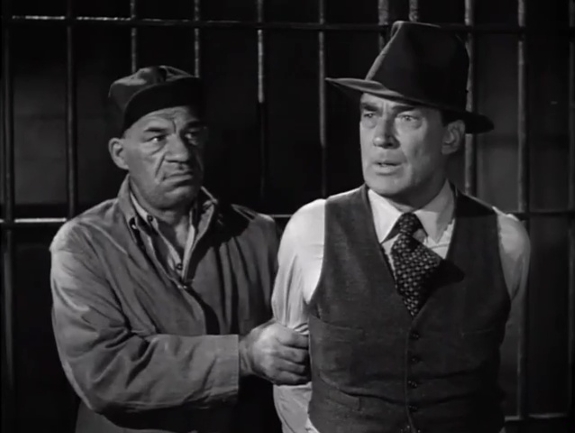
Structurally, The Sellout feels like a film of two distinct halves for the simple reason that the action plays out through the eyes of two quite different protagonists – newspaper editor Haven Allridge (Walter Pidgeon) and ambitious state attorney Chick Johnson (John Hodiak). It opens with Allridge, with the stoicism, stability and straight-down-the-line respectability an actor like Pidgeon effortlessly projects. That a man such as this – successful, comfortable and with a solid family life – should end up being rolled by a sly grifter (Thomas Gomez), tossed behind bars in a cell full of lowlifes and humiliated is supposed to shock, and it does so. That he is forced (in a scene that is as suggestively unpleasant as the production code of the time would allow) to witness the degradation of his companion, a man he generously offered a ride home, hammers this point home even more resoundingly. His sense of outrage is palpable and, using the tools available to him through his profession, he embarks on a campaign to expose the rottenness which has been growing steadily in his state. And then, just as he appears poised to land the killer blow, he stops, dropping out of sight for a time before inexplicably deciding to relocate and take up a new job in Detroit. The reason for this sudden reversal is eventually revealed through the diligent and relentless investigative work of Johnson, resolutely assisted by local cop Maxwell (Karl Malden).
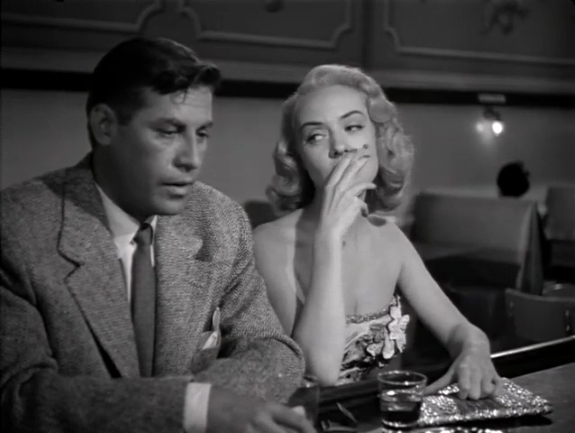
Gerald Mayer had made the tense and tightly confined Dial 1119 a few years earlier and he does sound work here, certainly good enough to leave me wishing he had racked up a few more titles in his relatively modest feature filmography before moving into his long and prolific career directing for television. Exposé movies can become dull affairs at times, sometimes due to the limited nature of whatever issue it is that’s being highlighted, or maybe the one-dimensional characters that can populate them. The Sellout avoids those pitfalls due to both the quality of the acting and the (probably unexpected) timelessness of the script. Both Pidgeon and Hodiak bring subtle shading to their characters, the former especially, and aren’t just the impossibly noble figures that one sometimes sees.
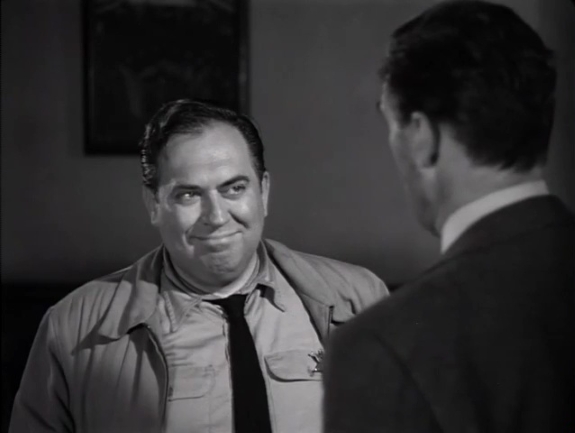
A strong supporting lineup is always a boon, adding weight and interest to those scenes where the main players are absent or otherwise sidelined. The Sellout has genuine depth in support with Karl Malden, Audrey Totter, Everett Sloane, Cameron Mitchell, Thomas Gomez and Paula Raymond all making significant contributions at various vital points in the narrative.
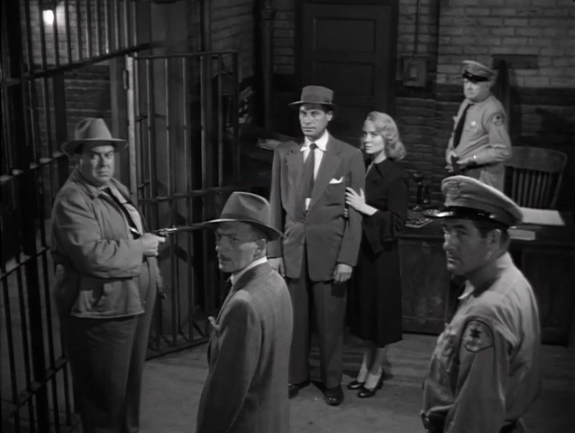
However, even a stellar cast working well can struggle to make an impression if the material they are handed is subpar. There is forever a risk of any issue driven picture dating badly, in the sense that the themes explored may be tied inextricably to situations which have since lost relevance. Normally, I would say it’s fortunate that concerns depicted still resonate and clamor for attention today. In the case of The Sellout, I can’t help feeling that any comment acknowledging that fact really ought to be preceded by the word ‘unfortunately’. That said, this is a fine film, one that is in the unusual position of being an even more worthwhile viewing experience today than would have been so when it was made. With that, I shall leave you, without further comment, with a transcription of the speech John Hodiak makes during the climactic courtroom scenes:
“In the mute parade of these frightened citizens. Weak men and strong men who have become weak and big men who have become little. All frightened. Their very silence testifies to that more strongly than shouted words… Their first protection was the law. Out of the domination of brutal and ruthless men, the law was turned against them. There is another protection: public opinion. Public Opinion finds its voice in the press, the free press. Here, a courageous editor brought his newspaper to the battle: he fought. His blows began to hurt. And little men who’d been fooled or frightened began to stir… to fall in behind his waving banner. But then something happened. Exactly what happened we don’t know. We may never know. But we do know that the voice of the public was stilled. The press had been enslaved… and when the press lost its freedom, these people lost their freedom. And Freedom is no idle phrase, it’s close and personal. It’s the right of Wilford Jackson, Walter Higby, Bennie Amboy. These people… of you and me… weak and strong… big and little to follow our normal pursuits in peace and without fear. Your Honor, the situation I’m covering here today is a symptom of civic cancer. We smell its malignancy not only in the terror-stricken avoidance of civic duty by this parade of bribed and intimidated witnesses, not only in the treasonable misconduct of public officials, not only in the violence, abuse, and even death we’ve observed… but in the growing helplessness of all decent people and their apparent apathy to the tightening grip of these ruthless men. This cancer must be traced down to its roots. It must be cut out or it will spread. And when it spreads far enough… the community will die. I therefore plead that this court free the people of Bridgewood County from the dictatorship of fear by finding cause to bind these defendants over for trial. The state rests.”
 Riding the High Country
Never seen it Colin. And thank you for posting those very fine sentiments from the film’s closing speech.
LikeLiked by 1 person
But I definitely plan to see it now of course. Thanks mate.
LikeLike
It’s very well done, snappily directed, and the cast is superb. Worth checking out.
LikeLiked by 1 person
Those words just jump out when they are spoken. They could have been voiced yesterday and carry as much if not more weight, and it’s not every day one comes across words that ring so true and are so applicable so many years later.
LikeLiked by 1 person
Absolutely true. 👍
LikeLike
I’m looking very much to checking this one out, Colin! (I’d written a slightly longer comment earlier, but got a message that it couldn’t be posted. So I’m trying again, just to let you know I enjoyed your write-up and can’t wait to see it!)
Karen
LikeLiked by 1 person
Really sorry to hear about the comment not getting through. I can’t imagine why that might be, and there’s certainly nothing that has been redirected to the spam as can happen on occasion. WordPress doesn’t make things easy sometimes!
Anyway, I’m pleased you got something from the post and I’ve no doubt the movie will hit the spot whenever you get to it.
LikeLike
Colin, good write-up on THE SELLOUT(filmed 1951, released 1952). I had written a rather long comment, but I lost it. It was either my fault or WordPress, probably mine. Lately I’ve been typing with one hand, but I’m now back to typing with both hands.
I think you made some good points, and I’ll try to get back, but I’m tired right now.
Take care and have good health.
LikeLike
The curse of WordPress striking again as like as not.
I was obviously impressed by this title and I think it should be a bit better known. I can only think that much of that is down to the fact the director, despite his name and connections, was mostly a TV fixture and of the cast Pidgeon isn’t (maybe never really was) what you might term a fashionable lead and Hodiak’s death at a very young age saw his profile slip out of the public consciousness long ago too.
LikeLike
Walter Pidgeon was a top star.
LikeLike
Undoubtedly, his credits are testament to that. I was just musing on how durable his star remains now, and how that might affect the extent to which some of his movies are remembered. For one reason or another, certain stars fade from public consciousness more than some of their contemporaries and I imagine that plays a part in how well remembered some of their movies are.
LikeLike
Well said.
LikeLike
Colin, that’s true. I wonder how many Generation Z and Generation Alpha are aware of the movies made before the year 2001, much less the black and white movies.
You are around students today. What do you think?
LikeLike
I can only offer impressions or anecdotal evidence, but my feeling is that awareness of, and certainly interest in, such movies is practically nonexistent.
As it happens, I was having a conversation with a group the other day and was surprised how few likes watching movies of any type or era. The vast majority professed a preference for streamed series of the Netflix type. To be honest, for that and other reasons, I do wonder what the future of the cinema is.
LikeLike
Collin, this is sad, but I’m not surprised. So, the future is streaming series that are made for Netflix and other streaming services. Do you know what type of these series are popular? It’s probably not DEATH BY LIGHTENING(filmed 2024, released 2025), which is one I’d like to view someday,
LikeLike
I’ll ask another time about what’s popular, but that will likely vary according to the person, their age, gender and so forth.
LikeLike
That’s sad. I couldn’t imagine my film collection without the earlier Westerns, War, Noirs.
LikeLike
Yes, it is sad, but the truth is times change, as do people and tastes. Certain material will always find an audience even if the size of that audience will inevitably shrink. I’ve long become reconciled to the fact that the films, TV, and indeed a lot of the books I read, means I’m something of an outlier even among those of my own age group.
LikeLike
Well said. We’ll all like what we like. I know I will.
LikeLiked by 1 person
I don’t watch current stuff but there have been interesting posts on social media about the way the writers of these streamed series are told to recap and re-explain the plot over and over again because people don’t really watch them. They just have them on while they’re doing other stuff.
It seems that the ability to watch a movie in the true sense is a skill that is being lost.
LikeLike
I can certainly attest to the fact attention spans are decreasing all the time, but the regular recap business isn’t entirely new either. The old cliffhanger serials did the same thing after all.
LikeLike
Barry, Walter Pidgeon was a top star and one of my favorites over the years. He made the movies better by being in them. Pidgeon was a box office draw in the 1940’s and had a long 51 year career in the movies, television, and stage. Those wonderful movies he teamed up with Greer Garson on, in which their chemistry was magic.
I’m sure many science fiction fans remember his memorable role as Dr. Edward Morbius in FORBIDDEN PLANET(filmed 1955, released 1956).
LikeLiked by 2 people
Thanks for the review, Colin. I hadn’t previously heard of this movie, but it sounds intriguing to say the least. (And hey, Audrey Totter, one of my favorite noir femmes!) Also, thank you for your thoughts about the movie’s relevance to events in the world today. I feel like politics is practically overwhelming so much of everything these days, and a lot of people don’t seem to want to hear it in certain forums, but I for one very much appreciate you sharing your thoughts and feelings on these matters. I would say that even if I disagreed with your opinions here (but I do in fact agree with you). I’ll definitely be looking out for this movie. (Do you happen to know where it might be available? It doesn’t seem to be streaming either via YouTube or Amazon, for instance.)
LikeLiked by 1 person
Thanks. I generally make a point of trying to stick just to the movies, but art does reflect and comment on life, and the plot and theme here meshed so much with current events that it would be remiss of me not to mention that. In fact, I felt it was important to do so.
The film was available from the Warner Archive Collection, but that disc now seems to be available via third party sellers on Amazon anyway. I think it can be viewed via the Ok.ru site, but for various reasons, I’m reluctant to post links to that site here.
LikeLiked by 1 person
Colin, I enjoyed your good write-up of THE SELLOUT(filmed 1951, released 1952), which I first viewed on Turner Classic Movies(TCM) in 2011. TCM shows it every couple of years, and it’s due for another airing. I like the movie okay, and it has a good, assembled cast, which appeals to me. I get a kick out of seeing Burt Mustin portray a corrupt local judge. Frank Cady as Bennie Amboy a duplicitous dive owner who employs Cleo Bethel(Audrey Totter) as a singer. The county jail’s “kangaroo court” shakedown conducted by jailbirds Little Jake(Frankie Darro), Big Jake(John Dierkes) and Robert Foulk is a keeper.
When I view a movie like THE SELLOUT I like to look at what was going on at the time and what was making headlines. I think the writers Matthew Rapf(story credit) and Charles Palmer(screenplay credit) were probably influenced by Tennessee Senator Estes Kefauver’s Special Committee to Investigate Crime in Interstate Commerce, which was conducted in the early 1950’s. Kefauver’s committee put the spotlight on organized crime throughout the country. These hearings just didn’t concentrate on big city crime. The committee grilled every sheriff and police chief they could find, which revealed widespread bribery, vice, and extortion. These hearings were televised and there were newspaper and magazine articles galore. Hollywood tends to take notice.
There are other movies that portray the fight against corruption made during the 1950’s that I like, and I think they are better than THE SELLOUT. I’ll name a few: THE CAPTIVE CITY(filmed 1951, released 1952), THE PHENIX CITY STORY(1955), TOUCH OF EVIL(filmed 1957, released 1958), DATE WITH DEATH(filmed 1958, released 1959), and others. This isn’t to make the unsung THE SELLOUT a lesser movie, because it covers some good points, but maybe it’s just me, but Metro-Goldwyn-Mayor(MGM) just seemed to make this type of crime drama too polished. Of course that’s MGM’s brand. Dore Schary was in charge of MGM in 1951 and he was attempting to change the studio’s message by making more thought provoking movies over escapist entertainment. More in the social justice vein with smaller budgets, hence THE SELLOUT. Charles Palmer the screenwriter of this movie, along with Schary, co-wrote the 1950 book CASE HISTORY OF A MOVIE, which extensively covered the making of THE NEXT VOICE YOU HEAR(1950), which was a smaller budget MGM movie coming in at $460,000. Anyway, Schary’s movies lost money and he was fired in 1956. Making movies is a business, yes.
Concerning Chick Johnson’s(John Hodiak) speech, which I liked. I wonder who we should give credit for writing it, Charles Palmer or Matthew Rapf?
Setting out to write about one thing, then something catches your interest or in my case triggers my memory and I chase after those rabbits and they go everywhere, but most times it turns out more interesting. In your case, “end up viewing a movie or reading a book or story that quite by chance seems to hold a mirror up to events unfolding before us.” Yes, corruption, graft, bullies, and self-serving chiselers hiding behind the cloak of laws to lie, cheat, and steal as much as they can on all levels Internationally, national, state, and local. Warnings of complacency 76 years ago, well good concerned people have been giving these warnings since ancient times. “The thing that hath been, it is that which shall be; and that which is done is that which shall be done: and there is no new thing under the sun”(ECCLESIASTES 1:9-KING JAMES VERSION). Followed with “Is there any thing whereof it may be said, See, this is new? It hath been already of old time, which was before us.”(ECCLESIASTES 1:10-KING JAMES VERSION). The Biblical book of ECCLESIASTES paints a good picture of today’s world as well as over 2000 years ago. The ancient Greeks and Romans knew this and gave warnings that are relevant for today, and so many others right down to today continue to keep the mirrors unbroken. That is why if we truly know history, its easier to understand the present. Why we do things we’re doing now.
There have always been the forces of “The Good, The Bad, and The Ugly” and will be until the end. Human nature doesn’t change, only the technology around us changes, and how it has changed in our lifetimes. Our friend Barry Lane was born in 1939, just look at the changes he has seen. Today’s technology in the hands of the powers that be is scary, but as this old activist, still in me, believes that we must always keep up the struggle against the never ending battle to take our LIBERTIES away from us. I don’t care if they are called authoritarians, totalitarians, or skunks because they are all in the same corner trying to figure out ways to rob us of our LIBERTIES.
Don’t be complacent, because individuals can make a difference. A good place to start is locally, where you live. I know this for a fact, because I had a hand in helping bring down a very corrupt judicial district attorney, deputy district attorney, and county sheriff. They all were sentenced to prison and served time. Believe you me these crooks were contemptuous, but prison took that out of them. I just wish one other had went to prison with them. The FBI did a good job here, especially 2 agents in particular. It was a long process, it took years, but it was worth it. I remember transporting 2 good citizens to the state capitol to testify before a grand jury at the federal building. One of the 2 men told the other that it was a rarity when I, the driver, had the 1990 Ford Thunderbird under 90 miles an hour(145 KM). Anyway, we got there, and at one time I had worked in the federal building during the mid 1980’s. There were others there to give testimonies and they were slime, but that’s what the law has to deal with. Although, thank goodness for all the good people involved who helped bring justice forward in this case and others. They weren’t complacent. I just wish someone that was very dear to me hadn’t got caught up in this corrupt mess and lost her life.
I believe in the truth, justice, and let the chips fall where they may.
LikeLiked by 3 people
I do too. Well put.
LikeLike
I thought Dore Schary stunk the place up. He’s the guy who wrote , There are no bad boys’ and he put that stupid thought in Spencer Tracy’s mouth. A forerunner to The Young Savages and Knock On Any Doo, another social worker job creation scheme.
LikeLike
Barry, ah yes, the social justice warriors of back in the day and continuing today. I think in the end they do more harm than good. I think these so-called social justice warriors should read and study History, it wouldn’t harm them any.
LikeLike
Exactly my thought too, Walter.
LikeLike
Social justice, or indeed any form of justice seems like a pipe dream at best in the world we inhabit today. The naked grift, bullying and barefaced lying right from the top down is surely beyond the ken of those who were moved to dramatize injustice back in Hollywood’s classic era.
LikeLike
Colin, well said. Although as I’ve said before there’s nothing new under the sun. There’s always been, “naked grift, bullying, and barefaced lying right from the top down.” Currently I’m reading about the USA Presidential election of 1876 and the compromise of 1877 that lead to Rutherford B. Hayes becoming President and the end of Reconstruction of the southern states after the War of the Rebellion(Civil War). New York Governor Samuel J. Tilden actually won the election, but he didn’t become president. It’s quite a Historical story played out against the massive corruption in government and in the powerful railroad companies and other entities during the 1870’s.
I think that we should always remember the wisdom of one of the greatest advocates of individual liberty of all time John Emerich Edward Dalberg-Acton better known as Lord Acton. In an 1887 letter to an Anglican bishop, he most truly wrote, “Power tends to corrupt and absolute power corrupts absolutely. Great men are almost always bad men, even when they exercise influence and not authority; still more when you superadd the tendency of the certainty of corruption by authority.” Those words were very relevant in 1887 as they are still today in 2026. I think that We, the People, must keep our elected officials’ feet to the fire from the top to the bottom.
Read and study History, because there is nothing new under the sun.
LikeLike
Lord Acton’s comment works for me. Thank you, Walter.
LikeLike
An amazing post from Walter.
Walter also name drops A DATE WITH DEATH as only he would. This Neo Noir from Harold Daniels (ROADBLOCK) is only available online in horrendous shape. I keep begging Film Masters to give us a restored uncensored version on Blu Ray.
At any rate the shower scene with Gerald Mohr and the notorious Liz Renay was pretty hot stuff at the time and only the sort of thing a small indie flick could get away with.
Regarding the other Walter I’m very fond of 6,000 ENEMIES an MGM programmer which moves like a rocket so viewers have no time to ponder the absurd plot-fast moving fun just the sort of programmer that I love.
Walter at the top of his game is where he is perfectly cast in Lang’s superb MAN HUNT paired with beguiling Bennett,sinister Sanders and creepy Carradine a Lang picture I never tire of viewing.
LikeLiked by 1 person
There is a new youtube channel called dubjax which has mostly HD versions of British Films, many old favorites but many rare titles as well.
The only negativew is there is a small logo base left on the films but that does not bother me as the rare titles are the best quality I’ve seen so far.
I have tried without success to include the excellent TAKE MY LIFE which we have discussed on these pages before. TAKE MY LIFE has the same plot as THE LONG DARK HALL and while the Rex Harrison Lilli Palmer film is far moe stylish, for me TAKE MY LIFE is the far superior film
TAKE MY LIFE is another unheralded Brit Noir and needless to say I would buy a Blu Ray version in a heartbeat.
LikeLiked by 1 person
Depending on where the rights for the movie lie, the chances of a Blu-ray may be slim to say the least. My understanding, from what I’ve read in various places around the net, is that ITV Studios product is extraordinarily hard to license these days.
LikeLike
Does that mean ITV Studios own the Rank Organisation’s films?
I mistakenly thought they were owned by Studio Canal.
While I think about it there are dozens of very good Rank films that should get a Blu Ray upgrade like THE SINGER NOT THE SONG and SAPPHIRE to name but two.
What we REALLY need is for someone to revive what Network were doing,wonderful transfers reasonably priced. Sadly Studio Canal right now seem to mainly focus on bona fide classics ignoring the less well known films that we all want to see given an upgrade.
LikeLiked by 1 person
The demise of Network was an immense tragedy.
LikeLike
Sadly, the company overreached itself, essentially flooding the market, and you have wonder what they were thinking concerning the viability of some of their TV releases. In retrospect, their too frequent (heavily discounted) sales should have acted as a warning.
LikeLiked by 1 person
Whoops! TAKE MY LIFE did make it after all-Good old WordPress
LikeLike
Thanks for posting the link, John. I’ve never seen the film and will check it out.
By the way, I think that YT channel was around before, or has been around for some time, as I seem to remember watching something in the past with that logo attached.
LikeLike