Monte Walsh

poster197-1

Elegiac is a word that has been used more than a few times to describe westerns that began to appear in the 1960s and particularly in the 1970s. While many movies tagged with this term do have a certain sorrowful quality to them, I can’t help feeling that it’s been overused at times. On the other hand, there are occasions where this description is highly appropriate, Monte Walsh (1970) being one of them. This is a remarkable film, a work of gentle and understated power, one which can break your heart and yet fill it up with renewed optimism at the same time. Being well aware of the fact that filmmaking is a collaborative effort, I’m loath to place too much emphasis on the contribution of one individual. However, and despite the fact there’s uniformly excellent work from all those involved in the film, I do feel that a large part of what makes Monte Walsh such an enriching experience comes down to Lee Marvin’s performance in the title role.

The film is split into roughly two halves, with the first part spending less time on plot development than the careful establishment of mood and character interaction. This technique is particularly important in creating believable human beings, people we get to know and consequently care about as the twists and turns of their lives unfold. Monte Walsh (Lee Marvin) and Chet Rollins (Jack Palance) are two veteran cowboys, men starting to feel the sharp bite of age in a world on the brink of huge changes. This fact is apparent right from the outset, when the two friends ride back into town after a hard winter to be met with ominous news. The harsh weather has taken a heavy toll on the ranches, wiping out many and allowing corporate interests to step in. Monte and Chet can count themselves among the lucky ones though; they at least have the offer of doing the only job they really know or care about. Their new masters, never seen and contemptuously referred to as “the accountants”, are an unsentimental breed, however, and owe an attachment to nothing beyond the bottom line. As the need to ensure investments remain profitable rules supreme, the initial group of cowhands is gradually whittled down in the interests of efficiency and cost effectiveness – the tight little community the viewer has come to know and identify with is being broken up before our eyes. To begin with, the younger men, those who have more chances of finding alternative employment, are given notice. Still, these chances are few and far between on a frontier that’s becoming hemmed in by both the barbed wire fences of new owners and the economic restrictions of a new era. One of the first redundancies is Shorty Austin (Mitch Ryan), and his departure is significant in that his meager opportunities set him on a path that will bring him into conflict with the law, his former friends, and ultimately shape the course of events in the second half of the picture. Throughout it all, the overriding theme is a sense of loss, and this is seen principally from the perspective of Monte. As viewers, we’re invited to watch as Monte loses first the job he knows and respects, the friends he’s had all his life, the woman he loves, and the only way of life he’s ever experienced. On paper, this should all add up to a pretty depressing time for the audience, yet the stoicism, the determination, the unstinting hope and essential humanity of the lead character means that there’s a kind of life-affirming optimism at the heart of the movie.

£3

Jack Schaefer wrote one of the most famous stories to be made into a western movie when he penned Shane. He also provided the source material for Monte Walsh and thus added another iconic frontier hero. Instead of a wandering gunfighter, although Monte’s no slouch on that score either, he presented a man battling to come to terms with a world that seems to be suddenly passing him by. I guess it all boils down to a meditation on integrity, the determination to remain true to the experiences and life one knows, and ultimately to oneself. As such, the movie is a curious and successful combination of the melancholy and the triumphant. For all the disappointments, and they come thick and fast as the tale goes along, there’s always a hint of hope. John Barry was one of the greatest composers of film scores and although his name isn’t one normally associates with westerns, he created music that’s literally pitch perfect and complements the images on the screen. He was one of the best at conveying a sense of expansiveness and those dusty scenes of the mustang round-up would be a whole lot poorer were it not for his contribution. Still and all, it’s the main theme  The Good Times are Coming – with lyrics by Hal David and vocals by the incomparable (Mama) Cass Elliot – that dominates it all. At first, this piece may seem like a paradox, an irony, in such a story but it’s actually entirely appropriate. Monte Walsh is a man who’s been bruised by life, but never beaten, a dreamer who’s both in thrall to the past and in love with the future – the ultimate cowboy perhaps. And then there’s the directorial debut of William A Fraker, that master cinematographer who took the reins in only a handful of films. His eye for landscape, his ability to draw genuine performances from his cast, and his impeccable sense of timing are wonderful and it’s regrettable that he directed so few movies.

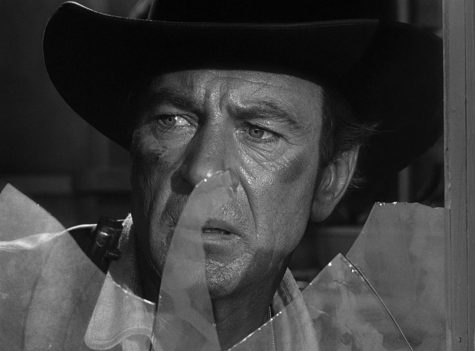
Lee Marvin has to go down as of the Hollywood greats. Starting out in supporting roles, he damned near stole the picture from many a legendary lead. By the time he made Monte Walsh, Marvin was in his mid-40s and looked every hard-living day of it. He always had character in his face, his voice and movements – you just knew this was a man who had been around, who had done things and was no stranger to life. Consequently, he fits the role of Monte like a glove, having the looks and experience in the genre to positively demand you believe in him. Despite winning an Oscar for Cat Ballou, I still feel this actor has never received his full due. Even today, he tends to be thought of as an action actor, a villainous character and tough guy. Well, he was a tough guy, but in the real sense of the term – an all-round man. He could play menacing as well as any but there was a whole lot more to him, power and subtlety to be exact. As Monte Walsh, he’s electrifying – you can’t take your eyes off him. Every bad break in life is etched into those craggy features and every sadness too, but there’s humor and tenderness beneath it all. I could pick out most any scene in the movie to prove my point but I’ll mention just two. The aftermath of Chet’s wedding is a sobering moment for Monte; the full impact of the changes to his world have just begun to hit home, and he heads for the refuge of the saloon. But as he enters he gets another shock – the place is deserted, a forlorn shell that’s a world away from the thriving hub it had once been. The realization and subsequent acceptance of this unpleasant truth is clear to see in just a few brief twitches around the eyes and mouth. Additionally, one of the most moving sequences comes when Monte arrives too late and discovers that his great love Martine (Jeanne Moreau) has passed away. His grief is completely internalized and controlled, yet there’s no question about its depth. As he opens her little jewelry box and finds both a lock of his hair and the unused money he once pressed upon her, there’s just the faintest glimmer of a tear in the corner of his eye – far more telling and powerful than any display of histrionics.

£2

Marvin may have been the beating heart of the movie, but he had no shortage of first class support right through the cast. Jack Palance was another performer who could ignite the screen at will, an actor of extraordinary intensity who was capable of exhausting an audience emotionally. This film, however, saw him playing a model of restraint and self-control. Where Monte would not be cowed by the vagaries of fate, Chet was the more philosophical. Recognizing that time was no longer on his side, he took the pragmatic view and settled down to town life and marriage. Palance added a note of calmness and pragmatism to his performance here, more blissful than defeatist. However, it’s worth noting that it’s the ornery refusal to bow down that leads to Palance’s downfall. Monte held onto that quality throughout, refused to succumb at any point, and fares better in the end. Jeanne Moreau also gave a memorable turn as Martine, the woman in Monte’s life – even his lifeline to some extent – who can forgive him anything and would wait for him for ever. Moreau was all sadness and sexiness, a classically tragic figure. The wordless scene where she tries to arouse the interest of her man as he struggles to roll a cigarette is a beautiful moment of humor and sensuality. And the discussion she has with Marvin about their future together is an object lesson in how to blend romance and regret with ever allowing it to descend into the maudlin.

For a long time, Monte Walsh was one of those movies that I feared would never see the light of day on DVD. Then Paramount finally came to their senses and released it in the US. The film is correctly presented in anamorphic scope and looks pretty good with no distractions or damage that I was aware of. The only extra feature offered is the theatrical trailer, which I think is a shame as a commentary track would be welcome and appropriate. Still, I’m grateful to have the movie available on disc so I’m not going to complain too much. I think this is one of the great westerns, not only of the 1970s but of one of the greats period. There is a depth and richness to Monte Walsh that stands the test of time; I think it’s a perfect piece of filmmaking where I cannot honestly find anything to criticize. It’s one of those films that grows on you and draws you further in with each subsequent viewing, improving with age. To those already familiar with it, it should need no recommendation. And for those others yet to experience its magic, well you’re in for a treat. I recommend this one without reservation or qualification – the definition of a classic.

Across the Wide Missouri

poster196-1

I’ve already featured a number of films that highlighted the trend in 1950s westerns towards a more sympathetic and mature view of the various native peoples and their relationships with the westward moving settlers. William Wellman’s contribution to this phenomenon can be seen in Across the Wide Missouri (1951), where his setting of the story in the 1820s and its focus on trappers and mountain men, as opposed to the later arrival of large groups of settlers, allows him to sidestep political issues and tell a more human tale. Wellman’s movie suffered from some overzealous editing that frankly hacked his work to pieces and leaves the version available to us today an imperfect one. The director was greatly displeased by this, virtually disowning the film, yet what remains is still a beautifully shot work that has some emotional punch, in spite of what was left on the cutting room floor.

The story is centered around Flint Mitchell (Clark Gable), a rough and ready mountain man and trapper, whose adventures we follow in the form of the narrated reminiscences of his grown-up son – voiced by an uncredited Howard Keel. Mitchell is in the process of putting together an expedition to head into Blackfoot country in search of lucrative beaver pelts. With most of the arrangements in place, Mitchell catches the attention of a young Blackfoot girl, Kamiah (Maria Elena Marques), who has been brought up by the Nez Perce. Despite being amused by her advances, he initially brushes her off. It’s only when he learns of the plans of Brecan (John Hodiak), a Scot who has become so enamored of the Blackfoot way of life that he’s literally “gone native” and been integrated into their tribe, to bring her back to her own people that he changes his tune. Kamiah is the granddaughter of Bear Ghost (Jack Holt), the tribe’s elder, and Mitchell sees an opportunity to gain favour. Of course the only way to take the girl from the Nez Perce is to marry her and bring her back as his wife. While Mitchell isn’t averse to the idea, he still regards Kamiah primarily as a bargaining chip at this stage. In the course of the long trek though he finds himself genuinely falling for her charms. Mitchell doesn’t speak a word of her language, nor she his, and all but the most basic communication has to be conducted through the medium of an interpreter, an old French trapper by the name of Pierre (Adolphe Menjou). One of the interesting aspects of the film is the fact that the Indian characters, and the many of the French too, speak exclusively in their own tongue, lending a touch of authenticity to it all. With much of the focus of the middle section of the movie on the arduous journey undertaken by Mitchell and his fellow hunters, it’s basically an outdoor adventure yarn with a romance woven into it. Although the adventurous elements occupy a lot of the running time, the real heart of the film comes from the interracial romance and the gradual development of cultural understanding that accompanies it. However, few tales succeed without the introduction of some kind of conflict, and that’s provided here by the appearance of a rising Blackfoot warrior, Ironshirt (Ricardo Montalban), whose enmity with Mitchell leads to the film taking a tragic turn at the end.


My father told me that for the first time, he saw these Indians as he had never seen them before – as people with homes and traditions and ways of their own. Suddenly they were no longer savages. They were people who laughed and loved and dreamed.

The above words, spoken by the narrator after Mitchell has come upon the Blackfoot settlement, might seem to be stating the obvious these days. However, they are quite potent when viewed in historical perspective. When Across the Wide Missouri was produced it was by no means a given to see some respect granted to Native American customs and ways of life. While it’s disingenuous to say that westerns before the 50s were uniformly dismissive of Indian culture, those that tended towards the kind of sympathetic treatment that grew in popularity as the decade went on were certainly thin on the ground. One could of course argue that the inclusion of the villainous character of Ironshirt shows the movie reverting to timeworn genre stereotypes, but that’s both lazy and a bit of a cheap shot. In the first place, the responsibility for the bad blood that arises can be traced back to both sides. Furthermore, it would be a misrepresentation of the times to suggest that everything was harmonious and that the thought of expelling perceived intruders from their territory never crossed the minds of the Indians. Finally, from a storytelling perspective, the presence of this character and his actions are a large part of what gives the film its emotional impact at the climax.

£10

Across the Wide Missouri must rate as a huge missed opportunity for William Wellman, though the director cannot be held responsible for the failings. The film had the makings of being one of the great frontier epics, a sweeping and intelligent analysis of cultural symbiosis. However, it appears that MGM bosses allowed themselves to be swayed by negative pre-release feedback and cut the movie down (allegedly from over two hours originally) to its current sub-80 minute running time. As such, we’re left with a slightly disjointed effort that nevertheless hints at what might have been. Despite the choppy rhythm, the development of the relationship between Mitchell and his Blackfoot maiden is a touch abrupt, there’s still a lot to admire. Wellman kept his cameras mainly outdoors to capture the splendor of the Colorado locations and, as a result of both the broadly comedic interludes and the incorporation of the landscape into the narrative, produced a film that’s reminiscent of the work of John Ford. Leaving aside the plot, the picture is a visual delight – William Mellor’s cinematography is frequently breathtaking and never less than beautiful.

Clark Gable had what could be termed a fairly lean run in westerns, with Raoul Walsh’s The Tall Men probably being his best showing in the genre. Across the Wide Missouri offered him a strong role though, one that played to his strengths and exploited his trademark roguish charm. In spite of his frequent casting in romantic parts, he had a certain goofball quality which, along with his inherent machismo, made him the ideal choice for a socially clumsy trapper. In addition, he performed very well in the handful of tender and reflective moments; no doubt he drew on his own sense of personal loss for the climactic scenes, and there’s a real dignity in the way he consoles his grief-stricken bride after the murder of her grandfather. As Kamiah, Mexican actress Maria Elena Marques is cute, spirited and gutsy. She barely utters a word of English throughout the film, save a few efforts in heavily accented pidgin, yet her feelings at any given point are abundantly clear. Her presence really drives the picture and gives it its purpose, and it’s refreshing to see the matter of fact acceptance of her relationship with Gable. After a promising start, John Hodiak’s career dipped swiftly and he died a very young man; this film was arguably his last memorable role before the decline set in fully. He had a dour thoughtfulness about him, a withdrawn sense that seems to match the character he plays ideally. There’s no real explanation given as to why Brecan left his own society to become assimilated into the Blackfoot tribe, and the actor’s own distance and remoteness adds to the air of mystery surrounding the character. Ricardo Montalban’s Ironshirt is a completely undeveloped part, although that may be due to the heavy cuts imposed by the studio, and he serves basically as a bogeyman figure. As for the supporting cast, the best work is done by Adolphe Menjou and Alan Napier.

£11

Across the Wide Missouri is now available in the US via the Warner Archive, and also on pressed disc in Europe from Warner Brothers in France. I have the French release of the film and I have to say the transfer is a very good one. The Technicolor hues come out very strongly, which is vital in a movie so heavily dependent on its outdoor photography and imagery, and the print is in pretty good condition. There are no extra features offered, and the French subtitles can be disabled from the language menu. In the final analysis, I’d have to say Across the Wide Missouri is a disappointing film. In doing so, I’m not saying it’s a poor movie, nor am I implying any criticism of the cast and crew. I feel there was a work of greater significance and cohesion here had the scissors not been applied so drastically. As it stands, this picture has fallen by the wayside somewhat when 50s westerns are discussed. Wellman was capable of producing work of considerable depth when the material was right, and the ingredients for something special were in place here. And that’s what disappoints me; we’re only seeing a fraction of the director’s vision. Even so, the movie is not without interest and is worth viewing for its visuals and its progressive storyline.

Just as an aside, it’s five years to the day since I first started blogging back on the old FilmJournal site. Time certainly flies.


The Verdict

poster192-1

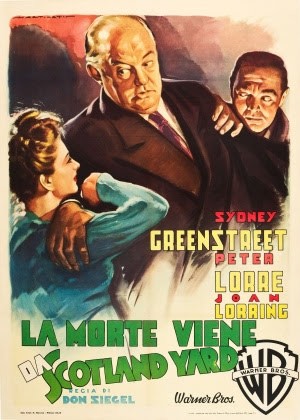
Some films just seem to work for me, to click if you like. They need not necessarily be movies of any extraordinary depth or have any abiding influence. The Verdict (1946) is one of these; it’s a small movie, a B picture really, but through a happy combination of elements it just checks most of the boxes for me. Firstly, there’s the setting: Victorian London as only Hollywood of the 1940s could depict it. Then there’s the fact that the plot revolves around a classic impossible crime, a locked room puzzle. And finally, a star pairing who worked so well and so memorably in tandem that they almost created a little sub-genre of their own. Mixing all these ingredients together results in a delightful little film that has no pretensions of greatness, that seeks only to entertain, and achieves that, not inconsiderable, goal admirably.

The opening is a first class piece of moody and atmospheric scene setting. The caption informs us that we’re in London in 1890, a dark and brooding place, as the camera tracks in to focus on Newgate prison, the last stop for many a condemned man. With the fog clinging to the gas street lamps and a bell solemnly tolling the hour of execution, the story’s protagonist looms into view. Superintendent Grodman (Sydney Greenstreet) is, quite literally, the big man in Scotland Yard. His lumbering bulk and sombre features speak of a man deeply contemplating his actions and his role in the world. Grodman’s latest investigation has drawn to a close and a convicted murderer is on his way to the gallows. Yet Grodman takes no pleasure in this, reflecting that success for a man in his position leaves only a bitter taste. In a sense, Grodman is condemned too, and we’re soon made aware of this paradox as the tale unfolds. Fate, circumstance and the pettiness of a rival have conspired to bring bout a dreadful miscarriage of justice. Grodman has sent an innocent man to the gallows. His professional disgrace is only one aspect of the matter though; a fine little montage succinctly sums up the guilt and paranoia Grodman suffers. Now settled into retirement, Grodman finds himself drawn back into his old life when a curious murder takes place in the boarding house opposite his own quarters. A reprehensible young man (Morton Lowry) had been found stabbed in his room under inexplicable circumstances: the door is locked from the inside and all the windows are sealed up. Grodman’s rival and successor at the Yard, Buckley (George Coulouris), is stumped and reluctantly calls on him for advice. Aside from the baffling mechanics of how the crime was committed, there are a clutch of fascinating suspects: Peter Lorre as an illustrator with a macabre sense of humour, Paul Cavanagh as a stiff-necked politician, June Lorring as Music Hall girl, and Rosalind Ivan’s hysterical housekeeper. Additionally, the possible motives for the murder form a complex web that encompasses jealousy, passion and blackmail. While Grodman strides in his stately manner through this labyrinth of suspicion, it emerges that history is in danger of repeating itself, with the possibility of another innocent victim being ground up by the wheels of blind justice.

The Verdict is adapted from The Big Bow Mystery by Israel Zangwill, one of the classic texts on the problem of the locked room – my thanks to Sergio of Tipping My Fedora for pointing out to me that this is available free as an e-book here & as an audiobook here. This particular form of impossible crime has been a staple of detective fiction for a long time, although its heyday was around the middle of the 20th century. At its best, the locked room problem depends more on the subtle art of misdirection than mechanical hoaxing. As such, this form of the detective story doesn’t always translate well to the screen and is generally far more effective in print. Still, I think Zangwill’s contribution to the canon does hit the mark and should succeed in confounding those not well-versed in this school of trickery. John Dickson Carr, the undisputed master of the locked room, also details the murder method used here in chapter 17 of The Three Coffins – the wonderful lecture on all things impossible delivered by Dr Fell – in case anyone wants spoilers without reading the Zangwill book.

The Verdict was Don Siegel’s first full length movie as director, although he had had extensive experience working in montage and the second unit in the years leading up to it. As a debut feature, it’s an impressive piece of work and demonstrates this was a talented individual with a future. While the film doesn’t bear much relation to what we might think of as a typical Siegel production, it does show that he already had a flair for visuals and pacing. The story is told economically, without unnecessary or tedious exposition, and maintains a consistent rhythm. With cameraman Ernest Haller making the most of the shadowy setups, Siegel uses a variety of interesting angles, dissolves and montage to keep things moving and strike the right tone. Aside from the excellent opening sequence, there’s a fine little section involving a late night exhumation that wouldn’t look out of place in a horror feature. The whole movie is a studio bound affair but, like the best B efforts, it turns this limitation to its advantage. The foggy London streets and mews where the action takes place may be no more than a Hollywood confection yet they have enormous charm, and the controlled environment leaves Siegel and Haller free to extract the maximum level of menace.

Peter Lorre and Sydney Greenstreet established a great on-screen partnership in the 1940s at Warner Brothers, earning themselves the nickname “The Laurel and Hardy of Crime”  – although that term seems to have been developed in retrospect. I remain of the opinion that The Mask of Dimitrios represents their best work together but The Verdict, their final collaboration, isn’t that far behind. Both these men had the knack of injecting a vein of comedy into their playing, of adding a human face to the menacing characters they so often portrayed. In this film, it’s Lorre who gets to indulge in a bit of sly black humour as the philandering cartoonist with a penchant for the gruesome. In contrast, Greenstreet cuts a much more tragic figure, his heavy features reflecting the regret and despair of his character. While Greenstreet’s huge physical presence, frequently emphasized by low angle shooting, dominates every frame he appears in, it’s the scenes he shares with Lorre that tend to be the most memorable. These two brought out the best in one another and seemed very comfortable working together. The main support came from George Coulouris, another actor who specialized in telling character roles, and he has just the right touch of venality as Buckley. In some ways he can be seen as the true villain of the piece, the blustering career cop whose inaction sets the whole affair in motion. Joan Lorring does fine as the blowsy entertainer who may know too much for her own good and ends up as one of Buckley’s chief suspects. Paul Cavanagh, who appeared in three Universal Sherlock Holmes films, has the ideal kind of patrician bearing for the part of the honour bound politician carrying around a guilty secret. Rosalind Ivan is essentially a caricature, a noisy, brittle busybody consumed by unfulfilled passion. The minor parts are filled by Morton Lowry as the slimy cad who becomes the murder victim and Arthur Shields playing yet another of his intense, tight-lipped clergymen.

The Verdict was made available on DVD in the US a while back through the Warner Archive. Additionally, the film has just recently been given a release on pressed disc by Sinister Films in Italy and that’s the edition I own. The transfer is pretty good, although there are plenty of minor speckles and blemishes on show. Some scenes are sharper than others but there’s no serious inconsistency or distraction either. The only extra on the disc is labeled as the theatrical trailer, but it’s actually the opening few minutes of the feature. The film is presented with three audio options: the original soundtrack and no subtitles, an Italian dub, or the original track with Italian subs. The movie is an excellent piece of entertainment, featuring fine central performances, atmospheric direction and an engrossing mystery story. It’s highly recommended for fans of Lorre and Greenstreet or those who like noirish thrillers. The fact that it features a classic locked room problem is an added bonus in my eyes, although those viewers especially familiar with that detective story variant shouldn’t have too much difficulty figuring out the method used.


Road House

poster255

We tend to think of film noir in an urban setting, the iconography of neon and slick, wet streets being such a powerful influence. However, the style isn’t confined to those mean city streets with their ominously shadowed alleyways. Noir can be every bit as effective in a rural or small town environment – the photographic opportunities, while obviously different, still exist and dark existentialism can be found wherever human beings interact. Road House (1948) is one of those partially neglected noir pictures that moves the action out of the city and places it in a small town near the Canadian border, or to be more exact in and around the titular establishment. The somewhat isolated setting works particularly well in this instance, and the classic romantic triangle that underpins the plot has the advantage of involving three top class performers in roles that play to their individual strengths.

The only alley in Road House is the one with bowling lanes in the business owned by Jefty (Richard Widmark) and managed by his childhood friend Pete (Cornel Wilde). It seems that Jefty inherited his money and kept his old friend by his side after the war ended. At the beginning of the movie both men are on the best of terms, coming across as something akin to business partners as opposed to boss and employee. However, a fly in the ointment is introduced in the shape of Lily Stevens (Ida Lupino), the new lounge singer and, it’s heavily implied, Jefty’s latest squeeze. The opening scene where Pete comes upon the world-weary Lily reclining, shoes off and ever-present cigarette burning on the table edge, in Jefty’s office offers up some great hard-boiled and insolent dialogue. Pete initially flirts and then, as he realizes that Lily is just another in a long line of “entertainers” that Jefty has brought back, fences with the newcomer. Despite Jefty’s obvious enthusiasm, Pete has seen it all before and tries to pack Lily off on the next bus out of town. However, Lily is one of those tough broads from Chicago and has no intention of being bounced so easily. Pete slowly warms to the idea that Lily may after all be good for business when her debut performance (a smoky, throaty rendition of One for my Baby) goes down a storm with the customers. When Jefty heads off for a hunting trip, Pete and Lily find themselves spending more and more time together and their mutual attraction grows. The problem is that neither one of them had cottoned on to the depth of Jefty’s feelings, and it comes as a huge shock when he arrives back with a marriage license in his pocket and a proposal on his lips. The situation’s obviously not a comfortable one so the two lovers decide the only option is to pack up and be on their way. While it was only hinted at and alluded to before, it now becomes clear that Jefty is both devious and emotionally unstable. He arranges to have Pete framed on a trumped-up embezzlement charge and put on trial. But this is only the tip of the iceberg; Jefty uses his influence to swing the court decision and have Pete placed in his custody. Pete is thus transformed into a classic noir dupe, tormented and pushed to the very brink by the increasingly erratic Jefty as Lily can do little but stand helplessly by and watch. The tale powers along towards a terrific and melodramatic climax in the forests along the Canadian border as the former friends go head to head, with love and freedom the prizes at stake.

I guess director Jean Negulesco is most famous for the glossy dramas and musicals he made during the 50s. For me though, his most interesting work remains the tight little thrillers and noir pictures he produced in the 40s. I’m immensely fond of The Mask of Dimitrios, adapted from Eric Ambler’s novel, a low budget thriller dripping in noir atmosphere that makes excellent use of the talents of Sydney Greenstreet and Peter Lorre. Road House though is probably the purest piece of noir that Negulesco worked on, and it indicates that he had a great deal of ability in this area had he chosen to exploit it further. With Joseph LaShelle taking care of the cinematography, Negulesco uses the sets of the Fox backlot to create a stifling yet strangely attractive world in which his three leads can enact their overheated drama. Forests have always held a menacing air, particularly when the action takes place at night allowing the leaves and branches to cast their dappled shadows. It also lends a touch of confusion, characters stumble blindly though whipping, blinding vegetation either in pursuit or seeking refuge. And then there’s the splendid isolation, the sense that events have exited the typical everyday world and passed into a more primal and uncertain landscape. It’s also worth mentioning how music is used so sparsely in Road House: apart from the numbers Lily sings as part of her set, the action plays out against a natural sounding backdrop. Music can of course be extremely effective in building and sustaining mood, but there are enough fireworks taking place on the screen in this movie to render it largely unnecessary.

The US DVD of Road House includes a short documentary feature that focuses on Richard Widmark and Ida Lupino, and it’s particularly heartening to see it drawing attention to Ms Lupino’s abilities. Apparently, Darryl Zanuck acquired the script for the movie specifically with Ida Lupino in mind. She was only thirty years old when the film was made but had already taken on a kind of worldly air which, when combined with a Gloria Grahame style sexiness, slotted nicely into the noir world. Lupino was an incredibly talented woman and, along with her acting, carved out a niche for herself as one of the few female directors of that era – The Hitch-Hiker is a fantastic piece of low-budget filmmaking. Lupino is cast as a sort of unwitting and reluctant femme fatale whose presence provides the spark for what follows. The aforementioned documentary also makes the point that Lupino, as the drifter with a possibly shady past who arrives in town, gets the traditionally male part in the movie and she certainly infuses her role with the kind of tough fatalism that we normally see noir men display. The movie essentially belongs to Widmark and Lupino, with the latter dominating the opening hour before the former grabs all the attention in the last third. Widmark was still tied into the psycho parts that followed on from his searing debut in Hathaway’s Kiss of Death. He comes across as quite affable in the early stages of the story, demonstrating the range that he was soon to explore further as his career progressed, before gradually descending into the giggling lunacy that he practically owned the copyright on. The thing is though, Widmark always had an edge, an emotional fragility if you like, and so the transition his character goes through is never totally jarring – it feels as though it’s simply a natural progression. With two powerhouse performers at work a stable centre was necessary, and that was provided by Cornel Wilde. His part was considerably less showy but that stoicism was important and stops the whole picture from sliding too far and losing credibility. Celeste Holm rounded out the cast in a somewhat thankless part as the girl Wilde throws over in favour of Lupino, helping to save the day in the end and suffering a few unkind digs directed at her appetite and weight along the way.

Road House was one of the last noir movies that Fox put out on DVD in the US before shutting up shop and moving into the murkier waters of MOD releases. The transfer is a good enough effort, despite a warning that the elements used were the best available, there’s no especially noticeable damage to the print. The disc has some nice extra features too: a commentary track with Eddie Muller and Kim Morgan, the documentary I’ve already spoken about, and some galleries. When Fox were running their film noir series there were a few questionable entries, but Road House is the real deal. The direction and performances are spot on and the pacing is very well-judged. While I wouldn’t class this as a forgotten movie, I think it’s fair to say it hasn’t always been given its due. Highly recommended for fans of the leads or film noir.


Smoke Signal

poster254

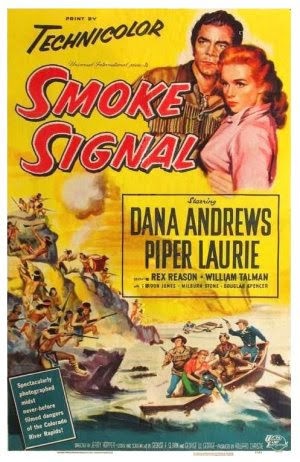
Films that adopted a pro-Indian stance can be found throughout the 50s, some more explicit in their sympathies than others. Smoke Signal (1955) offers an interesting variation on this trend; it would be inaccurate to refer to it as directly pro-Indian, rather it provides a critique of anti-Indian thinking. By casting a traditionally heroic actor in the central role and keeping his motivation slightly ambiguous for much of the running time – personally, I feel that greater ambiguity would have made the tale even more fascinating, but more on that later – it challenges our conventional genre perceptions. Add in an unusual setting, with the characters running the rapids of the Colorado River through the Grand Canyon, and the ingredients are in place for a compelling western.

The story is built around Brett Halliday (Dana Andrews), a former captain in the US Cavalry who deserted, joined the Utes and turned renegade. However, Halliday has been captured by the army and is being held prisoner at a remote fort until he can be transported for court-martial. The opening sees Captain Harper (William Talman) and his patrol coming upon the fort that’s currently under siege. Harper’s arrival puts him in command of the tiny garrison which has been whittled down by relentless attacks. He has a special interest in seeing the captive called to account since his brother was killed in a battle with a band of Utes led by Halliday. Apparently, these Utes have been massing and forming alliances with other tribes to stage a spectacular uprising. Harper is initially skeptical about this but when proof is provided it becomes evident that holding out in the fort is not going to be an option. Although reluctant to do so, he takes Halliday’s advice and decides to evacuate the fort, bringing some abandoned boats and making a break for it down the uncharted river. The majority of the running time is spent on this perilous journey, where the small band of survivors must fend off the harassing Utes and struggle to overcome the dangers posed by nature. While Halliday protests his innocence of the charges against him at the beginning, he avoids mention of this for most of the journey. Instead, we’re left to wonder and, like the desperate group around him, have our doubts raised only by his seemingly selfless actions and determination to see his captors to safety. Gradually, as Halliday’s knowledge of the Indians and their tactics proves more effective, he gains the trust of a few of his companions. His strongest allies are the late garrison commander’s daughter (Piper Laurie) and a grizzled old campaigner, Sergeant Miles (Milburn Stone), he once led. The turning point comes when the inflexible Harper, seemingly motivated by spite, orders Miles to undertake a suicidal mission. From here on, sympathy shifts to Halliday, the sole exception being the callous and brutal Lieutenant Ford (Rex Reason). The emphasis of the film is on the group dynamic as much as anything, and the shifting loyalties is an important part of what keeps the viewer’s interest alive. Who, if anyone, will make it to journey’s end is always uppermost in our thoughts and the battle for hearts and minds, ours as much as the characters on screen, ensure the tension is maintained right to the last scene.

Director Jerry Hopper made a series of good if fairly unremarkable movies in the 50s (Secret of the Incas perhaps being the most notable) before embarking on a long and successful career in a string of well-known TV shows. Hopper, and cameraman Clifford Stine, get good value from the Grand Canyon locations, the towering rock face being both visually impressive and also hammering home the bottled up, claustrophobic atmosphere. However, it has to be said that while the location work is extremely attractive, there’s far too much reliance on obvious and distracting back projection. Hopper’s handling of the action scenes is just fine, the sporadic battles and skirmishes blend well with the ever-present threat of the raging river and keep the story moving along. I think my biggest complaint relates to the script, and the ending in particular. For me, this was altogether too pat and slightly unsatisfactory – I feel that not only does Harper behave out of character but he gets off a bit lightly too.

Smoke Signal is really Dana Andrews’ picture all the way. Writing of this actor before, I commented on his tendency to internalize his feelings and play things down. That understated quality is highly appropriate for the character of Brett Halliday, a man to whom being true to his own inner convictions has brought only the distrust and enmity of others. I think Andrews was capable of hiding things so well that it’s a pity the scrip didn’t capitalize on this talent and keep the viewers guessing a little longer about the true nature of his character – it would have added more depth and uncertainty. There’s an excellent example of Andrews’ carefully modulated playing in one of the early scenes, when Halliday and Harper first meet. Harper, full of scorn and bitterness, reaches out to snatch away the native amulet Halliday wears round his neck. The flash of anger and resentment that briefly flits across Andrews’ momentarily clouded features, not much more than a twitch of muscle and a hardness of eye, tells us that this charm is special to him and that Harper’s action has gravely insulted him. When it comes to screen acting it’s the little things, those fleeting gestures and tics, that often speak loudest. William Talman tended to get cast in villainous, or at least unsympathetic, parts. He’ll always be remembered as Hamilton Burger, Perry Mason’s eternal foe, but he was exceptional as the psychotic bad guy in Ida Lupino’s The Hitch-Hiker. In this film though he portrayed a man bound by his own rigid code, a by the book disciplinarian with a narrow and inflexible perspective. Talman’s performance, alongside Rex Reason’s thuggish characterization, is what lends Smoke Signal its pro-Indian status. As such, it earns its credentials almost by default; the film paints the Utes’ opponents as deeply prejudiced rather than showing the Indians themselves in an especially positive light. As the only woman in the movie Piper Laurie spends much of her time torn between Andrews and Reason, but does well providing a non-partisan viewpoint. In supporting roles, there’s strong work from Milburn Stone, Robert J Wilke and Douglas Spencer.

Pegasus in the UK licensed Smoke Signal from Universal for their DVD release. The disc presents the film in a nicely framed 2:1 anamorphic transfer. The image looks a little soft in some places but there’s no real damage on show and the colours are bright and strong. There are no extra features whatsoever offered, just the main menu and scene selection. Anyway, the Pegasus release is the only one, so far as I’m aware, that presents the movie in the correct aspect ratio and with anamorphic enhancement. Universal westerns from the 50s are always worth seeking out – they’re generally attractive to look at and often feature plots that throw out something a little different. Smoke Signal is a solid, medium grade western that works pretty well. Andrews is dependable and credible, Hopper’s professional direction keeps it all moving along ensuring the pace never flags, and the location work is very welcome. Generally, this is a tight and entertaining mid 50s western that I’m happy to have in my collection.~

Whispering Smith

poster264

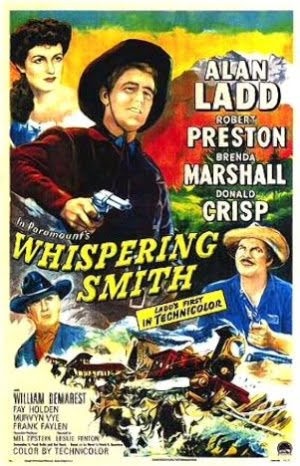
We’re back in remake territory, proving yet again that this is no modern phenomenon. Whispering Smith (1948) was the third time Hollywood had tackled Frank Spearman’s novel about the soft-spoken railroad detective. It wouldn’t be that last either: Audie Murphy went on to portray the character in the short-lived TV show of the same name in 1961. The film places the railroad and its importance right at the centre, in keeping with the vital role it  actually played in the conquest, building and civilization of the frontier. Down through the years, the movies have shown the railroad companies in both a positive and negative light depending on the view of the west they wanted to emphasize – regarding the coming of the Iron Horse as either the agent of corruption and restricted freedom or as the champion of progress and modernization. Whispering Smith, for the most part, adopts the latter position.

Luke ‘Whispering’ Smith (Alan Ladd) is the railroad’s star cop, with a reputation for being a calm but deadly man. The opening sees Smith falling victim to a couple of bushwhackers, later revealed as members of the Barton gang. The company has sent Smith west to bring in these outlaws, and he lives up to his billing by efficiently taking out two of the brothers when they attempt to hold up the train he has boarded. However, Smith doesn’t walk away unharmed; the shootout leaves him wounded – saved from death only by a bullet deflecting off the harmonica he carried in his breast pocket. As he recuperates in the home of an old friend, salvage engineer and small-time rancher Murray Sinclair (Robert Preston), we learn that there was some history between Smith and Sinclair’s wife Marion (Brenda Marshall). This is only one of the plot threads though. The other, and more significant one, concerns Smith’s gradual suspicion that Sinclair may have taken his first steps along a shady path. For one thing, there’s Sinclair’s association with a notorious crook and rustler, Rebstock (Donald Crisp), and then there’s the small matter of his apparently living beyond the means of a railroad employee. Still, the friendship between the two men holds firm for the time being. What puts it under strain, and ultimately breaks it, is the bullish refusal on Sinclair’s part to bow down and accept the fact the railroad now has new policies, new men in charge, and is determined to crack down on the kind of petty corruption that would have been overlooked in the past. In the end, both Smith and Sinclair have to choose between friendship and the old, freewheeling ways and the more hard-nosed corporate sensibility of their mutual employer.

I think the whole issue of the railroad is approached in an interesting way in Whispering Smith. With the title character as the hero, his carrying out of his employer’s wishes automatically earns a lot of legitimacy in the eyes of the viewer. Many westerns have portrayed railroad representatives as good for nothing flunkies riding roughshod over the pioneering settlers. By showing Smith to be an upright and admirable character and his immediate superior to be a refined man capable of some understanding, the film gives a human face to the railroad. At the same time though, the point is clearly made that it’s the inflexibility of head office, and their rejection of Smith’s direct appeal, that finally pushes Sinclair into out and out criminality. As such, there is a degree of ambivalence in the script’s attitude. Ultimately the railroad, albeit with the human face of Smith to soften the impact, represents the relentless forward march of progress and the inevitable end of the old freedoms that Sinclair personifies.

Leslie Fenton had a relatively brief directing career and his best work, Whispering Smith and Streets of Laredo, came towards the end of it. Both these movies saw Fenton work with cameraman Ray Rennahan, and together they created some beautiful images. Whispering Smith makes great use of the Technicolor process in the indoor and outdoor scenes, resulting in a film that’s rich and textured. There’s also an economy to the storytelling; the fact that Smith, Sinclair and Marion have a shared history is deftly summed up early on by the simple expedient of using close-ups of the characters’ facial reactions. And then the sequence detailing Sinclair’s descent into banditry sidesteps the need for tedious exposition by employing a brief but spectacular montage of wrecks and robberies.

Whispering Smith saw Alan Ladd appear in his first western in a starring role, and it proved that he had a promising future in the genre. Ladd used his quiet toughness to great effect in film noir throughout the 40s and this new departure for him provided an equally productive outlet. His character is given a strong build up early on and he effortlessly lives up to the deadly reputation. Ladd seemed at ease and at home in a western setting and, while there’s nothing gratuitous about his more violent moments, there’s never the slightest doubt that Smith represents a capable and menacing figure. The actor’s ability to seamlessly blend the gentler, more intimate passages with those highlighting his skills with the gun points the way towards his peerless performance in Shane a few years later. Robert Preston had shared the screen with Ladd in the past, most memorably in This Gun for Hire, but this time their roles were reversed. Preston’s Sinclair is a complex mix of ebullience and repressed fury, and the actor creates an interesting character who is three-dimensional enough to remain sympathetic to the end; bearing in mind the loyalty to Sinclair that Smith retains throughout, this is a vital quality to communicate. Brenda Marshall, who had been excellent opposite Errol Flynn in The Sea Hawk, was close to her early retirement from the movies at this point. I thought she gave a fine, restrained performance as the woman between Ladd and Preston, conveying very well the regret she felt for the chances of happiness she had lost by marrying the wrong man yet remaining steadfast in her vows – there’s a lovely little moment where Marshall and Ladd speak obliquely about their former relationship, and all their mutual longing and desire is clear to see in their eyes even as they talk around it. The film boasts a particularly strong supporting cast, headed up by the ever reliable Donald Crisp and William Demarest while Frank Faylen also deserves a mention for his turn as the creepily sadistic Whitey Du Sang.

Initially produced by Paramount, the rights for Whispering Smith now reside with Universal who have issued it on DVD in the US. That disc presents the film in the correct Academy ratio and it’s an extremely strong transfer, with no print damage to speak of and rich, vibrant colours. The only extra feature offered is the trailer. The movie is a good example of a late 40s western; it’s a fairly straightforward affair but there are some hints of the complexity that genre pieces from the following decade would more fully explore. It’s also noteworthy for offering Alan Ladd his first serious western role and giving a new direction to his career. All told, the movie is a fine piece of entertainment that looks very attractive.


Experiment in Terror

poster286

The common consensus holds that classic film noir came to an end with Orson Welles’ Touch of Evil. Some argue it lasted a little longer, but it’s pretty much universally accepted that the movement was essentially defunct in the 60s. However, film styles rarely have rigidly defined start or stop points; the nature of filmmaking is too fluid for that, and this is especially true of something as nebulous as film noir. So, even if the new decade saw the emphasis shift and other sensibilities start to take hold, there was still some residue of the old noir influence at play. Blake Edwards’ Experiment in Terror (1962) pointed towards the way the thriller movie was to evolve in the coming years yet it still bore some of the hallmarks of the works that preceded it – a dangerous urban environment, a dour and downbeat mood, and ample use of striking, high contrast photography. I’ve always been fascinated by transitional cinema, those pieces which seem to straddle eras, and I enjoy seeing how different styles and movements merge, blend and grow. As such, I think Edwards’ film is an interesting example of the phenomenon.

A nighttime view of San Francisco accompanied by Henry Mancini’s cool and slightly menacing score opens the movie. Gradually the camera tracks in and focuses on one car and its driver; Kelly Sherwood (Lee Remick), a teller in a downtown bank, is making her way home to the suburbs – as it happens, my friend and fellow blogger Michael has just posted a piece on that very opening here on his site It Rains…You Get Wet, and you can check out his full review of the film here. To borrow his words: “…the high contrast images of traffic as lights dancing in the nightfall, beside the luminosity in the landscape of the city by the bay, established its film noir bona fides through pure dark imagery”. As she pulls into her garage a series of quick cuts and close-ups make it clear that something is not quite right. Kelly senses danger and, sure enough, a figure emerges from the shadows to grab the terrified girl and set her nightmare in motion. The intruder’s face is never fully visible but his rasping, asthmatic voice breathes his plans into his captive’s ear. Kelly’s job places her in a somewhat unique position – she has access to money, a lot of it, and  there’s nothing to stop her stashing away a tidy sum and simply walking off with it. And that’s exactly what her assailant wants; Kelly will leave her job with $100,000 in her purse and bring it to him. In return, he promises to cut her in for 20% of the takings, and his generosity even extends to letting her and her kid sister live. As this sinister figure melts back into the night, Kelly slowly starts to regain her senses after the initial trauma. She puts a call through to the FBI and gets connected to an agent, Ripley (Glenn Ford), before the connection’s broken and the wheezing mystery man, pinning her helplessly to the floor, makes it clear that the consequences of any further contact with the authorities will be most unpleasant. However, the Feds are no fools, and once that initial contact has been made it’s only a matter of time before they manage to track its source. Kelly now finds herself in the unenviable position of acting as both bait for the G-men and the stooge for her unseen intruder. What follows is a cat and mouse game with Ripley and his agents lurking the background hoping to use Kelly to draw the would-be bank robber into the open. Kelly’s taking one silkily threatening call after another and relaying them to the FBI, while they in turn are racing against time in an effort to identify and locate the suspect. The first part, the identification, proves reasonably easy – it’s a guy by the name of Red Lynch (Ross Martin) – but tracking him down is another matter entirely. The suspense builds slowly and inexorably as the pressure on Kelly mounts and Ripley’s men scour San Francisco for the whereabouts of Lynch. The tale powers its way along towards a memorable finale at a thronged baseball game at Candlestick Park.

Blake Edwards is arguably most famous for his comedic films, and the bulk of his work as a director lies in that area. Even though he created the iconic TV show Peter Gunn, I don’t believe many people associate him with crime stories. Regardless of that, Experiment in Terror offers strong and convincing evidence that he was more than capable of handling dark, suspenseful movies. The opening scenes of the film pitch the viewer straight into an edgy and unpredictable world where danger seems to lurk in even the most innocuous settings. I think there’s always something very effective about films which highlight the fact that characters can never feel genuinely secure even in their own homes. Here, Kelly Sherwood finds herself under virtual siege, and the proximity of FBI watchers does little to assuage the suspicions of the character, or the viewer, that Red Lynch can get to her any time he pleases. Edwards made great use of real San Francisco locations to help ground the movie but the interior work particularly stands out. There’s a palpable sense of menace throughout, but there are also moments that go beyond that and become positively creepy. I’m thinking mostly of the scenes in the apartment of one of Lynch’s girlfriends – a maker of mannequins whose home is more a chamber of horrors with dummy body parts and impassive visages literally stacked to the rafters. While I guess these scenes could be viewed as a stylistic indulgence that don’t do much to further the plot, they add a lot to the atmosphere of unease. Visually, the film is impressive from first to last and I feel that it’s only a few lapses in the writing that let it down somewhat. I’m referring here to characterization of the villain; Lynch is clearly a bad man, a felon with a long and varied record. Yet, the introduction of a young Asian woman and her son suggests there’s more depth here, another layer to Lynch that’s neither fully explored nor explained. Perhaps the novel from which the film was adapted went further into this aspect but, never having read it, I’m not able comment one way or the other.

Although Glenn Ford gets top billing in this one his is honestly more of a supporting role. He’d started to take on a middle-aged appearance by this time and brought a certain gravitas to the part of Ripley. Movies where menace and hysteria simmer just below the surface need a figure of stability to prevent everything from flying off into melodramatic territory. That’s essentially the function of Ford in Experiment in Terror, and he’s fine as that strong point of reference at the heart of it all. The two most significant roles are those of Lee Remick and Ross Martin, with the former having to do the lion’s share of the work and carry the film for long stretches. Remick didn’t always get the chance to show what she was capable of as an actress and sometimes found herself cast in indifferent roles. Experiment in Terror placed her front and centre though and gave her a meatier part. Rather than going for the easy option and playing it as a stereotypical damsel in distress, Remick brings a lot of welcome resilience to her character. By doing so, she gives a bit more punch to those scenes where she’s in real danger and fearing for her life. Ross Martin’s villain is excellent too, he looks the part and has just the right sinister air about him. Edwards’ decision to shoot his early scenes in a way that concealed his identity works very well and, although the script would have required a major revision to facilitate it, it’s a pity the faceless nature of Lynch couldn’t have been sustained for longer. There’s good support from a very young Stefanie Powers as Remick’s kid sister, one of the main levers Lynch uses to ensure compliance with his plans, and she brings an appropriate sense of innocence to her role. Ned Glass could usually be relied on to add a touch of sleazy charm to any movie he appeared in, and that’s exactly what he does as a chiseling reporter reluctantly helping the Feds. Finally, there’s a touching little cameo from Patricia Huston as Lynch’s ill-fated girlfriend – if nothing else, her presence serves to highlight the ruthless and callous nature of her lover.

Experiment in Terror, as a Columbia picture, is a Sony property. It was long out of print on DVD in the US but has been reissued as a MOD disc and there is a Blu-ray on the way from Twilight Time. I have the inexpensive Sony disc that’s been released in the UK, and I find it more than satisfactory. It’s quite a basic effort with no extra features but the image is very clean and sharp and is presented 1.85:1 with anamorphic enhancement. I think this is a first class example of the evolving nature of crime movies at the time, featuring some of the look and feel of earlier film noir while looking forward to the more explicit realism that was to come. A fine thriller that I strongly recommend checking out.


Cry Wolf

poster55

The popularity of certain genres, or perhaps sub-genre is more accurate in this case, is always subject to change. Old dark house movies seem to have lost a lot of their appeal; I think they would have to be accompanied by significant quantities of gore to generate a lot of interest these days. Such films rely heavily on atmosphere and a sustained level of tension that is hard to achieve in the age of lightning editing and a succession of jump-cut shocks. Cry Wolf (1947) is one of these vaguely old-fashioned yarns where mood and setting play a major role in maintaining the suspense. I would term it a moderately or intermittently successful vehicle; the plot is serviceable without being particularly remarkable, but the look of it all and the unexpected casting makes for interesting viewing.

The opening has a breathless, intense quality: a black automobile hurtles along winding rural roads while a rider on horseback tracks along and ahead. As the horse clears a boundary wall, the car pulls up in front of an imposing mansion. Two figures, a man and a woman, alight and are admitted by the help. These two people are Senator Caldwell (Jerome Cowan) and Sandra Marshall (Barbara Stanwyck), and they’ve been racing through the countryside to attend a wake. An interview with Mark Caldwell (Errol Flynn), the senator’s brother and head of the house, establishes the fact that Sandra has arrived at this place of mourning to pay her respects to her late husband. Sandra claims that she was married to the deceased, the nephew of Mark and the senator, and has come to see the instructions he left in his will are carried out. It transpires that the dead man was extremely wealthy, his fortune held in trust and administered by Mark until he should turn 30 or marry. His sudden departure means that Sandra now stands to inherit a substantial fortune, providing her claims bear scrutiny of course. Mark is naturally suspicious of this unexpected widow, but that feeling is reciprocated. The death of Sandra’s husband is accounted for in fairly vague terms, the casket has been sealed, and the entire household appear to be held in the grip of some nameless dread. If Mark wants to find out a little more about Sandra’s assertions then that’s as nothing compared to her determination to dig deeper into the Caldwells’ past. She instinctively knows that something doesn’t ring true; there are little details that niggle, but the main issue is the sinister atmosphere that hangs over everybody and everything. The presence of a fragile, neurotic niece, the mysterious laboratory where Mark works late at night, and the awful, unacknowledged screams that echo along the corridors in the darkness all combine to drive Sandra to investigate further. It’s tempting to try to predict the outcome of this story and the trail is littered with clues and allusions, but there are various red herrings present too. By the time the tale twists its way to the climax I reckon it would take a very savvy viewer to step around the pitfalls and reach the correct conclusion.

I haven’t seen too much from director Peter Godfrey apart from the Bogart/Stanwyck feature The Two Mrs Carrolls. This movie shares the same feeling of overheated melodrama, and both films tend to disguise a mediocre script through the use of heavy atmosphere. I don’t usually comment on matters such as set design, but Cry Wolf, with its predominantly indoor setting, relies quite a lot on this. The sprawling Caldwell mansion and estate becomes almost a character in itself, a kind of brooding edifice that’s full of secrets and menace. Godfrey and cameraman Carl Guthrie use the architecture well to build mood – shooting from below and through the balustrades to achieve the classic noir imagery of characters pinned in place by shadows and bars, and mix this up with high angle shots from the gallery that coldly objectify the small figures milling about below. Even the outdoors scenes, with their matte paintings as backgrounds, blend in well. Theoretically, this ought to give the movie a cheap, B picture vibe but it actually adds to the air of unreality, heightening the sense of the characters inhabiting a world apart in much the same way that Hitchcock employed such techniques.

Errol Flynn rarely gets a lot of credit for his acting abilities. He even admitted in his (fantastically entertaining) autobiography that, especially in the post-1942 years, he was often just going through the motions, basically churning out pictures simply to cover his expenses. He was always at his most memorable in swashbuckling action roles, yet he was capable of more subtle performances whenever the opportunity arose. Cry Wolf offered him something quite different, a calmer, more thoughtful and genuinely ambiguous part. Perhaps some thoughts of his own father came into play when he assumed the role of the slightly aloof, pipe-smoking scientist. While he could be criticized here for a certain stiffness, I think he hit the right note under the circumstances; the character of Mark Caldwell is, after all, a man living under intense pressure with a lot of skeletons rattling around the family closet. I guess it could be said though that he doesn’t bring a strong enough sense of menace or threat to his performance to make it as convincing as possible. In something of a reversal of roles it’s Barbara Stanwyck who gets to do all the proactive stuff in the movie: riding horses, clambering across rooftops, dangling through skylights and generally toughing it out. As such, this was a perfect piece of casting since Stanwyck was one of the few actresses of the period who could credibly pull off this kind of thing. She was enormously versatile, at home in most any genre, yet particularly suited to playing gritty heroines who remained unfazed by physical danger. I’ll also give a mention to Geraldine Brooks who was highly effective and quite moving, in her debut role here, as the emotionally brittle and highly strung niece.

As far as I know, the only way to get Cry Wolf on DVD at the moment is via the Warner Archives disc. I remember buying this title on VHS way back in 1989 and I have to say that it looks very much like the same master has been used for the DVD. That’s not to say the image is poor, but there are plenty of speckles and damage marks, not to mention a general lack of crispness, that betray an unrestored source. The disc, as is usual with these MOD products, is very basic: no extra features whatsoever, a generic menu and standard ten minute chapter stops. I’ve tagged this picture as a film noir, but the truth is that it’s a borderline entry at best. The plotting has more in common with a Mary Roberts Rinehart style of mystery – a gutsy heroine blundering into a perilous situation. However, the dark mood and the atmospheric photography do earn it a place on the periphery of the noir world. Personally, I’m a fan of both the stars and I like the fact that it has Flynn playing against type for a change. It’s by no means a perfect film though it is a lot of fun – therefore, it earns my qualified recommendation.


Wichita

poster2741

Some years ago I ran a short series of pieces on the various representations of Wyatt Earp in the movies*. I covered almost all the major productions, but one – Wichita (1955) – was omitted for the simple reason that I won’t ever write about a film which I haven’t had the opportunity to view recently. Well, now’s the time to fill in a notable gap in the aforementioned series. For a character whose name has become such an iconic part of the history and mythology of the old west, there is a good deal of variation when it comes to assessment of his motives. While some writers have sought to build up the man’s legend, others have dedicated their efforts to chipping away at it, and then there’s always the stories that Earp himself chose to spin. Despite the diversity of opinion on Earp in literature, I think it’s safe to say that cinema has, for the most part, chosen to cast him in a heroic mold. The historical veracity of those pictures where his character played a prominent part may be open to question, but there can be no doubt that Earp provided filmmakers with a rock solid basis for their portrayals of tough, unflinching lawmen.

Wyatt Earp (Joel McCrea) is introduced a man hoping to start up business in the burgeoning cow town/railhead of Wichita, Kansas. Two early scenes, one involving a couple of light-fingered cowboys and another depicting a foiled bank raid (where Sam Peckinpah appears uncredited as the teller), make it abundantly clear that Earp is a man skilled in the use of firearms. However, for all his adept gunplay, he has no interest in wearing a badge and using his talents to enforce the law. Wichita is shown to be a town facing something of a dilemma; the railroad is attracting the big cattle outfits and the money that they bring with them, but the town’s also faced with the challenge of lawlessness. Hard men who have spent long weeks riding dusty trails, deprived of liquor and female company, are only too eager to spend their earnings and blow off steam. Everyone of influence in Wichita knows what’s going to happen as soon as the first big cattle drive arrives. These town elders are anxious to fully exploit the financial gains, but they also need someone strong and reliable to ensure that some semblance of law and order is maintained too. Earp would appear to be the natural choice but, as the newspaper editor (Wallace Ford) points out, he hasn’t yet come to terms with his calling in life. It’s only after a child is killed by a stray bullet that Earp bows to the inevitable and pins on a badge.

The script doesn’t concern itself too much with the documented facts – having Earp team up with a fresh young reporter by the name of Bat Masterson (Keith Larsen) for example – but it does give at least a grudging nod in their direction. In reality, Earp finally left Wichita after political disagreements and headed for Dodge City to make money in some questionable ventures. The film ends with our hero setting off for Dodge in order to continue along what’s claimed to be his destined path as a dedicated peace officer. And the political disputes, albeit of an entirely different nature, do form a significant part of the plot. The script sees Earp come into conflict with the business interests in Wichita, men who are prepared to turn a blind eye to violence as long as the dollars keep rolling in. While some people may try to tell you that Hollywood productions of the 50s were generally right-wing in perspective, I’ve never seen too much evidence of that. Wichita is yet another film that champions basic morality above any narrow political consideration.

Wichita is very fine film, where both visuals and theme vie for the viewer’s attention. All of the great directors had the ability to move with ease between genres, and Jacques Tourneur was no exception. Having made what I have no hesitation in referring to as masterpieces in the horror and noir fields, he went on to prove that he was equally at home with westerns. Wichita was shot in scope and Tourneur handles the wide lens beautifully throughout. The opening, which highlights the vast open spaces of the frontier, quickly draws the eye to a tiny speck, a lone figure off on the horizon. This is the first view of Wyatt Earp, a fine visual introduction for a character who remains resolutely apart from the milieu throughout the film. Now that’s a considerable feat in my book, encapsulating the essence and core of a character through the use of one long shot. A good deal of the action in Wichita takes place in interiors, and again Tourneur employs the scope camera to great effect, altering angles to highlight the dominance and physicality of McCrea, to create a sense of chaos or remoteness as required, and generally positioning his actors within the frame in such a way as to focus on the emotional relationships between them. All of this, along with a strong sense of pacing, marks out the work of a top flight director.

With regard to theme, I’ve already mentioned the political sensibilities, but there’s more going on than that. The best classic westerns dealt with the internal struggles of their heroes, men trying to come to an understanding with themselves and to decide on the right path to follow. The Wyatt Earp of Wichita faces this eternal dilemma too, but with the added complication of unavoidable destiny thrown into the mix. Time and again the script makes reference to men being unable sidestep or ignore the responsibilities that fate has laid before them. If one bears in mind that Earp ultimately chooses to pursue what’s morally right then the picture has an uplifting quality. However, it’s not quite so simplistic; in order to fulfill his destiny the hero must do things that offend him personally. I think the minimalist artwork used for the poster sums up that aspect very well – a hunched, regretful figure, full of remorse in his moment of triumph, surveying the body of his slain opponent.

Joel McCrea was an excellent piece of casting as Earp. He may not bear any physical resemblance to the man but both his size and commanding presence ensure he dominates the picture. McCrea was one of the top half-dozen western stars, a man who simply belonged in the genre. He often brought a good deal of warmth to his characterizations, though his role in Wichita sacrifices that to an extent in order to play up other qualities. His Earp is a man who’s not quite satisfied with himself, a reluctant hero whose awareness of his deadly skills pains him. He communicates the dour, steely nature of his character well, and leaves no doubt in our minds as to why this man held such a fearsome reputation. Vera Miles was cast as the romantic interest, and she’s fine given the limitations of her role. The film isn’t a romance so Miles has few dramatic opportunities. Under the right circumstances, she was a very good actress – something like Hitchcock’s The Wrong Man should offer ample evidence – but she’s never stretched here. Lloyd Bridges and Edgar Buchanan played the main villains, the former as a vengeful cowhand and the latter as a conniving, duplicitous businessman, and provide solid opposition to McCrea. The supporting cast is filled with plenty of familiar faces: Peter Graves, Carl Benton Reid, Robert J Wilke, Wallace Ford, and the ever dependable Jack Elam.

Wichita is available as part of the Warner Archive in the US, but I recently picked up a release from La Casa del Cine in Spain that pairs the film with The Oklahoman. Both movies come on their own discs and Wichita looks very good. The film is presented in anamorphic scope and the print seems to be in excellent shape, without significant damage and boasting solid colours. There are no extra features offered but the two movies can be had for less than 5 Euro. Spanish subtitles are removable via the setup menu, however, I did notice that they seem to be burnt in during the opening credits for Tex Ritter’s theme song, and there’s a brief instance of a sign being similarly translated. I think this is an exceptionally good movie, intelligently scripted, beautifully directed by Tourneur and featuring a strong central performance by McCrea. Check this one out.


*Other films featuring the character of Wyatt Earp:

Frontier Marshal

My Darling Clementine

Winchester 73

Gunfight at the O.K. Corral

Cheyenne Autumn

Hour of the Gun

Tombstone

Wyatt Earp

Foreign Intrigue

poster292-1

When television was still in its infancy, and for quite some time afterwards, it was quite common to see the appearance of small screen shows inspired by their big screen cousins. Today it seems like a reversal of that trend has taken place with a fair number of big budget productions hitting the cinema that have spun off from TV series. This phenomenon was noticeable in the 1970s when British TV shows frequently found themselves becoming movie features. However, even as far back as the 50s this was not unheard of, though it tended to be less pronounced in Hollywood. One early example of the US studios raiding their rival medium to produce a feature film is Foreign Intrigue (1956). I’ve never seen the TV show but I understand the movie isn’t really an adaptation in the strict sense of the word – it borrows the title and general concept, but that’s about it.

The movie opens on the French Riviera, with a man sauntering round the beautiful grounds of his equally beautiful villa. As he passes into his library and begins to browse the bookshelves, he’s struck down by a massive heart attack. The man is Victor Danemore and the first person to come upon him as he draws his dying breath is Dave Bishop (Robert Mitchum), his publicist. It’s soon revealed that Danemore was a genuine mystery man, one of those characters that could really only be a product of the 50s. Bishop was hired to fabricate an identity for his enigmatic employer and he knows no more about him than the inventions he’s been feeding the outside world. One would think the dead man’s young widow, Dominique (Genevieve Page), could fill in a few gaps but no, she knows nothing of the years before her marriage. So Bishop takes it upon himself to delve into Danemore’s past, to find out who this man was and why a Viennese lawyer is seeking confirmation of the circumstances surrounding his death. The quest moves from France to Austria and then on to Sweden, with Bishop encountering a variety of shady characters and dangerous situations as he tries to piece together Danemore’s fractured history. As he chases the shadows of the past down the murky, cobbled alleys of post-war Europe, a picture begins to emerge. The tale involves murder, blackmail, Nazis and collaborators, and how a legacy of treachery can poison the futures of the unsuspecting. Foreign Intrigue is a film that is very much of its time, sharing some of the characteristics of The Third Man and Mr Arkadin, yet never attaining the levels of suspense or artistry of either. There are some nicely crafted set pieces and atmospheric moments but the end result isn’t entirely satisfying. In short, the build-up promises much more than the pay-off can hope to deliver.

Foreign Intrigue was brought to the screen by Sheldon Reynolds – he wrote, directed and produced the movie – after Robert Mitchum expressed an interest in working with him. Reynolds had had some success with his TV show of the same name, and hastily knocked out a script. As I understand it, a good deal of the appeal of the show was its use of authentic European locations, and the movie employs the same tactics. This aspect is probably the greatest strength of the film, lending it an air of glamour and reality that even the most lavish studio mock-ups couldn’t hope to achieve. Leafing through Lee Server’s biography of Mitchum certainly gives the impression that the movie was an enjoyable one to make, and the star seems to have had a good time hopping around Europe. Reynolds and cameraman Bertil Palmgren compose some very attractive images and create atmosphere and suspense here and there, but the script fails to provide adequate backup. There’s too much shallow characterization to generate real interest in the people involved, and there are too many plot holes and unresolved questions. Even the finish is weak, its open-ended quality betraying Reynolds’ television background – it actually comes off like a pilot where the groundwork is being laid for the forthcoming episode.

Mitchum was the biggest name in the film and the whole thing revolves around his star power. While this could never be counted among his better roles, he’s good enough in the part. His trademark nonchalance is used well and he handles the thick-ear moments with the kind of toughness that makes it feel believable. Amid all the shadowy cloak and dagger stuff, he gets involved in two romantic sub-plots, but I didn’t feel either of these worked especially well. The two females in question, Genevieve Page and Ingrid Thulin (here billed as Ingrid Tulean), certainly look attractive yet the performances are just passable. Page is poorly served by a role that’s seriously underwritten and underdeveloped, while Thulin simply appears uncomfortable and unsure – disappointing when you consider her later success with Ingmar Bergman. However, there’s some fine support offered by Frédéric O’Brady as the double-dealing foil to Mitchum. A quick look at O’Brady’s IMDB entry reveals the man led a life that could comfortably be described as quirky, fascinating and off-beat. A good deal of this unpredictable quality shines through in his performance and some of the film’s best moments occur when Mitchum and he share the screen.

Foreign Intrigue is a film that I’d never had the opportunity to view until recently. It was one of those titles that you see included in filmographies and wonder what it’s like. Being a United Artists production, it’s part of the MGM library and recent arrangement with TGG Direct has seen it making its DVD debut. The movie is presented in anamorphic widescreen I’d describe it as typical of many MGM releases we’ve seen down the years. I mean that the transfer is about medium, some dirt and speckles, fair enough colour and no visible restoration. There are no extra features whatsoever and the movie shares disc space with an non-anamorphic version of The Quiet American. However, the fact that the title has been made available at last, and the very attractive price, should be taken into consideration. All in all, I found Foreign Intrigue to be a reasonably pleasant, if unremarkable, way of passing the time. The movie isn’t anything special and, realistically, will probably appeal mainly to Mitchum completists like myself. Still, bearing in mind how cheap the DVD is, it’s worth a look at least.