The Reckless Moment

iawu5gw

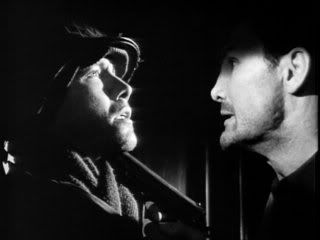
You live in a small close-knit community where everyone knows you and yours. Your family is all around, both depending on you and making endless demands on your time. You are also the victim of a blackmailer. What do you do and who do you turn to? That’s the problem at the centre of the 1949 film noir thriller from Max Ophuls, The Reckless Moment.

Lucia Harper (Joan Bennett) lives in a small California town. She is married with two teenage children, has a housekeeper and a large comfortable home. On the surface everything appears idyllic, but chaos is looming. The film opens with Lucia driving to Los Angeles to meet a man called Ted Darby. Darby (Sheppard Strudwick) has been dating the daughter of the family and Lucia means to put an end to it. She fails to do so and Darby comes secretly to the house later that night. The daughter (Geraldine Brooks) meets him in the adjacent boathouse and, after a quarrel, Darby stumbles off the landing to skewer himself on an anchor below. Lucia discovers the body the next morning and, with her husband traveling on business in Europe and she wanting to protect her daughter, decides to dump the corpse and cover everything up. It looks like she might pull it off until Martin Donnelly (James Mason) turns up with some compromising letters and proposes blackmail.

ewdhlrj

Joan Bennett will be familiar to any fan of noir due to her work with Fritz Lang on a number of pictures, most notably Scarlet Street and The Woman in the Window. There’s no femme fatale style vamping here though, instead she’s the competent, protective mother driven to near despair as the situation spins out of her control. Her measured underplaying is one of the factors which keeps the movie rooted in noir territory and saves it from straying into melodrama. The other factor is James Mason. Two years earlier Mason had given a blinding performance in Carol Reed’s beautiful and masterful Odd Man Out. Here he’s playing another doomed Irishman, albeit one with more dubious motives. He’s very believable in the role and there’s nothing that seems phony as we witness his self-doubts transform him.

The film is well directed by Ophuls and excellently photographed by Burnett Guffey. The location work adds to the realism and the interiors of the big open-plan house seem, paradoxically, to heighten the sense of domestic claustrophobia. It’s almost impossible to hold a private conversation anywhere as family members bustle in and out, cheerfully oblivious to the treachery that threatens them all.

The movie is available in R2 from Second Sight and it’s a great looking, clean transfer. The disc also has decent enough extras with a commentary, a good introduction and a stills gallery. Definitely recommended.

Western Union

pxsblta

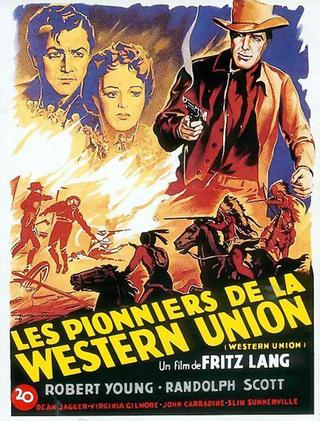
If you mention Fritz Lang’s name to most film fans they are most likely to think of expressionism, thrillers, and films such as M and Metropolis. It is not so typical to associate the German director’s name with classic Hollywood westerns but he did make a handful of these. To be exact, he made three westerns: The Return of Frank James (1940), Western Union (1941) and Rancho Notorious (1952). I think it would be fair to say that Western Union is the least known of them, but perhaps it deserves better. It is quite representative of 1940s westerns in that it tries to avoid some of the more juvenile aspects of the previous decade’s output but lacks the psychological depth that would come in the 50s. Although it may not bear the hallmarks of classic Lang, it does contain those of the classic western.

It’s not for nothing that the building of the railroad has figured so prominently in so many great westerns, from Ford’s The Iron Horse through to Leone’s Once Upon A Time In The West. It was this massive undertaking that at once opened up the west and also signalled the closing of the frontier way of life. For some film-makers it represented the advance of law, order and civil society; for others it stood only for the gradual encroachment of the corrupt influences of the east. Western Union deals not with the railroad but that other piece of progress that would drag America into the modern world and relegate the Old West to the realm of mythology – the laying of the transcontinental telegraph wire.

The film opens with outlaw Vance Shaw (Randolph Scott) attempting to outrun a posse and happening upon telegraph boss Edward Creighton (Dean Jagger). Creighton has been injured and is barely able to move with a busted ribcage. Shaw is desperate to evade capture and is on the point of taking Creighton’s horse and leaving the stricken man to his fate. However, his conscience pricks at him and he decides to take a risk and bring the helpless man along. That proves to be the turning point for Shaw, for when he later finds employment with the telegraph company as a scout it is Creighton who offers him the chance to go respectable. The other main character is the dandified easterner, Blake (Robert Young). Blake has come west to work for the telegraph, and soon enters into a rivalry with Shaw over Creighton’s sister. The movie, like the characters themselves, has a lot of ground to cover and is played out against the back-story of the Civil War. It includes a well-staged battle with some drunken Indians and a confrontation with a gang of renegade confederate raiders led by Shaw’s own brother.

£2

Randolph Scott is excellent as a man torn between a lingering loyalty to his brother and the old ways, and a desire to turn over a new leaf. If you’re under the impression that Scott would not come into his own until a decade later in the films of Budd Boetticher then think again – this is definitely one of his better performances. Dean Jagger’s part doesn’t call for much more than stoic determination and he does that just fine. As for Robert Young, he’s never been an actor that I’ve cared much for and this showing did little to change my opinion. The support cast features some great and familiar faces, not least Barton MacLane (who seemed to appear everywhere in the thirties and forties) as Scott’s thoroughly good-for-nothing brother. Add in an impossibly young looking Chill Wills as a tobacco-chewing (and spitting) telegraph man, and John Carradine as the company doctor and there’s not much to complain about. As I said above, there isn’t much to distinguish this as a Fritz Lang film, but he still delivers a polished, professional picture and does include a few typically dark moments – particularly the ‘shock’ climax.

The film is out on DVD in R2 from Optimum in their Western Classics line. The transfer is mediocre at best and has clearly undergone no restoration, with the colours looking quite washed out. Having said that, the movie is worth seeking out, but I can’t help wishing that Fox would see their way to releasing it in R1 with an improved transfer.


Plunder of the Sun

poster104-1

It is notoriously difficult to pin down what exactly constitutes Film Noir. Everybody seems to have their own list of titles that will variously include or omit a number of marginal entries. This 1953 movie would seem a likely candidate since it has a number of noir characteristics. The action, for the most part, takes place in Mexico, the lead is a down on his luck type drawn into intrigue, and the plot bears more than a passing resemblance to The Maltese Falcon. Furthermore, the director (John Farrow) had a fair noir pedigree, having overseen the likes of Where Danger Lives, Night Has a Thousand Eyes, and The Big Clock. So, does it qualify? I’m inclined to think not, but I can’t quite put my finger on the reason. The upbeat ending crossed my mind, but I don’t really buy into the theory that the style of everything gone before can be negated by the last few minutes – that would rule something like The Woman in the Window out of consideration as noir. Well, let’s just say that I don’t feel comfortable calling it noir – maybe someone else can offer a definitive answer.

The story opens in Oaxaca, Mexico and – via flashback and a noirish voice-over narration – takes us to Havana to introduce the main character, Al Colby (Glenn Ford), as a man on the bum and desperate to find the means to pay his debts and get back to the States. His hopes seem to be answered when he’s approached in a bar by a girl (Patricia Medina) in the employ of a crippled collector of artifacts (Francis L. Sullivan). Colby accepts the offer to book passage on a ship bound for Mexico with the aim of smuggling in a small package containing an old parchment. On board he meets the other main players, a spoiled rich girl (Diana Lynn) and a sinister archaeologist (Sean McClory). From there the action moves to Mexico and a treasure hunt ensues. So, there’s a race to possess a fortune, some dubious history, a fat man and a pair of duplicitous females – like I said, it all sounds like a cousin of The Maltese Falcon.

Glenn Ford is always an enjoyable actor to watch and he handles his fairly undemanding part well enough. Irish character actor Sean McClory looks a little startling with bleached blond hair and sunglasses, but his disbarred archaeologist (can an archaeologist be disbarred?), alternating between between charm and menace, is probably the best thing in the movie. Patricia Medina looks exotic and seductive and certainly fares better than the other female star, Diana Lynn, who has little more to do than impersonate Gloria Grahame.

Much of the film was shot on location in and around Oaxaca and makes good use of the ancient Zapotec ruins and pyramids. Paramount put this out on DVD a while back (before they decided to completely ignore their back catalogue) as part of the Batjac line. It looks very good and boasts a fine selection of extras, including a commentary,  featurettes on Sean McClory and the Zapotec locations, trailer etc. Bearing in mind that the movie clocks in at around 80 minutes, it’s a pleasant enough way to pass the time.


The Deadly Affair

poster18_zps6df1ef13

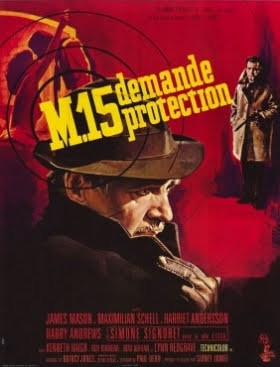
The 1960s were the heyday of the spy thriller with the market flooded in the wake of the success of Bond. Now most of these films fall into two broad categories – the glossy, gadget-laden Helm/Flint kind and the more pessimistic, downbeat Le Carre/Deighton kind. For one reason or another my own preferences lean towards the latter. The Deadly Affair is an adaptation of an early John Le Carre novel, and in no way attempts to glamorize the world of espionage. Instead, it focuses on petty betrayals and the slightly dingy suburban surroundings of the protagonists.

The story, as with many of this type, deals with the investigation of a possible mole in British Intelligence. James Mason plays Charles Dobbs (in the novel it’s George Smiley – I suppose the change of name is understandable enough given how little the character has to smile about here) who is charged with the task of investigating a civil servant. MI5 has received an anonymous letter concerning said civil servant and questions must, therefore, be answered. Dobbs appears satisfied that the letter is nothing more than a hoax, but the apparent suicide of the suspect seems inconsistent. It is the questions raised by this death that drive the rest of the  story along. There is also the secondary plot concerning Dobbs’ tortured domestic life with his nymphomaniac wife (played by Swedish actress Harriet Andersson) and the two strands are woven together successfully enough.

The film was directed by Sidney Lumet and has some nice location work around the vaguely depressing urban and suburban settings. Lumet’s style has never been the most exciting but that fits well enough with the mood – lots of grey skies and rain. Quincy Jones scored the picture and it’s one of the best things about it. The langourous, wistful jazzy music both evokes the mid-60s and reflects the emotional longings of the central characters.

The acting is a mixed bag, with the male characters coming off the best by far. James Mason is excellent and manages to convey the combination of determination, weariness, hopeless romanticism and pathos that the role requires – no mean feat that. To be honest, I don’t think I’ve ever seen Mason give a bad performance on screen and he ranks right up there as one of my favorite actors. There’s good support from Harry Andrews as a tough old retired policeman, and Roy Kinnear excels in a small role as a seedy, bigamous used car dealer. Maximilian Schell is adequate enough playing Dobbs’ old friend and former colleague, but nothing more. The female characters, however, are where the film falls down somewhat. Simone Signoret’s widow is too detached, although that may well be what the part of a concentration camp survivor demanded. The biggest problem, though, is Harriet Andersson. She gives one of the weakest performances I’ve seen in a long time. Given her role, you would have thought that some passion should be on display; but no, she’s ice-cold and blank throughout.

Overall, The Deadly Affair is a satisfying, if unspectacular movie. Currently, it’s available in R2 from Sony in a reasonable 1.85:1 transfer. The disc is a totally bare-bones one – literally. There isn’t even a real menu screen. While I’m grateful that the film is available, it has to be said that the cheap presentation of the disc is quite insulting.


Ride the High Country

poster19_zpsa03d6774

Generally, when I’ve knocked out my thoughts on a film, I’ve tried to avoid those productions which have already been analyzed to death. Such is the case with the work of Sam Peckinpah, which has had more than its fair share of examination and re-examination. However, I have decided that I’m not going to ignore the movie that both provides the title of my own blog and also happens to be my favorite among Sam’s films. Made in 1962, Ride the High Country was the director’s second feature – although this piece by John Hodson helps to explain why the previous year’s The Deadly Companions isn’t a real Peckinpah picture. This film contains the elements that have come to be typically associated with Sam, namely the passing of the Old West, the nature of friendship and loyalty, and a reflection on one’s past deeds.

The whole thing revolves around the two leads, Randolph Scott and Joel McCrea. These two men are old friends and former partners who have come together one last time,  for one last job. McCrea is the very epitome of honour and personal integrity, whose only wish in life is to enter his house justified. His idealism hasn’t brought him any material rewards, his shabby suit in the early scenes being proof enough of that. Scott, on the other hand, has come to question the value of holding on to principles that lead only to poverty and a poorly attended funeral. And so it’s a question of whether McCrea’s quiet nobility or Scott’s cynical pragmatism will ultimately triumph. The guarding of a gold shipment will test the strength of their friendship to the full, but it is the climactic showdown with a family of degenerate rednecks that brings closure to all the moral issues that precede it.

Both Scott and McCrea play off each other beautifully and it’s a genuine pleasure to watch these two old hands clearly relishing what they must surely have recognised as the roles of a lifetime. Both men had spent the previous decade acting almost exclusively in westerns and that experience adds immeasurably to the authenticity of the film. For Scott and McCrea, Ride the High Country was to be the last hurrah; McCrea would make a few more movies and Scott, wisely I think, called it a day and bowed out with what is arguably his best role. Maybe it’s just my sentimentality, but I always get goosebumps when Scott speaks his final lines in cinema and tells McCrea “I’ll see you later..” – it’s a lovely understated way to bid farewell to a long and distinguished career. Randolph Scott is one of the reasons why I enjoy the western genre so much (I suspect I’m not alone, if that gag in Blazing Saddles is anything to go by) – when I was a child it seemed as though no Saturday afternoon was complete without a television showing of one of his films, so he was and is the personification of the western hero for me.

Ride the High Country is a marvelous looking picture due to Peckinpah’s direction and Lucien Ballard’s wonderful cinematography. The movie is full of memorable scenes, not the least of which being the climax, as Scott and McCrea stand shoulder to shoulder and walk out to confront the murderous Hammond clan and fate itself. Peckinpah would offer up a more elaborately staged and celebrated ‘walk’ in The Wild Bunch, but this one packs just as much punch for its simplicity.

Ride the High Country may have become overshadowed by the films that would follow from Peckinpah, but I don’t feel that that should be the case. Is it his best movie? Many would argue that it’s not and point instead to The Wild Bunch or Pat Garrett and Billy the Kid, but it is the one that I have a special affection for, and the one that I find myself returning to most often.

100 Rifles

100Rifles_Poster

1969 saw the release of two westerns that featured Americans dabbling in the Mexican revolution. Both pictures involved hijacked arms shipments, trains, advancing technology, European military advisers and elaborately staged shootouts with the Federales. One, of course, was Sam Peckinpah’s seminal, genre-defining masterpiece  The Wild Bunch – the other was Tom Gries’ popcorn entertainment 100 Rifles. Since copious amounts of scholarly writing has already been devoted to the former, I’m going to look at the latter.

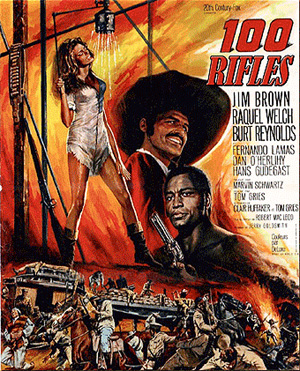
A year before, Tom Gries had directed the thoughtful and elegiac Will Penny – his next project was a distinct departure. 100 Rifles tells of Lyedecker, an American lawman (Jim Brown), who ventures south of the border in pursuit of Yaqui Joe (Burt Reynolds) who has stolen a consignment of weapons – the hundred rifles of the title. The guns are to be presented to the Yaqui Indians to assist them in their struggle against the Mexican authorities. Naturally, the Federales – led by a thoroughly sadistic Fernando Lamas – are keen to acquire these rifles for themselves. And there you have it. Will Lyedecker carry out his sworn duty and bring Joe back for trial? Will he be seduced by the plight of the Yaqui? Will the Federales beat them all to the chase? By the time the movie hurtles along to its grandstand climax all those questions have been resolved.

All the main players give amiable performances here with likable heroes and hissable villains. Burt Reynolds may not be the greatest actor in the world, but it’s hard not to like him on screen. Jim Brown is merely passable and Fernando Lamas is suitably vile. Dan O’Herlihy is always watchable as the railroad boss with shifting allegiances. But the real standout here is Raquel Welch as the revolutionary, Sarita. The scene where she stops a whole trainload of Federales as she takes a shower under a water tower is reason enough to see this film on its own!

OK, so this isn’t the best western you’ll ever see but its heart is in the right place, there’s more than enough action to satisfy, and Jerry Goldsmith’s score suits the mood of the piece perfectly. Available in a great looking anamorphic transfer from Fox in R1.


The Steel Helmet

jm0aujv

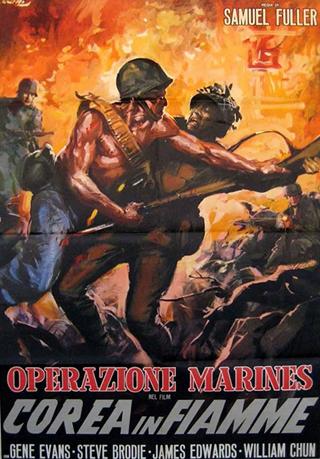
If you look at that small subgenre that is the Korean War movie, the efforts of Sam Fuller stand head and shoulders above the others. That’s not intended to disparage those other films which deal with that largely forgotten conflict such as Lewis Milestone’s Pork Chop Hill or Anthony Mann’s Men in War. However, Fuller’s Korean movies have that gritty believability that really set them apart. Both The Steel Helmet and the later Fixed Bayonets! deal with small groups of grunts caught up in desperate battles against overwhelming odds. Fuller’s presentation of war is a bleak one where there are no false heroics; just a bunch of regular guys doing what they have to in order to stay alive.

The Steel Helmet opens with Gene Evans’ Sgt. Zack, bound hand and foot, dragging himself along the ground amid the bodies of his massacred comrades. He’s just had the luckiest of lucky escapes – an execution squad bullet having entered his helmet and rattling round inside before exiting harmlessly. From here on the story follows Zack and the rag-tag bunch of stragglers he picks up as they make their way to an abandoned Buddhist temple to set up a forward observation post. Fuller never relents and the intensity of the story builds satisfyingly to the climactic assault on the temple by the communist forces.

Along the way the members of the group are revealed to us, and through this we get a glimpse of post-WWII American society. Among this odd group there’s a black medic and a Japanese-American veteran who serve to point up the racial prejudice prevalent at the time. There are also the quirky characters of the young soldier who lost all his hair through scarlet fever, and the silent G.I. whose only dialogue comes, poignantly, at the point of death. The locals are presented through the contrasting figures of “Short Round”, the South Korean boy who befriends Zack, and the malevolent, rat-like North Korean major. It is the sneering and callous reference to the boy’s fate by the red major that provokes Zack into an uncharacteristic, yet very understandable, reaction.

Which brings me to Gene Evans. His portrayal of Zack is the lynch-pin that holds the whole thing together. He is the consummate professional soldier – weary and cynical but dedicated to getting the job done and undeniably human. Evans would give a similar performance in Fuller’s next Korean drama Fixed Bayonets! and you have to wonder why his career never really took off from here. He plays the kind of three dimensional man’s man that is sadly absent in today’s cinema – well, that’s progress for you.

I’m not sure if anyone has seen any parallels between Fuller’s work and that of Howard Hawks. To me, both directors were attracted to the concept of the small group under siege and the emphasis on professionalism. However, while Hawks would use a lightness of touch, Fuller’s direction is like a pile-driver battering your senses.

Released by Criterion last year as part of their Eclipse series, The Steel Helmet comes in a set with I Shot Jesse James and The Baron of Arizona. While the film doesn’t appear to have undergone any restoration, it looks just fine and is worth the price of the set on it’s own.


The Big Clock

bpnijge

The Big Clock is a 1948 thriller about a race against time; a manhunt where the protagonist is essentially hunting himself. Does that sound complicated? Well, the plot is complex but it never becomes incomprehensible.

George Stroud (Ray Milland) is the overworked editor of a crime magazine who yearns for a holiday with his family. Just when this seems in sight his boss, time-obsessed media tycoon Earl Janoth (Charles Laughton), insists that he postpone his vacation and follow up on a breaking news story. In a fit of pique, he tenders his resignation and ends up spending a drunken evening with Janoth’s mistress. While exiting the girl’s apartment Stroud sees his boss arriving, while the boss sees only a silhouette. Goaded into a rage by the mistress, Janoth clubs her to death. On the advice of his reptilian chief executive (George Macready) he now plans to pin the deed on the shadowy stranger he glimpsed in the corridor. To this end, Stroud is recalled to co-ordinate the manhunt.

This is a great suspenseful picture, and you really sense Milland’s mounting horror as he is forced to use his own investigative team and techniques to gradually build up a profile of the mystery man; a man who he knows better than anyone. The two principal female roles are taken by Maureen O’Sullivan (who was married to director John Farrow) as Stroud’s wife, and Rita Johnson as the ill-fated mistress. I always enjoy anything with that inveterate scene stealer Charles Laughton, and he gives one of his more restrained performances here. There are lots of familiar faces in the support cast, not least Laughton’s real life spouse Elsa Lanchester as an eccentric artist and her turn damn near steals the whole show. Harry Morgan also shows up as a darkly menacing gunman on Janoth’s payroll, made all the more sinister by the fact that his character utters not a word on screen. Seasoned noir watchers may also recognise Harold Vermilyea who remains forever memorable, for me at least, as the doomed Waldo Evans from Sorry, Wrong Number.

If the plot to this movie seems slightly familiar that may be due to the fact that it was remade in the 80’s as No Way Out, with Kevin Costner and Gene Hackman in the Milland and Laughton roles respectively. That film was not bad but, to my mind at least, not a patch on the original – isn’t that usually the case?

The Big Clock is available in R1 as part of the now, apparently, defunct Universal Noir line. If any fans of classic noir/suspense don’t already own this, I can only ask – Why?


Night Passage

pound8_zps0j825if3

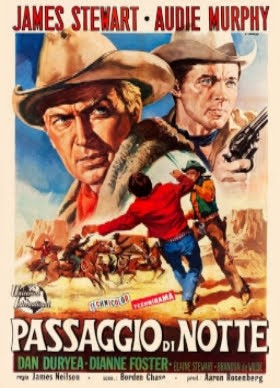
Two brothers, one an outlaw and the other a former railroad troubleshooter in disgrace, square off. That’s the basic premise of  Night Passage.

Jimmy Stewart is the honest man who is now reduced to scratching out a living as an accordion player after letting his no-good sibling Audie Murphy escape five years previously. He gets a last chance to redeem himself when his ex-boss hires him again. The railroad payroll has been repeatedly robbed by a gang of outlaws led by The Utica Kid (Murphy) and Whitey Harbin (Dan Duryea) – Stewart is assigned to see that the next one gets through. So the stage is set for a showdown.

Night Passage is the Anthony Mann western that never was. Mann was slated to direct Jimmy Stewart once again but pulled out at the last minute. His replacement was James Neilson (a debut director) and he managed to produce a serviceable movie, but fails to properly use the edgy quality that Mann always seemed to extract from his lead.

There are a number of weaknesses present, not least the overuse of Stewart’s accordian playing! The plot tries to pack in too many ideas and never really develops any of them sufficiently; Murphy and Stewart’s battle for the soul of Brandon De Wilde could have been expanded upon. It is shown early on that Stewart’s old flame is now married to his boss, but again nothing much is made of this.

Nevertheless, there are lots of good things here. The cinematography of William H. Daniels shows off the Colorado scenery to breathtaking effect in some beautiful shots and Dimitri Tiomkin provides one of his great trademark scores. I’ve heard it said that his music is sometimes too overpowering and in-your-face but I can’t think of any examples of his work that I didn’t like. Murphy is good in the role of the black sheep; he always seemed to give better performances when playing anti-heroic characters (No Name on the Bullet and John Huston’s The Unforgiven come to mind). There’s also a fine array of familiar support players in Jay C. Flippen, Jack Elam, Olive Carey, Hugh Beaumont and Paul Fix.

The film is available on DVD from Universal and looks very nice indeed in anamorphic scope – I have the R2 but I imagine the R1 uses the same transfer. Recommended.


The Dark Corner

cfe6bdn 

I feel all dead inside. I’m backed up in a dark corner….and I don’t know who’s hitting me.

Those words are uttered by desperate private eye Brad Galt (Mark Stevens). He’s talking about the one lead that he’d hoped would get him out of a frame-up for murder; the one lead that’s just turned out to be another dead end. But those same words also go a long way towards defining the essence of Film Noir.

Contrary to popular belief, there weren’t all that many Noirs of the classic period that featured a private detective as the hero, however, Henry Hathaway’s 1946 movie does. Galt is a New York P.I. who was double-crossed by his ex-partner. When the partner turns up in town and the police call around to warn Galt not to cause any trouble, you can be sure just what’s coming. Or can you?

The slightly convoluted plot introduces us to a cast of characters who are rarely what they first appear to be. Clifton Webb is a wealthy gallery owner, reminiscent of his earlier Waldo Lydecker in Laura. Cathy Downs is his trophy wife. William Bendix (one of the screen’s most memorable heavies) is…a heavy. Kurt Kreuger is Galt’s ex-partner and Lucille Ball is his ever faithful secretary. By the end of the movie we get to see all these characters for what they really are, and the ride there is never a displeasing one. Hathaway directs tightly on location and keeps everything moving along like an old pro. The interiors are all well shot by Joe MacDonald – lots of inky black shadows, silhouettes, figures framed in windows and so on.

hxhsdyj

So, have I any criticisms to make? Well, there’s Lucy! I have to confess that I have never been a fan of Miss Ball. Even as a youngster her TV shows irritated the hell out of me, now that I’m all grown up I find her even less appealing. While I watched this film, I found myself thinking that almost any other actress would have preferable in the role of the resourceful girl friday.

Nevertheless, I consider this to be a highly entertaining entry in the Fox Noir line. The R1 transfer is very good (it’s also available in R2 and I assume the image should be the same) and well worth picking up if you’re a fan of vintage noir/crime/mystery movies.