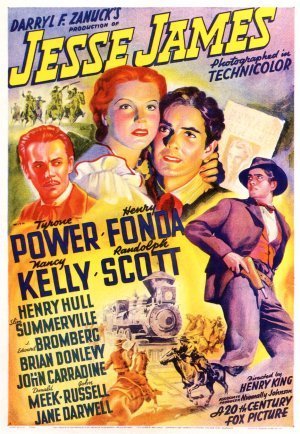
It is, and always has been, common for a highly successful film to spawn a sequel. In 1939 Fox produced Jesse James and, riding on the wave of the reinvigorated western genre, found themselves with a hit on their hands. Of course, it’s a little difficult to continue a story when you have just killed off your main character. However, Hollywood rarely finds itself at a loss for long and the solution was to pick up the story where the first film left off and concentrate on the surviving brother, Frank James (Henry Fonda). The only problem was that, after Jesse’s death, Frank’s life wasn’t the stuff of dramatic, action-packed blockbusters. Therefore, the truth needed to be manipulated to present audiences with a story of revenge and redemption.
In the aftermath of the ill-fated raid on the Northfield bank Frank James had gone to ground. We find him living under an assumed name and it would seem that he has renounced his outlaw ways. On receiving news of the death of his brother he is content to let the law run its course, believing that Bob and Charlie Ford will be tried and duly hanged for the murder. It is only when he learns that, despite their conviction, the Fords have been granted a full pardon that he decides to take matters into his own hands and straps on his guns again. There follows a pursuit across the country to Colorado as Frank attempts to track down the Fords and mete out the justice he feels the courts have denied him. By the end of the film all the loose ends have been tied up and we get a traditionally happy ending. The problem with this is that the production code of the time dictated that a killer should not be presented as the hero – or at the very least that he should be punished for his deeds. The way around that issue was to present Frank James as an essentially honorable man hounded into infamy by circumstances and big business. So while the Fords get their comeuppance it is not Frank who is shown to kill them (which is historically true at least). In fact, the film is at pains to point out the innocence and decency of our hero throughout – even having one of the characters declare indignantly that Frank James never killed anyone. All of this is vaguely unsatisfactory since a man setting out on a mission of vengeance should, to my mind, be allowed to achieve some measure of it directly.
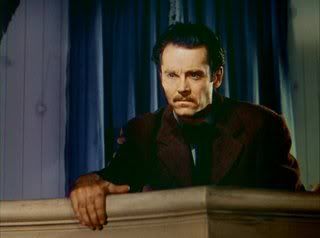
As I said, Henry Fonda plays the lead very much in the style of the classic romantic hero. Throughout his long career Fonda was most frequently cast as the everyman who was the very epitome of human virtue. Almost thirty years later Sergio Leone would give Fonda the opportunity to finally play a character (also named Frank, as it happens) of pure evil in Once Upon A Time In The West. Gene Tierney (in her debut role) provides some eye-candy and romantic interest as a newspaper reporter, but not much else. Much of the rest of the cast is filled out with actors from the previous film, with John Carradine reprising his part as Bob Ford. Once again, Donald Meek is the conniving railroad boss and Henry Hull chews up every piece of scenery in sight as the editor of the local paper and friend of the family. Hull’s best scenes come towards the end of the film in a flamboyant courtroom defence of Frank on a charge of murder. This scene mirrors reality, where Frank James stood trial for robbery and murder and whose character was attested to by an old Confederate officer. In truth, the film spends a good deal of time on the lingering animosity between north and south in the years following the Civil War. All in all, director Fritz Lang’s first foray into the western genre is a pleasant and entertaining one.
Fox’s DVD release of The Return of Frank James is an improvement on the transfer of Jesse James, but not by much. The image is a good deal more consistent here but darker scenes are still quite murky and washed out. Generally, the outdoor scenes fare the best with stronger colour and sharpness.
 Riding the High Country