Pitfall

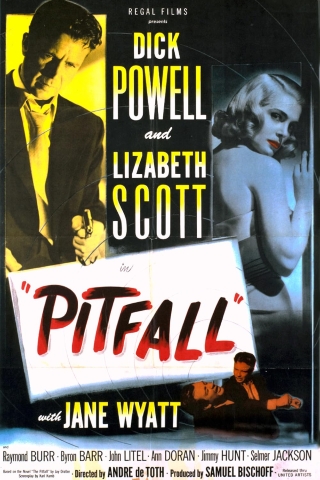
The daily grind, routine and repetitious. This is something most people can relate to, an integral part of all our lives just as much as sunrise and sunset. What does it represent though? Is it boon or bane? Well it certainly encapsulates the concept of security, and not just in a financial sense. That familiarity, that precise knowledge of where one is going to be at a given hour, perhaps even a given minute, of any day of the calendar offers reassurance. Yet reassurance is necessarily wedded to restrictiveness and at some point the balance between those two points of reference might just start to slip. That’s what happens in Pitfall (1948), a frank analysis of the way post-war suburban security and comfort could start to smother. Everything about it characterizes the classic film noir setup, the slow drift into dissatisfaction, the allure of the forbidden, the unwise choices and the way rapidly snowballing consequences threaten to smash everything in their path.
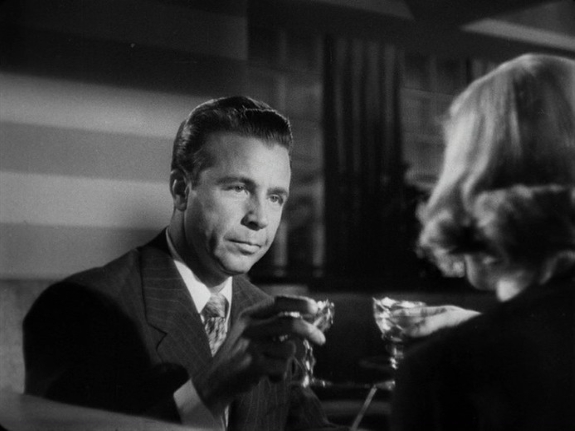
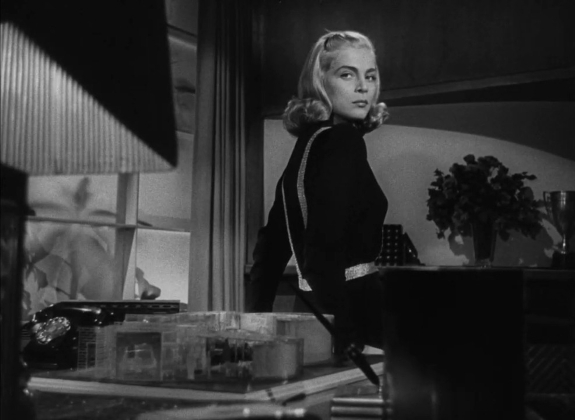
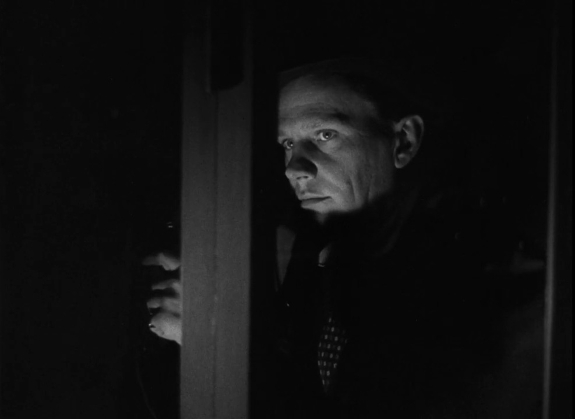
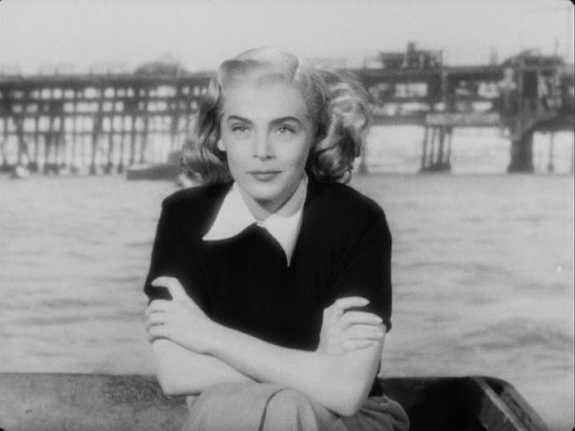
Johnny Forbes (Dick Powell) is a man who ought to be happy with his lot in life. He’s got a devoted wife (Jane Wyatt) and a bright young son. He’s got what appears to be a successful career in insurance and lives in a neat and attractive suburban home. What could be better than waking up to a breakfast that has been prepared and laid out before him, with his family around him, the sun pouring through the window and the promise of another relatively carefree day ahead. That’s how it should be, but the pain of predictability is etched into the hangdog features of Johnny Forbes as he contemplates it all. Both his demeanor and his conversation betray a man ripe for rebellion, a guy who has wearied of respectable averageness, of being part of the backbone of society. Such a man is just a step away from recklessness, he’s practically sleepwalking into peril. A visit to an embezzler’s ex in order to see how much can be recovered is all it takes. The ex in question is Mona Stevens (Lizabeth Scott), a model in a dress store. The hook that snags Forbes comes in the form of a trip to the marina to see the boat Mona’s boyfriend bought her with the money he stole. Just a smile from the girl and then a quick ride in the speedboat are enough – Forbes is soon asking her out for drinks, and it doesn’t take much imagination to realize where all this is heading. The affair itself only goes so far though, and not necessarily due to any moral qualms on the part of Forbes at this stage. A bigger issue is the fact that the private eye employed by the insurance firm to track down Mona Stevens in the first place (Raymond Burr) is besotted with her to the point he not only roughs up Forbes, but is also prepared to destroy anyone who stands in the way of his desires.
André de Toth made a handful of films noir and I think this is the best of them, although a strong case can be made for Crime Wave too. He perfectly captures the sheer ordinariness and regularity of suburban life, its bright and brisk order imparting a feeling of living on a well maintained social conveyor belt. Everything operates like clockwork, including the people. Dick Powell perfectly captures the ennui of a man gradually becoming just another obedient automaton. Everything about him screams normality, his quiet tailoring, his discreet briefcase, and the inevitable slow slide towards middle-aged and middle-class mediocrity that accompanies all that. This is no disillusioned veteran either – he was no decorated war hero like the father of his son’s friend, he rode out the war in Denver, Colorado – just an everyday guy who has come to the appalling conclusion that this is all he’s ever going to be. When he wrinkles his nose at the comic books he reckons have given his son nightmares it’s hard not to see a bit of resentment in it for not being one of those colorful figures himself. It is to De Toth’s credit that there is never any overt call to pass judgement on this man, no nudge towards any moral superiority or cheap finger pointing. Film noir works best when characters are portrayed as people with flaws who sometimes makes poor choices that the audience get to witness. Navigating life can be an ambiguous business at best and the better noirs seek to capture that incertitude rather than encourage self-righteousness.
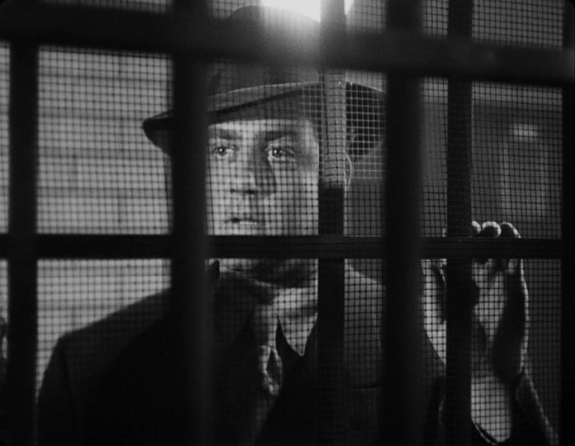
The portrayal of the two female characters in Pitfall is interesting, and the movie offers good roles for both Jane Wyatt and Lizabeth Scott. There are those who say film noir must have a femme fatale, that it’s one of the vital ingredients. I’m not sure that’s true, and I’m also not sure if Lizabeth Scott’s Mona Stevens should be characterized as such. Yes, she draws the men in the movie into danger, fatally in one case at least and the ending leaves it open as to whether or not that’s going to apply to another as well. Still, if she is a femme fatale, she is surely a reluctant one and arguably a victim of both her own weakness and the limited options open to a woman like her at that time. She acts as a magnet for negative forces, drawing danger to her without actively wanting to. Jane Wyatt as the wife is a tougher, more grounded and practical creation. All the way through she remains focused on the security of the family unit. It’s quite a clinical piece of work by Wyatt and the cool way she appraises the benefits and drawbacks of each new development that assaults her existence contrasts with the reckless opportunism of Powell and the emotional helplessness of Scott. Raymond Burr gets the creepy obsessiveness of his character across well, manipulating everybody and maneuvering them like chess pieces towards an endgame that will profit only him. The scene where he stalks Scott in the salon where she works is masterly in the way he humiliates her in plain view yet maintains a wholly innocent air. His bulk and physicality is employed effectively too, filling and almost overwhelming Powell’s office when he visits.
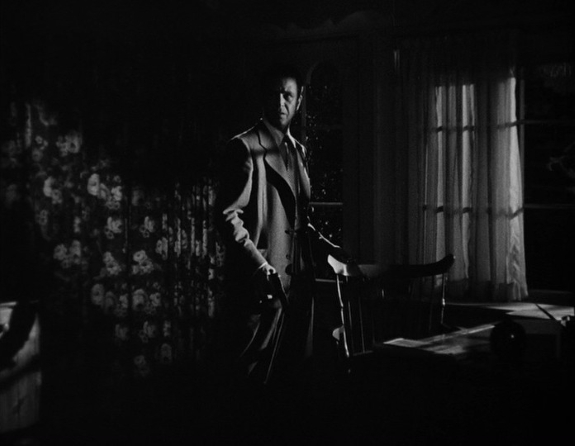
1948 was a particularly strong year for film noir in Hollywood, maybe one of the strongest, and Pitfall sits comfortably among the leading pack. Nobody puts a foot wrong in this movie and the script has no flab or slackness about it. It is a tight, direct story that asks plenty of questions but offers up no easy answers. In short, it’s a good movie and one worth watching.
I Walk Alone

You know, Noll, I think you’re afraid now. And I’m not. Frankie with his bootleg liquor, me with those checks I forged, you with this set-up here. Everyone trying to get something for nothing. Frankie paid, I paid. It’s your turn now…

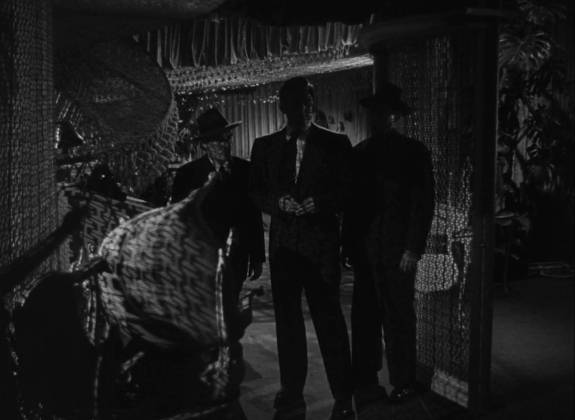
Checks and balances, adding a bit here, taking away a bit there. The books and the by-laws, a new post-war landscape where the sheen of legality is little more than a patina, a glossy veneer to add on top of the old rackets to create the illusion of respectability. I Walk Alone (1947) trades heavily on that highly polished hypocrisy, presenting a world of glamorous nightclubs where sharp suits and elegantly gowned ladies in superficially smooth surroundings seem to have taken the place of the rough and tumble hoods of Prohibition. Still, the high class tailoring and drapery only offer a limited disguise for the muscle, corruption and decadence. The world depicted here, at least that which is seen through the eyes of the protagonist, is one which has been flipped on its head, where none of the old certainties hold any longer and hoods hide and mask their actions with a web of financial chicanery. Plus ça change…

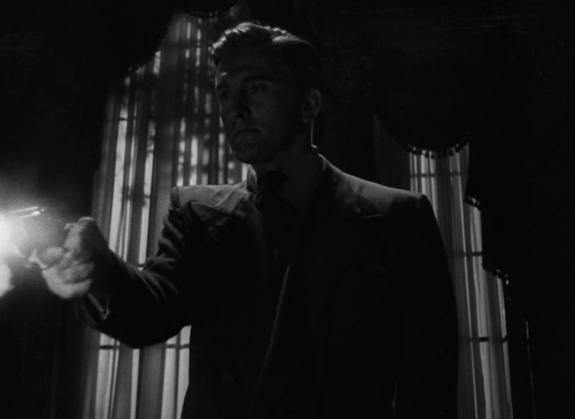
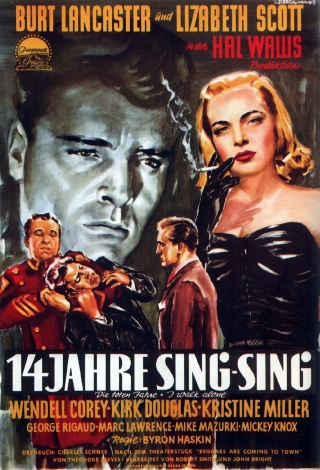
Frankie Madison (Burt Lancaster) is just out of prison and he’s sore. He has served 14 years and now he’s looking to collect on what he feels is his due. To that end he heads to the glitzy Regency, an upmarket nightclub run by his old partner in crime Noll Turner (Kirk Douglas). The fact is Frankie and Noll made a deal just before the former was picked up and sent up the river to split their profits straight down the middle. However, in all those years the only thing Frankie ever received from his old partner was a carton of cigarettes every month, not even one visit. He figures he’s owed, and there’s a little voice just starting to murmur insistently that maybe Noll plans to gyp him out of the rich pickings that have since come his way. Why? Well for one thing there’s the nervy attitude of his friend Dave (Wendell Corey), a man who has been becoming gradually more neurotic over the years and who visibly pales whenever any mention of the unfortunate fates of those who had crossed up old acquaintances crops up. Then there is Noll himself, genial and velvety in his solicitude yet watchful and calculating at the same time. When he arranges for his torch singer mistress Kay Lawrence (Lizabeth Scott) to charm Frankie and coax information from him over a carefully staged intimate dinner all the pillars of a setup have been put in place. Slowly the full extent of Noll’s self-serving duplicity dawns on Frankie, and he’s soon to discover that the, arguably more honest, strong-arm tactics he would once have relied on to get results are now hopelessly inadequate when faced with an updated criminality, one that subverts the law to serve his purposes.

I Walk Alone offers a classic noir framework: a man who has been away for an extended period of time returning to a world that is recognizable on the surface but which has in fact been radically altered at the core. If one is to see mature film noir as an artistic reflection of the post-war perceptions of the returning veterans, then this is something of a textbook example. It’s hardly a stretch to see parallels between Frankie Madison’s sense of being frozen out and the struggles of a whole generation to rediscover its place and role in a society that must now have felt odd and alien. There are two scenes which takes place in Noll’s office underlining the societal shifts that have taken place and the frustration of trying to deal with this.

First up, there is Frankie’s confrontation with Noll when he learns how he’s been stiffed and is getting the brush off. He resorts to his old two-fisted approach, laying one on his former buddy and storming out fired up with indignation and plans for retribution. Then later, having cobbled together a ragtag bunch of would-be enforcers courtesy of another old confederate (the instantly recognizable pockmarked Marc Lawrence), he sets about muscling what he’s owed out of Noll. However, this is the point where he comes face to face with what can only be viewed as a corporate minefield, an impenetrably complex series of cutouts that serve only to emphasize the absolute inefficacy of Frankie’s brute force methods in this brave new world. To witness his enraged impotence is akin to watching a bull elephant in its death throes, and the humiliation is compounded and completed when Mike Mazurki’s hulking doorman hauls him out to the back alley to hand him the beating of a lifetime.

Nevertheless, this acts as a catalyst, striking the scales from the eyes of Dave and Kay and helping to galvanize Frankie into taking genuinely effective action. As such, the movie tosses a lifeline of sorts to those ruing the passing of a more straightforward age. There is the hope held out that the conmen and the chiselers would get their comeuppance, that some sort of justice would prevail, which may be considered as diluting the noir sensibility. Maybe, or maybe the late 1940s didn’t fully encapsulate, or not as fully as we’re led to believe at any rate, the kind of existential despair that is frequently cited as the basis of noir. Perhaps the world today where gaslighting fraudsters and incompetents sit unchallenged at the top of the heap is the real noir era. Perhaps.

I Walk Alone was the first collaboration between Burt Lancaster and Kirk Douglas, and the fact they played so well off each other makes it easy to see why they appeared together with such regularity over the following four decades. Lancaster’s star rose faster and he was receiving top billing at this stage whereas Douglas was still working his way up, albeit strongly, in supporting roles. Lancaster uses his physical presence very effectively, and there is that vulnerability too beneath it all that was brought out very successfully in these early Hal Wallis productions. Douglas is less imposing in physical terms but he has that menacing air, principally via his voice and those sharp eyes. Lizabeth Scott is fair but that’s about it, her smoky-voiced allure is always welcome though and she was made for slinking around nightclubs singing throaty odes to ill-starred romances. Wendell Corey did a nice line in whey-faced fear, that and indignation were his strengths and he gets to exercise both as the guilt-ridden bookkeeper.

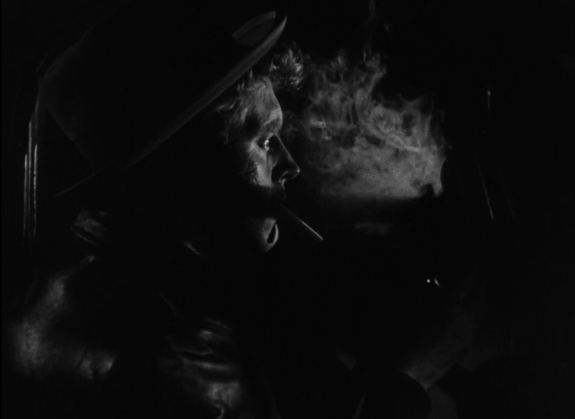
After a few early efforts as director Byron Haskin spent two decades as a cinematographer and effects man. I Walk Alone signaled his return to directing and from that point on, barring a few blips, he embarked on a remarkably solid run right up until Robinson Crusoe on Mars in 1964.  It is a very entertaining movie, well cast and beautifully shot by Leo Tover. It both links to and contrasts with the old 30s gangster movies and the film noir mood and aesthetic of the time. Until Kino brought the movie out some years ago it was one of those titles that appeared to be destined to remain mostly talked about or featured in books on noir rather than actually seen. Happily, that is no longer so and I recommend giving it a look.

Red Mountain

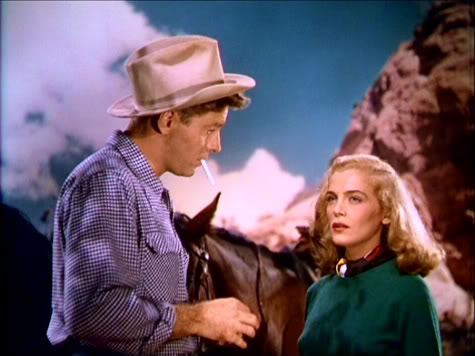
One of the reasons I started this site many years ago was the opportunity it afforded me to write on and maybe draw some attention to movies (many of which happened to be westerns) that appeared to  have slipped between the cracks and drifted into relative obscurity. That wasn’t the only reason of course, but it was certainly a signficant one. Over time I’ve tried to broaden my base and mix up my content in a way that pleases me and, I hope, engages and attracts a wide range of visitors. Red Mountain (1951) could be seen as a return to my blogging roots in a sense as it is the type of movie I had in mind at the outset, a western with a big name star and directed by a well regarded filmmaker, with some equally impressive names among the crew, but one which rarely gets mentioned.

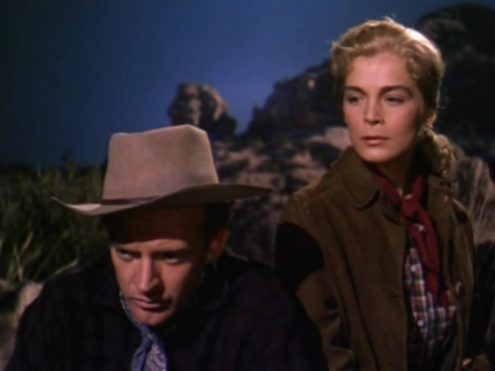
This is a fanciful tale, one likely to drive the history buffs crazy as it plays fast and loose with historical facts. However, we’re talking about movies here, where artistic license should be granted and where minor matters such as accuracy and fidelity to the known facts are of no more than incidental interest. It opens well, with a faceless killer shooting down an assayer in the town of Broken Bow, the assailant recognizable only by the spurs on his boots. It would seem likely at this stage that we would see a tale focusing on the hunt for this anonymous gunman, and that does appear to be the direction we’re headed in, not least when an innocent man is accused and a vengeful posse summoned. That innocent man is Lane Waldron (Arthur Kennedy), one on whom suspicion is heaped not only because he had been seen in the vicinity but largely because he was once a soldier of the Confederacy and these are the dying days of the Civil War. The townsmen all regard him as a potential traitor and are only too willing to set out with the aim of lynching this interloper. Indeed he comes within a hair’s breadth of this fate but is spared when Brett Sherwood (Alan Ladd) breaks up the party and rescues the happless Waldron. Sherwood is the real killer of the assayer – this is only confirmed right at the end of the movie but it’s acknowledged quite early on in proceedings – and his feelings of guilt and responsibility for Waldron, and later some stronger feelings for the latter’s woman Chris (Lizabeth Scott), drive the plot. All of this is intensified when the infamous Quantrill (John Ireland) comes on the scene. The notorious guerilla leader is in the process of stirring up unrest among the Indian tribes, starting with the Utes, with the aim of opening a new front in the west, one with the potential to derail the Union march towards victory.

One doesn’t think of German director William Dieterle as a natural for  westerns. That said, there’s no earthly reason why we should exclude someone like this – the beauty of the western as a genre is its malleability and the kind of inclusiveness it bred among filmmakers where so many diverse types were able to make strong and successful contributions. That Old West setting was the ideal backdrop for so many tales, a largely untouched landscape invested with enough opportunity and presenting so many physial and ethical challenges that almost any human drama was enhanced when it played out there. Dieterle (who apparently was replaced for a time by an uncredited John Farrow due to ill health) uses the New Mexico locations well, presenting a similar view to that pioneered by John Ford with the vast and imposing natural features framing the conflicts dramatically and simultaneously suggesting their relative lack of consequence in the grand scheme – those towering hills and cliffs and endless horizons prevail and gaze impassively on the petty squabbles acted out in the their shadows and dwarfed by their permanence. Charles Lang’s cinematography makes the most of the natural beauty and is equally effective in the numerous night time shots. The driving and powerful (perhaps occasionally overpowering) score by Franz Waxman adds urgency and also complements some of the grimmer moments in the film.

Red Mountain was the third western for Alan Ladd, following on successfully from Whispering Smith and Branded and paving the way for his signature role in the timeless Shane. While I’m not entirely convinced by some of the writing and characterization in this film, I can’t say that any of that affects the quality of the performances. Ladd’s star was still in the ascendency at this point and he was tremendously good at tapping into the growing uncertainty of his character; there’s a touch of ambiguity there too but it’s the burgeoning sense of unease at the path chosen, the war raging within his own soul, which impresses most.

In contrast, Lizabeth Scott’s career had already peaked and  a few years later any chance of reviving it would be torpedoed by the disgraceful actions of Confidential magazine. She handles her part as the embittered victim of Quantrill’s razing of Lawrence, Kansas with assurance. She is sometimes regarded as a film noir actress first and foremost, and she has some stellar credits in that genre to back that view up, but her work in this film and Silver Lode is just fine as far as I am concerned. Arthur Kennedy fades a little as the story develops, a strong start sees him squaring off against Ladd but his character’s injury sees him sidelined to some extent and the writing I mentioned above does him no favors. John Ireland’s Quantrill offers an interesting study in fanaticism. I particularly appreciated the actors physicality here, using a kind of stiff discomfort to great effect, suggesting a man aware of his own unhinged nature and struggling with some moral straitjacket of his own design. There are also welcome if limited supporting roles for Whit Bissell, Neville Brand and Jeff Corey.

I’m not sure if Red Mountain has received an official release anywhere, which is a pity as the movie has a good deal to recommend it. It represents a strong entry in the filmography of Alan Ladd as he was building his credentials as a western hero and it also adds another layer to the Hollywood work of William Dieterle. Frankly, it’s the kind of film that would look just dandy on Blu-ray if it were given a bit of a clean up. I’d like to think that might happen one day.

Dead Reckoning

I guess when you watch enough films it’s almost inevitable that a certain degree of familiarity with plot and characters creeps in. Leaving aside the matter of remakes and such, this is often simply a false perception on the viewers part. However, every once in a while, a movie like Dead Reckoning (1947) comes along where familiarity is not just a case of perceived similarity but a clear rehash of characters, themes and even dialogue from earlier works. This picture borrows heavily from two previous Bogart vehicles – The Big Sleep and The Maltese Falcon, the latter being the most obvious with lines of dialogue getting recycled by the very man who made them iconic in the first place. Although Dead Reckoning never manages to attain the heights of its source of inspiration, it remains an entertaining (if slightly cheesy) film noir.

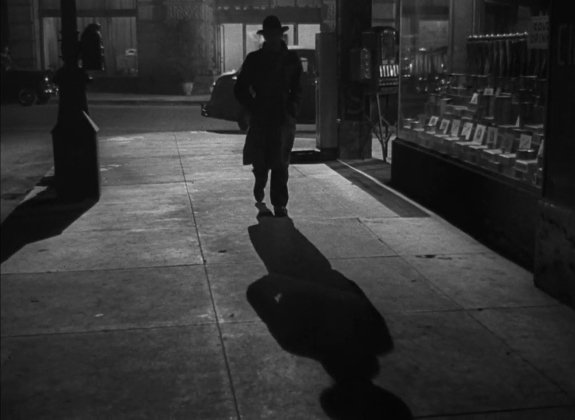
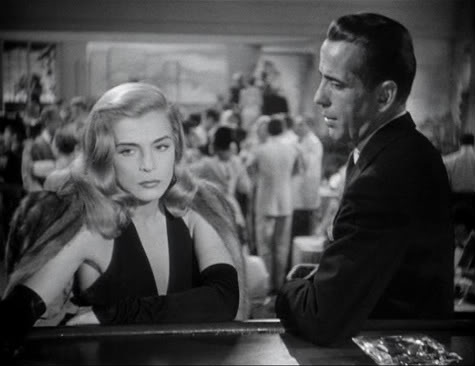
It opens strongly with a battered and desperate Captain Murdock (Humphrey Bogart) dodging the cops along the dark, rain slicked pavements of Gulf City. Symbolically seeking sanctuary, he slips into a Catholic church and melts into the protective shadows. Recognising the returning priest as a former army padre, he takes the opportunity to unburden himself and tell his tale in an improvised confession. This introduces the flashback structure that dominates the bulk of the film’s running time. In brief, Murdock is now running scared in Gulf City as a result of his attempt to locate an old army pal who decided to take a powder rather than face exposure as a wanted man when he learns that he is to be awarded the Medal of Honor. The plot follows Murdock’s efforts to clear the name of his friend for a murder that he believes was out of character. The friend in question ends up burnt to a crisp in a car wreck before Murdock even has a chance to contact him, so he must feel his way in the dark in a strange town and among an assortment of shady figures. The closest link to his friend, and the person most likely to hold the key to his fate, is a husky voiced cabaret singer by the name of Coral Chandler (Lizabeth Scott). Murdock’s innate distrust of women means he starts off sceptical of the sincerity of this lady, and her apparent closeness to the smoothly repellent night club owner and gambler Martinelli (Morris Carnovsky) merely serves to heighten his suspicions. Throughout the movie Murdock blows hot and cold in relation to Coral, his attitude varying from doubt to acceptance and back again, even as he finds himself increasingly attracted to her. It’s only after Murdock turns Martinelli’s office into a raging inferno that the truth behind his friend’s demise finally comes to light.

£7

Bogart’s character in Dead Reckoning is a detective in the Spade/Marlowe mold in all but name; he frequents the same kind of places, mixes it with the same mobsters and duplicitous types and speaks in the same hard-boiled idiom. He even brings matters to a head in a way we’ve seen before – as he tosses the deadly incendiary grenades around Martinelli’s office to loosen tongues you almost expect to hear him snarl “That’s one, Eddie…”, and the climactic scene with Lizabeth Scott borders on a pastiche of the payoff in The Maltese Falcon. Despite the lack of originality in the script (I’ve also read that the movie was initially planned as a kind of follow-up to Gilda) it still stands up as a medium grade noir. A lot of this is due, I think, to Bogart’s strong performance, his cynicism and toughness papering over the weaknesses in other aspects of the movie. The short scene in the morgue – the one cool place in town – highlights this through its combination of smart-ass dialogue and implied violence. In fact, there’s a good deal of violence in the movie, although much of it takes place off screen. The savage beating Murdock receives from Marvin Miller’s sadistic thug, all carried out to the accompaniment of dance time music, is never shown but the damage to the hero’s face makes it clear enough what’s been going on. Morris Carnovsky’s Martinelli makes for an interesting villain, reminiscent of George Macready’s Ballin Mundson in the aforementioned Gilda, as a lowlife with a veneer of sophistication and mock delicacy. The weakest link in the whole chain is ironically the one person who’s presence ties all the strands together – Lizabeth Scott. She was clearly supposed to act as a kind of surrogate Bacall, a sultry foil for Bogart’s two-fisted protagonist. She looks the part and pitches her voice low enough to promise heaven and honey, but her overall performance is a poor one. At one point she spins Bogart one of those hard luck yarns so beloved of femme fatales and then, not reading the result she wanted in his features, asks if he doesn’t believe her. And that’s the problem; there’s a lack of conviction and credibility when she delivers some of the most crucial lines in the movie. Leaving aside the performers, John Cromwell’s direction is mostly effective and there are some darkly moody scenes. The tense opening and the subsequent flashback power things along, but the return to “normal” time lets the momentum slow a little, and a little too early, before the final reveal.

The R2 DVD from Sony/Columbia is reasonably good but not without some faults. The transfer is generally clean, but there are moments of softness and a few occasions when scratches and light damage prove mildly distracting. The only extra feature offered is a gallery consisting of a few posters. Generally, this is a pretty respectable noir, though not quite top flight material. The script is too much by the numbers and unquestionably derivative of other pictures. Still, it does hold one’s interest and has rewatch value if only to enjoy again some fine, snappy lines. That, and a typically gritty Bogart performance, earns it a recommendation.

Desert Fury

Can a technicolor movie be considered a film noir? I think so. Sure, the form lends itself better to the harshness of black and white photography where the light and shadows can be more skilfully manipulated. Having said that, film noir is more than just a photographic style – it’s a style of film making. To me, noir is a combination of many elements (theme, character, time, location, photography etc.) and the more boxes we can check, the closer we come to defining it. Photography is, undoubtedly, one of the major elements that needs to be present – I just feel that photographic style rather than color vs B&W is the clincher. As such, I feel Desert Fury (1947) is most definitely noir. Although the movie is shot in blinding technicolor, the themes and characterization place it firmly in the realm of dark cinema.

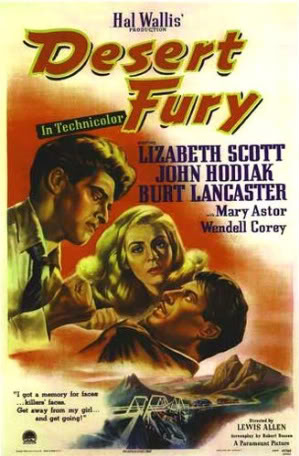
Paula Haller (Lizabeth Scott) returns to Chuckawalla, the small desert town where she was raised by her widowed mother Fritzi (Mary Astor). Paula is shown to be an outsider right from the off, snubbed by the locals due to her mother’s ownership of the town’s gambling joint. The only friend she has is Tom Hanson (Burt Lancaster), a former cowboy now working as town deputy after an accident put an end to his former career. Paula’s arrival back home coincides with the reappearance of a shady character called Eddie Bendix (John Hodiak), whose wife died years earlier in a mysterious road accident. When Paula falls for Bendix a whole hornet’s nest of passion is stirred up as Fritzi, Hanson, and Bendix’s partner Johnny (Wendell Corey) all, for their own reasons, try to keep them apart. What tilts this into noir, rather than straight melodrama, is the twisted nature of the relationships involved. Paula is said to bear a strong resemblance to Bendix’s late wife; Fritzi and Bendix were formerly lovers; there’s more than a hint of jealous competition between the two female leads; and there are strong suggestions that the relationship of Bendix and Johnny might involve some sexual undercurrents – heady stuff indeed for 1947. There’s also a nice cyclical form to the movie, which both opens and closes with characters staring over the rails of a bridge at the site of a fatal crash.

This is a picture that’s dominated by the performances of the women. Mary Astor is near perfect casting as the worldly and tough dame who rules the roost in a man’s world, yet struggles to tame the impulses of her headstrong daughter. Lizabeth Scott was born to star in films noir, and she does the business here as the troubled heroine with the whiskey voice who has to learn a few hard lessons. Burt Lancaster’s role is a bit of a thankless one; he seems to do little more than cruise up and down the desert highway, hoping to run into Scott on her return from Hodiak’s rented pad. Hodiak himself gives an interesting performance as man who’s clearly not all he seems. His initial detachment and suppressed aggression hint at some dark secret, and he gradually descends further into a kind of manic vindictiveness until his flaws and weakness are finally exposed by the sly and knowing Corey. Director Lewis Allen makes sure everything moves along smoothly and makes excellent use of the harshly beautiful locations. A word also for cinematographer Charles Lang, who makes those same desolate landscapes positively pop off the screen.

Desert Fury is available on DVD in R4 from a company called DV1. Their disc looks fantastic with strong color and detail, although there are some speckles and damage marks here and there. It is, however, totally barebones with not even subs offered. On the plus side there are some interesting liner notes  printed on the reverse of the cover – and it should be available cheaply. For me, this was pretty much a blind buy and I ended up enjoying it a lot. Recommended.