Powder River

Seeing as I’ve reviewed the majority of the movies which directly featured the character of Wyatt Earp, I thought I might as well have a look at Powder River (1953). Even though this film does not have any character by the name of Earp in it,  that’s where the inspiration comes from. Stuart N Lake’s book Wyatt Earp: Frontier Marshal is probably the most influential source helping to shape the legend which grew up around the famous lawman. Powder River is yet another adaptation of that book, and Lake is credited on screen as the author. However, for whatever reason, none of the real names of characters are used – perhaps Fox just didn’t want another Earp movie at that particular time. Anyway, the film represents another retelling of the Earp/Holliday story though it puts a slightly different spin on the central relationship, one that I’m not sure is altogether successful.

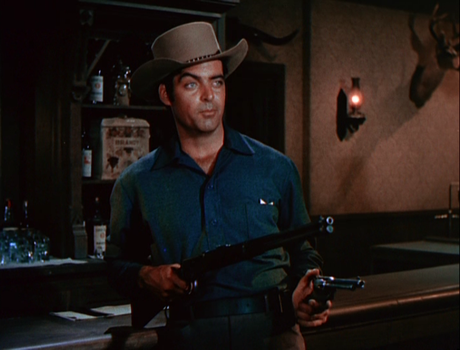
In this version of the story the Earp character becomes the colorfully named Chino Bull (Rory Calhoun). Chino – I’m sorry, but I’m not going to write a piece continually referring to a man as Bull – is a former lawman who has grown weary of the violence that goes along with that profession and has decided to try his hand at prospecting. A quick visit to town to pick up supplies leads to two events that combine to alter Chino’s chosen path. Firstly, some unplanned heroics connected to a can of peaches and a gun-happy drunk see him offered the job of town marshal. While he’s initially uninterested in putting on a badge again, a return to camp and the discovery of the fact his partner has been murdered and robbed brings Chino back to town, and back to his old life. As the newly appointed marshal, one of his first official acts is to crack down on crooked gambling and rigged tables. This means the temporary imprisonment of Frenchie Dumont (Corinne Calvet), the proprietor of one of the town’s saloons and gambling houses. This in turn sees the introduction of the Doc Holliday figure, here renamed Mitch Hardin (Cameron Mitchell). Hardin has a fearsome reputation as a drinker and a gunman, and also happens to be Frenchie’s man. Although Chino and Hardin butt heads to begin with, the former’s cool self-assurance wins over the gunman. As such, the central relationship, based on mutual admiration and respect, is established in a fairly familiar way. Now most Earp/Holliday films have concentrated on the friendship of the two men and how it is tested and then cemented by the feud with the Clantons. Powder River diverges from that formula somewhat by bringing in an insipid romantic triangle, the rivalry and distrust of a professional gambler (John Dehner), and a damaging secret which Hardin is harboring. I’d say that the extent to which the film works for the viewer is heavily dependent on how far one is able to buy into these aspects.
Anyone familiar with the Earp/Holliday movies will immediately recognize the characters of Chino and Hardin are only the thinnest of disguises. In addition there are sequences that directly mirror some of those in Dwan’s Frontier Marshal and Ford’s My Darling Clementine. Director Louis King had a long career, but he was no match for either Dwan or Ford. Having said that, King’s work on Powder River is by no means poor – it simply lacks the flair that Dwan or, more especially Ford, were able to achieve. Much of the action is confined to the town and interiors, but there are occasional scenes shot on outdoor locations. These exteriors are generally attractive, and one in particular, an attempted hi-jacking of a ferry carrying a stagecoach, is very well shot. The movie is largely a character driven piece, but King handled the action quite effectively whenever it does come along.

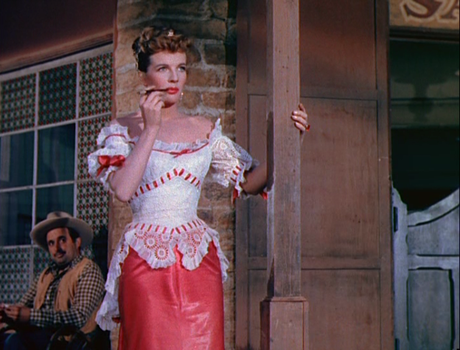
I like Rory Calhoun in westerns, and I think I’ve mentioned this before, he just seemed comfortable in the genre and frontier parts were a good fit for him. I feel the right word to describe his performance in Powder River is confident. Calhoun spends much of the running time unarmed, his character’s preference, and is never less than convincing as a man with enough self-belief and force of personality to keep the peace without resort to weapons. On the other hand, Cameron Mitchell is rarely seen without his custom rig. Again, this is entirely appropriate for a character living mainly on his nerves, and who has built a reputation for himself as a killer of men. Mitchell was a good enough actor, and gave some fine performances over the years, however, he didn’t have a huge amount of charisma. The Doc Holliday figure is one of the most interesting and, from an actor’s point of view, one of the more rewarding roles offered up by westerns. Almost all the performers who have played this part at various times have created something memorable. Of all those I’ve seen, Mitchell’s take on the role was among the least satisfactory, for me anyway. I can’t say he did poorly; he certainly got across the self-loathing aspects of someone who has witnessed his life take a route he had never intended. To some extent, the problem stems from the character arc Hardin goes through, but that’s not it all either. Ultimately, Mitchell’s performance never quite measures up to the other screen depictions of Doc Holliday – it may be a little unfair to compare performances in this way, but it’s hard not to. John Dehner was a man who always brought a touch of class to his parts and his name among the credits is something that I look forward to. He has a medium size role in Powder River, and I think the film would have benefited had he been given a bit more to do. There are two female parts in this production, those of Corinne Calvet and Penny Edwards. Of the two, Calvet did by far the most interesting work, coming across as tough, sexy and sassy from her very first appearance. In contrast, Penny Edwards just feels very colorless, and her romantic involvement with Calhoun and Mitchell never catches fire or is the least bit convincing.
Rory Calhoun hasn’t been all that well served on DVD, with the dearth of titles being especially noticeable in the US. Generally, he’s fared a bit better in Europe, and Powder River has been released on disc in Spain by Fox/Impulso. For the most part, the transfer is quite good. This is an extremely colorful movie and the Spanish release reproduces that aspect pretty well. It can appear a little dark at times, notably during interior scenes, and there is some mild flickering on occasion although none of that is particularly distracting. The disc allows the Spanish subtitles to be disabled via the setup menu, and extras are the usual gallery and a few cast and crew text pages. Powder River is a modest western, never straining to overreach itself and delivering reasonably satisfying entertainment. Personally, I’m always up for another version of the Earp/Holliday saga, and I do appreciate the fact that the filmmakers tried to bring something slightly different to the table with this movie. However, while the attempts to alter the dynamic of the relationship between the two leads is interesting, I don’t honestly think it works that well in practice. There are a handful of good performances and the film is worth checking out, but it never seriously challenges the better Earp movies.

Red Sundown

poster276_zps6a227718

Low budget westerns seem to occupy a place on the filmography of just about every Hollywood star at one time or another. For some actors, the relationship with the genre was little more than a flirtation, something they dipped in and out of without leaving any real or lasting impression. On the other hand, there were others who discovered their niche in such movies. Rory Calhoun belongs in that category; sure he made other types of movie, but it’s with the western, and the programmers in particular, that his name tends to be most often associated. Red Sundown (1956), directed by Jack Arnold, offered him a pretty good role in a standard tale of a man trying to reform and make a fresh start.

Alec Longmire (Calhoun) is a man with a violent past, a drifter with no particular plans. However, his aimless existence is about to take a sharp turn, precipitated by his stumbling upon a lone figure in the wilderness. Bud Purvis (James Millican) is another wandering gunslinger, running from the law and on his last legs. He’s already walked the same path Longmire is currently taking, and all he has to show for it is regret. An altercation with a group of roughnecks in the saloon of some nameless backwater leads to the two men riding out of town in a hurry, with company not far behind. By nightfall they’re under siege in an abandoned shack with no way out. Gutshot and dying, with their shelter already on fire, Purvis comes up with a unique plan that will allow one of them to escape. But he has one condition; the doomed gunman has the younger man give his word that he’ll hang up his weapons if he should make it out alive. Well, Longmire’s not the kind to break a promise, least of all one given to a dying man, and so determines to leave his past behind him. However, reputations have a way of catching up with people and, besides that, wiping the slate clean generally demands more than a sense of remorse and good intentions. And so Longmire, somewhat reluctantly, finds himself sworn in as deputy to Sheriff Murphy (Dean Jagger) in the town of Durango. Murphy’s not getting any younger, and badly needs some backup as he’s caught right slap in the middle of an escalating range war. On one side is big time rancher Henshaw (Robert Middleton), while on the other is a collection of squatters and homesteaders. The greatest threat posed to Longmire and Murphy is the arrival on the scene of Chet Swann (Grant Williams), a reckless killer hired by Henshaw. Longmire has to tread a fine line, maintaining the objectivity of the law while an unwanted showdown with the dangerous Swann looms ever closer.

Red Sundown was Jack Arnold’s second western and showed a lot of promise. That’s not to say it’s above criticism though. Restricted budgets generally meant short running times and pacy storytelling, and that’s more or less the case with this movie. I say more or less because the film fairly springs out of the gate and grabs the attention, tends to coast along in the middle, and then puts in a strong sprint finish. The opening benefits from a bit of added exterior shooting and a great turn from James Millican – this was to be his last film and he looks quite ill at times. The siege of the abandoned hut where he and Calhoun hole up looks good, has a sense of real tension, and a pay off that’s sad and uplifting at the same time. The slightly problematic mid-section, in contrast, suffers from too much interior work and a romantic angle with Martha Hyer  that never sparks or truly convinces. In short, this passage has too much talk, not enough action and relatively flat visuals. Having said all that, the character of Swann is introduced in a way that highlights his creepy ruthlessness, and his presence does create a bit of much needed tension. The ending, while a touch abrupt, sees the pace pick up for the climactic duel and allows for a little more inventiveness as far as the camerawork is concerned.

Rory Calhoun gives what I’d term a comfortable, easy performance as the former bad man trying to cut his ties with a violent past and turn over a new leaf. This is far from an unfamiliar theme within westerns, and I think it’s fair to say that Calhoun doesn’t bring anything new or startling to the table. However, he’s never less than believable in the role and has enough natural charm to carry the lead. I think there’s a bit of a misconception that playing a tough western character doesn’t require a lot of effort. The thing is, pushing the boat out too far means you end up with a caricature, while reining it in too much results in a limp character lacking in credibility. Personally, I feel Calhoun strikes the right balance; the whole look, posture and attitude he adopts never leaves the viewer in any doubt that he’s capable of handling himself in a tight situation, yet he never tips over into comic book antics.

In contrast, Grant Williams, as the hired killer Swann, doesn’t quite hit the mark. His first appearance, all smiles and mock geniality, really taps into a sinister, chilling quality that bodes well. However, he fails to maintain this, and the scene where he confronts Calhoun in his room doesn’t work at all. It’s something almost indefinable, but the way Williams delivers his lines is all wrong – there’s no threat behind them, none of the menace that’s desperately needed. I already referred to the unsatisfactory romance between Calhoun’s character and Martha Hyer’s, but I’ll bring it up here again simply because it highlights what I feel was a missed opportunity. There was the possibility of adding an intriguing triangle to the mix with the introduction of Lita Baron as Henshaw’s housekeeper, and Calhoun’s old flame, but it’s never truly exploited. The actress was married to Calhoun at the time and there is a chemistry at work whenever the pair share the screen. When you consider the fact that Lita Baron eventually sued for divorce and cited her husband’s having committed adultery with seventy-nine different women (yes, that’s right 79) as the grounds, it’s clear this must have been a turbulent relationship. If there are some weaknesses in a few of the performances, it’s just about balanced out by solid playing from two old pros, Dean Jagger and Robert Middleton – the latter even gets to slug it out in a fine saloon punch-up with Calhoun.

Red Sundown has always been one of the more difficult Jack Arnold westerns to get hold of, previously only being available in a pricey box set from Koch in Germany (more so if, like myself, you already had the other titles) or a French release afflicted with the dreaded forced subtitles. However, Llamentol in Spain have recently put out a nice-looking edition on DVD that’s competitively priced. The film is presented in the correct 2:1 ratio and is anamorphic. The image is generally pleasing, with strong colour and a clean print. As usual, there’s no problem with subtitles – they can be disabled via the setup menu. The disc boasts no extra features, but I’m just glad to have a decent looking copy for a reasonable price. The movie is a solid programmer, and never aspires to anything loftier. I won’t claim the film is some lost classic or anything, but what I will say is that it does provide 80 minutes of attractive entertainment.


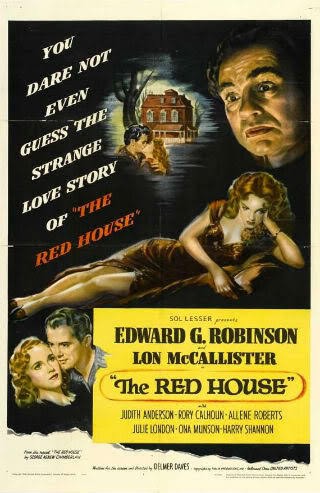
The Red House

rh1-1

“Did you ever run away from a scream? You can’t…it will follow you through the woods…it will follow you all your life!”

Last time, I looked at a movie that grafted film noir tropes onto a western story and setting. To the purist, noir really ought to be set in a contemporary, urban location, but there are always examples that prove the exception to the rule. Delmer Daves’ The Red House (1947) has its characters battling their demons in a superficially wholesome and clean rural environment, but it does take place in modern times. The tale also imports some of the elements and trappings of the ghost story, largely for the sake of atmosphere and to create a oneiric quality. However, this is no supernatural affair and the only phantoms on view are those locked away in the subconscious mind.

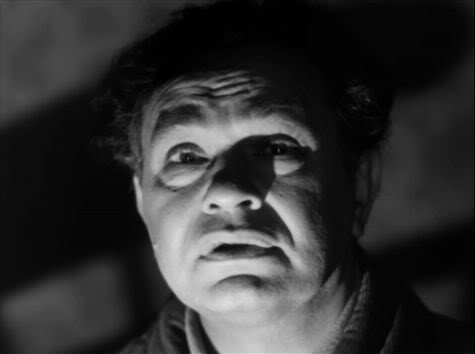
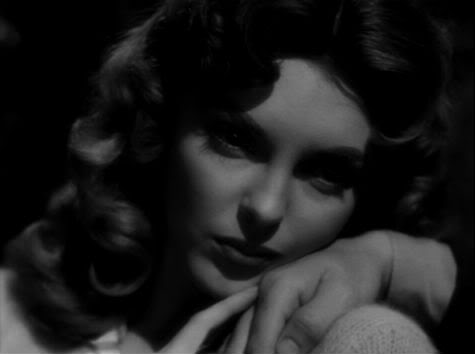
Everything revolves around the reclusive Morgan family: Pete (Edward G Robinson), his sister Ellen (Judith Anderson) and the girl they have adopted, Meg (Allene Roberts). Their self-imposed seclusion has given rise to rumours and wild conjecture about what goes on in their private world. As viewers, we gain entry to this odd household via a young boy, Nath Storm (Lon McCallister), who has been hired to help out with the farm chores. Our first impressions of the Morgans, especially Pete, are positive, and the overall feeling is that this is a simple, kindly family interested only in minding their own business and not overly concerned about the opinions of others. Nevertheless, there is an undercurrent, almost imperceptible at first, that all is not well. Gradually, it becomes apparent that this Garden of Eden houses its own serpent, lurking deep in the shadows of the past and awaiting the opportunity to uncoil itself and strike at the present. The trigger is Nath’s arrival and the refreshing sense of openness that his presence introduces into the musty Morgan home. This impacts most noticeably on Meg, a young girl on the cusp of womanhood and eager to sweep away the cobwebs of superstition woven around her. The root of the mystery and the doom-laden atmosphere is the Red House of the title. Pete’s ominous warnings to Nath to avoid the forest at night and his allusions to the menace emanating from the house within don’t have their intended effect. Nath is a young man brimming with self-confidence and Pete’s urgings, while building up the mythic stature of the Red House, serve only to stir his contempt for what he sees as mere old wives tales. The upshot of all this is a growing determination on Nath’s part, aided by Meg and his girlfriend Tibby (Julie London), to find the house and crack its secret. Yet, the deeper the young people penetrate into the forbidding woods and the closer they come to discovering the elusive house, the more pronounced Pete’s paranoia and desperation become. It’s painfully obvious that we’re not being confronted with just the foolish ramblings of a hick farmer, but rather some dark and shameful event in the past that cannot and will not remain buried.

£55

Delmer Daves took on both the directing and writing duties (although IMDB claims Albert Maltz was also involved) for The Red House so much of what appears on-screen is down to his efforts. The whole film builds slowly and relentlessly towards the solution of the central mystery and, in terms of pacing, rarely puts a foot wrong. The early stages paint a picture of idyllic rural life, with only the odd hint of something unpleasant slumbering below the surface. The first discernible cracks appear when Nath decides to defy Pete’s melodramatic pleas to avoid the woods and the horrors he claims they hide. Daves’ direction, Bert Glennon’s photography and Miklos Rozsa’s lush, haunting score all combine to glorious effect in the sequence that sees Nath stumbling through the woodland in the midst of a gale. What looked like a peaceful, untroubled paradise by day is transformed into a sinister and menacing jungle by night. The howling wind, the groping branches and the darkness all contribute to the creation a nightmarish landscape that threatens to take possession of the boy. Throughout the film Daves and Glennon draw attention to the contrast between the bright cheerfulness of the days where youthful optimism and hope hold sway, and the gloomy nights when the despair of the older generation casts its long shadow. In the last third, the pace quickens, the visuals darken and the revelations come thick and fast. The result is a powerfully affecting climax that offers excitement, tension, revulsion, and tugs a little at your heart. The ending itself, which emphasises the idea that there’s no escaping the past, is both moving and apt.

Edward G Robinson came to his part on the back of some sterling work for Billy Wilder, Orson Welles and Fritz Lang. I reckon he was at the peak of his powers at this time, and his role as Pete Morgan is a further illustration of his versatility. His time at Warners may have made him famous, but some of his best and most memorable work was done elsewhere. His turn as the lovesick loser in Lang’s Scarlet Street has justifiably earned many plaudits, and I feel his performance in The Red House makes for a nice companion piece. It’s a complex role that calls for a subtle touch to convincingly achieve the transition from the avuncular figure at the beginning to the guilt crazed shell of a man he becomes by the end. He got some fine support in the shape of Judith Anderson, exercising great restraint as the sister who has repressed and subordinated her own desires to maintain the illusion of a united family – there’s a touching moment where we see her stealing a glance onto the porch at the man whose love she spurned, and thus condemned herself to a life of lonely spinsterhood for the sake of her brother. Julie London and Rory Calhoun both had interesting parts too, as good for nothing wasters, and they seemed to have a bit of chemistry in their scenes together. That’s more than I can say for Lon McCallister and Allene Roberts, who never convince as a couple of burgeoning sweethearts. Individually though, they weren’t bad; McCallister had the right kind of cocksure quality for a young man trying to prove himself, and Roberts managed a nice line in wistful confusion and frustration that befitted a girl brought up in such a murky and secretive household.

£54

The Red House is one of those films that seems to have been a staple of the PD market for as long as I can remember, regularly turning up from a variety of distributors in generally rotten transfers. Until recently, the best edition available was the one included on the Edward G Robinson double feature from VCI, although that too displayed problems such as interlacing and a mediocre soundtrack. Last month, the film was released as a region-free DVD/Blu-ray combi by HD Cinema Classics, and it’s the best I’ve seen the film looking and sounding. However, it’s not a perfect release: the DNR has been liberally applied to achieve a smoother look and the brightness has been boosted too. While this is far from ideal, it has to be said that even this digitally manipulated image is streets ahead of what was previously available. The new release also features a commentary track with William Hare and a before-and-after restoration comparison. Bearing in mind the PD status of the film, this is likely to be about the best we’re going to see. The movie is a great piece of rural noir, a slow-burning melodrama that’s visually impressive and emotionally involving. I guess that the unsatisfactory condition of previous editions of The Red House have contributed to its not getting the attention or respect it deserves, but it’s a wonderful and neglected example of film noir for all that. The excellent performances of Robinson and Anderson, and the moody, assured direction of Daves earns it a solid recommendation from this viewer.