The Barefoot Contessa

“I suppose that when you spend most of your life in one profession you develop what could be called an occupational point of view.”

Write what you know. Isn’t that the classic line of advice offered to all budding scribes? When Humphrey Bogart’s character speaks those words above as the camera pans on the opening scene of The Barefoot Contessa (1954) there is at the very least a flavor of that sentiment on display.  And if Hollywood knows anything, it surely knows about the path to fame and about each and every pothole mining the route that leads there. Self-awareness, so long as it’s kept on a short enough rein to prevent its spinning off into self-indulgence, can be healthy; it grants perspective and that along with what I can only term soul are the essential ingredients of creativity. So “Hollywood on Hollywood” has been a productive sub-genre over the years, permitting the movies and their makers to take a look at themselves and inviting the viewer to peel back a corner of the mask for a glimpse of what lies behind. Such films generally fall into two categories, ranging from the celebratory to the acerbic. The Barefoot Contessa lands somewhere in the middle, perhaps because it is itself a story pitched halfway between Hollywood exposé and a meditation on fate.

That air of fatalism pervades the movie, right from the rainswept introduction in an Italian cemetery, where a pensive Harry Dawes (Humphrey Bogart) casts his mind back over the few short years when he came to know the titular character. He stands a little apart, slightly detached from the other assorted mourners, although all of them are separated from each other in pairs and little clusters. This detachment is somehow appropriate, as fitting in its own way as the low key setting of this last farewell. These people have gathered to pay their respects to Maria Vargas (Ava Gardner), a one-time flamenco dancer from the back streets of Madrid who would later find fame on the screen as Maria D’Amato, before ending her life as the Contessa Torlato-Favrini. It’s appropriate because although the movie traces the brief rise and fall of Maria Vargas everything that is shown is filtered through the perceptions of others, those who tell her story to the viewer. Harry Dawes does the lion’s share of the telling, he was the one who was credited as having “discovered” her or mentored her in any case. As we segue into a flashback to the club in Madrid where Maria dances by night, the tone is set with great deftness. Her dancing is never observed, only the reactions of the audience provides a sense of her. While the camera roves around the assorted patrons, it becomes clear the woman who holds them all rapt is offering a reflection of what they all feel – the responses vary from frank admiration to surreptitious desire, as love, passion, frustration and shame flash across the screen and the faces of the assembled watchers in waves. And then it’s over, the dance is done and the star vanishes back to her own privacy as the beaded curtain swings back into position.
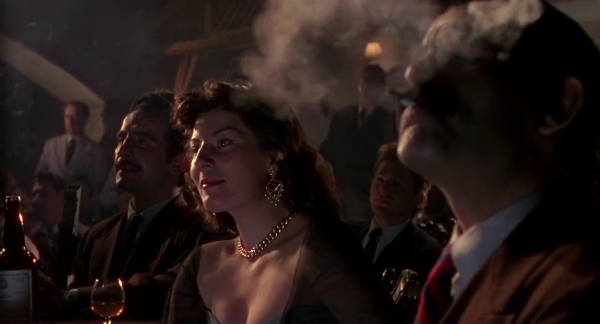
In what might be taken as a subtle dig at Hollywood forever playing catch-up with regard to popular trends, no sooner has the main attraction vacated the stage than the people from the movies arrive. The aforementioned Harry Dawes is tagging along with Kirk Edwards (Warren Stevens) a buttoned up producer reminiscent of Howard Hughes, Oscar Muldoon (Edmond O’Brien) whose glittering eyes and glistening face speak of perspiration and PR, and a burnished blonde courtesan by the name of Myrna (Mari Aldon). Kirk Edwards is a mean vulgarian, a shell of a man high on his own sanctimony and motivated only by the manipulative power of the dollar. He has flown his entourage all the way to Spain to see Maria Vargas dance and maybe offer her a contract. And now he has arrived too late, but such a man cannot countenance this kind of ill-fortune. He orders, savoring the humiliation the whole process entails, first Oscar and then Harry to fetch the aloof dancer to his table. While Oscar sweats and schmoozes Maria out of agreeing to a screen test, Harry is left with literally no option but to track down and persuade her to change her mind. Where Oscar’s sweat failed, Harry’s sincerity triumphs and Maria is on her way to stardom.

Exit Harry, temporarily. And enter Oscar, the vacuous nature of the publicity man firmly to the fore as he takes up the narration, charting the course of a life and spirit he freely admits he could never quite fathom. Of course Oscar doesn’t do depth, he does his master’s bidding. Partially due to the liberating effect of being around a woman who has no time for the fakery and front that stardom seems to demand, he sees his world view shifting ever so slightly. His remit is to guide us through the downfall of Kirk Edwards and Maria’s move on to the next phase of her life as the principal exhibit of Alberto Bravano (Marius Goring), a Latin playboy with no discernible character. This is a shorter interlude, a stepping stone on the way to Maria’s ultimate destination. Soon, the tale is taken up by Vincenzo Torlato-Favrini (Rossano Brazzi), the tortured aristocrat who is tragically incapable of real love, able only to venerate and deify. It is he who commissions the marble statue of Maria that will ultimately mark her final resting place, a cold approximation of beauty that is as cold and blank as his own helpless passivity.

Ava Gardner’s Maria Vargas drifts through the movie, and I use that term quite deliberately. As I said, at the beginning, the story is deeply fatalistic. Both by her words and her actions the lead character is presented as a woman unable to, or perhaps unwilling to, completely break from the past and take command of her destiny. The whole barefoot business ties into this, an explicit acknowledgment that the past is an integral part of oneself, functioning either as a brake on ambitions and aspirations or as a means of grounding one in reality. I don’t say this is a philosophy I particularly sympathize with, but it is there, it defines the whole mood of the piece and is well realized. Ava Gardner’s performance here is key to that realization and is almost a subversion of her typical screen persona. Earthy is the word that  frequently springs to mind when I think of her rather than ethereal yet it is the latter quality which she conveys throughout much of the film. Sure she has her moments of fire, but she never allows her natural vigor to overshadow that acceptance of a life directed by the golden threads of the Moirai.

The Barefoot Contessa is not a film that works for everybody, maybe due to that air of languor that grows out of its core fatalism. Then again it might be the wordiness of the script that bothers some, but I’d argue that anyone knowingly approaching a Joseph L Mankiewicz film and finding that aspect an issue ought to know better in the first place. Personally, I’m inclined to think that the third act, that beautifully shot and achingly poignant Italian interlude is most problematic. It is not a question of where the film is going or even where it ends up that hurts it, rather it is the playing of Rossano Brazzi that I think takes the edge off it all. Although I’ll concede he gets the futile desperation of his character across, I don’t think Brazzi was ever the most magnetic presence at the best of times and that becomes an issue here. It is undoubtedly a tricky part to carry off, but I just do not see him as the object of Gardner’s grand passion, the man who has that something which she never found elsewhere. Without that, one of the main props of the story is seriously weakened.

Bogart’s name was top of the bill and his bookending of the narrative is nicely judged. His later films weren’t always all they could have been, even if his own work was as strong as ever for the most part. His peak years were often characterized by that tough insolence that has spawned so many imitators, but he had more to him than that when he wanted or was allowed to show it. The Barefoot Contessa lets him reveal a warmer side than usual. Even if it’s tempered by the weariness and regret that came easily to him, there is an empathy on display which is very attractive. In support Edmond O’Brien sweet talked his way to an Oscar playing Oscar; there’s a degree of showiness as there nearly always is with award winning turns and he makes what is on paper a pretty miserable character more appealing than he probably ought to be, still it’s an engaging and memorable bit of work. Warren Stevens achieves an almost reptilian stillness as the soulless tycoon and it’s fun seeing him face off against a very theatrical Marius Goring in their big confrontation scene. Valentina Cortese, Elizabeth Sellars and Mari Aldon all have their moments even though their parts are relatively minor.
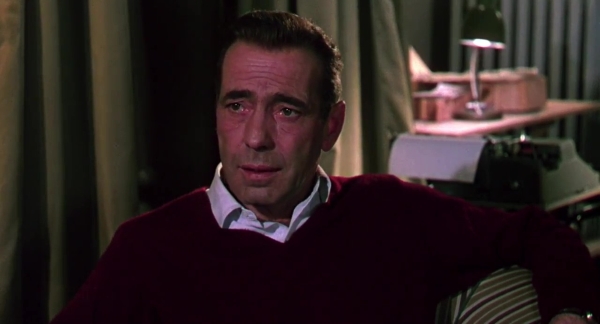
The Barefoot Contessa got a Blu-ray release in the US from the now defunct Twilight Time and then later in the UK via Eureka. I have that UK BD which now appears to have gone out of print and it’s a fine looking transfer of the movie that makes the most of Jack Cardiff’s beautiful cinematography. I don’t always mention scores or soundtracks, which I know is remiss of me, and so I want also to take the opportunity to draw attention to Mario Nascimbene’s evocative work on the movie. I wouldn’t want to claim The Barefoot Contessa is a flawless work as I am aware that it has its weaknesses and doesn’t appeal to all. However, it is and has long been a favorite of mine, ever since I stumbled on an early evening TV broadcast nearly forty years ago.

Well, that about wraps it up for 2023. I’d like to say thank you to everybody who came along for the ride over the last twelve months. Here’s to 2024 and here’s hoping it brings peace and happiness to us all. Happy New Year!

The Quiet American

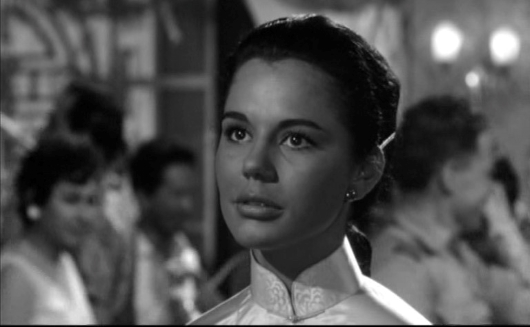
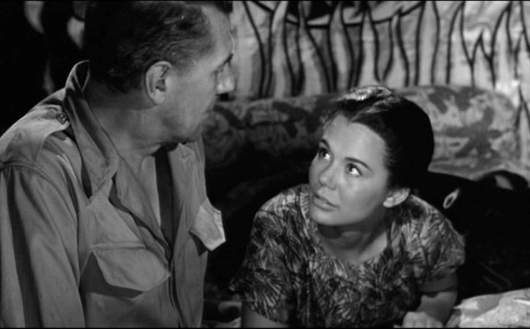
The Quiet American (1958) is an adaptation by Joseph L Mankiewicz of Graham Greene’s novel of the same name and it, unintentionally from the filmmaker’s point of view, poses the question of whether a movie is best approached or evaluated on an emotional or an intellectual level. Greene was very unhappy with the changes Mankiewicz made to his book, particularly with the alterations to the political sentiments the author had written into his story. Greene’s objection highlights what I think of as the intellectual approach, for viewing a film and assessing its worth or success in terms of its political perspective strikes me as a coldly intellectual exercise. Conversely, examining how a movie deals with the human interactions that underpin the story is surely a more emotional approach. Given that I have long been convinced that art is much more closely related to the heart than the head, it probably won’t come as any surprise to learn which view I tend to favor.

The Quiet American opens near the end of the story and works back from there in search of a beginning that will allow all the events and personalities involved to fall into place. The titular character (Audie Murphy) who remains unnamed throughout, unlike in Greene’s novel, is already dead when we viewers come on the scene. His body is floating face down near the banks of the river in Saigon, discovered by chance by revelers celebrating Chinese New Year. From here we are taken back to the months before his demise, to the time when he first arrived in Vietnam. So the bulk of the movie is related via flashback, unfolding from the point of view of Thomas Fowler (Michael Redgrave), a British journalist and acquaintance of the anonymous American, as he conducts a one-man wake in the morgue, reflecting on the life and death of the young man reposing on the slab before him. Those few months defined the course of the lives of three people: Fowler, the American, and Phuong (Giorgia Moll), the young Vietnamese girl who is loved by both of them. Regardless of the political background of the tale, and the points about the role of foreign intervention in South East Asia that Greene wanted to make, this is a love story first and last; remove that element and there is nothing to relate that has any resonance beyond contemporary concerns. What matters here, and what the movie focuses on, is the triangle formed by those three people, with Phuong acting as the anchor.

As I mentioned above, Greene felt aggrieved at the way the script radically altered the points he wanted to make in his book. I can understand that frustration on the part of the author, and I can sympathize with what he must have seen as wholesale distortion of his vision. I read and enjoyed his novel many years ago yet I still appreciate this movie for what it is, for what it does rather than what it does not. Basically, I see the changes that Greene disliked as only background details as far as the movie is concerned – those elements might be integral to the aims of the novel, but Mankiewicz was making a movie and both his medium and the aims he had were very different. I am of the opinion that any filmmaker who emphasizes the purely contemporary elements of a story at the expense of the timeless aspects is straying into the realms of commentary. In short, I see film as a form of artistic expression, an analysis of the human condition, and that is something eternal rather than ephemeral.

Ultimately, what counts is whether or not the movie works on the terms by which it was conceived. I regard it mainly as both a love story and as a contemplation of the way we frequently project visions of ourselves and the world around us onto those we love. As such, I consider it to have succeeded in achieving it aims. Of course one can dig deeper and read more into it all, seeing different slants on relationships adopted by the old world and the new, the contrasting views of young and old, and so on. Nevertheless, it all comes back to the portrayal and interpretation of love and what that means to various individuals in the end. The background of the story operates in relation to the characters like the MacGuffin in a Hitchcock film, but even then only up to a point. After all, when Fowler makes his fateful decision, he is motivated by a toxic cocktail of pride, jealousy, fear and thwarted passion and not something as prosaically dreary as political convictions.

On paper, one would say that having Audie Murphy face off against Michael Redgrave would lead to an uneven and unfair contest. On celluloid and in fact , however, the contest is a remarkably even and productive one. Murphy had grown steadily as an actor by the late 1950s and this kind of dramatic role was well within his capabilities. There is still a lot of fresh energy about him, and that quality is used to superb effect when placed in contrast to Redgrave’s worn and dissipated cynicism. That fresh faced enthusiasm always cloaked a deeper steel and there is never any doubt about the resilience of the idealistic young man he was portraying. When he trades words with Redgrave’s weary writer, the latter may indicate disdain for their naivety but he never really questions their sincerity, and nor do the viewers. Redgrave is every bit as good as the complete opposite, a tired and spent man whose surface smugness masks chronic insecurity and desperation. We believe it when Murphy shows drive and positivity, and that sense of credibility is just as strong when Redgrave paints his own picture of desolation and emptiness.

Italian actress Giorgia Moll is wonderfully unknowable as the focal point for the affections of those two very different men. There is a lot of passivity about her character, right up till the end anyway. Her final scene adds a great deal of punch and power though, largely because of the apparent indifference and insouciance she displays earlier. The cast is fairly self-contained, but Claude Dauphin lends attractive support as the deceptively relaxed policeman who misses very little. Bruce Cabot has what amounts to a cameo as an American journalist and Richard Loo, who popped up all over the place throughout the 40s and 50s whenever an Asian character was required, is coolly efficient as Redgrave’s contact with the insurgents.

The Quiet American was given a release on Blu-ray by Twilight Time some years ago but I never got around to picking it up and have had to make do with less than stellar DVD versions. It’s a shame no company in the UK has been able to put this film on the market on BD so far. The story was filmed in 2002 by Philip Noyce, with Michael Caine and Brendan Fraser in the Redgrave and Murphy roles, and it stuck closer to the sentiments of the novel. I saw it at the time and while I thought it was fine (although I should say I’ve never been able to warm to Fraser in anything) I don’t think it was improved by being more faithful to its source. I can only say that I have never felt the need to revisit the 2002 film in twenty years whereas I’ve seen the Mankiewicz version multiple times.

Somewhere in the Night

Somewhere in the Night (1946), that title alone is imbued with all the uncertainty and ambiguity that is such an essential ingredient of film noir. Add in the theme of amnesia and it’s tempting to imagine this movie might be the classic example of the form. Well, it doesn’t quite get there; the plot is twisty, the characters even more so and their motives are buried deep in a half-remembered past. Everything looks right, and at times sounds right too, but maybe there is too much going on, too many strands to follow with the result that the viewer is left to navigate the kind of fog our protagonist must battle his way through.

No time is wasted in the opening, a field hospital where all manner of wounds and injuries are being treated by stressed and weary medics. George Taylor (John Hodiak) is lying in bunk drifting in and out of a morphine induced haze, his jaw wired up and his memory wiped after a close encounter with a grenade. The fact is George Taylor isn’t even sure that’s his real name, the doctors call him that but he doesn’t really know, and he’s both puzzled and uneasy by the letter he finds among his belongings. It’s incomplete but there’s enough there to tell him it’s from a woman, one who is consumed with bitterness and recrimination, and all of it directed towards him. Well he eventually gets shipped back to the States and so begins his fumbling efforts to establish his identity, efforts which hint at large sums of money awaiting him, but few friends if any to guide him along. Conversely, the more he learns, the less he appears to know, and the more nonplussed he becomes. A letter from a guy called Larry Cravat tells him there’s cash in the bank in his name, but this only increases his suspicion. Who is Larry Cravat, and why does every question asked about him lead to further suspicion and violence? Taylor’s world is reduced to a stumbling quest through night clubs and slums, peopled by hoods and chiselers, where swank businessmen rub shoulders with dubious fortune-tellers and a convoluted trail involving Nazi loot and murder leads to a sinister sanatorium and a final showdown on the waterfront.

The films of Joseph L Mankiewicz have a tendency to be stylish but wordy, and I think that’s true of Somewhere in the Night. Norbert Brodine’s cinematography drapes the 20th Century Fox studio sets in very attractive shadows while Mankiewicz’s script (with uncredited contributions from Lee Strasberg and Somerset Maugham) and direction are characteristically polished. For all that though, the plot is packed tight and is of a density that hinders rather than helps. For every morsel of slick, hard-boiled idiom, there’s a side order of undercooked exposition to be dealt with. This kills the pace at vital moments, the complications unnecessary and the detours involved only sporadically interesting. While a predatory Margo Woode offers a masterclass in would-be sophisticated patter and burnished brass, her presence and interactions with a slippery and proudly amoral Fritz Kortner feel like they have blown in from a different movie.  In fact, the entire Nazi loot subplot has an air of pastiche to it, channeling elements of The Maltese Falcon to such an extent that by the time the confrontation in Kortner’s dingy flat rolls around I was half expecting Hodiak to lean over to Ms Woode and mutter: “Six, two and even they’re selling you out.”

I can’t help thinking tales of amnesia and 1940s movies seem to go hand in hand, a feeling that’s perhaps been heightened by the fact I watched another variation on this the other day in William Dieterle’s Love Letters. In that case, however, the loss of memory is suffered by Jennifer Jones’ traumatized heroine as opposed to Joseph Cotten’s returning veteran. Nevertheless, that tumultuous post-war world, where everything has been upended and all the old certainties swept aside, provides fertile ground for stories of recollections lost and the consequent pros and cons presented by the unknown and the uncharted. John Hodiak is a personable hero, getting across the self-doubt of his character, that need to learn more about the man he once was while also fearing what he may discover in the process.

Nancy Guild is fine as his Girl Friday, but her role is a touch bland and she makes only a limited impression compared to Margo Woode’s flashy turn.  Where Hodiak is necessarily cautious, Richard Conte is typically sharp and assured, rapping out his lines with a confidence that dares the world to challenge him. Lloyd Nolan is hugely enjoyable as the cop in the case, unflappable and unfazed by the deceptions and betrayals all around him, representing a beacon of sorts amid all the shifting currents. A word too for Josephine Hutchinson; hers is a small part and arguably not really essential in advancing the plot yet that one scene she has remains memorable. The movie makes a number of points about the effects of the war on those who have come back as different men to a radically changed society, but the effect on those who were left behind is no less important. That brief interlude which says so much about loss, loneliness and the hurt of missed opportunities is deeply touching, and Josephine Hutchinson’s sensitive and restrained work opposite Hodiak is quite wonderful.

Somewhere in the Night is a movie which has always felt like a bit of a companion piece for The Crooked Way. They do not tell the same story but there are definite points of similarity, enough to tie them together in this viewer’s mind at least. I think the latter is the more successful film due to its pared down nature and tighter focus overall. That said, Somewhere in the Night is entertaining, classy and has enough positives to offset its weaknesses. Perhaps it isn’t the quintessential film noir that the title alludes to, but it’s still a solid genre piece.

So, that brings me to the end of 2021. All that’s left to say is Happy New Year to all those who have spent time here. May 2022 bring only good things for all of us.

House of Strangers

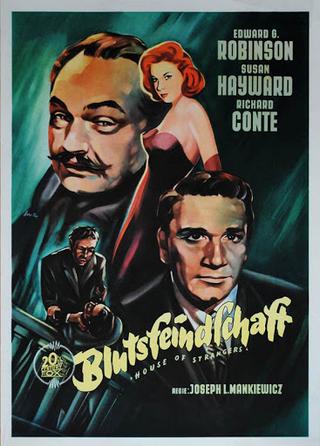
Back in 2015 I looked at Broken Lance, a superior western and a remake of an earlier movie. I remarked at the time that I preferred the later version of the story and that’s still the case. Nevertheless, House of Strangers (1949), the original adaptation of Jerome Weidman’s novel, is an excellent piece of work when viewed in its own right. All versions and adaptations of stories bring something different to the table: the sensibilities of the filmmakers involved, themes added or removed, highlighted or suppressed. Where Broken Lance broadened and extended the scope of the material, House of Strangers retains a tighter focus overall.

A crowded sidewalk, bustling and bursting with life, and amid it all the eye is drawn to one solitary figure making his way through the vibrant mass, a detached and determined figure. He pauses before the imposing facade of a bank, the guard inside eyeing him fishily through the polished plate glass. This is Max Monetti (Richard Conte), once a sharp and arrogant lawyer but now just another ex-con. Actually, he’s a bit more than that; the bank was once the domain of his late father Gino Monetti (Edward G Robinson) before it was taken over by three of his sons, and before Max spent seven years as a guest of the state for jury tampering. Some of the brashness is still there though, and it’s enough to worry his siblings. It’s here that the lengthy flashback which occupies most the running time kicks in, showing how a family turned upon itself and slowly disintegrated, how rivalry and dissatisfaction became the seeds of hatred, how an old woman’s heart was broken and how a once grand home was transformed into a mausoleum to pernicious pride.

As in the image above, the past is forever peering over the shoulders of the characters. And it’s not just the malign spirit of Gino Monetti haunting his sons and poisoning their hearts, for even the old man in life was haunted by the specter of penury and subservience. The whole movie concerns itself with characters racing to keep a step ahead of their past, be it the stifling “old world” traditions that Gino professes to be desperate to throw off while apparently reveling in their trappings or another generation’s desire to be free of the too firm hold of an overcritical patriarch. Underpinning all of this is the concept of revenge or retribution, and the corrosive effect it has for all who drink from that particular cup.

I opened by speaking of a narrower focus, and I feel House of Strangers actively seeks to present a sense of restrictiveness. Instead of showing family as a symbol of fertility, it offers up a view of a stagnant and suffocating household, and I think it’s no coincidence that much of the action is rooted in the Monetti house and the old bank. Both structures have an old-fashioned ambience, a workplace where the sons are kept firmly in place – literally caged in the case of the elder brother Joe (Luther Adler) – and with limited options, and a home that is almost overpowering in the sheer weight and oppressiveness of its decor. The contrast with the light, spacious and airy apartment of Irene Bennett (Susan Hayward), the one person in the movie with an outward-looking perspective, and the one who represents the chance for a clean break with the past and new start on the west coast, is marked and unmistakable.

Susan Hayward’s presence adds much to this movie. Her drive, allure, and most of all her infectious self-confidence represent the best hope of salvation for Richard Conte’s Max. The frank and witty dialogue those two trade is a highlight, giving an edge to their passion and, in Conte’s case, allowing his character to become much more rounded. Joseph L Mankiewicz, who apparently had an uncredited hand in the writing alongside Philip Yordan, was noted for the use of sophisticated dialogue and it’s a real boon in this picture. The visuals and themes are well handled and well realized, but the smartness of the script gives everything extra vigor.

Richard Conte could always be relied on when you needed someone tough and streetwise, and he starts out incredibly sure of himself, unpleasantly so in fact. It’s largely through his interaction with Hayward though that he unbends gradually, looking out instead of in, realizing what to embrace and what to reject. Edward G Robinson plays a man it’s hard to like – even in his more expansive and beneficent moods there’s a shade of self-importance about him. As the story progresses, this latter quality develops, eventually running to bitterness and, ultimately, spite and vindictiveness. With a trio such as Robinson, Hayward and Conte headlining, there’s not a lot of space left for others to make their mark. That said, Luther Adler is subtly impressive, enduring the pettiness and humiliations as he broods and nurtures a deep resentment. In support Paul Valentine and Efrem Zimbalist Jr are the other two browbeaten offspring, while the imposing Hope Emerson seems an unlikely mother to the diminutive Debra Paget.

House of Strangers was released on DVD years ago as part of the Fox Film Noir line and the image is pleasing if not perfect, with a few trailers and a commentary track by Foster Hirsch as supplements. All told, this is the kind of highly polished picture one would expect from 20th Century Fox and Joseph L Mankiewicz. The shift to a western setting allowed Broken Lance to successfully explore other ideas and make it a more satisfying experience. However, I like to examine every movie on its own merits and I feel House of Strangers deserves to be praised for what it is rather than disparaged for what it isn’t.

5 Fingers

£9

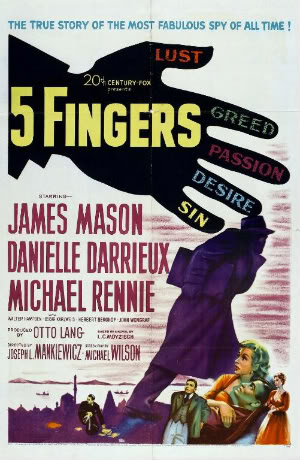
Much as I enjoy all the gadgetry and technology that seems to have become part and parcel of the espionage film over the years it’s refreshing nevertheless to watch something where the spy uses nothing more advanced than a pocket camera to accomplish his goal. 5 Fingers (1952) is just such a film, a slow burning suspense yarn that concentrates on character and the gradual building of tension. The fact that it’s supposedly based on a true story makes the whole, seemingly unlikely, series of events even more intriguing.

The story takes place in Ankara, Turkey during WWII and tells the story of an amazing scam carried out under the noses of the British embassy staff. Diello (James Mason) is an Albanian employed as a valet to the British ambassador, and is a man of intelligence, culture and ambition who realises the unique opportunity afforded him by his current employment. Not only is he the trusted companion of the senior diplomat, but he also has easy access to countless documents of the highest classification that routinely cross his master’s desk. To a patriotic man, or even a man of integrity, this might be regarded as a privilege but nothing more. However, Diello is neither; he is a pragmatist with two aims in life – a) to win the heart of the aristocratic widow of a former employer, and b) to have sufficient funds to emulate the life of a South American gentleman he once caught sight of in Rio. With this in mind, he approaches a German diplomat and makes an offer that’s hard to believe and even harder to turn down. He promises to ensure the delivery of a continual stream of top secret documents, but at his price and on his terms. He thus becomes a privately employed agent of the Nazis, under the code name Cicero, and the money starts to roll in. But, as I said, Diello is a very clever man, clever enough to know that he cannot keep popping around to the German embassy and hope to remain unnoticed. Needing both a partner and a safe meeting place, he strikes a bargain with an impoverished Polish countess (Danielle Darrieux) for whom he’s been carrying a torch. In return for funding her lifestyle Diello gets to use her home as a cover for meeting and carrying out transactions with a variety of high ranking Nazis. Of course such a scheme can’t last indefinitely and Diello eventually finds out that betrayal can be a double-edged sword.

£10

5 Fingers came out a mere seven years after the end of WWII and when you bear that fact in mind it’s quite surprising that the character of Diello is one the viewer actively roots for. Although it’s made clear that Diello is spying out of a desire for money and cares nothing for political ideology, the truth is that it’s Mason who makes the character such an appealing one. Both the British and German authorities are treated with a kind of suave condescension by the man. He always appears the master of his own destiny and, even with the earth falling away beneath him, you never really doubt that he’s the one in control of the situation. I never tire of watching James Mason, and there’s real pleasure to be found here in seeing him toss out casual insults to the Nazis in a marvellously supercilious tone. Danielle Darrieux is an actress I haven’t seen much of, but her fallen Polish aristocrat is a fine mix of allure, earthy sensuality and duplicity. Her scenes with Mason carry a sense of conviction and there’s certainly some chemistry between them. Michael Rennie has a somewhat thankless role as the secret service man hunting Cicero but he does well enough in the circumstances. Joseph L Mankiewicz wasn’t the most prolific director but I’ve always enjoyed his work and he handles this material very stylishly. The use of genuine Turkish exteriors helps lend some authenticity to the film but it’s the interior sequences that have the most power. The scene that leads up to the discovery of Cicero’s identity is a masterclass in the building of suspense – the way the camera follows a cleaner round an embassy corridor, while she tries to work out the source of a power failure and we know what the consequences of her actions will be, is a piece of film-making worthy of Hitchcock himself. And that neatly allows me to point out that the movie also benefits from a score by the great Bernard Herrmann.

5 Fingers is available on DVD in R2 from Optimum in the UK. Unfortunately, it’s one of their weaker efforts with a soft transfer that also suffers from being interlaced. It’s one of the usual barebones discs from this company with no extras whatsoever and no subtitle options. However, the one thing in its favour is that it’s cheap and it’s about the only option if you want to see this title – being a Fox property the chances of a R1 release are not good at present. Anyway, it’s a very classy film that won’t disappoint, and the final scene that fades out to the accompaniment of the kind of hollow, cynical laughter that recalls John Huston is almost worth the price on its own. The Optimum disc is definitely watchable despite its shortcomings and, since the movie itself is just so entertaining, I’d have no hesitation in recommending it.