The Iron Curtain

The 50s saw the red scare, fanned by McCarthyite rhetoric, blaze into life in Hollywood. With the HUAC inspired blacklists casting a dark pall over the movie capital, there was a kind of desperation in the air, a need to prove one’s patriotism and simultaneous rejection of the evils of communism. This meant the decade saw the production of a number of films directly addressing the issue and sending out a message to the witch-hunters that the industry was aware and prepared to play ball. Whatever contemporary reactions may have been, these films, by and large, not only seem lousy when viewed today but they also remind us of all those careers and lives left in tatters by the taint of the blacklist. From a purely artistic standpoint, the ham-fisted presentation of political dogma and the judgemental tone adopted both bog down the narrative and, in the worst cases, leave a very sour taste. However, there are always exceptions, and William Wellman’s The Iron Curtain (1948) is one of the more polished and less hysterical pieces of work from a generally unsavoury interlude in cinema history. I think this is partly due to the skills of Wellman as a filmmaker, and partly as a result of the production taking place right at the beginning of HUAC’s reign of terror, before it’s raging paranoia had fully matured.

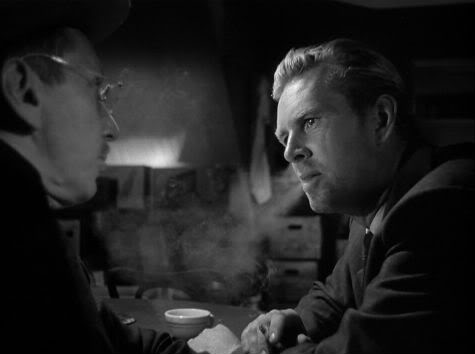
In keeping with a lot of Fox movies of the time, the film opens with a declaration that what we’re about to see is a true story, shot on real locations. The cool, authoritative tone of the narrator further enhances the sense that this is something more than mere Hollywood fantasy. I’ve often found that there’s a tiresome quality to some of these earnest eulogies to the dedication and responsibility of various government agencies remaining ever vigilant in the face of multiple threats from without and within. What sets the introduction of The Iron Curtain apart is its location if nothing else. The entire film takes place in Ottawa, Canada, so we are spared yet another hymn to the efficacy of the FBI, Treasury agents or other assorted G Men. Instead, the plot follows the establishment of a Soviet fifth column in Canada during the war and its subsequent dismantling as the big freeze of the Cold War set in. As I said, the movie doesn’t takes us behind the scenes of one of those complex government sting operations that were much favoured by contemporary filmmakers, but concentrates on telling the tale of how one man brought a spy ring to its knees off his own bat. The man in question is Igor Gouzenko (Dana Andrews), a cipher clerk freshly assigned to the Soviet embassy in Canada. The first third of the film goes to great pains to establish how loyal Gouzenko was to his own country and political system, one of those resolute, unthinking servants of the state with clear and direct convictions. As we observe the steadfast Gouzenko going manfully about his duties, we’re also afforded a view into the closed world of the Soviet diplomatic mission. And it’s a drab, forbidding world at that, peopled with stony-faced officials and dripping an atmosphere of suspicion and secrecy. There’s also a glimpse at the careful construction of the spy network, whose eventual unravelling provides the dramatic backdrop for the latter stages of the story. It’s Gouzenko who brings the whole thing crashing down, and his motivation for doing so is a slow realization that he’s serving a flawed master. The catalyst for his decision is the arrival in Canada of his wife Anna (Gene Tierney), and the birth of a son. The presence of this human element greatly strengthens the story and adds to the dramatic tension of the final third. By doing so, the political aspects necessarily take a back seat to the unfolding drama of a family suddenly cast into a perilous situation.

Even if it’s viewed purely as a propaganda piece, then I think The Iron Curtain is remarkably successful. The reason for that is the script and Wellman’s ability to sidestep the trap of sensationalism and instead adopt a more matter of fact tone, letting the events and their inherent drama speak for themselves. Of course, the air of quiet dread that seems to hang over the scenes in the embassy emphasises the stifling lack of personal and intellectual freedom, but this is quite subtly achieved. The ever-present music from Soviet composers, the inclusion of which in the score apparently caused something of a minor international incident at the time, has the effect of building up the brooding, sinister feel. The only time we take a detour into the realm of direct political preaching is when one of the Soviet residents (Eduard Franz) seals his own fate by getting drunk and lamenting the betrayal of the ideals of the revolution by the apparatchiks who have risen to prominence in Moscow. As a thriller, the film really comes into its own in the final third, as Gouzenko decides to take that leap of faith and defect. Wellman, and cameraman Charles G Clarke, employ classic film noir techniques of lighting and shooting angles to ratchet up the tension during Gouzenko’s theft of incriminating documents from the embassy, and then again in the climactic standoff in his apartment. Another notable aspect of the film is how the government agencies – I’m guessing the Canadian setting facilitated this slight subversion – are conspicuous by their lack of involvement. In fact, there’s initially a downright refusal on the part of the authorities to become involved in what they take to be the ravings of a lunatic.

Dana Andrews was never one of the most emotive or demonstrative of actors, the kind of guy who tended to keep it all inside and bottled up. Such characteristics can unfairly lead to accusations of woodenness when the truth is it’s simply another, and no less effective, style of performing. As it happens, that tight-lipped anxiety that he had a talent for fits the character of Gouzenko to a tee. After all, this is a man who’s been trained to exert self-control in the first place and who then finds himself in a situation where both his own and his family’s survival depends on the maintenance of a facade. Still, Andrews conveyed more than a blank countenance when he had to, the eyes in particular registering the mounting pressure Gouzenko was subjected to. Gene Tierney was making her fourth film alongside Andrews, the most successful being their partnership in Laura a few years earlier, and was good enough in a fairly undemanding role. Her main purpose was to act as a softening and humanizing influence on her previously stiff and determined husband, and that’s how she comes across. However, arguably the most memorable work is produced by the supporting cast. Berry Kroeger was making his screen debut as the shadowy head of Canada’s communists and carries off the part of the principal villain with aplomb. Playing such a Machiavellian puppet master required a good deal of restraint combined with implicit menace. Kroeger was blessed with the features and voice that were ideally suited to this kind of role and he makes a very strong impression. Stefan Schnabel also shines as the head of the NKVD, masking a dangerous ruthlessness with an outwardly reasonable persona. And finally, June Havoc appears as the embassy secretary with a wandering eye and a special brief to vet the reliability of all new staff.

I think the only DVD edition of The Iron Curtain to date is the one issued in Spain by Fox/Impulso. In terms of picture quality, it’s one of their mid-range efforts. There hasn’t been any restoration work done, as can be seen from the cue blips and so on, but the print used is in generally good condition and doesn’t display noticeable wear. Extras are limited to the usual gallery and text data on the cast and crew. The disc offers English and Spanish soundtracks – the Spanish subtitles are optional and can be deselected via the setup menu. While I certainly don’t think this film represents Wellman at his best, it is an interesting addition to his body of work. The main attraction of The Iron Curtain though lies in its historical significance, coming as it does near the beginning of the red scare. It’s interesting to observe the comparatively restrained approach it takes to its emotive subject matter in contrast to some of the more hyperbolic and offensive offerings that the following decade would eventually produce. Generally, this is worthwhile viewing for fans of Wellman and for providing a snapshot of early Hollywood reactions to the HUAC assault.

The Asphalt Jungle

Experience has taught me never to trust a policeman. Just when you think one’s all right, he turns legit.

It could be said that John Huston created the template for the private eye movie with his version of The Maltese Falcon; I think the same is also true of The Asphalt Jungle (1950) and the heist movie. In terms of plotting and development, this film lays out the pattern that almost all subsequent efforts have followed. Others have played around with the structure and characterization within this sub-genre, but the basic concept of a group of professional thieves assembling to plan and execute a raid before seeing everything fall apart remains the standard formula to this day. Aside from its influential status, The Asphalt Jungle is also a first-rate film noir and a compelling crime drama. Unlike Criss Cross or The Killers, the gang are not foiled by a scheming femme fatale or by having their judgement clouded by emotion. Instead, their downfall is hastened by mistrust born of greed and the little glitches that even the coolest planner couldn’t hope to foresee.

The credits fade from the screen and are replaced by a bleak, deserted and forbidding cityscape where a cruising patrol car prowls ominously. As it does so, a man keeps to the shadows and flits silently from one piece of cover to the next, like prey being stalked by a relentless hunter. The man is Dix Handley (Sterling Hayden) and at this stage the only thing we can say with any degree of confidence is that he’s anxious to avoid a brush with the law. Later, we learn that Dix is what’s termed a hooligan, a low-class common criminal using violence and brawn rather than brains and finesse. Dix is the man we follow throughout the movie, and it’s by this means that we’re introduced, one by one, to all the major players in the drama: Gus (James Whitmore), the physically deformed wheelman; Cobby (Marc Lawrence), the bookie with connections in both high and low places; Doc Riedenschneider (Sam Jaffe), the ex-con with a big reputation; and eventually Lon Emmerich (Louis Calhern), the big-time lawyer in need of money. When Riedenschneider emerges from prison with an apparently foolproof plan for a headline grabbing jewel heist, the scene is set for the paths of all the main characters to cross in a game of lies, betrayal and violence. By the time the end credits roll, a daring plan is hatched and put in place, enormous wealth is stolen, promises are broken, and men die abrupt and bloody deaths.

One of the more remarkable aspects of the film is the way the career criminals come across in a far stronger light than the traditional representatives of law, order and respectability. The Asphalt Jungle was made by MGM just as Louis B Mayer’s time in charge was drawing to a close. Apparently, the old mogul wasn’t the least bit impressed by what he saw as a movie peopled by a succession of disreputable types. The fact that the police are portrayed as oafish and corrupt, and that the patrician lawyer is in reality an adulterous confidence man must have raised a few eyebrows at the bastion of wholesome, all-American values that was MGM during the Mayer years. The inclusion of a crusading, moralizing police commissioner (John McIntire) looks suspiciously like a sop to silence the protests of the outraged sections of the studio brass. If that was the intention, then I’m not sure it worked out – the almost insufferable, whiter than white sermonizing results in his becoming little more than a cardboard cutout compared to the complex and layered figures ranged against him. Frankly, there’s a lot of John Huston’s fondness for the perverse in this whole setup. The director had a great eye for skewed, noirish imagery throughout his career, and he was also drawn to those dramas that featured characters who were either flawed or were a step or two removed from the mainstream. The film is full up of perfectly realized scenes that highlight the twilight world of these off-centre people: the threatening opening, the charged atmosphere of the planning sessions in Cobby’s back room, and the cool detachment of the heist itself. The latter sequence, with its minimal use of dialogue is a wonderful example of extended tension. In fact, dialogue all through the film is treated as a precious commodity, every word being weighed and delivered to extract maximum effect so that even seemingly throwaway lines are actually loaded with significance. In a similar vein, the use of Miklos Rozsa’s score is rationed too, lending it greater impact when it’s finally allowed to burst forth during Dix’s frantic and fateful drive home.

Sterling Hayden’s performance as Dix is the glue that holds everything together and keeps the narrative focused. Physically, Hayden was ideal casting as the muscle of the gang, and his presence dominates every scene where he appears. His cocksure contempt for the trashy city types that circumstances have forced him to associate with is evident in his arrogant, swaggering manner around the other hoods. The only time he allows the mask of tough insolence to slip a little is when he’s alone with Jean Hagen’s Doll. This fragile woman seems to draw out Dix’s humanity and it’s her presence that encourages him to reminisce with a touching innocence about a happier, cleaner youth growing up on his Kentucky farm. Despite the strident claims of the police commissioner that Dix is a man without conscience or feeling, the viewer can clearly see that he’s an all too human figure. He may be hardened by the necessities of the life he’s had to lead, but the heart of a simple farm boy beats strong below the surface. Although Jean Hagen’s role may have been a small one she is spot on in her portrayal of a lonely and vulnerable woman adrift in the apathetic environment of the big city. The one thing that almost all the characters have in common is their desire to escape the stifling confines of their urban wilderness. Sam Jaffe’s Doc sees the heist as the ideal means to secure a leisured retirement in Mexico and Emmerich views it as an opportunity to dig himself out of the financial and personal wasteland in which he’s mired. Of course both these characters also share a fatal fondness for the company of young women, and that weakness is partly responsible for their coming to grief. Jaffe’s calm inscrutability was well suited to the part of the mastermind who comes to realize that even the most intricate planning and preparation can only take one so far, sooner or later the vagaries of fate step in and throw a spanner in the works. I don’t think I’ve seen Louis Calhern do anything better than his Lon Emmerich, a study in dissipated disillusionment that’s simultaneously sympathetic and repulsive. Huston often shoots him in close-up to catch the shifting emotions and self-doubt that are particularly evident in the eyes – a wonderfully subtle performance. I’d also like to single out Marc Lawrence, whose sweaty turn as Cobby, the real weak link in the chain, is a fine piece of twitchy character acting. Finally, it’s worth mentioning that although she’s prominently featured in the reissue poster I’ve used above, Marilyn Monroe has a relatively minor part in the movie.

The Asphalt Jungle is widely available on DVD from Warner Brothers, and the transfer on the US disc is especially strong. The image is clean and sharp, and the excellent contrast highlights the skills of cameraman Harold Rosson. The disc includes a commentary track by Drew Casper and James Whitmore, along with a short filmed introduction by John Huston. All told, it’s a very nice presentation of the movie and one that I have no complaints about. The film is a highly accessible slice of prime film noir, whose only weakness is the inclusion of the inserts involving John McIntire’s commissioner and his upstanding officers. These bland, colourless figures are an unconvincing addition, however, they do serve to emphasise the authenticity of the playing around them. This one is a great movie that can be viewed time and again without losing any impact. An easy recommendation.

Gunman’s Walk

I guess one of the most typical features of the western genre, both implicitly and explicitly, is the way it places the whole concept of masculinity under the microscope. The rugged nature of the environment and living conditions in the old west meant that traditionally male qualities were highly regarded, as such it’s only to be expected that western movies should frequently analyze and comment upon these. Even the humblest programmers tackled this theme, although not always in the subtlest of ways. Phil Karlson’s Gunman’s Walk (1958) approached the issue head-on using the framework of a family drama, and also worked in some interesting and important comments on evolving race relations and changing perceptions of law and civilization on the frontier.

Lee Hackett (Van Heflin) is an old-time rancher of tough frontier stock, one of that hard breed that carved out a niche for themselves in a hostile environment. Like many people who have had their character forged by adversity, Lee can’t quite let go of the past. Times have changed, the world has moved on, and Lee has risen to become a respected man in his community, yet he still retains an affinity for the rough and tumble days of his youth. The two sons, Ed (Tab Hunter) and Davy (James Darren), who he’s brought up alone – he appears to be a widower – have learned to address him by his first name, a clear attempt by this man to hang onto the identity he possessed in earlier times. On the surface, Ed seems closest in character to his freewheeling father, while Davy is gentler and more considerate. The story naturally deals with the contrast between Ed and Davy, but the real thrust of it all is the relationship both brothers have with their hard-as-nails father. Lee is a man of rigid principles, his own principles mind, and very firm ideas about the way a man ought to behave, and thus how he should raise his boys. Lee’s whole philosophy is built around the idea of standing on one’s own feet and accepting favours from no man; early on he berates Ed for accepting the ranch foreman’s offer to rub down his horse. This kind of tough individualism is an almost constant feature of the western, and it’s an admirable enough trait as far as it goes. Yet, taken too far, this tends to result in a degree of alienation and social isolation, particularly as the advance of civilization gradually renders the notion less desirable. If Lee has trouble getting to grips with this, then the problem is multiplied tenfold when it comes to Ed. In his eagerness to emulate the past glories of his illustrious father, Ed has both absorbed these teachings and twisted them around in the process. The result is that courage, determination and independence of spirit have distorted themselves into bravado, violence and cruelty. In his quest to outstrip his father’s achievements Ed is driving himself beyond the bounds of acceptable behaviour. We get to see examples of his arrogance, insensitivity and casual racism from he beginning, and it’s not long before this unsavoury combination leads to the killing of a half-breed hireling. From this point on, the movie charts Ed’s inexorable moral descent as his father and brother look on, powerless to haul this increasingly uncontrollable young man back from the edge.

Phil Karlson spent the majority of his directing career overseeing B movies, and made a number of very classy crime and noir films throughout the 50s. Therefore, it should come as no surprise that he brought some of that dark moodiness and pessimism to Gunman’s Walk, thematically, if not visually – although there is a sequence in the jail towards the end that has a look straight out of the classic film noir handbook. The emphasis on these fractured family relationships has a relentlessly downbeat tone that sets the movie a little apart from the usual genre pieces. It’s been stated before that the classic westerns of the 50s were guided by the idea of redemption for the protagonists. It could be argued that this is achieved in some small measure by the end, but the traumatic nature of the developments leading up to this point suggest to me that it will be short-lived. The way I see it, the character of Lee is left so emotionally devastated by the end of the movie that he’s essentially finished and washed up as a man. The final image does indicate that progress has been achieved, but only by reaching closure and burying the past and those associated with an outmoded way of life. As such, this is very much a bittersweet triumph; the next generation (Davy and his half-Sioux sweetheart) setting off to face the future and the final nail hammered into the coffin of the closing frontier.

Understandably enough, this movie is dominated by two strong central performances, those of Van Heflin and Tab Hunter. Of the two, Van Heflin had the more complex role and probably did the better work. He had to convey a range of emotions throughout, and also maintain a level of control and discipline consistent with playing a man of such iron resolve as Lee Hackett. As I alluded to earlier, his was not an altogether sympathetic part – the ingrained racism of his character, and his belief that he’d earned the right to be above the laws and conventions of lesser men is a bit hard to swallow. However, by the time we get to the final scene, and are confronted with a man whose spirit has been comprehensively broken, it’s difficult not to feel for him. The fact that the viewer is able to regard Lee in this light, after he’s displayed such negative traits, says much about the skills and abilities of Van Heflin. Angry and confused young men were very much in vogue in Hollywood in the 50s, and Tab Hunter’s role slots neatly into that category. The cause of this rebel is to be as big a man as his father, to surpass him in every way he can. Hunter seemed to be having a good time with the excesses of his character and did well with the sudden mood swings and violent outbursts. In retrospect, some of the era’s representations of misunderstood youth can be toe curlingly self-conscious and quite painful to watch, but Hunter managed to avoid the inherent pitfalls and created a convincing portrait of a guy with a hair-trigger temper struggling to emerge from the massive shadow of his father. As the younger brother, James Darren isn’t bad, although the script doesn’t call on him to take an especially active part and he’s pushed into the background somewhat. Kathryn Grant was the only woman in the movie and she too is mostly sidelined by the conflict between father and son that’s at the heart of the story. She does get one good scene though, at the hearing into her brother’s death. She hits just the right note when she demonstrates her indignation at the travesty of justice by flinging Lee’s blood money on the courtroom floor, and the contempt in her voice is palpable as she speaks contemptuously of the pervading racist attitudes of all those around her. The supporting cast also features a notable turn from perennial western lowlife Ray Teal; his small role as a chiseling horse dealer with a strong line in unctuous treachery is pivotal to the development of the plot.

Unfortunately, the two current DVD editions of Gunman’s Walk are problematic. Sony first released the film in Spain and, although it’s not a bad transfer, the disc is a non-anamorphic letterboxed affair. Shortly afterwards, Sidonis in France put the title out with an improved anamorphic scope transfer. However, and this is a major black mark as far as I’m concerned, the disc forces Spanish subtitles on the English language track. The only way around that issue is to make a backup copy with the subtitles disabled. This is particularly irritating when you bear in mind that the presentation is satisfactory in every other respect. Anyway, the movie is a very strong addition to the long list of quality westerns that came out of the 50s. All of the themes it touches on have been addressed in other productions but this picture handles them in a measured and mature way. Furthermore, Phil Karlson’s tight direction, anchored by two fine performances, ensures that everything blends together seamlessly. It’s an enjoyable and thoughtful western that pays off with a powerful emotional punch. I strongly recommend that genre fans give it a go – I can’t see it disappointing anyone.

Criss Cross

poster319

“From the start, it all went one way. It was in the cards, or it was fate or a jinx, or whatever you want to call it.”

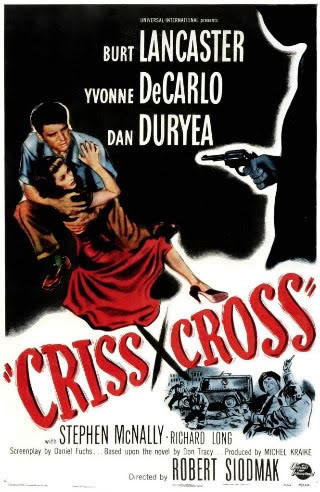
Burt Lancaster, Robert Siodmak, a heist, a hero doomed by fate and his own stupidity, and a rotten to the core femme fatale – all of this sounds a little like a brief synopsis of The Killers. In fact, it refers to Criss Cross (1949), a near relative of that earlier work and a film that vies with it for the honor of being hailed Siodmak’s best movie. Apart from the pairing of director and star, both these films share a similar theme and structure, and I find it almost impossible to decide which is the better one. Ultimately, it doesn’t matter – I like them both and they are two of the strongest noir pictures to come out of the 1940s.

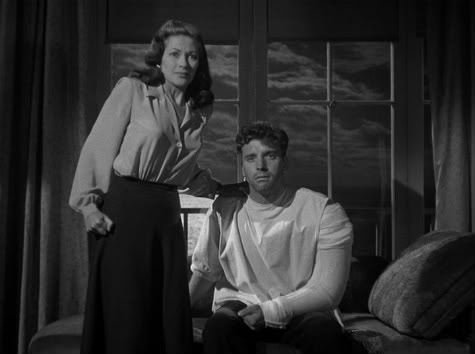
The title of this movie is a highly appropriate one for a tale where the paths of all the main characters are continually intersecting in a web of deceit and betrayal, each crossing up the other at the first opportunity. At the centre of it all are three people – Steve Thompson (Burt Lancaster), Anna (Yvonne De Carlo) and Slim Dundee (Dan Duryea) – bound together by an unholy combination of love, lust and greed. The opening shot, with the camera swooping ominously down from the night skies of LA, sees Anna and Steve caught in a clinch in the parking lot of a nightclub. As the lights suddenly pick them out, their startled and guilty reaction indicates that this is an illicit rendezvous. The fact is further underlined by the terse, tense dialogue – this couple is planning something dangerous, and the possibility of discovery holds a terrifying threat for them. Anna is married to local hood Slim Dundee, but she and Steve were once wed too. Their passionate embrace makes it clear that they have rekindled their old relationship, with the flame burning brightest for Steve in particular. And it’s from the point of view of Steve that the story is primarily seen, with the others moving in and out of the picture at various intervals. He’s a classic noir protagonist, a fairly ordinary guy with limited prospects and a blind spot where no-good females are concerned. A lengthy flashback sequence, accompanied by a suitably weary and resigned voiceover by Steve, spells out exactly how the lives of these three characters converged and the complex ties that continue to bind them together. In short, Steve’s job as a guard for an armored car company has led to his conspiring with Dundee to raid one of the secure vehicles. However, in the noir universe there’s no such thing as honor among thieves and everyone has his own hidden agenda. Steve is the only one of the trio whose motives have some semblance of decency – he’s driven by a kind of desperate love for Anna – and the aftermath of the heist shows just how deep the fault lines of treachery run in this uneasy alliance.

£5

Apparently the untimely death of Mark Hellinger meant that the original script was revised and certain aspects of the story were changed. Be that as it may, the movie that we ended up with is almost impossible to fault and Daniel Fuchs’ script successfully blends the heist and Steve’s obsessive love to powerful effect. Flashback structures can sometimes be confusing or upset the mood of a film but in this case it works perfectly, coming at precisely the right point and filling in the background details that are vital to understanding the nature of Steve and Anna’s relationship. With a tight script, and Franz Planer’s photographic talents, in place, director Robert Siodmak was free to put it all together with his customary visual flair. The opening, which I referred to earlier, pitches the viewer headlong into this complex tale of dishonor and betrayal in incredibly stylish fashion. And it never really lets up from that moment, with one memorable and superbly shot scene following hard on the heels of another. Siodmak uses every trick up his sleeve to manipulate the mood and perspective, from coldly objective overheads to disconcerting low angles and close-ups, interspersed with fast cuts and dissolves. For me, the real stand out scenes, although there’s hardly a poor moment throughout, are the ones in Union Station and in the hospital. The former not only gives a fascinating glimpse of contemporary LA bustle, but also shows the director’s skill in composing a complex series of shots in a crowded environment while retaining control of the geography. In the latter, he uses the reflection from the mirror in Steve’s room to break up the static nature of the setup and extract the maximum amount of tension at the same time.

If the technical aspects of the film are straight out of the top drawer, then the same can also be said for the acting. Burt Lancaster kicked off his career with some finely judged playing as the doomed Swede in The Killers, and Siodmak got him to tap into that same vibe to coax another wonderfully nuanced and sensitive performance from him. Once again he hits all the right notes as the big palooka whose dark romanticism sees him suckered by the machinations of a conniving woman. Every emotional state the script calls on him to display is carried off convincingly, from fear and disenchantment right through to the calm acceptance of his fate at the end – from the dumbfounded look of a guy who’s just had his guts kicked out by the woman he loves to the cloying sense of panic of a man under sentence of death and trapped in an anonymous hospital ward.

£4

Yvonne De Carlo didn’t have to go through quite as many stages, yet she’s still excellent alternating between the sassy, sensual broad that forms her public persona and the nervy, desperate woman she becomes in private. When she drops all pretense in the climax and reveals her true character to Steve and the audience there’s a tangible shock to be felt. Dan Duryea was an old hand at taking on the role of the slimy villain, and to that he adds a layer of menace as Slim Dundee. He manages this so well that it’s easy to understand the level of fear and trepidation he provokes in Steve when he contemplates the consequences of crossing him. While these three actors carry the movie, there’s real depth in the  supporting cast too. Stephen McNally is solid and sympathetic as the cop whose friendship for Steve leads him to inadvertently push him into crime. In fact, there are lovely little cameos all through the movie: Percy Helton’s chipmunk featured barman, Joan Miller’s garrulous barfly, Griff Barnett’s kindly and lonely father figure.

Criss Cross has been out on DVD for many years now, and the US disc from Universal is an especially strong effort. It offers a near perfect transfer of the film with clarity, sharpness and contrast all at the high end of the scale. My only disappointment comes from the absence of any extra features, bar the theatrical trailer, for such a quality movie. One shouldn’t really complain, in these days of bare bones burn on demand discs, but this film does deserve a commentary track at the very least. Still, we have got an excellent piece of the filmmaker’s art looking great. Criss Cross is a highly rated production that occupies a prominent position in the noir canon, and it has earned that honour. It’s one of those rare films that checks all the boxes and never puts a foot wrong from its dramatic opening until it’s darkly cynical final fade out. Those who are familiar with the picture will know exactly what I’m talking about, and those who are not owe it to themselves to discover this little treasure. This is unquestionably one of the real jewels of film noir.


Rancho Notorious

Hate, murder and revenge…

Those three powerful words succinctly describe what Fritz Lang’s Rancho Notorious (1952) is all about. It’s a curiosity – a western that seems to take pride in overturning genre conventions and defying viewer expectations. It’s also a highly stylized melodrama, bordering on parody in fact, a kind of baroque noir picture dressed up in western garb. Over the years I’ve seen the movie come in for some criticism, largely based on the atmosphere of artificiality or cheapness. Still, that’s a big part of what attracts me to it; the anti-realism of the film gives it a theatrical feel, and heightens the sense of watching a morality piece played out on an elaborate stage.

The plot is a fairly straightforward revenge yarn although, perhaps unsurprisingly with Lang occupying the director’s chair, it’s given a twist to keep it fresh. Vern Haskell (Arthur Kennedy) is an ordinary cowboy who sees his world turned upside down when a couple of outlaws ride into town, raid the assayer’s office where his fiancée works, and rape and murder the girl in the process. Inevitably, Vern wants justice and sets out with the hastily assembled posse to track down the criminals. However, the traumatic event has caused cracks to appear in the apparently mild exterior of this man, and an obsessive streak begins to emerge when the posse refuses to continue what looks like a fruitless pursuit. Having scornfully dismissed his former friends, Vern sets out alone in search of a reckoning. The first third of the film is thus played out in typically noir fashion, as we follow Vern’s painstaking combing of the country for a clue that will lead him to those responsible for the death of his girl. His progress is charted through interviews and flashbacks, as he slowly pieces together the clues and draws ever closer to his quarry. The final piece of the puzzle, or at least the piece that will bring him within striking distance of the murderer, comes when he contrives to have himself thrown in prison with notorious outlaw Frenchy Fairmont (Mel Ferrer). Along the way, Vern has learned that the key to the mystery lies with a woman by the name of Altar Keane (Marlene Dietrich) and a place called Chuck-A-Luck. His acquaintance with Frenchy, and his part in making good their jail break, ensures Vern’s smooth entry to the semi-mythical Chuck-A-Luck. This is a ranch, run by Altar, serving as a front for an outlaw refuge where no questions are asked so long as the proprietress is paid 10% of any and all takings. Vern is now in a position to work through a shortlist of possible candidates who may be the murderer. Yet, there is a price to be paid; his initial quest for justice has evolved into a thirst for vengeance and has transformed his character in the process. By the end, the hero has become as violent, manipulative and ruthless as the man he set out to find.

£2

Rancho Notorious was the last of three westerns that Fritz Lang made, and it’s arguably his most interesting. The idea of the ordinary guy overtaken by events and thrown into a world of violence and deceit that’s alien to him is one that can be found throughout Lang’s work. The central theme of how a desire for revenge can twist a formerly decent man and leave him on a par with the criminals he’s pursuing would be further, and more competently, explored when the director returned to it in The Big Heat a year later. Although all of Lang’s westerns contain elements of his trademark noir sensibilities, Rancho Notorious displays them most prominently. I’ve mentioned the use of the flashback in the first half hour of the picture, but the mood and photography all the way through help to cement the fatalistic and pessimistic sense that pervades the movie. One could, I suppose, complain about the overuse of painted backdrops and the ever-present ballad that serves as a stylized voiceover narration for the unfolding plot, but I prefer to see these as tools that Lang used to create his own vision of a dark frontier. The film is less concerned with showing any accurate portrayal of the west than it is with detailing the downward spiral of an essentially good man into a world of corruption and violence.

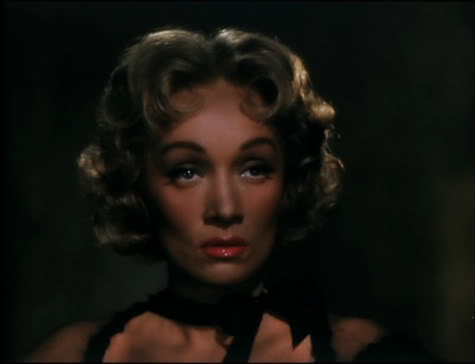
Marlene Dietrich had already played the archetypical bad saloon girl over a decade before in Destry Rides Again, and her role as Altar Keane comes off as an older but only slightly wiser version of that same character; between these two films she created the template against which all such portrayals would subsequently be judged. Dietrich apparently disliked the film and the reasons for that are detailed in a fine post by Toby at 50 Westerns here. Despite all the discord on the set, she turns in a fine performance as a woman who’s gained a lot of experience but little personal fulfillment. She may well rule the roost at Chuck-A-Luck, but there’s a weary, resigned air about her that indicates happiness has passed her by. Mel Ferrer was an actor I’m generally not that fond of, but I thought the mournful passivity that he possessed was used to good effect here, a nice counterbalance to Arthur Kennedy’s twitchiness. Kennedy wasn’t really a leading man at any point in his career – his best and most memorable work was usually done when he was playing the villainous supporting role – yet that actually makes his casting here more successful. His nondescript, everyman quality is suited to the role of Vern Haskell and he really taps into the obsessive, driven nature of his character as the movie progresses. As an aside, I’ve often seen it stated that Vern falls for Altar after his arrival at Chuck-A-Luck, but I’ve never thought that was the case at all. To me, he’s become so consumed by hate at this stage that he’s incapable of loving anyone and is merely feigning attraction to get nearer to his ultimate goal.

For a long time I had the UK DVD release of Rancho Notorious from Optimum, and it was never particularly satisfying – soft and with washed out colours. The movie then came out in the US as part of the Warner Archive series, sporting an altogether stronger transfer. Since then, I picked up the French release by Films Sans Frontieres which I’m very happy with. It’s a significant improvement on my old Optimum disc and, judging from screencaps, looks very close to the quality of the Archive disc. It’s sharper and more colourful but there’s still some print damage on view. Forced subtitles on the English track are always a concern with French releases but this disc allows them to be disabled via the setup menu. Rancho Notorious isn’t one of Fritz Lang’s better regarded films and tends to be criticised quite a lot. I think this is a little unfair; while it may not be his best work it’s still very entertaining. Much of the problem may come down to a question of expectations, with the film suffering from viewers approaching it with the thought that they will be getting a standard oater. If you accept that you’re in for a piece of high melodrama in a stylized western setting then the movie is unlikely to disappoint.

The Indian Fighter

poster322

Films like Broken Arrow and Devil’s Doorway broke new ground for the western by offering up portrayals of Indians which were more three-dimensional than had traditionally been the case. Andre de Toth’s The Indian Fighter (1955) treads a similarly sympathetic path, showing the Sioux in a generally positive light. Few of the white characters are shown to be particularly admirable, even the nominal hero is not without his faults, succumbing easily to prejudice and greed. In addition, the film has a pro-ecology subtext that’s blended into the story in a way that’s refreshing and unobtrusive. This is not as powerful a film as the examples by Delmer Daves and Anthony Mann which I mentioned, yet it still manages to get its message across without resorting to the po-faced piety of more recent revisionist pieces.

Johnny Hawks (Kirk Douglas) is the Indian fighter of the title, an army scout recently returned to the west after the Civil War. He’s been sent along to guide a wagon train bound for Oregon through potentially hostile country. Before he ever reaches his posting though, he’s distracted by two events that are to shape the story that follows. The first is a sighting of Onahti (Elsa Martinelli), the beautiful daughter of Sioux chief Red Cloud, bathing naked in a river. The second is when he stumbles upon a botched deal between two white men, Todd and Chivington (Walter Matthau and Lon Chaney Jr), and a Sioux warrior exchanging whisky for gold. Both of these occurrences illustrate Hawks’ inherent sympathy for his old enemies. The former, naturally enough, arousing his romantic instincts, while the latter emphasises his willingness to side with the Sioux when confronted with the exploitative behaviour of his fellow whites. What draws Hawks to the Sioux is the respect he shares with them for the land which they occupy. Red Cloud’s principal objection to white men on his land is based on his belief that their greed for the gold it contains will wreak environmental havoc on the unspoiled paradise. Although Hawks doesn’t voice such fears specifically, there’s a telling moment later on when he confides in a photographer that the reason he doesn’t share his evangelical zeal to publicize the beauty of the frontier is his knowledge that attracting more settlers, and the trappings of civilization that they will inevitably bring in their wake, will spell the end of the west he loves. Even so, Hawks agrees to guide the wagon train through Sioux territory. However, the presence of Todd and Chivington among the settlers soon leads to trouble and puts the lives of everyone in jeopardy. While Hawks’ desire for Onahti drives him to neglect his duty, the equally strong desire of Todd and Chivington for the yellow metal sparks off a Sioux uprising. Faced with suspicion and hostility from both sides, Hawks is desperate to find some way of averting an impending massacre, and the terrible consequences it will have for the Sioux.

£41

By the time he made The Indian Fighter, Andre de Toth had a string of westerns behind him (half a dozen starring Randolph Scott), and he’d developed into a highly competent genre director. He used the wide cinemascope lens to highlight the natural beauty of the Oregon landscapes where the picture was shot. These stunning images make it very easy to see why both Hawks and the Sioux want to do all in their power to preserve the land. The rich visuals are probably the biggest selling point for this picture, but de Toth was no slouch when it came to filming action scenes and his talent in this area is shown to great effect in the climactic Sioux attack on the besieged fort. Not only are the tactics employed innovative and surprising, but the way it’s shot gets across the excitement and danger too. Many of de Toth’s films display a matter of fact approach to physical violence and this one is no exception. Early on, we get to see two victims of Sioux justice strung up by the heels, though the camera mercifully avoids zooming in to focus on the exact nature of their demise. Then later, as the body of a cavalry officer is removed from the mount he’s been strapped to, his hat drops away to reveal the gory aftermath of his scalping.

The Indian Fighter came from Kirk Douglas’ own production company and, as was the case with Man Without a Star, he tends to overindulge himself a little. Generally though, Douglas manages to keep his vigor and enthusiasm within acceptable bounds this time. That is to say, he plays the role of Johnny Hawks with the level of energy that’s not unreasonable for the character. The outdoors nature of the shoot, and the degree of action involved, offered ample opportunity for him to show off his physical powers, which is just as well since Ben Hecht’s script never puts serious demands on his acting abilities. In the role of Onahti, Elsa Martinelli hasn’t a great deal to do beyond looking attractive, and she accomplishes that without too much effort; her introductory swimming scene is one of the more memorable openings for a western. Walter Matthau and Lon Chaney Jr are moderately effective as the heavies, the former faring best, but never pose any direct threat to the hero. The nature of this pair’s villainy comes from the repercussions of their actions rather than the actual menace they generate. Matthau is now best known for his comedic roles but he did make a handful of westerns at the beginning of his film career. He uses that calculating, scheming quality which came so naturally to him, and which he built up in subsequent years, to compensate for the absence of any real physical threat. Chaney’s career, on the other hand, was in decline by this time, and the truth is he cuts a rather shambling figure.

The Indian Fighter is widely available on DVD from MGM. I have the UK release, which I understand is a step up in terms of picture quality from the lacklustre US version. Although the disc offers nothing in terms of extra features, the image is quite pleasing. The anamorphic scope transfer is acceptably sharp, without noticeable damage, and represents the colours very nicely. A film that relies as heavily on its scenic views as this one does needs to look good, and I have no complaints about the presentation. Generally, this is a good and well-intentioned movie, although the villains are a little weak. Having said that, the action and the cinematography make up for such deficiencies. It’s interesting to note that with the exception of Douglas’ skittish lead and the thoughtful cavalry commander, the whites are portrayed as either grasping, prejudiced or duplicitous. The only truly honourable figures are the environmentally aware Sioux. which gives the movie a strangely contemporary feel. I liked it.


The High Bright Sun

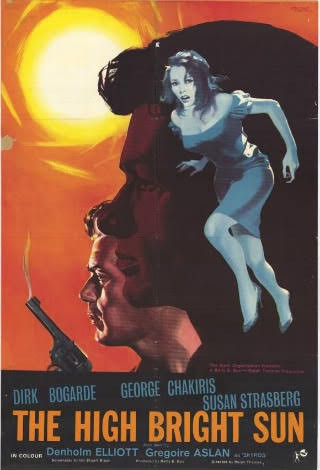
I’m not sure how many movies have been set during the guerilla campaign in Cyprus in the 1950s, but The High Bright Sun (1964) is the only one that I can recall seeing. It’s all too easy for a story which makes use of such a background to become bogged down in politics and thus dilute the drama. However, this film has the good sense to avoid becoming too mired in ideological matters and instead concentrates on telling a suspenseful yarn that could have been relocated to most any conflict zone without losing its edge. As such, we end up with a well paced thriller that builds tension relentlessly and holds the attention right to the end.

The tale is all about finding oneself in the wrong place at the wrong time. Juno Kozani (Susan Strasberg) is a Cypriot-American student visiting the island where her father was born and staying with some old family friends. Having witnessed the aftermath of the fatal ambush of two British soldiers by EOKA guerillas, she is interviewed by an intelligence officer, Major McGuire (Dirk Bogarde). Although Juno can only tell him the few mumbled words of a mortally wounded sergeant, McGuire’s suspicions are aroused. He’s one of those jaded colonial campaigners who has grown accustomed to the guarded silence of the locals, and routinely takes it for granted that details will be withheld. In this case though, Juno has told him all she knows, but he has a hunch that the guerilla leader, Skyros (Gregoire Aslan), was involved. What both he and Juno are unaware of at this stage, however, is that her host is using his flawless respectability to cloak his involvement with the paramilitaries. Following a vaguely unpleasant dinner party attended by a family acquaintance, Haghios (George Chakiris), Juno blunders into the library and sees too much for her own good – a secret visit by Skyros. This is the point at which the story really shifts into gear, with Juno having inadvertently placed herself in a very dicey position. She now has to do her utmost to convince her hosts – and in particular, the hostile and dangerous Haghios –  that she didn’t notice anything untoward. In the meantime, McGuire is playing his hunch that Juno knows more than she can or is willing to say. By the by, it’s decided that Juno represents too great a threat and she finds herself the quarry of the seemingly unstoppable Haghios, first in a hunt across the beautiful countryside, and later holed up and under siege in McGuire’s apartment.

Director Ralph Thomas isn’t best known for his thrillers but he did dabble in the genre, including among his credits the excellent The Clouded Yellow and the unloved remake of The 39 Steps. The lion’s share of his work concentrated on comedies, but he plays down that aspect in The High Bright Sun, and succeeds in producing a tight thriller that draws you in as it goes along. The scene where Juno learns that what she thought was going to be a trip to the airport and safety is really a ploy to see her assassinated by the roadside is nicely shot. It also leads into the chase across the island where Thomas, and cameraman Ernest Steward, gets great value out of the stunning locations – Italy apparently standing in for Cyprus. The script, by Ian Stuart Black and Bryan Forbes, does contain some risible and admittedly clunky dialogue at a few points yet it also maintains its focus throughout and does its best to tell a story rather than descending into political diatribe. If anything it points out the dirty and indiscriminate nature of guerilla warfare, where the innocent often suffer the most at the hands of both combatants.

I thought all the actors turned in nicely measured performances, with Susan Strasberg doing fine as the girl caught out of her depth in a situation that’s spinning out of control. For the most part she underplays, and that’s fine as she’s supposed to be someone who must keep a careful check on her emotions lest she should betray herself. Dirk Bogarde wasn’t overly stretched in this one, though he does bring just the right degree of weary cynicism and self-effacing humour to his role. As the villain of the piece, the fanatical and homicidal Haghios, George Chakiris shows a surprising menace. He really did the coldly determined bit well, only the prospect of indulging in some physical violence bringing a gleam to his eye. There’s also a wonderful supporting part for Denholm Elliott as the apparently dissipated and alcoholic friend of McGuire who proves himself to be both ruthless and resourceful.

The High Bright Sun comes to DVD in the UK via Spirit, who have recently begun distributing a growing number of British titles from the ITV library. On the positive side, the film looks pretty good despite an apparent lack of restoration, without any major damage on view. The colour fares well and does justice to the location photography. The downside is that the movie opens with the credits letterboxed at about 1.66:1 before reverting to 1.33:1 for the remainder of the running time. I think we’re looking at an open matte transfer here, though it might be slightly zoomed too, judging from the extraneous headroom in some shots. This is by no means perfect, but it’s not a totally botched job either – a 1.66:1 movie doesn’t suffer as badly from a compromised aspect ratio as is the case with those composed for wider presentation. The disc is a very basic affair offering no subtitle options and no extra features. I found the film to be a well produced political thriller, with the emphasis on the thrills rather than the politics. It may not be an outstanding piece of work, yet the performances, scripting and direction are all professional and polished. Crucially for a thriller, it does deliver the necessary amount of suspense, tension and excitement. I’d call it a solid piece of entertainment that looks good and doesn’t outstay its welcome. I recommend giving it a chance – it’s certainly worth a look.

The Raid

poster312

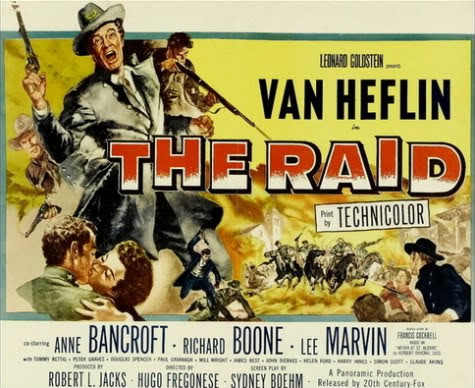
There is no conflict as dirty, socially corrosive and tragic as a civil war. Friends and neighbours, those whose similarities are every bit as pronounced as their differences, suddenly find themselves sworn enemies at one another’s throats. Any story which uses such a conflict as its backdrop automatically has an enormous amount of built-in dramatic potential. Yet despite that, there’s a hazard too – commercial success is by no means guaranteed. Movies based around the American Civil War were traditionally regarded as box office poison, and I don’t think such an aversion is some affectation confined to the United States. There are few nations which haven’t fallen victim to internal bloodletting, and the scars of these events never fully heal in the public consciousness – it’s hard to get past the essential ugliness of a country tearing itself apart from within. However, a movie can still remain compelling, and indeed worthwhile, in the face of these obstacles. The trick is to sidestep the cloying piety that can sink a script and instead focus on the real human effects of a land and people divided. The Raid (1954) is such a film.

The story is based on a real event during the Civil War – one of those peripheral actions that occur in most conflicts. It opens with a small band of Confederate POWs staging a breakout from a Union prison close to the Canadian border. The aim of the fugitives, under the command of Major Benton (Van Heflin), is to cross into neutral territory and reorganise themselves there. Benton has in mind using the neighbouring country as a springboard to attack the North. His plan is to marshal his forces and unexpectedly raid the border towns, both as an act of revenge for Sherman’s pillage of the South and as a means of drawing vital troops away from the front line and thus relieving the pressure on Lee. The target for the first of these incursions is St Albans, Vermont. Benton arrives in town posing as a Canadian businessman looking to invest in local property, but really scouting the lay of the land and paving the way for his comrades to join him. The basic plan is to clean out the banks, providing much needed funds for buying munitions, and then to torch the town and cause as much havoc as possible before beating a hasty retreat back across the border. On paper, this sounds like a viable proposition but complications inevitably arise. There are three troublesome flies in Benton’s jar of ointment: Katy Bishop (Anne Bancroft), the young widow running the boarding house where Benton’s lodging; Captain Foster (Richard Boone), the one-armed veteran in charge of St Albans’ small military force; and Lieutenant Keating (Lee Marvin), whose bitter hatred of the North means he’s something of a loose cannon among Benton’s otherwise highly disciplined force. These three people, and Benton, are a perfect illustration of the effects of civil warfare. All of them have been damaged, either physically or emotionally, by the war and all represent different aspects of the mindset it has created – Keating’s volatile sadism, Katy’s dignified struggle against loneliness, Foster’s self-loathing, and Benton’s juggling of professionalism and sentiment. One key scene highlights the moral dilemma faced by a man in Benton’s peculiar and precarious position. Having just saved the townsfolk from mortal danger (and himself too, as it happens), he returns to his lodgings only to be confronted with that which he least expected – the gratitude and acceptance of the local community. A combination of shock, humility, and horror at his own duplicity briefly flit across Benton’s features. In this moment, everything we need to know about how this kind of war divides loyalties, even internally, is deftly expressed. Still, Benton is a man of principle and, despite any moral qualms he may be experiencing, he forges ahead towards his objective. By the time the actual raid occurs the viewers have been granted a glimpse into the hearts and minds of those from both sides of the divide, making the climax all the more tense and charged.

£9

Argentine director Hugo Fregonese came to Hollywood in 1949 and made a number of films that have largely been forgotten outside of film buff circles. There may not be any masterpieces among his credits but he displayed a very strong visual sense and his work remains interesting at the very least. Apache Drums, produced by Val Lewton, is a little neglected gem that’s ripe for rediscovery, while Saddle Tramp and Harry Black and the Tiger have points in their favour too. The Raid is one of his best efforts, looking handsome and maintaining suspense throughout. The reenactment of the titular raid (a bit of research indicates that the real event resulted in considerably less damage) makes for an exciting climax and it’s well staged by Fregonese and his cameraman, Lucien Ballard. Van Heflin does very well as Major Benton, looking tough and authoritative enough to be believable as the commander of the raiders, and also showing the right degree of sensitivity when necessary. He hadn’t the looks to make a career as a romantic lead but his understated performances generally had a very attractive human quality. Once again, Richard Boone seems to get right into the character he’s playing; the gruffness of Foster initially seems to stem from his bitterness over his war injury but, as the story progresses, it’s apparent that his reserved demeanour has a deeper psychological root. Both actors bring quite subtle nuances to their respective characterizations and there’s nothing one-dimensional about either of them. Personally, I found it refreshing that Anne Bancroft’s widow was used as a softening influence on both Boone and Heflin, and wasn’t there merely to provide an excuse for some superfluous romance. Her presence is integral to the development of the plot and the shifting emotions of the two men staying under her roof, but not as a stereotypical Hollywood siren. Heading up an especially strong supporting cast, Lee Marvin turns in another memorable performance as the vengeful and dangerous Keating. His “bull in a china shop” approach acts as a counterweight to Van Heflin’s measured caution and helps to up the tension.

To the best of my knowledge, the only DVD release of The Raid is the Spanish edition from Impulso/Fox. Generally, whilst apparently unrestored, the disc is one of their reasonable efforts. The film may have been 1.66:1 originally, but this transfer presents it in Academy ratio (1.33:1) – if it’s open-matte it may be slightly zoomed as the framing looks a little tight to my eyes on occasion. However, I wouldn’t say it was seriously compromised. The colour and detail levels are quite strong, and it’s pleasing to look at. The extras are the usual gallery and text items, and the Spanish subtitles can be disabled from the setup menu. The film approaches its subject matter intelligently and avoids forcing judgements on the viewer. The combination of a strong, capable cast, a tight script and professional direction adds up to a pacy and entertaining look at an intriguing episode from the Civil War. Recommended.


Singapore

relx40f

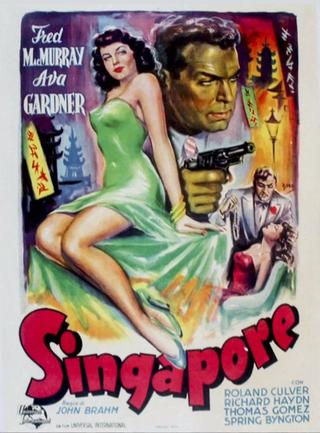
Sometimes it’s hard to know how to categorize a movie; it may have certain familiar and identifiable features that one associates with a particular genre, yet either fails to capitalize on these or mixes in the traits of another type of movie. Of course that’s not necessarily a bad thing, and a touch of the unexpected can enliven a stale formula. But not always. Singapore (1947) has many of the trappings that are associated with film noir: dark, shadowy imagery, a flashback, a voiceover narration, a slightly unscrupulous protagonist, a mysterious woman. Still, it’s not a noir picture; there’s too much melodramatic romance and half-hearted adventure tossed in there. Ultimately, it’s a movie that flirts with a handful of genres and suffers a bit of an identity crisis as a result. Besides that, it’s just not very good.

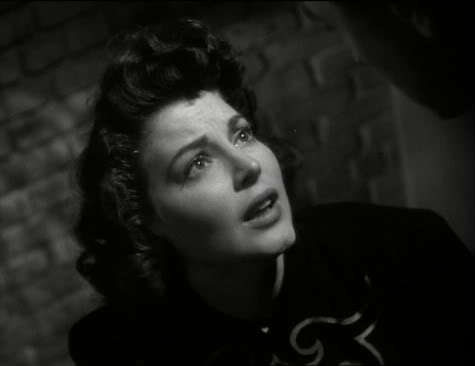
Matt Gordon (Fred MacMurray) is a pearl smuggler – we learn this when he’s pulled in to the custom’s office the moment his plane touches down in Singapore. With the war over, he’s returning to his old haunts and the authorities suspect that he’s likely to return to his old trade too. As Gordon wanders through the hotel where he formerly resided, he’s suddenly assailed by memories. A flashback sequence sees him in the days leading up to the Japanese attack and introduces the old lover whose loss still preys on his mind. Gordon and Linda Grahame (Ava Gardner) had one of those whirlwind romances that are often found in wartime movies. Just as the couple are about to tie the knot the bombing raids commence, and he races back to his hotel to recover the fortune in pearls he has stashed there. Failing to recover his treasure, he returns to find the chapel in ruins and Linda missing presumed dead. And so we’re up to speed – Gordon has come back to Singapore hoping his pearls may still be retrievable. As he awaits the opportunity to check out his old quarters and see if the loot is still there, he spies Linda. The woman he thought had perished in the bombed out chapel is alive and well, but has no recollection of who he is. Amnesia – we’re back in noir territory, right? Wrong. Loss of memory can serve as a great plot device when it involves blanking out secrets that carry a threat or danger. In Singapore, that’s not the case at all and the story becomes bogged down in a soapy love triangle that really only has two sides. Sure, there’s an attempt to milk some suspense and intrigue from the secondary business of two cartoon villains (Thomas Gomez and George Lloyd) also seeking the elusive pearls, but again the absence of any real threat hamstrings that element.

PDVD_001-45

Casablanca struck gold when it placed its two eternal lovers in an exotic locale, but a movie needs more than that to succeed. Lots of films have tried to tap into that vibe (Macao, Calcutta, Saigon etc.) but the results have been variable at best. For me, Singapore fails on two levels; the central romance and half-hearted mystery just aren’t engaging, and the leads don’t have any spark together. Although both MacMurray and Gardner are good enough in their respective roles they have no chemistry whatsoever, and that’s a major issue when the script revolves around an apparent grand passion. As if that weren’t enough, the chief stumbling block preventing the couple from picking up where they left off – Gardner’s post-amnesia marriage to a planter – rings hollow and utterly fails to convince. As the villain, Thomas Gomez is surprisingly toothless and his character’s borderline incompetence means that we never seriously doubt MacMurray’s ability to get the upper hand. Director John Brahm made a number of noir-tinged melodramas that have much to recommend them, but Singapore is certainly among his weaker efforts. I’m generally a fan of his work and he does his best to inject some style into this humdrum production. The angles are varied and the sets are cleverly lit to enhance the atmosphere as far as possible. Still, apart from a short sequence which sees MacMurray struggling to extract his hidden pearls while avoiding the attentions of the law next door, there’s precious little tension on view.

As far as I’m aware, the only current commercial release of Singapore is the recent DVD from Universal in France. Generally, the film has been presented well; the transfer does exhibit some dirt and speckles but this is really only noticeable right at the beginning. The image is satisfactorily sharp and contrast is consistent throughout. There are no extra features offered and the French subtitles are optional and can be disabled via the setup menu – burnt-in captions do appear though on a handful of occasions when text is displayed, but this is too rare and minor to be regarded as a black mark. I guess I’ve made it clear enough that this isn’t an especially good or memorable movie. Singapore was later remade as the Errol Flynn vehicle Istanbul and while that’s no great shakes either, it’s arguably a stronger film. This one is attractively shot and Ava Gardner looks wonderful as always, but that’s about it. I can’t say I got much out of the movie and it’s not one I’d recommend tracking down.


Jubal

Shakespeare and westerns really don’t sound like they go together. However, in the case of the former, the universality of his themes means that the location and period in which the drama takes place is largely irrelevant. And as for the latter, the genre is so flexible that pretty much anything can be tackled within its framework. William Wellman’s Yellow Sky has been described as a reworking of The Tempest, while Jubal (1956) sees the ideas central to Othello transported to a ranch in Wyoming. In a way, the isolated simplicity of the west provides an ideal backdrop for the presentation of such timeless concepts. Like an uncluttered stage, the absence of the trappings of civilization helps to better focus attention on the more important aspects of the story.

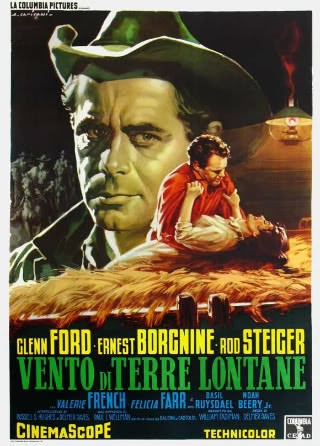
Jubal Troop (Glenn Ford) is a wanderer, a man who has spent his life running; he claims that he’s been trying to escape the bad luck that’s always dogged his steps. In reality though, he’s been running away from himself, or rather his own perceived inadequacies that stem from traumatic childhood experiences. When ranch boss Shep Horgan (Ernest Borgnine) takes him in and offers him a job and a chance to make a fresh start, it looks as though his streak of ill-fortune may be coming to an end. In spite of Jubal’s initial optimism, he soon realizes that he’s actually walked into a highly volatile situation. Shep is one of those salt of the earth types, brimming with hospitality and geniality yet lacking certain social graces. It’s this cheerful disdain for (or ignorance of) the niceties of polite society that has apparently pushed his young Canadian wife, Mae (Valerie French), away from him. I say apparently, because Mae merely uses this as an excuse – it’s clear enough that the remote ranch life and lack of social contact play an equally significant role in shaping her dissatisfaction. Almost as soon as Jubal arrives on the scene Mae begins to show an interest in the newcomer. On top of all this, there’s the problem of Pinky (Rod Steiger), Shep’s current top man and the previous recipient of Mae’s attention. Where Jubal resists Mae’s advances on the grounds that it would be a betrayal of the one man who ever handed him a break, Pinky never displayed such qualms. Now that he’s been sidelined by the new arrival, his resentment and natural antagonism bubble closer to the surface. Due as much to his own petty and spiteful nature as Jubal’s dedication to his job and his boss, Pinky finds himself falling out of favour both as a lover and an employee. It’s this displacement that triggers Pinky’s pent-up jealousy and latent misanthropy. When the opportunity arises, he slyly plants the seeds of doubt in Shep’s mind. And it’s from this point that the classical tragedy at the heart of the story starts to develop fully.

Delmer Daves had a real affinity for the western, his films within the genre all displaying an extremely fitting sense of time and place. In addition, he also had a great eye for telling composition and the use of landscape. His best movies look beautiful, and Jubal takes advantage of the breathtaking vistas that the location shooting in Wyoming offered. The exteriors have a kind of clean, bracing quality to them reminiscent of the mountain air their backgrounds suggest. These wide open spaces are representative both of the freshness of Jubal’s new life and also the remoteness of Shep’s ranch. However, Daves was no slouch when it came to interiors either; he, and cameraman Charles Lawton, create some extremely moody and tense imagery when the action moves indoors. It’s not always easy to achieve effective depth of focus and shadow density when filming in colour, yet Daves and Lawton manage to pull it off time and time again. When you’re telling a story as thematically dark as this it’s vital to keep the mood of the visuals in tune with the plot – Jubal always looks and feels just right at all the critical moments. What’s more, although Daves’ endings had a tendency to be a letdown in comparison to what went before, this movie maintains the correct tone right up to the rolling of the credits.

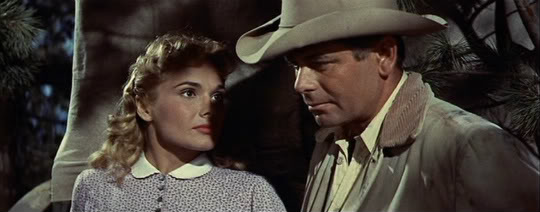
Glenn Ford was an excellent choice to play Jubal Troop, his edgy affability and that slight unease were well suited to the role. The character has an innate nobility and honesty, but there are demons lurking there too, torturing the man with personal doubt and a devalued sense of self-esteem. Ford had a gift for projecting all these qualities on the screen; perhaps that’s why he seemed at home playing in both psychologically complex westerns and film noir. In the following year’s 3:10 to Yuma, Ford and Felicia Farr played out one of the most touching and affecting romantic interludes it’s been my pleasure to see on film. This picture also features a romance between the two, just not as memorable or emotionally loaded as what was to come. Part of the problem is the weaker role handed to Ms Farr, but she still manages to convey something of that bittersweet tenderness in her scenes with Ford that would prove so effective in their next collaboration. The other, and much more substantial, female role was that of Valerie French. There was certainly nothing likeable about the part of Mae, whose infidelity (both real and imagined) sets three men at each other’s throats. Her frustrated sexiness is well realized and, by the end, in spite of her deceit, it’s hard not to feel some sympathy for her fate. Ernest Borgnine’s cuckolded husband draws even more pity though; the way he positively radiates a love for life means that his betrayal really hits home. His brash good humour makes him a favourite of the men, but also leaves him blissfully unaware of the coldness of his wife. When it suddenly dawns on Shep just how much of a fool he’s been, Borgnine’s highly expressive features show very clearly how deeply Mae’s playing around behind his back has affected him. Rod Steiger was always an extremely showy actor, forever in danger of allowing his intensity to spill over into inappropriate grandstanding. As the scheming and reprehensible Pinky, he just about manages to stay the right side of the line – although his tendency towards showboating does raise its head as the movie nears its climax. Among the supporting cast, Charles Bronson makes a strong impression as a hired hand who befriends Ford, and whose intervention at two critical moments help save the day.

Jubal has been available on DVD for a long time via Columbia/Sony in the US. The disc boasts a very good anamorphic scope transfer that looks rich and colourful. There are no extras offered, unless you count the preview snippets for other western titles from the company. The film remains an excellent example of Delmer Daves’ skill at telling a mature and thoughtful western tale. I think the fact that both the director and the star went on to make the better known 3:10 to Yuma a year later has overshadowed this picture to an extent. I’d say that anyone who enjoyed that movie will also appreciate the work on show here. This is yet another strong entry in the western’s golden decade, and fully deserving of any fan’s attention.