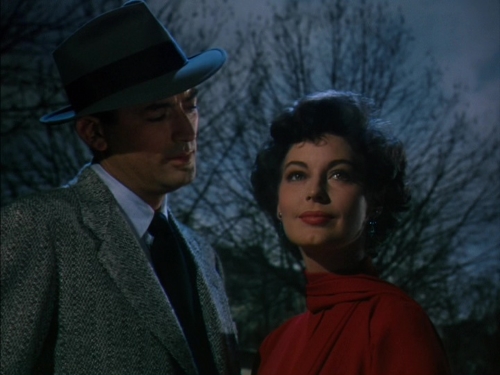
Caught

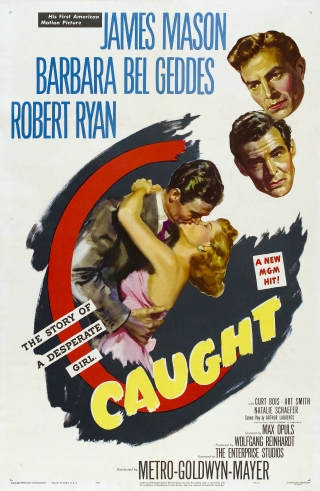
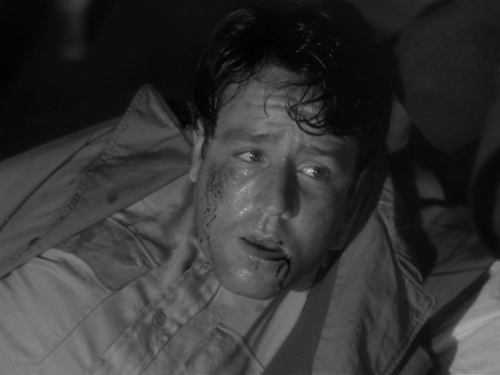
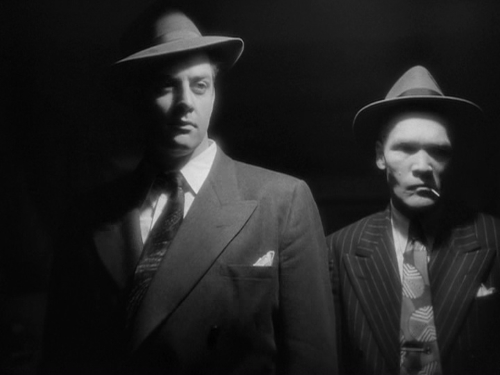
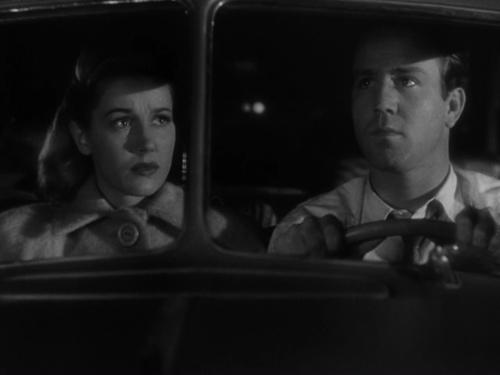
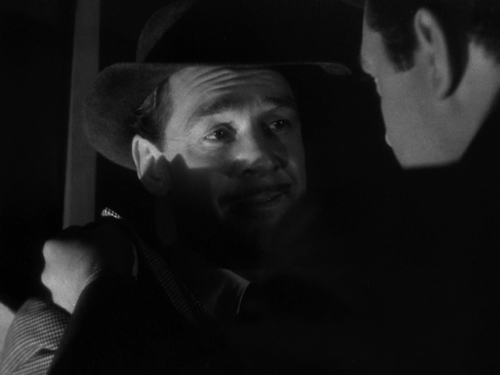
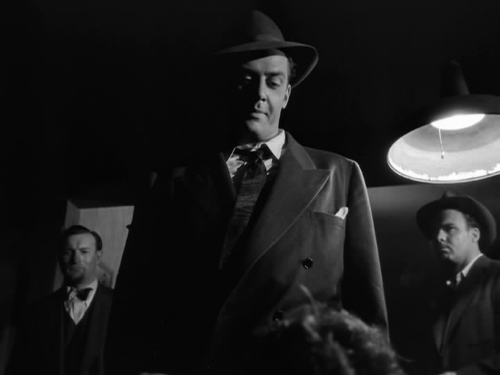
Seeing as Max Ophuls came up in some of the comments on the previous post, I decided to go back and have another look at one of his movies that I have struggled with in the past, namely the 1949 production of Caught. As a rule, I have enjoyed what I have seen of the director’s work, but this film has never worked for me. Anyway, with his name fresh in my mind, as well as the knowledge that the movie seems to be well regarded by many other viewers, I thought I should give it another chance. In brief, and this will be one of my shorter posts, I still have major issues with the movie. To be honest, the fact that I made it to the end was as much through a sense of obligation as anything.

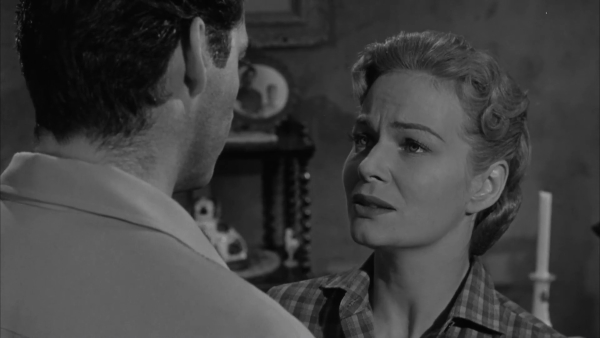
The whole thing is an examination of wish fulfillment and the consequent importance of being very careful indeed of what one wishes for. It opens with two sisters in a shabby tenement mooning over glossy magazines and browsing for dreams, a gem encrusted necklace here, a platinum bracelet there, and so on. As ever, money and the power it bestows matters very much to those who have little of it. Leonora (Barbara Bel Geddes) wants the security and the comfort that comes with wealth, and it does come her way as the result of an invitation to a party on a yacht, an invitation she very nearly turns down. This is the thing with Leonora – she wants things and then doesn’t want them when their real cost becomes apparent. When she makes the acquaintance of Smith Ohlrig (Robert Ryan), a tycoon with a deeply disturbed character, she is soon on the fast track towards the high life on Long Island. However, this is where it all goes wrong for just about everyone involved. Ohlrig is a domineering, controlling and cruel man, an obsessive soul at war with himself and the world in general. Leonora soon comes to see the stew she’s landed herself in and, wisely one would say, moves out and ends up working as a receptionist in a slum neighborhood for Dr Quinada (James Mason). From here the movie devolves into a series of sorties back and forth for Leonora as her indecision along with a deep-seated conviction that she has to “improve herself” at all costs winds up being a good deal more expensive in emotional and physical terms than she’d bargained for.

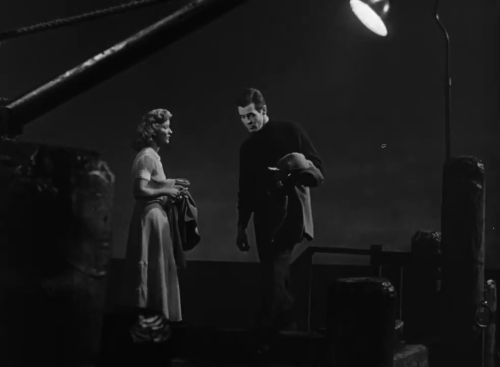
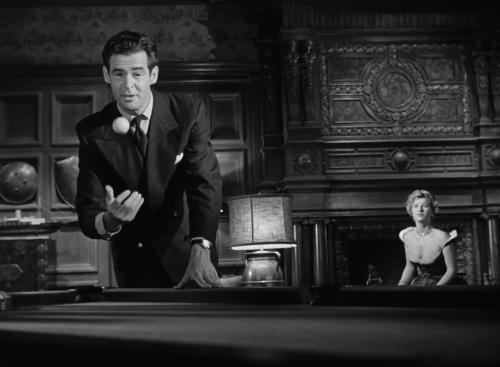
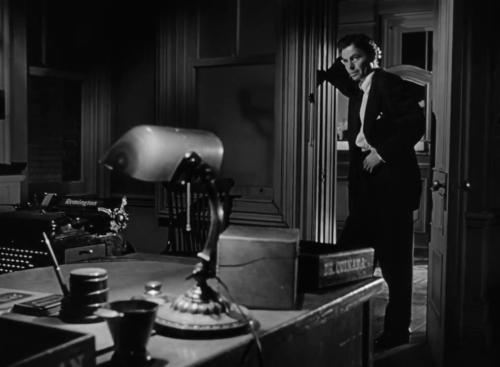
Max Ophuls’ direction is a pleasure – his camera swooping, swinging and panning, following his characters and sometimes sweeping past them to draw attention to the variously opulent or cheap surroundings while they debate, argue or simply muse out of shot. It’s a distinctive style and Lee Garmes’ cinematography adds to the eye-catching visuals. Attractive as all this may be, it’s not enough to paper over the paucity of genuine character at the heart of the movie. Robert Ryan’s Howard Hughes inspired sociopath is a showy piece of work, neurotic and foul and yet also somehow pitiful in his inadequacy. However, there’s a big hole in the middle of it all for me, and that’s the result of the role played by Barbara Bel Geddes. I started off feeling for her as she struggled to dig herself out of the poverty trap. The fact is though that she’s a playing a woman with essentially no character, a whiny, vacillating type who seems to revel in helplessness and indecision. This is the person who is the main focus and it’s very hard to like a movie where the central role presents such a moral vacuum. And the less said about the “happy ending” we’re asked to buy into, the better. James Mason’s first Hollywood starring role is fair, but he’s given little to do to stretch him –  he does have at least one good scene in the garage confrontation with Ryan and Bel Geddes. The support is mainly an attractively homespun turn from Frank Ferguson and a well observed peek at degradation and dissipation by Curt (“Tough, darling, tough.“) Bois.

Max Ophuls made far better films than this – The Reckless Moment, again with Mason, came shortly afterwards and is superior in every respect, and there are his great French movies such as  The Earrings of Madame de… and La Ronde. I honestly wish I could like this film more, but it just does not do it for me.

River Lady

Movies that exist at the periphery regularly catch my attention. They may be movies that occupy a place on the margins of a particular genre, they may be transitional efforts that straddle different eras, or they may even be a bit of both. Such is the case with River Lady (1948) a film which is not entirely successful, partly as it’s difficult to pin down the genre – a hint of the western, a dash of riverboat melodrama, and a pinch of the frontier adventure – and partly due to the time it was made. While it might not be the kind of movie that broke new ground or made a strong enough impression to encourage frequent revisits, it is still engaging in the way so many of George Sherman’s titles are.

I’ve lost count of how many westerns have turned a spotlight on the encroachment of civilization on the frontier. Sometimes it’s a matter of the railroad hammering out an iron clad tattoo across the plains and relentlessly shoving the old world to one side. At other times it is the stringing of the telegraph line, or the gradual extension of the reach of the law itself. River Lady concerns itself with the expansion of organized business interests, in particular the conflict between small, independent logging outfits and the hungry syndicates. Nevertheless, corporate kerfuffles of any type have a limited appeal at best and it’s always advisable to bring the human drama and the human faces of the players and antagonists to the fore. So it is that attention is focused on a roughneck logger called Dan Corrigan (Rod Cameron) and Sequin (Yvonne De Carlo), the owner of the titular paddle boat and undisclosed boss of the syndicate which is buying up all the struggling outfits on the river. This allows for a double-edged conflict, both the tangled business affairs and the romantic tug-of-war between a hardheaded free spirit such as Corrigan and the ambitious and manipulative Sequin. And any time the mixture looks like drifting off the boil the silky and stealthy Beauvais (Dan Duryea) is on hand to stoke it up once again.

As has been stated, in terms of genre, there’s a fluidity to the movie that mirrors the flow of the timber down the river. I guess that could be seen as versatility in the script, or even as a determination to resist the imposition of boundaries on the part of the filmmakers. However, it makes it hard to get a handle on the movie, a situation I’ve found can crop up from time to time in mid to late 1940s westerns, where it’s possible to detect elements of breezier B pictures rubbing shoulders with themes that carried a bit more weight. One could even say something similar about George Sherman’s career trajectory itself at this point. The rights to the story drifted around Universal for many years before the movie was finally made and perhaps this fairly lengthy gestation period has something to do with the feeling that the finished product imparts.

Rod Cameron is third billed but has the leading role. He provides a strong physical presence, although he does end up on the receiving end of a terrific beating meted out by Duryea at one stage. His acting is adequate overall, but the way his character is written is problematic. I think it’s clear enough that the intention is for a redemptive arc to be traced, which is fine as far as it goes. The thing is though that, as written, Corrigan isn’t really a likeable figure for much of the film’s running time. He’s not just a man who is on a learning curve, he’s downright unpleasant to the women in his life and comes across as spoiled and petulant instead of grittily independent. Duryea, as the villain of the piece, actually brings more nuance and therefore more interest to his part. I suppose it comes down to the fact that Duryea, even when we was showboating shamelessly or backstabbing with the worst of them, had a soulful air about him. Top billing went to Yvonne De Carlo but she is off screen for far too long and her role ends up largely undeveloped. Helena Carter is her romantic rival for Cameron’s affections and actually gets the more rewarding part. In support, John McIntire, Florence Bates and Jack Lambert all have their moments.

As a Technicolor production, River Lady might be expected to look better than it does. I have a German DVD that is acceptable all told, but there is a certain muddiness to it too. Perhaps the fact the movie is part of a George Sherman box that has it packaged alongside solid Blu-ray versions of The Last of the Fast Guns and Red Canyon serves to draw attention to its weaknesses.

Viewing notes – in brief

Just a few very brief comments to ensure the place doesn’t stagnate completely, which I’ve posted elsewhere, all on some movies I’ve been revisiting lately. Normal service should be resumed soon. I hope.


The Magnificent Seven (1960)

God knows how many times I’ve seen this over the years. Even so, as soon as Bernstein’s famous score kicks in there’s that same tingle of excitement and anticipation I first experienced as a child. Even though John Sturges is almost certainly best remembered for his longer movies such as this and The Great Escape, I think he did his most effective work on the shorter and more tightly structured films he made in the previous decade. While the first half of this one has some terrific scenes and moments – Calvera’s initial appearance, the ride up to Boot Hill and back etc – there is padding there too.
Something else I’ve become aware of over time is the way Steve McQueen’s “look at me” performance has lost a lot of its appeal. I find it very self-conscious, mannered and less satisfying every time I see it. On the other hand, Brynner’s work stands up well while Bronson is crafty, subtle and quite affecting.


The 39 Steps (1935)

Donald Spoto reckoned this movie improved with age and familiarity and I fully agree. It’s the best version of Buchan’s story (not the most faithful by any means, but that’s neither here nor there) and I consider it the best of Hitchcock’s British movies. The Lady Vanishes might run it close, but it’s the little moments, what John Ford would refer to as grace notes, such as Peggy Ashcroft’s aching wistfulness or Lucie Mannheim’s doomed spy that elevate it.


The Wrong Man (1956)

More Hitchcock and this time a man trapped in the relentless and merciless machine that is the justice system. I’ve a hunch I only saw this film once before, and that was a very long time ago. In some ways it is atypical Hitchcock, stylistically anyway – measured, sober, with a gritty realism. In another sense, thematically, it’s very characteristic with the title itself telling us that and it’s also very Catholic, even more so than I Confess.

My memory was of a rather harsh and decidedly grim picture and that’s exactly what it is, and it’s possibly the reason why it’s so long since I revisited it. Still, it’s a terrific movie which is held together by two fine, understated performances. Henry Fonda was always an immensely dignified actor, even down to his posture and gait, that quality adding much to his portrayal of a shell-shocked regular guy. Of course the real gut punch comes from what happens to Vera Miles, something which can’t be easy to convey in such a controlled way.

Mister Cory

Another day, another movie that appears to defy categorization. Of course, there is no good reason why anyone ought to feel it is necessary to categorize a movie, but it is a pastime that we film fans like to indulge in.  Mister Cory (1957) does not comfortably wear any of the labels I’ve seen hung on it, not that there are many people who have actually commented on the film one way or another. It has been referred to variously as a crime picture, a drama, even as a film noir. I guess there are elements of all those genres and styles to be found there, but none of them are entirely satisfactory. Perhaps one could call it a Blake Edwards film. However, I’m not sure I would be able to define that either, certainly not for something coming at this early stage of his career as a director/writer. So what is it? There is a hint of The Great Gatsby about the setup, it maybe even casts a glance in the direction of Dreiser’s An American Tragedy (and Stevens’ adaptation A Place in the Sun), and there is too a touch of the humor that Edwards brought to so many of his films. If anyone can produce a convenient label out all that, I salute them. Frankly, I’m happy enough to just think of it as a good movie that is not as well known as it might be.

The first view of Cory (Tony Curtis) is of a young man making his way along a heaving sidewalk in Chicago, one of those tenement slums where all human life is to be found, the kind of place where hope can all too often wither or where the seeds of all-consuming ambition can take hold. Cory is a man with ambitions, and the first steps towards realizing them are going to see him keep right on walking out of the neighborhood he grew up in. They carry him out of the city to one of those exclusive lakeside resorts where only those with blue blood, deep pockets and an Ivy League education can afford to lunch and lounge with poise. Now Cory may not have any of the usual qualifications to hang out in such environs, but he does have poise, even if his is borne of audacity. He’s hired as a busboy, right down at the bottom of the pecking order. However, he has no intention of remaining in that lowly position and employs a combination of cunning and chutzpah to hobnob with the cream of society and keep an eye on the main chance. To be precise, he has set his sights on Abby Vollard (Martha Hyer), an ice cool society blonde, and for a time it looks as though he might just pull off the deception and bag the prize he so craves.

However, that would be too simple and dramatically, not to mention ethically, unsatisfying. No, a tale requires a twist if it’s not to become too predictable. So, with his imposture revealed and his scheme shattered, Cory is forced to move on. He does so, and moves far and wide, returning to his roots in a way as he falls back on the skills as a gambler he acquired early in life. All of which segues into the second part of the story, the rise of Cory as a slick and smooth front for Ruby Matrobe (Russ Morgan), a big man in the Chicago underworld. With money no longer an object, prestige and deference (even from those who once demanded the same of him) his constant companions, he would appear to have fulfilled his ambitions. Yet there is still the ever present itch that he yearns to scratch – Abby. That he is now in a position to woo her successfully is complicated by both the need to conduct the business and romantic equivalent of a high wire act. Her long time fiancé (William Reynolds) is the son of a man with significant political clout, capable of delivering a knockout blow to Cory’s backers and by extension to Cory himself. And then there is the sneaking suspicion he begins to have that maybe Abby’s now grown up sister Jen (Kathryn Grant) is the one he should have been pursuing.

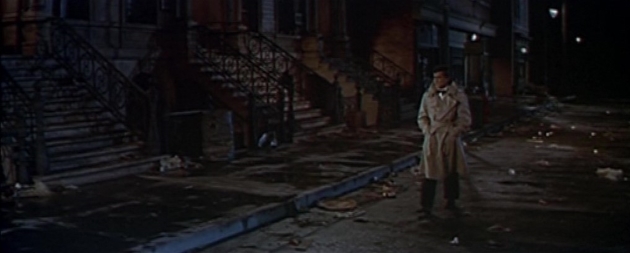
Mister Cory was adapted from a Leo Rosten novella, which Tony Curtis bought the rights to and had Blake Edwards adapt for the screen. It has a classic “rise and fall” structure that makes for good drama. There is a lot of emphasis placed on the nature of ambition, the old exhortation to be careful what one wishes for never being far from the surface, as well as other maxims regarding all that glitters and so on. This is all very well, but not that compelling at the same time. On the other hand, the movie is on much firmer ground when it posits the theory that human nature is immutable, rendering notions of grasping ambition, social climbing, and all the deceit and falseness that tend to accompany those wraiths redundant. At the heart of the story is the belief that running away from one’s true self, denial of one’s nature in essence, is a doomed enterprise. Sooner or later, this dawns on pretty much every character. It can be seen in Charles Bickford’s veteran gambler, a man who intuitively knows when the game has grown stale. Cory may be one of the last to fully grasp this, though it does grow on him gradually; there is a terrific scene where, with success won, he wanders back to the old neighborhood where he grew up, strolling down the middle of the empty nighttime street, gazing at the building he was born in, the locations that spelt loss and tragedy and the places he learnt his trade. Lost in the cool solitude of reminiscence, surrounded by the echoes of voices long gone and words drifting across time, his past and present knit together in a moment that marks the beginning of his acceptance of self.

Curtis deftly captures the many facets of the character, the roguish charm that never really deserts him, the drive concealed behind this, and the awareness that all the polish and front is simply that, a veneer that does nothing to shrink the distance between the one-time street urchin and the elegantly clad dream merchant he has cast himself as. Again, I’m drawn back to that scene I mentioned above, so much of the character is encapsulated in it after all, with Russell Metty’s camera tracking the lone figure via a crane shot that shifts from cool objectivity to intimacy and serves to highlight the contrast between the slick facade Cory has adopted and the grimy background that produced him. With the lens focused on his troubled features, it’s clear to see that he hasn’t traveled so very far. Martha Hyer was an actress who flirted with true stardom yet never quite broke through. Around this time she had roles in some good movies – Battle Hymn for Douglas Sirk, and she earned an Oscar nomination for her work in Minnelli’s Some Came Running. The part of Abby called for someone who was able to convey chilly snobbery in tandem with a weakness for slumming  and hypocrisy, which Hyer gets across successfully.

Kathryn Grant graced some fine films throughout the 1950s and she brings a liveliness that is quite infectious to the part of the younger Vollard sister. Playing the third arm of a romantic triangle frequently proves to be something of an unrewarding task, but William Reynolds takes it on manfully and achieves a degree of pathos as the flawed fiancé. The reliably crusty Charles Bickford brings dry humor coupled with down to earth wisdom to the table and acts as a stabilizing influence on his often hot-tempered protégé. Another interesting piece of casting is band leader Russ Morgan as the Chicago hood, something which sounds like an odd choice but which ends up working out just fine. Finally, a word for Henry Daniell, a man whose long career saw him regularly playing highly cultured villains. He brings great suavity to his work here, insisting on good manners and propriety at all times, the very personification of moral rectitude. And then he gets to deliver a genuinely killer punchline to wrap up the climactic confrontation in the casino.

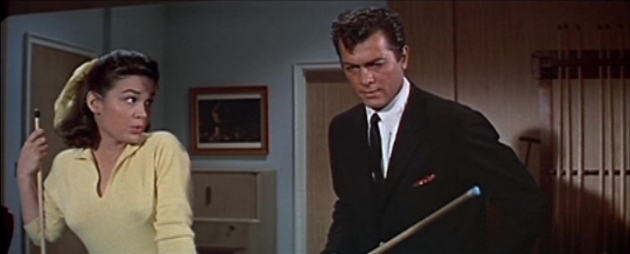
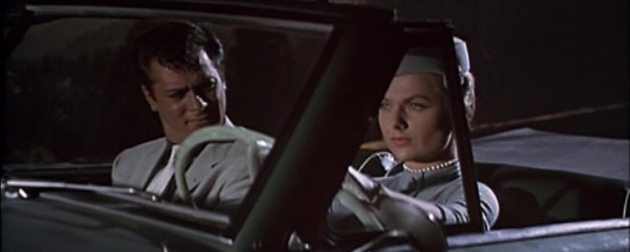
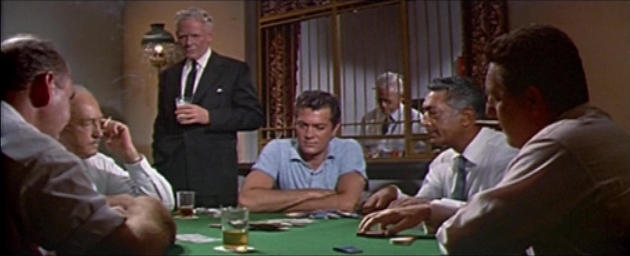
Mister Cory has had DVD releases in France, Spain and Italy, and I strongly suspect all of them will be using the same source. I have the Italian release, which presents the movie in the correct ‘Scope ratio. It’s a colorful if rather soft transfer though and the images I’ve added above should give some idea of how it looks. I would love to see this film get a brush up because it really deserves better treatment. I hadn’t seen it before and I’ve never heard anything much about it either. Every year brings a few new discoveries for me and I feel this movie rates as the most enjoyable and worthwhile of them so far in 2023.

Domino Kid

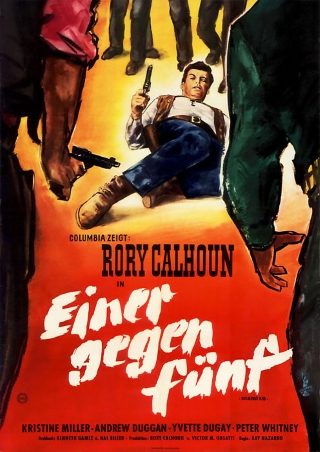
Domino Kid (1957) is a small movie, the kind of picture that that was relatively inexpensive to make and could be relied on to fill the bottom half of a bill. Somehow, probably due to the wealth of industry experience the people working on such features were able to bring to them, these films often managed to be briskly entertaining while at the same time there was a solid core that explored, to a limited extent at least, the themes one would anticipate from a bigger budget, more ambitious production. In this case, the theme that provides the backbone for the story is revenge, the ethical chasm it represents and the hollowness of the reward it promises those who would pursue it.

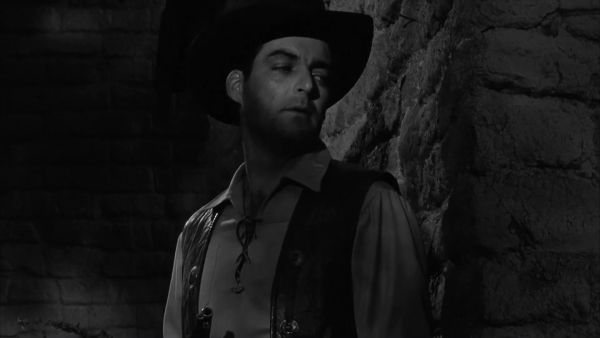
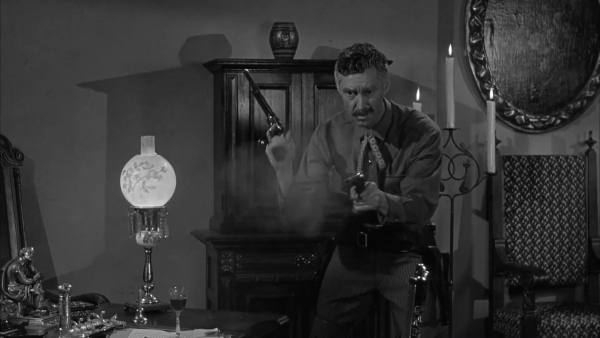
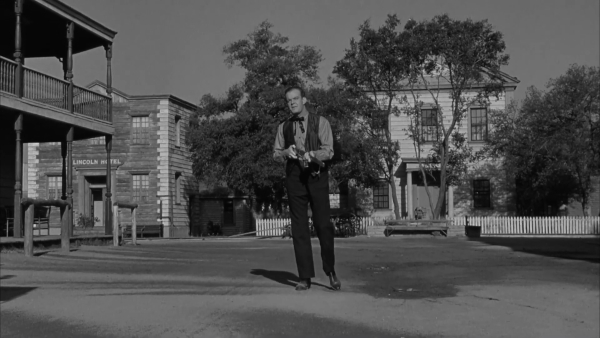
Domino Kid is a sparse movie, never putting more people on screen at any one time than is strictly necessary. And there is an urgency to it too, the opening shot is quite literally a shot, one delivered from one anonymous figure in a saloon bar and fatally received in the belly of another. The very abruptness of this beginning, its unsentimental, businesslike violence is an indication of the mood or tone of the story itself. Domino (Rory Calhoun) is a man with a powerful appetite for revenge. Having returned from the Civil War to find his family dead and his home raided, he lives now to visit retribution on those responsible. The first reel has a whiff of what was to come in the western genre about it: those bleakly deserted streets in mean looking towns, the lone avenger clad in a low profile black and white outfit, chewing on a cheroot and with a manner that is largely taciturn yet still capable of the occasional dry witticism, the succession of cold and calculated killings – isn’t there something suggestive of the early spaghetti westerns to that? Sure I may be reaching here, but the imagery and mood evoked had my mind drifting off in that direction, and of course nothing appears out of the blue in filmmaking, trends and styles evolve and are picked up on and adapted gradually, even from the unlikeliest of sources. Still, this feel doesn’t go much beyond the early scenes. It thereafter develops along more traditional lines, with Domino returning to the town of his birth and youth and realizing his reputation has preceded him, disconcerted to find himself greeted with open suspicion as opposed to open arms.

The story plays out as a personal conflict, Domino’s own struggle with his conscience, at once pulling him towards seemingly irreconcilable poles representing a cold and unnourishing revenge on the one hand and the warmth of acceptance and civilization on the other. The whole business is further complicated by the reemergence of his feelings for old flame Barbara (Kristine Miller), and the hostility he runs foul of in the shape of the newly arrived financier, and rival for Barbara’s affections, Wade Harrington (Andrew Duggan). There are a few unforeseen developments and detours before the end, but the point about the ultimately unpalatable nature of revenge, be it served hot or cold, is clearly and justifiably made.

Rory Calhoun had recently made the excellent Red Sundown with Jack Arnold at Universal-International but was keen to branch out on his own. He formed his own production company Rorvic in partnership with Victor Orsatti, and Domino Kid was one of the movies that came from that venture. The Rorvic productions I have seen, a number of which were directed by Ray Nazarro, were entertaining enough, but I still think they lacked something of what the bigger studio pictures could offer and I feel that a look at The Saga of Hemp Brown, which was made when Calhoun went back to work for Universal-International, highlights that. Nevertheless, Calhoun does put in a good performance in the lead here, blending the positive and negative sides of his character skillfully and endeavoring to present us with a fairly rounded individual.

A few months ago, I watched Kristine Miller playing the leading and pivotal role in Joseph M Newman’s remarkably ethereal war film Jungle Patrol. This movie doesn’t offer her such a memorable part, but she does bring a classy and effective presence to proceedings and Calhoun was obviously impressed enough to have her cast in a couple of episodes of his TV show The Texan. Andrew Duggan has an interesting and quite an ambiguous role as the newcomer who makes little effort to conceal his resentment of Domino. His career would see him cast as all kinds, and he had that ability to essay characters who could leave audiences guessing. James Griffiths turns up very briefly and bows out just as rapidly, but even so it’s never a chore to watch him on screen. Other supporting roles are filled by Yvette Duguay (The People Against O’Hara), the recently deceased Eugene Iglesias , Robert Burton and the hulking Peter Whitney. For a film with such a brief running time, Domino Kid offers opportunities for each one of those performers to make not only an impression, but an important contribution to the development of the story.

To the best of my knowledge, Domino Kid has never been released on DVD anywhere – of course, if anyone reading this knows otherwise, I should be delighted to be proved wrong. Fortunately though, it is not hard to track it down online, and it can be viewed in very good quality, from a nice widescreen print that displays little or no damage. To tell the truth, there are still a number of Rory Calhoun movies which have not been released on any form of disc. I’d like to think there’s still a chance to see a few of those gaps plugged, but even if we don’t I am pleased that the majority can be accessed. Domino Kid is, without question, a modest production that doesn’t try to overreach itself or aim too high. In spite of its inherent limitations, it takes a common western theme, indeed one which is very familiar from all types of drama, and uses it well. It’s worth remembering that B movies don’t have to be bad movies, and this is an example of one that is actually rather good.

The Walking Hills

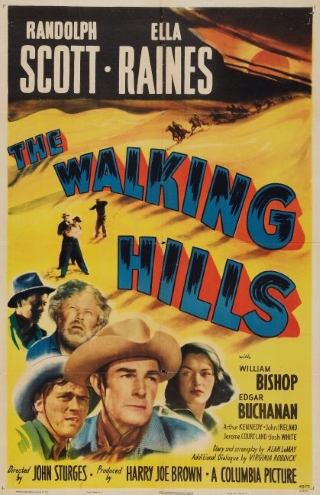
In 1948 John Huston had a small yet ill-assorted bunch of fortune hunters looking for gold and finding it paved the way to something far darker in The Treasure of the Sierra Madre. A year later, John Sturges took another disparate group from the back room of a cantina in Mexicali and had them cross the border into the US on a quest for the yellow metal. The Walking Hills (1949) is a less ambitious picture, smaller in scale but using that same lure of gold to trigger a range of reactions among his treasure seekers, and in so doing to offer a commentary on people and what makes them tick. Where Huston finished off with the dry desert winds blowing away the remnants of a tarnished dream to the accompaniment of a fatalistic laugh, Sturges uses his dust storm to scour away the mendacity and suspicion which has dogged his characters and to hold out the possibility of renewal.

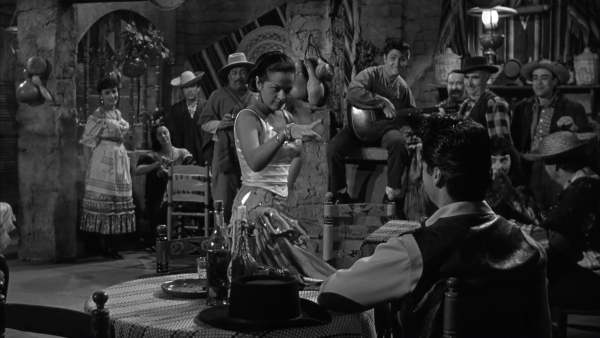
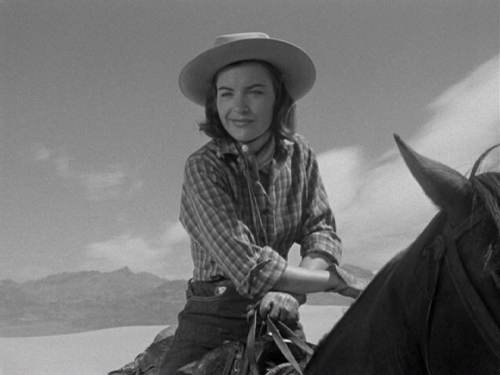
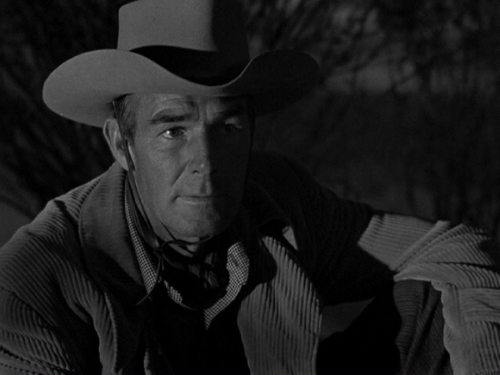
A chance remark during a card game in a cantina sets it all off. The men around the table had been musing and joking over the fate of a wagon train said to have been loaded with gold that had vanished in the wilderness almost a hundred years earlier. Then one of them mentions seeing what looked like an old wagon wheel sticking out of the ground on his last trip. Just as he says those words, a silence descends. A silence pregnant with meaning, as each person in that room thinks the same thought at the same moment, and then they realize that this shared knowledge binds them all together in an uneasy alliance of greed and distrust. They are an odd cross-section of humanity, dreamers and fugitives, drifters and grifters, the kind of people who have nothing much in common save a yearning for something better than the life they are currently leading. Most notable among them is Jim Carey (Randolph Scott), a horse breeder with a mare in foal to worry about – that foal acting as an overt symbol of rebirth and a new beginning and quite literally carried by Scott right to the end of the movie – and then there is Shep (William Bishop), who is a cowboy with a secret he is keen to keep, especially from the brash Frazee (John Ireland). So this diverse band sets out to cross the border back into the US and into the desert, where fates and loyalties shift as suddenly and unpredictably as the sands beneath them. No sooner have they left civilization behind than another rider appears on the horizon, having followed them from Mexicali. This is Chris (Ella Raines), a woman with past ties to both Jim and Shep.

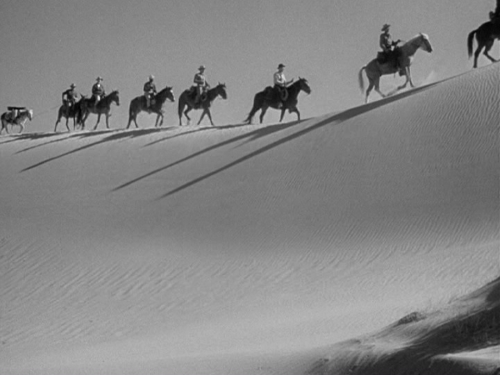
With the sun beating down and the trappings of the modern world stripped away, something approaching truth is gradually revealed. Hasn’t the concept of entering the desert, the wilderness, represented the confrontation of temptation and the attainment of spiritual renewal from Biblical times on? The desert of this movie serves a similar purpose, bringing the secrets of the past out into the open and finally laying out the prospect of a new beginning for those whose resolve is strong enough to withstand the siren call of greed. Is it too convenient that there are so many potential suspects all brought together, and that all of them should be tormented by the prickly discomfort of a guilty conscience? Perhaps there is convenience too in the neat way the hunter proves himself to be little better, and in some senses arguably worse, than the hunted. Yes, all of this can be taken as contrivance, but it is a story after all, a parable with a lesson to impart, and not a factual entry in a diary. So long as it all leads to the resolution writer Alan Le May and director Sturges desire and the realization they wish to encourage, then it ought to be permissible to bend credibility a little.

Once again,  we see a movie which underscores the steps Scott was taking towards the full flowering of his screen persona, one which would reach its apogee in the Ranown cycle. There’s the air of charm and civility cloaking a steely core that was so characteristic. Added to that is the wounded nobility that is his guiding principle. There is something heartfelt about the way his pride prevents him from correcting Chris when she misinterprets his motives and berates him – just the use of body language and the terseness of his tone is enough to convey how holding oneself to a high standard can be tough, and that expecting others to be capable of comprehending that is an even bigger ask. Then there is the climax, where his generosity of spirit is admirable. It is clear how much it costs him emotionally to grant Shep the facility to redeem himself. Still, he does so, that innate sense of nobility or propriety nudging him to sacrifice his shot at personal fulfillment in order to present others with that same prize.

It has been said that The Walking Hills has noir overtones, but they are really only incidental, Charles Lawton casts some captivating shadows at times and the use of flashbacks to fill in the backstory for William Bishop and Ella Raines is suggestive, but nothing more. Bishop makes good use of the restlessness and ambiguity he brought to his better roles and keeps everyone guessing for a long time. Ella Raines is always a welcome sight and she offers some much needed empathy and selflessness to leaven the greed and antagonism that threatens to boil over in that raw and searing environment. In the small cast everyone gets to contribute something, Arthur Kennedy only really coming into his own as a delightfully sniveling ne’er-do-well towards the end. John Ireland displays his customary air of menace in a largely unsympathetic part, while Russell Collins, Edgar Buchanan, Jerome Courtland and Josh White all have their moments to shine, the latter via some terrific blues songs.

The Walking Hills got a DVD release as part of a Randolph Scott box from Sony years ago – I don’t know whether it has been upgraded to Blu-ray in the interim – and looks generally fine, highlighting Lawton’s cinematography and Sturges’ confidence shooting outdoors on location. Personally, I enjoy what could be termed contemporary westerns, especially something like The Walking Hills where it feels as though the classic west is within touching distance, easily accessible by simply riding beyond the city limits yet with a spectral, intangible quality too.  It is one of those tight, compact pictures that Sturges excelled at and is well worth seeing.


Desperate

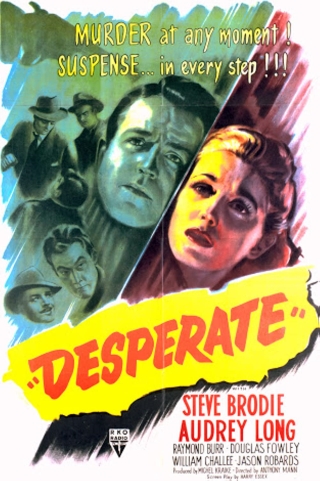
With a title like Desperate (1947) and a lead character who is a veteran striving to make a success of both his new marriage and his job, it might be reasonable to expect the focus to be on the desperation related to difficulties in settling back into civilian life. What we get, however, is a classic film noir scenario based on some dubious choices and flawed judgement. It is often said that the kind of maladjustment that appeared to dominate the post-war landscape was a major driver of film noir in the mid to late 1940s. I guess the initial poor call by the protagonist that sets everything in motion could be regarded as being tangentially influenced by that, but it’s really just a matter of a guy looking to make a bit of extra cash and how that draws him into one of those spiraling nightmares where it seems virtually impossible to catch a break.

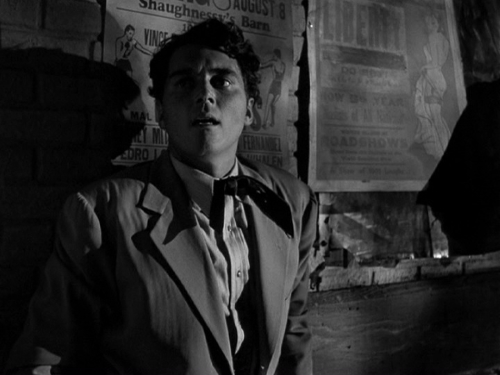
Steve Randall (Steve Brodie) is trying to make a go of it as a trucker and makes what turns out to be a fateful decision to accept a job offer from an anonymous caller. He could have been enjoying a celebratory dinner with his new wife Anne (Audrey Long), and she could have broken the happy news that there was a baby on the way. However, a man just starting out needs money and so the prospect of some easy cash for an evening’s work is too alluring to pass up. That this is the first of Randall’s poor choices becomes abundantly clear when he turns up for the job only to be greeted by a shady old acquaintance, Walt Radak (Raymond Burr). He then discovers that he is expected to haul away the spoils of a warehouse heist. That would be bad enough in itself, but a bungled escape bid by Randall stirs up the thieves and leads to the shooting of a cop and Radak’s brother getting arrested.

Radak is, not unnaturally, sore, sore enough to have his hoods hand out a brutal beating along with a warning that Randall’s wife will suffer too unless he is prepared to take the rap and by doing so exonerate the brother, who is now looking at a date in the death house on a murder rap. Now a smart guy would take the chance to go to the police at this point, say his piece, and let them provide the protection. However, Randall doesn’t do that; he proceeds to make the next of his poor choices and goes on the run, not to save himself but to find a sanctuary where he can stow his wife till the increasingly tangled skein can be unraveled.

So the story follows Randall as he tries to keep at least half a step ahead of the vengeful Radak, and to avoid further run-ins with the law. In a sense, everybody, all of the main characters anyway, grow progressively more desperate as the plot unfolds. Randall fears for his and for his family’s safety, Anne’s anxiety for her husband and child is a constant, and Radak’s hunger for retribution against the man he holds responsible for his brother’s plight becomes almost monstrous.


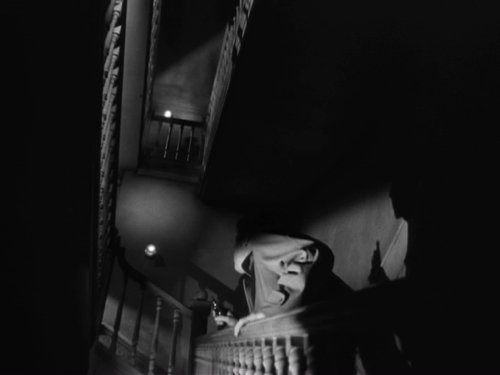
The tendency is to think of Anthony Mann’s films noir in terms of his work at Eagle-Lion in collaboration with cinematographer John Alton. However, Desperate was made for RKO and was shot by George E Diskant. Alton or not, Eagle-Lion or not, this is without question an Anthony Mann movie. Visually, it is inventive and disorientating – the beating of Randall, as the overhead lamp swings ominously like a blade slicing through the shadows as the hoodlums’ fists slice up the hero, has Radak dipping in and out of darkness like some malign bogeyman. Characters are frequently either squeezed by the frame or shot from unexpected angles, everything highly suggestive of people under pressure and facing circumstances that are fraught with peril and insecurity. Mann has a credit for the story, from which Harry Essex wrote the screenplay, and it is an incident packed affair. If anything though, the movie is probably overloaded with incident, something that becomes even more noticeable when one takes into account the brief hour and a quarter running time. That said, it does contribute to the sense of urgency of the production and perhaps could be seen as going some way toward explaining Randall’s questionable judgement on many occasions. Thematically too, there is much that we associate with Mann on display, notably the violence and brutality the characters must endure, and that typical sense of movement and direction, not so much forward as upward, that ever present striving to reach some high place, which in this case culminates in the shootout on the tenement stairway.

Steve Brodie was a perennial supporting player, a name and a face that will be familiar from countless movies and TV shows. That he never got the lead outside of Desperate is no slight on his acting abilities, he simply wasn’t the type physically to be cast in headline roles. What he had, however, was a recognizably everyman quality with the features and demeanor of a regular guy. As such, he was well chosen to play Steve Randall – it is easy to accept him as a man who can be worked over, one whose decisions will be flawed from time to time. Raymond Burr plays Radak as a relentless and driven figure, and Mann makes good use of his bulk, having him crowd and dominate the frame on multiple occasions. Audrey Long spends much of her time fending off a gnawing anguish and the script offers her little or no opportunity to do anything beyond that. In support, Douglas Fowley, another familiar face from countless movies as well as a recurring role as Doc Holliday on The Life and Legend of Wyatt Earp, is superbly seedy as an ill-fated private eye, while Jason Robards Sr playing the detached detective with the singsong delivery is unusual enough to make his relatively small role memorable.

Desperate came out on DVD from Warner Brothers on one of their later film noir sets and it looks very well. The films Anthony Mann made for Eagle-Lion from around this time draw more critical attention and their profile is correspondingly higher. I reckon the script is a little crowded and busy, but the movie is a good one overall with a strong sense of momentum and it stands as a solid example of the director’s noir work.

They Drive by Night

Warner Brothers made some of the most socially aware movies of the classic era, not in a preachy or even a condescending sense but in a way that was both matter of fact and humanitarian at the same time. This aspect of the studio’s output was particularly apparent throughout the 1930s and it provided a sound base on which to establish their characteristic gangster films. That classic gangster cycle was effectively brought to a close by Raoul Walsh’s magisterial The Roaring Twenties.  The following year Walsh cast two pivotal figures from those seminal crime movies in major roles in They Drive by Night (1940), a film whose very structure represents something of a bridge between the strong social conscience material of the previous decade and a smoother kind of melodrama that hinted at a noir sensibility.

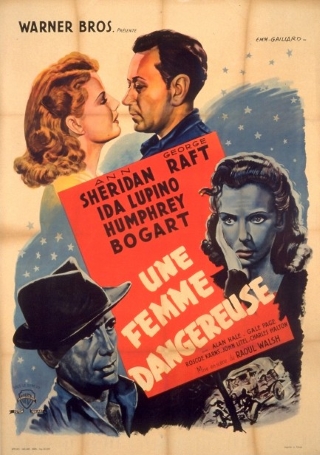
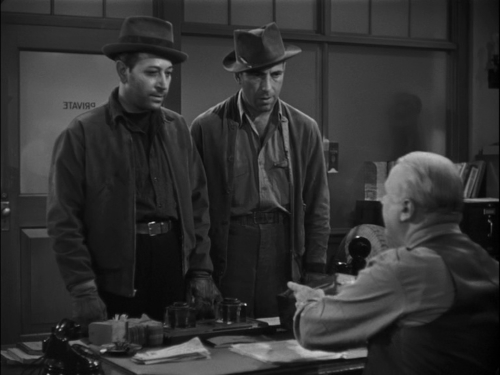
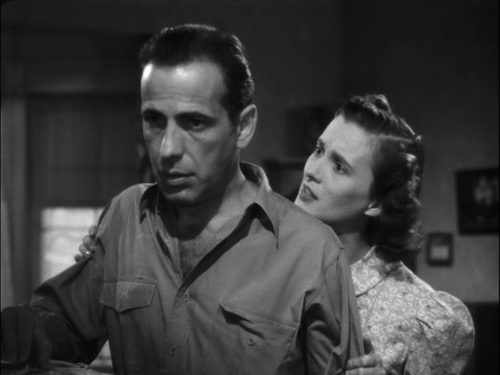
Movies based around the exploits and experiences of truck drivers are pretty common, from Racket Busters to Thieves’ Highway, The Wages of Fear and Hell Drivers to The Long Haul. That last movie, a British picture with Victor Mature and Diana Dors, shared the same title, but nothing more, as the A I Bezzerides novel from which They Drive by Night was adapted. There is a certain in-built romance to any kind of road movie, the notion of man and machine blazing trails and running into crime, corruption, or maybe just lousy luck has plenty of storytelling potential. There’s also the opportunity to examine the hardships involved, all the mundane little trials that come with such a typically working class job. That’s how this movie starts out, following the exhausting, insecure and poorly rewarded toil of two brothers trying to eke out a living hauling whatever loads are handed to them. They are Joe and Paul Fabrini (George Raft and Humphrey Bogart respectively), bleary-eyed, grimy, short of cash and never more than a tip-off or a fast dodge ahead of their creditors. Even so, there’s a tough integrity to their poverty, the wisecracks serving as a cloak of modesty for the determination and ambition honed and tempered by long years on the road.

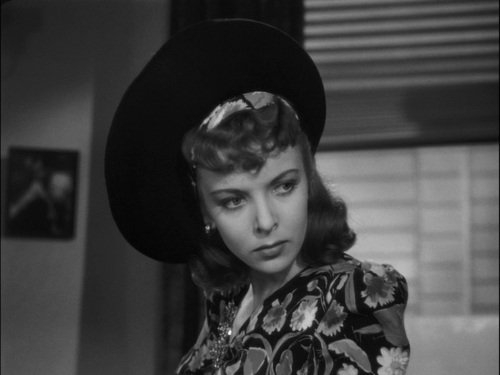
The first half of the movie traces a true but bumpy and incident strewn path towards Joe Fabrini’s ultimate goal, with just the same steely focus as the character himself shows as he hugs that white line night after night. It feels like one long ride, broken occasionally by stop-offs at cheap boarding houses, gas stations and roadside diners peopled with braggarts, lechers and brawlers, quick with a quip yet as close knit and proud as only the downtrodden can be. This section is dominated both by the to and fro over what might be termed the work-life balance between the Fabrini brothers, and also a burgeoning romance between Joe and Cassie (Ann Sheridan), a short order waitress. Two other major characters, restless vamp Lana Carlson (Ida Lupino) and her rambunctious and incorrigible husband Ed (Alan Hale), are introduced. Ed is an old friend of Joe’s who has made good and is living in the kind of luxury he hasn’t yet managed to get a handle on. Lana also knows Joe from way back, and she’s very keen on not only renewing the acquaintance but on seeing it develop into something much more intimate. However, this strand is only fully explored in the latter half of the film.

Everything changes dramatically, the direction of the story and the whole tone of the movie, after a serious accident quite literally takes the Fabrinis off the road. It opens up an opportunity for Joe to strike out on an alternative route to success, and it also presents an opportunity for Lana as she gets to thinking she might be able to rid herself of the husband she’s grown to despise and simultaneously sate her desire for Joe. In an ironic twist, the trappings of wealth and prosperity that Ed has surrounded himself with to facilitate the high life are shown to be capable of bringing that life to a swift and premature end. After another evening of boozing and ribaldry, Lana feels humiliated and frustrated enough to act – it only requires her to take a short walk on a quiet night and thus commit murder by remote control. Could this be the perfect crime?

Walsh handles the story with typical vigor, bridging the stylistic divide over the course of the movie with aplomb so that the changing circumstances feel authentic. The early scenes have a real flavor of the 30s about them, full of Depression-era energy and snappy, wisecracking dialogue, while Raft, Bogart and Sheridan get the lived-in feel of their characters down pat. Raft is very assured, arguably his Joe Fabrini is too sure of himself, to the point where it is going to come back and bite him. Sheridan is at her best in the diner sequence, tough and sassy, trading one-liners with the customers and more than holding her own. Bogart could always play it soulful when necessary and he’s good value till the script sees him effectively sidelined. The second part of the story looks ahead to the type of movie that would become increasingly common in the 1940s, and it is this section where Ida Lupino comes into her own. She switches smoothly from acid to sugar depending on the person she happens to be dealing with and her desperation to conceal a trashy background and move in more genteel circles is almost a living thing. That barely disguised dissatisfaction grows steadily, driving her to crime and ultimately consuming her body and soul. The physical transformation she achieves by the time of the famous courtroom meltdown is quite remarkable.

The movie, or its latter stages at any rate, see it flagged as an early film noir by some. Admittedly, there is a touch of that about it, but there’s no more than a suspicion really. It’s a solid melodrama with a crime and jealousy angle and there is no need to hang any other labels on it. The triangular romance and the betrayal this provokes, those illicit, murderous passions stirred into life amid a tough working environment are said to be an echo of the earlier Bordertown, a film I have not seen, and there are points of similarity to be discerned in the later Blowing Wild. Leaving aside genre descriptors and links to other movies, They Drive by Night is a fine picture, an involving, well-crafted piece of work that showcases the ease with which Raoul Walsh seemed to make great films. It is unmistakably a Warner Brothers production, a first rate Raoul Walsh movie and a genuine classic.


High Wall

Many a film noir has traded heavily on mistrust, betrayal, isolation. These are themes that breed doubt and underpin anxiety, and what better way to highlight doubts and anxieties than to tell a tale through the eyes of an amnesiac. Even partial loss of memory becomes a type of betrayal of self, a descent into the classic inky nightmare of the noir universe where a person can no longer feel confident in their own being, where awareness is forever tempered by a gnawing fear that there may be something contemptible lurking within one’s own heart. This notion of the unreliable narrator has enjoyed sporadic popularity and saw something of a revival in crime fiction and its adaptations a few years ago. High Wall (1947) toys with this concept, but it doesn’t really pursue it. Depending on the viewer’s own tastes, that may or may not be regarded as a strength.

We open on a club scene, one of jazzy music, well-heeled revelers clustered round tables or taking a turn on one of those characteristically small dance floors. The camera glides along, drinking it all in and then pauses on a figure at the end of the bar, perched there with his own drink in front of him. His entire demeanor screams disquiet, the cultured, patrician features rumpled and strained by some inner turmoil. He is Willard Whitcombe (Herbert Marshall), a publisher of virtuous literature. After establishing his identity, we cut to the interior of a speeding car, the driver’s countenance set and grim, hurtling down the highway while the lifeless body on the seat beside him lolls obscenely. And then he ploughs off the road, seeking to join the departed passenger who’s been keeping him company. This is Steven Kenet (Robert Taylor), one of those damaged veterans, a man not really recovered from a head injury suffered during the war. That corpse he had been taking on a ride across his own version of the Styx belonged to his wife, and his addled brain has convinced him he must have strangled her before blacking out.

Well, that’s not how things work out, and Kenet finds himself rescued and sent to a psychiatric hospital for assessment. This is the point where the plot kicks in properly, where the patient’s despair gradually transforms into doubt, partly due to the almost complete disintegration of his family and partly as a result of the efforts of Dr Lorrison (Audrey Totter). As we follow Kenet’s painfully slow quest for enlightenment regarding those lost hours, there is another strand unspooling in parallel. While our protagonist might be assailed by fear and uncertainty, there hasn’t been a great deal of doubt in the minds of the viewers as to who the guilty party really is. I don’t think it would amount to a significant spoiler to reveal the identity here  – allusions aside, the truth is explicitly spelt out on screen before long anyway – but I’ll refrain from doing so. Of course people can feel free to do so in the comments below if they wish.

Seeing as the script by Sydney Boehm and Lester Cole does reveal the culprit quite early, it is probably fair to assume that the intention was to make this less of a mystery or whodunit and more of a suspense picture. The viewer is not invited to follow a detective figure as he ferrets out leads to corner the killer. We already know who this is, and we also know that the hero is just that and not some cleverly disguised bogeyman waiting to spring a surprise. Somewhat similar to the inverted mystery, the suspense derives from our being a hop, skip and a jump ahead of everyone on the screen, knowing more than they do yet unsure of how or when they will acquire that knowledge. As a premise, this certainly has its merits, but my feeling is that it tends to draw some of the sting out of the amnesia plot, perhaps diluting the potency of the noir scenario in the process.

Curtis Bernhardt had a flair for both film noir and melodrama, and that strong run he embarked on from the mid-1940s, starting with Conflict and extending through to Payment on Demand, saw some of the sensibilities and trappings of both styles bleed into each other. While I have a few reservations about some of the scripting decisions, that is not to say the film is weak overall. Bernhardt’s atmospheric direction is a big part of what makes it work, elevating even the most mundane situations through sheer visual bravado. He manages to elicit tension and the hint of needle from something as simple and prosaic as two people squeezed into a phone booth in a diner, and then juxtaposes hope and despair by having the hero escape a full on deluge by taking a shortcut through a virtually deserted church on his way towards ultimate salvation. Brief, throwaway moments that employ the visual language of the cinema with wonderful eloquence.

There are a good many high points in the post-war career of Robert Taylor, and the quality of his work was remarkably consistent up till at least the start of the 1960s. Pretty much all of his films noir are enjoyable and High Wall is one of the better ones – personally, I’d place Rogue Cop and Party Girl ahead of it but that still leaves it occupying a very respectable third place. He gets the hunted intensity of the amnesiac, the primal guilt that the condition provokes, across very successfully. When this movie was made it seemed as though Audrey Totter was destined to be cast in nothing but film noir, which can be taken as a testament to how comfortably she slotted into that murky style. As a rule, I think I prefer her in unsympathetic roles where her pouty petulance can be so effective. However, she is very much the Girl Friday figure in High Wall, somewhat severe and sober, but loyal and resourceful too. Regardless of the part he was playing, be it hero, villain or anything in between, Herbert Marshall brought what I can only describe as an air of reassurance to the screen. His presence alone could typically be taken as proof that the movie would be a good one.

High Wall has been available on DVD for years as part of the Warner Archive, looking quite strong but sadly devoid of any supplementary material. It is a good, solid noir that falls just short of the very top flight, probably due to the nature of the script. However, it fits neatly into that tantalizing sub-genre of Freudian-influenced dramas and thrillers that flourished in the mid to late 1940s. While it has a few flaws, the direction of Curtis Bernhardt and the strong central performances of Robert Taylor, Audrey Totter and Herbert Marshall easily compensate. Highly recommended.

The Snows of Kilimanjaro

Kilimanjaro is a snow-covered mountain 19,710 feet high and is said to be the highest mountain in Africa. Close to the western summit, there Is the dried and frozen carcass of a leopard. No one has explained what the leopard was seeking at that altitude.

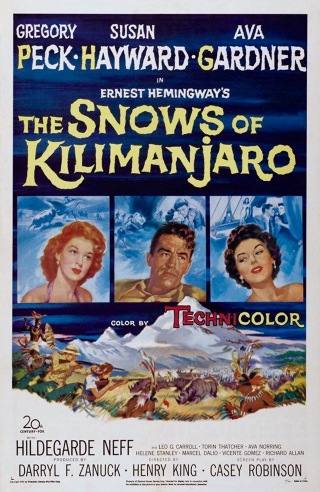
Those are the words which are spoken at the beginning of The Snows of Kilimanjaro (1952), words which are by and large the same as those which open the Ernest Hemingway short story of the same name. There’s something of a paradox in the fact that the above quote is slightly abridged, whereas the story brought to the screen greatly expands upon the author’s original text. Hemingway is said to have been displeased with the end result, allegedly because Casey Robinson’s script folds in elements of so many of the author’s other works, and perhaps partly because the fleshing out that occurs shifts the emphasis of the narrative. It alters the ending too, quite radically in fact, and I’m of the opinion that it is for the better. Hemingway aficionados (and I count myself as one) may find that hard to swallow, but I shall try to work my way through my reasoning as we go along.
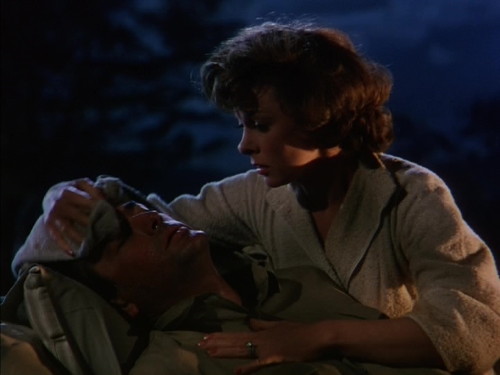
Harry Street (Gregory Peck) is a writer, but what is more important is that he is a dying man. He knows this, he can hardly fail to do so as he’s laid up in camp with the poison from an infected leg wound slowly pumping its way round his body. He’s being tended to by Helen (Susan Hayward), a rich woman whose company he needs and desires even as he spurns her attention and her affection. Not unnaturally for a man whose future is limited, Harry spends a lot of his time casting his mind back. The primary focus of those reminiscences is on the women in his life. While there does appear to be a degree of spitefulness or baiting to his revisiting the memories of his late loves and then telling Helen about them, the overriding sense is one of wistfulness, a kind of regret for opportunities not so much missed as elbowed aside in the ongoing quest for artistic success. Hemingway’s story, partly on account of its brevity, only touched on those memories, sights, sounds and flavors of a time that cannot be recaptured. However, where Hemingway drew attention to the words never written and the tales never told, the movie (while not actually ignoring those omissions) has Harry lamenting the loves he let slip away.

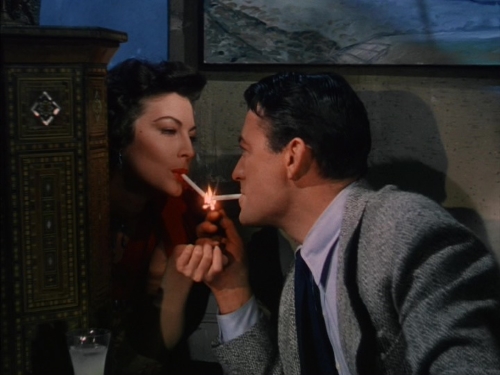
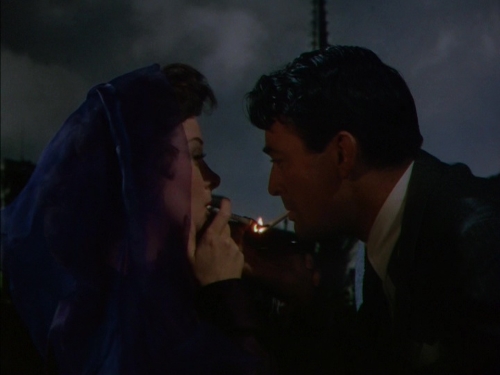
Harry’s flashbacks to those earlier days take in interludes in the USA and on the Riviera, but the bulk of the time is devoted to his stays in Paris and Spain, and to the woman who captured his heart, became his muse and then whose loss consumed him. Cynthia Green (Ava Gardner) is first encountered in a bar in Paris, dancing and laughing and stealing Harry’s heart in the half minute or so available to her. Then later in some improvised jazz club, in an atmosphere laden with intellectualism and melancholy, swept along by a slow and sultry saxophone, they embark on the affair that will define them, sealed by the simple expedient of lighting their cigarettes off a shared match. It’s a beautifully shot scene, Henry King’s painterly mise en scène bathed in Leon Shamroy’s blue and golden hues evoking a smoky eroticism that is both heightened and tempered by the gently charged flirtation of a woman merely “trying to be happy” and a man who has maybe found the essence of his own truth in that moment.

Those sequences charting the course of the relationship between Harry and Cynthia constitute the heart of the movie, and they are at best only alluded to in Hemingway’s story. Some of the description that Harry imparts via voiceover is directly lifted, but the events and their development and integration into the story is the work of Casey Robinson, an impressive piece of work in that it skillfully draws in strands of other Hemingway writings and captures the flavor and spirit of the author. For this viewer it not only works, but works well. Between them, King, Robinson and Darryl F Zanuck manage to turn what was a fine short story into a movie that adds new layers and nuance.

Then there is the ending, which is where the biggest departure from the source material is to be found. Hemingway wrote a lot about life and death, his whole attitude to hunting and bullfighting being closely tied to his feelings on this. His story sees Harry pondering the work he will not now complete, of what he had thought of doing but never actually did. And then he dies and his final thoughts take him up the peak of Kilimanjaro to commune with or perhaps even in some sense become that leopard referred to in the opening lines. He is then in his last moments a man making peace with his restlessness and his creative spirit, dreaming his way to the high ground.
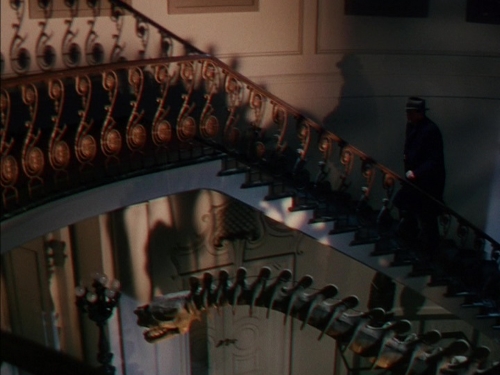
The film takes a different path, presenting Harry with a salvation that is more comprehensive, more human. His creativity remains intact simply due to the fact that he is saved. What I feel is more important though, and it’s a big part of what I prefer about the movie, is that the higher plane achieved is not that conjured within the dreams of a dying man, instead it is a tangible one that can only exist in the living. It is a rediscovery of life, the will to live and the purpose of that life, coming about largely through his spiritual reconciliation with the women,  both in the past and in the present, who have shaped his work and his character. Where the story on the page suggested fulfillment attained through death, the movie offers a vision of fulfillment won through living.

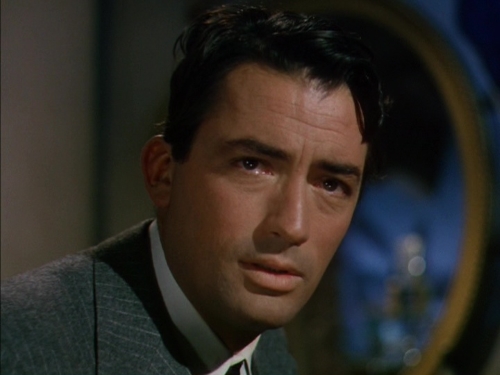
In the lead role Gregory Peck grows into the part, the character of Harry proving to be a complex one, and not an especially admirable one in many respects. There’s a good deal of self-regarding pomposity to him and Peck gets that across well. It’s that central part of the film, however, that solid dramatic core, where he explores the part in greater depth. One sequence in particular stands out for me, coming after the traumas of his sojourns in the Riviera and in Spain, where Harry finds himself back in Paris, and to be specific back in the bar where he and Cynthia first glimpsed each other. As he sits and thinks of those distant days, he turns around and fancies he sees the specter of Cynthia dancing from out of the mists of his past, laughing and full of joie de vivre. And the blend of emotions that chase across his features – hope jousting against regret and despair in an uneven contest – strike right to the heart of the man at that point.
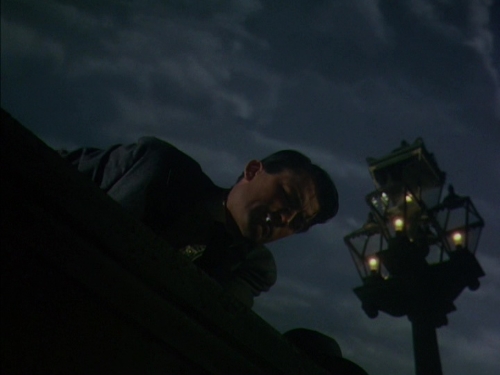
The real strength of the movie, in terms of performances anyway, derives from Ava Gardner. Her role is essentially a riff on Lady Brett Ashley, the character she would go on to play for Henry King in his adaptation of The Sun Also Rises a few years later, albeit with less of the emotional bruising present. In her own words, Cynthia represented the first role she understood and felt comfortable with and that she truly wanted to play. That desire to have the part is always in evidence in her unaffected and naturalistic playing, and the inherent truth of that performance seems somehow appropriate for a character in a Hemingway adaptation. Susan Hayward was the other big star name and she too was well cast in a role that drew on her strengths as an actress, that characteristically tough resolve built as a shield around her vulnerability. In support Hildegarde Neff, Leo G Carroll, Torin Thatcher and Marcel Dalio all do creditable work.
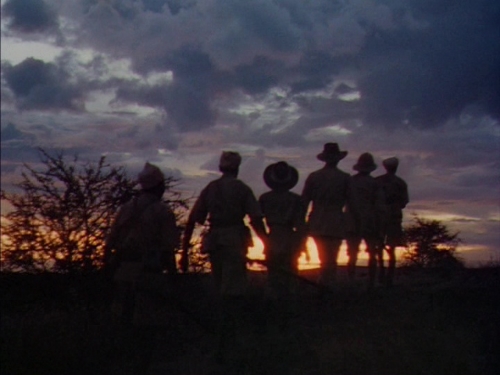
I think I first caught The Snows of Kilimanjaro as a TV broadcast some time in the early to mid-1980s. I liked it well enough then, even if all aspects of the movie didn’t resonate with me to the same extent as they do now. I held off getting any home video version for a long time as the movie spent years as one of those dreadful looking public domain staples. Eventually, Fox released their own official version, one which is generally very pleasing to view. Hemingway purists might feel put out at the changes made to the story, but I feel the efforts of Zanuck, Casey Robinson and Henry King (helped along by the scoring of Bernard Herrmann)  work and the result is a movie that stands up on its own terms, and brings out themes and ideas that the brief nature of the original material did not allow.