All right. What’s certain? Two things… death and taxes…
There aren’t too many films noir set in and around the holiday season, Christmas Holiday and Lady in the Lake probably being the best known, as it’s clearly more marketable to focus on the upbeat and cheerful rather than the dark or cynical side of life. Backfire (1950) isn’t strictly speaking a seasonal noir but a number of its key events do play out over the festive period. As such, I thought it would be an appropriate choice for what ought to be my last full review piece for this year.
It’s November of 1948, the war’s been over a few years now but the scars haven’t fully healed. In a veterans hospital in California Bob Corey (Gordon MacRae) is still recuperating from his wounds, a serious back injury which has required thirteen operations. Still, he’s on the road to recovery and has hopes of going into the ranching business with his old army pal Steve Connelly (Edmond O’Brien), and also of marrying the nurse, Julie Benson (Virginia Mayo), who’s tended him. The holidays are rapidly approaching and Bob is growing anxious that his buddy hasn’t been around of late. Then, late on Christmas Eve as his medication is just kicking in, he has a visit from an unknown woman, a foreigner whom none of the hospital staff can subsequently recall seeing. As he lies in a narcotic haze, she tells him that Steve is in serious trouble, laid up with a shattered spine and desperately in need of help. What’s a guy to do when he learns his best buddy is in such dire straits? As soon as his discharge comes through in the New Year, he resolves to track down the mystery woman and, by extension, Steve. In the world of noir nothing’s quite that simple though, and he finds himself picked up by a squad car upon leaving the hospital. Ferried to the homicide department, our bewildered hero fears the worst, but instead discovers that Steve is top of the police wanted list for the murder of a prominent gambler. And so begins a twisting quest for the truth which dips in and out of the past, a winding path that’s driven by gambling and jealousy, and has death as its final stop.
The problems faced by returning veterans, particularly the difficulty of establishing one’s place back in civilized society, was a recurring theme (perhaps one of the most prominent in truth) in film noir and was arguably the factor which gave greatest momentum to the post-war boom in that genre. Backfire comes at this on three fronts, focusing on the physical, social and psychological barriers to be overcome. While the latter aspect is the one which acts as the catalyst for the violence and tragedy in the plot, its causes are hinted at rather than fully explored – although it does at least make an effort to acknowledge the matter and avoids going down the road that led to such an unsatisfactory conclusion to The Blue Dahlia a few years before. Speaking of which, I have a hunch the coda of the movie here was tacked on as a softening touch – I hasten to add I have no evidence to suggest this is so beyond a feeling that the fade out preceding it may have been deemed a bit too much of a downer.
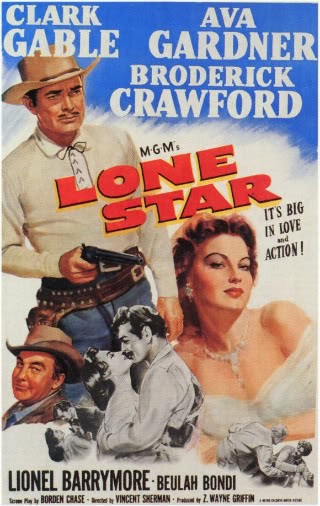
Vincent Sherman was one of those studio directors who made mainly professional if not wholly memorable pictures. Generally, I’d say I enjoy his work well enough – Lone Star was quite disappointing but I think Nora Prentiss, The Garment Jungle, The Unfaithful and The Damned Don’t Cry all have worth. The plot does become pretty complicated as it goes along but Sherman uses the flashbacks intelligently and keeps the pace up. There’s some good use of the Los Angeles locations and Carl Guthrie lights the interiors nicely to create the requisite atmosphere.
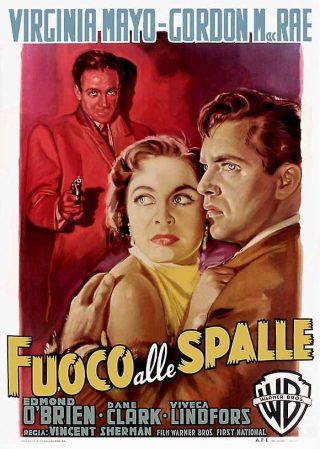
The poster art is a little misleading, although understandably so in the wake of White Heat. It gives the impression that Virginia Mayo is playing the kind of vampish femme fatale so beloved of noir. The fact is, however, that she’s cast as that other staple of the form, the Girl Friday who lends support to the hero. She’s fine in this role and I think it’s a pity she didn’t get to feature a bit more. Gordon MacRae is the everyman figure who leads us through the complexities – he was primarily a musical star and seems an odd choice at first for this type of film but actually works out OK as the innocent cast into a world which is clearly alien to him. Edmond O’Brien, on the other hand, was very much at home in film noir and does great work (tough, weary but fundamentally decent) in his flashback scenes. While the presence of a femme fatale – and that doesn’t have to be a “bad girl”, just one whose sexuality leads men into danger – isn’t always necessary, it never hurts either. Viveca Lindfors fits the bill in Backfire, positively smouldering at times and always convincing as a woman unconsciously capable of tempting men to risk it all for. Dane Clark was always busy as an actor but never seemed to really make it as a star; he was excellent in Borzage’s Moonrise and I thought he did well in a number of crime/noir films he made in Britain. His role here is a vital one and he handled it very capably in my opinion. Notable support is provided by the always reliable Ed Begley and John Dehner pops up in an uncredited bit part.
A Warner Brothers production, Backfire is available on DVD as part of that studio’s Film Noir Classics Collection Vol. 5. It’s paired up on disc with Deadline at Dawn and looks good throughout. The transfer is mostly clean with very little damage visible and a nice level of detail. There are no extra features offered. Although this isn’t one of the better known films noir it’s a solid movie with some good performances. The script maybe tries to be a tad too clever at times and I did notice one plot hole which irritated me somewhat (I won’t go into it here as I don’t want to get into spoiler territory) but it remains enjoyable overall. A reasonably entertaining thriller then with a tangential connection to the holidays.
 Riding the High Country