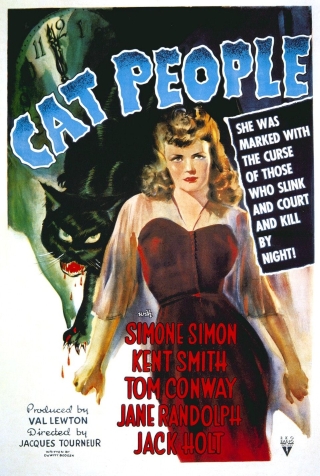
Halloween – ’tis the season to be wary. I am a very selective, maybe even picky, viewer when it comes to horror movies. My taste runs more to those productions that stir a vague sense of unease or foreboding rather than those which trade on visceral shock tactics. Consequently, I can usually find varying degrees of entertainment and satisfaction from a good deal of material made up until the late 1960s or thereabouts. My interest in anything made after that approximate cut off point tends to slacken gradually, partly due to a dissatisfaction with the visual aesthetic that began to creep in as well as that aforementioned shift towards a more graphic form of terror. However, if we take a step back to the early 1940s, when RKO gambled on making Val Lewton head of his own dedicated B picture unit where the focus would be on the doubts and fears which viewers conjured up from the shadows of their own consciousness, by what is suggested as opposed to what is shown, then I’m in my element. So let’s look at the movie that set the ball rolling in that brief but influential cycle – Cat People (1942).
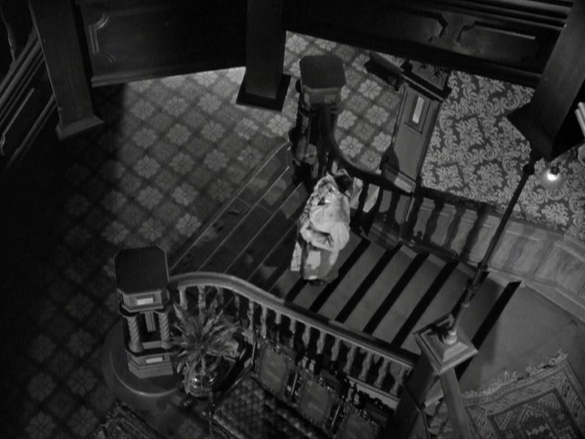
Most of the classic early horror movies had a strong romantic element, often using the blend of dark fantasy and ill-starred love affairs to motivate the characters even if that wasn’t necessarily the main driver of the narrative from the viewer’s perspective. Cat People starts out like many a romance with a standard boy meets girl setup in the municipal zoo. Oliver Reed (Kent Smith) is a draftsman/boat designer who runs across a girl sketching (unsatisfactorily, if the number of discarded efforts she produces is anything to go by) outside the panther cage. That girl is Irena Dubrovna (Simone Simon), a young woman with a near morbid fascination for all things feline. What follows is a standard progression through the various stages of courtship leading to marriage. However, alongside the dates and other rituals there is an air of something off-kilter, not so much of menace as melancholy and trepidation. Despite the sunny smiles and optimism, Oliver and Irena make for an odd pair, his apple pie innocence contrasting sharply with her cool depths. The fact is that Irena is a very disturbed young woman, haunted by the horrors of something ancestral and atavistic, a kind of tormented bloodline stretching back to her Balkan heritage. And it’s a fear which is rooted in her sense of self, a threat from within that is liable to be roused by outside provocation. In short, Irena is petrified by the thought that by succumbing to her own passions and desires she will be transformed into a savage beast.
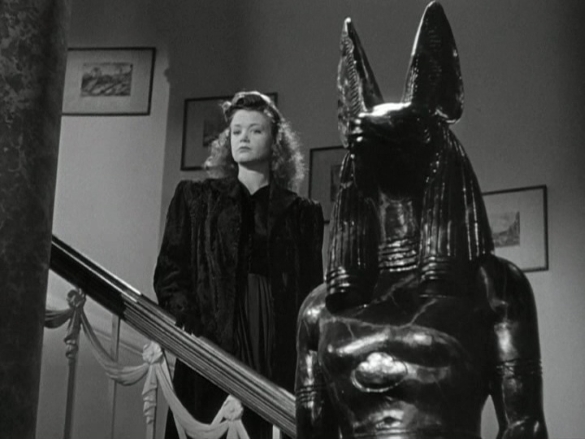
There’s no escaping the fact that a film with a premise such as that outlined above is always going to run the risk of descending into cheesiness. Many a harried B director or producer would grasp the easy option of relying on cheap shocks and even wholly unconvincing “monster” effects – see the relevant segment in Minnelli’s The Bad and the Beautiful on filming such tales. That Val Lewton’s name remains so celebrated today and his films so revered is down to his refusal to head down any of those well worn tracks or to fall back on hackneyed and derivative storytelling techniques. His genius is rooted in the decision to transpose a macabre fairy tale atmosphere to a contemporary New York setting. And of course it’s important to note how he found a kindred spirit in director Jacques Tourneur. His silkily unobtrusive style was ideally suited to this type of filmmaking, crafting meaning, drama and suspense from the drearily commonplace. Somehow as a result of Tourneur’s touch, the prosaic surroundings – the mundane anonymity of a featureless office, a basement pool and a simple sidewalk – add to rather than subtract from the creepiness.
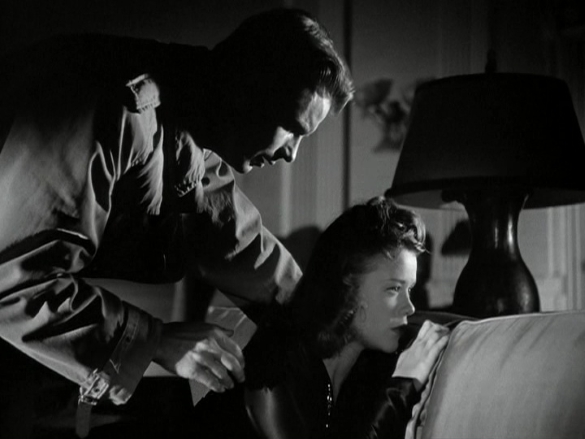
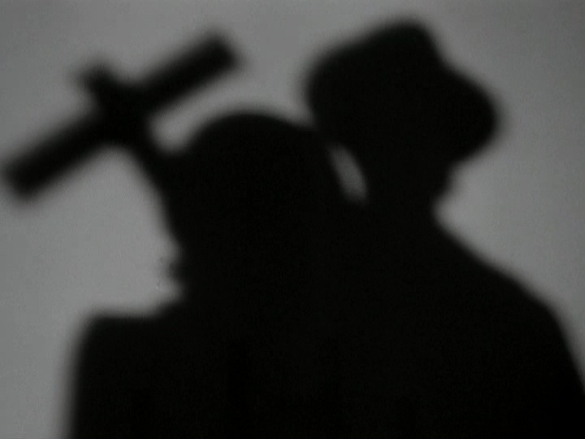
For this viewer, there are three standout scenes in the movie. The first is the sidewalk stalking of Alice (Jane Randolph), Oliver’s colleague and slow-burn romantic interest, where we witness a marvelous synthesis of Tourneur’s direction, Mark Robson’s editing and Nicholas Musuraca’s lighting. Sound effects and visuals mesh perfectly to create drum tight suspense and a superbly effective jump scare that retains the power to startle regardless of how many times it has been seen. Then there is the famous swimming pool sequence, where once again the dread of what might be lurking unseen is given a vigorous workout. Alice, again, has gone for a late night swim only to be spooked by the shadows that never seem far from her. Here the sounds blend with the rippling fugitive reflections, and the imagination does the rest. Finally, we have the climactic section in Oliver’s office, another stark and superficially unremarkable location that is provided with character by the uplighting from the draftsmen’s tables. Here it is both Oliver and Alice, now presented as a unified threat to Irena’s equilibrium, who are menaced. There are glimpses afforded of a great cat prowling the perimeter, and then a hugely evocative shot of the couple’s shadow pinned to a wall, an image imbued with unmistakable religious symbolism.
I was very young when I first saw Cat People, probably back in 1981, and what struck me at the time was the creepy atmosphere conjured up. Looked at with more mature eyes, the subtext of sexual repression and violent fantasies and emotions stirred up by jealousy and desire are clear to see. While the leads, Kent Smith and Simone Simon, were both in their thirties during production there is an air of innocence to their relationship that fits the notion of two people struggling to deal with the turbulent, tempestuous emotions their union has unleashed. Kent Smith has a genuinely bewildered juvenile air about him at times, especially when his character opines that he’d never experienced a day’s unhappiness in his life. And Simone Simon possesses a touch of that too in the way she struggles to contain her feelings, not to mention her inability to countenance consummating her relationship. Set against this relative callowness is Tom Conway’s smooth and worldly psychiatrist. He drifts in and out of the picture, but his sophistication bordering on decadence acts as a terrific foil to the jejune confusion of Smith in particular.
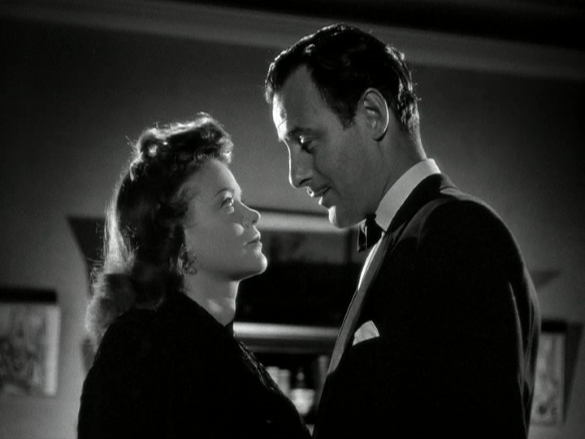
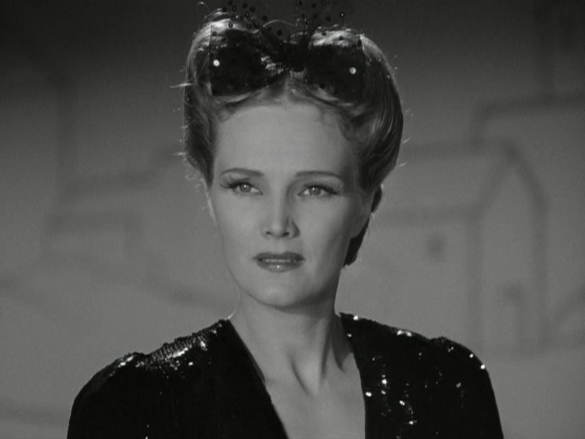
Jane Randolph had a relatively short career, retiring early and then living out a fairly long life away from the screen. As the lightning rod for Irena’s frustrations she provides a solid and relatable center for the movie. If her career was brief, it also involved a number of good films – this title as well as it’s loose sequel The Curse of the Cat People, a couple of entertaining Falcon movies again alongside Tom Conway, and two strong pictures for Anthony Mann, T-Men and Railroaded. Although the rest of the cast have limited screen time there are a few “faces” that are eminently recognisable, Alec Craig as the scripture quoting zookeeper, and the striking Elizabeth Russell as the nameless “cat woman” at the Serbian eatery.
Cat People got a DVD release years ago in the complete Val Lewton box set that Warner Brothers put out. Some of the movies in that collection were a tad rough looking, but Cat People was reasonably solid. That version has since been surpassed by the Criterion Blu-ray, a very fine presentation which I heartily recommend. The film is an exemplary slice of macabre fantasy that exudes style and it remains important not only due to the fact that it kickstarted Lewton’s unrivaled run of chilling masterpieces, but also for the way it altered perceptions of how horror movies could be shot and presented. Perhaps more significantly, it is enormously entertaining and memorable. A bona fide classic of the genre.
As an Amazon associate, any purchases made through clicks on links to that site earn a small commission that assists in the upkeep of the blog.


It’s a superb film and you really do it justice. So interesting about your recollection of seeing it for the first time. I was well aware of its reputation when I first saw it – one of those great occasions when a film totally lived up to its reputation!
LikeLiked by 1 person
I can’t imagine anyone coming away from the movie disappointed, even if their expectations had been ramped up by the praise of others. Some films most certainly do live up to the build up.
But yes, I came to it completely cold as a mere youngster and it captivated me – the subtexts and undercurrents naturally washed over me but that superb fusion of sound, lighting and editing was mightily impressive. It got me hooked on Lewton’s movies right away.
LikeLiked by 1 person
I do think that the dark folk tale feeling of the Val Lewton cycle, with its psychoanalytical underpinning, has a strong appeal to teens. I don’t love them all equally but they have a magic to them like no other films of the period.
LikeLike