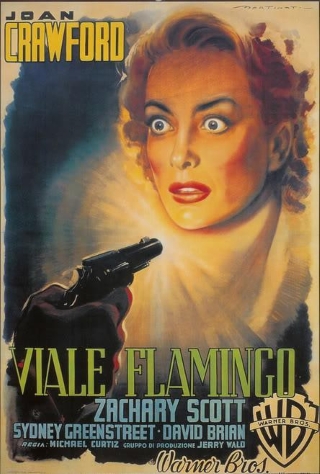
“He’s the only man I know that can make a sow’s ear out of a silk purse. Somehow I always hate to see it happen.“
Graft, greed, ambition , manipulation, betrayal… and that’s just a representative sample of the themes and ideas explored in Flamingo Road (1949). The list of descriptors that could be applied to the plot machinations and gyrations of prime melodrama is practically an endless one, all of which goes some way toward explaining how endlessly fascinating the genre tends to be, not to mention how compatible it is with other genres and styles of filmmaking.
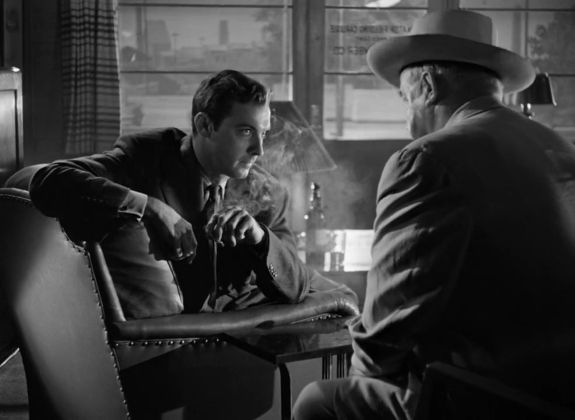
The familiarity we all have with those aforementioned themes is part of what makes melodrama such an identifiable form; even if the status of those portrayed is far removed from that of the viewer, the core principles that drive the narrative have that everyman quality that allows an almost intuitive understanding of how the characters act and react. The opening lines of the movie reinforce that sense, reminding us that every town, big or small, has its Flamingo Road, one of those thoroughfares where those with money, power and influence reside. And all the other areas that make up a typical settlement, from civic centers to fleshpots, are to be found in the town of Boldon City. After dangling the promise of easy, gracious living on that titular street, we are transported to “the wrong side of the tracks” to the patch of ground occupied by a traveling carnival, one replete with freak shows and exotic dancers. Lane Bellamy (Joan Crawford) is eking out an uncertain living as one of those dancers, going through the moves under the dispassionate gaze of gum-chewing adolescents. With the show hastily being given the bum’s rush, she finds herself high and dry, so to speak.
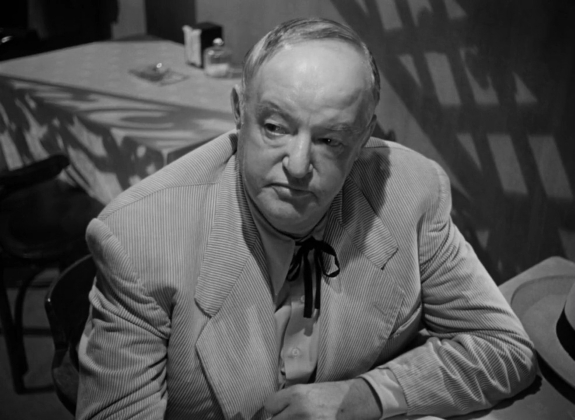
When the reluctant and unmotivated sheriff’s deputy Fielding Carlisle (Zachary Scott) is sent to ensure the carnival has upped stakes and left, he finds only Lane reclining on her bunk in a shabby tent listening to the radio. Probably more out of pity than anything else at that stage, he takes her into town, buys her some food and even manages to wangle a job for her as a waitress in the local diner. None of this escapes the attention of the calculating sheriff Titus Semple (Sydney Greenstreet). Gross and glowering, this seersucker-clad kingmaker has lined Carlisle up as rising star in the local political landscape and seeing him mixed-up with a lowly carnival dancer is decidedly not part of the plan. To cut to the chase, the burgeoning romance is nipped in the bud, Lane is not only fired but also tossed in prison on a trumped up charge of soliciting, and the sheriff presses ahead with his ambitions. Yet Lane is made of sterner stuff and she gradually claws her way back into society, latching onto and marrying political boss Dan Reynolds (David Brian). Amid the occasional slights and the snobbery of a small town, Lane continues to butt heads with Titus and both of them warily circle each other as wheels turn within wheels in the background and the scene is relentlessly set for a zero sum game of revenge where the biggest casualties are likely to be Reynolds and Carlisle.
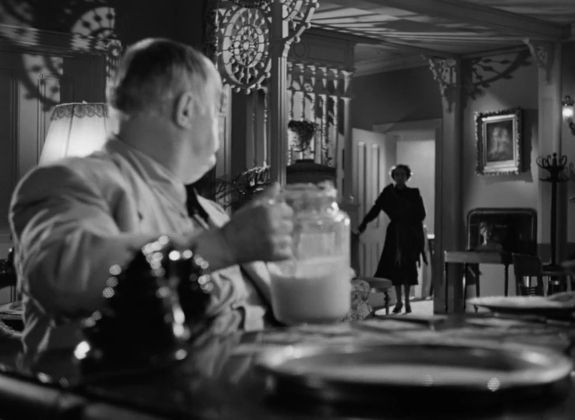
The screenplay of Flamingo Road was adapted from his play of the same name by Robert Wilder. While I’ve not seen the source material, I think it’s safe to say some alteration had to be made and euphemisms put in place to tiptoe around the inevitable production code objections to some of the developments. As I watched this I couldn’t help wondering whether Shakespeare’s Titus Andronicus was at least a partial inspiration for the naming of the sheriff. Did Wilder have that tale of implacable and terrible revenge and rivalry between Titus and Tamora in mind when he came up with the character’s name? Either way, the film does descend incrementally into ever deeper darkness as the protagonists cut and parry at each other in their personal arena. The longer it goes on the more it shifts toward film noir. Michael Curtiz had already worked to great acclaim with Joan Crawford and Zachary Scott on the classic noir melodrama Mildred Pierce and leans into some of the same ideas here. He employs tried and tested noir imagery and techniques – reliance on shadows, blinds and frequent deep focus composition, particularly in the last act.
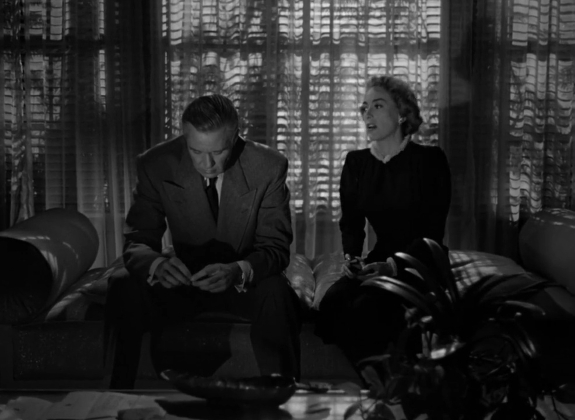
One of the great strengths of the studio system was its ability to make use of a pool of stars and cast them in roles that fit them like a glove. Of course that didn’t always come off and we can all probably think of instances of poorly judged casting. However, a movie such as Flamingo Road clearly demonstrates how successful it could be. The role of Lane Bellamy would have been meat and drink to Joan Crawford in the wake of her career resurgence in Mildred Pierce. The part offered plenty of scope to exploit the persona of style, grit and personal integrity she had honed by that stage. She was a powerful screen presence and needed someone equally strong to act as a foil – step forward Sydney Greenstreet. He was fast approaching retirement but his relatively short cinema career saw him grow into characters where his bulk and brooding threat was never less than memorable. He’s a superb villain, Machiavellian and dangerous with not even the faintest trace of a scruple. Zachary Scott was able to easily occupy roles defined by weakness and dissipation, and if his character’s downward spiral is not charted in as much detail as one might like, that’s down to the constraints of the script rather than any deficiency on the part of the actor. The tragically short-lived Gladys George played the roadhouse owner in that style of hers characterized by a toughness born of personal honor. Maybe she doesn’t attain the level of pathos she did in The Roaring Twenties but she still turns in a performance that feels very credible. David Brian is terrific in his debut, fully invested in his part and with none of the stiffness that he could occasionally display.
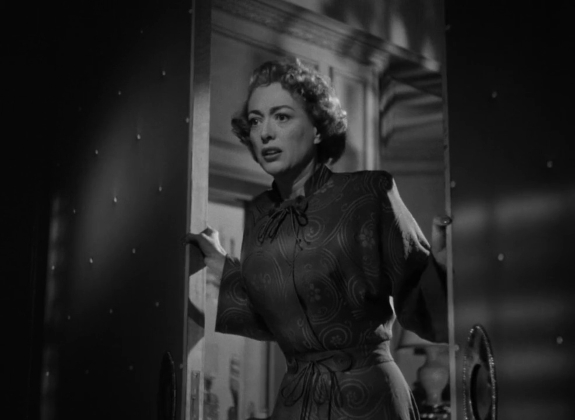
Flamingo Road was available as a good DVD from Warner Brothers and has since been issued on a very attractive Blu-ray by the same studio. The movie is a wonderfully entertaining blend of melodrama and noir that is packed with interesting themes and developments, as such it’s not hard to see why it was picked up and expanded into a TV series in the early 1980s. Recommended viewing.
As an Amazon associate I will earn a small commission on any purchases completed via clicks on the link above.