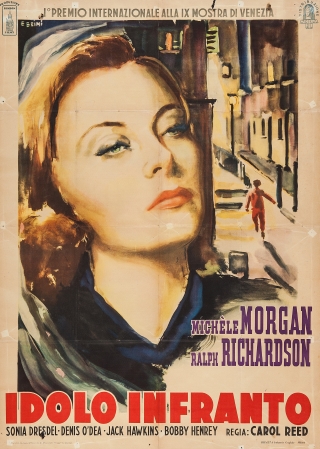
Is it possible to encapsulate the cinema of a nation in just a word or a phrase? I guess received wisdom, or maybe some sense of deference to the depth and breadth of most cultures, would nudge many people towards a negative answer. Still and all, I think that sometimes the essence of a nation’s approach to filmmaking (and the artistic temperament that lies back of that) can be neatly summarized thus. While this idea has occurred to me before, it was while I was revisiting Carol Reed’s The Fallen Idol (1948) the other day that I found myself mulling it over again. The movie itself is one of the director’s finest, a study in suspense and longing, a powerful melodrama observed primarily through the eyes of a fanciful child and shaded accordingly. And so it was that as I watched the drama play out the word “quiet” floated insistently into my thoughts. Somehow that quietness, or restraint if one prefers, that pervades the film felt like it was actually a byword for the best offerings of British cinema.
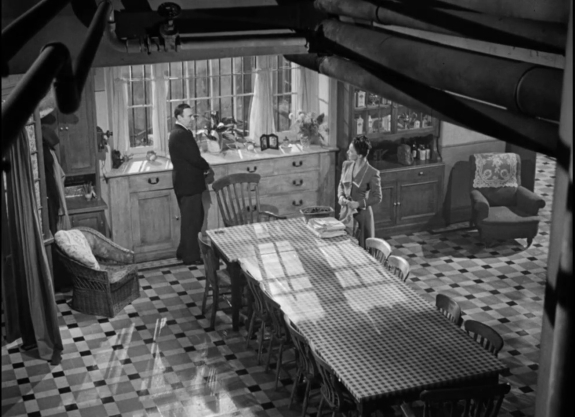
Belgravia, a location that exudes solidity, tradition and indeed diplomacy. Those imposing structures with their sense of permanency and the home to many an embassy have something of that quiet dignity I referred to about them. There’s an orderliness to it all, and what better way to put a human face on that concept than to represent it in the shape of a very proper English butler. Such a figure is familiar to almost everyone via literature, film and television if not in the flesh. He exists as a link of sorts, offering a vague connection between the present and some distant semi-feudal past, between high born aristocrats and the ordinary citizen. He is, in short, soft-spoken, impassive, dignified and authoritative, a paragon of decorum. Or is he? Is it right or reasonable to label any man a paragon of anything other than the mass of foibles and feelings that make up his inner self? Baines (Ralph Richardson) is the butler in the household of the ambassador of some unnamed nation. He is efficient and intelligent, diligent and charming. And his private life is a tangled mess of bitterness, betrayal and seemingly impossible passion. His marriage is a barren and loveless wasteland, a stale and frequently argumentative co-existence with a wife (Sonia Dresdel) who has grown suspicious and discontented. On the surface, his relief from this emotional desert comes via the whimsical and easy-going rapport he has developed with Philippe (Bobby Henrey), the lonely and over-imaginative son of the ambassador.
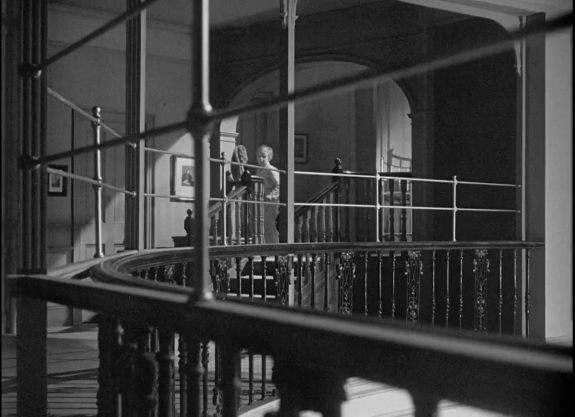
Nevertheless, as is so often the case in life, the image presented to the world at large tells only half of the tale. The Baines who ensures the smooth and comfortable running of his employer’s home, the spinner of yarns for the eager ears of a credulous and adoring Philippe has another outlet for the emptiness he experiences. He is quietly and discreetly engaged in an affair with Julie (Michele Morgan), a typist at the embassy. This fact is revealed by accident when Philippe innocently follows his hero one day and chances upon the lovers meeting quietly in the mundane setting of a nearby tea shop. Such is the simplicity and ingenuousness of childhood that the nature of the relationship is lost on the youngster and he happily and unquestioningly accepts that Julie is Baines’ niece. Still, the complications of the adult world must inevitably intrude as suspicion and desperation lead to confrontation. In that adult universe, jealousy and longing make for an explosive combination as the truth is inexorably brought to light. The audience see the argument between Baines and his wife all the way through and know how it resolves, but the boy (reflecting the half-understood perceptions of the very young) witnesses only part of it, fascinated and frightened by the heightened emotions laid bare before him. As he scrambles up and down the fire escape, peering in dread through the windows while the argument rages within, he misses out on the crucial moment and sees only the lethal consequences. Carol Reed’s direction is superb not only during these set piece scenes, but all the way through. The subsequent investigation, the possibilities that gradually emerge, the doubts and fears of all concerned are conveyed with marvelous subtlety. The master stroke of course is the way the entire thing is viewed and presented through the prism of a child’s faltering awareness and mounting despair.
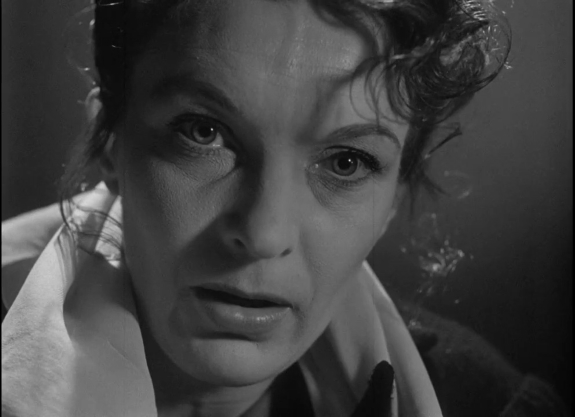
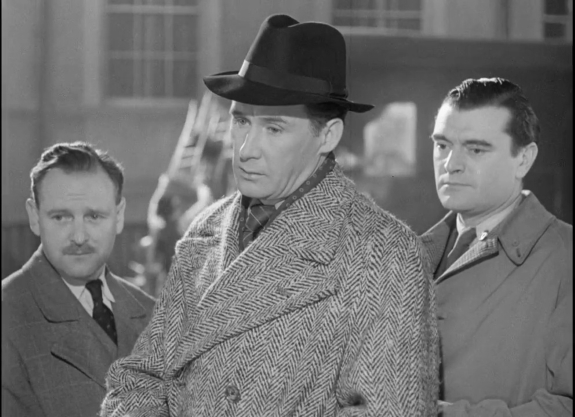
Aside from that marital spat that leads to tragedy, the quietness of it all dominates. While I feel this is a quality that pervades British cinema of the era, it is clearly a deliberate stylistic choice on the part of the filmmakers here. Many key exchanges are only half heard, uttered softly and intimately, with the kind of discretion that is the specialty of lovers or close confidantes, or indeed professionals who live by a code of caution. The conversations are frequently sotto voce, heard in snatches and presented with the contrived nonchalance adults sometimes adopt to shield the very young from the harsh complexities of life. This air of calculated concealment sets the mood for the picture precisely because it is a story seen from the standpoint of a small boy. It’s evident in the interactions of the trio of policemen, not least Denis O’Dea’s gently probing inspector, though ably supported by a watchful Jack Hawkins and a humorous turn from Bernard Lee as the interpreter whose talents appear questionable.
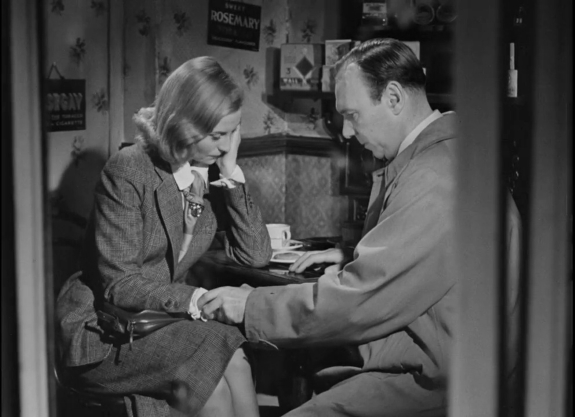
Ralph Richardson delivers a performance that is that is wholly authentic, displaying an outward bounce and buoyancy to charm and beguile a wide-eyed Philippe – so memorably portrayed by Bobby Henrey. Richardson sails rather close to eccentricity in these moments but he does so in such an attractive fashion that it doesn’t especially matter. He layers the character beautifully too and that sad little scene played out in the tea shop is heartbreakingly poignant in its restraint, and arguably because of it. It’s not just some stiff upper lip pose either but rather it’s a barely suppressed emotional crisis held in check largely due to the presence of the young boy who couldn’t possibly comprehend or grasp the powerful passions ebbing and flowing across the table before him were they to be let loose. Michele Morgan does fine things with her eyes and voice to supplement all this but it’s Richardson who owns the scene, who wrings truth out of the simplicity and ordinariness of the setting; that turning away when Julie exits, the fiddling with the newspaper, the shuffling round the shop his eyes downcast as he struggles to master the despair that threatens to overwhelm him is suffused with gut-wrenching pathos. But so very quietly.
The Fallen Idol was the first of three adaptations of works by Graham Greene that Carol Reed brought to the screen. The Third Man is undoubtedly the most highly regarded of those, but The Fallen Idol is every bit as good in its own way. Actually, when one pauses to remember that those two movies preceded by Odd Man Out were all made one after another between 1947 and 1949, it really does serve to highlight Reed’s greatness as a filmmaker. I don’t believe there’s any doubt that this is a movie everybody should make the time to see.



 Riding the High Country