Tomorrow at Ten

Finding myself writing about a lot of crime movies of late, I consequently find myself ruminating over what goes into making these genre pieces successful. Well of course it is a combination of writing, acting and direction, with a some additional assistance from sets, photography and music from time to time. Still those are broad terms which encompass a lot, but I think one critical element that grows out of their synergy is what we term suspense.  The best examples of the crime movie trade heavily on this, using it to hook and then captivate the audience. Tomorrow at Ten (1963) is a first-rate British crime picture that does this in superb style.

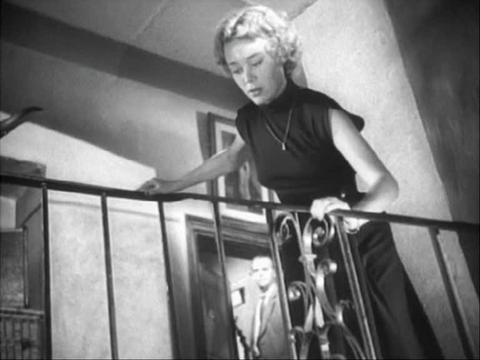
Sometimes I think that the worst crimes can inspire  the best films. Kidnapping is an especially nasty and traumatic piece of work, putting a life at risk and simultaneously exerting sadistic psychological pressure on those faced with the ransom demands. That’s in real life. However, in the fictional world of the movies the dramatic potential of such situations is practically boundless and, depending on the perspective from which the story is seen, multi-faceted too. Here we are introduced to man calling himself Marlow (Robert Shaw) who is in the process of adding the finishing touches to a meticulously planned scheme; in the secluded house he has rented, we see him happily gutting a child’s stuffed toy and snugly fitting what is clearly a device with a timer. This golly will be used superficially as a comforter for the little boy Marlow will abduct and also as a form of dreadful insurance to secure the cooperation of the victim’s father.

It’s barefaced stuff, snatching the boy and then presenting himself to the shocked parent to calmly demand money and immunity. Marlow is counting on his threats either keeping the police out of the affair or inducing the wealthy father to use his influence to neuter their efforts. But he reckons without the grim determination of DI Parnell (John Gregson), a man with a clear and uncompromising sense of justice. In the finest dramatic tradition though, even the best plans hit snags, and in this case it’s a huge one. In fact, the powerful emotions released by his actions has wholly unforeseen results for Marlow, dragging the story in a different more intense direction and raising the suspense to a completely new level.
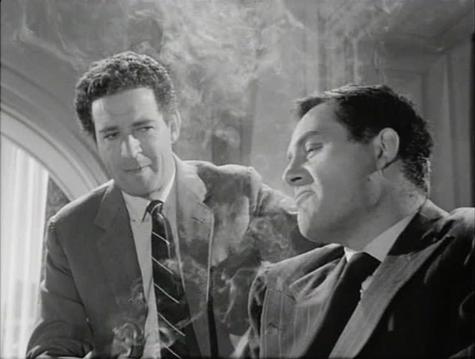
Briefly scanning back through pieces I’ve written here in the past and I don’t believe I’ve included any films directed by Lance Comfort yet. Bearing in mind how many of his movies I have to hand, this seems like an odd omission and certainly not an intentional one. Comfort worked in a range of genres but he had a real talent for crime movies and thrillers, and he also managed to wring the very best out of some particularly spare projects. Tomorrow at Ten makes use of a small central cast, around a half dozen people and keeping the focus on Gregson and Shaw in particular. When one thinks of these British quickies there’s a tendency to expect simple and direct visual setups, but Comfort had the experience and the resultant confidence to move his camera around more imaginatively and there are a number of extraordinarily stylish shots on view. And he was a highly professional filmmaker, never losing sight of the thread of the narrative and the necessity to keep everything moving relentlessly towards the resolution.

Robert Shaw was one of the big stars of British cinema, although he had yet to make his major breakthrough – that was to come shortly with his portrayal of the cold and dangerous Red Grant in From Russia With Love.  As an exercise in frighteningly psychopathic behavior, Tomorrow at Ten provided a pretty good warm-up, allowing him to create a genuinely memorable villain – there’s something chilling about his gleeful appreciation of his own cunning. Opposing hm is the stolid and reassuring presence of John Gregson as the dogged and principled policeman. As the plot develops, it’s Gregson who gets the greater share of screen time and he brings the audience along on the emotional journey as he hunts against the clock for the clue that may vindicate his methods and, more importantly, save an innocent life.

Tomorrow at Ten was released on DVD by what was Odeon well over ten years ago. That edition appears to have gone out of print now but, as far as I can see, there should be used copies available to buy for reasonable prices online. The transfer on that DVD was in Academy ration, which is unlikely to have been correct for an early 60s film. There are also some instances of print damage to be seen but overall the presentation is perfectly watchable. The movie itself is wonderful little hidden gem, one where the suspense is increased artfully and built around a mightily absorbing tale. Highly recommended.

The Night Won’t Talk

Continuing with my trawl through British movies that have been largely neglected, I now come to The Night Won’t Talk (1952), an atmospheric little whodunit with a tempting title and another of those ever attractive one hour running times.

A good opening goes a long way with me, and The Night Won’t Talk hits the ground running with a hooded figure slipping through deserted nighttime streets, headed towards a basement flat and a victim. Right away we’re pitched into the middle of a murder case, an artist’s model having been killed in that initial sequence. Certain settings tend to work well in mysteries and an artistic milieu often provides at least an interesting set of suspects, and the kind of undisguised personal and professional competition that doesn’t need to be restrained in the way it might in more conservative circles. The murder victim is soon established as a source of jealousy for other women and also, more suggestively, a siren who sparked romantic rivalry among those men she came into contact with. The complicated web of relationships first needs to be unraveled and that task falls to the cool and detached Inspector West (Ballard Berkeley) and his equally laconic assistant (Duncan Lamont). As with many (most?) investigations, the shadow of suspicion has a habit of resting more comfortably on one particular person. In this case, it’s the victim’s fiance, unstable artist Clay Hawkes (John Bailey) but nothing is certain and there’s no shortage of alternatives for us to keep in mind.

Actress Hy Hazell got top billing, and to be fair she does deserve it as she is a strong and attractive screen presence. Her film career was somewhat limited although I’m keen to see more of her work. I have another two  of her movies in my collection but I see I’m missing Stolen Assignment, which sounds like it might be worth a look and I’m keen to get my hands on it at some point now. There’s marvelously relaxed support from Ballard Berkeley as the policeman on the case and the film is more fun whenever he’s on view. I’ll have to admit I was less impressed with John Bailey as the main suspect; he’s good enough I guess but his nervy brand of angst didn’t fully convince me and I think it hurts the film somewhat when such a central role isn’t entirely successful.

The Night Won’t Talk was directed by Daniel Birt, but I’m not all that familiar with his other work. I have a couple of his titles to hand though – The Deadly Game and Three Steps in the Dark – and should make an effort to check those out at some stage. Birt’s direction is brisk and efficient enough but it’s also noticeable that at times the film has a look that belies what must have been a restricted budget. A quick glance at the credits shows that the art director was one Bernard Robinson (the man responsible for the distinctive and deceptively luxurious appearance of many a Hammer production) so it shouldn’t really come as any surprise.

Network give The Night Won’t Talk quite a nice transfer to DVD in its correct Academy ratio and even include a brief gallery of press clippings as a supplement. Again, it’s a solid presentation of a lesser-known British crime picture. The movie is a reasonably neat whodunit which is plotted satisfactorily and moves along at a good clip.

Wrong Number

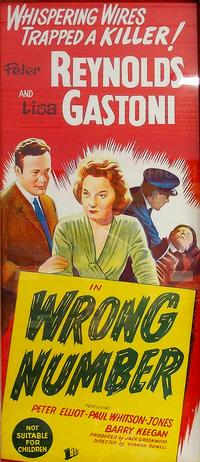
More British cinema, and more low budget British filmmaking to be exact. The fact is I’ve been watching a lot of this material lately and enjoying it immensely. Sure the quality varies and I’m not making any particular arguments in favor of raising whatever reputation these films may have. It’s simply a matter of immersing myself in the kind of pared down affairs which I frequently find myself drawn to. Wrong Number (1959) is without question a pretty slight work, a movie with a running time of around an hour and shot on a handful of sets. However, those aspects need not be seen as negatives as there’s plenty of pleasure to be derived from such modest fare.

Wrong Number is a heist movie, and that genre variant presents opportunities for drama at different stages – the planning, the execution and the aftermath. More ambitious films may choose to exploit all of those stages, but Wrong Number is aware of its limitations and satisfies itself by working within them. The focus here is the aftermath of the robbery, the earlier elements being only briefly addressed. In brief, a mail robbery has been planned by the outwardly respectable Dr Pole (Peter Elliott) and carried out by career crooks Max and Angelo (Barry Keegan & Peter Reynolds), although far from cleanly when the latter ends up clubbing an overzealous guard to death. If a potential murder rap isn’t bad enough, Angelo and his boss are also interested in the same woman, Maria (Lisa Gastoni).

With the pressure and emotional temperature on the rise in the aftermath of the botched robbery, the titular wrong number begins to play its part. So, as the movie progresses, it alternates between a disloyalty among thieves drama and a slightly eccentric police procedural where a dippy Olive Sloane threatens the patience of investigating cop John Horsley. All of this probably sounds like an incident-packed plot and there is enough in there to keep everything chugging along. Director Vernon Sewell was something of a specialist in low budget pictures, generally making entertaining if sometimes lightweight pictures alongside some more affecting work like Strongroom.

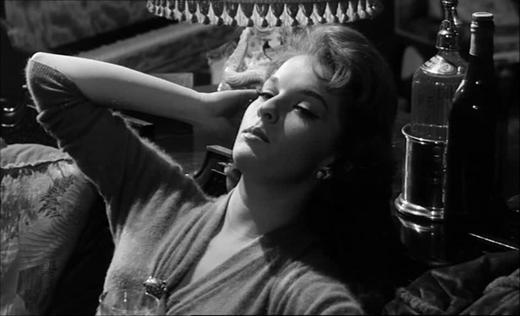
Wrong Number was a Merton Park production and that company made some terrific features and short films throughout the 50s and 60s, not the least of which were the long running series of Edgar Wallace mysteries. There are a number of faces present who ought to be familiar to those who know British cinema even if the names may not be so readily recalled. I think it’s safe to say Irish-Italian actress Lisa Gastoni is the main attraction in this one, and she’s both comfortable on screen and easy on the eye. Actually, the women get the most interesting parts in Wrong Number, with Olive Sloane also making the most of her part as the comical busybody who holds the key to everything.

Once again I find myself looking at one of Network’s sparse yet impressive DVD releases. Wrong Number is a small picture, a true B movie, but professionally made and Network provide a suitably professional presentation – widescreen and a nice, clean print. The DVD offers just the movie but that’s fair enough given the fine transfer and the nature of the film.

Catacombs

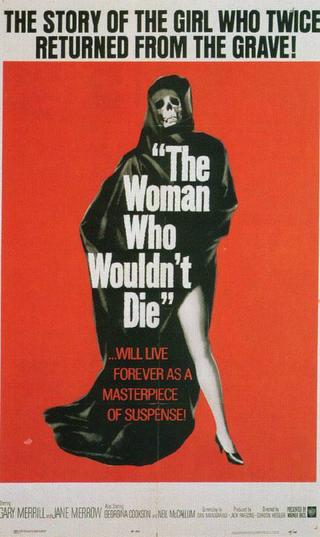
I’m in the mood for small-scale British thrillers just at the moment and am currently enjoying some new watches alongside some revisits. Last time I looked at a late 40s noir effort and have now leapt ahead almost two decades to highlight Catacombs AKA The Woman Who Wouldn’t Die (1965), a macabre, twisty thriller which evokes some of the vibe director Gordon Hessler picked up from his work on Alfred Hitchcock’s TV series.

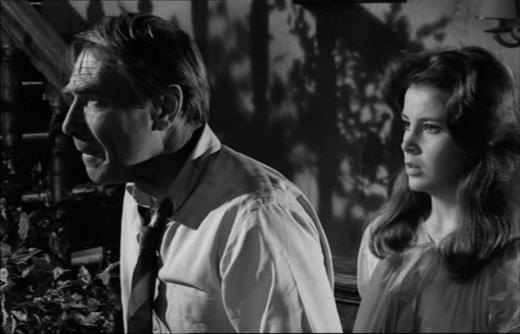
The story is a highly seasoned mix of temptation, infidelity and murder which also flirts with the supernatural. Everything revolves around Raymond and Ellen Garth (Gary Merrill & Georgina Cookson) and Ellen’s niece Alice (Jane Merrow). Ellen represents the money, a hard-driving (both literally and figuratively) businesswoman who strives to have total control over everything and everyone in her life, including her husband and her health problems. As far as the former is concerned, Raymond is essentially a kept man, a weak-willed specimen who has spent his life trading on his sexuality. As for the latter, Ellen’s attacks of physical pain have led her to explore meditation techniques and as a result the ability to put herself into a trance in an effort to manage her suffering. Into this slightly unusual household comes the figure of Alice, a girl who had gone abroad to study art and has now returned as a grown woman and caught the roving eye of Raymond. What we have is a potentially explosive situation in development, one which only needs a chance spark to set it all off. Then an apparently casual suggestion by one of Ellen’s disgruntled employees (Neil McCallum) strikes just such a spark…

Catacombs is a fairly entertaining little film, not all that surprising in terms of the direction it takes but still delivering a neat and satisfying twist right at the end. Gary Merrill was the big name Hollywood name whose star was on the wane, a common enough casting technique employed by British movies of the 50s and 60s. Merrill’s role as the ageing gigolo isn’t an especially appealing one although it’s not really meant to be  attractive and the actor picks up on the venal and craven aspects of his character very well, making him quite human but not in any pleasant way. Georgina Cookson is cool and poised, maybe too cool though to be wholly credible. Jane Merrow is better as the returning ingenue, the catalyst for the turmoil which ensues. And finally, Neil McCallum has a small but pivotal part as the shifty type who brings matters to a head.

Aside from his on screen work, McCallum also had a co-producing credit alongside Jack Parsons – and incidentally Parsons also produced Walk a Tightrope, which McCallum both wrote and had a minor role in. However, the bigger influence behind the cameras appears to have been provided by the director.  Gordon Hessler spent many years working as associate producer and ultimately producer for Hitchcock for his television show. Anyone familiar with those Hitchcock episodes will recognize the mood here and the connection isn’t all that difficult to see. I’ll be honest and admit I’ve not been all that enamored with the other Hessler films I’ve seen – those horror features he made with Vincent Price – but then again I’m not a huge fan of that genre anyway. IN short, I’d say I like Catacombs quite a bit more than the director’s other work, or at least what I’ve had the opportunity to view.

Catacombs has been released on DVD in the UK in a very nice edition by Network. The widescreen transfer looks crisp and attractive but the package is, as usual, light on supplements. Still, the movie is a fun way to pass an hour and a half or so and one that fans of the Hitchcock TV shows ought to check out.

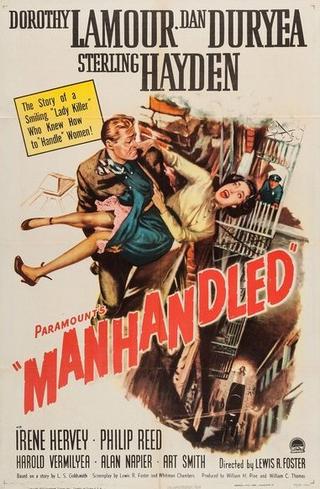
Manhandled

It’s not the first time I’ve found myself looking a movie that seems to have been marketed as a film noir, or at least as a hard-boiled crime yarn in the days before filmmakers and critics had acquainted themselves with French terminology. I’ve also made the point before that I think of myself as inclusive in my own attitude to what precisely constitutes an entry in this somewhat nebulous category. At a glance, Manhandled (1949) looks like it’s earned its place in the lineup, but the truth is it’s more of a decoy than the genuine article. However, that’s not necessarily any bad thing, just so long as one knows what the score is going in.

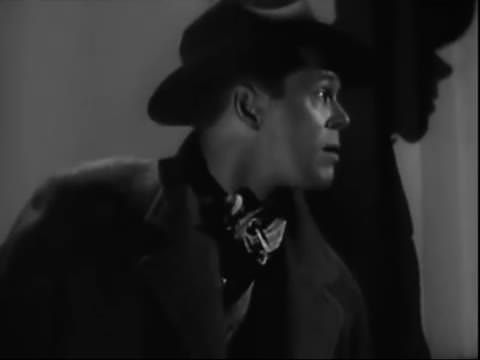
Everything begins furtively, the camera hugging the ground and slinking  cat-like around the shadows, revealing only the legs of characters whose voices indicate a jealous, insecure man waiting up for the woman he fears may be cheating on him. They meet, there’s a confrontation, and then a killing. It’s looks stylish and gripping, and the sudden knowledge that it was all a dream recounted by an anxious writer (Alan Napier) to his analyst (Harold Vermilyea) only adds to the noir trappings. When it then looks as if the dream were in fact an omen of the tragedy to come, well one would be forgiven for believing we’re firmly entrenched in cinema’s darker corner. Yet, it’s at this point that the tone alters, despite the presence of noir regulars Dan Duryea and Sterling Hayden, to head off (for the most part) down a lighter path more in keeping with a whodunit murder mystery with a hint of a 30 s or early 40s series picture about it.

I have a hunch there are those who will dismiss this movie for not being a true noir, or perhaps for strongly hinting that it is and then delivering something rather different. I can understand that; the film does appear unsure of exactly what it wants to be and the tone can veer radically from scene to scene, and even within a scene. Frankly, I’m happy to regard it as a mystery which flirts with the trappings of noir without ever fully committing. On that level, it works fine and the jokey, vaguely bumbling cops (Art Smith & Irving Bacon) don’t feel out of place in such a world. I’m being deliberately cagey about the plot in this case as I think any discussion of a film which is essentially a whodunit should steer as far away from spoiler territory as possible, out of respect for any reader who is unfamiliar with the material. Suffice to say, Dan Duryea has a field day trading on his characteristic fake bonhomie, acting as a role model for aspiring chiselers everywhere. Dorothy Lamour does distress well and only Sterling Hayden is a tad disappointing, his typical gruff abruptness not really suiting his role here.

That opening sequence where cinematographer Ernest Laszlo and director Lewis R Foster pull out all the stops is a wonderful hook but, at the same time, it’s perhaps setting up a different picture to what they were planning to present. Ultimately, I have no issue with a film not being as dark as it promises – I like noir a lot but wouldn’t want to see every crime or mystery movie forced to conform to its requirements. As a mystery, Manhandled works well enough, sprinkling suspects and red herrings around to maintain interest. Still, it misses the mark to some extent due to the shifting and uncertain tone.

As with a lot of Pine – Thomas movies, availability can be tricky. I watched this online recently but there has been a DVD released in Italy – I haven’t seen it so can’t make any comment on its quality. So to get down to brass tacks, would I recommend it? Well, I’d have to answer with a qualified yes. The quality of the cast should speak for itself and the mystery at the heart of the story is solid enough to hold one’s interest. Yet that variability in the script has to be noted – if you can accept that and take the film on its own occasionally muddled terms, then there’s fun to be had with it.

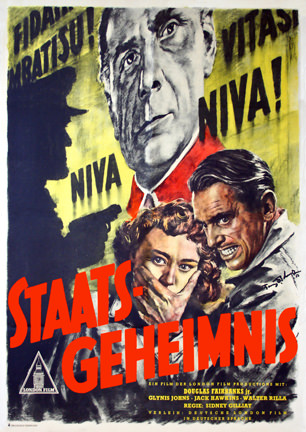
State Secret

Political thrillers can be a bore; long-winded affairs that can be equally long on sanctimony have a tendency to turn me off. For me, anything which is given this designation works best when the political aspects are sidelined as far as possible and the thriller elements are brought unashamedly to the fore. Even better is the film were the politics are of the entirely make-believe variety, serving only as a light frame upon which to drape a tale of intrigue. In 1938 Frank Launder and Sidney Gilliat turned out such a screenplay and in the process played a significant role in shaping the success of The Lady Vanishes, one of Alfred Hitchcock’s best British movies. A dozen years later would see Gilliat both contributing to the script of and directing another British “political” thriller called State Secret (1950) – a neglected piece of hokum which remains highly entertaining.

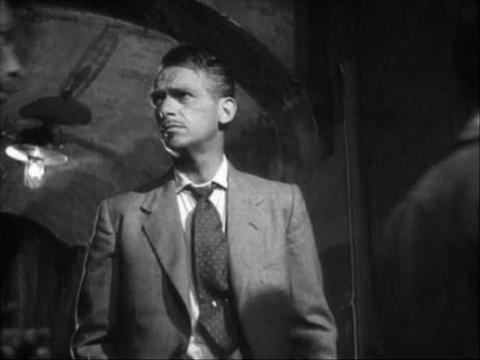
Middle Europe and non-existent countries (and in this particular case featuring what appears to be a specially created language that is used throughout the film) are the kind of ingredients which effortlessly draw me in. In this case it’s Vosnia, the undisputed realm of one General Niva (Walter Rilla). Frankly, I find it hugely refreshing that there is a deliberate vagueness about the leanings of this dictatorship; whether Niva is a leftist or rightist demagogue is never addressed, and the simple fact is it’s of no relevance whatsoever. When eminent surgeon John Marlowe (Douglas Fairbanks Jr) is persuaded to travel to Vosnia to demonstrate his pioneering new technique, it’s not important to know the color of intolerance and repression that holds sway within its borders – both the hero and the viewers are off on a pacy adventure, where the only thing that matters is the threat and not the philosophy supposedly driving it.

So, Marlowe finds himself enjoying the kind of luxurious hospitality only the best totalitarian regimes can offer while he shows off his new procedure and collects what he’s been told is a prestigious award. Naturally, in a movie of this type, the whole scenario  is merely a blind, an elaborate charade designed to conceal the fact Marlowe is actually operating on the seriously ill head of state. Perhaps a wiser man might have considered this possibility, and certainly would have made sure  any suspicions he may have had were kept strictly to himself. But Marlowe isn’t such a man, and of course if he were, we wouldn’t have a film to enjoy. As it is, he makes a point of finding out who his patient is, and then finds that countries like Vosnia have a host of other feature to offer when patients whose identity it really would be better not to know don’t survive the procedure. What follows is a relentless pursuit across an alien landscape as Marlowe, with the initially reluctant assistance of showgirl Lisa (Glynis Johns), tries to elude the urbane but deadly Colonel Galcon (Jack Hawkins) and all the forces at his command.

With location shooting in Italy, State Secret is an attractive looking British thriller, a fast-moving and exciting thriller which owes a debt to the writer/director’s previous collaboration with Hitchcock. The concept of the regular guy on the run, pursued across the country by shady types in the employ of a ruthless foe, is a familiar trope. And, in addition, there are scenes, such as the attempt to seek sanctuary in a theater and hide oneself among a crowd as the enemy closes in, all of which recall the likes of The 39 Steps and Saboteur, and also look ahead to North by Northwest and Torn Curtain. Gilliat’s script here is adapted from a novel by Roy Huggins (of The Fugitive fame), which I have yet to track down and read so I can’t say how much derives from that source.

Fairbanks makes for a personable and sympathetic hero in State Secret, making me wish he’d done more of this kind of stuff. His was a rich and varied life and it seems sometimes that acting was only a small part of it all – he’ll probably remain best known, and probably deservedly so, for his roles as the amoral Rupert of Hentzau in the 1937 version of The Prisoner of Zenda and also as a soldier in Gunga Din two years later. Personally, I’d love to be able to see another of his movies, Green Hell, made available at some point as I remember it as being quite a lot of fun. Glynis Johns, daughter of Mervyn Johns, was in the middle of a productive run of work at this point and is an appealing and credible partner for Fairbanks. Jack Hawkins was one of the greats of British cinema; equally at home as either hero or villain, or any variation floating between, he lent class to any film he appeared in and here (bearing in mind the caliber of his co-stars) he consolidates an already distinguished cast. If I had a complaint to make, it would be that we don’t get to see more of Hawkins, and the same could be said for the always accomplished Herbert Lom.

In the same year, Richard Brooks would make the similarly themed Crisis – with Cary Grant finding himself pressured into operating on a dictator and running the attendant risks – but that’s a slower, duller picture that tries harder to make a philosophical point but ends up losing its way as a piece of cinema. State Secret, on the other hand, is upfront about its aims as a piece of entertainment first and foremost and winds up being a better film as a result. Sadly, there don’t appear to be any strong versions of the movie available to buy. I have a Spanish DVD which is just about acceptable in terms of quality, but I couldn’t really endorse it. There’s also an Italian disc on the market and I suspect it’s probably from a comparable source. As such, all I can say is I hope the film gets a release somewhere that does it justice. Anyway, it’s a fine British thriller that is worth keeping one’s eyes open for – and perhaps it will come in for the treatment and attention it deserves.

EDIT: The film has since been released in a very attractive Blu-ray edition by Network in the UK.

The Flying Scot

poster92_zpsujq7jv9e

We hear a lot about budgets when filmmaking is discussed, and you end up with the feeling nowadays that movies are barely considered to be worth watching if the amount of money invested in the production isn’t of the eye-watering variety. This is a shame as it means the range of films made tends to be reduced and, crucially, fewer chances are taken for the simple reason no one wants to accept a risk when the stakes are so high. Now I’m not trying to make a case here for the inaccessible or the utterly impenetrable – movies which are not entertaining or watchable are going to be failures not merely in financial terms but also due to the fact they cannot succeed if they cannot engage with an audience. If I’m lamenting the current obsession with massive budgets, then that’s because it does away with (or at least significantly reduces the potential for seeing) sparse and direct pieces which depend  on tight storytelling techniques rather than whizz bang visuals. I’m referring to frugal little productions like The Flying Scot (1957), the kind of minimalist drama we can’t even count on television taking on these days.

The Flying Scot has three major points in its favor as far as I’m concerned: it takes place almost exclusively on a train, it’s concerns itself with a heist, and it’s pared so far down that practically no excess fat is evident. The opening pitches us straight into the heart of proceedings, tracking along a railway platform to follow the progress of a newly wed couple about to embark on a train to begin their honeymoon, and thereafter their life together.  We see them settle in, put up a reserved notice on the door, draw the curtains. And then they change into casual clothes and lie down on separate berths on opposite sides of the carriage! It’s now quite clear that these people (Lee Patterson & Kay Callard) are no newlyweds, they and their associate in another car (Alan Gifford) are biding their time till they’re due to act. And that action is the smooth and meticulous execution of a plan to steal a half a million pounds in banknotes. Everything moves like clockwork with each person fulfilling his or her assigned role with precision and cool professionalism – it’s at this point that we pause, step back in time, and see what really happens…

£8

The director of The Flying Scot was Compton Bennett, a man with a comparatively small yet interesting set of credits. His big Hollywood success was King Solomon’s Mines but there were other noteworthy titles both in the US and the UK. That this was a very low budget affair is apparent from the small cast with no big names, the limiting of the action to a handful of train carriage sets and the running time of not much more than an hour. However, as I hope my introductory remarks suggested, a limited budget doesn’t have to mean a poor quality movie. With The Flying Scot Bennett turns these aspects to his and the film’s advantage by using the cramped and suffocating space as a device for ramping up the tension, emphasizing the sense of characters trapped by their own criminal plans. Similarly, the short running time positively demands the pace is maintained, the plot forging ahead relentlessly just as the train where it all takes place heads inexorably towards its destination. I’d also like to note the stylish opening section where the first ten minutes or so is played out with one word of dialogue being spoken, it could be described as gimmickry I suppose but it never actually feels like that.  Furthermore, that opening and how it then develops reminded me of the beginning of Gambit, a later film with a lighter overall feel. The presence of Peter Rogers as producer and Norman Hudis as screenwriter brings to mind the Carry On series of comedies that would shortly debut in British cinemas and seem like an odd pair to be attached to a tense little suspense picture such as this. In truth, there is a thread of humor running through the film, but it ‘s of a more carefully observed type than the bawdier variety the aforementioned series would become famous for – having said that, those early Hudis scripts had a gentler approach anyway.

£7

As far as a general audience is concerned, Lee Patterson is probably not a name that will be especially well-recognized. On the other hand, anyone who is a fan of, or even just reasonably familiar with, British thrillers of the 50s and 60s will be very much aware of this guy. Patterson was a Canadian actor who seemed to get cast in every other mystery or noirish thriller, so much so that it’s nearly impossible to have watched more than a handful of these kinds of films without coming across him. I’ve always found him a reliable enough performer, not a big draw but the type who you know will get the job done whether he was cast as good guy or bad. Here, he’s playing a man who is tough to like, displaying a bit too much unnecessary arrogance and self-absorption. He does it pretty effectively and fellow Canadian Kay Callard helps to smooth down his rough edges a little. Alan Gifford, yet another transatlantic import, provides just the right degree of pathos as the ageing crook hoping for one last touch to set him up for retirement but plagued by a health problem and a plan that’s fraying uncontrollably.

The Flying Scot is out on DVD in the UK via Network as part of the ever attractive The British Film line. I imagine a 1957 title would be better suited to at least some form of widescreen aspect ratio but it still looks fine, to me at least, with the 1.33:1 framing used on this disc. The print is in pretty good shape too with no major damage to cause distraction. As for extra features, there’s the facility to watch the opening under the alternative title The Mailbag Robbery. All in all, I thought this a very neat thriller, well constructed and satisfyingly tense – it gets a recommendation from me.


Little Red Monkey

poster76_zps0muvedbk

Topicality is often seen as a desirable quality in films. Movies are and were, above all else, made to earn money, and what better way to do so than to present your audience with a story that has its finger on the pulse of current affairs. I’m happy to acknowledge this fact but, as someone who spends a lot of time watching, discussing and dissecting older films, I’m in the habit of looking beyond those immediate concerns. All of that was a roundabout way of putting forward the theory that topicality and longevity, and by extension artistic value, may be less than mere casual acquaintances, but might in fact be perfect strangers. These were thoughts that were running through my head the other day as I was watching Little Red Monkey (1955), a film which is firmly rooted in the concerns and mindset prevalent in the Cold War.

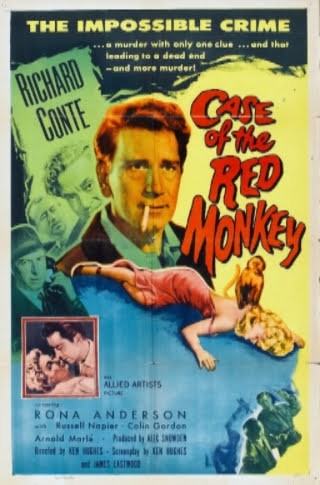
Intrigue is surely one of the essential ingredients of a thriller, and Little Red Monkey kicks off with a series of intriguing episodes. To be more precise, we start off witnessing a succession of killings, the assassinations of top scientists. Aside from the acts of murder themselves, all are linked by the curious phenomenon of taking place when a small monkey is present. Now that’s the kind of hook that’s bound to snag the interest of the press and thus we move smoothly to a press conference where a harried government representative is fielding  questions that the reporters are lobbing relentlessly in his direction. They want to know who is behind the violence, what it’s all about, and what’s with the monkey. While the face of officialdom calmly bats away query after awkward query, he has beside him a silent but attentive figure. This is Superintendent Harrington (Russell Napier), the man charged with investigating these events. Before heading off to meet a special arrival at the airport Harrington first spars coolly with Harry Martin (Colin Gordon), one of the more persistent newspaperman in attendance. The nature of the relationship between press and police was one aspect of the film which jumped out at me, and in truth didn’t sit all that comfortably, but I’ll return to that later. Harrington is off to meet a defector whose plane has just touched down and also the man who will be shortly assuming full responsibility for his safety. The defector is simply in the UK to make a transfer before proceeding on to the US, and Bill Locklin (Richard Conte) is the State Department man there to see it all goes as planned. And so we have all the key elements of our scenario falling into place: a supposedly routine babysitting operation that is in danger of being derailed by a bizarre assassination plot and a dogged press.

I like spy stories, I like the trappings of them and the situations typically arising out of them, and I generally like the Cold War milieu that frequently inspires these tales. I also enjoy a good crime yarn, even better if it happens to involve impossible or fantastic elements. In short, Little Red Monkey ought to be right up my street, and yet it didn’t work for me. Why? I think it comes down to a combination of not really caring about the main characters and the movie’s focus on what were probably the contemporary hot topics of defectors and fifth columnists. Frankly, I found the characters of Harrington and Locklin brash, dismissive and perilously close to authoritarian. And these are the good guys. In addition to that, we have the overt suggestion, made more than once, that an unfettered and investigative media is at best a nuisance and maybe even a threat. Then we have the matter of the more unusual aspects of the story – how scientists seem to be getting bumped off by a monkey – getting sidelined in favor of mundane fifth column shenanigans and an insipid romance.  Ken Hughes made some fine shorts and features – Heat Wave is an enjoyable noir, for example – but I feel he squandered the opportunities to do something interesting with this one, allowing the duller moments to predominate.

Richard Conte was a dependable actor, capable of strong, diverse work in the likes of The Big Combo, The Blue Gardenia and Cry of the City but in this film he’s often brusque and snappish, alienating the viewers when he really ought to be connecting with them. Russell Napier is another chilly presence, appearing distant and remote when he’s not railing against reporters. The fact of the matter is the most sympathetic character in the movie is Colin Gordon’s irreverent hack. He’s no saint and has no particularly elevated opinion of himself or his profession but he is more real as a consequence. I found him very effective in Strongroom and this markedly different role is proof that he had some range as an actor. Rona Anderson does her best and is quite personable but her part as Conte’s romantic interest is unremarkable and doesn’t ask an awful lot of her.

Little Red Monkey is the kind of film that popped up in TV schedules with regularity in the past but not so nowadays. It’s been released on DVD in the UK by Network as part of their British Film line, and it looks reasonably good. I would have thought some kind of widescreen ratio would have been appropriate given the year of production but the framing at 4:3 is acceptable. Among the extra features included on the disc is an alternative opening sequence, a neat little touch. I guess it’s clear enough that I wasn’t exactly blown away by this film but all I can do is call it as I see it. To be clear, I don’t say Little Red Monkey is a bad movie, just a disappointing one. There are points of interest in there and it’s a professional piece of filmmaking but I don’t believe it has worn well and, alongside a vaguely unsavory subtext, is too tied to the era in which it was made. So, watchable but hardly essential in my view.


Strongroom

Suspense is one of the most attractive aspects of any work of fiction, regardless of whether it’s literary or cinematic. There are all kinds of dramatic devices which can be employed to entertain and enthrall an audience but suspense must surely be the strongest. It doesn’t always come off, lots of movies have fallen flat on their faces while attempting it, but the slow escalation of tension, the encouragement of anxiety which feeds off itself and grows incrementally, is one of the more potent techniques available to the filmmaker. If suspense is to be effective as either a source of drama or as the by-product of it, then it needs to be based on characters whom the audience has gained empathy for or discovered some kind of connection with. Strongroom (1962) is a superb exercise in the art of rubbing the viewer’s nerves raw, of depending on such imposters as fate and coincidence to wring as much tension as possible out of a simple story.

A heist movie is nearly always engrossing and that’s particularly the case when the robbery in question starts to go wrong, when the seemingly meticulous plans go awry. In Strongroom nothing much goes right for anyone from the beginning. WE see the employees of a bank preparing to head off for a long weekend as the Easter holidays have arrived. Across the street, in a van, three men  – Griff (Derren Nesbitt) along with brothers Len (Keith Faulkner) and Alec (Morgan Sheppard) – watch and wait for the manager to be left alone inside. These guys have a little larceny in mind and think they’ve got all bases covered, all the angles figured out. But the manager, Spencer (Colin Gordon), staying a little later than usual and keeping one of the staff , Miss Taylor (Ann Lynn), to help him has a knock-on effect.  It throws the calculations of our would-be master criminals out of kilter and leads to an unexpected situation. In order to avoid detection or the alarm being raised prematurely, the robbers rashly decide to lock the manager and his helper in the vault and make good their escape. It’s only afterwards that they start to think of the consequences of their actions – the air supply in the strongroom is finite and unless they want a murder charge hanging over them, they’ll have to figure out some way to ensure the captives are released without betraying themselves. And this is where the aforementioned suspense kicks in; one piece of ill-fortune follows another as the plans slowly unravel and the chances of freeing the pair diminish as rapidly as the oxygen they so desperately crave.

Strongroom was brought to the screen via the writing of Max Marquis and the prolific Richard Harris. While there are definitely holes in the plot, some big enough to drive a large truck straight through, the peril of the central situation is such that they can be glossed over. It helps too that there’s so much happening at every point that there’s not a lot of time available to spend on analysis of some of the implausibilities. The robbery itself is well realized and neatly executed, but the real interest, the meat on the bones of this movie, only arises once the bank has been raided. Essentially, there are four interconnected strands which vie for the viewer’s attention throughout. The growing sense of panic is seen from two separate angles, that of the manager and his assistant trapped in the vault and slowly coming to terms with the very real possibility that they’re not going to be rescued, and also that of the thieves who find their ideas for freeing the captives foiled by one bad break after another. Therein we have the restricted, claustrophobic core of the movie, and out of that springs another of the plot threads. The relationship which develops between Spencer and Miss Taylor gives the whole thing its heart; by showing the endangered pair to be real, likeable people who only now appreciate what life has to offer, and how much they have taken it for granted, the suspense actually means something and the tension and drama take on a human face. Alongside all of this is the plodding procedure of the police which is methodically going about its business and inching ever closer to the guilt-stricken criminals. So, plenty going on, most of it absorbing, and all in the space of an hour and a quarter.

There’s been plenty of discussion on this site recently on the subject of directors and how they and their work are received. We’ve spoken of auteurs, of the overrated and the underrated, and for the most part we’ve concentrated on those filmmakers working in Hollywood. As such, it’s no bad thing to look at a British example here. Vernon Sewell had a long directing career, stretching back to the 30s, and Strongroom came in the latter stages of it. I’ve had the opportunity to see a fair bit of his work now and I have to say it’s generally entertaining – low budget but very solid and with some nice stylistic touches from time to time.

There are no big names in the cast of Strongroom although seasoned movie fans, especially those with any interest in the British B variety will recognize Derren Nesbitt and Colin Gordon. Nesbitt tended to be cast as a villain quite a lot, usually in fairly straightforward roles. This time he’s given more to do and I found him quite engaging as the de facto leader of the gang whose naturally cockiness is gradually chipped away at by his own conscience, his awareness of and need to put right what he realizes is a dreadful wrong placing him in jeopardy. His chief partner in crime is Keith Faulkner, all cold blood and callousness sitting dangerously alongside an explosive and volatile temperament. Colin Gordon was one of those faces you always see in British cinema and he is excellent as the buttoned up banker who finds himself reconnecting with his real self, his humanity even, when faced with death. It’s the scenes in the vault, when Gordon and Ann Lynn open up to each other and reveal a different side to themselves, that elevate the movie to something more memorable than the run of the mill thriller it was probably intended to be.

Strongroom was released on DVD in the UK some years ago by Odeon, although it looks like it might now have slipped out of print. That disc presents the movie in 4:3 Academy ratio, which seems an unlikely choice for a film released in 1962 and is probably open-matte. The image is nothing special, quite soft in places and the contrast is ramped up higher than is necessary. However, even if the picture quality is variable, it doesn’t matter all that much as the movie itself is riveting enough to make such concerns fade as you watch the story unfold. I found this to be a very effective crime/suspense picture, something of a low budget gem and I suggest anyone who hasn’t seen it should keep an eye out for it – there’s lots to take away from this one and very little that is likely to disappoint.

The Adventures of Sherlock Holmes

I’m going to break you Holmes. I’m going to bring off right under your nose the most incredible crime of the century, and you’ll never suspect it until it’s too late. That will be the end of you Mr. Sherlock Holmes. And when I’ve beaten and ruined you then I can retire in peace. I’d like to retire; crime no longer amuses me. I’d like to devote my remaining years to abstract science.

The Sherlock Holmes character has come to the screen (both big and small) in many shapes and forms over the years and almost everyone has their own favorite incarnation. As often happens, the first version I saw or at least have a memory of has become my preferred choice. For me, the evening television screenings of the Basil Rathbone and Nigel Bruce movies cemented them in my consciousness to the point where I automatically see their faces first when the characters of Holmes and Watson are mentioned. The interpretations, adaptations and settings were far from what a purist might find acceptable, but I don’t care about any of that. These performers and their films carry me back almost 40 years and will always occupy a special place in my affections.

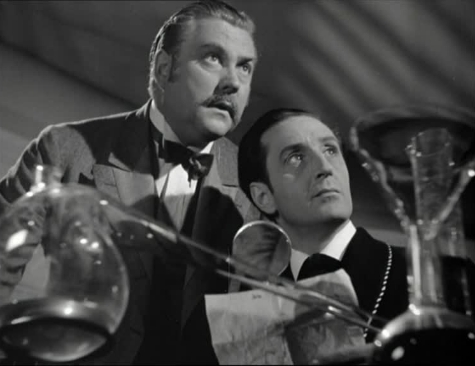
The Adventures of Sherlock Holmes (1939) wasn’t an adaptation of any of Conan Doyle’s stories, although the estate is credited, presumably for the use of the characters themselves. The script instead claims to be derived from the stage play by William Gillette. It opens with the dismissal of a murder case against arch-criminal Professor Moriarty (George Zucco), just as Holmes (Basil Rathbone)dramatically bursts into the courtroom with evidence he maintains will shoot the alibi of his adversary to pieces. With the verdict already in, he’s too late of course and there follows a neat little scene with the two rivals sharing a Hansom cab that spirits them away amid a torrential downpour. It’s at this point that Moriarty makes the little speech I used at the top of this piece, setting up the plan for revenge which dominates the remainder of the picture. I won’t go into too much detail here as much of the pleasure of the movie is to be had from watching the slow unfolding of two ingenious plot strands simultaneously. The lion’s share of the running time is taken up with the grotesque and macabre stalking experienced by Ann Brandon (Ida Lupino) and her ill-fated relatives.

1939 is often referred to as the golden year of cinema’s Golden Age due to the sheer number of successful and high quality pictures produced and released during those twelve months. This is something I wouldn’t want to argue with as even a cursory glance reveals the depth and breadth of the quality projected onto the silver screen in that year – from award-wooing prestige vehicles to crowd-pleasing genre pieces, just about every possible taste was catered to and it would be a mean-spirited film fan indeed who failed to hit on something to captivate him or her. Last time I was highlighting a tightly budgeted western shot by Alfred Werker, this time it’s the same director but the money men were a little more generous. Fox had already scored a success with Rathbone and Bruce in their wonderfully atmospheric version of The Hound of the Baskervilles and this was their follow-up. Werker had the resources of the studio backing him up in this moodily impressive effort, the sets looking rich and classy and Leon Shamroy displaying his photographic talents as cinematographer. There’s been some conversation on here of late relating to the relative merits of set based film production after I looked at a movie where I felt the backdrops were less than satisfactory. The Adventures of Sherlock Holmes, on the other hand, presents us with the flip side of the coin, where much of the enjoyment of the movie stems directly from the marvelous artistry involved in creating those fogbound and gas-lit cobble streets down which hacks chase their cabs speeding their fares to or from the scene of mystery and intrigue.

The two films made by Fox had Holmes and Watson fighting crime in the Victorian surroundings in which their creator had originally placed them. Subsequent tales of mystery and detection undertaken by Rathbone and Bruce would be produced on a smaller budget for Universal (my friend and regular contributor to discussion on this site, Sergio, is in the process of going through that series here, and others like 100 Films in a Year have done so too) with the characters operating in a contemporary setting. Purists may rail against such liberties but they never concerned me particularly. The Adventures of Sherlock Holmes retains the era of Conan Doyle’s literary detective yet it will no doubt displease some as a result of the way certain central characters are portrayed.

Is there a definitive screen Holmes? Plenty of people would argue that Jeremy Brett nailed it on television. Having gone back and revisited a number of episodes of the Brett series, I’d say there’s a strong case to be made for this assertion and I wouldn’t seek to dissuade anyone from holding this opinion. And still I find I return to Rathbone, for those reasons I mentioned above; I’ve since read the novels and short stories and seen other interpretations that may have gotten closer to the sleuth on the printed page, but Rathbone was the one I came across first and thus will always be my Holmes. There’s a terrific energy and restlessness about the man and it contrasts nicely with the moody abruptness which can bubble up to the surface on occasion. Nigel Bruce’s Watson tends to come in for a fair bit of stick and derision for the bumbling and clowning, and I can quite understand how that must grate for those familiar with the capable and competent figure of the books. Sure there’s something of the overgrown child about Bruce’s performance, even so I like it fine and there’s good chemistry between him and Rathbone – I think the affection the characters have for each other is quite apparent and nicely illustrated by the little exchange right at the end of the movie. As Moriarty, George Zucco is delightfully creepy and dangerous. He would reappear in the Universal film Sherlock Holmes in Washington, though playing a different role. A young Ida Lupino was just seeing her career take off at this point and I think she does well as the girl whose family appears to be cursed in some way and haunted by dark South American secrets. In support, we have E E Clive, Henry Stephenson, Alan Marshal, series regular Mary Gordon, and Terry Kilburn.

I have all the Rathbone/Bruce series on the UK set issued some years ago by Optimum and the transfers sourced from the UCLA restorations are very good. There’s some damage to the prints of course but nothing major. Among the extra features on The Adventures of Sherlock Holmes is a commentary track by Holmes writer David Stuart Davies. It’s worth noting here that there are various Blu-ray editions of these films available both in the US and in Europe – I’ve yet to pick one up but the quality is excellent by all accounts. As for this movie, it’s a fine tale with bags of creepy atmosphere and ought to satisfy fans of Holmes and the wider mystery genre too. It would serve as a good introduction to the Rathbone/Bruce take on Holmes and Watson and the brisk pacing is such that it never outstays its welcome.