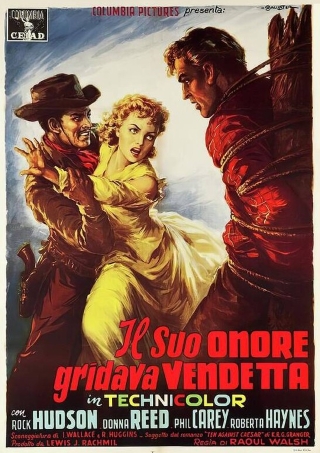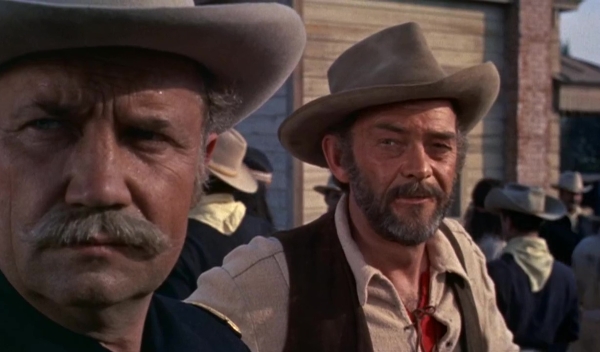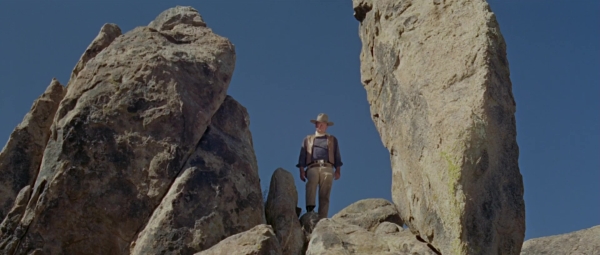
Gun Fury

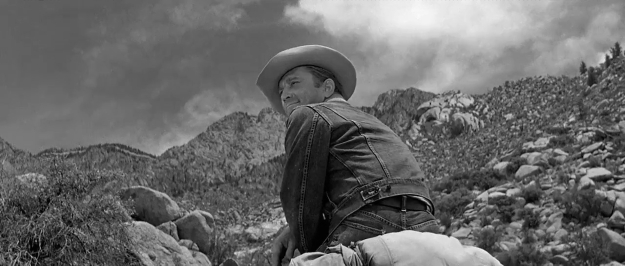
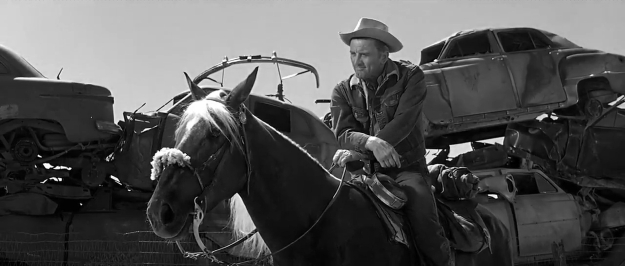
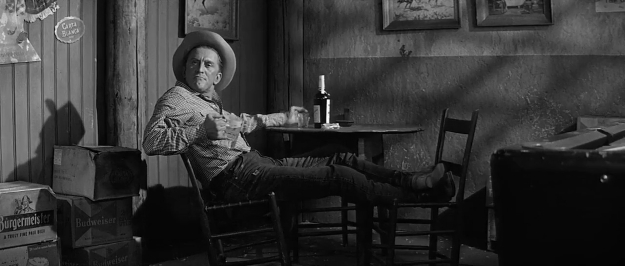
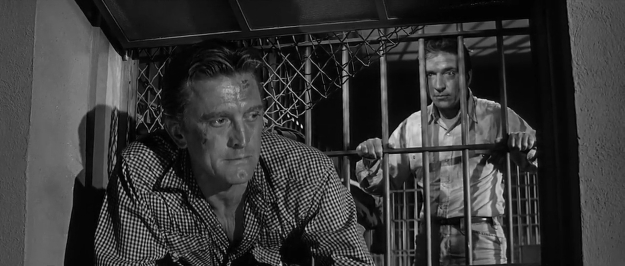
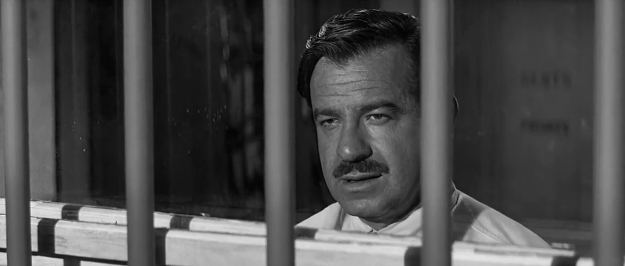
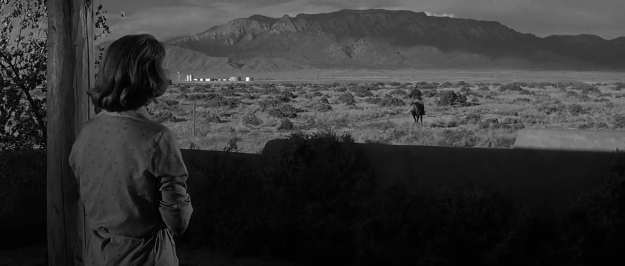
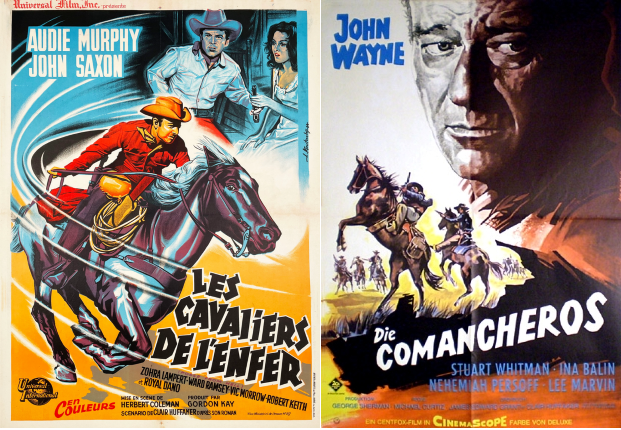
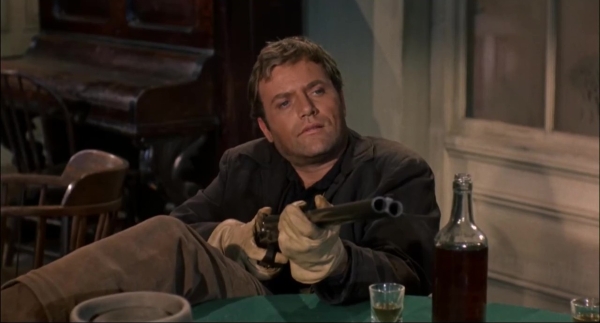
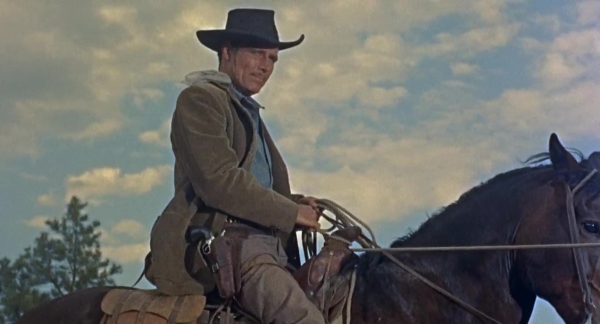
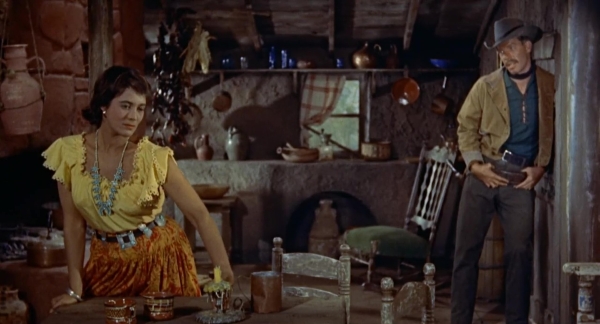
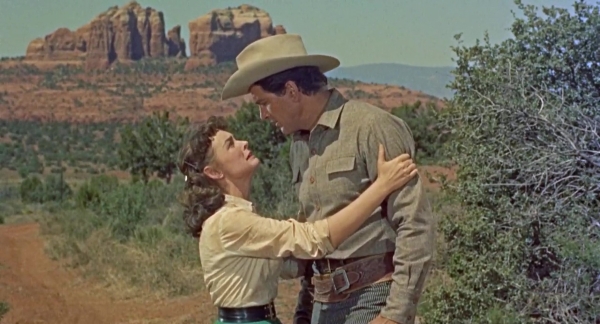
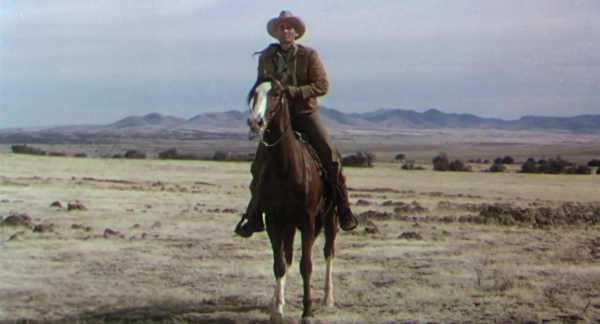
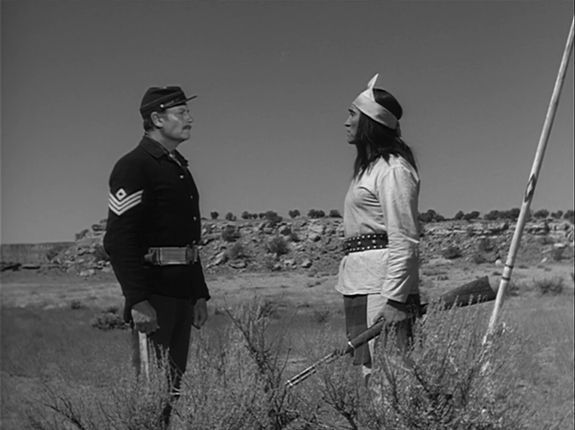
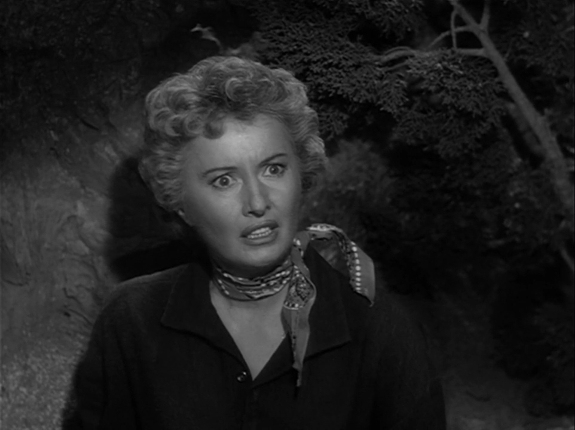
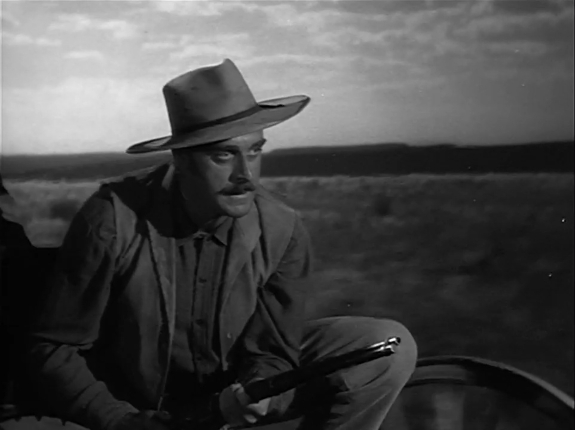
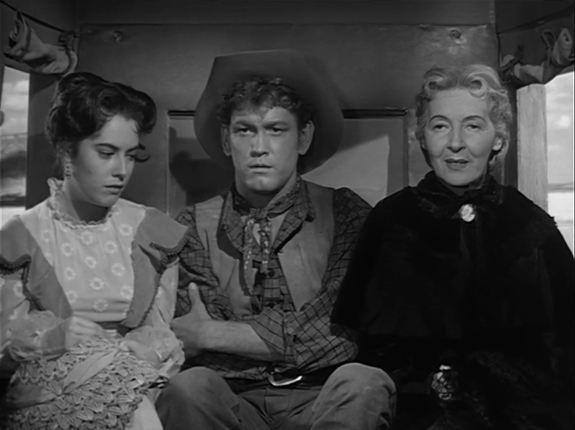
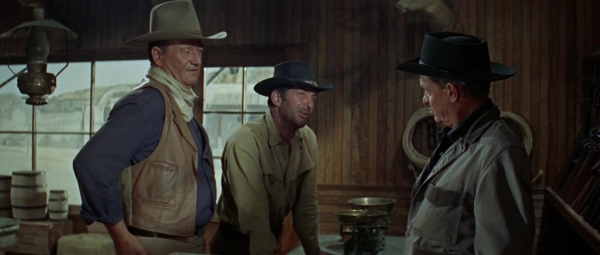
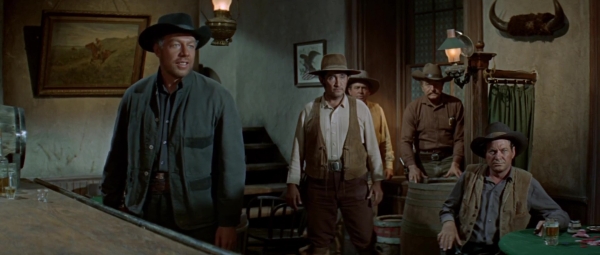
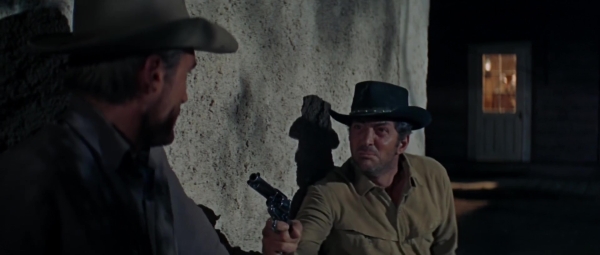
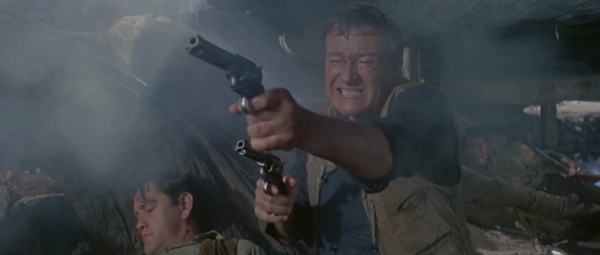
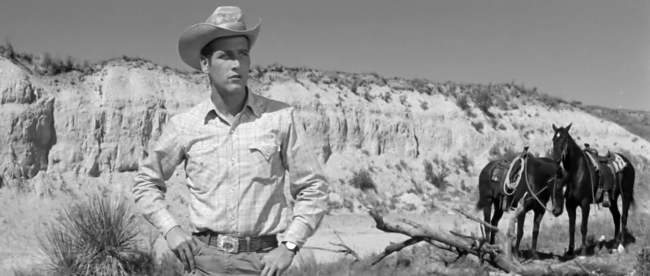
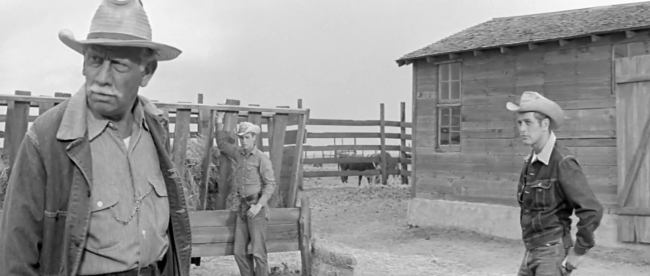
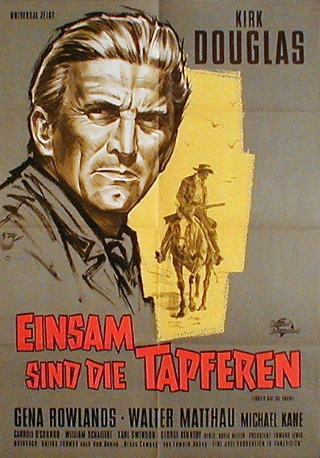
Every time I view a Raoul Walsh movie I find I’m struck by one thought: why don’t I watch more of his movies more often? It says something for a director whose work is so diverse and spread over so many decades that this should occur to me so consistently – in short, I don’t believe I’ve ever seen a Walsh movie that didn’t leave me thirsty for another. Gun Fury (1953) is a standard pursuit and revenge western, but it scrutinizes other themes such as pacifism, isolationism, the hold exerted by the past, and a flirtation with, as opposed to a full embrace of, the classic concept of redemption.

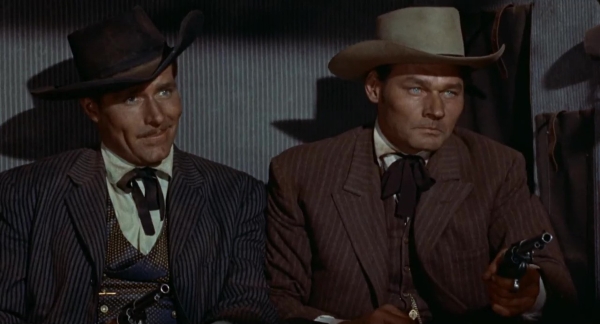
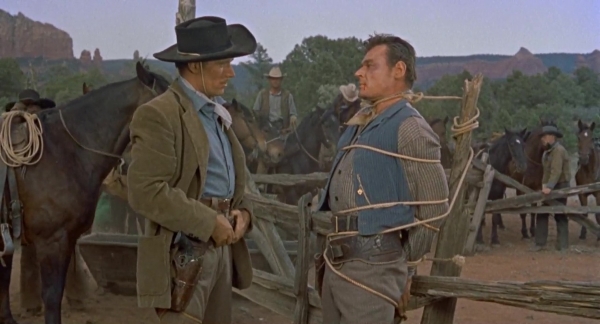
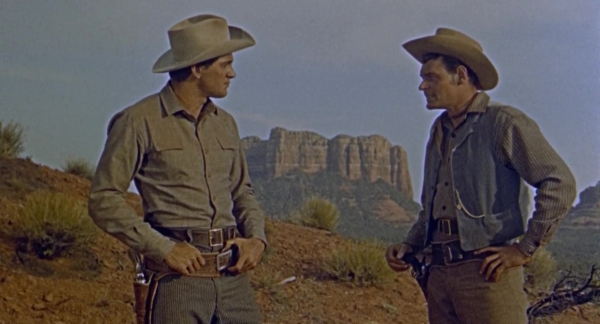
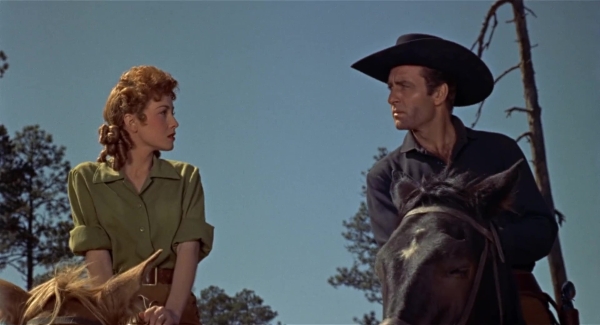
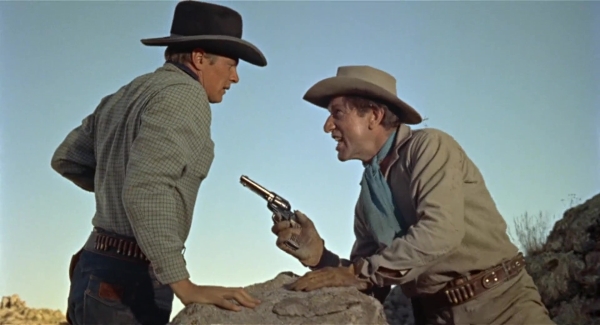
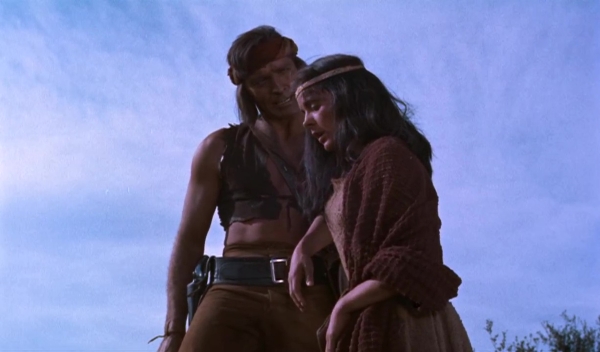
The setup is quite simple. A stagecoach headed west is carrying among its passengers one Jennifer Ballard (Donna Reed), a woman journeying to meet her fiance Ben Warren (Rock Hudson) in order to get married and then continue on their way to California and the prospect of a future ranching. They find themselves sharing space with several others, ostensibly traveling on business of one kind or another. Before long these supposed gentlemen are revealed to be Frank Slayton (Phil Carey) and Jess Burgess (Leo Gordon), a pair of outlaws making the journey simply to facilitate the robbery of the stagecoach by the rest of their gang. In the course of the holdup Warren is shot and while merely wounded he is mistakenly thought to be dead and so abandoned. Slayton has set his sights on Jennifer and brings her along as they set out on the run south to Mexico. The pursuit element is therefore set in motion as Warren goes off in search of his woman, while the revenge aspect is strengthened by the fact Slayton and Burgess quarrel over the decision to abduct the woman, resulting in the latter being bound and left to die in the shadow of circling vultures. His rescue by Warren leads to the formation of an initially uneasy alliance, one held together by the promise of taking Slayton as the prize. Support comes from an unlikely quarter, an Indian called Johash (Pat Hogan) who is also hungry for revenge on Slayton whom he blames for the death of his sister. And so the chase is on, with the outlaws unaware to begin that anyone is on their trail.

Gun Fury was written for the screen by Roy Huggins, the creator of Maverick, The Rockford Files and, more significantly, The Fugitive. The previous year Huggins had both written and directed the very fine Randolph Scott vehicle Hangman’s Knot, also starring Donna Reed as it happens. Gun Fury proves to be a pacy and surprisingly tough little western which utilizes the revenge motif well. All of the characters are essentially driven by a desire for revenge of one kind or another – Warren for the treatment of his woman, Burgess for his the grisly fate planned for him, Johash for his family honor, later a Mexican girl (Roberta Haynes) for her betrayal, and even Slayton himself seems bent on settling scores with life itself for the losses inflicted by the Civil War. As with the best written westerns, revenge for all of these characters is ultimately shown to be a hollow and unworthy goal. The redemption strand is mainly seen in the character played by Leo Gordon, although it has to be said this not as successfully executed as it might be. Personally, I feel this thread ends up being undermined by the developments that take place in the final act. Others may be less swayed by that though. While the script by Huggins offers much food for thought, the direction of Walsh powers it all along. There is never any sense of drift and, as ever, the director skillfully juggles the character development with regular bursts of action, and all shot against a primal Sedona backdrop.

Rock Hudson is credible in the lead, catching something of the driven quality that Anthony Mann would coax out of James Stewart in their western collaborations, even if it doesn’t quite attain those levels of intensity. Hudson holds onto that hopefulness that defines his character, a feature that one would expect to find in a young man on the cusp of a new life in California. It is through Hudson’s Ben Warren that the pacifist and isolationist elements are explored. He has been strongly influenced by the recent Civil War, sickened by the wholesale killing and no doubt that would have struck a chord with audiences less than a decade after WWII and right at the tail end of the Korean War. His isolationist stance – he refers early on to his ranch being bounded on the west by the ocean and on the east by the river, and he claims to have no interest in anything happening on the other side of that river – is tested and thrown back at him as he seeks out allies in his race to catch up with the outlaws. Rebuffed time and again by people too scared or just apathetic and self-absorbed, he is left with no option but to face up to his own former beliefs and reassess them. Finding a way to reconcile a desire for peaceful coexistence with the realization that a civilized man cannot simply retreat behind the barricades of personal interest is a complex theme to examine; it’s to the credit of all involved that it is articulated so smoothly within the framework of the movie.

Phil Carey never quite made it as a lead player. Columbia was casting him in some pretty good pictures around this time, but mainly as the second lead and sometimes in rather unsympathetic parts. The character of Frank Slayton was not what anyone could term attractive – he’s not only a killer but a sadistic one to boot, leaving one man to perish horribly in the wilderness and having another of his gang staked out on the ground and trampled to death for an act of betrayal, and that’s before we get to his frankly abusive treatment of both Donna Reed and Roberta Haynes. The paradox of course is that he regards himself in a wholly different light, as a dispossessed gentleman craving only a return to the gracious living he believes he was robbed of and which is his due. The following year Donna Reed would star alongside Carey again in Phil Karlson’s They Rode West.  Her role here is better than that unfocused effort and she would go on to do further good work in westerns over the next couple of years first in another Roy Huggins scripted movie Three Hours to Kill and also more impressively for John Sturges in Backlash.

Leo Gordon is such a welcome presence in just about anything. Frequently cast as the one-dimensional villain, it’s a pleasure to see him given a more nuanced role. I’m not convinced that the character we have followed on screen would have behaved in the way he does in the final act, but that’s not the fault of the actor. Lee Marvin typically did a great deal with minor characters in small parts in his early films. Some actors have what it takes to make their mark on screen, something largely indefinable but instantly recognizable too. Marvin had that something. The movie business is rife with “what if” scenarios and always has been. There’s some irony in the fact that  Roberta Haynes tested and apparently came close to being cast in From Here to Eternity, in the role which would ultimately go to Donna Reed and for which she would win an Oscar. That’s Hollywood for you! Also featured in a supporting role as one of the outlaw gang is perennial heavy Neville Brand.

Gun Fury is a mid range Raoul Walsh movie in my opinion, which means it’s a good film by any standard. Plots which are relatively straightforward yet carry within them an abundance of ideas that are put forward in an intelligent and adult way are very appealing. I have always liked this film and I reckon it is the kind that should go down well with most fans of the classic western.

War Arrow

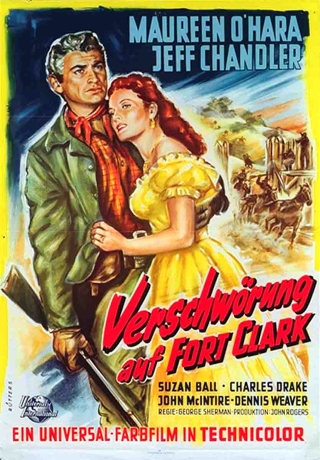
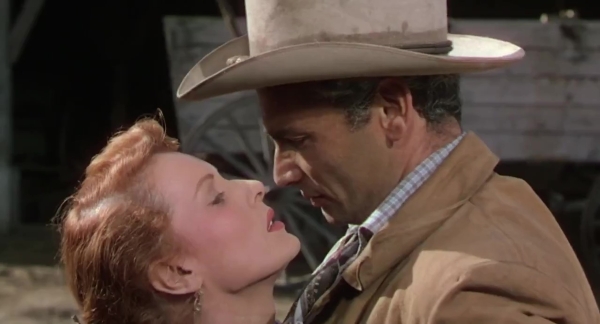
Something about the mid-range westerns that Universal-International was producing in the 1950s points to that hard to define quality which makes the genre so attractive. It’s partially down to the look, the color and locations, and partially the no nonsense style of storytelling. It’s not always easy to come up with a movie that offers entertainment while quietly making some point about a given issue. Universal-International movies often managed this, and the westerns directed by George Sherman during his time at the studio from the late 1940s on are a good example of this. In particular, his films that give some prominence to Indian or Native American affairs sidestep the ponderous or pretentious  pitfalls that have bedeviled many a well intentioned movie. War Arrow (1953) will not be found on any ‘best of’ lists and there’s no reason why it should; it breaks no new ground, nor does it do anything especially startling. However, the film is enjoyable, it uses its strong cast effectively, and Sherman’s characteristic sympathy for the Native American is subtly and seamlessly blended into the narrative.

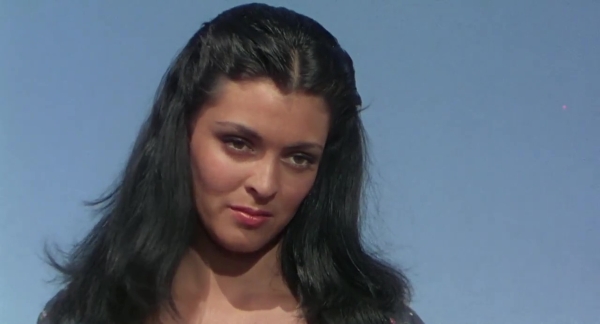
War Arrow is one of those westerns that takes its inspiration from some real historical event, in this instance the recruitment of Seminole tribesmen as cavalry scouts. I say inspiration here because it is a movie after all, not some attempt to represent real history. The film starts out with Major Brady (Jeff Chandler) and two sergeants (Noah Beery Jr and Charles Drake) on their way to Fort Clark, Texas. They have been sent to help in the struggle to contain the raiding parties of Kiowa that have been sweeping the state. They come across the grisly aftermath of one of those raids, with corpses and a burnt out wagon strewn like broken and discarded playthings on the scorched grass. Quite what three individuals are supposed to achieve where the full complement of a fort have failed is anybody’s guess. Their arrival is greeted with some suspicion by the local commander Colonel Meade (John McIntire), a feeling that will gradually be distilled into open hostility as he sees his approach sidelined and his authority not quite usurped but certainly undermined by Brady’s willingness to think outside the box. Meade is an adherent of the West Point manual, rigid in his views of both military tactics and the local tribes. Brady, on the other hand, is an opportunist at heart, a man who is prepared to take a more unorthodox path, and to improvise where necessary. His plan is to employ the kind of guerilla methods the Kiowa themselves have perfected, fighting fire with fire in a sense. And he’s keen to go a step further, to use the dispossessed and dislocated Seminoles as a sort of semi-official, roving commando. As the friction between the two schools of military thought grows in intensity there is another complication elbowing its way into Brady’s life.  The widow (Maureen O’Hara) of one one of the fort’s officers who is missing presumed dead has caught his eye. In itself, that ought not to represent a great problem were it not for the fact that she appears uneasy, and perhaps unconvinced, over the fate of her husband, while the frankly radical daughter (Suzan Ball) of the Seminole chief is also showing signs of interest.

Sherman was a director who knew the genre and how to bring in a movie according to the studio’s requirements. Universal-International seemed to suit him and his time there saw him do some of his best work. I won’t claim that War Arrow represents him at his best, but it is an example of how he could produce a solid piece of entertainment from fairly ordinary material and get worthwhile work from his cast. His depiction of the Native Americans is as sympathetic as one would expect – granted the Kiowa do not come off well and act as bogeyman villains open to outside manipulation, but the Seminole fare much better. The script is by John Michael Hayes, someone who hadn’t much of a pedigree in westerns and who I tend to think of more in relation to his work for Hitchcock in the 50s, and it presents the Seminole in a strong light. They come across as indispensable to the success of the campaign planned out by Brady. They are seen as gutsy and committed, and a good deal more honorable than the frequently petty and hidebound Meade and his junior officers. Sherman gives plenty of time to this aspect, and shoots the battle scenes and skirmishes in a way that is both exciting and which highlights the contributions of the Seminole.

Jeff Chandler typically was good in military roles, either in westerns or contemporary war movies. Gravitas and authority came easily to him and these qualities could be tempered by thoughtfulness, inner conflict or iron determination as required. The part of Major Brady is a relatively straightforward one, an easy run out for him in essence and he carries it off with his usual smooth accomplishment. Maureen O’Hara made a number of films for George Sherman, including the director’s last Big Jake, with variable results. Personally, I think the actress did her best work in the genre for Ford, but this isn’t a bad effort and she is better in the latter stages where her character is given a little more depth. Suzan Ball was the other female star and she is marvelously forthright and assertive, although probably anachronistically so. It’s an attractively spirited performance and serves to emphasize the cruel tragedy of her short life – cancer would claim her just two years later at the age of 22. I think it’s fair to say that any movie benefits from the presence of John McInitre, a class act who could play it mean or sympathetic and who manages to inhabit the obduracy of his character here. Charles Drake and Noah Beery Jr add some lightness to proceedings, while Henry Brandon – still a few years away from his most memorable role as Scar in The Searchers – is the Seminole chief Maygro, with Dennis Weaver and Jay Silverheels filling the other native parts.

It always pleases me to sit down with a George Sherman film, especially one of his westerns. Even if War Arrow isn’t among his top titles, it still shows his professionalism and his sensibilities as a director are apparent, not least with regard to how he viewed Native Americans. The movie shouldn’t be that difficult to track down on DVD although the German Blu-ray, originally released by Koch Media, that I picked up years ago sadly seems to have drifted out of print.

I’m offering this as a contribution to the Legends of Western Cinema Week being hosted by Hamlette’s Soliloquy and others.

Robbers’ Roost

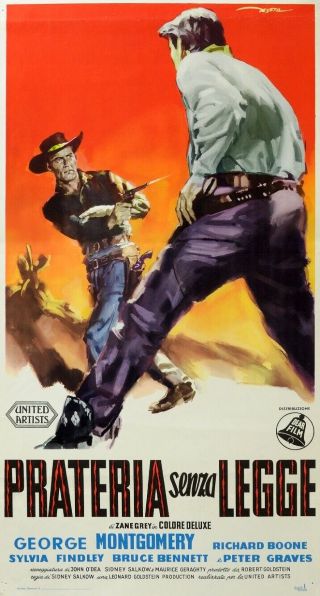
There is an interesting concept or ploy at work in Robbers’ Roost (1955), one which provides an intriguing setup for the movie but which ultimately fails to achieve what its architect envisaged. The character in question claims at one point that he is employing the principle of setting a thief to catch a thief. I don’t think that’s actually the case though or it isn’t an accurate description at any rate – sure there are two bands of criminals involved, but they are being used more as a counterbalance to each other than a trap. If anything, the idea is to play the two ends off against the center, thus neutralizing the threat of both. At the center stands a man with his own personal reasons for becoming involved. Adapted from a Zane Grey novel, the movie loosely prefigures the idea that would form the basis first of Kurosawa’s Yojimbo and then of Leone’s A Fistful of Dollars.

It begins with a lone rider (George Montgomery) checking the brands on horses after entering a new town, the kind of thing a man might do were he searching for someone. He proceeds to scan the wanted posters nailed on the wall, but there’s something furtive in his scrutiny, something a little too eager perhaps and then that quick turning away lest anyone catch sight of him doing so. Is he the seeker or the sought? Maybe a bit of both, but the viewer will have to wait a while before any real light is shed in that direction. The focus shifts to the two rival gangs of thieves mentioned above. They are led respectively by Heesman (Peter Graves) and Hank Hays (Richard Boone), and it’s the latter group that our protagonist throws in with. He claims to go by the dubious name of Tex and is reluctant to divulge any more personal details. Both these gangs have been hired by a local rancher, Bull Herrick (Bruce Bennett), who has been left paralyzed as a result of a riding accident and he has hit on the idea that the best way to keep the rustlers from decimating his herd is to employ them and trust to their mutual hatred ensuring they keep an eye on each other. A sound plan as far as it goes, and it does seem to be going the right way till they decide to cooperate in thinning out his herd and then there is the inevitable falling out – the myth of honor among thieves proving to be as fragile as all other myths. Throw in complications provoked by the presence of Herrick’s sister (Sylvia Findley), as well as the fact Tex has his own scores to settle, and the plot thickens satisfyingly.

Robbers’ Roost relies heavily on the twists and turns of its plot and characterization is relegated to a bit of an afterthought. The bad guys are bad just because they are and Montgomery’s ambiguous hero is on the side of the angels simply because he does mainly good deeds. Now I’ve never read the novel which the movie is based on – although I have picked up a free eBook of it so that can be remedied – and as such I’m not in a position to say whether the script cut much out. Nevertheless, as the movie stands the main interest is seeing how the gang conflict will play out and how Montgomery’s Tex will fare. I think one of the main strengths of the film is the extensive location shooting, an element which grows more prominent as the story progresses. To be frank, the early scenes around the town, and to some extent those around the Herrick ranch, are not especially inspiring. Sidney Salkow was a middling director at best, a safe pair of hands with extensive experience in B movies and supporting features, but no great visual stylist. That said, the Durango locations look quite splendid and the second half of the picture, with its abundance of action and outdoors shooting, makes for a particularly enjoyable watch.

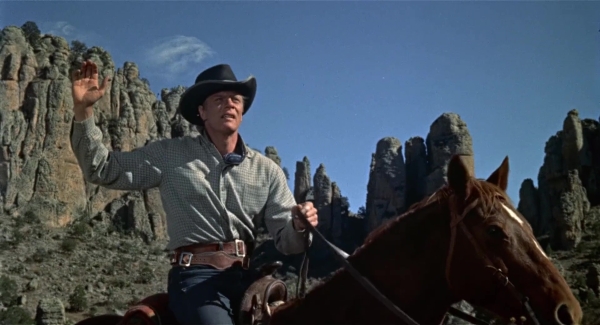
George Montgomery is on fine two-fisted form, riding tall in the saddle and walking tall to boot, he looks and sounds like a classic western hero. His character is carrying a secret, the movie does need a touch of mystery to keep everything ticking along, and he catches some of the reticence necessary in such a role. There’s nothing all that notable about his performance – the script doesn’t demand that, to be fair – but there’s nothing wrong with it either. In short, if you’re a fan of his westerns, then Robbers’ Roost will do just what you expect. As the pair of villains, both Peter Graves and Richard Boone are fine, although the latter has the showier part and was the stronger actor in general. As I said above, neither one sees his character develop beyond that which we see at the beginning. It’s worth pointing out, however, that there is always much pleasure to be derived from any flat out villainous turn by Richard Boone. It feels as though Bruce Bennett, ever a reliable supporting actor, is being set up to play a more significant part but he essentially disappears in the second half, reduced to peering belligerently from a window as friends and enemies alike ride off to squabble over his sister and his stock. Leo Gordon and Warren Stevens fare much better as opposing rustlers, but William Hopper (TV’s Paul Drake from the Perry Mason show) must have been left wondering what he’d been hired for.  Sylvia Findley is the only woman in the movie, and apart from this her sole acting credit is in Hugo Fregonese’s long neglected Black Tuesday. There must be some reason for that.

Over the years I’ve come to the conclusion that the condition a movie is in when viewed has an effect on the way we perceive it. Watching the German Blu-ray of Robbers’ Roost brought this home to me once more as I felt a lot better about the film than I had in the past. There is a lot of day-for-night shooting and that aspect never looked great on the old DVD copy I’d seen before. The Blu-ray has everything looking cleaner, clearer and sharper, just like watching a different movie. All in all, this is an unpretentious little western, nicely paced, well shot and pleasingly acted. I’m glad I revisited it.

Last of the Comanches

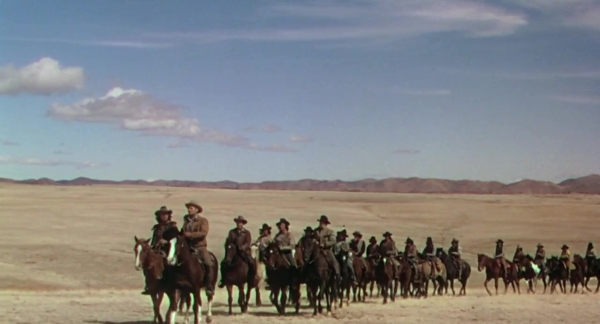
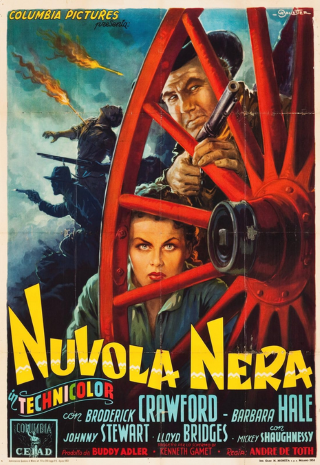
Remakes come in for plenty of bad press – lazy, unnecessary and creatively bankrupt are some of the charges leveled. Granted some of that may be justified on occasion, as with most things in life, it is generally best to avoid blanket dismissals and instead approach these on a case by case basis. As such, let’s take a look at a remake, or reimagining, which I feel works very well. Back in 1943 Zoltan Korda, working off an adaptation of Philip MacDonald’s novel Patrol, made Sahara with Humphrey Bogart in the lead. It was a tense, spare wartime affair and the basic premise was good enough to see the script revisited by Kenneth Gamet a decade later, resulting in the André de Toth directed western Last of the Comanches (1953).

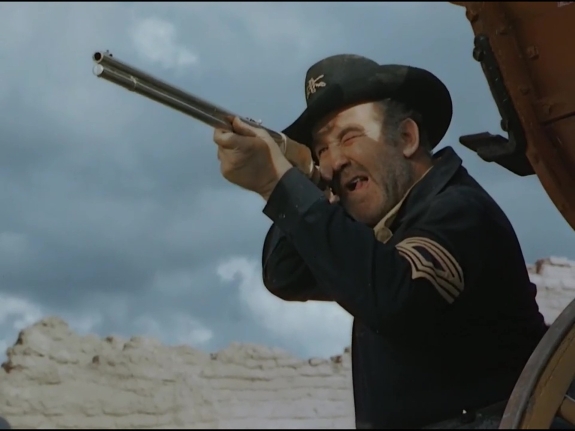
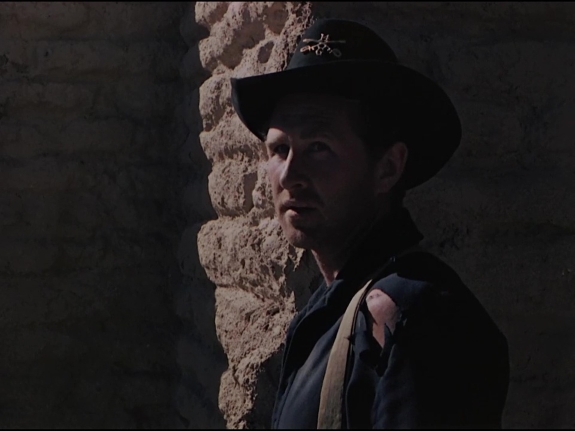
Last of the Comanches is a movie with a gradually narrowing perspective, where the shift outdoors into what ought to be the wide open spaces and all the freedom such a move implies actually brings greater restrictions. Fleeing the smouldering remains of a frontier town razed and massacred by rampaging Comanches, a ragtag troop of half a dozen wounded and weary soldiers under the command of Sergeant Trainor (Broderick Crawford) makes its way across the desert in search of respite and refuge at the nearest fort, 100 miles or more away. Aside from the obvious need to evade the raiding parties of Comanches, the greatest problem facing these battered fugitives is the lack of water in the blistering heat, a matter which is only further exacerbated when they meet and are joined by the passengers of a stagecoach. What are the chances then of their survival in the wilderness when faced with the twin threat of diminishing water supplies and a well armed enemy that vastly outnumbers them?

Normally, one would say the prospects looked more than a little bleak. However, they get thrown a lifeline in the form of a lone Kiowa boy who is also keen to stay out of the clutches of the Comanche. Despite being initially rebuffed, he is able to guide them to the ruins of an old mission where a reputed well holds out the hope of relief from at least one of the dangers. The presence of that elusive source of water tucked away in the heart of the barren wasteland also hands Trainor’s little band a bargaining chip. The Comanches are every bit as parched and in need of water, so whoever defends the mission is in a position of strength irrespective of numbers, so long as the water lasts, or at any rate, for as long as the limited nature of the supply can be kept a secret…

Every studio’s westerns had a certain look to them and it was usually most apparent in the mid or lower budget pictures. It’s hard to define exactly but if you’ve watched enough of all the major studios’ output, it is often possible to spot which one produced a given western just from that look or tone. Universal-International westerns, for example, tend to be almost instantly recognizable for their saturated palette and detailed sets. Paramount had a vibrancy to the colors too but more of what I’d term stateliness to their backdrops. Columbia is the studio whose westerns I think look least attractive overall, although there are clearly titles where this isn’t so; Randolph Scott’s films with Budd Boetticher all look very fine for instance. Nevertheless, a lot of their mid-range titles, especially those with a lot of interior work look somehow drab, not so much for the colors as the flatness of their set design and dressing. Those which made greater use of exteriors and location work fare much better, and Last of the Comanches falls into that category. Andre de Toth’s compositions and angles create unease and a sense of space compressed and limiting, while Charles Lawton lit and shot the whole thing with real flair, actually getting the day-for-night filters to produce genuinely evocative images for a change. As is often the case, placing a small central cast in a highly restrictive setting acts as an excellent conductor of tension and suspense. The fact that it’s attractively staged and is accompanied by a generous helping of fairly regular action sequences adds to the appeal.

Broderick Crawford doesn’t always draw me to a movie but, somewhat like Longfellow’s little girl with the curl,  when he was good he was very good indeed. When he made Last of the Comanches he was in the middle of a ten year run that contained far more hits than misses, from All the King’s Men right through to the curiously compelling The Decks Ran Red. His brash, bulldog demeanor was and machine gun delivery fit in perfectly with his role as the inventive and stoic sergeant. You get a sense of a man very much in possession of himself, faults and all, and all the more capable as a result. Barbara Hale was the only woman in the cast and I found it rather refreshing that despite the isolated setting and the presence of so many increasingly desperate men around her that none of the growing pressure emanating from the bluff and deception at the heart of the plot was siphoned off by some cheap exploitation of sexual tension. That said, I can’t help wondering if that hurt the box office take? Hale’s resilience plays successfully off Crawford’s gruff abruptness, but perhaps another more conventionally attractive male lead, or even co-star, might have opened the story up to a wider audience? Of the other cast members, there’s a lot to enjoy in Mickey Shaughnessy’s lumpy toughness and the edginess of Lloyd Bridges. Interestingly, the latter appeared Korda’s original take on the story in Sahara. There’s also a lot of pleasure to be derived from finding the immediately recognizable and almost supernaturally solemn Milton Parsons becoming virtually unrecognizable in beard and western garb.

Last of the Comanches is something of a neglected western. De Toth’s movies with Randolph Scott, Gary Cooper, Joel McCrea, Robert Ryan and Kirk Douglas certainly get more attention. I don’t know if that has to do with the casting, that the film is a remake (though I don’t believe that aspect should be used as a criticism since the frontier setting is ideal for such a story), or the fact that it’s a fairly simple and direct tale without a lot of subtext. Personally, I like it for its pacing, the often strikingly attractive visuals, and the purity of its storytelling.

Trooper Hook

He fights his way, I fight mine. We’re just a couple of dogs haggling over the same bone. Only it happens to be his bone.

Whenever anyone tries to tell you that the westerns of the classic era were simplistic, one-sided shoot-em-ups that glossed over the complexities of the era they depict you could do worse than point to a line such as that highlighted above. The truth is of course that there are numerous examples of westerns in the classic era, especially in the genre’s golden years of the 1950s, which took a grown-up approach to the various injustices suffered, to the prejudices and fears of all involved, and thus embraced the consequent nuances of a fascinating period of time. Trooper Hook (1957) is a movie whose limited budget places no constraints on the intelligence of its script, or on the sincerity of its central performances. And it also exposes the redundancy of boilerplate dismissals of the genre’s depth by those who allow self-righteousness and a judgmental turn of mind to blind them.

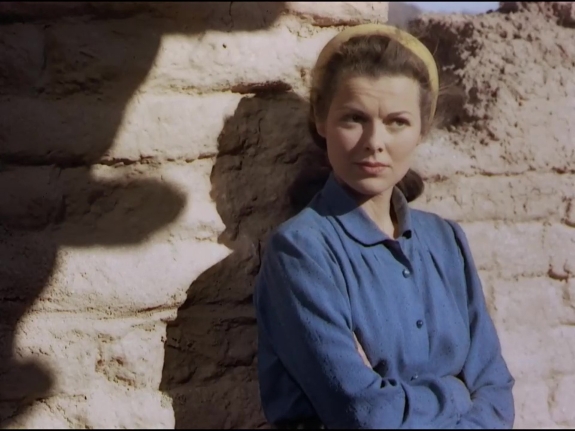
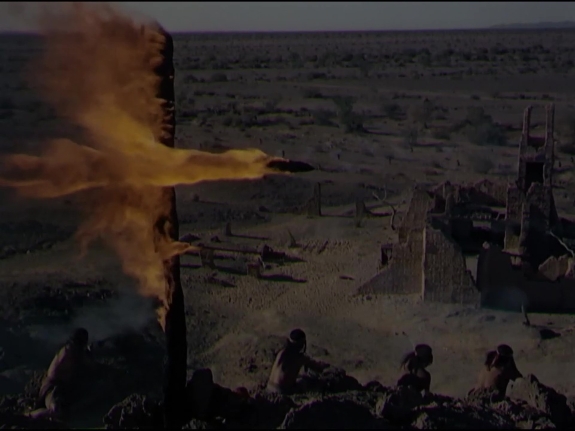
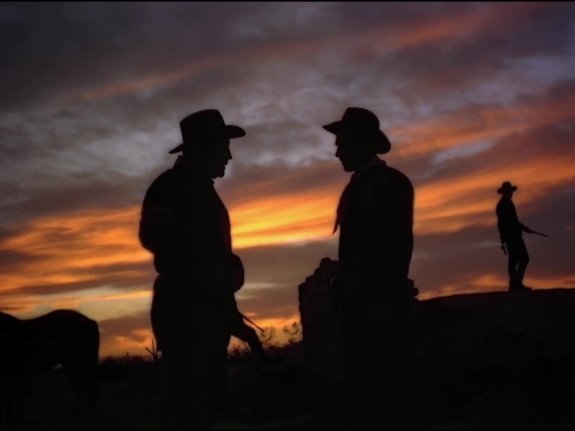
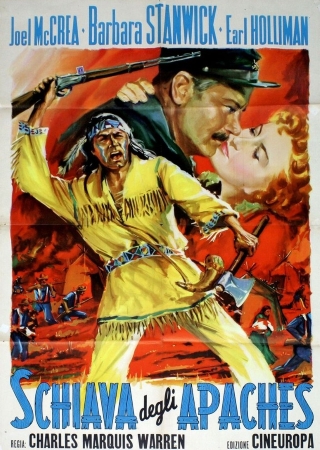
Executions and reprisals, a harsh and uncompromising way to begin any story, but one which sets the tone for what will follow. That is not to say Trooper Hook is a movie of gratuitous or even excessive violence, rather it is a picture which frankly examines an enmity which is implacable and deep seated. The executions are of the straggling survivors of the first wave of an army assault on an Apache settlement. The battered and beaten soldiers are backed up on a bluff above the village as the Apache leader Nanchez (Rodolfo Acosta) calmly has them shot down one by one. Almost immediately, the next wave of cavalry troops descend on the Apache, round them and their families up and burn their settlement to the ground. Among the prisoners awaiting transportation to the fort, and ultimately the reservation, is a white woman and her young son. This is revealed to be Cora Sutliff (Barbara Stanwyck), the only survivor of a raid who was subsequently taken prisoner and whose child is the son of Nanchez. Unsurprisingly, after years of captivity and rough treatment, she is largely unresponsive. Of course any long term hostage or captive is going to struggle to integrate themselves back into the society from which they were snatched. However, Cora’s future is even more in doubt since the world she knows is one riven by hatred. She endured and to some extent overcame the hostility of the Apache women but now is confronted by the equally ugly contempt and rejection of her own people. And then there is the boy, Cora is strongly protective of him, his father will not rest till he gets him back, and the whites largely want nothing to do with him. All but one man that is. Sergeant Hook (Joel McCrea), is a veteran campaigner, one who has known loss, hardship and desperation himself, and thus is a man loath to sit in judgment of others. His task is to escort Cora and the boy back to the husband she hasn’t seen for many years, and to head off any threats that arise, whatever direction they may come from.
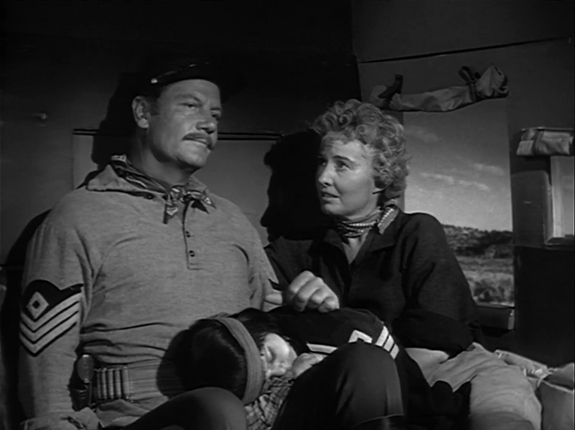
Charles Marquis Warren was what I’d call an occasional director, devoting more time to writing and producing and doing so with great success, particularly on television with both Gunsmoke and Rawhide. His direction of Trooper Hook is fine as far as I can see, drawing a sense of intimacy from the interior scenes, especially those taking place in the stagecoach, and touching on that frequent western image of apparently tiny and insignificant human dramas playing out against the backdrop of a massive, primal landscape. Cinematographer Ellsworth Fredricks captures that expansiveness in the scenes shot on location in Utah, with his camera high among the craggy peaks alongside grimly impassive Apache warriors coolly observing the dash of the stagecoach far below on the dusty, arid floor of the canyon. Visuals aside, the strength of the movie lies in its theme of acceptance amid seemingly wall to wall  hatred, as well as or maybe allied to the maturity of outlook that forms its core. It was adapted from a story by Jack Schaefer (Shane, The Silver Whip, Tribute to a Bad Man, Monte Walsh) so it’s pedigree is strong – this is taken from one of his short stories I haven’t read, but I intend to set that omission on my part right.

Much of the maturity underpinning the movie comes not only from the writing but also the casting. The two leads were over 50 years old at the time – Stanwyck was 50 and McCrea 52 – and both of them, in the last of a half dozen movies they made together, bring a lived-in credibility to their roles. Stanwyck achieves an extraordinary stillness in her early scenes, a watchful withdrawal that feels appropriate for a woman who at that point had to all intents and purposes been assimilated into the Apache tribe. Such is the layering of the role though, and therefore the performance, that her detachment is also right for someone who is just beginning to realize that hers is not to be a sweet homecoming, that her very survival will be taken as an affront by many. The way she tries to talk herself into believing the husband she has not seen for an age will accept not only her but her son too is a masterclass in pathetic self-delusion, and the despairing gaze she casts in McCrea’s direction as she babbles out this fantasy is telling. McCrea’s ageing soldier is decent, dignified and authoritative, all the qualities that make the western hero such an admirable figure; I think I’d actually go further and say he comes close here to epitomizing the traits and values that made the post-war US so admirable. The strength of Hook derives from his honesty, his warmth and his defense of the weak, his refusal to buy into cheap bigotry or cruelty. If only there were more of his type around in the world today.

The film is imbued with this generosity of spirit, it’s reflected all through the cast. Earl Holliman’s itinerant cowboy, forever short of cash yet long on good nature, is another openhearted individual, prepared to take huge risks to ensure the safety of those who did him a good turn. It’s there too in the quiet courage of the passengers, particularly Susan Kohner, just off making The Last Wagon for Delmer Daves and only a year or two away from her Oscar nominated turn in Sirk’s Imitation of Life. Royal Dano is barely recognizable as the grizzled stagecoach driver but he too carries a strong sense of honor beneath that gruff exterior. By way of contrast, the ever reliable Edward Andrews essays the type of oily venality he brought to many a part. And John Dehner deserves credit for his portrayal of a man who cannot find it within himself to rise above his prejudices. That’s a tricky role, one that could easily slide into villainous caricature yet such is Dehner’s professionalism that he instead paints a picture that earns pity and scorn from the viewer in equal measure.

The only issues I have with the film are the somewhat redundant use of Tex Ritter’s song to punctuate the action onscreen, as well as the editing of the version I viewed. There is a choppiness to that editing, with scenes ending so abruptly that they are highly suggestive of a cut down print. I know there are some who don’t rate Trooper Hook so highly, but I’m an unashamed fan of the movie. There is so much of what I love about the classic western encapsulated here – the ability to tell a story that is rich and deep, that has meaning and soul, within a relatively simple framework. But more than anything there is that straightforward belief in the ultimate triumph of all that’s fine in the human heart, that steadfast faith in our capacity for being better despite the malice that may  threaten us at times.

Apache

Which words get tossed around most often when the western is discussed? I guess I talk a lot about redemption, it’s the cornerstone of the genre for me. Others, depending on the direction from which they are approaching it, may look at the way it portrays expansionism, or how it charts and critiques civilization. Some like to focus on the elegiac aspects, and some go in for revisionism. But does anyone ever mention a sense of urgency? Maybe we should though. A lot of classic era westerns have a paciness to them, both for budgetary and for storytelling reasons. Yet when one stops to think not only of the relatively short window in time occupied by the historical concept of the Old West but also the equally brief flowering of the classic movie version, it somehow feels appropriate to regard urgency as at least one of the characteristics worth considering. Apache (1954) is what I would call an urgent movie. It is a motion picture in a very literal sense, the protagonist moves almost continually and it offers little respite for the viewer either as events unfold on screen. The theme too is one of an era drawing to a rapid close, of time threatening to overtake people and the consequent need to keep pace with it all.

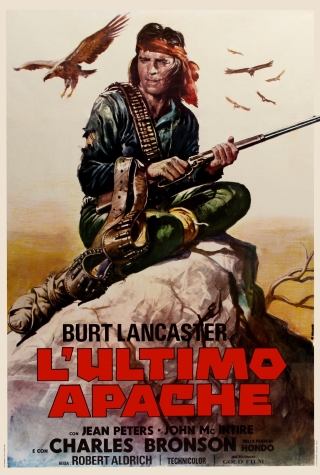
It opens with the surrender of Geronimo, the end of the Apache Wars and to all intents and purposes the closing of native resistance in general. One man at least is not keen on this capitulation and the first view of Massai (Burt Lancaster) has him riding in aggressively in a last ditch attempt to disrupt the event. It’s as good an introduction of the character as one could wish for, highlighting his belligerence, defiance and energy. Nevertheless, despite his bullish bravado, he’s not to succeed. Instead he is manacled with the other former fighters and placed on board a train headed for Florida. Even as the locomotive makes it’s way across the country, Massai’s restlessness and rebelliousness remains undimmed. Taking advantage of a temporary halt in Missouri, and the hubris of embittered Indian agent Weddle (John Dehner), he escapes. This leads to a brief yet fascinating interlude where Massai spends some time wandering around town, bemused and ultimately threatened by a way of life that couldn’t be more alien to him. That sense of urgency, that driving need to return to his roots while he still can, kicks in again and his overland odyssey is broken only by an encounter with a Cherokee in Oklahoma who has resigned himself to the reality of the newly civilized world. It leads to a wonderfully droll moment where Massai asks incredulously how it is that he has a wife but has to fetch and carry the water himself. The old Cherokee looks at him ruefully and admits with a sigh that some of the ways of the white man are indeed hard. The lessons Massai has learned along the way have given him hope though, hope that he may find the means to continue to exist as a free Apache, albeit less warlike and in the company of his love Nalinle (Jean Peters). This is not to be, however, and the drunken duplicity of Nalinle’s father as well as the distrust of the army and scouts see him back in chains. All the while, the movement never ceases, the cross-country trek, the recapture and later escape, and then the long run to the wilderness of desert and mountain, the settling of old scores and the desperate effort to reclaim some shreds of the past before the relentless advance of civilization rends them forever.

Apache fits neatly into that group of westerns taking a more sympathetic view of the native American  that had begun to appear in the early years of the decade. This pro-Indian cycle set in motion and characterized by the likes of Anthony Mann’s Devil’s Doorway and Delmer Daves’ Broken Arrow played a significant role in the evolution and maturation of the western which was taking place at this time. No doubt there are those who will protest the casting of Lancaster and Peters, as well as Charles Bronson, Paul Guilfoyle, Morris Ankrum and others, as Native Americans but it’s no more than a reflection of the casting practices, and indeed the choices available, at that time. Anyway, my own take on any spats over inauthentic casting is that surely acting is the adopting of roles and the presentation of characters and their traits. I see it as striving for some thematic and dramatic truth, and reality be damned. Was the theater of the ancients any less valid or lacking in artistic integrity as a result of the wearing of masks?

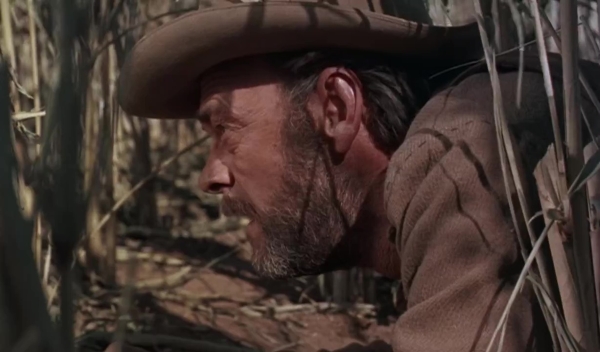
By maintaining the focus on Massai, and by extension the Indians who had not yet been fully integrated into an ever encroaching civilization, director Robert Aldrich and writer James R Webb also keep the focus on the overriding sense of urgency, of time running out. Massai admits to his woman at one point that he is aware of the fact he has perhaps only a few years at best ahead of him, that civilization and his consequent demise will catch up with him some day. And this is where the real urgency resides, the need he soon feels to lay some kind of lasting foundation, to provide some sense of continuity. In narrative terms, this is clearly indicated by the planting of seeds in the earth to grow corn, the idea introduced by the old Cherokee, tested unsuccessfully at first by Massai himself, and then encouraged and brought to full fruition by Nalinle. This notion of growth, of building a future out of nature itself is further highlighted by Nalinle’s pregnancy and the direction in which that development pushes the story. The “some day” Massai foresees arrives at the end. The climactic scene with John McIntire’s Al Sieber crawling through the undergrowth of the cornfield as he stalks the wounded warrior provides a visual metaphor for the creeping advance of civilization, threatening not only Massai’s last Apache, but the future he has tried to cultivate too. Still, the ending is one that is suffused with both hope and a hint of reconciliation.

Aldrich himself claimed not to have wanted to finish the movie in this way, preferring the more negative ending that was laid out in the novel Bronco Apache by Paul Wellman that formed the basis for the script. Some may see that as further evidence of the commonly held belief that Aldrich was first and foremost a cynic, but I’m not so sure. Perhaps that bleakness that could shine through some of his films on occasion was more prominent, rawer in some way, in his early efforts. Even if that is the case, I remain unconvinced that this should be seen as his defining characteristic. There are plenty of examples sprinkled through his work of him displaying if not a completely positive outlook then at least one which sees the better side of humanity in the ascendancy. I’m thinking here of Autumn Leaves, Hush… Hush, Sweet Charlotte, The Flight of the Phoenix and The Last Sunset, the latter being a movie I’m happy to admit I have come to reassess after being encouraged to give it another go. I recall a commenter on this site once referring to a certain writer as being in “the truth business”, even if I don’t now remember who was being so lauded. Anyway, that’s all by the by. The point is that the phrase stuck with me as it seems that it’s surely the goal of every artist to mine the truth. As such, it feels misguided to regard Aldrich merely as a cynic, as some critics would support, rather than a genuinely rounded artist in the sense that he too was a seeker after truth.

So, without deliberately spoiling matters for anyone yet to view it, I like the way the movie ends. It feels appropriate in that it validates the points made, the struggles endured and the promises alluded to throughout its running time. All that urgency that preceded it, the crowded, pressing framing frequently employed to create the sensation of a cramped and restricted set of circumstances eases. The simple yet instantly recognizable sound of a future long awaited calls a halt to what threatened to be impending tragedy and the “some day” that had loomed large is banished, to be replaced by the chance of a better day. In short, it’s a fine way to bring the story to a close.


The Sons of Katie Elder

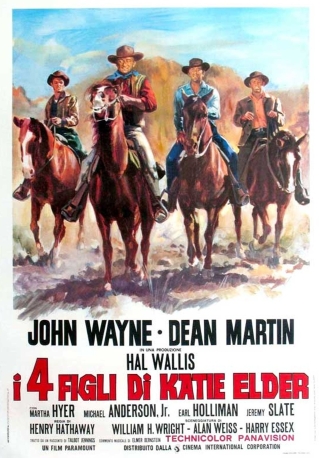
I think it’s fair to say that the going always appears to be trickier once one hits the downside of a slope. There’s that ever present temptation to succumb to the lure of relaxation, to freewheel, to sit back and let the momentum carry one wherever it fancies. If we are to see the western as having scaled the heights of its artistic potential by the end of the 1950s, and on into the beginning of the next decade to be fair, then the following years must represent the other side of that hill. By the mid-60s the treacherous nature of that downhill path was becoming apparent, the more so since it proved to be a pretty steep descent for the most part. As the decade wore on there were increasing numbers of westerns that do not quite work, or which flat out fail in some cases. It can be a dispiriting experience trawling through some of these when one bears in mind what had come before. Still, one of the strengths of this genre is its overall resilience, its ability to offer up something worthwhile just when it seems that hope has passed. The Sons of Katie Elder (1965) is not what I would personally term a great western, but it is a very good and entertaining one.

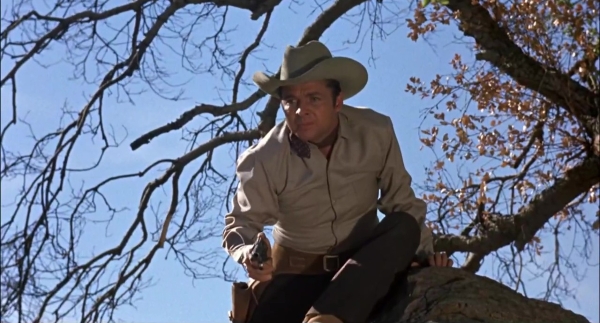
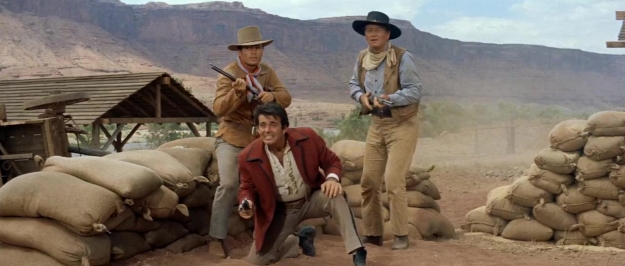
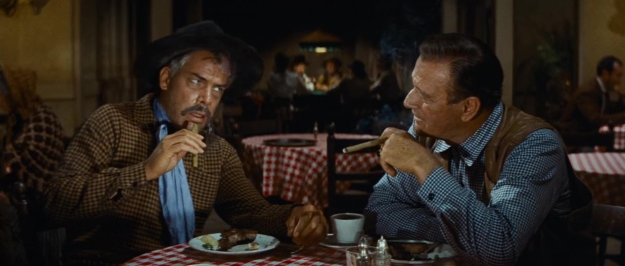
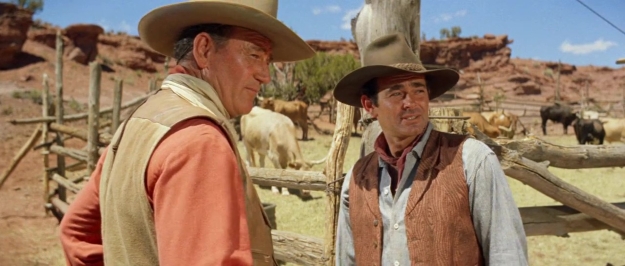
The plot of The Sons of Katie Elder follows a well trodden path. A newcomer buys influence and expands his power, elbowing aside any local objections or stamping hard on them should the need arise. In the case of the eponymous Mrs Elder and her offspring, the latter action appears to have been applied. We never get to see Katie Elder, she has already passed away before the movie begins and the opening scene has three of her sons, Tom, Matt and Bud (Dean Martin, Earl Holliman, and Michael Anderson Jr respectively) waiting by the train halt for the senior member of the clan to arrive prior to attending the funeral. The oldest brother John Elder (John Wayne) is a gunfighter of renown or ignominy, depending on one’s perspective. Well he doesn’t show up so the service takes place without him, or so it seems. The fact is he has slipped back home unobtrusively and we can observe him watching proceedings from afar, high among the rocks overlooking the cemetery, aloof and vaguely forbidding in his isolation. As the story progresses, it becomes evident that the Elder family has been cheated, the father was almost certainly murdered and his wife then forced to leave the home where she raised her four boys before they went on their separate ways. Now they are back though and experiencing a combination of guilt for their neglect of a woman who everybody held in the highest regard as well as an incipient sense of indignation over being gypped. And that’s how it plays out – the process of arriving at some kind of accommodation with feelings of self-reproach develops side by side with a deepening conflict with Morgan Hastings (James Gregory), the man now occupying the land that was once theirs.

The notion of past events coloring or shading the present frequently results in good drama, and the shadow of Katie Elder looms large in the lives of her sons. Where each of them is seen to be flawed or negligent or profligate, their mother is spoken of with warmth and respect by all those who had known her. This conceit is a neat way to allow the characters to address their own deficiencies within a narrative framework which encompasses justice and redemption. Having Katie exist only as a memory offers the opportunity to build something of a myth around her, as of an ideal to be lived up to. By rendering her in those terms her spirit starts to feel emblematic of the mythical west, almost as though woman and land have fused. It’s an aspect that is further highlighted when Martha Hyer speaks of her to the four sons as all of them stand around the old lady’s beloved rocking chair.

Texas is a woman, she used to say, a big, wild, beautiful woman. You raise a kid to where he’s got some size, and there’s Texas whispering in his ear and smiling, saying, “Come and have some fun.” “It’s hard enough to raise children,” she’d say. “But when you’ve got to fight Texas, a mother hasn’t a chance.”

The Sons of Katie Elder was John Wayne’s first film after undergoing major surgery for lung cancer. He’d had a lung and a couple of ribs removed only a few months before but looked and acted remarkably robust under the circumstances. It’s an ebullient performance, big and commanding with the balance between humor and seriousness deftly maintained. Henry Hathaway framed and shot him in such a way as to emphasize the iconic, monumental stature he was growing into by this time. Some of the action scenes are very stylized, but superbly put together at the same time – the big gun battle at the river crossing, and that memorable moment when he belts George Kennedy’s sniggering bully full in the face with an axe handle.

Dean Martin made his western debut alongside Wayne in Rio Bravo, giving a fine performance first time out and growing ever more comfortable in the genre in subsequent outings. Maybe he became too comfortable at times later on, cruising along on charm and a wink at the camera. His role as Tom Elder allows him to indulge the laid-back persona at times – a nicely played comedic interlude in a saloon involving a glass eye,  as well as some other horseplay involving his siblings – but not to the extent is diminishes the more dramatic moments. Earl Holliman is quite subdued, much more composed than some of the less secure characters he was often cast as. The youngest brother was Michael Anderson Jr and he was enjoying a wonderful run in westerns that year; aside from The Sons of Katie Elder, he had roles The Glory Guys and Major Dundee. One notable feature of this movie was the absence of any other women bar Martha Hyer, who serves as a kind of conscience for the the Elders, recalling the strong character of the late Katie and reminding the sons of their duty to her memory. It’s worth pointing out too that the movie represented a rehabilitation for Dennis Hopper. He had apparently enraged Henry Hathaway during the making of From Hell to Texas and found himself essentially frozen out in Hollywood till Wayne got him the part in this film. Of course he would go on to work with Hathaway, and an Oscar winning Wayne, once more a few years later on True Grit.

The Sons of Katie Elder is what I’d call a satisfying western, something that was not the case with a number of genre efforts as the decade wore on. Hathaway’s films were always very smoothly put together and this one is no exception. Basically, he keeps everything balanced; the classic western themes are there, the cast features a lot of very familiar faces who are used sparingly and not in the tired “by the numbers” fashion of, say, an A C Lyles picture, Lucien Ballard has it looking extremely attractive and Elmer Bernstein’s score is one of his better ones. All in all, this is a very watchable and enjoyable film.

How the West Might Have Been Won

While my previous post arguably brought up the matter of the parameters one applies to the notion of the western, it was a few comments leading on from that which added some impetus and got me thinking a bit more. I guess I have my own idiosyncratic criteria which I wouldn’t expect to satisfy everyone. So be it, but that wasn’t the direction I now found my thoughts running in anyway. What I ended up contemplating was the course that the western as a genre charted after it had peaked in the late 1950s and on into the early 1960s. Reaching a peak means that some form of change is inevitable, but the path the genre adopted led to a sustained decline. That path essentially operated on two levels: one the one hand, there was that slightly desperate and ultimately unsatisfying effort to ape the nihilism at the heart of the spaghetti western, while on the other hand, there grew up a fruitless attempt to cling to the tropes of the classic form, one rendered stale by the crucial absence of thematic richness. Somehow these twin approaches converged at the artistic quagmire that came to be referred to as the revisionist western, where the myth was not merely deconstructed but practically obliterated. Yet what if an entirely different approach had been pursued instead, one which filmmakers had flirted with and dabbled in but failed to fully embrace?

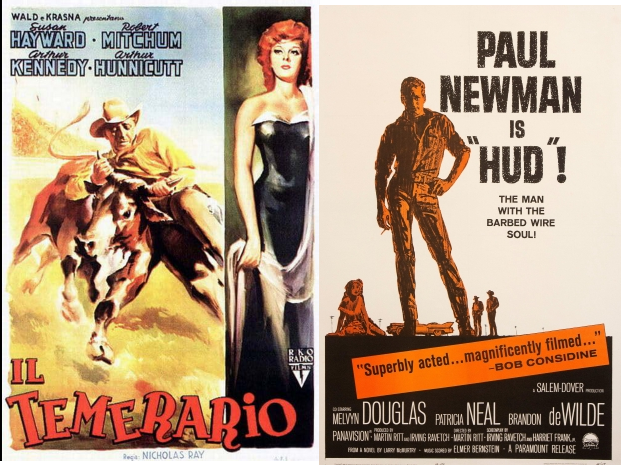
I’m speaking here of what is sometimes called the modern or contemporary western, and I’m also well aware that there will be those who struggle to accept that such movies are “real” westerns at all. While I can’t say I share such reservations, I do understand them. Fairly recently, I happened to revisit a couple of movies that fall into this category, The Lusty Men (1952) and Hud (1963), with a view to maybe writing them up separately. Nevertheless, it now seems apposite to fold them into this piece on what I’ve been toying with for a while now, namely that the western might have been better served  in the long run had filmmakers made a clean break and gone a different way. I guess it’s always easy to spot missteps when one has the benefit of hindsight to frame it all, but looking back at so many less than satisfactory westerns that were made from the mid-1960s on does create the impression of people trying to recapture lightning in a bottle. Instead of reaching for the unattainable, I can’t help but wonder if the people making westerns wouldn’t have been better off acknowledging that the way to secure the future of a genre so strongly rooted in the past was to allow it to naturally evolve into a recognizably modern form which still retained something of the spirit that made it great in the first place.

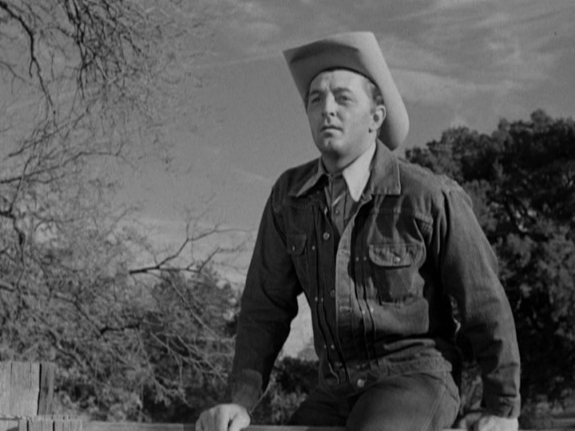
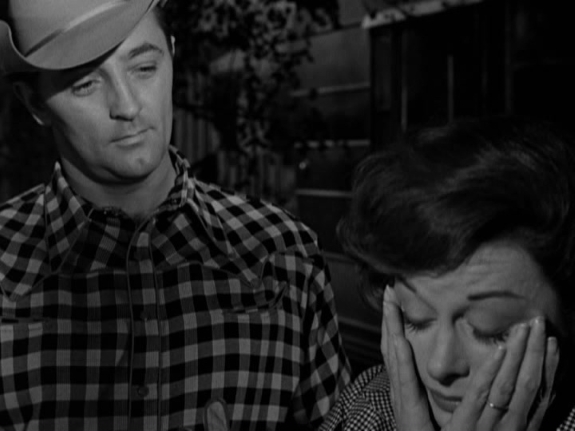
In The Lusty Men Nicholas Ray stirs together the doomed romanticism of Jeff McCloud (Robert Mitchum), a dwindling band of itinerant rodeo performers and one of his characteristically uneasy relationships. From the moment a limping and broken McCloud gazes with the kind of melancholic longing only Mitchum could impart so effortlessly at his childhood home, it’s clear he is meant to represent some bridge between a lost idyll and a world where skills once carefully acquired to tame the land itself are now of use primarily for display and entertainment. Wes Merritt (Arthur Kennedy), his protege, sees this the other way round – that the shows and spectacle may be a way to reconnect with the land. The whole movie traces McCloud’s slow reconciliation with the man he has now become, of the fact the world no longer holds a place for him. It also charts Merritt’s concurrent but bumpy journey back to his origins, aided by the tough earthiness of his wife (Susan Hayward) and by McCloud’s sacrifice. The world of Ray’s The Lusty Men is very much a contemporary one, and never tries to suggest otherwise, but by the time those still standing take stock of the lessons learnt and head back to the land which spawned them they are strengthened by their experience. The viewer too is fortified by the time spent tagging along on their journey, and that’s in no small part down to the way the essence of the classic western is transferred to the mid 20th century setting.

Martin Ritt’s Hud, adapted from a Larry McMurtry novel, came along a decade later and is a darker affair all told. It’s a film about change and passing, about a fractured family dealing with the notion of passing, of guilt and blame and principle. Paul Newman’s titular character is the new face of the west, amoral and self-absorbed, straining against ties to the past as represented by his father (Melvyn Douglas) and casually dismissive of a future hinted at by his nephew Lonnie (Brandon deWilde). Buoyed by two superb Oscar winning performances from Patricia Neal and Douglas, the former touching on a marvelous sense of resignation and regret, while the latter simply exudes pain and dignity, it scratches away at the mythology of the west. The culling of the herd is sobering in its matter of fact coldness, and Douglas’ subsequent putting down of his prized Longhorns, the last of the breed, is deeply symbolic and even more traumatic on a personal level – the hurt of the man is palpable. There is a bleakness to all this, yet the ending also looks to the resilience of the genre. If Hud’s shutting out of the modern world is indicative of a dead-end insularity, then Lonnie’s rejection of his uncle’s negativity and his striking out alone in the world looks toward a different horizon, an approach the genre itself is built upon.

While what I’m going to call ‘regular’ westerns made from the middle of the 1960s onward are very much a mixed bag for me – with far too many misses weighing down the hits – I don’t think I’ve seen a ‘modern’ western that actually disappointed me. The form continues to be made, and quite successfully too if TV shows such as Yellowstone are any kind of guide, but it still feels as though it is only visited from time to time. Admittedly, I’m doing no more than musing and hypothesizing here, spitballing something I’ve not yet reached a conclusion on myself. Increasingly though, I think Hollywood may have missed a trick by not abandoning the traditional western at some point in the late 60s, or at least by the 1970s, and turned the genre away from the static form it devolved into. Had this happened, had it become a contemporary rather than a historical form, perhaps we would be talking about the western in entirely different terms today, as a still thriving genre.

Man of the West

The western, when it hits the heights of its artistic potential, traces the route of its characters along a path that leads them to salvation, redemption, fulfillment or any combination thereof. When this is achieved then the audience gets to follow, to catch a glimpse of, and thus on some level share vicariously in those rewards – this is one of the riches of cinema and it’s to be found in abundance in the very best of the classic era of the western, not least as it approached the zenith of its power. And for directors who could be said to have had a clear view of what they wanted to do within the genre this same progression towards a destination marked fulfillment can also be discerned. Anthony Mann started making westerns at the beginning of the 1950s with Devil’s Doorway and Winchester ’73 and, particularly in that great cycle with James Stewart, dug deep into the heart of the genre. His work laid bare the tormented souls of his characters yet also applied a kind of spiritual healing balm that meant the harsh journeys he took them on finished up at a place that promised them peace. Man of the West (1958) follows this template and while it wasn’t the last of Mann’s westerns, it does represent the apogee of his work in the genre.

On the surface, the plot of Man of the West is a simple and straightforward one. Link Jones (Gary Cooper) is a man clearly out of his element, a true man of the west who is spooked by his first view of a train and bemused by civilization’s apparent determination to squeeze him into the smallest space manageable. Still, the west of his past is never far away and a neatly executed raid sees him relieved not only of his luggage (and the money he’s been carrying to hire a teacher for his town’s new school) but also the discomfort of his poorly designed seating. Stranded in the middle of nowhere in the company of garrulous card sharp Sam Beasley (Arthur O’Connell) and  saloon singer Billie Ellis (Julie London), he has no option but to set out in search of shelter. The thing is though, Link is no helpless hick – he evidently knows where he’s headed as he soon comes upon an old homestead that he seems familiar with. In short, this is very definitely a man with a still unrevealed history, one who thought he had outrun that past only to find it catching up with him and drawing him back into its unwelcome embrace. There had been hints of that in his shifty avoidance of the law back at the train halt, but it’s here that the full extent of his involvement with criminality is dragged out into the light, or into the flickering shadows of a dank and dangerous cabin to be precise. The gang who robbed the train are taking orders from Dock Tobin (Lee J Cobb), the notorious uncle who brought up and shaped – or perhaps twisted – the character of the younger Link. His delight at having his protégé back is matched by Link’s carefully concealed disgust at being snared once again by the kind of people he thought he had escaped for good.

The tone of the movie shifts radically at this point. Link’s caginess grows and is clarified at the same time, and the worthlessness and utter inhumanity of Dock and his gang increases by the minute. The cabin itself is hugely oppressive, shot by Mann in the shadowy menace of guttering flames with a heavy and smoke darkened ceiling regularly in view, its narrow and tight dimensions seem to press from every side. As Dock raves and booms about a past steeped in blood and brutality, Link’s burgeoning despair is just about held in check. He had set out to recover the money entrusted to him by poor and trusting people and now finds himself responsible for both his own well-being (he has a dependent wife and children relying on his safe return) and that of two helpless people he has led into danger.

This long sequence in the cabin gradually takes on the feel of a visit to one of the deeper circles of Dante’s Inferno, where depravity is let loose and one starts to wonder if light will ever be permitted in again. Dock resides here, a malignancy at the center of a web he has spun around himself,  goading his companions to ever greater excess. When the degenerate Coaley (Jack Lord) demands that Billie strip for their amusement and holds the outraged Link captive, a knife cutting into the flesh of his throat, there is a real sense of terror on show. This entire section is impossibly tense, dark and forbidding, so much so that there is a palpable sense of relief when events move the characters out, when a new dawn breaks and the possibility of getting into the open beckons.
Here, in the closing act of Mann’s beautifully shot tragedy, those classic themes of revenge, redemption and renewal are played out against a dusty and sun-bleached backdrop that is as unforgiving as it is honest. Link is handed the opportunity to avenge the indignity and barbarity of Coaley, meting out a retribution that is chilling in its bleakness and also unsatisfying as a result of the further hurt it unwittingly inflicts on the innocent. The message of course is that revenge never achieves anything of value, a theme that Mann revisited time and again throughout his career. By the time it all draws to a conclusion with a sudden gunfight high up on one of the director’s characteristic elevated spots, more horror has been confronted and further pain endured. For all that harshness and violence and loss, Mann’s essential commitment to the durability and resilience of humanity, to the ultimate triumph of decency over malice never falters. When the damaged survivors come together briefly at the end before the inevitable parting, making their peace with themselves and the challenges posed by life itself, there is no doubt that catharsis and renewal have been earned and won. This holds true of the characters, maybe it can be said of the director, and it brushes off on the viewer too .

I know the casting of the movie has not met with universal approval, but I find it works fine for me. Sure Cooper was probably too old for the part as written but his work here allows me to ignore that. The fact he had such a natural affinity for western roles is a terrific boon in itself and then there is that minimalist approach to acting he had perfected over the years. Those eyes that dart like fugitives while the face remains taut, that guarded catch in the voice, the pauses and the silences all add up to wonderful screen acting and I find it hard to see how anyone else, regardless of their age, could more convincingly impart the mix of caution, fear and guts required. Does Lee J Cobb crank it up too high? Maybe so, but as I see it his character is a monstrous creation, deluded and demented by his own turpitude. Dock Tobin lives in an unreal cocoon and surrounds himself with lowlife sycophants so it’s arguably a valid interpretation on the part of the actor to play him with such studied bombast.

Julie London’s lonely saloon girl is well realized and she deftly captures the precarious position occupied by a woman in such circumstances. All her western roles were fine but this one presents her with a number of challenges – the natural toughness of the saloon singer is neatly juxtaposed with her innate vulnerability and she handles the scenes where she’s subjected to both physical and psychological assault with sensitivity and grace. She excels in her scenes in the cabin and barn, playing effectively off Cooper’s reticence and reserve, and then has two other memorable scenes with her leading man in the wagon, the first tender and bittersweet while the second exposes the full horror of Tobin’s bestial character. In support John Dehner plays it tightly coiled as Cooper’s cousin, coolly disgusted by the decline he sees in Tobin and never once deceived by Link’s maneuvering. Royal Dano is memorably manic as the mute Trout, Robert J Wilke sneers and threatens on cue while Arthur O’Connell is all blather and blarney till he stops a bullet at the end of one of the film’s most shocking scenes.

Man of the West saw Anthony Mann take the western to the place he wanted it to be. All the themes he’d touched on and explored throughout the preceding decade are on view and placed under the microscope. Having won acclaim as a director of film noir, his westerns hold onto some of that darkness – the visual aesthetic may have gradually become less pronounced as he moved to frontier tales but the fascination with the less savory aspects of humanity remained. What separates his westerns from his earlier noir work though is the focus on reaching for something finer, the scramble towards redemption and an escape from the darkness both within and around the characters. By the time he made Man of the West he had discovered how to set those characters firmly on that path.

The Western Range

If one is to accept that the second string western, or the programmer or B movie depending on the terminology preferred, represented the bread and butter of the genre during its heyday in the 1950s (and I strongly believe that the assertion should be accepted) then it’s not unreasonable to assume those films would have much in common. Yet, leaving aside the personnel who turn up time again both in front of and behind the camera, there was in fact quite a wide variety on show. I recently watched Cripple Creek (1952) and Ride Out for Revenge (1957) back to back and was struck by how very different these two “lesser” westerns were. Both featured stars (George Montgomery and Rory Calhoun respectively) who are closely associated with such westerns and both work pretty well when taken on their own terms. Nevertheless, tonally, visually and with regard to aims, one might just as easily compare movies from two entirely different genres.
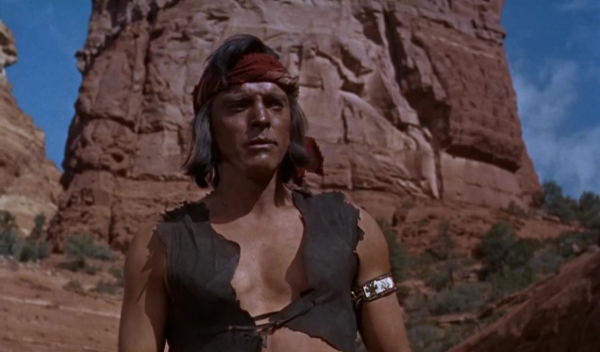
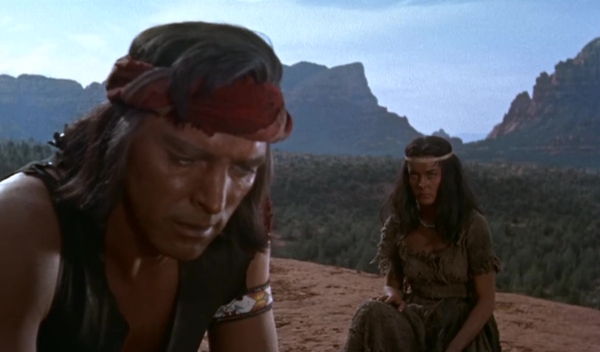
So what have these two pictures got in common? Well the 19th century setting and the locations (Colorado and the Black Hills) are fine for westerns, and both movies have the hunt for gold worked into their scripts. But that’s about as far as it goes. Cripple Creek is in essence a crime movie taking place against  western backdrop, all about gold robberies, smuggling and intrepid Secret Service agents working undercover. And despite a few harder edged scenes, it has a lighter feel to it overall – I’d hesitate to say juvenile, but it does have the kind of cut and dried ethical simplicity about it that means it can be enjoyed by just about anybody regardless of age. I can’t say for sure if I saw the movie myself when I was a youngster but it is the kind of Saturday matinee fare that I tended to lap up at an impressionable age. George Montgomery is heroically square-jawed as the gutsy G-man while William Bishop and John Dehner never leave the viewer in the slightest doubt that they are up to no good. Only Richard Egan, gradually working his way up the billing towards stardom, shows a bit of shading in his characterization. Ray Nazarro serves up a colorful and broadly frothy concoction, a frank piece of lightweight entertainment that never tries to  cajole the viewer into believing it’s anything more than that.

Conversely, Ride Out for Revenge is a much more serious affair. Bernard Girard is clearly shooting on a tight budget but making fine use of Floyd Crosby’s stark black and white cinematography. This is weightier stuff with conflicted marshal Rory Calhoun butting heads with a drunken and incompetent soldier played by Lloyd Bridges. The story explores greed, intolerance and the corrosive effects of unfettered hate on individuals and whole communities. There’s not much to smile about in this movie and there’s a hardness to it befits an exploration of the themes mentioned. There is an interracial romance which is central to the plot – sidelining Gloria Grahame, who appears so completely detached that hers is practically a non-performance – and has the guts to end on a far more hopeful note than is often the case with such storylines in westerns of the time. An early outing for Kirk Douglas’ Bryna Productions, Ride Out for Revenge challenges all types of prejudice and even the whole idea of manifest destiny.

So, there you have it: two westerns made just five years apart, both a step below the A list yet both radically different in look, theme and mood. The sheer malleability of the western in the classic era has always struck me and I guess I could have chosen plenty of other examples from this general time period to illustrate this.