Viewing Notes – A Month with Hitchcock

Without having initially planned to do so, I ended up watching a selection of movies directed by Alfred Hitchcock all through September. I tried to choose those titles I had not seen for quite some time and have been jotting down and recording my thoughts on each in brief as I’ve gone along. Having done so, I figured I might as well assemble them here as an end of month round-up. So here goes:

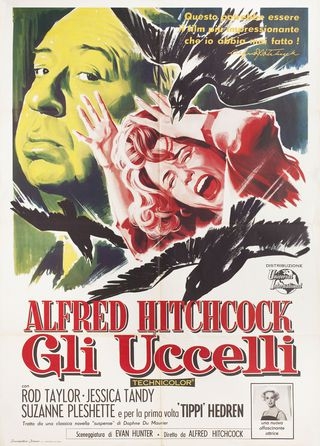
The Birds (1963)

It’s been many years since I last watched this and I’d forgotten just how well constructed it is, not to mention its technical proficiency bearing in mind the era.
That long, slow build-up is the work of a deeply confident filmmaker. It’s never boring or tedious and the gradual, estrogen-fueled tension, with all the cats among the pigeons, is drawn ever tighter in tiny but finely judged increments. When the full chaos is finally unleashed in the apocalyptic latter half Rod Taylor does get to flex bit of muscle, literally and figuratively.

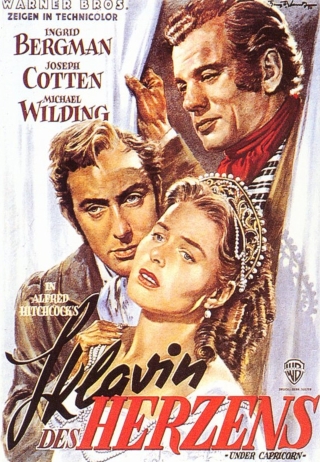
Under Capricorn (1949)

Very much lesser Hitchcock, a movie which barely anyone ever has a good word to say for. Well, I’ll at least say that it is handsomely shot, courtesy of Jack Cardiff, and the acting is fine even if Michael Wilding does lay the whimsy on with a trowel at times.
But yes, it is a problematic movie. And that is largely because it tells a story which is thin, not uninteresting in itself but too thin for its running time. It needed to be trimmed and compressed, which would have been hard to do because of the other great flaw – the director’s insistence at the time on experimenting with long takes. It hamstrung the previous year’s Rope (though that one has other issues dragging it down too) and was a technique that was antithetical to Hitchcock’s style.

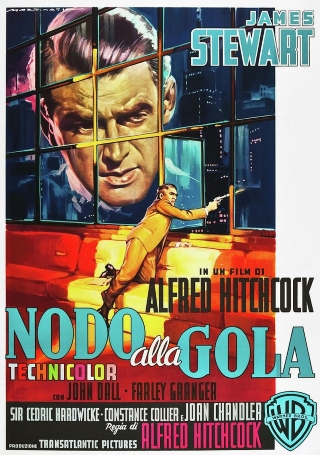
Rope (1948)

I’ve never especially liked this. The technical ambition is admirable, and I’ve always been somewhat hypnotized by the seamless skill involved in the gradual change in the lighting of the studio bound skyline as the tale unfolds in real time. However, the whole continuous take conceit imposes huge limitations on the cast and crew and the process must have been a genuine pain for everyone involved. As with Under Capricorn, the entire business works to undermine the director’s natural strengths.

The biggest problem I have with the movie though is the coldness and indeed the malice at its core. Nobody aside from Cedric Hardwicke’s anxious and compassionate father comes out of it well. That’s not to say it’s badly played of course. Granger could do that weak sister act with his eyes closed and Dall has the clinical and supercilious aspects down pat too – he always seemed to manage that though and there’s a hint of that inherent unlikeability also found in Laurence Harvey in all his parts. James Stewart nails the creeping suspicion that blossoms into horror and then outrage and (self?) disgust. But his character is not really sympathetic either – a man of his intelligence ought to have realized the kind of seeds his intellectual posing was planting.

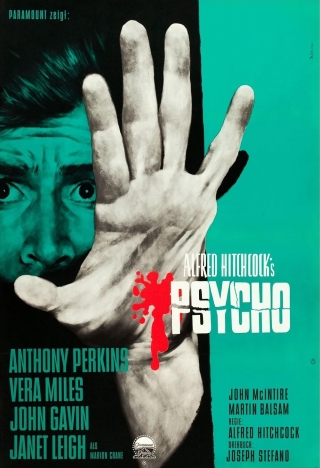
Psycho (1960)

It’s probably 15 years, maybe even more, since I last watched this. The first half always worked best for me and I still feel the same. The paranoia and gnawing guilt of Janet Leigh’s Marion is perfectly encapsulated in the minimalist style of that whole opening section – the rain, the ever more frantic musing, Herrmann’s nervy score and those seemingly permanent close ups of Leigh’s huge, expressive eyes.

And then there’s that frankly sublime sequence in the motel cabin. Cagey and uncomfortable, pathetically flirtatious and taut all at the same time. I reckon it’s the best scene in the entire movie. What follows in the last hour engages me less. It remains visually astounding and technically flawless, but too much of the artful subtlety drains away with the bath water. It still grips and shocks at times, just much more conventionally and it never again approaches the emotional precipice that was teased by the interaction amid stuffed birds, sandwiches and milk.

Nevertheless, it is still undeniably a great piece of cinema, the heights approached and attained in that first hour and the total assurance of a director genuinely in love with his medium are enough to ensure that.

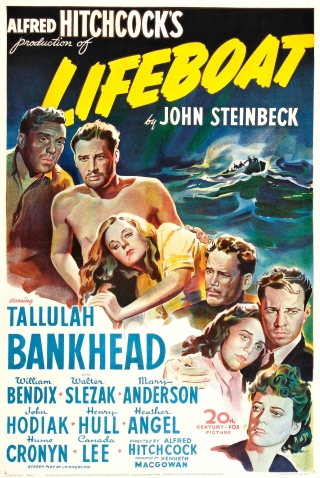
Lifeboat (1944)

A wartime propaganda picture from Hitchcock. Still, being a Hitchcock movie there’s more to it than that – by a circuitous route it winds up as something of a celebration of cohesiveness. Just about every stratum of western society is represented, from Henry Hull’s super rich kingpin to John Hodiak’s blue collar revolutionary, from the stoicism of Canada Lee to the louche decadence of Tallulah Bankhead. All the disparate characters are by turns gulled, threatened and finally drawn together by the malignant presence of Walter Slezak’s cool and cunning Nazi.

It’s another of the director’s challenges to himself, an exercise in the potential of confinement that makes up for in intensity what it arguably lacks in suspense. Alongside the more eye-catching dramatics of those further up the cast list, it’s satisfying to watch the slow development of a gentle romance between fairly regular Hitchcock collaborator Hume Cronyn and Mary Anderson, an actress who never much graduated beyond supporting roles except perhaps in the rarely seen but rather good Chicago Calling.

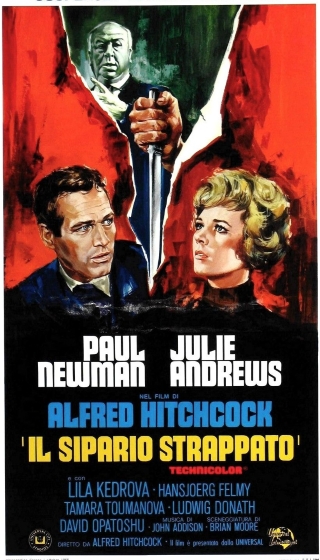
Torn Curtain (1966)

This is the point at which Hitchcock’s decline can be discerned. This Cold War thriller starts out as a double-cross drama where the bluff is drawn out too long before turning into a more successful cross-country chase, the kind of affair Hitchcock could make with his eyes closed.

The first half of the movie misses more than it hits, the brief bookstore scene in Copenhagen errs just on the right side of oddness, but the drab grey/green palate when events move to East Germany reflects the dullness of much of that section, not helped by a listless and detached performance by Paul Newman and an uncomfortable looking Julie Andrews. Some of it does work though – I like the entire build up to the farmhouse scene where the Stasi spook Gromek is laboriously disposed of, and Ludwig Donath is spikily entertaining as a caricatured professor.

The bus ride/pursuit has its moments, helped by John Addison’s slightly eccentric score and an earnest David Opatoshu. There are a few late flourishes too – the hiding among a crowd/creating a distraction ploy is revisited for at least the fourth time – off the top of my head variations thereof are employed in The 39 Steps, Saboteur and North By Northwest if not more.

So, a mixed bag all told. I guess it does more wrong than it does right yet I’ve always had a greater fondness for it than it probably deserves.

The Sons of Katie Elder

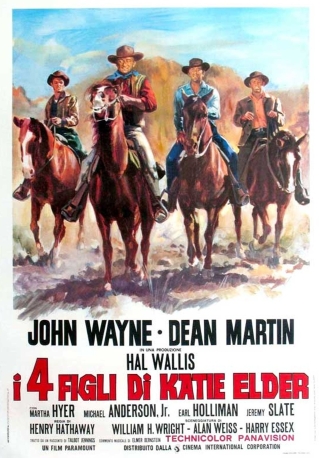
I think it’s fair to say that the going always appears to be trickier once one hits the downside of a slope. There’s that ever present temptation to succumb to the lure of relaxation, to freewheel, to sit back and let the momentum carry one wherever it fancies. If we are to see the western as having scaled the heights of its artistic potential by the end of the 1950s, and on into the beginning of the next decade to be fair, then the following years must represent the other side of that hill. By the mid-60s the treacherous nature of that downhill path was becoming apparent, the more so since it proved to be a pretty steep descent for the most part. As the decade wore on there were increasing numbers of westerns that do not quite work, or which flat out fail in some cases. It can be a dispiriting experience trawling through some of these when one bears in mind what had come before. Still, one of the strengths of this genre is its overall resilience, its ability to offer up something worthwhile just when it seems that hope has passed. The Sons of Katie Elder (1965) is not what I would personally term a great western, but it is a very good and entertaining one.

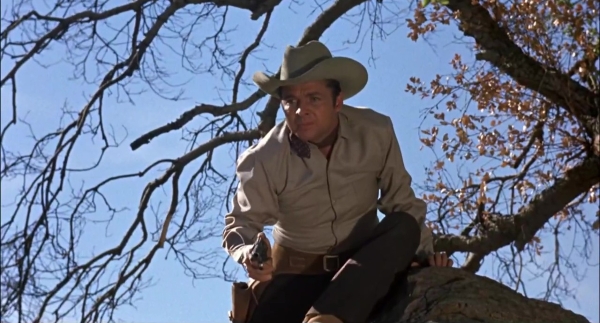
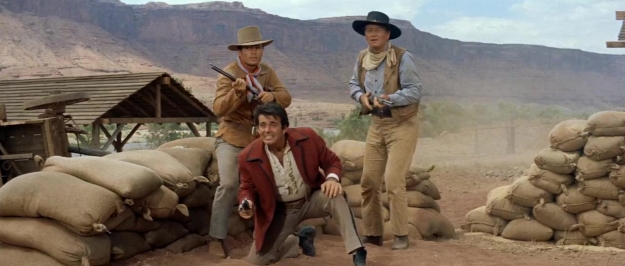
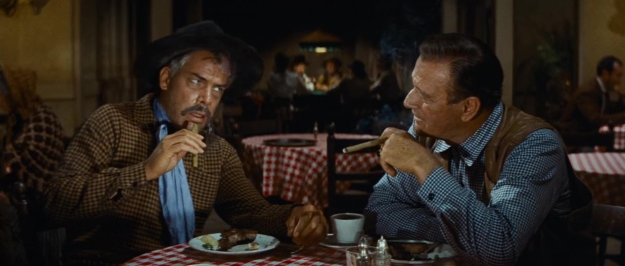
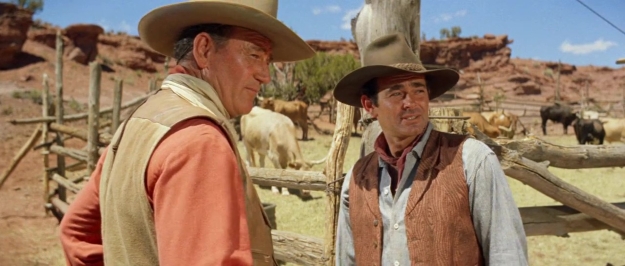
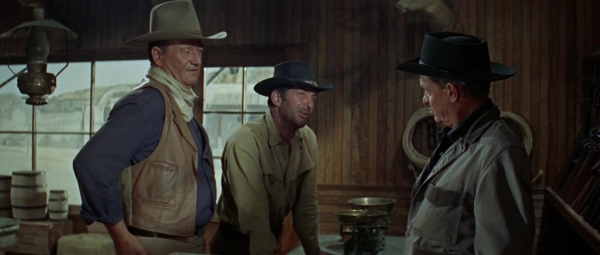
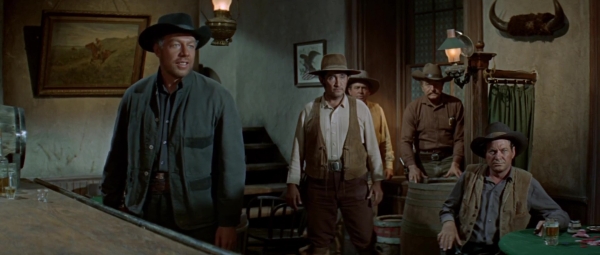
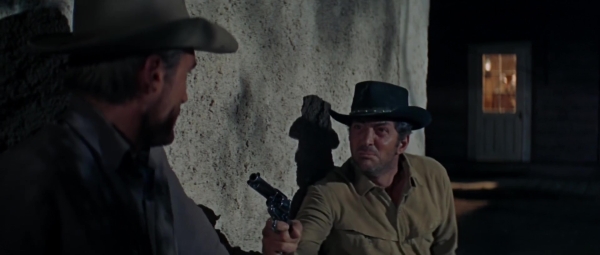
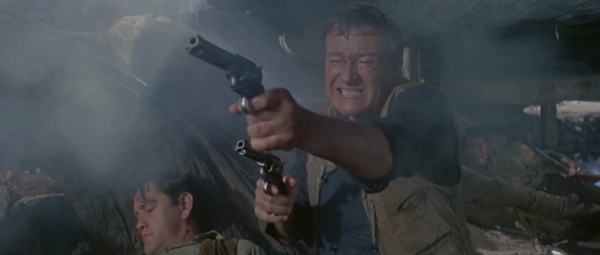
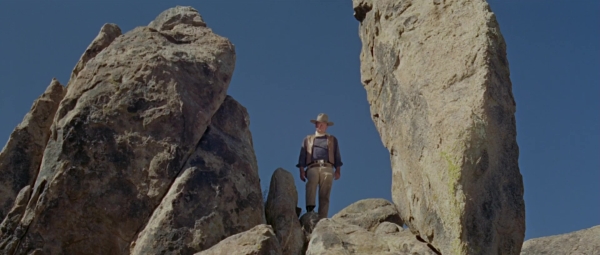
The plot of The Sons of Katie Elder follows a well trodden path. A newcomer buys influence and expands his power, elbowing aside any local objections or stamping hard on them should the need arise. In the case of the eponymous Mrs Elder and her offspring, the latter action appears to have been applied. We never get to see Katie Elder, she has already passed away before the movie begins and the opening scene has three of her sons, Tom, Matt and Bud (Dean Martin, Earl Holliman, and Michael Anderson Jr respectively) waiting by the train halt for the senior member of the clan to arrive prior to attending the funeral. The oldest brother John Elder (John Wayne) is a gunfighter of renown or ignominy, depending on one’s perspective. Well he doesn’t show up so the service takes place without him, or so it seems. The fact is he has slipped back home unobtrusively and we can observe him watching proceedings from afar, high among the rocks overlooking the cemetery, aloof and vaguely forbidding in his isolation. As the story progresses, it becomes evident that the Elder family has been cheated, the father was almost certainly murdered and his wife then forced to leave the home where she raised her four boys before they went on their separate ways. Now they are back though and experiencing a combination of guilt for their neglect of a woman who everybody held in the highest regard as well as an incipient sense of indignation over being gypped. And that’s how it plays out – the process of arriving at some kind of accommodation with feelings of self-reproach develops side by side with a deepening conflict with Morgan Hastings (James Gregory), the man now occupying the land that was once theirs.

The notion of past events coloring or shading the present frequently results in good drama, and the shadow of Katie Elder looms large in the lives of her sons. Where each of them is seen to be flawed or negligent or profligate, their mother is spoken of with warmth and respect by all those who had known her. This conceit is a neat way to allow the characters to address their own deficiencies within a narrative framework which encompasses justice and redemption. Having Katie exist only as a memory offers the opportunity to build something of a myth around her, as of an ideal to be lived up to. By rendering her in those terms her spirit starts to feel emblematic of the mythical west, almost as though woman and land have fused. It’s an aspect that is further highlighted when Martha Hyer speaks of her to the four sons as all of them stand around the old lady’s beloved rocking chair.

Texas is a woman, she used to say, a big, wild, beautiful woman. You raise a kid to where he’s got some size, and there’s Texas whispering in his ear and smiling, saying, “Come and have some fun.” “It’s hard enough to raise children,” she’d say. “But when you’ve got to fight Texas, a mother hasn’t a chance.”

The Sons of Katie Elder was John Wayne’s first film after undergoing major surgery for lung cancer. He’d had a lung and a couple of ribs removed only a few months before but looked and acted remarkably robust under the circumstances. It’s an ebullient performance, big and commanding with the balance between humor and seriousness deftly maintained. Henry Hathaway framed and shot him in such a way as to emphasize the iconic, monumental stature he was growing into by this time. Some of the action scenes are very stylized, but superbly put together at the same time – the big gun battle at the river crossing, and that memorable moment when he belts George Kennedy’s sniggering bully full in the face with an axe handle.

Dean Martin made his western debut alongside Wayne in Rio Bravo, giving a fine performance first time out and growing ever more comfortable in the genre in subsequent outings. Maybe he became too comfortable at times later on, cruising along on charm and a wink at the camera. His role as Tom Elder allows him to indulge the laid-back persona at times – a nicely played comedic interlude in a saloon involving a glass eye,  as well as some other horseplay involving his siblings – but not to the extent is diminishes the more dramatic moments. Earl Holliman is quite subdued, much more composed than some of the less secure characters he was often cast as. The youngest brother was Michael Anderson Jr and he was enjoying a wonderful run in westerns that year; aside from The Sons of Katie Elder, he had roles The Glory Guys and Major Dundee. One notable feature of this movie was the absence of any other women bar Martha Hyer, who serves as a kind of conscience for the the Elders, recalling the strong character of the late Katie and reminding the sons of their duty to her memory. It’s worth pointing out too that the movie represented a rehabilitation for Dennis Hopper. He had apparently enraged Henry Hathaway during the making of From Hell to Texas and found himself essentially frozen out in Hollywood till Wayne got him the part in this film. Of course he would go on to work with Hathaway, and an Oscar winning Wayne, once more a few years later on True Grit.

The Sons of Katie Elder is what I’d call a satisfying western, something that was not the case with a number of genre efforts as the decade wore on. Hathaway’s films were always very smoothly put together and this one is no exception. Basically, he keeps everything balanced; the classic western themes are there, the cast features a lot of very familiar faces who are used sparingly and not in the tired “by the numbers” fashion of, say, an A C Lyles picture, Lucien Ballard has it looking extremely attractive and Elmer Bernstein’s score is one of his better ones. All in all, this is a very watchable and enjoyable film.

Home from the Hill

“Home is the sailor, home from sea,
And the hunter home from the hill.”

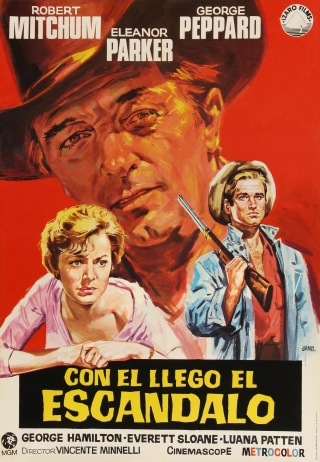
Those lines, the final two of Robert Louis Stevenson’s poem Requiem, introduce the movie featured today. The image of the hunter has long been a romantic one. In mythology Orion was not only renowned for his skills as a huntsman but also for his amorous exploits – in addition to his attractiveness, it is said that he fathered up to fifty offspring by as many different mothers. It is therefore apt that the protagonist in Vincente Minnelli’s Home from the Hill (1960) should also embody these characteristics. And as this hunter moves inexorably towards that repose alluded to in Stevenson’s short poem those features are repeatedly highlighted. In telling this story, Minnelli creates one of his grand melodramas, assembling from constituent parts which are at once discrete and also united in their focus on the deceptions that people lock themselves into in their quest to achieve contentment. How is that to be achieved? Through three interdependent actions: confronting the past, acknowledging the present, and securing the future.

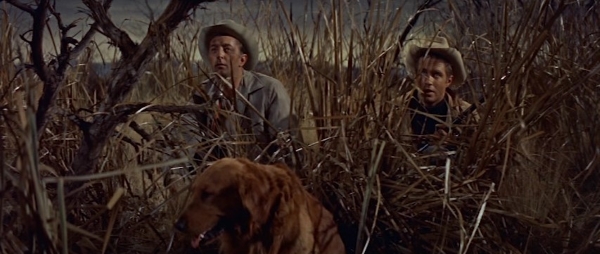
Small town America, the ultimate paradox in some ways, that curious blend of the idyllic and the deeply unattractive. There is something comforting, reassuring, even downright alluring about the sense of orderliness and stability that small, close-knit communities seem to exude. There is a security attached to everybody knowing everybody else, but of course the flip side of that is the preponderance of gossip, of long memories of a malicious type, a type which fosters and breeds grudges. Wade Hunnicutt (Robert Mitchum) is the town’s leading citizen – everybody calls him Captain, adding another layer of deference – wealthy, influential, a noted sportsman, and an infamous womanizer. The opening scene among the bulrushes in the middle of a duck shoot cements all these qualities, the latter one in particular being driven home with some force when Wade finds himself marked as prey by a desperate and indignant husband who has been wearing the horns of a cuckold. That Wade narrowly evades death at his hands is down to the sharp reactions of Rafe Copley (George Peppard) in knocking him just out of harm’s way at the critical moment. By and by, it becomes apparent that Rafe is his illegitimate son, a fact which irreparably soured his marriage to Hannah (Eleanor Parker) and led to her forbidding him to have any involvement in the raising of Theron (George Hamilton), their son who was born in wedlock. That all changes though when Wade comes to realize Theron has reached an age where he needs to learn some lessons that will see him graduate to manhood.

Manhood, however, entails a good deal more than being adept at hunting and the use of firearms, the sowing of wild oats, or even the kind of rugged individualism that Wade Hunnicutt espouses. Those are mere trappings, the panoply of masculinity that one may or may not need to adopt in certain situations, but the characteristics of a man are more nuanced, they run deeper and ask more of the individual than that. This of course forms the core of the movie, the processes, experiences and trials that one must pass through and absorb on the road that leads a boy to grow into a man. That road may be circuitous, forked, ill-defined or uncharted depending on the person who treads it and the destination won’t be the same for everyone yet it’s a journey none can avoid. Maybe more than anything it is the bumps and hollows encountered, and how they are navigated, that ultimately mark the man. For better or worse Wade Hunnicutt has grown into the man he is, and the meat of the tale is to be found in the trajectories followed by Rafe and Theron. The former moving through the roles of tutor, guide and confessor, creating an illusion of being the finished article while he’s really still only part way along on life’s learning curve. Theron is starting further back, having been cocooned in the cotton wool of innocence, his path to maturity seems more dramatic and raw as a consequence. His growing awareness of his father’s legacy, the galling revelations this exposes with regard to the family he thought he knew, and his rejection of a potentially redeeming love see him cast out, his full maturity if not denied then at least deferred.

There is a degree of mirroring with regard to the behavior of the characters. Theron’s disgust at the hypocrisy he discovers at the heart of his family drives him away. He has already proved his physical courage in the wild boar hunt and then his loss of innocence sees him strike out alone seeking independence from his parents and thus indirectly fulfilling another of his father’s wishes. Still, his immaturity and callowness lingers and he ends up, through fear of both himself and his family’s history, abandoning storekeeper’s daughter Libby (Luana Patten), who he has left pregnant. Despite himself, he has acted as his own father did with Rafe’s mother. While Theron is fated to recycle the sins of the father, Rafe is afforded the opportunity to forestall some of the prejudice and rejection he suffered. The past throws long shadows though, especially in these small towns, and even the best intentions can be ambushed by small minded parochialism. Rafe’s selflessness and essential good nature is undermined by cheap gossip and leads to yet more tragedy, though perhaps one whose foundations had been laid long before.

The screenplay for Home from the Hill came via Harriet Frank Jr and Irving Ravetch, adapting a novel by William Humphrey. The writing couple had come off two tricky William Faulkner adaptations directed by Martin Ritt, the rather fine The Long, Hot Summer and the less good but still worthwhile The Sound and the Fury. Now I’ve not read Humphrey’s novel but a quick bit of research suggests the screenplay made a number of changes to the story and characters, and I think the original tale must have been quite different as a consequence. What we get though forms the basis of a fine melodrama, the type of material that was ideally suited to Minnelli’s talents and vision. Perhaps it is a touch more subdued than some of his other melodramas, the palette chosen reflecting this to some extent. There is an earthiness on display in the soft green and brown hues which predominate. However, there are flashes of those vivid shades often found in Minnelli’s pictures at key moments – the crimson dress worn by Luana Patten in the waterside scene where she entrances Theron, the rich burgundy upholstery in Wade’s den where the affairs of men are raised and settled, and then the blood red tombstone in the final scene that is somehow triumphant, sedate and reassuring all at once. These are all instances of great passion and those varied tones of red capture the mood of the scenes perfectly. It’s noteworthy too that the site of Theron’s climactic revenge is backed by an acrid yellow, the noxious gases rising off the swamp matching the bitterness on show.

Robert Mitchum catches all the shades of his character, the arrogance born of privilege often to the fore and, in his more private moments, a hint of humility creeping through whenever he’s reminded of his personal failings. The scene which offered him the most to work with occurs during the barbecue arranged in the wake of the boar hunt. Sharing the screen with a pensive Eleanor Parker, both of them are on the porch overlooking the revelers on the front lawn. Mitchum starts out gently, reminiscing and quietly romancing the woman who has spurned him for so long. He seems to be making headway, gradually softening her with his talk of bygone and better days. And then just as he seems to have victory in sight, she slams the door, telling him in no uncertain terms that he’ll never have her. The wounded pride and the hurt of rejection, that sudden, sour realization that it’s all been for nothing flash across Mitchum’s features for no more than an instant yet he accomplishes it all so effortlessly. Fine acting.

Eleanor Parker is all frozen dignity and has a hugely influential role, her character’s actions motivating and coloring the lives of those around her. The strained marriage to Mitchum has led to her overprotecting her son and the decay that characterizes that union ends up blighting the latter’s life. George Hamilton gets the sullen immaturity of Theron across quite successfully and Minnelli would use him again, albeit less satisfactorily, in Two Weeks in Another Town a couple of years later. George Peppard, in just his third feature role, is excellent as Rafe. His character may have been denied a name and left unacknowledged but he carries himself more easily than Theron. While there is resentment inside, he covers it with a veneer of assurance and gets to play some of the most memorable scenes in the picture: the interlude in the cabin with Theron after the truth of his identity has been brought out into the open, his stepping up to the plate with the distraught and desperate Libby, and his tenderness after the marriage. The film is all about the attainment of manhood and the contentment that this brings and Rafe’s progression towards that goal is an immensely satisfying one to follow. Theron only gets to take the first faltering steps before being sidetracked by upheaval, but Rafe reaches his destination and gets there in some style.

The movie features two cemetery scenes and I guess there is some quality about that spot none of us can avoid which draws forth honesty and strips away the pretense. Both scenes involve Peppard and Parker, the first is wistful and touching as Rafe carefully tends the plot on “reprobate’s field” where his mother reposes. He’s come to terms with his regrets and there is a sense of a young man who has made his peace with who he is and his place in the world, while Hannah sees the beginnings of a thaw warming her heart. It’s all very understated and very effective. Then reminiscent of the final glorious scene in Some Came Running, Home From the Hill draws to a close in another cemetery. All at once memories and loss shed their sorrow, fusing instead into something rich and positive. The point where we witness resentment chase briefly across Rafe’s face before being banished permanently leads to a moment of catharsis and truth, the healing of a wound long suffered by both himself and Hannah achieved through an instance of shared decency and unity. A homecoming lent greater significance and value by being so hard-earned.

Perhaps I’ve rambled on a little too much about this movie, but it’s one I have always admired and it has stuck with me since I first caught a broadcast on TV by chance some forty years ago. It’s a strong addition to that wonderful run of melodramas that Minnelli embarked on in the 1950s and the early 1960s. I have spent a fair bit of time here on some of the performances and a handful of key scenes, but I’d also like to take the opportunity to mention the score by Bronislau Kaper. It is a marvelously evocative piece of work, those lush soaring strings backed by melancholic horns, plaintive as a hunter wearied by the chase. I’d just like to sign off on this piece with his main title theme to the movie.

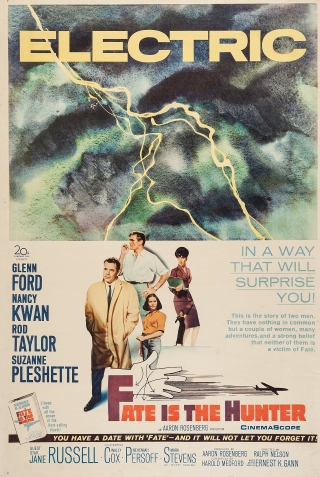
Fate Is the Hunter

“When your number’s up, why fight it, right? And if it’s not, why worry about it?”

Fate and faith. That line quoted above is delivered with a kind of petrifying calm by Rod Taylor’s flyer during one of the many times he and his maker passed within a hair’s breadth of one another in Fate Is the Hunter (1964). He is by his words and by his actions a fatalist, believing that most of what happens in life, the larger scale concepts at any rate, are beyond one’s control. It’s part of his attraction, lending a devil may care aspect to him that draws people when it’s carried off with aplomb. And then there is faith, such an important and defining principle in the human condition. One may or may not subscribe to the former, but the latter (and not necessarily in a religious sense) surely touches all of us and influences our approach to life. Both of these ideas are explored in Ralph Nelson’s movie, where the trappings of the genre picture – in this case the aviation thriller/disaster movie – are used to frame a fairly simple tale of one man’s belief in the character of his friend and, consequently, in his own judgement.

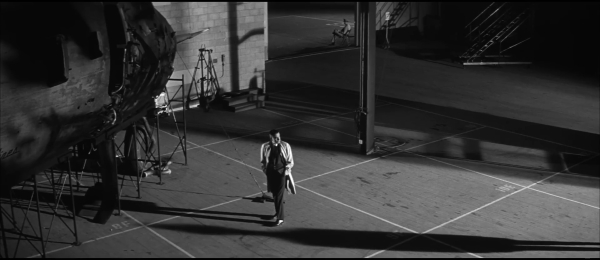
There is a lengthy prologue, the routine preparations for a transnational flight filling up most of the time and introducing three main characters – pilot Jack Savage (Rod Taylor), his friend airline executive Sam McBane (Glenn Ford), and stewardess Martha Webster (Susanne Pleshette). So yes, all fairly routine, until it’s not. A fault in an engine, then a communications glitch, and then the other engine fails. And then the crash. Of those on board only the stewardess survives and it falls to McBane to sift through the little evidence available in order to fix the cause of the disaster. The airline seems keen to put pilot error on the part of Savage forward as the reason, and the air of raffish irresponsibility he spent his life cultivating backs up this approach. However, McBane is unconvinced, partly due to a sense of self preservation as his championing of Savage over the years has left his own acuity at least on the periphery of suspicion, but perhaps more importantly he balks at the notion his friend was so careless as to be the one solely responsible. In his efforts to see beyond the easy way out, he finds himself delving into the past, the past of Savage to be exact, trying to clear the man and in a way trying to clear his own conscience, to validate his faith in a friend and in himself.

Anyone going into this movie with the expectation of seeing a thriller of some kind is likely to be disappointed. There is the tense build up to the crash in the prologue, and a pretty suspenseful reconstruction undertaken right at the end, but that’s about it in terms of standard thrills. The rest of the movie, the bulk of the narrative, is a character study, an examination of who Savage was and why he acted as he did, largely told by means of multiple flashbacks, each one colored somewhat by the sensibilities of the person doing the telling but also by the spirit of the man himself. By the end, we have gained a broader perspective on this ebullient fatalist, the views of those touched most deeply by their contact with him having reshaped this both subtly and decidedly. The net result is that the truth is arrived at by a combination of chance and logic that is apt under the circumstances, and on a deeper level McBane feels vindicated not only since he has salvaged the reputation of his friend but because in so doing he has reaffirmed the primacy of faith.

Ralph Nelson had a spotty, patchy kind of career, veering wildly from genre to genre and hard to pin down stylistically. Fate Is the Hunter was a memoir penned by aviator Ernest K Gann, the stories contained in that book have given rise to a number of movies but this particular film just borrows the title. Maybe Gann himself was unhappy about the result but the movie is attractively shot by Milton Krasner, has a score by Jerry Goldsmith which manages to be both haunting and lush, and is thematically consistent in a way that is satisfying.

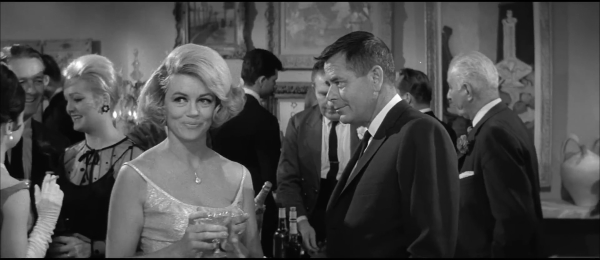
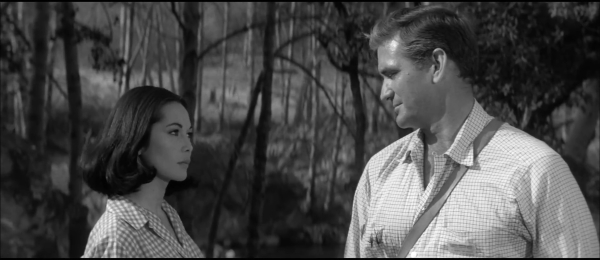
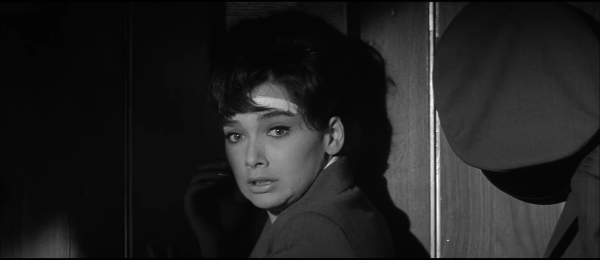
Ford plays it low-key for the most part, a quiet performance that suggests maturity and fits his character. Taylor could be big and showy on occasion all through his career, but he too had a quietness, an introspective side that he was able to tap into and it serves him well at a few key moments. The piecing together of the various facets of a man’s life and character through the vignettes presented in the flashbacks allows a succession of performers to drop in and sketch a few more lines in the emerging portrait of Savage. Mark Stevens’ noir heyday had passed yet he brings a fine sense of weary dissipation to the role of an alcoholic former buddy who owes much to Savage. Dorothy Malone ( The Tarnished Angels)gushes glamorously as a socialite ex-fiancée in a brief interlude, while Nancy Kwan (The World of Suzie Wong) has a slightly more substantial part and consequently adds a good deal more to our understanding of the pilot. Susanne Pleshette, on a good run around this time and only a year after co-starring with Taylor in Hitchcock’s The Birds, brings a touching bewilderment to it all, wondering why she should have been singled out to live when everyone else perished. She was an actress who always had a gutsiness about her and that aspect is on show when she has to confront her fears and thus make perhaps the vital contribution to the final resolution.

Fate Is the Hunter is the kind of film that isn’t quite what it seems to be on the surface. There is aviation drama to satisfy those drawn to the title by that aspect but that’s only incidental I’d say. At heart, the movie is about perceptions and assumptions, how chance and belief can combine to shape a life, how one’s impressions and suppositions may not be as dependable as we hope, and how reason can transcend the random while also bolstering faith and friendship.

Seven Ways from Sundown

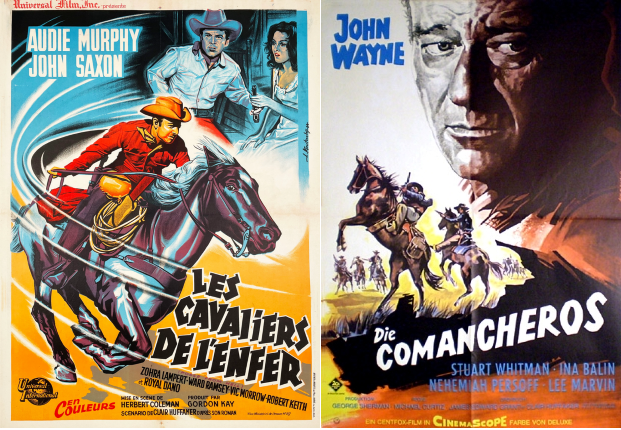
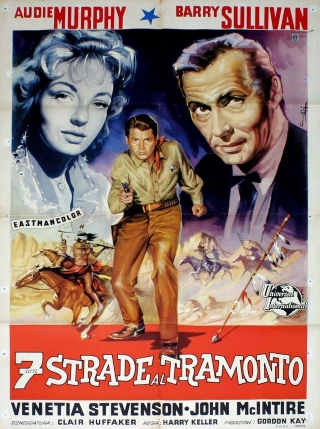
It’s strange the way a modest Universal-International western can somehow encapsulate just about all the most important themes that propelled the genre to greatness in its heyday. Yet, in another way, it’s perhaps also appropriate this should be true of a movie starring Audie Murphy and coming at a point in time close to the end of what can now be regarded as the golden age of the western. Seven Ways from Sundown (1960) weaves threads incorporating such ideas as the gradual taming of the West, Fordian notions of printing the legend, sacrifice, and of course redemption into the fabric of its consistently entertaining sub-90 minute running time.

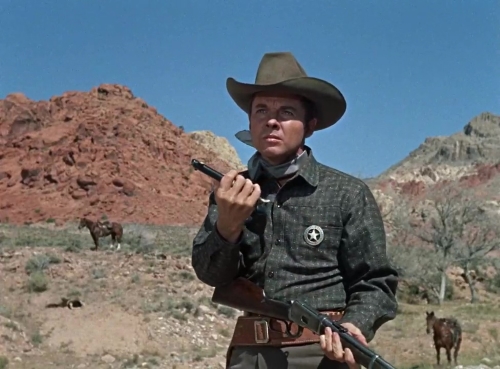
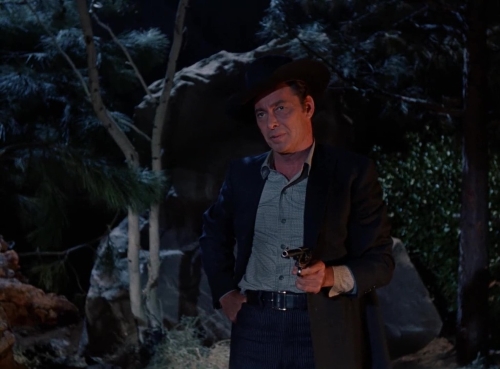
I like it when a movie pitches us right into the action. Seven Ways from Sundown opens with a shootout and the fire that ensues. The man responsible for this mayhem is Jim Flood (Barry Sullivan) and it’s soon established that he’s a man with an impressively fearsome reputation. Riding into the aftermath of Flood’s handiwork and drawing the ire of the exasperated townsfolk is an unsuspecting Texas Ranger rookie with the unique and memorable name of Seven Jones (Audie Murphy) – all the members of his family were unimaginatively named numerically, although his mother apparently tried to add some individual character and color by extending it to Seven Ways from Sundown Jones. His first assignment as a Ranger is to accompany a veteran sergeant, Hennessy (John McIntire), and effect the arrest of Flood. At this point the viewers are let in on a piece of information that Jones is not privy to, namely that Flood killed his elder brother. When Jones later catches up with Flood and sets about the laborious and perilous task of seeing him returned to face justice this hidden fact adds an anticipatory edge to the drama and alters the dynamic of the narrative to an extent. Suspense, guilt and the hint of another mystery are drawn into the story, further enriching it. This fluid, shifting quality is heightened and gains greater significance as we witness Flood’s roguish self-awareness slowly charm the simple and straightforward Jones. All told, it sets up a climax that manages to be at once fitting, affecting and satisfying.

Seven Ways from Sundown has what might be termed an interesting background. It was written by Clair Huffaker (Posse from Hell, Rio Conchos), adapted from his own novel and so has a solid pedigree to start off. A bit of browsing around the internet reveals that the movie was initially directed by George Sherman till an apparently serious row with Audie Murphy lead to Sherman’s departure and his replacement by Harry Keller (Quantez, Six Black Horses, Man Afraid). I’ve not been able to find a source for this though, nor have I managed to ascertain exactly how much of Sherman’s footage (if any) remains in the picture. The arc traced by the story and indeed the ethical journey undertaken by the main characters certainly seem like the kind of material that would have appealed to Sherman and which he would have handled with his customary sensitivity; the short interlude with the hero worshiping youngster, the brief yet still poignant moments spent over the old Ranger’s grave, as well as the low key romance with Venetia Stevenson all feel like the kind of thing Sherman would have relished.

Audie Murphy was doing some terrific work around this time – Posse from Hell, Hell Bent for Leather, The Unforgiven, No Name on the Bullet to name just a few westerns, as well as The Quiet American, every one of which are high quality movies. I would rate Seven Ways from Sundown as belonging up among his best movies, not necessarily due to Murphy’s own performance, which is perfectly fine, but more for the film that is built around it. Murphy plays it fresh and innocent even though he had over a decade’s worth of movies behind him at that point, and the contrast between the mentality and viewpoints of Jones and Flood is indicative of a West that was nearing a turning point. Murphy’s Ranger is open-hearted and honest, brimming with optimism and faith in man’s better nature, whereas Flood’s knowing charm masks if not cynicism then a touch of regret and an awareness that drifts near and flirts with an acknowledgement of the fact that his time is short. By the time this film was made change was in the air, the following decade would see the number of westerns produced drop off and a discernible shift in tone within a few years. Maybe this is not overtly expressed, but hints of it are there should you care to look for them.

Seven Ways from Sundown came out only a few years after Barry Sullivan had taken leading roles in westerns such as Dragoon Wells Massacre and Forty Guns, but it more or less marked the end of his time in such headline parts and he would shortly embark upon a two season run on television playing Pat Garrett in The Tall Man and then drift into supporting/character roles. Perhaps I’m reading too much into it, but I like to think his actions in the last reel represent something of a redemptive sacrifice when he’s confronted with both the impact of his actions and the realization that he’s finally running out of road – this complements and builds naturally on the moment of dreadful guilt that washed over him earlier when he understood that he had taken the life of an old friend. Venetia Stevenson, daughter of John Ford favorite Anna Lee and director Robert Stevenson, is someone I remember most for Day of the Outlaw and the effective low budget horror movie The City of the Dead. She shares a few good moments with Murphy, particularly towards the end when she puts him straight on the danger posed by Flood’s recklessness and then becomes an unwitting catalyst for the tragic yet apt climax. John McIntire could generally be relied upon to provide a touch of class to any movie and he does so here as Flood’s former associate. It’s a quiet performance and quite a touching one.

Seven Ways from Sundown has had a few releases on DVD in various European countries although I don’t think any of them present the movie in its correct widescreen ratio – it ought to be 1.85:1. I’ve certainly never seen it in anything other than open-matte, which while not ideal is at least better than a cropped version. All told, I consider it to be a superior Audie Murphy vehicle buoyed up by an eye-catching turn from Barry Sullivan that contains a generous measure of depth and subtlety.

Man-Trap

By the 1960s film noir had had its day, at least that’s what the critical consensus tells us. Anything after that gets variously referred to as post-noir, neo-noir etc. I don’t know, age has made me less interested in labels and I find myself paying only scant attention to them these days; they are useful for marketing purposes and the like, but I’m not selling anything. So, all of that is just in the nature of a disclaimer lest anyone should object to my hanging the tag film noir on Man-Trap (1961) – I did so because the subject matter, resolution, personnel and general feel pointed in that direction for me.

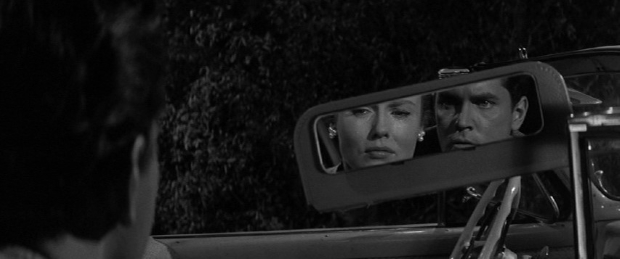
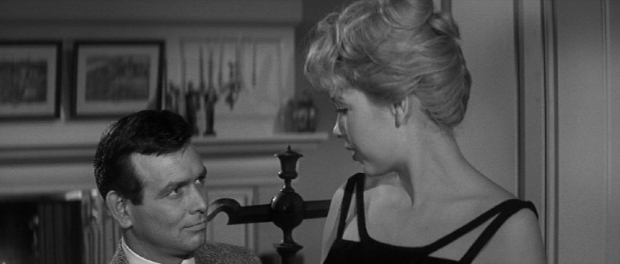
There’s a brief opening section, a prologue of sorts, which takes us back to 1952 and Korea. The purpose is to establish some facts that will influence the story to be told. We learn that Matt Jameson (Jeffrey Hunter) is a decorated war hero who got a medal pinned to his tunic and another piece of metal inserted in his skull while saving the life of his comrade in arms Vince Biskay (David Janssen). Years pass and Matt is trapped in an unsatisfying job and a marriage to the boss’ daughter Nina (Stella Stevens) that is even more toxic. He’s essentially been consigned to a suburban hell, an American nightmare of disillusionment and disenchantment. So, when Vince turns up, apparently out of the blue, brimming with roguish charm and a business proposition, Matt is moderately receptive to say the least. Vince has been hiring his services out to the highest bidder in Central America and in so doing has hit on a scheme to profit from political unrest and bag a cool $3 million dollars. As Matt’s relationship with the alcoholic and promiscuous Nina deteriorates, his desire for his secretary as well as the promise of full financial independence drives him to fall in with Vince’s scheme. All of this leads to a botched heist and a radical change of plan as the law, hitmen and domestic discord all begin to apply pressure.

Man-Trap is full up of the kind of bad choices, ill fortune and empty opportunities that characterize film noir. Perhaps it doesn’t have the classic look, but that arguably evolved over time anyway and the slightly flat, TV movie appearance of the visuals is not entirely out of keeping with other late era offerings. Aside from a couple of television shows, this was only Edmond O’Brien’s second feature as director after his collaboration with Howard W Koch on Shield for Murder. It’s only a partially successful effort though, the low budget is always noticeable and the script isn’t all it could be. On the plus side, the heist sequence and its aftermath through the streets of San Francisco is well filmed and quite exciting. O’Brien manages to fit in some imaginatively framed shots here and there, but the writing remains problematic – the screenplay is an adaptation of a John D MacDonald (Cape Fear) story, which maybe creates unrealistically high expectations. The high point is the heist and the momentum is never regained after it takes place. That wouldn’t have to be a problem if the film wound up faster, but there’s still a whole lot of storytelling to get through before the credits roll.

I also get the impression that either O’Brien or the screenwriter Ed Waters wanted to make the movie a critique of the state of middle class America as much as a thriller, but ended up with those elements orphaned and only partially addressed. Matt and Nina’s rotten marriage feeds into this but it’s the portrayal of the appalling neighbors which hammers it home. This suburban degeneracy is peopled by a gallery of grotesques, sad swingers who spend their time boozing, leering and gossiping. It’s a snapshot of the moral decay simmering below the surface of the backyard barbecues. Maybe  it’s the presence of Jeffrey Hunter that had me thinking how it was vaguely reminiscent of aspects of Martin Ritt’s No Down Payment, though that is a far superior movie on every level and indeed almost like a Douglas Sirk film with the varnish scraped off. Man-Trap can’t aspire to that and although these aspects are diverting enough, I feel it might have worked better all round had it avoided them and kept its focus tighter.

As for the acting, Jeffrey Hunter does reasonably well as the dissatisfied Matt, uncomfortable and unsettled for much of the running time, but the developments in the latter stages of the movie don’t succeed. Everything takes a detour into the type of ill-starred territory one would associate with a Cornell Woolrich tale yet it lacks the suspense that give such fatalistic fables their teeth. David Janssen, however, is excellent throughout. He nails the charm and duplicity that define the character of Vince, beguiling and bedeviling just about everyone he comes into contact with. On the other hand, the real weak link for me was Stella Stevens. She does well in the early scenes where her coquetry is to the fore, but the more her angst and desperation grow, the less convincing she becomes. In the end, it feels like a very transparent performance and it hurts the film as a result.

Man-Trap was a Paramount production and got a release in the US via Olive Films some years ago. That was a solid transfer, crisp and attractive in the way black and white ‘Scope movies tend to be. Olive are now defunct of course so I’m not sure how readily available the film is these days. All told, it’s a picture that works in places – Janssen’s characterization, the heist – but falls down due to scripting issues and some unsatisfactory work from the leading lady.

The Professionals

La Revolución is like a great love affair. In the beginning, she is a goddess. A holy cause. But, every love affair has a terrible enemy: time. We see her as she is. La Revolución is not a goddess but a whore. She was never pure, never saintly, never perfect. And we run away, find another lover, another cause. Quick, sordid affairs. Lust, but no love. Passion, but no compassion. Without love, without a cause, we are nothing! We stay because we believe. We leave because we are disillusioned. We come back because we are lost. We die because we are committed.

Random musings on the nature of revolution, words which have an attractive feel, a weary patina lying somewhere just the right side of cynicism. That, I think, is the effect they are meant to convey, but therein is their problem, and by extension part of the problem of the movie they appear in. Hearing them spoken by Jack Palance’s wounded rebel and reading them back here leaves me with the impression that they have been crafted for just that, for effect rather than for truth or out of any real conviction. I watched The Professionals (1966) again the other day, a movie I’ve seen  fair few times now, and came away from it thinking it entertaining enough although somewhat lacking in substance. Like so many films by Richard Brooks, it doesn’t do much wrong, doing a lot right in fact, yet never actually amounts to as much as the filmmaker would have us believe.

During the latter half of the Mexican Revolution a group of four men, introduced via brief sketches during the opening credits, are hired by a wealthy businessman to get his kidnapped wife back. That’s the plot of the movie in a nutshell. It’s a simple enough setup, fleshed out by the colorful nature of a some of the leads as well as the dynamic created by their intertwined pasts, and of course the turbulent background of a country riven by internal conflict. The hired hands are led by Rico Fardan (Lee Marvin) a former associate of Pancho Villa, Bill Dolworth (Burt Lancaster) a womanizing rogue with a talent for blowing things up, Ehrengard (Robert Ryan) a diffident wrangler, and Jake (Woody Strode) a tracker and expert with a longbow. Their employer is one J W Grant (Ralph Bellamy), an ageing tycoon married to the much younger Maria (Claudia Cardinale). On the other side is Raza (Jack Palance), one of those bandits with a reputation approaching legendary status. The story is broken into a classic three act structure – the preparation and the journey out, the rescue, and the ride back leading to the denouement. If it sounds a bit formulaic, that’s because it is. There aren’t really too many surprises and the twist that is supposed to grab the viewer comes as more of a shock to the characters on screen.

This probably sounds more negative than I mean it to – the film is (as one would hope from the title) all very professionally shot and put together. It’s amiable and exciting in all the right places, the big set piece assault on Raza’s hacienda is filmed with style, the dialogue is peppered with memorable one-liners, and Conrad Hall photographs the desert locations beautifully. Yet when it all wraps up and the final credits roll, I can’t help feeling I’ve just had the cinematic equivalent of an attractively packaged fast food meal – pleasing and enjoyable while it’s there in front of you, but not something that is going to linger long in the memory when it’s finished.

A film scripted and directed by Richard Brooks (The Last Hunt) from a novel by Frank O’Rourke (The Bravados) inevitably raises expectations given the examples of the author’s and the director’s work cited. I guess that’s why it belongs in my own personal category of movies I like and enjoy even though I don’t believe they warrant an especially high rating. Films such as The Last Hunt and The Bravados stay with you long after they have been viewed, the performances and themes, the images and the very philosophy underpinning them have a way of boring into one’s consciousness and commanding attention. I guess what it comes down to is this – those are movies which touch on greatness, The Professionals is fun.

Lee Marvin and Jack Palance appeared in, by my count, four movies together – in additions to this, there’s Attack, I Died a Thousand Times and Monte Walsh. I feel confident that the latter is by far the best of them, closely followed by Aldrich’s intense study of men in war. The fact is all of the star players, and I’m counting Lancaster, Ryan, Cardinale, Strode and Bellamy here, all made much stronger films, all had roles that stretched them and highlighted their strengths to a greater degree than this. On the other hand, every one of these people are in essence playing types in The Professionals. This is not to say their performances are poor or weak, merely that the way the roles are written allow for next to no development – there are hints of back stories, mentions of experiences that would shape characters, but none of those characters grow over the course of the story. What we see at the start is pretty much the same as what we see at the end.

So, is The Professionals a good movie? The critics seem to have been kind over the years and its reputation remains strong. I like it well enough myself; I’ve watched it a number of times and I’m not in the habit of doing so with films which hold no appeal. Even so, I retain reservations about it, which I think is representative of my attitude to or how I respond to much of Richard Brooks’ work. Parts of his oeuvre hit the mark, have an impact beyond the immediate and provoke me in some way. On the other hand, all too often I find I’m left only half satisfied.

A Trio of TV Episodes

It’s been a while since there have been any guest posts on this site, so here’s a television themed one from Gordon Gates highlighting a few episodes from three different shows, all from directors better known for their movie work.

A trio of early television episodes from directors we all know. I picked one each from Sam Peckinpah, Robert Altman and Phil Karlson.
The RiflemanThe Marshal (1958)Chuck Connors headlines this 1958 to 1963 western series that ran for 168 episodes. Connors is a world class hand with a Winchester rifle. This of course ends up getting him in no end of trouble. This is episode 4 from the first season. It is the first episode that future North Fork, Sheriff, Paul Fix is in.
Chuck Connors, a new resident to the North Fork area rides into town to grab a few supplies. While having a talk with the North Fork, Sheriff, R.G. Armstrong, a drunk is tossed out of the local beer hall. Armstrong and Connors pick the man out of the dirt and offer him a coffee. Armstrong recognizes the drunk as a former top lawman.
The drunk, Paul Fix, had lost his nerve and taken to the bottle. Connors offers the man a job building fence. Three squares and a chance to get sober is all that Connors offers him. Fix agrees and is soon at work on Connor’s ranch. The heebie jeebies are soon at work on Fix as he struggles to detox.
While this is going on, three gunmen, James Drury, Robert Wilke and Warren Oates ride into North Fork. Wilke and Oates are brothers looking to settle a several year old score with former lawman, Fix. They have tracked Fix to North Fork and do not plan on leaving till they kill him. The word soon gets around that the brothers are in town to do a killing, so Sheriff Armstrong pays the pair a visit. He however fails to realize that Drury is also part of the group. This costs him his life as Drury shoots the Sheriff in the back.
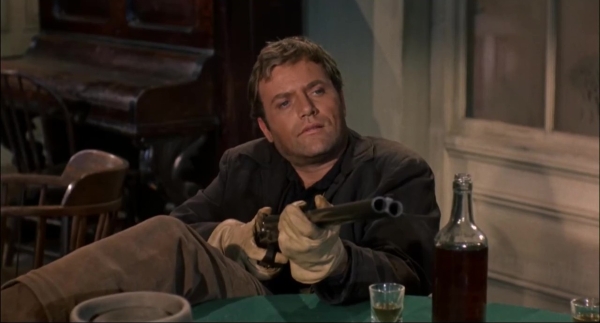
When Connors hears about the murder, he grabs his rifle and heads to North Fork. The just barely sober Fix likewise heads to town after arming himself with Connors’ big twin barrel.
Connors runs into the brothers right off and lead flies with Wilke being knocked flat for the count. Connors collects a round in his side and goes down wounded. When Oates steps up to finish Connors, Fix walks up and blows Oates damn near in half with both barrels of the shotgun. He reloads and then steps out to meet the survivor, Drury. Drury is likewise soon making an express trip to boot hill.
Connors is patched up by the local doc. Fix has regained his self-esteem and takes over as the new town Sheriff.
A neatly done episode with plenty of gun-play involved. Handling the reins on only his second directing assignment is future big time director, Sam Peckinpah. Peckinpah is of course known to all western fans as the man behind, The Wild Bunch. Peckinpah received a best Oscar nomination for his screenplay on that film. Peckinpah also wrote the story for this particular television episode.
The look of the episode is quite sharp with two-time Oscar nominated, Pev Marley doing the cinematography.
This episode also was the beginning of the long time collaboration between actor Warren Oates, and director Peckinpah.
Next up on the playbill is…The Gallant MenPilot (1962)
The Gallant Men was an American television series that debuted on ABC in the fall of 1962. It followed a company of US soldiers from the Sept 1943 invasion at Salerno, and their battles up the toe of Italy. The series ran for a total of 26 episodes during 1962-63.
 Leading the cast is Robert McQueeney, who also narrates the story. McQueeney is a newspaper reporter who follows the company on their exploits. (Sort of an Ernie Pyle clone) The rest of the regulars are played by William Reynolds, Francis X Slattery, Eddie Fontaine, Roland La Starza, Roger Davis and Robert Gothie. There are the standard types sprinkled throughout, the joker, the card sharp, the loner etc.
This one starts with the company storming ashore at Salerno. They then end up in the mountains fighting for the village of San Pietro. Attack after attack is launched against the well-entrenched German defenders. These make ground, but only slowly and with many casualties. Newsman McQueeney notices that one man in the squad, William Windom, always seems to be first in the attacks. Almost as if he has a death wish.
McQueeney is sure he knows Windom from somewhere. Then he recalls, Windom had been a Major in North Africa. He had been relieved of duty after getting most of his command killed in a botched attack. What is he doing here as an infantryman?
McQueeney grills Windom and discovers that Windom had taken the identity of a dead man, and reported to this unit as a replacement. He begs McQueeney not to turn him in. He has to prove that he is not a coward or a foul up. McQueeney agrees to remain silent.
During the next attack, the officer in charge, William Reynolds, is wounded and carried to safety by Windom. Reynolds wants to put the man up for a medal but Windom says no thanks. Windom does however offer some advice on how to take the hill they are assigned to occupy.Reynold and his officers listen and like what they hear.
 That night, they infiltrate up the hill and launch an assault at first light. It is a hard fought go, but they manage to chase the Germans off the heights. Needless to say Windom is badly wounded taking out a machine gun nest single-handedly. He asks McQueeney to continue to keep his secret and dies.
A pretty good first episode which blends in plenty of live combat footage and film clips from other war films. Being in black and white of course helps this work. The series only lasted one year and lost out in the ratings to the same network’s other war series, Combat.The look of the episode is quite good with Robert Altman in the director’s chair. The cinematographer duties were handled by veteran Harold Stine. Stine would later work again with Altman as the d of p on the film, M*A*S*H.
The screenplay was by Halsted Welles. Welles was known for his work on numerous television series and the feature film, 3:10 to Yuma. William Reynolds would hit it big with 160 plus episodes of the series The F.B.I.
  Last, but by no means least, is one by RTHC fave, Phil Karlson
Ford TheatreThe Fugitives (1954)
This is an episode from the long running anthology series, Ford Theatre. The series ran for 195 episodes between 1952 and 57.
Raymond Burr plays a cop-killer who is on the lam after breaking out of death row. He has only one thing on his mind. And that is to get even with his ex, Mary Beth Hughes. Hughes had ratted him out to the police, which of course had not amused Burr.
Barry Sullivan is a newspaper reporter who gets the assignment to do a story on Burr. Sullivan has a wife, two young boys and is flat broke. For a $100 bonus, he tells his editor, Douglas Dumbrille, he will find Burr and get an exclusive story. The boss agrees.
Sullivan uses all his Police and underworld contacts to narrow down Burr’s possible hideouts. The Police however find Burr first. They have him cornered in a rundown rooming house. Sullivan rushes to the scene hoping to salvage enough for at least an article. The police are reluctant to close in as Burr has taken Mary Beth and a young neighborhood girl, Patsy Weil, hostage.
Sullivan needs that bonus so he offers to take a message from the Police into Burr. He figures he can help the Police and get his story at the same time.
Sullivan enters and finds Burr armed with a rifle. Burr is quite prepared to go out in a blaze of gunfire. Sullivan soon realizes that Burr is off his rocker and a story is the least of his worries. Sullivan unsuccessfully tries to persuade Burr to release the hostages. Burr then begins to beat Mary Beth. Sullivan decides to take a more physical approach and jumps Burr. A well-staged dust-up ensues with Sullivan getting wounded and Burr his well-deserved comeuppance.
This episode has noir fingerprints all over it with cast and crew all being noir vets. We have a story by Robert Hardy Andrews who worked on I Married a Communist.
Then there is the director of photography, Burnett Guffey, who worked on many noirs, including Nightfall, The Harder They Fall, Human Desire and In a Lonely Place.
Next up is the director, Phil Karlson. His films include, 99 River Street, Scandal Sheet, Hell’s Island, Behind the Mask, Tight Spot, 5 Against the House, The Brothers Rico, The Phenix City Story and Kansas City Confidential.
A well done bit of noir television.
Gordon Gates

The World of Suzie Wong

To whom it may concern…

Integrating into an essentially alien society or culture is a process which demands that one should not only become familiar and comfortable with the prevailing mores and customs but, and this is arguably an even greater challenge, also reassess oneself. This complete awakening, a combination of introspection and extrospection acts as a powerful dramatic hook. It lies at the heart of The World of Suzie Wong (1960) and applies particularly to William Holden’s stranger in a strange land. However, the setting in colonial era Hong Kong and that curious Eurasian atmosphere it generates, coupled with its examination of the demimonde that flourished in the bars and dance clubs of the city by night, means that it has an application for Nancy Kwan’s title character too. All of this ties in with the quest for fulfillment, a theme that figures prominently in Strangers When We Meet,  the other Richard Quine directed movie released that year.

It all starts in a lighthearted, playful way, with Robert Lomax (William Holden) sparring and flirting with the Chinese girl he encounters on the boat ride into Hong Kong. The mood alternates between coy and farcical and is buoyed along by the irrepressible optimism and positivity that films of the era seemed able to tap into without ever needing to break sweat. She is Suzie Wong (Nancy Kwan), a veteran of the waterfront bars despite her youth, although Lomax is not initially aware of this, having seen no reason to doubt her claims of coming from a wealthy and decorous background. Both of these characters are at heart dreamers, one spinning a yarn for the sheer fun of it, just to indulge her fantasy harmlessly in the company of a stranger she is unlikely ever to meet again, while the other harbors hopes of transforming his desire into something real – I guess this contrasting perspective might, in a nutshell, be seen as defining the nature of dreams in youth and maturity.  Lomax has come east to make a fresh start, and a radical one at that. He has grown weary of life as an architect and has decided to have one last shot at making it as an artist, giving himself in the region of a year, or until his money runs out,  to either realize this ambition or face up to the fact it is not to be.

Suzie (Nancy Kwan), on the other hand, is motivated, superficially anyway, by the kind of ephemeral thrill-seeking, bordering on hedonism, that is the preserve of the young. Yet these flights of fancy really only exist on the surface, and as the movie progresses it becomes apparent that there is a depth of longing within her too, that need for emotional stability and security which is innate to every person. In her case it is perhaps even stronger due to her own particular personal circumstances. So, there are quite profound themes and issues being explored and, despite the occasional but well integrated foray into lighter areas, they gradually build and grow in intensity, revealing themselves in an almost kaleidoscopic manner with tones and shades of meaning and motivation forever shifting or altering the perspective of both the characters on the screen and that of the viewers of the drama.

If fulfillment is the bedrock of the story then rediscovery represents the path which should be taken. Suzie is Robert’s inspiration in every sense, the muse who forms the basis of his art and also the person who opens up that route back to a fulfilled life. While it’s not explicitly stated in the script, although I feel there are oblique hints, the journey undertaken by Robert Lomax to such an alien environment, tossing aside what one might assume would have been a successful career to try to make a fresh start as a painter, is suggestive of some trauma in his life. His initial rejection of any kind of commitment – his claim that it is basically the result of his straitened finances is only half-credible, I think – indicates a man who is in retreat from personal relationships.

If his art is inspired by Suzie, then I reckon it is fair to say his reconnecting with life through that art is similarly achieved. At one point she tells him that he will die inside without his art, that it both sustains and defines him. Then later Kay (Sylvia Syms), the well-to-do banker’s daughter who finds herself by turns jealous and besotted, suggests that if he never painted Suzie again he wouldn’t die. It is at this moment that he becomes completely aware of himself and his situation. He is now conscious of the fact that his whole existence has become bound up with Suzie – his art, his love, his life itself are essentially one and the same. If one aspect or ingredient is absent or denied, then he can never attain fulfillment. So, love, art and life are inextricably linked for Robert Lomax, with no one part functioning properly without the other. And it is the unlikely figure of Suzie who acts as the gravitational hub for all of these elements.

Richard Quine may have come on board as a replacement for Jean Negulesco, but this notion of fulfillment earned through an imperfect love underpinned Strangers When We Meet and thus I can’t help wondering whether the theme didn’t have some resonance for the director. The movie does appear to have been strongly influenced by producer Ray Stark and writer John Patrick as much as anyone yet the mere fact Quine occupied the director’s chair for two films released in the same year which were both so markedly informed by this theme is certainly intriguing. I would like to mention too that I was struck by the fact that both movies present emotional crescendos played out in the midst of intense rainstorms. Quine made only a handful of dramatic movies overall, which I think is a pity as he did display an affinity for this type of material, although that should by no means be taken as a criticism or dismissal of the highly entertaining comedies and satires he is more commonly associated with. As with Strangers When We Meet, George Duning contributes another lush and evocative score and Geoffrey Unsworth’s cinematography makes the most of the Hong Kong locations as well as the beautifully lit interiors.

Watching movies featuring William Holden never disappoints, the man could be tough or sardonic, flippant or intense, but whatever the part he consistently brought a sense of a real person to his roles. The part of Robert Lomax has a number of dimensions, jauntiness, adventurousness, humility, a hint of desperation and, crucially, a solid core of compassion. Holden had become such an accomplished performer by this stage that he could convey all of this smoothly and convincingly. Nancy Kwan was making her screen debut in the title role and took the place of France Nuyen, who had been originally cast and then fired by the producer. She brings a beguiling freshness to the role, frank and energetic throughout, and coping well with the powerful and dramatic moments. Michael Wilding comes across as something of a caricature of an Englishman abroad; it’s amusing enough in its way, but I’ve always thought there was a touch of the artificial to many of his performances. Both Laurence Naismith and the recently deceased Sylvia Syms offer good support.

The World of Suzie Wong ought to be easy enough to track down on DVD and it has also been released on Blu-ray by Imprint in Australia. Personally, I feel it has a lot going for it; it looks squarely and unflinchingly at such matters as prostitution and casual racism yet never patronizes nor loses sight of that alluring and elusive central theme, and of course Nancy Kwan is enchanting throughout. I think it is a really great movie.

Youngblood Hawke

Youngblood Hawke (1964) was the penultimate film directed by Delmer Daves, one of those melodramas he turned his attention to from 1960 onward. The critical response to these films has been mixed at best, although one could say that this characterizes the response to the director’s body of work as a whole. So far, I have only seen a smattering of these late career movies myself, but I fully intend to catch up with them all sooner or later. Youngblood Hawke is a classic rise and fall drama with a pleasing thread of self-discovery and renewal forming  the backbone of the narrative.

Arthur Youngblood Hawke (James Franciscus) is an aspiring writer, driving coal trucks in Kentucky by day and spending his nights working on his novel. His break comes just before Christmas, a phone call from a New York publishing house confirming its desire to publish his book and inviting him to the city to sign contracts and so on. So it’s with a mix of awe and joy that Hawke arrives in the metropolis, dazzled by the scale of the place, the skyscrapers and monuments, and scarcely able to absorb the fact that someone is prepared to pay him good money to do what he loves, to write. Before the day is over he will have made the acquaintance of two beautiful women, both of whom will alter the course of his life. He is taken in hand by his editor Jeanne Green (Suzanne Pleshette) who finds him a small attic room to rent in the same building she occupies in Brooklyn. That same evening, Christmas Eve, at a literary party he’s been asked to attend he meets Frieda Winter (Genevieve Page), wealthy, sophisticated, provocative, and married. In these early stages, every step Hawke takes is an ascending one, his career path rises promisingly before him, the critics and socialites flatter and flirt respectively, and he, as any young man thrust suddenly into such a position would, basks and revels in the attention and allure of it all.
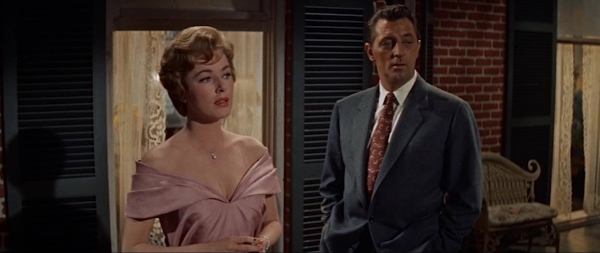
So Youngblood Hawke is a success; he’s been declared just that by the men and women who create reputations, but those same people can crush them just as easily and just as quickly. The thing is, for all his apparent charm and his ability to write award winning prose, Hawke is at heart a novice in the art of living. He craves success and thinks that the appetizer he has been served up will lead naturally to a grander and richer main course. For it’s riches in the real, monetary sense that draw Hawke, not for their own sake – he’s not so mercenary as that – but for their ability to set him free from financial worry, free to pursue his art in earnest. This leaves him walking something of an ethical tightrope, performing a precarious balancing act between artistic integrity on the one hand and the lure of the fast buck on the other. That someone so inexperienced should falter and lose his way is only to be expected, and that lack of artistic or professional surety extends to his personal affairs as well. This of course provides the real meat of the story, the tug-of-war for his heart with the excitement and illicit unpredictability of Frieda on one side and the reliability and patient devotion of Jeanne on the other.

Youngblood Hawke was Delmer Daves’ first movie shot in black and white since Kings Go Forth, and while I understand budgetary considerations played a part in that decision I also think it works well in this story, and the cinematography of Charles Lawton (a frequent collaborator with Daves) is luminous in places. In truth, I think the story lends itself to monochrome with some of the more powerful scenes, particularly those in Hawke’s apartment, benefiting from the starkness. Daves had a lot of creative control on the movie, not only directing but also producing and adapting Herman Wouk’s novel. As such, I think it’s fair to say it’s very much his film and his trademark theme of placing complex people in difficult positions where there are no easy choices is fully explored. The script ties it all up in a much more positive way than I understand to be the case with the source novel. Again, this positive thrust is characteristic of the director’s work, there’s always that path towards redemption, or renewal and rebirth as far as Youngblood Hawke is concerned, in his films. His characters are put to the test by life’s challenges, forced to confront harsh and perhaps unpleasant realities, both with regard to themselves and those most precious to them. Yet there is a reward to be attained, a victory which is frequently richer and more satisfying by virtue of being so hard won.

The movie begins and ends at Christmas and it’s surely significant that the main character experiences the dawn of new phases of his life at both points. Is the whole film to be viewed as a parable of sorts, or perhaps as an allegory? Daves’ films do have a strong sense of the spiritual to them after all, so perhaps that’s not such a stretch. Hawke sets out on his journey from humble beginnings and winds up being lauded and celebrated, drawn across the river to Manhattan to be tempted by its glitter and glamor. Yet it proves to be something of a creative desert for him, sapping his creativity and his spirit, and so he retreats back to Brooklyn, back from the brink and back to life itself, to be reborn as another Christmas comes around.

I’ve heard it said that the casting of James Franciscus is one of the weaknesses of the film, but I’m not sure about that. For the most part he acquits himself well, catching that wide-eyed wonder of Hawke in the early stages and that ever present ambition that blinds him to the pitfalls ahead of him. If there is a touch of awkwardness in some aspects of his performance, it feels appropriate for a character who at times shows an astonishing lack of perception. Genevieve Page’s worldly Frieda points out the paradoxical contrast between his artistic voice with all its depth of appreciation of the human soul and the tone deaf naivety of his interactions in his private life.

It is the women in Hawke’s life who understand him better than he does himself, laying the foundation for two very strong roles for the characters of Frieda and Jeanne and the two actresses playing those parts produce correspondingly fine performances – of course Daves typically presents women in a highly positive light. Both women are drawn to the writer right from their first meetings but then find themselves repelled by the selfishness, pettiness, and latent prudery he fails to control on various occasions, although never quite enough to make a clean break with him. Daves had already worked with Suzanne Pleshette on Rome Adventure a few years earlier and her role as Jeanne allowed her to explore a down to earth sexiness that feels very authentic. As the more passionate and the more conflicted Frieda, French actress Genevieve Page has the showier part and has more to work with. She gets to play two fine scenes with Franciscus, one in her own home and one in his studio apartment, both of which run the gamut from passionate desire to a cauterizing self-disgust. There is some real rawness on display, in a very human performance, and it is to Daves’s great credit that he never invites the viewer to make cheap or facile judgements about this character and affords her a marvelously classy exit. She is written as a person with flaws and failings as well as strengths and virtues, Page plays her in that way, Daves directs her so, and the movie as a whole benefits from that frankness.

Aside from the leads, the supporting cast is deep and constitutes a major draw in itself. Among the highlights are the seemingly ubiquitous John Dehner as Hawke’s chiseling uncle offering a masterclass in misplaced overconfidence, Mildred Dunnock as his prim mother, juggling defiance and reproval, Edward Andrews as the critic who mixes smarm with acid, and Kent Smith’s cool, calculating cuckold. All those alongside Mary Astor and John Emery, Lee Bowman and Eva Gabor, Berry Kroeger, Werner Klemperer, Don Porter, and so on.

Youngblood Hawke is available on DVD via the Warner Archive and it offers a fine, crisp and clean widescreen transfer of the movie. There are no supplements whatsoever, which I feel is a pity as the film does merit some attention. Frankly, I found much to enjoy and appreciate in this film – the appealing cast, Charles Lawton’s cinematography, Max Steiner’s buoyantly memorable score, and of course Delmer Daves’ hearteningly positive view of people.