The Midnight Story

“Nothing is more wretched than the mind of a man conscious of guilt.”

 Titus Maccius Plautus

Guilt, doubt and suspicion are some of the key ingredients of dramatic tragedy. One of Aristotle’s four pillars of tragedy is suffering and the aforementioned features can certainly be said to form the basis of that. The concept of guilt runs all the way through The Midnight Story (1957), every major character is assailed by this feeling as it hounds, worries and tears at them insistently. Of course all tragedy really only has a point if it follows its natural path towards a sense of catharsis, a relief or clearing up granted to the characters, not to mention the audience, a lightening of the dramatic load. If guilt and all its gnawing associates can be viewed in a classical context, it can also be seen in religious terms too, especially from a Catholic perspective. In such cases the catharsis we move towards is frequently expressed as a form of redemption. The Midnight Story manages to fuse all of these ideas into a beautifully constructed film noir that draws the viewer deep into dark and despairing places before finally emerging in a brighter, more hopeful landscape.
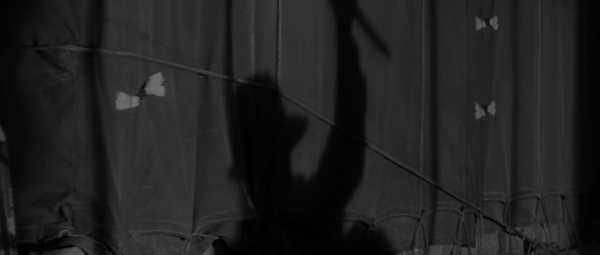
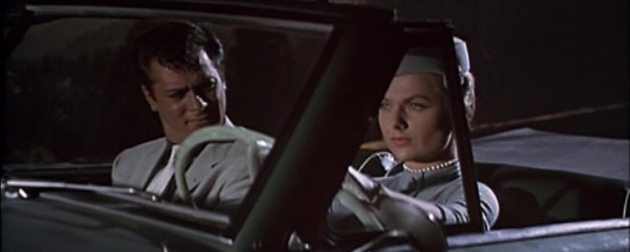
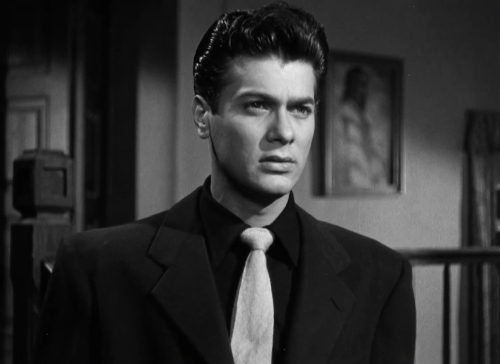
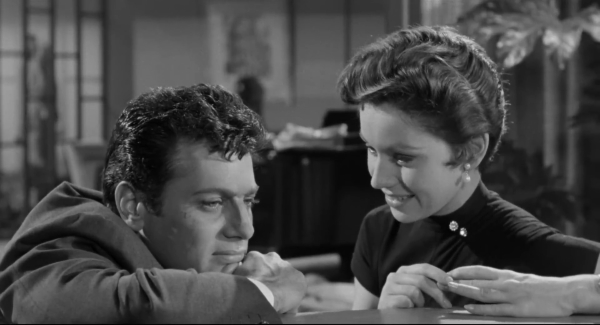
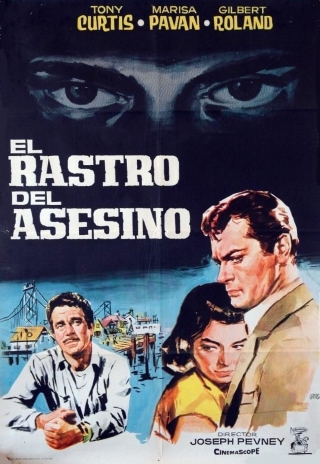
The opening is stark and shockingly abrupt, the caption informing us that the studio set represents an approximation of a side street on the San Francisco waterfront. A priest strolls out of the shadows towards the camera, his attention suddenly caught by a voice softly calling his name. We zoom in on his eyes as they register curiosity, maybe recognition and a touch of fear. This is  Father Tomasino and we’re witnessing his final moments as a knife-wielding assailant, seen only as a shadow cast against the tarpaulin of a truck, strikes him down. It’s one of those crimes that outrages people, particularly those who knew and respected the victim. One such person is Joe Martini (Tony Curtis), a young traffic cop who grew up in an orphanage and owes his job and much besides to the murdered priest. Martini wants the killer and he vainly presses his superiors to let him in on the investigation. At the funeral he notices a man who seems to be more deeply affected, tormented even, than the other mourners. There is something about the intensity of this man’s grief that gives Martini pause and indeed leads to him temporarily turning in his badge in order to pursue his own inquiries. The person who has attracted his attention is Sylvio Malatesta (Gilbert Roland), the owner of a seafood eatery and a familiar figure on the waterfront. Deftly and swiftly, Martini inveigles his way into Sylvio’s life, becoming a friend, employee and even a guest in his home.
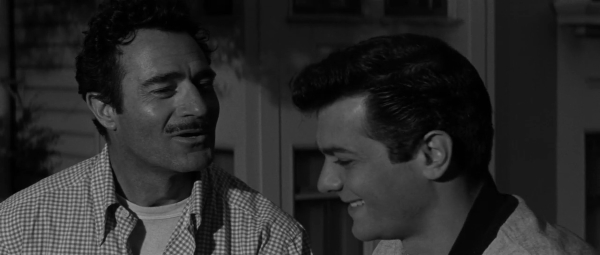
Guilt haunts the characters from start to finish. There is obviously the overarching guilt that stalks whoever the killer may be, but Martini carries it with him too all the way. As has been stated, he owes almost everything to Father Tomasino and there is surely a sense of guilt that, despite his job as a protector of society, he was unable to be there to ensure the safety of this man. One of the orphanage nuns he speaks to advises against going around with hate in his heart, but I’d argue that his guilt and shame, a feeling of inadequacy (albeit misplaced) due to his not being there at the crucial time, is his true motivation. Then that same feeling steals over him as he works his way into the affections of not only Sylvio but his family too. This is exacerbated by his falling for Anna (Marisa Pavan), the niece from Italy, and her clear devotion to him. All of this is further heightened by the accompanying doubts and suspicions: suspicions about Sylvio that ebb and flow with the depressing regularity of the ocean tides, and those corrosive doubts about the propriety of his own actions, the dubious morality of exploiting the love and trust of innocents regardless of the cause which is supposedly served. Soon every look and gesture is brought under the microscope, no word or comment is so trivial as to be discarded, no alibi can be relied upon or taken at face value. Everything has to be questioned, everyone suspected in some way. And still the guilt persists.
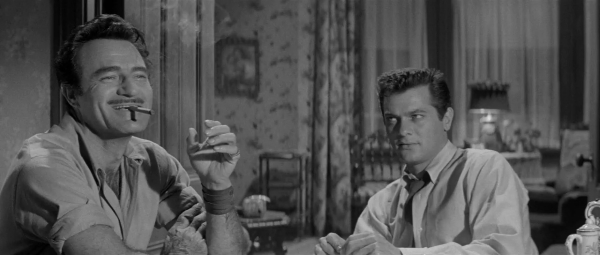
Besides probing its central theme, The Midnight Story functions both as an engrossing whodunit and as a snapshot of working class family life. There is irony in the fact Martini has only been able to achieve the bonding and acceptance that grows out of membership of a family though deception. In seeking justice for the death of his mentor and friend, not to mention a quest to make amends for imagined failings, Martini risks the loss of all that he most desires. The notion of only being able to win by losing everything is a sour-tasting one indeed. Consequently, there are moments of genuine, heartbreaking darkness in this movie, although it does aim for a redemptive quality, and I think it succeeds in that respect. The crushing burden of guilt is finally lifted in the end by the confession and then the quiet nobility of the final scene, where the feelings of the innocent are spared, absolving them of further undeserved shame, Martini simultaneously washing away his guilt for the deceit perpetrated.
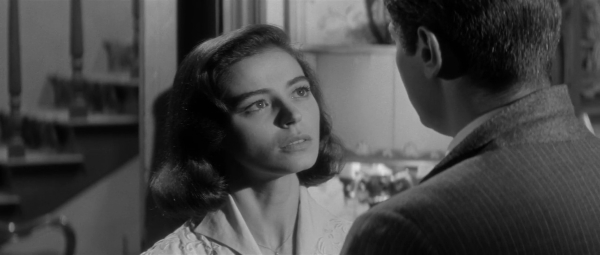
I think it’s fair to say The Midnight Story is Joseph Pevney’s best film. Working from a story and script by Edwin Blum (The Adventures of Sherlock Holmes, Stalag 17), he clearly had an affinity with both the themes explored and the subtle blend of film noir and melodrama. Those intimate little scenes in the Malatesta home, often around the dinner table, but not exclusively, reveal some fine character work from a hard-working cast. The spiritualism inherent in the story and its development is never far from the surface, sometimes overtly but frequently buried a bit deeper in the rambunctious and passionate instances of simple family interaction where the real sense of redemption resides and thrives. The final fade out encapsulates that eloquently as inner strength, belonging and renewal all collide and give meaning to everything that has gone before on screen.
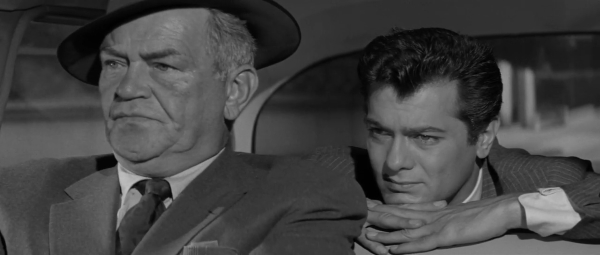
Once again, Tony Curtis is given the chance to prove how adept he was at straight drama and he carries it off successfully. I have probably mentioned this before, but I think it’s worth restating: when actors gain a reputation as skilled light entertainment or comedic performers they seem to get stuck with that label and regarded as capable of only that type of work. Sure some play up to it, and Curtis did choose poorly in his later roles yet it seems a pity that his dramatic work, which is generally very strong, is neglected or at best downgraded as a result. The sincerity and determination of his character is never in doubt and he handles the ups and downs experienced, depending on how his investigation happens to be progressing, most convincingly. Marisa Pavan, who only passed away last December, is very soulful and controlled as Anna. It is this control and emotional caution she displays that gives added fire to the scene where she succumbs to her true feelings as the dangerous game her betrothed appears to be playing is laid bare. There is solid support from Ted de Corsia and Jay C Flippen as the senior cops, the former typically bullish and aggressive while the latter gives another of his slightly dyspeptic avuncular turns.
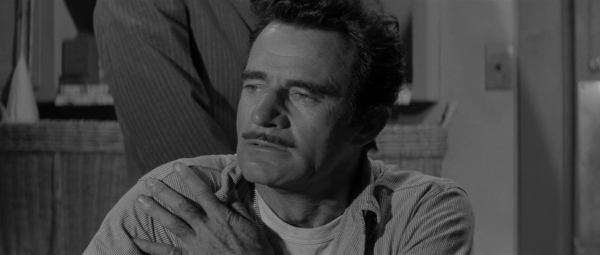
And that leaves only Gilbert Roland. His was long career and one which saw him get better as the years passed. The leading roles were not to be his at that stage but the presence of the man lent gravitas and truth to many a film. The part of Sylvio Malatesta was an extraordinarily difficult one to carry off, but he does so with considerable aplomb. While there is plenty of scope for his trademark bravura, the part is in fact complex and multi-layered, gradually revealing itself in increments over the course of the movie. The inner torments of the man, the history he hauls around inside himself, are subtly presented, held carefully in check and only occasionally allowed to make their presence known. Frankly, he gives a beautifully judged performance that is fully three dimensional – his work here is the rock which anchors the movie and provides real substance to the story.

This brings me to the end of my trawl through a selection of Joseph Pevney directed movies this summer. It’s something I’ve been wanting to put together for a while now and I’m pleased to have finally done so. I only hope it’s been as enjoyable for visitors to follow along as it has been for me watching and writing about these titles.

Mister Cory

Another day, another movie that appears to defy categorization. Of course, there is no good reason why anyone ought to feel it is necessary to categorize a movie, but it is a pastime that we film fans like to indulge in.  Mister Cory (1957) does not comfortably wear any of the labels I’ve seen hung on it, not that there are many people who have actually commented on the film one way or another. It has been referred to variously as a crime picture, a drama, even as a film noir. I guess there are elements of all those genres and styles to be found there, but none of them are entirely satisfactory. Perhaps one could call it a Blake Edwards film. However, I’m not sure I would be able to define that either, certainly not for something coming at this early stage of his career as a director/writer. So what is it? There is a hint of The Great Gatsby about the setup, it maybe even casts a glance in the direction of Dreiser’s An American Tragedy (and Stevens’ adaptation A Place in the Sun), and there is too a touch of the humor that Edwards brought to so many of his films. If anyone can produce a convenient label out all that, I salute them. Frankly, I’m happy enough to just think of it as a good movie that is not as well known as it might be.

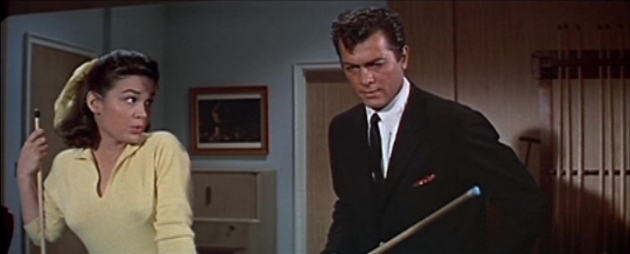
The first view of Cory (Tony Curtis) is of a young man making his way along a heaving sidewalk in Chicago, one of those tenement slums where all human life is to be found, the kind of place where hope can all too often wither or where the seeds of all-consuming ambition can take hold. Cory is a man with ambitions, and the first steps towards realizing them are going to see him keep right on walking out of the neighborhood he grew up in. They carry him out of the city to one of those exclusive lakeside resorts where only those with blue blood, deep pockets and an Ivy League education can afford to lunch and lounge with poise. Now Cory may not have any of the usual qualifications to hang out in such environs, but he does have poise, even if his is borne of audacity. He’s hired as a busboy, right down at the bottom of the pecking order. However, he has no intention of remaining in that lowly position and employs a combination of cunning and chutzpah to hobnob with the cream of society and keep an eye on the main chance. To be precise, he has set his sights on Abby Vollard (Martha Hyer), an ice cool society blonde, and for a time it looks as though he might just pull off the deception and bag the prize he so craves.

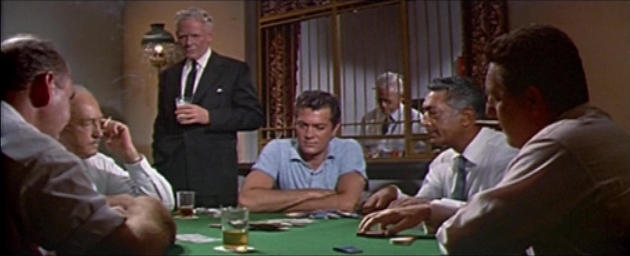
However, that would be too simple and dramatically, not to mention ethically, unsatisfying. No, a tale requires a twist if it’s not to become too predictable. So, with his imposture revealed and his scheme shattered, Cory is forced to move on. He does so, and moves far and wide, returning to his roots in a way as he falls back on the skills as a gambler he acquired early in life. All of which segues into the second part of the story, the rise of Cory as a slick and smooth front for Ruby Matrobe (Russ Morgan), a big man in the Chicago underworld. With money no longer an object, prestige and deference (even from those who once demanded the same of him) his constant companions, he would appear to have fulfilled his ambitions. Yet there is still the ever present itch that he yearns to scratch – Abby. That he is now in a position to woo her successfully is complicated by both the need to conduct the business and romantic equivalent of a high wire act. Her long time fiancé (William Reynolds) is the son of a man with significant political clout, capable of delivering a knockout blow to Cory’s backers and by extension to Cory himself. And then there is the sneaking suspicion he begins to have that maybe Abby’s now grown up sister Jen (Kathryn Grant) is the one he should have been pursuing.

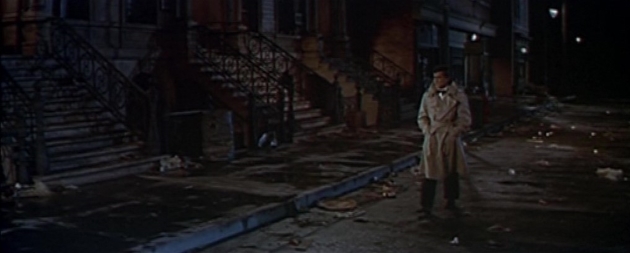
Mister Cory was adapted from a Leo Rosten novella, which Tony Curtis bought the rights to and had Blake Edwards adapt for the screen. It has a classic “rise and fall” structure that makes for good drama. There is a lot of emphasis placed on the nature of ambition, the old exhortation to be careful what one wishes for never being far from the surface, as well as other maxims regarding all that glitters and so on. This is all very well, but not that compelling at the same time. On the other hand, the movie is on much firmer ground when it posits the theory that human nature is immutable, rendering notions of grasping ambition, social climbing, and all the deceit and falseness that tend to accompany those wraiths redundant. At the heart of the story is the belief that running away from one’s true self, denial of one’s nature in essence, is a doomed enterprise. Sooner or later, this dawns on pretty much every character. It can be seen in Charles Bickford’s veteran gambler, a man who intuitively knows when the game has grown stale. Cory may be one of the last to fully grasp this, though it does grow on him gradually; there is a terrific scene where, with success won, he wanders back to the old neighborhood where he grew up, strolling down the middle of the empty nighttime street, gazing at the building he was born in, the locations that spelt loss and tragedy and the places he learnt his trade. Lost in the cool solitude of reminiscence, surrounded by the echoes of voices long gone and words drifting across time, his past and present knit together in a moment that marks the beginning of his acceptance of self.

Curtis deftly captures the many facets of the character, the roguish charm that never really deserts him, the drive concealed behind this, and the awareness that all the polish and front is simply that, a veneer that does nothing to shrink the distance between the one-time street urchin and the elegantly clad dream merchant he has cast himself as. Again, I’m drawn back to that scene I mentioned above, so much of the character is encapsulated in it after all, with Russell Metty’s camera tracking the lone figure via a crane shot that shifts from cool objectivity to intimacy and serves to highlight the contrast between the slick facade Cory has adopted and the grimy background that produced him. With the lens focused on his troubled features, it’s clear to see that he hasn’t traveled so very far. Martha Hyer was an actress who flirted with true stardom yet never quite broke through. Around this time she had roles in some good movies – Battle Hymn for Douglas Sirk, and she earned an Oscar nomination for her work in Minnelli’s Some Came Running. The part of Abby called for someone who was able to convey chilly snobbery in tandem with a weakness for slumming  and hypocrisy, which Hyer gets across successfully.

Kathryn Grant graced some fine films throughout the 1950s and she brings a liveliness that is quite infectious to the part of the younger Vollard sister. Playing the third arm of a romantic triangle frequently proves to be something of an unrewarding task, but William Reynolds takes it on manfully and achieves a degree of pathos as the flawed fiancé. The reliably crusty Charles Bickford brings dry humor coupled with down to earth wisdom to the table and acts as a stabilizing influence on his often hot-tempered protégé. Another interesting piece of casting is band leader Russ Morgan as the Chicago hood, something which sounds like an odd choice but which ends up working out just fine. Finally, a word for Henry Daniell, a man whose long career saw him regularly playing highly cultured villains. He brings great suavity to his work here, insisting on good manners and propriety at all times, the very personification of moral rectitude. And then he gets to deliver a genuinely killer punchline to wrap up the climactic confrontation in the casino.

Mister Cory has had DVD releases in France, Spain and Italy, and I strongly suspect all of them will be using the same source. I have the Italian release, which presents the movie in the correct ‘Scope ratio. It’s a colorful if rather soft transfer though and the images I’ve added above should give some idea of how it looks. I would love to see this film get a brush up because it really deserves better treatment. I hadn’t seen it before and I’ve never heard anything much about it either. Every year brings a few new discoveries for me and I feel this movie rates as the most enjoyable and worthwhile of them so far in 2023.

Johnny Stool Pigeon

It’s interesting to watch movies that might be described as halfway house efforts, they have an air about them of remote outposts on clinging on at the frontier of genres, one eye fixed on a particular set of circumstances and the other looking in a different direction like a sort of cinematic Janus. Johnny Stool Pigeon (1949) has a touch of that, casting ahead to the rapidly approaching decade where the focus would shift firmly to tales of a society under threat from shadowy but large scale criminal organizations while still retaining a concern for the battered and bruised individuals who represent the life blood of the genre.

A federal sting aimed a netting a drugs courier just off a boat in San Francisco leads to the suspect taking a bullet during a chase through a dockside warehouse. The agent who had been hoping to make an arrest is Morton (Howard Duff) and he’s the insistent type. Running down the man who did the shooting is easy enough, but picking him up in order to apply a bit of pressure proves trickier. Organized crime is dependent on tip offs and betrayals, and so it is that word filters through of what the authorities have in mind. The result? Another mouth silenced and another link cut out of the chain leading back to the narcotics suppliers. This is all routine stuff so far, but the apparent brick wall confronting Morton calls for some creative thinking, and enlivens the story as a consequence. His reasoning is that if the organization can’t be broken from the outside, then it will have to be done from the inside. The problem of course is how to get in. The key to unlocking that particular door rests in the hands of Johnny Evans (Dan Duryea), a hood and gangster serving time in Alcatraz thanks to the efforts of Morton, and nursing the kind of deeply felt grudge one might expect. Conveniently, from Morton’s standpoint at any rate, Evans’ wife has recently died from the effects of drug addiction so there’s plenty of emotional leverage on hand. Forming an uneasy alliance, Morton (now going under the name of Doyle) and Evans head first to Vancouver in Canada and then back down south to Arizona on the trail of the head of the syndicate. While all this is taking place, there is an added complication provided by Terry (Shelley Winters), a girl keen to escape the clutches of the mob.

Frankly, the gangbusters element of the story is by the numbers stuff, well enough executed but hardly riveting. Any plot that makes use of the lawman going undercover trope naturally generates suspense and tension, and that is certainly true here. I guess the involvement of a potentially hostile figure such as that portrayed by Duryea adds a touch of uncertainty, although there aren’t really any jaw-dropping twists in store. For all that, the movie is entertaining in the way so many Universal-International crime pictures are. It displays a brisk lack of pretension, a utilitarian stylishness that is alluring. William Castle is best known these days for those horror and thriller movies he concentrated on from the late 1950s onward. However, his credits in the preceding years show the breadth of his body of work. He worked in many genres and deserves more recognition for the frequently tight and fast-moving westerns, adventures and crime movies he cut his teeth on. When Johnny Stool Pigeon was made he had just moved to Universal-International after spending years working on a number of series for Columbia, such as Crime Doctor (somebody please release a set of these enjoyable B pictures!) and The Whistler. The economical shooting and storytelling style of these low budget movies would stay with him and inform much of his subsequent work.

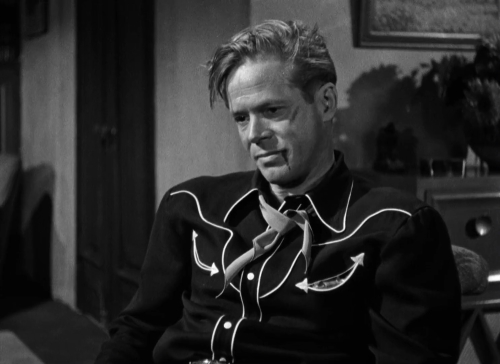
I have  seen and enjoyed so many Dan Duryea performances over the years. Broadly speaking, he tended toward two characteristic types. On the one hand, there was the sly, wheedling good-for-nothing, slouching from one cheap subterfuge to another. On the other hand, he could be a loud, booming braggart, a strutting peacock daring all to challenge his brashness. His role in Johnny Stool Pigeon is something of a hybrid, with a couple of real firecracker scenes that have him cutting loose and barking at Barry Kelley and Howard Duff respectively, as well as more subtle, yet paradoxically more powerful and affecting, moments such as his visit to the morgue to identify the body of his wife. Threaded trough the whole performance though is that air of tough melancholy he always wore. He had about him the aura of a man assailed by wry bitterness and relentlessly pursued by some nameless regret.

Howard Duff enjoyed a fairly successful run from the late 1940s till the middle of the next decade as a lead of the square -jawed variety. I wouldn’t say he had great range but he was an agreeable screen presence. He is rather aloof in Johnny Stool Pigeon, distant and frankly stiff in many scenes. In his defense, the role he was playing was that of a man in an especially precarious position, one who would have needed to maintain a cool and icy grip on himself at all times. Still, the contrast with Duryea’s full-blooded performance is marked. Shelley Winters weighs in with a credible mixture of street-smart and vulnerable, and her character’s influence on both her co-stars and the eventual resolution of the story is noteworthy. In support, John McIntire is typically impressive, his back-slapping bonhomie masking a dry, cold core. Tony Curtis, in one of his earliest appearances, has the role of a mute assassin. He may not have had any dialogue but he gets plenty of screen time to glower and brood.

Johnny Stool Pigeon was another movie that was impossible to view in anything other than the crummiest condition until Kino released it recently. It’s not going to make anyone’s list of the best films noir, and just about everyone involved would make stronger movies. Nevertheless, it is very watchable and enjoyable, brief and pacy and possessed of that appealing Universal-International vibe this viewer generally finds irresistible.

The Square Jungle

Hollywood in the 1950s seemed to fall in love with the idea of jungles, metaphorical ones at any rate. They ranged from the Asphalt to the Human, from the Blackboard to the Female, and those titles always carried at least a hint of film noir about them. The Square Jungle (1955) has been marketed as noir, but I don’t believe it fits in that category. Sure the trajectory followed by the protagonist takes a detour into the darker corners of despair and disgust, but it is ultimately headed in a different direction and is arguably best approached as a sporting melodrama that charts the sometimes painful journey from hubris to humility.

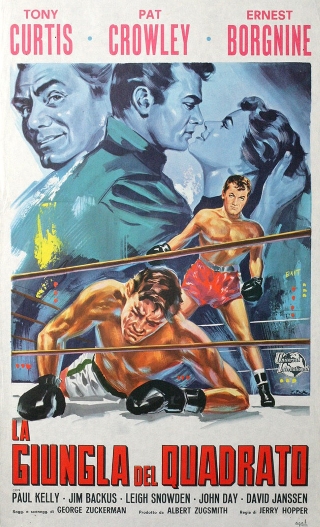
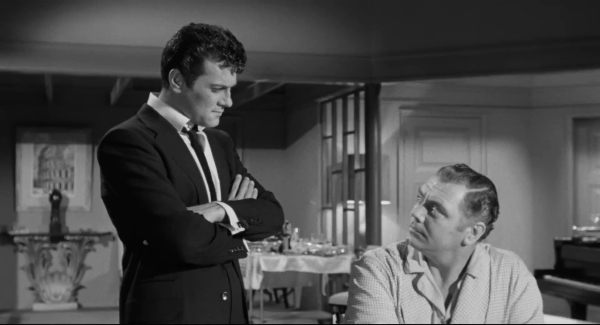
Eddie Quaid (Tony Curtis) is a man with ambitions, albeit modest ones at first. He’s working as a grocery store clerk and doing his best to offer moral support to his father, Pat (Jim Backus), who is weighed down by an unholy trinity of widowhood, unemployment and alcohol dependence. Desperate to haul his old man back from the brink after he’s been arrested for a drunken assault, and smarting from the consequent break-up of his relationship with Julie Walsh (Pat Crowley), he stumbles into the world of prizefighting. Since Eddie is clearly showing aptitude for the fight game, his father along with a sympathetic cop, McBride (Paul Kelly), persuade him to give it a go as a professional boxer. Under the watchful tutelage of Bernie Browne (Ernest Borgnine), an atypically learned and thoughtful man who is almost Socratic in his approach to training, Eddie (or Packy Glennon as he is known in the ring) rises fast through the ranks to earn a shot at the world title. This all occurs in the first twenty minutes or so of the movie, cutting through a lot of potentially tedious build-up and allowing the focus to rest firmly on Eddie’s period at the top, the three fights and their consequences that define him as a champion and, more importantly, as a man.

Many a boxing drama has focused on the corruption and underhanded shenanigans taking place in that shadowy world beyond the stark and floodlit square where the modern gladiators jog out to do battle with the promise of riches, glamor and celebrity always just one punch away. Yet there is little if any of that on display in The Square Jungle. Instead, it is replaced by a kind of ragamuffin romanticism, where pride, honor and self-respect are put to the test and are seen to win the day as opposed to the self-regarding venality that one normally associates with the fights.

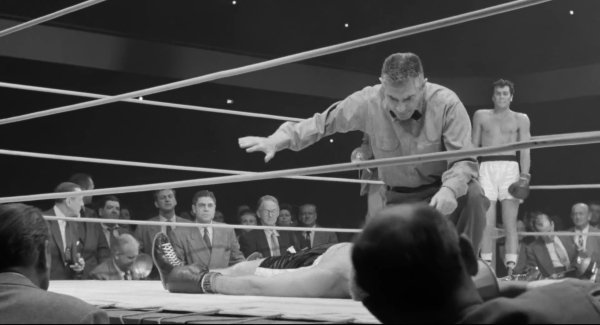
I guess director Jerry Hopper would be classified as a journeyman, although that is not a term I am especially fond of due to that air of drabness it carries with it. He is never going to be regarded as a great and there isn’t any one film he made that commands our attention. Then of course there is also the fact that he worked so extensively in television, with many more credits in that medium than in the cinema, and that was rarely a career route that brought critical praise, or which permitted the creative breathing space essential to it for that matter. For all that though, I don’t think I have watched anything Hopper made which I didn’t enjoy on some level and those often undervalued television credits include some exceptionally fine work. One welcome feature of The Square Jungle is the pacing, the story maintains a strong sense of forward momentum all the way through, and I’ve already mentioned the brisk and efficient way the early part of the story is handled. Naturally, a boxing film needs to have well staged fight scenes and I think that is the case here, with the three major bouts being shot and edited in such a way as to impart a kind of brutal intimacy. The aftermath of each successive fight is vital to our understanding of the emotional, and indeed the spiritual, development of Eddie in particular. It’s quite subtly achieved given the nature of the subject matter and the brash milieu of fighters, trainers, promoters and sundry hangers-on. Personally, I was taken by the marvelous stillness that Hopper brought to the end of the fateful third fight, an all-encompassing silence that descends abruptly, the gravity of it all perfectly captured in the terseness of the referee and the wordless, tear-stained anguish of one woman’s face.

Eddie Quaid/Packy Glennon was the second time Tony Curtis would play a fighter, having already done so a few years earlier in Joseph Pevney’s Flesh and Fury. It is a good performance, charming throughout and moving smoothly from the open, selfless young man of the early scenes to the conceited and vaguely boorish champion he becomes before finally attaining wisdom and warmth, and winning a far more valuable prize in the process. Pat Crowley is quietly supportive as the girl he loves and who helps anchor him.

However, this is not a love story, but rather a look at how men can reach an accommodation with themselves, with their own masculinity in all its forms. As such, the relationship Eddie has with his father is a key one, the older man – who has tasted failure many times – living vicariously through his son’s success and the way that impacts on the younger man. Jim Backus was good in that kind of role. I find I tend to hold onto my first conscious impressions of actors and in the case of Backus that would have been his part as James Dean’s father in Rebel Without a Cause, so he is someone I automatically associate with weak but well-meaning figures. Then there is Ernest Borgnine, who could do no wrong around this time, as the saturnine philosopher carrying his own private guilt. In smaller roles, Paul Kelly, David Janssen, John Day, John Marley (long before he would wake up next to a horse’s head in The Godfather) and Leigh Snowden all make telling contributions. There is also a very brief cameo from former heavyweight champion Joe Louis.

Gradually, it is becoming easier to catch up with Universal-International titles that had long been hard to see. The Square Jungle has been released on Blu-ray in the US by Kino in one of their film noir collections and I’d like to think it might turn up in Europe or the UK at some point.It is a solid boxing drama with an attractive cast and a reliable director, and it’s well worth watching.

Kings Go Forth

There are simple, straightforward war movies, there are also films which see their stories played out against a backdrop of war, and then there are what I can only describe as genre hybrids. Kings Go Forth (1958) is one of those hybrids; it is not a full on war movie, meaning the plot is not driven solely, or even principally, by the battle scenes or the military strategy, yet these aspects are not relegated to the merely incidental either. In brief, it is a movie dealing with personal and social conflicts, all presented within the wider framework of the latter stages of the Second World War.

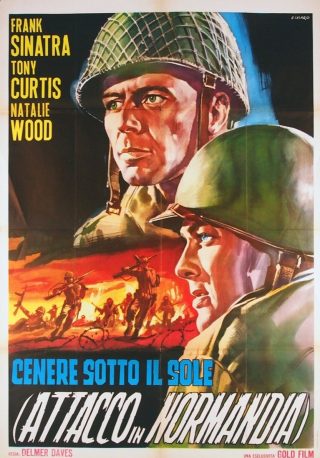
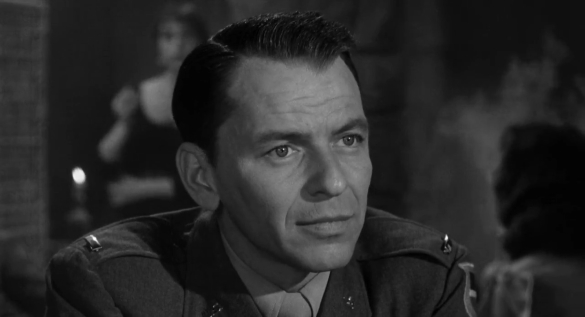
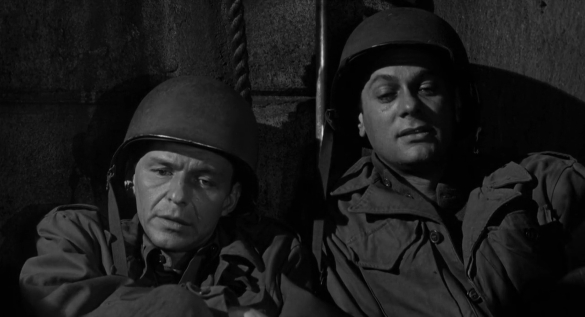
Not all wars are created equal, are they? While D-Day and the invasion of Northern France grabbed the headlines, and continues to garner attention, it is easy to forget that the drama and tragedy of WWII was also being played out in other theaters. Kings Go Forth unfolds in the south of the country where the US forces are in the process of trying to clear out the remaining pockets of Nazi resistance. Sam Loggins (Frank Sinatra) is a lieutenant in need of a new radio operator for his outfit. His voice-over narration in these early scenes make it clear that Britt Harris (Tony Curtis), the man who talks his way into the role, is a figure who will loom large in the subsequent events. He is brash and cocky, sure of himself yet essentially unknowable to others. Right from the beginning, Sam is aware that what is presented is largely a facade, an image offered up for public consumption with the goal of ensuring that what Britt wants, Britt gets. An apparently contradictory figure, he joined the army only as a last resort, having tried to bribe the draft board, but is not averse to indulging in showy heroics – dragging wounded men from a treacherous minefield, or braving machine gun fire to neutralize a pillbox. In short, as Sam himself noted at the outset, he is a man you notice. Well, it takes all kinds to make a world and the various peculiarities of character need not trouble anyone too much. Or that’s the way it seems for a time.

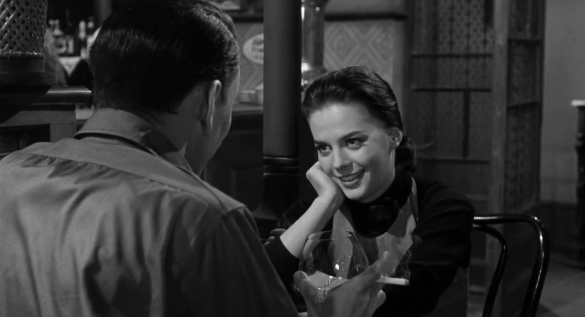
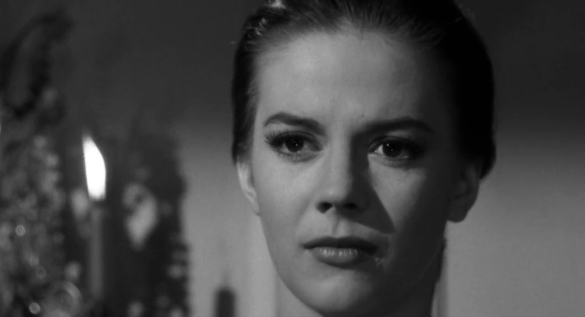
While these two central characters are shown  in sharp relief, the contrast only becomes an issue with the arrival on the scene of Monique (Natalie Wood). She was born an American, brought to Europe by her parents as a child, and is now practically a Frenchwoman. When Sam chances upon her during an impromptu leave he is smitten on the spot. He sees her again, and falls a little further, and all the while Monique remains half a step removed, charming and charmed yet cool. An evening in a cafe, where the wine and jazz form a potent cocktail has Britt meeting this pair, and so the final decisive point of the triangle is fixed in place. By the by, the reason for Monique’s reticence is revealed to be largely the product of her uncertainty of how Americans will react to her mixed race heritage. Sam is gradually accepting of this, having first forced himself to confront the prejudices he once entertained, but Monique finds herself dazzled by the glamor Britt seems to represent. In the end, the story boils down to a question of character and how it manifests itself. On an evening that promises death or glory deep in the enemy’s stronghold, truth emerges as the victor, but it is perhaps a bitter victory.

It has been some time since I last featured a movie from Delmer Daves. Over the years, I have developed a deep appreciation of this director and I count him among one of my favorites. His sympathetic handling of multifaceted and flawed characters caught up in situations which were correspondingly complex shows great maturity and I find his reluctance to sit in judgement enormously refreshing. Characters may be idealized by others within their world, but the viewer is presented with them as they are rather than as we might wish them to be. There is something soulful yet reassuring in the frank admission of imperfection and frailty; this is a filmmaker who not only understood but embraced humanity and sought to celebrate all its aspects. For me, such characteristics define the artist.

Kings Go Forth came in the middle of a particularly productive period in Frank Sinatra’s screen career. Some Came Running, The Joker is Wild and Pal Joey were all made in and around this time. It’s a fine performance, restrained, largely dialed down and frequently internalized. There is a good deal of pain in Sam Loggins, a hard-bitten personal diffidence riding side by side with a professional assurance, a tricky balance to achieve. I very much appreciate how the easy option of having the leading man simply do the right thing without thought was avoided, how he was made to look his own racial prejudices square in the face and acknowledge them for what they were. Perhaps we’re not talking redemption in the classical sense, but it is a matter of decency won after a hard battle, and the ending of the movie, in all its bittersweet melancholy and tantalizing optimism, is all the better for it. Nor is Natalie Wood asked to play any one-dimensional angel. Her hunger for acceptance draws her deep into a damaging and worthless relationship, blinding her to the artifice which is burrowing its way into her heart. It is an honest piece of work and, as with all forms of honesty, not always attractive. Tony Curtis is well cast too, coasting along on looks, style and polished patter, but never able to completely sell the lie to himself. As he sits in the clock tower with Sinatra, feeling the chill breath of fate creeping closer, his openness about his complete absence of character is very well realized – to watch him at this moment is to watch a man gazing deep within himself, and being appalled at the emptiness that he discovers. And finally, a word for Leora Dana, who is characteristically touching as Wood’s mother. If the only movies she had ever made were this one, 3:10 to Yuma and Some Came Running, then it would still constitute a fine career.

Kings Go Forth was an early release on DVD by MGM and looked good enough even though it was presented open-matte. There was a Blu-ray release by Twilight Time but I think that’s been out of print for some time now. However, there is a fine Blu-ray available in Germany, English-friendly, widescreen and generally very attractive. I freely admit that I am an unashamed fan of the work of Delmer Daves and I am well aware that this may color my view of his films. That said, I think Kings Go Forth is a terrific little movie and it comes highly recommended.