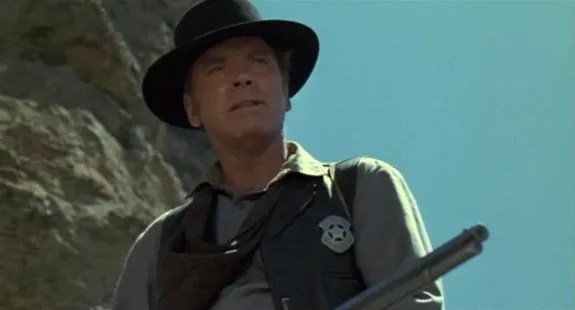
I Walk Alone

You know, Noll, I think you’re afraid now. And I’m not. Frankie with his bootleg liquor, me with those checks I forged, you with this set-up here. Everyone trying to get something for nothing. Frankie paid, I paid. It’s your turn now…

Checks and balances, adding a bit here, taking away a bit there. The books and the by-laws, a new post-war landscape where the sheen of legality is little more than a patina, a glossy veneer to add on top of the old rackets to create the illusion of respectability. I Walk Alone (1947) trades heavily on that highly polished hypocrisy, presenting a world of glamorous nightclubs where sharp suits and elegantly gowned ladies in superficially smooth surroundings seem to have taken the place of the rough and tumble hoods of Prohibition. Still, the high class tailoring and drapery only offer a limited disguise for the muscle, corruption and decadence. The world depicted here, at least that which is seen through the eyes of the protagonist, is one which has been flipped on its head, where none of the old certainties hold any longer and hoods hide and mask their actions with a web of financial chicanery. Plus ça change…
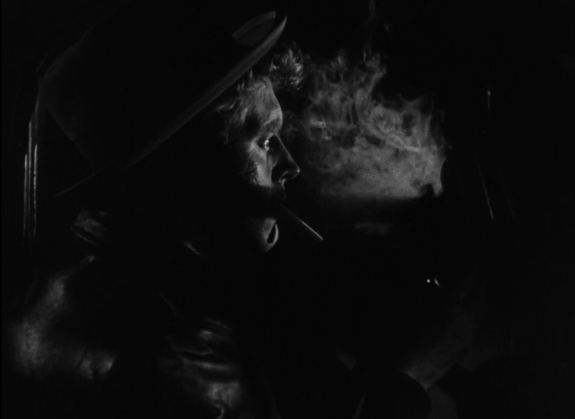
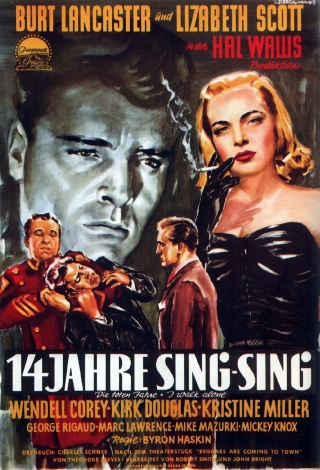
Frankie Madison (Burt Lancaster) is just out of prison and he’s sore. He has served 14 years and now he’s looking to collect on what he feels is his due. To that end he heads to the glitzy Regency, an upmarket nightclub run by his old partner in crime Noll Turner (Kirk Douglas). The fact is Frankie and Noll made a deal just before the former was picked up and sent up the river to split their profits straight down the middle. However, in all those years the only thing Frankie ever received from his old partner was a carton of cigarettes every month, not even one visit. He figures he’s owed, and there’s a little voice just starting to murmur insistently that maybe Noll plans to gyp him out of the rich pickings that have since come his way. Why? Well for one thing there’s the nervy attitude of his friend Dave (Wendell Corey), a man who has been becoming gradually more neurotic over the years and who visibly pales whenever any mention of the unfortunate fates of those who had crossed up old acquaintances crops up. Then there is Noll himself, genial and velvety in his solicitude yet watchful and calculating at the same time. When he arranges for his torch singer mistress Kay Lawrence (Lizabeth Scott) to charm Frankie and coax information from him over a carefully staged intimate dinner all the pillars of a setup have been put in place. Slowly the full extent of Noll’s self-serving duplicity dawns on Frankie, and he’s soon to discover that the, arguably more honest, strong-arm tactics he would once have relied on to get results are now hopelessly inadequate when faced with an updated criminality, one that subverts the law to serve his purposes.
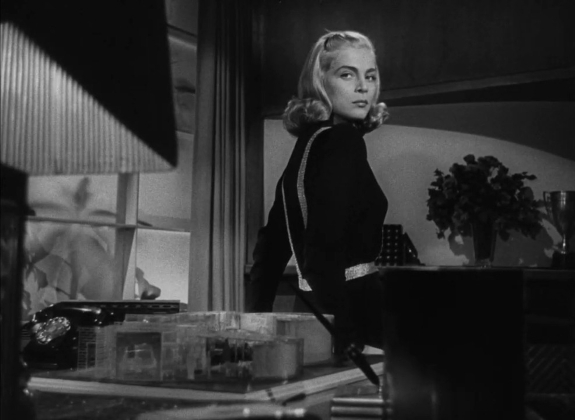
I Walk Alone offers a classic noir framework: a man who has been away for an extended period of time returning to a world that is recognizable on the surface but which has in fact been radically altered at the core. If one is to see mature film noir as an artistic reflection of the post-war perceptions of the returning veterans, then this is something of a textbook example. It’s hardly a stretch to see parallels between Frankie Madison’s sense of being frozen out and the struggles of a whole generation to rediscover its place and role in a society that must now have felt odd and alien. There are two scenes which takes place in Noll’s office underlining the societal shifts that have taken place and the frustration of trying to deal with this.
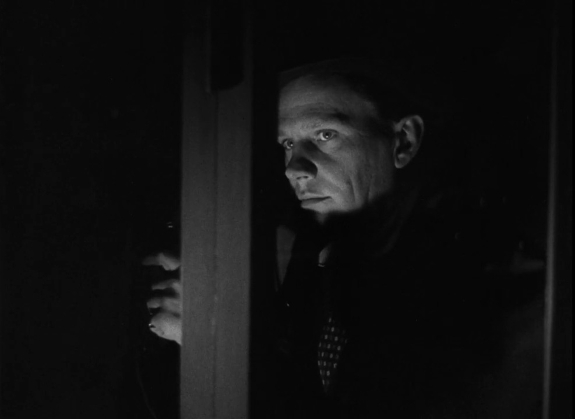
First up, there is Frankie’s confrontation with Noll when he learns how he’s been stiffed and is getting the brush off. He resorts to his old two-fisted approach, laying one on his former buddy and storming out fired up with indignation and plans for retribution. Then later, having cobbled together a ragtag bunch of would-be enforcers courtesy of another old confederate (the instantly recognizable pockmarked Marc Lawrence), he sets about muscling what he’s owed out of Noll. However, this is the point where he comes face to face with what can only be viewed as a corporate minefield, an impenetrably complex series of cutouts that serve only to emphasize the absolute inefficacy of Frankie’s brute force methods in this brave new world. To witness his enraged impotence is akin to watching a bull elephant in its death throes, and the humiliation is compounded and completed when Mike Mazurki’s hulking doorman hauls him out to the back alley to hand him the beating of a lifetime.
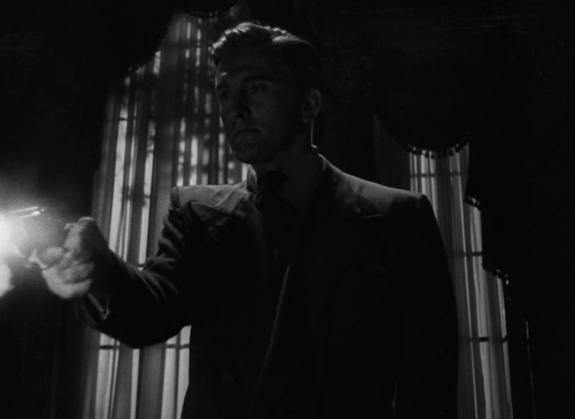
Nevertheless, this acts as a catalyst, striking the scales from the eyes of Dave and Kay and helping to galvanize Frankie into taking genuinely effective action. As such, the movie tosses a lifeline of sorts to those ruing the passing of a more straightforward age. There is the hope held out that the conmen and the chiselers would get their comeuppance, that some sort of justice would prevail, which may be considered as diluting the noir sensibility. Maybe, or maybe the late 1940s didn’t fully encapsulate, or not as fully as we’re led to believe at any rate, the kind of existential despair that is frequently cited as the basis of noir. Perhaps the world today where gaslighting fraudsters and incompetents sit unchallenged at the top of the heap is the real noir era. Perhaps.
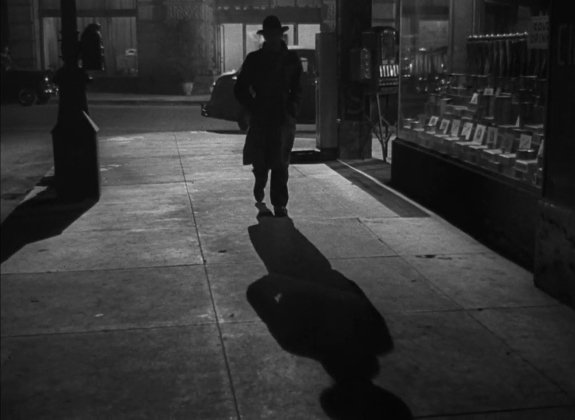
I Walk Alone was the first collaboration between Burt Lancaster and Kirk Douglas, and the fact they played so well off each other makes it easy to see why they appeared together with such regularity over the following four decades. Lancaster’s star rose faster and he was receiving top billing at this stage whereas Douglas was still working his way up, albeit strongly, in supporting roles. Lancaster uses his physical presence very effectively, and there is that vulnerability too beneath it all that was brought out very successfully in these early Hal Wallis productions. Douglas is less imposing in physical terms but he has that menacing air, principally via his voice and those sharp eyes. Lizabeth Scott is fair but that’s about it, her smoky-voiced allure is always welcome though and she was made for slinking around nightclubs singing throaty odes to ill-starred romances. Wendell Corey did a nice line in whey-faced fear, that and indignation were his strengths and he gets to exercise both as the guilt-ridden bookkeeper.
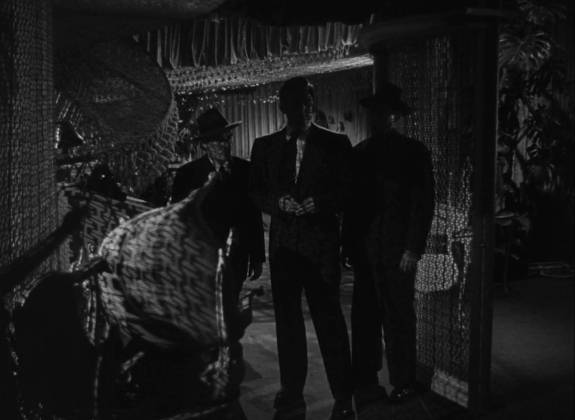
After a few early efforts as director Byron Haskin spent two decades as a cinematographer and effects man. I Walk Alone signaled his return to directing and from that point on, barring a few blips, he embarked on a remarkably solid run right up until Robinson Crusoe on Mars in 1964.  It is a very entertaining movie, well cast and beautifully shot by Leo Tover. It both links to and contrasts with the old 30s gangster movies and the film noir mood and aesthetic of the time. Until Kino brought the movie out some years ago it was one of those titles that appeared to be destined to remain mostly talked about or featured in books on noir rather than actually seen. Happily, that is no longer so and I recommend giving it a look.
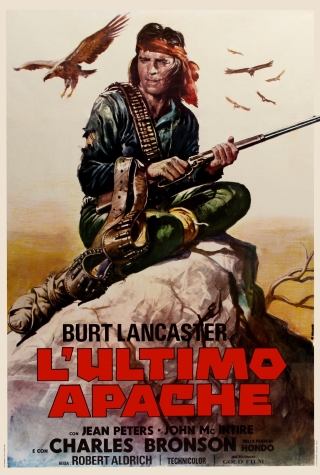
Apache

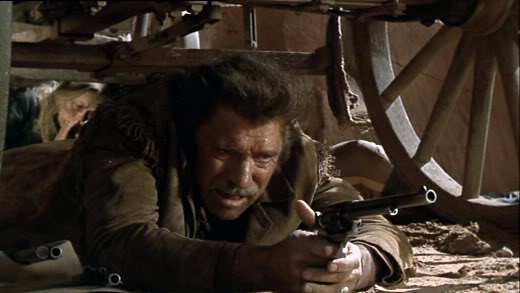
Which words get tossed around most often when the western is discussed? I guess I talk a lot about redemption, it’s the cornerstone of the genre for me. Others, depending on the direction from which they are approaching it, may look at the way it portrays expansionism, or how it charts and critiques civilization. Some like to focus on the elegiac aspects, and some go in for revisionism. But does anyone ever mention a sense of urgency? Maybe we should though. A lot of classic era westerns have a paciness to them, both for budgetary and for storytelling reasons. Yet when one stops to think not only of the relatively short window in time occupied by the historical concept of the Old West but also the equally brief flowering of the classic movie version, it somehow feels appropriate to regard urgency as at least one of the characteristics worth considering. Apache (1954) is what I would call an urgent movie. It is a motion picture in a very literal sense, the protagonist moves almost continually and it offers little respite for the viewer either as events unfold on screen. The theme too is one of an era drawing to a rapid close, of time threatening to overtake people and the consequent need to keep pace with it all.

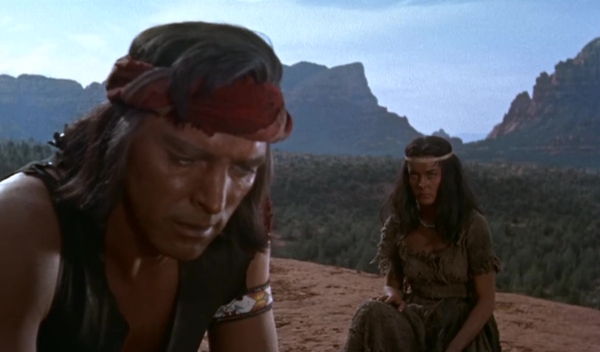
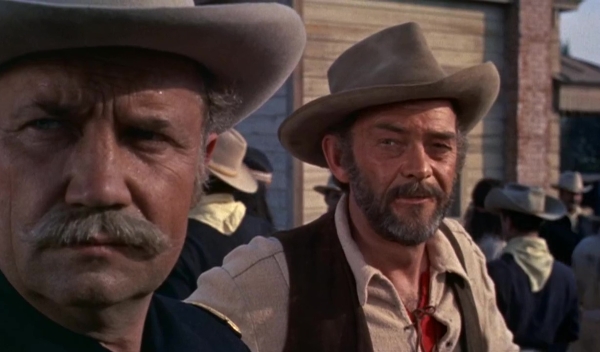
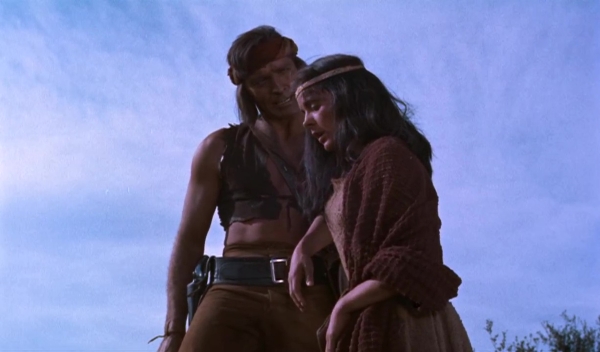
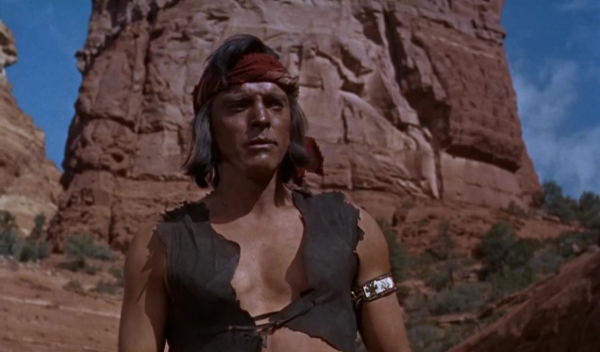
It opens with the surrender of Geronimo, the end of the Apache Wars and to all intents and purposes the closing of native resistance in general. One man at least is not keen on this capitulation and the first view of Massai (Burt Lancaster) has him riding in aggressively in a last ditch attempt to disrupt the event. It’s as good an introduction of the character as one could wish for, highlighting his belligerence, defiance and energy. Nevertheless, despite his bullish bravado, he’s not to succeed. Instead he is manacled with the other former fighters and placed on board a train headed for Florida. Even as the locomotive makes it’s way across the country, Massai’s restlessness and rebelliousness remains undimmed. Taking advantage of a temporary halt in Missouri, and the hubris of embittered Indian agent Weddle (John Dehner), he escapes. This leads to a brief yet fascinating interlude where Massai spends some time wandering around town, bemused and ultimately threatened by a way of life that couldn’t be more alien to him. That sense of urgency, that driving need to return to his roots while he still can, kicks in again and his overland odyssey is broken only by an encounter with a Cherokee in Oklahoma who has resigned himself to the reality of the newly civilized world. It leads to a wonderfully droll moment where Massai asks incredulously how it is that he has a wife but has to fetch and carry the water himself. The old Cherokee looks at him ruefully and admits with a sigh that some of the ways of the white man are indeed hard. The lessons Massai has learned along the way have given him hope though, hope that he may find the means to continue to exist as a free Apache, albeit less warlike and in the company of his love Nalinle (Jean Peters). This is not to be, however, and the drunken duplicity of Nalinle’s father as well as the distrust of the army and scouts see him back in chains. All the while, the movement never ceases, the cross-country trek, the recapture and later escape, and then the long run to the wilderness of desert and mountain, the settling of old scores and the desperate effort to reclaim some shreds of the past before the relentless advance of civilization rends them forever.

Apache fits neatly into that group of westerns taking a more sympathetic view of the native American  that had begun to appear in the early years of the decade. This pro-Indian cycle set in motion and characterized by the likes of Anthony Mann’s Devil’s Doorway and Delmer Daves’ Broken Arrow played a significant role in the evolution and maturation of the western which was taking place at this time. No doubt there are those who will protest the casting of Lancaster and Peters, as well as Charles Bronson, Paul Guilfoyle, Morris Ankrum and others, as Native Americans but it’s no more than a reflection of the casting practices, and indeed the choices available, at that time. Anyway, my own take on any spats over inauthentic casting is that surely acting is the adopting of roles and the presentation of characters and their traits. I see it as striving for some thematic and dramatic truth, and reality be damned. Was the theater of the ancients any less valid or lacking in artistic integrity as a result of the wearing of masks?

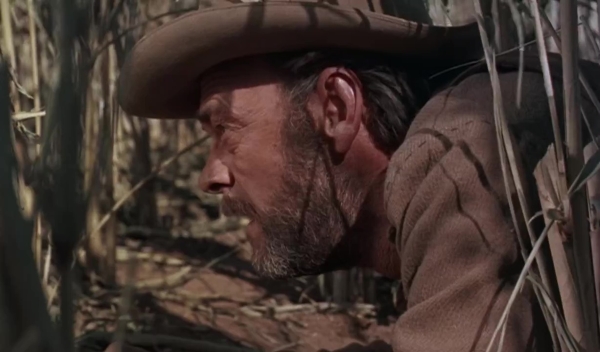
By maintaining the focus on Massai, and by extension the Indians who had not yet been fully integrated into an ever encroaching civilization, director Robert Aldrich and writer James R Webb also keep the focus on the overriding sense of urgency, of time running out. Massai admits to his woman at one point that he is aware of the fact he has perhaps only a few years at best ahead of him, that civilization and his consequent demise will catch up with him some day. And this is where the real urgency resides, the need he soon feels to lay some kind of lasting foundation, to provide some sense of continuity. In narrative terms, this is clearly indicated by the planting of seeds in the earth to grow corn, the idea introduced by the old Cherokee, tested unsuccessfully at first by Massai himself, and then encouraged and brought to full fruition by Nalinle. This notion of growth, of building a future out of nature itself is further highlighted by Nalinle’s pregnancy and the direction in which that development pushes the story. The “some day” Massai foresees arrives at the end. The climactic scene with John McIntire’s Al Sieber crawling through the undergrowth of the cornfield as he stalks the wounded warrior provides a visual metaphor for the creeping advance of civilization, threatening not only Massai’s last Apache, but the future he has tried to cultivate too. Still, the ending is one that is suffused with both hope and a hint of reconciliation.

Aldrich himself claimed not to have wanted to finish the movie in this way, preferring the more negative ending that was laid out in the novel Bronco Apache by Paul Wellman that formed the basis for the script. Some may see that as further evidence of the commonly held belief that Aldrich was first and foremost a cynic, but I’m not so sure. Perhaps that bleakness that could shine through some of his films on occasion was more prominent, rawer in some way, in his early efforts. Even if that is the case, I remain unconvinced that this should be seen as his defining characteristic. There are plenty of examples sprinkled through his work of him displaying if not a completely positive outlook then at least one which sees the better side of humanity in the ascendancy. I’m thinking here of Autumn Leaves, Hush… Hush, Sweet Charlotte, The Flight of the Phoenix and The Last Sunset, the latter being a movie I’m happy to admit I have come to reassess after being encouraged to give it another go. I recall a commenter on this site once referring to a certain writer as being in “the truth business”, even if I don’t now remember who was being so lauded. Anyway, that’s all by the by. The point is that the phrase stuck with me as it seems that it’s surely the goal of every artist to mine the truth. As such, it feels misguided to regard Aldrich merely as a cynic, as some critics would support, rather than a genuinely rounded artist in the sense that he too was a seeker after truth.

So, without deliberately spoiling matters for anyone yet to view it, I like the way the movie ends. It feels appropriate in that it validates the points made, the struggles endured and the promises alluded to throughout its running time. All that urgency that preceded it, the crowded, pressing framing frequently employed to create the sensation of a cramped and restricted set of circumstances eases. The simple yet instantly recognizable sound of a future long awaited calls a halt to what threatened to be impending tragedy and the “some day” that had loomed large is banished, to be replaced by the chance of a better day. In short, it’s a fine way to bring the story to a close.


The Professionals

La Revolución is like a great love affair. In the beginning, she is a goddess. A holy cause. But, every love affair has a terrible enemy: time. We see her as she is. La Revolución is not a goddess but a whore. She was never pure, never saintly, never perfect. And we run away, find another lover, another cause. Quick, sordid affairs. Lust, but no love. Passion, but no compassion. Without love, without a cause, we are nothing! We stay because we believe. We leave because we are disillusioned. We come back because we are lost. We die because we are committed.

Random musings on the nature of revolution, words which have an attractive feel, a weary patina lying somewhere just the right side of cynicism. That, I think, is the effect they are meant to convey, but therein is their problem, and by extension part of the problem of the movie they appear in. Hearing them spoken by Jack Palance’s wounded rebel and reading them back here leaves me with the impression that they have been crafted for just that, for effect rather than for truth or out of any real conviction. I watched The Professionals (1966) again the other day, a movie I’ve seen  fair few times now, and came away from it thinking it entertaining enough although somewhat lacking in substance. Like so many films by Richard Brooks, it doesn’t do much wrong, doing a lot right in fact, yet never actually amounts to as much as the filmmaker would have us believe.

During the latter half of the Mexican Revolution a group of four men, introduced via brief sketches during the opening credits, are hired by a wealthy businessman to get his kidnapped wife back. That’s the plot of the movie in a nutshell. It’s a simple enough setup, fleshed out by the colorful nature of a some of the leads as well as the dynamic created by their intertwined pasts, and of course the turbulent background of a country riven by internal conflict. The hired hands are led by Rico Fardan (Lee Marvin) a former associate of Pancho Villa, Bill Dolworth (Burt Lancaster) a womanizing rogue with a talent for blowing things up, Ehrengard (Robert Ryan) a diffident wrangler, and Jake (Woody Strode) a tracker and expert with a longbow. Their employer is one J W Grant (Ralph Bellamy), an ageing tycoon married to the much younger Maria (Claudia Cardinale). On the other side is Raza (Jack Palance), one of those bandits with a reputation approaching legendary status. The story is broken into a classic three act structure – the preparation and the journey out, the rescue, and the ride back leading to the denouement. If it sounds a bit formulaic, that’s because it is. There aren’t really too many surprises and the twist that is supposed to grab the viewer comes as more of a shock to the characters on screen.

This probably sounds more negative than I mean it to – the film is (as one would hope from the title) all very professionally shot and put together. It’s amiable and exciting in all the right places, the big set piece assault on Raza’s hacienda is filmed with style, the dialogue is peppered with memorable one-liners, and Conrad Hall photographs the desert locations beautifully. Yet when it all wraps up and the final credits roll, I can’t help feeling I’ve just had the cinematic equivalent of an attractively packaged fast food meal – pleasing and enjoyable while it’s there in front of you, but not something that is going to linger long in the memory when it’s finished.

A film scripted and directed by Richard Brooks (The Last Hunt) from a novel by Frank O’Rourke (The Bravados) inevitably raises expectations given the examples of the author’s and the director’s work cited. I guess that’s why it belongs in my own personal category of movies I like and enjoy even though I don’t believe they warrant an especially high rating. Films such as The Last Hunt and The Bravados stay with you long after they have been viewed, the performances and themes, the images and the very philosophy underpinning them have a way of boring into one’s consciousness and commanding attention. I guess what it comes down to is this – those are movies which touch on greatness, The Professionals is fun.

Lee Marvin and Jack Palance appeared in, by my count, four movies together – in additions to this, there’s Attack, I Died a Thousand Times and Monte Walsh. I feel confident that the latter is by far the best of them, closely followed by Aldrich’s intense study of men in war. The fact is all of the star players, and I’m counting Lancaster, Ryan, Cardinale, Strode and Bellamy here, all made much stronger films, all had roles that stretched them and highlighted their strengths to a greater degree than this. On the other hand, every one of these people are in essence playing types in The Professionals. This is not to say their performances are poor or weak, merely that the way the roles are written allow for next to no development – there are hints of back stories, mentions of experiences that would shape characters, but none of those characters grow over the course of the story. What we see at the start is pretty much the same as what we see at the end.

So, is The Professionals a good movie? The critics seem to have been kind over the years and its reputation remains strong. I like it well enough myself; I’ve watched it a number of times and I’m not in the habit of doing so with films which hold no appeal. Even so, I retain reservations about it, which I think is representative of my attitude to or how I respond to much of Richard Brooks’ work. Parts of his oeuvre hit the mark, have an impact beyond the immediate and provoke me in some way. On the other hand, all too often I find I’m left only half satisfied.

Rope of Sand

“Consider the diamond itself for instance. Carbon, soot, chemically speaking. And yet the hardest of all matters. So hard, in fact, that whatever it touches must suffer: glass, steel, the human soul.”

Peter Lorre uses that line, or a variation thereof, something like three times throughout Rope of Sand (1949). It’s not a bad line and has an air of wistfulness about it, and it’s tempting to wonder whether the filmmakers were hoping that this echoing might encapsulate the spirit of the movie. In a way it does, but probably not as originally envisaged. In essence, Rope of Sand is a simple story, one incorporating revenge, justice and a treasure hunt. Yet for all its simplicity, it feels somewhat repetitious, stretching its material more than is necessary and losing some of the inherent tautness in the process.

In brief, the plot revolves around Mike Davis (Burt Lancaster), a disgraced hunter who has fallen foul of the mining authorities after stumbling through (I presume, although it’s never explicitly referred to as such) the Namib desert in pursuit of a client who recklessly felt he could sneak out some diamonds. The result is the death of the client as well as a beating and torture for Davis, supplemented by the loss of his license. That ought to be enough to ensure any man would give the place a wide berth in future, but Davis is driven in true noir style by both a thirst for revenge and some sort of justice or recompense – he doesn’t appear certain himself as to which one holds the strongest allure. Up against him is the local commandant, the sadistic Vogel (Paul Henreid), and his debonair boss Martingale (Claude Rains). The latter wants to lay his hands on the diamonds Davis left behind just as much as the aggrieved hunter does. To that end he flies in a Frenchwoman of questionable reputation (Corinne Calvet) with the aim of coaxing the location from Davis, and then delights in the added bonus of seeing the new arrival add another layer to the antagonism between Vogel and Davis.

Walter Doniger’s script contains a fair bit of toing and froing, plans made and dropped, schemes attempted and foiled, and retribution handed out. There are dark mutterings amid exotic surroundings, interspersed with a smattering of witticisms as dry and abrasive as the South African sand. Past events are alluded to over hard liquor and a haze of cigarette smoke, then rather unnecessarily clarified via a flashback sequence that serves to simply slow everything down. And all the while the tone is shifting in tandem with the dunes of the surrounding wasteland, louche charm rubbing shoulders uncomfortably with instances of truly grim brutality.

On the other hand, these Hal Wallis productions tend to have a very grand look, a real cinematic sheen that is hard to resist. William Dieterle’s mise-en-scène and Charles Lang’s wonderful lighting combine to present some genuinely sumptuous shots and on occasion it approaches expressionism – the silhouetted figure atop a dune, the torture of Lancaster. Visually, the whole production is quite splendid. As for Franz Waxman’s score, I again found portions of it jarred and almost swallowed up the action on screen instead of complementing and supporting it.

Burt Lancaster is said to have disliked the movie intensely but his work on screen reflects none of that. It’s yet another variation on his, by that stage, patented studies in tough vulnerability and the type of thing he could practically sleepwalk through. Maybe it wasn’t much of a stretch for him dramatically but he turned in a credible piece of work all the same. Paul Henreid ‘s interpretation of an irredeemable sadist is powerful and intimidating, saved from becoming totally one-dimensional by the actor’s ability to hint at an awareness of his own failings. Claude Rains is all silken malice, a puppeteer whose viciousness only appears more palatable than that of Henreid due to the sheen of elegance and sophistication he wraps it up in. The only woman in the story is Corinne Calvet, hired by Rains to act as a siren and finding herself gradully falling victim to the  subterfuge and betrayals. Sam Jaffe’s alcoholic medic is underused and Peter Lorre as a lowlife fixer going by the glorious name of Toady drifts in and out of proceedings like some sweat-stained Falstaff.

Olive Films released Rope of Sand on both DVD and Blu-ray in the US but I’m not sure about availability elsewhere. It sports a terrific cast and Dieterle’s visual nous is never in question. I’d say it is sporadically entertaining, but the script allows the plot to drift too much in places and the tone lurches a little too freely – the smart dialogue and the harsh physical violence form an uneasy mix with this viewer.

That brings me to the end of this brief exploration of the cinema of William Dieterle which I have undertaken over the course of this month. I did toy with the idea of keeping it going a little longer but I have a hunch a triple bill such as this is sufficient for the present as too much of a good thing can be counterproductive. Nevertheless, I will certainly return to the director’s work as it represents a rich vein for movie fans.

Kiss the Blood Off My Hands

Some titles are just irresistible, catching the eye and positively insisting that you watch them. And if ever a movie title seemed to encapsulate the absolute essence of film noir, then it surely has to be 1948’s Kiss the Blood Off My Hands. In terms of expectations, it sets the bar pretty high and I wonder if anything could actually live up to the promise.

The film gets off to a flying start with a dangerous and moody looking customer reacting violently to a barman’s attentions. It leads to a scuffle, a fatal punch and then a desperate flight through a grimy studio recreation of post-war London. Bill Saunders (Burt Lancaster) is the fugitive, a former serviceman with psychological scars left by his years as a POW and no place to go. Still, he finds himself running and the only refuge he discovers is the home of Jane Wharton (Joan Fontaine), a nurse who’s suffered her own losses in the recent conflict. Out of this reluctant encounter, an inauspicious beginning if ever there were one, grows a fragile romance, the kind one couldn’t envisage outside of times of immense social upheaval. However, the world of noir is rarely concerned with handing anyone an easy time so it’s not long before Bill’s hair-trigger temper and an ill-starred blend of blackmail and black marketeers threaten to sour the relationship.

Director Norman Foster’s biggest credit is probably Journey into Fear, but his work on the Mr Moto and Charlie Chan series is well worth checking out. That low budget background arguably serves him well here as there is a briskness to the movie that’s very welcome. Of course there’s plenty of high quality assistance behind the camera to help things along with cameraman Russell Metty keeping everything shrouded in shadows, while Miklós Rózsa provides the score. I suppose some may complain about the use of sets as opposed to real locations but I’m generally happy to see a nicely designed mock-up  (cult director Nathan Juran’s name is listed in the art direction credits, by the way) as I think this is now something of a lost art and it adds a lot to vintage studio productions. For all that, and as I hinted at in the introduction, the film doesn’t quite attain the heights you might be expecting. This is not to say it’s a bad or poor movie, let me be clear about that. Yet there is a certain weakness in the writing, and I don’t know if that derives from the script or the source novel of the same name, but the build up and visuals suggest a far darker experience than that which is ultimately delivered. Even so, this does not amount to a massive flaw and the film, taken as a whole package, is both entertaining and satisfying.

The action revolves around Lancaster and Fontaine for much of the time, the latter working well and playing to her strengths as she gets the timidity and vulnerability of her character across most effectively. Lancaster is fine but, once again, I feel the writing does him a bit of a disservice by failing to explore as fully as possible the complexity of his role. That said, he makes the most of the material he’s given. The other major part is played by Robert Newton, a man who one always fears may use broader brush strokes than are needed. I don’t believe that’s the case here though and he conveys the oily menace of his part quite credibly.

Kiss the Blood Off My Hands was a film I wanted to see for many years – as I said above, the title alone sold it to me – and it was always a matter of frustration that it never seemed to be available or to turn up on TV. Fortunately, there is now a DVD on the market as part of the Universal MOD range. Also, the film has been released in Italy in what I suspect will be a port of the US transfer. The picture quality is sound as far as I can tell, maybe not startlingly good but not seriously compromised in any way either. Overall, I’m delighted to have been able to finally see the film and check another film  noir off the list. So, even if it doesn’t quite make the top tier, it’s easily worth an hour and a half of anyone’s time.

Lawman

It’s always the same. If you post a man, he has to come into town to prove he’s a man. Or you kill a man, he’s got a friend or kin – he just has to come against you… and for no reason… no reason that makes any sense. And it don’t mean a damn to the man already in the ground. Nobody wins.

Nobody wins – that quote taken from Lawman (1971) is a bit downbeat, but it does sum up the mood surrounding the film and maybe also feeds into the sentiments which would become increasingly common in the western in the 1970s. Last time out I was looking at a western, and at the same time musing about the genre itself, from the late 60s, a restless and hard to define era. The decade of the 70s followed on from that and gradually developed its own character – when we speak of the westerns of the 50s we often find ourselves referring to redemption, by the time we reach the 70s we’re more likely to encounter resignation.

The figure of the lawman is integral to the western, the constant expansion of the frontier and the subsequent attempts to bring and maintain civilization via the rule of law is a constant factor, if not the underlying theme in itself. A bunch of weary cowboys let loose and whooping it up is another common sight, and the result of such celebrations was frequently violence. Such was the case in the town of Bannock, where the hands employed by Vincent Bronson (Lee J Cobb) had a little too much to drink, let their good sense abandon them and left a dead man lying on the street. And so the marshal of Bannock, Jared Maddox (Burt Lancaster), comes to Bronson’s patch with the goal of returning the guilty men to stand trial for the killing. Bronson is one of the old style pioneers, that tough breed who tamed a land and bent it to their will through the force of their personality, backed up by a loaded gun. Men like this are accustomed to getting their own way or, where that’s more difficult, to buying individuals who can smooth things out for them. Bronson has already bought and paid for his own marshal, Cotton Ryan (Robert Ryan), and believes that Maddox or those he represents have their price. In a way, he’s right as Maddox admits that he’s really only going through the motions – acquittals can be purchased in all likelihood. Yet Maddox’s own price isn’t quite the same; he might draw his wages from a corrupt source but he owes personal loyalty to another more idealistic paymaster – justice. So the drama and conflict therefore grow out of two situations: the reluctance of Bronson, or at least that of his men, to comply with Maddox’s wishes, and also the lawman’s own battles with  himself and the code he’s stuck by all his life.

The 60s was a decade when many questions were asked, the 70s kept at it and got some answers, but those answers weren’t always the ones people wanted to hear. Disillusionment was creeping in and many ideals seemed to be tarnished when dragged out into the cold light of day. Lawman dealt with that now familiar theme of changing times – clearly articulated by Lee J Cobb’s character – and the need to adapt, bend or be broken.The message seems to be that when all around you has been corrupted and debased by greed and self-interest, then the only sure or true thing one can hold onto is your personal code of honor. Maddox is the lawman, the one who has lived by that code refused to compromise. It raises him above the other characters, friends and enemies, colleagues and lovers, but isolates him too. Maddox questions the value of this, understands the fact it has sustained him through the years, but ultimately betrays it (and by extension himself) when confronted by the rank and venal behavior of the man who, in some respects, replaced him. It’s as though the knowledge of what he could become, if he were to submit to his desires, is too much for him and so must be banished.

Lawman was directed by Michael Winner, a man not noted for his subtlety either as a filmmaker or in any other area of life. It became fashionable to dismiss his work as crass and lacking in substance, but blanket judgements are rarely worthwhile and best avoided, in my opinion. Winner will never be regarded as a great filmmaker, which is fair enough, but it’s unjust to simply brush him aside as a hack. Some of his early work is very good – for example, West 11 is a neat little movie – and it wasn’t until  mid-70s that a significant decline in quality could be discerned. Lawman does have too many needless zooms and close-ups yet it also has pace and a kind of raw, brutal honesty that’s quite attractive.

Once again, we have a film whose stars hark back to the golden era of the genre – Lancaster, Ryan and Cobb were all involved in some of the finest westerns made and worked with the most talented directors, writers and cameramen. To browse their filmographies is to contemplate the heights cinema was capable of attaining, and their class is readily apparent in even the smallest gestures. There’s real pleasure and delight to be had from seeing these seasoned pros playing off each other and enjoying the nuances they could bring to parts effortlessly. Although that trio of heavy hitters would be enough to hold our interest by themselves there’s a terrific supporting cast to savor too – Albert Salmi, Joseph Wiseman, John McGiver, Richard Jordan, Robert Duvall, Robert Emhardt, J D Cannon, John Beck, Ralph Waite and more. It should be noted that the film is light on female representation; Sheree North is the only woman to play a part of any importance, but it’s a good role and one that impacts on the ultimate resolution.

Lawman is one of those United Artists titles released on DVD by MGM ages ago now. It’s typical of many such releases in that it’s just about passable but should look an awful lot better. On the plus side, the film is presented in the correct widescreen ratio and enhanced for 16:9 screens. On the other hand, there’s a softness about it and the usual artifacts and instances of print damage that need to be tidied up. The UK version I have has no extra features and I think the same can be said for the US edition too. Generally, I find I get on better with many (though not all) 70s westerns than the late 60s variety – it seems the genre settled down somewhat and made up its mind where it wanted to go by that stage – and I feel Lawman is deserving of a bit of attention. While it has suffered a bit due to the lackluster reputation its director earned over the years, it’s a good film and one that’s worth checking out.

Ten of the Best – Noir Stars

Seeing as 2012 is drawing to a rapid close, this is likely going to be my last article of the year. It’s been the first full year blogging on the new site and I have to say it’s all turned out far better than I could have anticipated. I consider myself very fortunate to have built up a loyal little band of followers and the feedback that I’ve been consistently receiving is both gratifying and informative. My last entry, on western stars, offers ample evidence of that, turning out to be the most popular piece I’ve posted by some considerable margin. I’d mentioned that I was intending to do something similar on my other great cinematic passion, film noir, and so it’s time to make good on that. Again, I’ve deliberately restricted myself to ten stars who made an impact on cinema’s shadowlands. Film noir isn’t a genre like the western; it’s a more nebulous form where the convergence of melodrama, crime and fate all become bound up in the creation of a cinematic demimonde that defies definition yet is immediately recognizable. To be honest, I had a hard time deciding on only ten men and women who portrayed so many memorable cops and private eyes, grifters and chiselers, dames on the make and hoods. Anyway, here’s my selection.

Robert Mitchum


Mitchum’s omission from my western list sparked a good deal of comment. He started out playing cowboys, and there’s a case to be made that his western roles are by and large superior to his noir ones. A number of his noirs are weak or flawed productions, particularly those made when Howard Hughes was running the show. However, even when a film was less than successful, it would be difficult to single Mitchum’s performance out for criticism. Besides that, he took the lead in two of the finest noirs: as the classic dupe in Tourneur’s Out of the Past, and as the evil killer in the oneiric The Night of the Hunter.

Burt Lancaster


Lancaster made his debut in what I reckon is one of the top three film noirs, Robert Siodmak’s The Killers. This flashback reconstruction of what led one man to lie in a darkened room, calmly awaiting those who have come to murder him showed that Lancaster had the kind of soulfulness and sensitivity that can be used to such great effect in film noir. He would return to the dark cinema frequently, producing fine work in the likes of Criss Cross and Sweet Smell of Success.

Barbara Stanwyck


One of the best known features of film noir is the figure of the femme fatale. Not every picture has one, but if you asked the average film fan to list the characteristics of noir you’d likely hear the name. Barbara Stanwyck has the distinction of playing arguably the greatest deadly woman of them all in Billy Wilder’s Double Indemnity. She did a lot of work in noir, and I’m very fond of her turn as the panicked and bedridden heiress in Sorry, Wrong Number, Anatole Litvak’s study in mounting paranoia.

Edward G Robinson


This mild and cultured man made his name in the early 1930s in Warner Brothers gangster pictures, most notably as Rico in Little Caesar. He worked successfully in a variety of genres throughout that decade but really hit his stride in the 40s with two films for Fritz Lang (The Woman in the Window and Scarlet Street) and one for Wilder (Double Indemnity). While those three roles are quite different, they do share one common feature – Robinson was playing men who, in one way or another, are trying to close off their minds to unpleasant realities, and all of them are ultimately tragic figures. This actor was among the best Hollywood ever produced, and his efforts in the world of noir are highly significant.

Robert Ryan


With some actors, it’s fairly easy to pick their best work. When it comes to Robert Ryan though, I find myself so spoiled for choice that it’s nearly impossible. His 40s and 50s output is peppered with excellent performances in noir pictures made for Dmytryk, Renoir, Wise and Ray. Even a piece of flummery like Beware, My Lovely benefits from Ryan’s intense presence. However, I’m going to single out Robert Wise’s tight and economical The Set-Up for attention. Ryan’s portrayal of a washed up fighter (he was once a boxer himself) determined to bow out with dignity, even if it kills him, gave him a break from playing the heavies he’s so often remembered for.

Gloria Grahame


Gloria Grahame has always been a favorite with noir fans, her unique brand of sexuality managing to blend quirkiness and vulnerability with a hint of inner steel. Perhaps her part as the good time girl deformed by an enraged Lee Marvin in Fritz Lang’s The Big Heat sums up that aspect of the actress best. She also brought something special to her role in Nicholas Ray’s In a Lonely Place, opposite a fiery and abusive Humphrey Bogart – I’ve heard it said that the relationship depicted had parallels with her marriage to Ray at the time.

Glenn Ford


Another guy who had strong claims for inclusion on my recent western list, Glenn Ford started out strong in film noir playing off Rita Hayworth in Gilda. Ford had that everyman quality and, as I’ve remarked when discussing some of his roles on other occasions, a vague sense of discomfort with himself that was ideal for noir pictures. I think Lang brought out the best in him in The Big Heat; his avenging cop is almost a force of nature and his barely contained rage is something to behold in a film that’s got a real mean streak running through it.

Dana Andrews


A little like Ford, Dana Andrews was another actor with whom you could almost see the wheels going round just below the surface. He too seemed to exude some of that inner dissatisfaction that translated into fatalism and disillusionment on the screen. His series of movies with Otto Preminger in the 1940s represent his noir work best. Laura may well be the best known, but Where the Sidewalk Ends offered him a meatier part and stretched him more as an actor. That movie, along with The Big Heat and On Dangerous Ground would make an interesting triple bill on violently unstable lawmen.

Marie Windsor


The queen of the B noirs, Marie Windsor had good roles in both Force of Evil and The Narrow Margin. She had a real knack for playing the cheap schemer better than anyone else I’ve seen, and her role in Kubrick’s The Killing was a perfect fit. As Sherry, the wife of everybody’s favorite sap and loser Elisha Cook Jr, her greed sees her trying to play everybody off against each other and is instrumental in bringing a tragic end to the heist.

Humphrey Bogart


And so I come to the last, but by no means the least, of this brief selection. After a long apprenticeship in supporting roles, High Sierra and The Maltese Falcon saw Bogart define the noir lead for the next decade and a half. Tough, chain-smoking and moody, he seemed to encapsulate all the weary cynicism that the war and its aftermath ushered in. His portrayal of Sam Spade was, and remains, hugely influential, and then he went one further and truly nailed the essence of the private detective in The Big Sleep. In fact, I find it impossible to read Chandler’s text now without hearing Bogart’s distinctive delivery in my mind.

So there we have it. When I made that western list I made the point that I wasn’t claiming it as any kind of definitive one. I’ll say the same again here – these are just the ten names that I feel offered something of worth and value to film noir over the short span of its classic period. In their different ways, I think these people helped sum up what noir was all about and shaped its development. I’ll admit I struggled to decide on ten actors for westerns, and this was actually tougher. The fact that I included both actors and actresses meant that my options were increased while the overall parameters remained the same. Of course I could easily have split this into two sections, or expanded it to twenty. However, in the end, I decided to stick to ten as it forced me to apply a more ruthless approach, and give it all a lot more consideration, than I might otherwise have done. Once again, all comments, arguments and protests are most welcome.

Criss Cross

poster319

“From the start, it all went one way. It was in the cards, or it was fate or a jinx, or whatever you want to call it.”

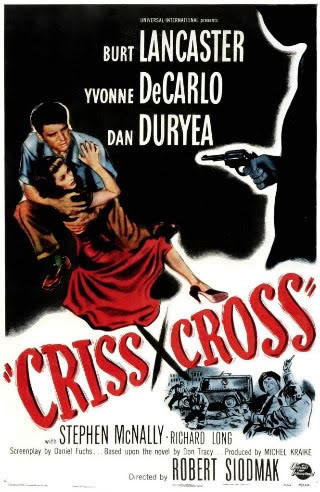
Burt Lancaster, Robert Siodmak, a heist, a hero doomed by fate and his own stupidity, and a rotten to the core femme fatale – all of this sounds a little like a brief synopsis of The Killers. In fact, it refers to Criss Cross (1949), a near relative of that earlier work and a film that vies with it for the honor of being hailed Siodmak’s best movie. Apart from the pairing of director and star, both these films share a similar theme and structure, and I find it almost impossible to decide which is the better one. Ultimately, it doesn’t matter – I like them both and they are two of the strongest noir pictures to come out of the 1940s.

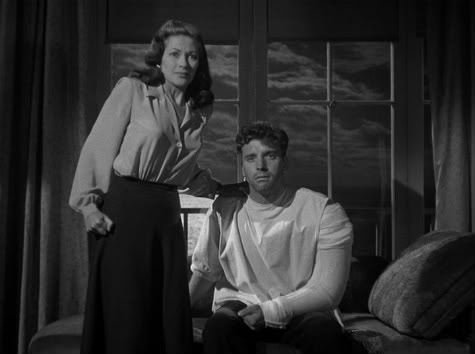
The title of this movie is a highly appropriate one for a tale where the paths of all the main characters are continually intersecting in a web of deceit and betrayal, each crossing up the other at the first opportunity. At the centre of it all are three people – Steve Thompson (Burt Lancaster), Anna (Yvonne De Carlo) and Slim Dundee (Dan Duryea) – bound together by an unholy combination of love, lust and greed. The opening shot, with the camera swooping ominously down from the night skies of LA, sees Anna and Steve caught in a clinch in the parking lot of a nightclub. As the lights suddenly pick them out, their startled and guilty reaction indicates that this is an illicit rendezvous. The fact is further underlined by the terse, tense dialogue – this couple is planning something dangerous, and the possibility of discovery holds a terrifying threat for them. Anna is married to local hood Slim Dundee, but she and Steve were once wed too. Their passionate embrace makes it clear that they have rekindled their old relationship, with the flame burning brightest for Steve in particular. And it’s from the point of view of Steve that the story is primarily seen, with the others moving in and out of the picture at various intervals. He’s a classic noir protagonist, a fairly ordinary guy with limited prospects and a blind spot where no-good females are concerned. A lengthy flashback sequence, accompanied by a suitably weary and resigned voiceover by Steve, spells out exactly how the lives of these three characters converged and the complex ties that continue to bind them together. In short, Steve’s job as a guard for an armored car company has led to his conspiring with Dundee to raid one of the secure vehicles. However, in the noir universe there’s no such thing as honor among thieves and everyone has his own hidden agenda. Steve is the only one of the trio whose motives have some semblance of decency – he’s driven by a kind of desperate love for Anna – and the aftermath of the heist shows just how deep the fault lines of treachery run in this uneasy alliance.

£5

Apparently the untimely death of Mark Hellinger meant that the original script was revised and certain aspects of the story were changed. Be that as it may, the movie that we ended up with is almost impossible to fault and Daniel Fuchs’ script successfully blends the heist and Steve’s obsessive love to powerful effect. Flashback structures can sometimes be confusing or upset the mood of a film but in this case it works perfectly, coming at precisely the right point and filling in the background details that are vital to understanding the nature of Steve and Anna’s relationship. With a tight script, and Franz Planer’s photographic talents, in place, director Robert Siodmak was free to put it all together with his customary visual flair. The opening, which I referred to earlier, pitches the viewer headlong into this complex tale of dishonor and betrayal in incredibly stylish fashion. And it never really lets up from that moment, with one memorable and superbly shot scene following hard on the heels of another. Siodmak uses every trick up his sleeve to manipulate the mood and perspective, from coldly objective overheads to disconcerting low angles and close-ups, interspersed with fast cuts and dissolves. For me, the real stand out scenes, although there’s hardly a poor moment throughout, are the ones in Union Station and in the hospital. The former not only gives a fascinating glimpse of contemporary LA bustle, but also shows the director’s skill in composing a complex series of shots in a crowded environment while retaining control of the geography. In the latter, he uses the reflection from the mirror in Steve’s room to break up the static nature of the setup and extract the maximum amount of tension at the same time.

If the technical aspects of the film are straight out of the top drawer, then the same can also be said for the acting. Burt Lancaster kicked off his career with some finely judged playing as the doomed Swede in The Killers, and Siodmak got him to tap into that same vibe to coax another wonderfully nuanced and sensitive performance from him. Once again he hits all the right notes as the big palooka whose dark romanticism sees him suckered by the machinations of a conniving woman. Every emotional state the script calls on him to display is carried off convincingly, from fear and disenchantment right through to the calm acceptance of his fate at the end – from the dumbfounded look of a guy who’s just had his guts kicked out by the woman he loves to the cloying sense of panic of a man under sentence of death and trapped in an anonymous hospital ward.

£4

Yvonne De Carlo didn’t have to go through quite as many stages, yet she’s still excellent alternating between the sassy, sensual broad that forms her public persona and the nervy, desperate woman she becomes in private. When she drops all pretense in the climax and reveals her true character to Steve and the audience there’s a tangible shock to be felt. Dan Duryea was an old hand at taking on the role of the slimy villain, and to that he adds a layer of menace as Slim Dundee. He manages this so well that it’s easy to understand the level of fear and trepidation he provokes in Steve when he contemplates the consequences of crossing him. While these three actors carry the movie, there’s real depth in the  supporting cast too. Stephen McNally is solid and sympathetic as the cop whose friendship for Steve leads him to inadvertently push him into crime. In fact, there are lovely little cameos all through the movie: Percy Helton’s chipmunk featured barman, Joan Miller’s garrulous barfly, Griff Barnett’s kindly and lonely father figure.

Criss Cross has been out on DVD for many years now, and the US disc from Universal is an especially strong effort. It offers a near perfect transfer of the film with clarity, sharpness and contrast all at the high end of the scale. My only disappointment comes from the absence of any extra features, bar the theatrical trailer, for such a quality movie. One shouldn’t really complain, in these days of bare bones burn on demand discs, but this film does deserve a commentary track at the very least. Still, we have got an excellent piece of the filmmaker’s art looking great. Criss Cross is a highly rated production that occupies a prominent position in the noir canon, and it has earned that honour. It’s one of those rare films that checks all the boxes and never puts a foot wrong from its dramatic opening until it’s darkly cynical final fade out. Those who are familiar with the picture will know exactly what I’m talking about, and those who are not owe it to themselves to discover this little treasure. This is unquestionably one of the real jewels of film noir.


Ulzana’s Raid

poster242

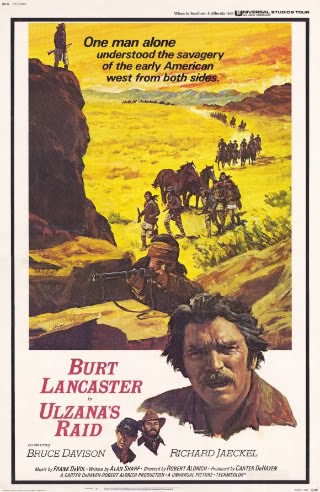
By the 1970s revisionism had hit the western in a big way; it had started the previous decade of course, but the social upheval of the period brought it fully to the fore in those last painful days of the Vietnam War. Conflict and domestic unrest have a way of drawing a nation’s gaze inward and it’s hardly surprising that the most iconic cultural markers are the ones upon which attention is most strongly fixed. Such was the case with the western, that most readily identifiable symbol of America’s heritage, and the brutal campaigns against the Indians provided a rich background to use as a parallel for a contemporary war. Ulzana’s Raid (1972) is frequently cited as an allegory for US involvement in South East Asia, and it’s hard to argue with that – inexperienced soldiers battling a largely faceless foe in hostile and unforgiving territory, exposing strengths and weaknesses, prejudices and virtues in the process.

The tale concerns the breakout by a band of Apache led by Ulzana (Joaquin Martinez) from the reservation, and their subsequent rampage across Arizona. In response, the army sends out a detachment under the command of a green officer, Lieutenant DeBuin (Bruce Davison), with orders to capture or kill the fugitives. DeBuin is to be aided in his task by two scouts, an Apache, Ke-Ni-Tay (Jorge Luke), and a white veteran, McIntosh (Burt Lancaster). DeBuin’s initial approach, fuelled by the fact that his father is a clergyman, is an almost evangelical one, wherein he views the Apache as a misguided and misunderstood people who need to be coaxed back to the bosom of white civilisation. The scouts, McIntosh in particular, have no illusions on this score though – to them the runaway Apache are no aspiring white men who have strayed from the flock, they are a dangerous and cunning enemy worthy of both fear and respect. As DeBuin’s troop follow Ulzana’s blood-soaked trail, encountering one horrific atrocity after another, the young lieutenant sees his faith in the essential goodness of humanity challenged. His reactions range from shock, leading him to question a bemused Ke-Ni-Tay about the motivation for such cruelty, to a kind of outraged vindictiveness as he demands his Apache scout bury the mutilated remains of yet another butchered settler. Throughout all this McIntosh remains dryly philosophical, guiding his young charge as best he can and providing the voice of reason when hate and revenge threaten to displace logical action. What we end up with is an examination of white America’s attempts to come to terms with an adversary whose psychology and beliefs are so alien and incomprehensible that they defy conventional means of tackling them. In the end, it’s only by worming his way into Ulzana’s thought processes that McIntosh is able map out a way to defeat him, although the ultimate irony is that it’s another Apache, and not all the might and firepower of the army, that finally brings closure.

£23

I think Ulzana’s Raid might just be Robert Aldrich’s best movie, blending action and harsh visuals perfectly. The cruel and pitiless Arizona and Nevada landscapes are a fitting backdrop for the brutal events that play out on the screen. There’s barely an interior shot in the whole picture, the bulk of it taking place amid the dust, rocks and canyons. Where he was a little coy about trumpeting his politics in earlier works here he indulges in a kind of liberal realism that never patronises or descends into sentiment. There’s clearly sympathy for the deprivation that has driven Ulzana and his band off the reservation in search of the spiritual power they crave, but at no point does Aldrich allow the Apache to be seen as the kind of dippy mystics that is the stuff of caricature. He never shies away from depicting the merciless nature of Ulzana and his men, but nor does he seek to cover it up in politically correct excuses – to paraphrase both McIntosh and Ke-Ni-Tay, the Apache are what they are and that’s how it’s always been. The main focus though is on how the young lieutenant and his men cope with the reality of fighting an enemy that they can neither seem to catch nor even understand. Bruce Davison had suitably innocent and freshly-scrubbed features to portray a man about to have all his high-minded illusions shattered. He matures nicely as the story progresses and McIntosh’s wisdom gradually sinks in. As the grizzled old scout, Lancaster dominates the movie with his wry observations helping to ground it all. He displays a sense of fatalism that befits a man whose years of living on the frontier have exposed him to the brutal nature of men in general. Richard Jaeckel also deserves a mention for his sergeant who’s been through the wars and learnt that while officers need to be obeyed and respected their judgement is not always to be trusted.

Universal’s UK DVD of Ulzana’s Raid presents the film at about 1.78:1 anamorphic. The disc contains no extra features at all, but the movie itself looks very handsome with good detail, sharpness and colour. I should mention that the UK version has a number of mandatory BBFC cuts for horsefalls – these don’t amount to much in terms of time but they do result in slightly jarring editing when they occur. As far as I know, the continental European versions do not have any of those cuts present. As I said, this is probably Aldrich’s best work and it makes for a western that’s both intelligent and engrossing. It casts a cool eye on the old west that refreshingly avoids being either judgemental or romantic – the viewer is expected to be enough of an adult to make up his or her own mind without being led by the nose. Highly recommended.


Vera Cruz

poster243

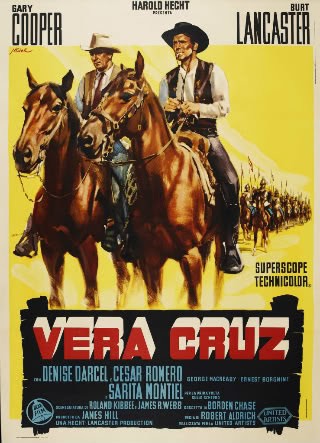
Reputations are a strange thing. They tend to wax and wane as the allegiances of critics shift over time and fashions change. Some directors have seen their stock rise dramatically while others have toppled from once lofty positions. There are those though who never seem to be celebrated excessively nor wholly forgotten, they simply exist in that shadowy periphery where both praise and criticism are always heavily qualified. One such man is Robert Aldrich, a director who made some memorable and stylish films yet continues to be granted only a kind of grudging respect. Vera Cruz (1954) was one of his early efforts and has traditionally been viewed as a good action picture, but that’s about it. It’s also been cited as the inspiration for the following decade’s spaghetti westerns, and I fully agree with that assertion. I see it as occupying an odd place among the westerns of the 50s; it doesn’t probe dark psychology like an Anthony Mann film, and it has none of the sparse leanness of Boetticher’s work. Instead it leaps over all of this and presents, or maybe even glorifies, the kind of amoral characters who would come to populate the western from the mid-60s onwards.

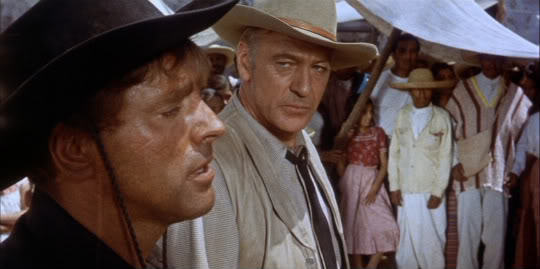
The story takes place in 1866, during the Franco-Mexican war, when the followers of Juarez were struggling to wrest control of their country back from those forces loyal to the puppet Emperor Maximilian. The focus is on two Americans who, as the prologue informs us, are among those who have drifted across the border after the Civil War to sell their services to the highest bidder. These men are Ben Trane (Gary Cooper), a southern gentleman ruined by the war and Joe Erin (Burt Lancaster), a reckless adventurer and a stranger to the notion of ethics. The early scenes where Erin sells Trane another man’s stolen horse set the tone for the rest of the picture, where double-crosses, lies, betrayals and greed come thick and fast from every side and no one seems to spare a thought for anybody but himself. When it looks as though Maximilian’s people offer the better chance for profit, both men throw in their lot with them. This sets up a nice sequence at the Imperial palace as Erin’s men show themselves up for the uncouth, rag-tag bunch they are. Of course, the aristocrats that they casually offend and outrage are seen to be no better, displaying no qualms whatsoever as they calmly scheme to dispose of their new employees as soon as their purpose is served. The purpose in question is to escort, and ensure the safe passage of, a French Countess (Denise Darcel) and her coach from Mexico City to the port of Vera Cruz. Finally, it would seem that there’s some honour to be seen. After all, risking one’s neck to ensure a woman is able to travel unmolested through treacherous country infested with Juarista rebels on the rampage is not an unworthy enterprise. However, at no point in this story is anything really as it appears on the surface. The whole mission is nothing but a blind on the part of the monarchists to smuggle a shipment of $3 million in gold out of Mexico to buy military aid and , by extension, some time for the crumbling regime. Naturally, everyone wants the money for themselves – Erin, the Countess, Trane and even the Juaristas in order to further their political aims. The fact is that of all those eyeing the fortune, the only one (barring the Juarista general) who has even a shred of decency motivating them is Trane. He sees the money – or at least as much of it as he can bargain for – as a means of restoring his devastated plantation and those who have grown dependent on it. After a succession of ambushes, broken promises and a desperate assault on the Emperor’s forces, everything comes down to a simple duel between two very different men in a dusty Mexican courtyard.

£20

As I said earlier, I’d have to agree with those who claim that Vera Cruz is a major influence on the spaghetti western. In fact, it’s a virtual template for the flood of Euro westerns that hit cinemas within ten years. The south of the border setting is the first thing that comes to mind, and when you factor in the strife torn political background the parallels become more apparent. The difference of course is that in Aldrich’s movie the politics really only forms a backdrop to facilitate the narrative without impacting directly on it. The film isn’t making any particular ideological point, except perhaps that greed overrides everything and corrupts everyone, but concentrates on entertainment albeit with a cynical twist. The main characters, Erin and Trane, profess to have no interest in anything beyond money when they start out. However, as the story progresses, Trane does exhibit something approaching a conscience. Both Cooper and Lancaster’s roles can be viewed as a blueprint for the upcoming anti-heroes from Europe. In a way, the Italians ended up presenting a kind of hybrid of these two men; a mercenary figure who hasn’t abandoned himself totally to amorality, a taciturn man with a personal code of honour (Cooper) who retains a sort of capricious flamboyance (Lancaster). It’s Lancaster’s grinning, black-clad rogue who has the greatest impact, but Cooper’s steadiness plays a significant part in keeping the film balanced. For all Lancaster’s scene stealing bravado, Cooper still holds the attention – his little grimaces at key points have a great understated quality to them. As for Aldrich’s direction, his handling of the action scenes is exemplary. The climactic assault is a well executed sequence that’s perfectly paced with just enough establishing shots to ensure the geography remains clear throughout. Aside from the big set pieces, he uses the wide screen well and mixes up the long, medium and close shots to good effect. He also throws in a variety of angles, and the final duel between Trane and Erin is yet another example of the film’s influence on the likes of Leone. While the lingering, operatic quality is missing, the basic iconography that would become so familiar is certainly present in the angles and the cutting.

Vera Cruz was shot in 2:1 Superscope and the UK DVD from MGM retains that ratio. The anamorphic transfer is a reasonable one, colours are strong and there’s no serious damage to the print. The only extra provided is the theatrical trailer. The film is due out on BD this coming June and it’s the kind of production that ought to benefit from the upgraded picture quality. As a movie, it’s not exactly a typical 50s western; in tone, it almost bears comparison to a 60s WWII extravaganza – big, brash, colourful and noisy. While it may not have the depth of the best from its decade, it is still an influential piece of work. Moreover, it offers an hour and a half of first class entertainment. I like it a lot and think both the film and its director deserve some renewed attention.