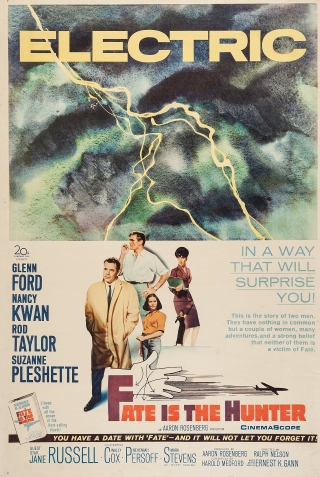
Fate Is the Hunter

“When your number’s up, why fight it, right? And if it’s not, why worry about it?”

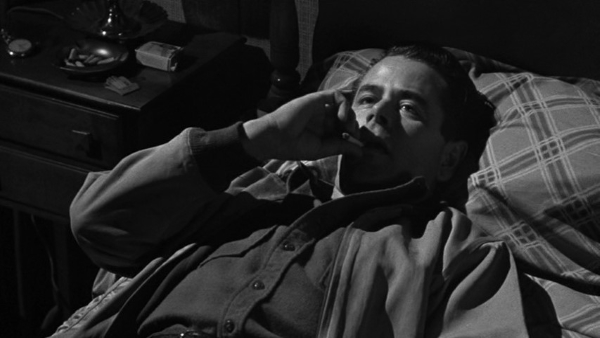
Fate and faith. That line quoted above is delivered with a kind of petrifying calm by Rod Taylor’s flyer during one of the many times he and his maker passed within a hair’s breadth of one another in Fate Is the Hunter (1964). He is by his words and by his actions a fatalist, believing that most of what happens in life, the larger scale concepts at any rate, are beyond one’s control. It’s part of his attraction, lending a devil may care aspect to him that draws people when it’s carried off with aplomb. And then there is faith, such an important and defining principle in the human condition. One may or may not subscribe to the former, but the latter (and not necessarily in a religious sense) surely touches all of us and influences our approach to life. Both of these ideas are explored in Ralph Nelson’s movie, where the trappings of the genre picture – in this case the aviation thriller/disaster movie – are used to frame a fairly simple tale of one man’s belief in the character of his friend and, consequently, in his own judgement.

There is a lengthy prologue, the routine preparations for a transnational flight filling up most of the time and introducing three main characters – pilot Jack Savage (Rod Taylor), his friend airline executive Sam McBane (Glenn Ford), and stewardess Martha Webster (Susanne Pleshette). So yes, all fairly routine, until it’s not. A fault in an engine, then a communications glitch, and then the other engine fails. And then the crash. Of those on board only the stewardess survives and it falls to McBane to sift through the little evidence available in order to fix the cause of the disaster. The airline seems keen to put pilot error on the part of Savage forward as the reason, and the air of raffish irresponsibility he spent his life cultivating backs up this approach. However, McBane is unconvinced, partly due to a sense of self preservation as his championing of Savage over the years has left his own acuity at least on the periphery of suspicion, but perhaps more importantly he balks at the notion his friend was so careless as to be the one solely responsible. In his efforts to see beyond the easy way out, he finds himself delving into the past, the past of Savage to be exact, trying to clear the man and in a way trying to clear his own conscience, to validate his faith in a friend and in himself.
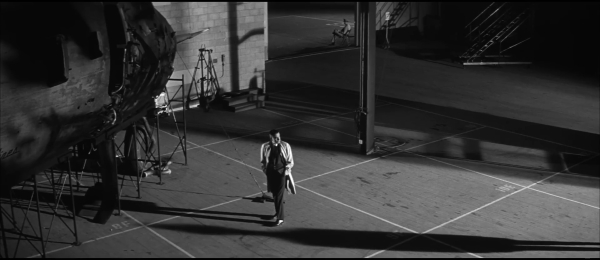
Anyone going into this movie with the expectation of seeing a thriller of some kind is likely to be disappointed. There is the tense build up to the crash in the prologue, and a pretty suspenseful reconstruction undertaken right at the end, but that’s about it in terms of standard thrills. The rest of the movie, the bulk of the narrative, is a character study, an examination of who Savage was and why he acted as he did, largely told by means of multiple flashbacks, each one colored somewhat by the sensibilities of the person doing the telling but also by the spirit of the man himself. By the end, we have gained a broader perspective on this ebullient fatalist, the views of those touched most deeply by their contact with him having reshaped this both subtly and decidedly. The net result is that the truth is arrived at by a combination of chance and logic that is apt under the circumstances, and on a deeper level McBane feels vindicated not only since he has salvaged the reputation of his friend but because in so doing he has reaffirmed the primacy of faith.
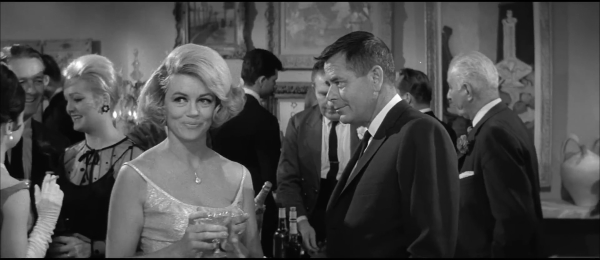
Ralph Nelson had a spotty, patchy kind of career, veering wildly from genre to genre and hard to pin down stylistically. Fate Is the Hunter was a memoir penned by aviator Ernest K Gann, the stories contained in that book have given rise to a number of movies but this particular film just borrows the title. Maybe Gann himself was unhappy about the result but the movie is attractively shot by Milton Krasner, has a score by Jerry Goldsmith which manages to be both haunting and lush, and is thematically consistent in a way that is satisfying.
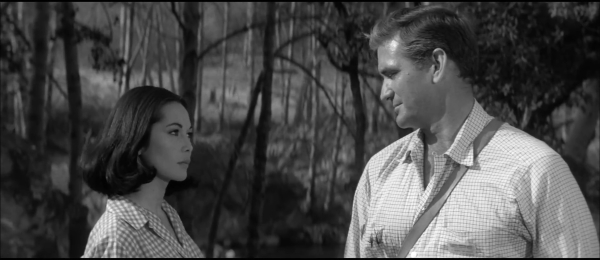
Ford plays it low-key for the most part, a quiet performance that suggests maturity and fits his character. Taylor could be big and showy on occasion all through his career, but he too had a quietness, an introspective side that he was able to tap into and it serves him well at a few key moments. The piecing together of the various facets of a man’s life and character through the vignettes presented in the flashbacks allows a succession of performers to drop in and sketch a few more lines in the emerging portrait of Savage. Mark Stevens’ noir heyday had passed yet he brings a fine sense of weary dissipation to the role of an alcoholic former buddy who owes much to Savage. Dorothy Malone ( The Tarnished Angels)gushes glamorously as a socialite ex-fiancée in a brief interlude, while Nancy Kwan (The World of Suzie Wong) has a slightly more substantial part and consequently adds a good deal more to our understanding of the pilot. Susanne Pleshette, on a good run around this time and only a year after co-starring with Taylor in Hitchcock’s The Birds, brings a touching bewilderment to it all, wondering why she should have been singled out to live when everyone else perished. She was an actress who always had a gutsiness about her and that aspect is on show when she has to confront her fears and thus make perhaps the vital contribution to the final resolution.
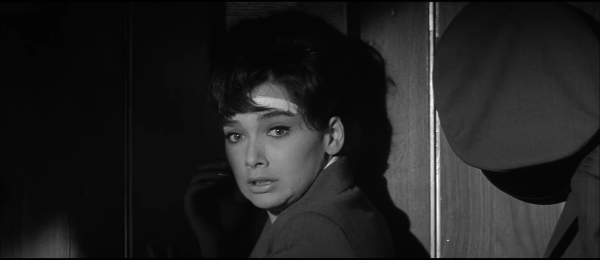
Fate Is the Hunter is the kind of film that isn’t quite what it seems to be on the surface. There is aviation drama to satisfy those drawn to the title by that aspect but that’s only incidental I’d say. At heart, the movie is about perceptions and assumptions, how chance and belief can combine to shape a life, how one’s impressions and suppositions may not be as dependable as we hope, and how reason can transcend the random while also bolstering faith and friendship.

Human Desire

Fate and free will, two philosophical concepts that go to the heart of the human condition and form the basis of a good deal of religious thinking and debate. They loom large in the world of film noir too, though that shouldn’t come as any great surprise since art and our perception of our place in the scheme of things are inseparably linked. Fritz Lang’s Human Desire (1954), made as he was approaching the end of his time in Hollywood, posits both fate and free will as drivers of his characters and invites viewers to make up their own minds on which exerts the more powerful influence. I’m of the opinion that Lang himself regards both of these concepts as being in play simultaneously and that there are certain points at which individuals have the opportunity to exercise their free will in order to determine which path of fate they will lock themselves into.

If one were to seek a visual metaphor for fate as a fixed and predetermined path, then a railway line is as good a one as any. Sleek and clean, indicative of precision and order, the lines forge the way ahead, carrying their passengers to a destination that lies at the end of the track as sure as a compass needle points to north. Yet the lines run in more than one direction and points do exist where it’s possible to shunt from one to the other. Human Desire opens with those railroad lines and the locomotives that carry all kinds of people to all kinds of places, starting and ending with absolute certainty at predefined locations that can no more be avoided or cheated than birth and death themselves. In between though, the choices are available, laid before the driver as he advances and by extension before those he brings along with him on the journey. Jeff Warren (Glenn Ford) is an engineer on the railroad, back home and back in his old job after serving in the Korean War. He is very much a regular guy doing a regular job, following those clearly defined lines in life in many ways. There’s nothing particularly special about him, he’s no medal adorned hero nor does he profess to have any ambitions beyond the desire for an uneventful life. However, a movie with this title must necessarily focus on desires affecting all kinds of people and even changing according to circumstances. Carl Buckley (Broderick Crawford) is an old acquaintance, a man who has risen to assistant yard master while Warren was off at war. He’s a blunt, brutish character, loud of mouth and quick of temper who manages to get himself fired for quarreling with his supervisor.

Desperate to get his job back – he’s only got a few more years to do before he qualifies for a pension after all – he badgers his wife into interceding on his behalf with a big city businessman who he figures has sufficient clout to see him reinstated. His wife Vicki (Gloria Grahame) is much younger and it’s immediately clear from her reaction that there is some history involving herself and the corporate bigwig that goes beyond the fact her mother was once his housekeeper. This is the catalyst for the snarl up in the lives of all concerned that follows. It’s made clear that Vicki gets Carl his job back by offering sexual favors. Even though he brought about this situation and essentially forced his wife into a compromising position, Carl is affronted, savagely beating her and making her an unwilling accessory to murder. A sordid business all round and one whose spreading ripples draw in Jeff Warren, who just happens to be riding the same train when the killing takes place and subsequently finds himself fatally attracted to Vicki.

Does one slaying inevitably lead to another? Do abusive, dehumanizing relationships become habit forming and addictive? Are the patterns woven by rotten choices and poor judgement indelible? Or can a virtual lever be pulled at the crucial point and send a life back onto a track that hauls it away from destruction? All of these questions are posed during the course of Human Desire and are answered at least in part by the close. While I’ve no wish to take any credit away from scriptwriter Alfred Hayes, adapting Jean Renoir’s own adaptation of an Émile Zola novel, it seems clear enough that these are themes Lang addressed on multiple occasions and thus carry the director’s imprint too.

Glenn Ford’s everyman qualities are to the fore in Human Desire. He plays Jeff Warren with a directness and simplicity that befits an uncomplicated working man who is unexpectedly snared in a web of temptation and desire. He is faced with the dilemma of succumbing to the vagaries of fate or using his free will to chart an alternative course. Ford’s ability to present frankness alongside a hint of personal dissatisfaction and discomfort works well under the circumstances. I see a touch of resentment early on in his realization that men like Buckley have prospered while he was doing his duty in Korea, it’s just barely there but I think it helps color some of his subsequent actions and decisions. In contrast, Gloria Grahame’s mistreated femme fatale is anything but straightforward, veering from victim to manipulator, cowering one moment and goading the next, and effortlessly alluring throughout. Her work alongside Ford here makes for an interesting companion piece to their previous collaboration with Lang in The Big Heat. Crawford too is neatly cast, by turns shambling and violent he’s a doomed figure haunted by his inadequacy and too ineffectual to challenge his own fate. On the other hand, Edgar Buchanan and Diane DeLaire as Ford’s landlord/colleague and his wife provide an alternative take on marriage. Their affectionate devotion in effect represents the other route available to Ford, in stark contrast to the dysfunctional dynamic of the Grahame-Crawford mismatch.

Human Desire ought to be easy enough to view these days. I have the UK Blu-ray from Eureka, a dual format release that looks terrific, and there is a Kino version available in the US as well. The main supplemental feature on the Eureka Blu-ray consists of an interview with Tony Rayns which fills in some background information on the making of the movie as well as comments on scriptwriter Hayes. I’m not sure the contributor fully gets the film though and he raises a number of points I found myself taking issue with, not least that tiresome critical gambit of looking at movies in terms of what they are not rather than what they are. Anyway, his is an interesting perspective, even if I don’t share all his conclusions. Personally, I’ve always been fond of Human Desire for its thoughtful exploration of themes and motifs that frequently grace Fritz Lang’s movies. Well worth checking out.

Cowboy

“You’re a dreaming idiot, and that’s the worst kind. You know what the trail is really like? Dust storms all day, cloudbursts all night. A man has got to be a fool to want that kind of life. And all that hogwash about horses! The loyalty of the horse! The intelligence of the horse! The intelligence? You know a horse has a brain just about the size of a walnut. They’re mean, they’re treacherous and they’re stupid. There isn’t a horse born that had enough sense to move away from a hot fire. No sensible man loves a horse. He tolerates the filthy animal only because riding is better than walking…. Pour me a little more whiskey there, will you?”

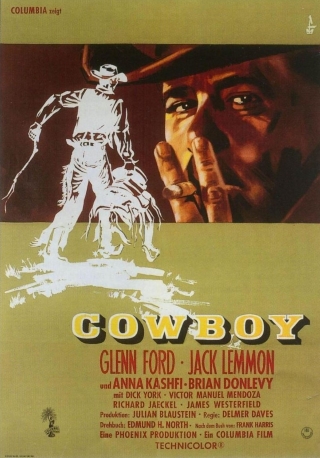
The myth, and how to deconstruct it. Those lines above, quoted by Glenn Ford’s world-weary trail boss as he lies in a hot bath he’s traveled the length of the country for, drinking whiskey from a china cup and shooting cockroaches off the wall, seem to rip the romantic facade away from the genre. We’re looking at a man who is bone tired, more than a little jaded and in no mood to indulge the highfalutin fantasies of Jack Lemmon’s lovesick hotel clerk. Delmer Daves’ Cowboy (1958) therefore creates the impression that the movie is going to dispense with legends and instead print some mean and ugly truths. In a way it does too, at least in the sense that the kind of codology Ford holds forth against gets short shrift, and for long stretches it looks as though the whole thing is building towards a grim revision of the genre. Nevertheless, the deeper myth, that which informs and elevates the western movie is, unsurprisingly, what Daves was searching for and what he skillfully reaffirms by the end.

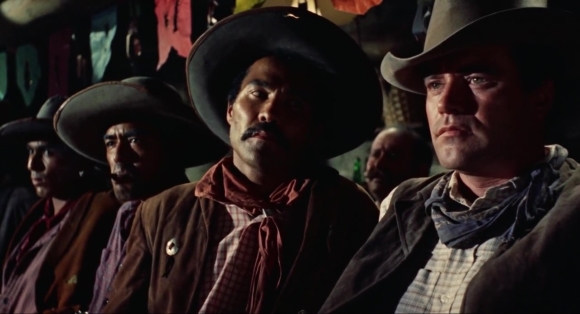
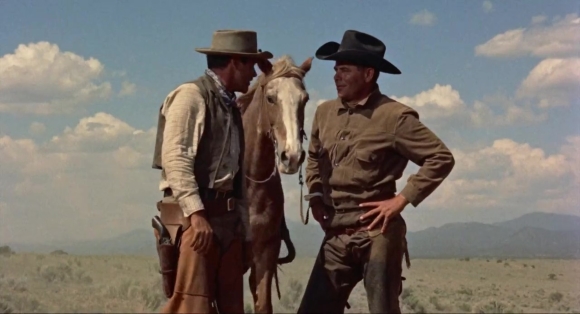
The structure is classically circular, starting and ending in what what is nominally the same place, creating the impression of a tale turning back on itself but finishing up on a very different level as far as the development of the characters is concerned. The story is seen through the eyes of Frank Harris (Jack Lemmon), an ambitious young man first encountered working in a hotel in Chicago. This is not where he intends to spend the rest of his life though and the fact he has fallen for a young Mexican woman and incurred the displeasure of her father is one of the factor’s influencing his plans. When the expansive and free spending Tom Reese (Glenn Ford) and his rambunctious cowhands book into the establishment, this sets Harris thinking and a run of rotten luck at the card table for the trail boss provides an opportunity worth seizing. In short, Harris makes Reese a loan of his savings to get him out of trouble in return for a partnership on the upcoming cattle drive, one which will conveniently take him all the way to Mexico. What follows is a classic trail story, one beset by difficulties posed not only by the hardships of the terrain and the hazards of the Comanche, but also by those stemming from the personalities and idiosyncrasies of one’s traveling companions. This site often looks at westerns underpinned by the theme of redemption but here it’s not so much that aspect that grounds the film as those near relatives: growth and renewal.

Cowboy is based on an autobiographical work by Frank Harris called My Reminiscences as a Cowboy. Born on the west coast of Ireland in Galway, Harris went on to lead what might reasonably be termed a colorful life, traveling throughout the United States and Europe and earning fame or notoriety (depending as ever on one’s point of view) in the process. He certainly wouldn’t be the first writer who is alleged to have added some embellishment to his experiences so it is hard to say how accurate the source of what is presented on screen is. That notwithstanding, Cowboy, with its script by Edmund H North and and an uncredited and still blacklisted Dalton Trumbo, tells a rattling good yarn with plenty of incident, all of which is predicated on a solid core message.

Every time I come back to a movie directed by Delmer Daves I’m once again struck by his focus on the better aspects of human nature. I see this as the defining characteristic of his work, that simple faith in humanity and its capacity for rising above the petty and the ignoble, and that perspective forms a large part of what draws me back to his films regularly. As was mentioned above, the redemption motif is not present in the movie as it doesn’t feature characters who have wandered down the kinds of paths that require a trip to that destination. What we do get are men who have either lost touch with or have yet to attain a fully rounded appreciation of humanity. So growth and renewal are the dominant themes, which I regard as a welcome detour. Daves was always very much at home shooting outdoors and he makes fine use of the Arizona and New Mexico locations, beautifully photographed by Charles Lawton Jr and with a fine George Duning score to complement the imagery.

For a long stretch it appears as though the plot is going to chart a hard bitten course, Harris soon has the exuberance knocked out of him by the unforgiving nature of both the environment and his companions. The whole purpose of his trek across the border is shattered in one moment of appalling revelation, a moment which threatens to tip him into a pit of despair and bitterness that is deep and steep sided. Similarly, Reese spends much of his time indulging his cynicism and abrasiveness. To all intents and purposes, that dismissive diatribe quoted at the head of this piece starts to sound more and more like a summation of the myth-busting stall the film has set out. Yet it’s a deceptive impression, for the characters played by Lemmon and Ford respectively learn and grow as a result of their experiences and their effect on each other. Lemmon had a knack for essaying a unique type of passion and enthusiasm that often felt manic and brittle. He comes perilously close to cracking under the strain and the provocations that come his way, but he matures in the process and tempers his excesses in a way that transforms them into strengths. Ford’s destination is slightly different, but just as fulfilling for the character and the viewer too. His path is essentially one of rediscovery and renewal, the bluster and machismo discarded as he witnesses the negativity of his influence mirrored in the meanness that threatens to harden the heart and damn the soul of his youthful partner. In support Brian Donlevy plays it quiet and pensive in a way that he didn’t always get the chance to, a disillusioned gunslinger looking for a different kind of life. There’s something very moving about his ultimate fate, and it proves to be one of the prime catalysts spurring Ford’s epiphany. Anna Kashfi (Marlon Brando’s first wife) is the only woman in a very masculine movie and although her role is important for its impact on Harris in particular, she’s only in the film for a short time. Richard Jaeckel, Dick York, Frank DeKova and Strother Martin are among those who also provide telling little sketches that serve to flesh out the story.

Cowboy is a fine Delmer Daves western, perhaps weakened somewhat by the lack of a more positive female character of the type that bolstered and added depth to his very best movies. Still, there’s much to admire in what we do get, visually, thematically and in the work of the principal cast members.

With this post I have now managed to cover all of the westerns directed by Delmer Daves. He’s a filmmaker whose work I never weary of sampling whatever the genre and his movies have been regularly featured here over the years. Below are links to all of his westerns that I have posted about.

Broken Arrow

Drum Beat

The Last Wagon

Jubal

3:10 to Yuma

The Badlanders

The Hanging Tree

The Four Horsemen of the Apocalypse

While literary adaptations come up for discussion on this site all the time, remakes of earlier movies are less common. The Four Horsemen of the Apocalypse (1962) is both an adaptation of the novel by Vicente Blasco Ibáñez and a remake of the silent film directed by Rex Ingram and starring Rudolph Valentino. In the interests of full disclosure, allow me to get it out of the way from the get go that I have neither read the novel nor have I seen Ingram’s movie. As such, I won’t be indulging in any comparisons here, which is something I try to avoid where possible anyway. After all, a work ought to be assessed on its own merits, to do otherwise is to rob it of its integrity.

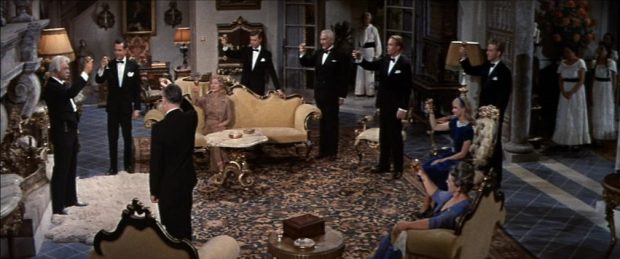
This is a tale of family, war and division yet, in the final analysis, I think it is also a film about unity. The opening is celebratory, packed with dancing, music and, above all, color. It is 1938 in Argentina and Madariaga (Lee J Cobb), in a brazen repudiation of his years, is reveling in life, for its own sake and also in anticipation of the coming together of the two branches of his family. Madariaga has two daughters, one married to Karl (Paul Lukas), a German, and the other to Marcelo (Charles Boyer), a Frenchman.  The offspring of these two couples will all be present after a long absence, so it should be an occasion for joy. However, it is, as has been noted, 1938 and joy is about to take a long vacation. During the course of the evening, Karl’s son Heinrich (Karl Boehm) comes clean about his involvement in the Nazi cause, provoking outrage in his grandfather. To the accompaniment of elemental furies within and without, the old man has visions of the horsemen of the title, representing conquest, war, pestilence and death, charging across a lightning ripped sky. And then he dies. The story moves to Paris, seen largely through the eyes of Julio (Glenn Ford), the dissipated and pleasure-seeking son of Marcelo. That storm which toppled the head of the family half a world away has followed and has lost none of its strength on the long journey. Julio is a self-absorbed wastrel, quick to seduce the wife (Ingrid Thulin) of one of his father’s friends, complacent and secure in the apathy afforded by his neutral status. When the war finally breaks out and engulfs everyone, he gradually learns the value of love, of loyalty, of sacrifice and, crucially, of what it means to be part of a family, even a divided one.

War, love and hate, but family above all. We follow the fate of the two conflicting branches of the family, one half seduced by darkness and the other coddled by decadence. The war cleaves them, tearing the younger generation in particular apart and setting them at each other’s throats. Yet by the end, when the horsemen have done their worst, the intangible and eternal core of the family remains intact, in spirit if nothing else. That finale, with those lords of chaos riding triumphantly across the sky, has an unquestionably grim quality, an ancient malignancy pressing on in a relentless continuum. Still, there is a grain of hope there too – there are, it seems, two slightly different endings and it’s possible the viewer’s perceptions may shift depending on which one is seen – hinting at the ultimate resilience of the concept of family. Both sides of Madariaga’s clan have been devastated yet even in the moment of their greatest loss those who remain have been drawn back together. Perhaps that is the message running through it all, that family in its broadest possible sense, that of society of which we are all members, still endures. The rampaging horsemen may be forever with us, but so too are those unshakeable familial bonds that hold everything in place.

The Four Horsemen of the Apocalypse was poorly received on release, with a disappointing box office and a critical drubbing. Bosley Crowther of the New York Times, who never seems to have met a picture he liked, kicked the movie good and hard. Opinions are always varied and no more than an individual’s reaction to what is offered up, and of course there’s no getting away from the fact that I am simply presenting my own take here, but it is generally both poor form and somehow worthless to criticize a work for what it is not as opposed to what it is. Should anyone feel like seeking out Mr Crowther’s hatchet job on the film, it will be clear that he appeared most offended by a remake and adaptation not being a carbon copy of what came before. That type of criticism feels utterly redundant. However, what struck me as even more wrong-headed were the barbs aimed at Vincente Minnelli’s direction. To quote from that review:

“…most of it reeks of the sound stages and the painted sets of a Metro-Goldwyn-Mayer studio These, on wide screen in color and lighted like a musical show, convey no more illusion of actuality than did “Snow White and the Seven Dwarfs.”That much is the fault of the screen play, garbled grossly by Robert Ardrey and John Gay, and the staging of Mr. Minnelli, who should have looked at a couple of neo-realist films.”

That comment indicates to me that the writer either ignored or fundamentally misunderstood the director and his intentions. The artist is concerned with truth first and foremost. In order to address this, he searches for, he explores, and if he is truly fortunate, he finds himself in a position to present that truth via his chosen medium. Minnelli was an artist. For him, the quest for truth took precedence over any thoughts of adherence to realism. Cinema allows for the incorporation of a broad range of techniques and approaches, and there are those who try to reconcile artistic truth and realism. Minnelli, on the other hand, sought to achieve a separation, happily sacrificing the illusion of realism – and excepting documentaries, what appears on the screen can never be anything other than illusion – in order to break down those barriers which would stifle artistic expression.

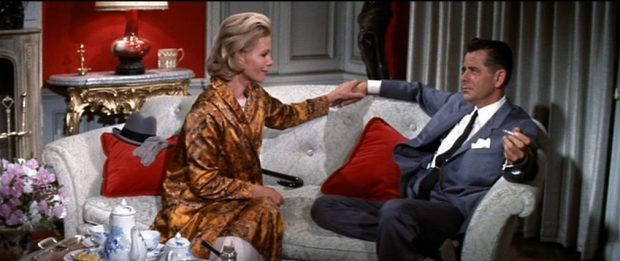
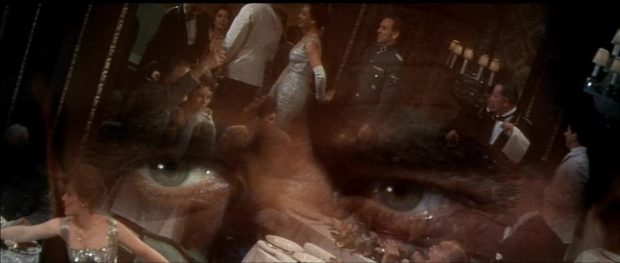
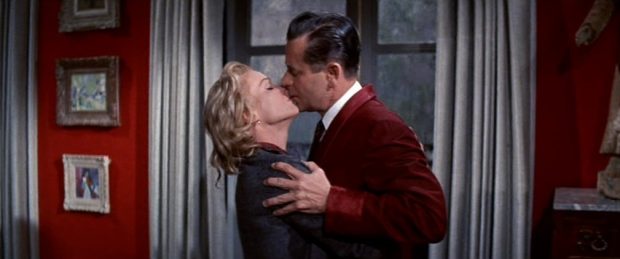
All of those elements which have been pointed out as flaws or weaknesses are deliberate choices on the part of the director.  While Minnelli might have had some reservations with regard to aspects of the script and casting, the staging and presentation feel very characteristic of his work. He was a very visual director, making bold choices when it came to color and that balletic sense he brought to set piece scenes: the debauched Parisian parties, the Latin nightclub, the riot that leads to the initial arrest of Yvette Mimieux. There is a oneiric quality to all of this, heightened sensations brought to life on the screen in order to stimulate the viewer’s emotions. The striking colors are very effective too; the predominance of red is notable, from the drenched and saturated newsreel footage, suggesting danger and violence, to the decor of Glenn Ford’s apartment. The contrast of red and grey is marked in that set, and also in the costuming in one key scene. The color scheme of the apartment is reflected in the intense, passionate red of Ford’s smoking jacket and the cooler, more practical grey of Ingrid Thulin’s suit, mirroring their contrasting characters when they reluctantly acknowledge that circumstances have left them no alternative but to part.

In terms of casting, the most widespread complaint seems to relate to that of Glenn Ford, mainly due to his age. Admittedly, he is old for the part, in his mid-40s at the time. The early scenes in Argentina, and also pre-war Paris, where Ford is supposed to be gliding along fueled by youthful hedonism, feel a bit forced. However, the role of Julio is one which requires the character to mature fast as the war takes an increasingly heavy personal toll and the option of simply sitting on the fence becomes no option at all. It is here that Ford grows into the role, or it could be said the role grows around him. Either way, that internalized dissatisfaction which the actor was able to exploit so well in his classic western and noir roles in the preceding decades serve him well. As the character of Julio begins to live a double life, so Ford gets the requisite psychological squirming across. Minnelli is said to have initially wanted Alain Delon for the part and it’s interesting, if not especially productive, to speculate on how he would have handled the part. Ingrid Thulin (dubbed by Angela Lansbury) has a certain Scandinavian aloofness about her – Ava Gardner is said to have been the first choice for the role – but she plays well off Ford and their relationship feels credible.

Charles Boyer’s turn as the head of the French side of the family is nicely judged. He is as suave as one would expect of a man in his position, but there is discomfort too, and it comes out in two scenes with Ford, one where he confesses to the cowardice which has hounded him all his life, and then on a rain-soaked Parisian bridge, racked with grief after the death of his daughter, as he begs his son to be a braver and better man than he had ever been himself. Boyer also shares a poignant moment with Paul Lukas, where both men are screaming at each other in bewilderment as the horror of their personal tragedies mounts. Paul Henreid is simultaneously chilling and stoic as the hero of the resistance, slowly being destroyed, physically by the attention of the Gestapo and mentally by  the loss of his wife’s love. As for the others, Yvette Mimieux is fine as the impassioned younger child of Boyer, while Karl Boehm is a textbook Nazi. Finally, Lee J Cobb plays it large in the  opening scenes. Is it all too affected? Well, that is something the viewer will have to decide. For me, in a movie where many aspects are heightened and intensified with the aim of raising the dramatic temperature, Cobb’s performance can be considered to be just another dab of color.

The Four Horsemen of the Apocalypse can be found on DVD in the US as part of the Warner Archive, and editions are available in France, Italy and Spain. This is a film I came to relatively recently and one which I quite like. It has its flaws and it drifts in places but there are enough of Minnelli’s characteristic flourishes to draw me in, and Glenn Ford is someone I can always watch. It is not perfect but the pluses outweigh the negatives for me and I reckon it is a good deal better than some of the criticism leveled at it would have us believe.

The Violent Men

Quality is a hard thing to  define with any degree of precision. It’s something we all know when we see it but try putting it into words, creating a label for it which can be affixed to suitable candidates and you find yourself in trouble. If that’s a tough one, then differentiating or categorizing grades of quality is the kind of challenge one could base myths on. I, like probably most other people, will take some pride in my ability to recognize “a good movie”, even if that is merely my necessarily subjective view, and I might also try to impart to others exactly why I feel this is the case. But what separates a great movie from a simply good one? I genuinely don’t know, but again I can usually recognize it. All this abstraction leads me to The Violent Men (1955), a Rudolph Maté directed western with a superb cast and the kind of names on the other side of the camera which really ought to ensure its comfortable position among the acknowledged greats. Yet it doesn’t belong there, it’s not poor by any means but never rises above the level of quite good. And I can’t help but wonder why that’s so. Needless to say, any and all ideas on the subject are welcome and will be taken into consideration.

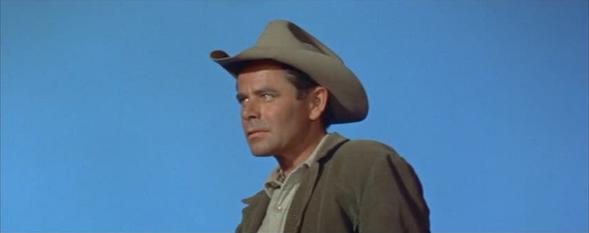
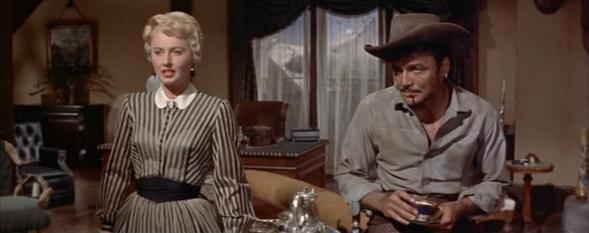
The framework within which the story plays out is a classic one for the genre, the range war. The motivation behind it all appears to be ambition and a twisted kind of love, twisted by a its traumatic birth in violent circumstances. I say appears here because it’s really greed, or perhaps covetousness might be more accurate, which propels everybody and everything towards another of those fiery yet cathartic conclusions. We follow it all from the perspective of John Parrish (Glenn Ford) a Civil War veteran who came west in the uncertain hope of recovering from his wounds. Well he did recover, and clearly made a success, albeit a slightly reluctant one, of his time as a small-scale rancher. However, in something of a subversion of the standard western trope the dearest wish of this young man is to go east. That’s what he claims anyway, or at least it’s what his betrothed, Caroline Vail (May Wynn), has encouraged him to believe. When we meet Parrish he’s poised to sell out and be on his way to a new life, but there are clearly nagging doubts stalking him. He’s ready to sign everything over to local big shot and bully Lew Wilkison (Edward G Robinson), a battle-scarred old tyrant who rules the range with an iron fist but who fails to see the treachery taking place under his own roof involving his restless wife Martha (Barbara Stanwyck) and his shiftless younger brother Cole (Brian Keith).

I spoke about the path that leads to a blazing climax earlier, but it’s a long and slow-burning fuse that leads us there. The first half of the movie builds everything up carefully and methodically, as Ford’s character gradually comes to terms with his own doubts, his sense of responsibility to a place and a people who arguably saved his life and offered him a new start. As he watches injustice pile on top of vindictiveness, till cold-blooded murder is done before his eyes, we see him wrestling with his own indecision. Ford was, in my opinion, a master at pushing against his own natural reticence, a characteristic which colored and strengthened his best performances. This quality gets a solid workout in The Violent Men, the pressure rising incrementally until a release must be  sought.

If drama needs conflict in order to have meaning, then that conflict should be founded on the existence of a strong villain to give it the necessary momentum. The Violent Men presents the nominal bad guy in the form of Edward G Robinson and he growls, blusters and threatens his way through the first half with aplomb. Still, I don’t think he can be classified the main villain; although there’s some effectively sullen slouching from Brian Keith, and even a bit of mean braggadocio from a young Richard Jaeckel, the honor surely belongs with Barbara Stanwyck. Mendacious and manipulative to the end, she pulls the strings and directs the mayhem, easily seeing off any competition from the other women in the cast – May Wynn, Diane Foster and Lita Milan. In support, Warner Anderson is enjoyable as Ford’s dependable foreman and there’s a typically unctuous turn from James Westerfield.

Rudolph Maté began as a cinematographer and carried his talents in that area into his subsequent work as a director, generally turning out visually attractive and striking movies. With a man like that directing and the actual photography duties shared between W Howard Greene and Burnett Guffey, it shouldn’t be any surprise that the film looks exceptionally fine, aided by shooting in the familiar Lone Pine locations. The story derives from a novel by Donald Hamilton, of the Matt Helm stories (much admired apparently by John Dickson Carr) and The Big Country. Personally, the only book by Hamilton I’ve read is Night Walker, which was reissued in paperback a few years ago, and I rather liked it so I’ve a mind to see if I can locate a copy of this. Anyway, plenty of talent on display here so far and that’s further enhanced by having the score penned by the great Max Steiner.

So, we wind up in a similar place to where we started, looking at a mightily impressive list of highly talented contributors in a well made western that flirts with themes that allude to classical tragedy. Make no mistake, this is a fine and entertaining piece of work yet it falls short of what I’d think of as greatness. Nevertheless, this isn’t a major criticism, more something that piques my curiosity. Just to round it all off, while The Violent Men has long been widely available on DVD, the image could use a bit of a brush up and there’s the potential for a very strong Blu-ray. As far as I’m aware, no-one has  released a Hi-Def version of the movie and I think this is a title deserving of that kind of treatment.

The Money Trap

It isn’t the money, it never is. It’s people, the things they want…and the thing’s they’ll do to get it.

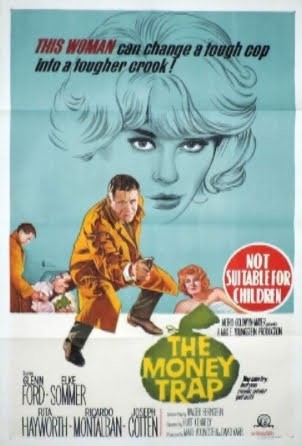
While the consensus is that film noir, weakened and wounded by a shifting media and social landscape, shuffled off into the shadows at the tail end of the 1950s, it occasionally lurched back out of the alley and onto the slick, neon-lit main streets. Wherever tough luck and the fickleness of fate hang out the dark cinema is never far off, and sightings were reported at various times throughout the 60s. The Money Trap (1965) is one of those later versions of the classic form and, to my mind, quite an effective one too.

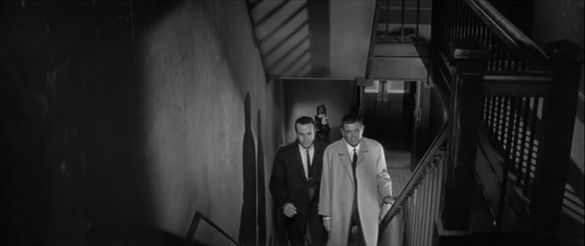
It starts, as it ends, with the aftermath of a killing. The camera is high, observing with cool detachment, the familiar urban setting of streetlights reflecting off wet asphalt. A squad car pulls up to the curb and two detectives alight, crossing swiftly to the ramshackle tenement where the night’s latest offering awaits. Joe Baron (Glenn Ford) and Pete Delanos (Ricardo Montalban) are confronted with the dead body of a young Latino woman, lynched in a bordello by her enraged husband. Although this turns out to be no more than an incidental plot strand, it serves to introduce the seedy and morally skewed world – an “honor killing” such as this is spoken of as being at least partially understandable – where we’ll be spending the next hour and a half. We then move on to see how Baron is living an extremely luxurious existence, far beyond that which a cop’s salary could be expected to pay for. And of course it’s no such a surprise when we learn how the finances are actually down to a rich young wife, Lisa (Elke Sommer), but that supply of cash may not be unlimited. So the need for money is our hook, the line is provided by the main investigation – a burglar shot under slightly dubious circumstances by a well-off doctor (Joseph Cotten) – while the sinker will come in the form of a mini-heist that’s doomed from inception. As it all unfolds Baron, who has been treading a variety of fine lines, runs across Rosalie (Rita Hayworth), an old flame and a reminder of simpler times, and something begins to worry his conscience.

The film has two big themes at work on two levels. In a narrower and more personal sense, there is a yearning for some kind of return to innocence, a desire on Baron’s part to regain some of the purity and promise he once possessed. This plays out in the way he’s drawn repeatedly to seek out Rosalie, yet she’s been bruised and broken by the years and we (and I think the same is true of Baron too) know that he’s really just chasing rainbows on that score. The wider picture is all about front and facade, the flash appearances that ensure nothing is quite as it seems and thus nothing can be depended on. Everybody in the movie is carrying secrets and consequently tell lies to conceal them – policemen are corrupt, wives are potentially faithless, friends may be enemies in waiting and the more respectable the surface, the rottener the core. There are angles everywhere and none of them clean. Should we read something into the fact the one man who speaks of integrity and honesty is a police captain (an uncredited Ted de Corsia) who is only seen  in the morgue?

Burt Kennedy’s great strength was as a writer, especially in those films where he worked with Randolph Scott and Budd Boetticher – even if he had never done anything else outside of those films his cinematic legacy would have been considerable. Nevertheless, Kennedy also worked as a director, albeit with less satisfying results. In that capacity his work tended to be what we might term entertaining without being all that distinguished. A lot of his films have a certain flatness to the visuals, something of the made-for-TV look, although this doesn’t apply to all of them. The Money Trap does suffer from this a little but cameraman Paul Vogel had a sound enough pedigree in classic era noir (High Wall, Dial 1119, Black Hand, A Lady Without Passport, Lady in the Lake etc.) to ensure the right kind of mood was struck when required. Still, I feel there’s some indecisiveness in the overall style of the movie, it’s not a fatal flaw or anything but it is noticeable.

Glenn Ford and Rita Hayworth made five films together, with Gilda probably being the most famous of those. Naturally, both stars had aged in the two decades which had passed but Ford was in better shape, his features reflecting a man with a bit of living behind him and about the appropriate level of weariness for a man who sees the less savory side of life on a daily basis. Hayworth was playing a woman worn down by years of bad luck and booze, and she looked like she knew the feeling only too well. I understand she had something of a drink problem in reality and there’s a degree of authenticity in her performance.

Joseph Cotten could move easily between heroic and villainous parts; he always had a bit of stiffness about him, a distance or remoteness, which lent itself well to darker or more ambiguous roles as the years went by. As such, he was a fine fit for the doctor with connections and he looked like he was enjoying himself as his character slowly reveals himself. Ricardo Montalban had appeared in a couple of quality films noir before this – Border Incident and Mystery Street – and he brought abundant experience to the table as Ford’s partner on the lookout for any get-rich-quick opportunities. And rounding out the principal cast is  Elke Sommer, always easy on the eye and playing a role that has a touch more depth than initially looks like being the case. In fact, it’s Sommer who makes a major contribution to the resolution, which at least hints at something more positive than the build-up might suggest.

The Money Trap is available as a Warner Archive MOD disc, and there are also copies on sale in other territories. The image is generally quite pleasing, black and white CinemaScope usually is and particularly when the print used has no glaring faults. Anyway, I found this an enjoyable piece of post-noir cinema, well acted and, for the most part, nicely shot.

The Big Heat

poster52_zpsuu5u64gu

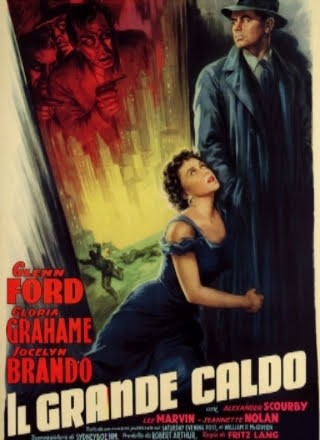
Over the years I’ve spent a fair bit of time talking about film noir, musing over what it is or isn’t and, perhaps inevitably, looking at quite a few borderline cases. I’m still not sure I could articulate exactly what constitutes film noir – although not being able to do so is hardly a big deal – but I do recognize a clear-cut example when I see it. Fritz Lang’s The Big Heat (1953) comfortably fits the bill with its harsh portrayal of a cruel and corrupt world and the merciless way it treats those who would resist it.

The first thing we see is a man reaching for a revolver and then calmly blowing his brains out as he sits at the desk in his front room. His wife (Jeanette Nolan) is alerted by the gunshot and appears shocked, but not too much and certainly not overcome by grief. If anything, she’s drawn more to the document her late husband left behind. The recently deceased was a cop, a dirty one who had been bought and paid for by the mob, and also smart enough to have retained some insurance. As the investigating officer, Bannion (Glenn Ford), remarks, when a cop takes his own life the department is always interested to find out the reason. Initially, there’s no reason to doubt the widow’s claims that her husband was suffering from ill-health and the case looks to be an open and shut one. Even when a girl in a clip joint makes allegations about a less than satisfactory private life, there’s nothing to prove it’s anything other than talk. It’s only after Bannion starts to get gently warned off that he grows more suspicious. As the underworld flexes its muscles and reveals the violence that has been lurking behind the thinnest of veils the full extent of official corruption becomes apparent. Had Bannion been prepared to play the game, matters would have ended there. However, his persistence, and perhaps recklessness or naivety, brings tragedy right into his own parlor. With the whole fabric of his being torn down around him, Bannion moves himself out to the fringes of society where he allows himself to become consumed with hatred, frustration and an unquenchable desire for vengeance.

£2

I’ve never made any secret of the fact I’m a big fan of Fritz Lang, and I’m especially fond of his Hollywood movies. Towards the end of his time in the US the budgets he operated under seemed to shrink but he always had a talent for economy in his storytelling anyway. The Big Heat exemplifies this neatly in the no-nonsense way it plunges headlong into the tale from the very first shot. The whole movie is a lean affair, pared down to its essentials visually, thematically and in terms of dialogue too. There’s no waste – not a word nor a gesture appears which doesn’t serve to drive the narrative on. Even the central idea (that of institutional corruption, an increasing staple of 50s film noir) is addressed in direct, matter-of-fact terms.

One of the most interesting aspects, for me at least, was the contrasting portrayal of family life on view. We’re introduced to Bannion’s domestic setup early on and it’s an attractive one, defined by the affection and banter between the detective and his wife (Jocelyn Brando) and the simple yet wholesome way they’re living. Later, when we’re introduced to the chief mobster, Lagana (Alexander Scourby), it’s a very different world which is presented. Where Bannion’s home is a relaxed place filled with informal conversation, Lagana’s mansion feels like a mausoleum of respectability, a soulless place where no hint of “dirty” talk is tolerated.

The other notable point to be made about The Big Heat is the frank way that violence is depicted. There’s real brutality in the actions of the mob and its principal enforcer (Lee Marvin), a sadistic pleasure derived from the infliction of pain and suffering. The film came along quite early in Marvin’s career and gave him the kind of role that was something of a gift for a young actor. In another of those instances of mirroring Ford’s honest cop is driven right to the brink of sanity and morality – he comes to embrace violence with almost the same gusto as Marvin’s sociopath. The crucial difference here though is that Ford draws himself back before he fully succumbs to his basest instincts. Actually, it’s a very solid part for him, requiring him to exercise a fair bit of range as his character travels along the painful arc from contented family man, through heartbreak and loss, to cold avenger. He’s partially saved or redeemed by his own innate decency, but an even more significant influence is provided by Gloria Grahame’s unfortunate moll. It’s her actions and what happens to her that breaks everything wide open, giving Ford his first real leads and also reawakening his ability to identify and empathize with people again. Ultimately, while The Big Heat is a film which sees very bad things happen to people, its message is a positive one about human nature. Sure society has its share of rottenness and violence may be lurking just round the corner, but decent people remain so at heart and there are always those willing to lay it on the line to help others.

£3

There was a time when it was difficult to see all of Fritz Lang’s films, although that’s no longer the case. Even back in the days when one had to search around for his stuff The Big Heat was one of the more accessible titles – I think it may actually have been one of the first films by the director I ever saw, at a time when his name wouldn’t have registered with me. Now there are a variety of DVDs and Blu-rays available from different territories so there should be no problem finding a suitable copy of the movie to view. I would imagine that most people with even a passing acquaintance with Lang will be aware of this film – it’s generally well regarded and the casting probably helps. Needless to say, it’s highly recommended for anyone who has yet to view it.


The Man from Colorado

poster11_zps8d7fa5f9

The years following WWII saw a number of movies looking at the problems encountered by veterans returning home and the difficulties they faced in trying to assimilate themselves once again into society in peace time. This was a common enough theme in film noir, where the shadowy, paranoid and dangerous world of the dark cinema seemed ideally suited to such tales of detachment and disillusionment. Westerns, on the other hand, would appear an odd choice for exploring these particular issues. However, as I’ve tried to point out in the past, the western was a versatile and malleable genre capable of embracing just about any type of story. The Man from Colorado (1948) deals with a man coming home after experiencing the horrors of a different and more distant war – the Civil War – but the associated problems, especially the psychological ones, are sure to have struck a chord with contemporary audiences. Perhaps more importantly, the film remains relevant for modern audiences as, sadly, new conflicts have a nasty habit of rearing up to rob a little of the soul of almost every generation.

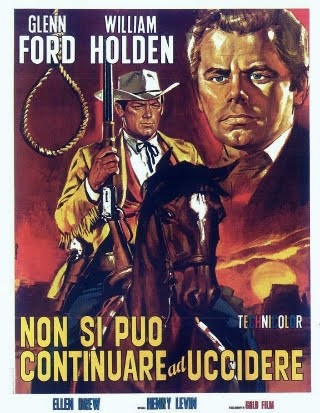
It all starts with a massacre. On the last day of the Civil War a small band of Confederate soldiers are holed up in a box canyon. Faced by a well equipped Union force, these demoralized troops have the choice of making a fight of it or surrendering. Their officer orders a white flag run up, and then watches in disbelief as the Union commander gives the word for his artillery to open up. Owen Devereaux (Glenn Ford) is the colonel who knowingly seals the fate of this group of doomed men. Devereaux is a man not only hardened by battle but psychologically damaged to the extent that his humanity has been all but stripped away. This calculated atrocity is witnessed by his friend and subordinate Captain Del Stewart (William Holden), but his sense of loyalty to his commander, and perhaps his charity to a man he feels has been scarred enough by conflict, leads to his surreptitiously burying the evidence. Devereaux himself recognizes the mental strain he’s suffering from but hopes that civilian life and freedom from official duties will offer him respite. However, that’s not to be; a man with his war record is attractive to those with a political agenda to push, and the local businessmen in his hometown convince Devereaux to take on the role of federal judge. Reluctantly, Stewart agrees to serve as federal marshal under Devereaux, partly because it affords him the opportunity to keep an eye on his disturbed friend. Nowadays, the condition affecting Devereaux would likely be referred to as post traumatic stress disorder and various treatments would be prescribed. However, we’re talking about 1865 and men had to simply soldier on, so to speak. The power and responsibility that Devereaux now holds seem only to exacerbate the problem, and the fact that Stewart is not only his deputy but a rival in love too doesn’t help matters any. As Devereaux, backed by grasping mining interests, develops a kind of callous megalomania that threatens to undermine all respect for the law among the locals, Stewart increasingly realizes that his friend has gone beyond the pale and it’s his duty to take a stand.

Borden Chase wrote the story that The Man from Colorado was based on, although I don’t know how much of that was altered in the finished screenplay. The dark characterizations certainly all bear Chase’s stamp, but the script shows the mine owners and authority figures in a pretty negative light, something that would appear to be at odds with his conservatism. The depiction of a man driven insane by the horrors of warfare and his inability to come to terms with a post-war life is the main theme of the movie, and it’s obviously the most interesting feature. However, the critique of a society shaped and driven by financial interests is never far from the surface either. Taken together, these two aspects are held up to the light in what is essentially an examination of how society treats those it relied on to defend its safety when the hostilities have come to an end. The inference is that, at the time anyway, a man had to deal with these matters himself, or with the help of a handful of close friends at best. Director Henry Levin is one of those figures who worked away within the studio system, making movies in all kinds of genres, without too much fuss or acclaim. His handling of the material in The Man from Colorado shows he was more than capable of telling an interesting story and keeping the pace tight. The film is a mix of interior and location work, with the former dominating for long stretches. For the most part, the action set pieces take place outdoors – particularly the opening and the fiery climax – while the sound stage interiors are used for the more psychologically complex character scenes. At times here, the lighting, composition and musical cues suggest the feel of a film noir, in spite of the sumptuous Technicolor used in the movie.

As far as the performances are concerned, the lion’s share of the work is carried out by Ford and Holden, with the former being the center of attention. The part of Owen Devereaux is arguably the least sympathetic of Glenn Ford’s many roles. He managed to get right into the dark heart of his character, but in doing so missed out on giving him too much dimension. That may be down to the writing as much as anything, but it still means that the central role is robbed of some much needed complexity. Basically, Ford becomes a villainous black hat for the audience to hiss at, and not a lot more. What this means is that Holden’s part is given added interest. A lawman who turns in his badge and joins a gang of outlaws isn’t usually seen as a hero in westerns of the period, but that’s precisely what Holden’s Del Stewart does. There’s considerably more conflict in this character – loyalty, love and social responsibility are all motivational factors for him – and Holden gets to explore his range a good deal more than Ford. Among the supporting cast James Millican has the plum role as the former soldier who insubordination sees him run foul of Ford’s Devereaux. Millican gets to play a great anti-heroic figure and eventually bows out in fine fashion – a terrific actor. Ellen Drew is the only woman in the movie, as the object of both Ford and Holden’s affections, and her role is a weak one; she’s not called on to do much more than look suitably distressed by Ford’s growing excesses. Other parts of note are filled by Edgar Buchanan as a sympathetic doctor and Ray Collins as the mercenary mine owner.

The Man from Colorado is a Columbia production so Sony are responsible for its release on home video. The UK DVD is a very basic disc, lacking a proper menu and boasting no extra features at all, apart from a plethora of language and subtitle options. That notwithstanding, the picture quality, which is ultimately the most important thing, is excellent. The print used for the transfer is in very good condition and displays no damage that I was aware of. The transfer is clean and sharp, and the Technicolor looks to be especially well reproduced – all in all, this is a handsome presentation. Westerns with a strong psychological storyline really came into their own in the 1950s but The Man from Colorado represents a fine late 40s example of this variant. While I think the film could have benefited from a more rounded portrayal of Ford’s character the roles played by Holden and Millican do compensate to some extent. In the final analysis, I consider this to be a solid, worthwhile western that I’d rate as above average.


The Man from the Alamo

The worst that can happen to you is that somebody will say you died a hero. That man’s going to be called a coward the rest of his life.

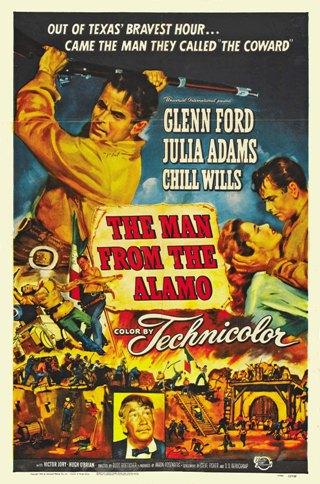
That quote essentially sums up what The Man from the Alamo (1953) is all about – the way that courage can be misrepresented and misunderstood, how casual labeling can lead to blind, unjustified persecution. While this idea is central to the film, it’s mixed in with a standard revenge tale, and set against a backdrop of historically significant events. One could say there are the makings of an epic story here but, in the hands of Budd Boetticher, the end result is a short, tightly paced western that rarely pauses for breath and never outstays its welcome.

The opening section plunges the audience straight into the latter stages of the siege of the Alamo, with Travis’ volunteers holed up in the old adobe mission and Santa Anna’s forces massing for the final assault outside. These events have become part of American lore, and far beyond the borders of the US too if the truth be told, coming to represent grit, determination and heroic self-sacrifice. Occasions such as this have the potential to make legends of all involved, to see names honored for generations to come. However, as always, there’s a flip side to the coin. Where circumstances can see one man’s reputation soar, they can equally see that of another cast into the mud. Which brings us to John Stroud (Glenn Ford), one of the defenders of the Alamo and a man who has already proved his mettle in the heat of battle. It’s bad enough when news arrives that no relief will be forthcoming, but the situation is exacerbated for some by reports that enemy sympathizers are raiding the unprotected homesteads to the north. As a result, a handful of defenders draw lots to see who will undertake the thankless task of leaving the mission and heading off to take care of the vulnerable families. The dubious honor falls to Stroud, who accepts his fate and rides off into potential ignominy. The crucial point here is that the viewer knows that Stroud had no other choice, that he was simply dealt a lousy hand and could do nothing but play it. As it turns out, his gesture proves futile – the guerrillas have been and gone, leaving nothing in their wake but charred homes and shallow graves. Stroud is now a man bereft: his home and family are gone, and his name has become a byword for cowardice and dishonor among those not privy to all the details. All that is left is a thirst for revenge, a desire to track down and punish the renegades who have taken all he held dear. At best Stroud finds himself shunned by a contemptuous town, and at worst he risks a lynching by the more hot-headed elements. Yet, despite the threats and insults, he is committed to tracking down the real villains and, in so doing, redeeming himself in the eyes of his suspicious traveling companions while also coming to terms with his own feelings of guilt and shame.

A brief glance at the credits for The Man from the Alamo provides ample proof of its pedigree: Niven Busch and Steve Fisher feature among the writers, Russell Metty handled the photography, and Budd Boetticher occupied the director’s chair. Boetticher’s status rests mainly on the Ranown films, those pared down masterpieces with Randolph Scott. However, directors, like actors, don’t just arrive fully formed. When you come to examine almost any artist’s finest work, there’s generally a progression that can be traced leading up to that point. And so it was with Boetticher; the Ranown westerns may represent the peak of his achievements, but his earlier pictures were pointing in that direction. As I mentioned at the beginning, the ingredients were in place for a “big” movie. However, Boetticher, and the writers, trim away all the unnecessary flab to leave us with a lean piece that focuses on a driven character, an emotionally damaged outsider who measures words and actions carefully. That inner torment that Scott would so successfully portray a few years down the line isn’t quite so fully developed in The Man from the Alamo, but it’s there in embryonic form at least. I think it’s fair to say that Boetticher did his best work when he was out shooting on location. This film doesn’t have the benefit of the iconic Lone Pine locations yet the exteriors all look suitably handsome. Actually, a fair bit of the filming took place on the Universal backlot, and still looks attractive. The opening in the Alamo is extremely atmospheric, with the guttering candlelight creating a kind of grim claustrophobia, punctuated occasionally by the harsh flashes of the artillery. Generally, all of the action, and there’s no shortage of it, is well handled – the scene with the wagon train in full flight near the end is a good example of the director’s talent for exciting outdoor sequences.

Glenn Ford started his post-war career strongly with Gilda and built on it very successfully in the years that followed. By the 1950s he was getting better and better, and The Man from the Alamo was made at a time when he was approaching his peak. While there are plenty of good actors around him in this movie, a lot rests on his central performance. Ford’s experience working in film noir stands to him here as there’s more than a touch of bad luck and the cruelty of fate surrounding his character. He was always good in these kinds of roles – the outsider who’s vaguely uncomfortable with himself – and uses that ability to get properly into the character of Stroud. He could also, when he wanted, project a type of self-effacing affability and that helps draw the sympathy of the audience. If you’re going to tell a story like this – about a wronged man whose sense of personal and public honor is questioned – then it’s vital to have an everyman type like Ford whose real qualities are apparent to the viewer. Julia Adams was handed a strong role too as the woman who overcomes her initial skepticism to become Stroud’s main ally. Not only does she bring a lot of dignity to her part, but she handles the physical demands very well too. Every western needs a suitable villain and Victor Jory was an expert at playing cunning and ruthless types. Besides looking shifty and slippery, Jory had a voice that just oozed malevolence. Neville Brand was another of those perennial bad guys and is impressive in a small but memorable role. In support there are worthwhile turns from Hugh O’Brian as a priggish Texan officer who gets to eat some humble pie, and Chill Wills as the one-armed newspaperman forced to put his blustering prejudice aside.

I actually have two copies of The Man from the Alamo on DVD: the UK edition that came out first and the US release that came as part of a four movie set a few years later. Both are Universal releases, and there’s not a lot to choose between them regarding the transfer. Both are in reasonable condition with no major print damage evident, although the colors look a little muted here and there. The UK disc has a variety of language dubs and subtitles available, but the US version represents better value since three other films come with it. Certain names bring raised expectations with them, and Budd Boetticher is one of those. It would be unwise to approach The Man from the Alamo in the hope of seeing a movie of the quality of any of the Ranown pictures, but that doesn’t mean it’s an inferior movie. Frankly, it’s a good little western on its own terms, but it’s also interesting as an indication of the direction in which Boetticher was unmistakably moving at this stage in his career.

Ten of the Best – Noir Stars

Seeing as 2012 is drawing to a rapid close, this is likely going to be my last article of the year. It’s been the first full year blogging on the new site and I have to say it’s all turned out far better than I could have anticipated. I consider myself very fortunate to have built up a loyal little band of followers and the feedback that I’ve been consistently receiving is both gratifying and informative. My last entry, on western stars, offers ample evidence of that, turning out to be the most popular piece I’ve posted by some considerable margin. I’d mentioned that I was intending to do something similar on my other great cinematic passion, film noir, and so it’s time to make good on that. Again, I’ve deliberately restricted myself to ten stars who made an impact on cinema’s shadowlands. Film noir isn’t a genre like the western; it’s a more nebulous form where the convergence of melodrama, crime and fate all become bound up in the creation of a cinematic demimonde that defies definition yet is immediately recognizable. To be honest, I had a hard time deciding on only ten men and women who portrayed so many memorable cops and private eyes, grifters and chiselers, dames on the make and hoods. Anyway, here’s my selection.

Robert Mitchum


Mitchum’s omission from my western list sparked a good deal of comment. He started out playing cowboys, and there’s a case to be made that his western roles are by and large superior to his noir ones. A number of his noirs are weak or flawed productions, particularly those made when Howard Hughes was running the show. However, even when a film was less than successful, it would be difficult to single Mitchum’s performance out for criticism. Besides that, he took the lead in two of the finest noirs: as the classic dupe in Tourneur’s Out of the Past, and as the evil killer in the oneiric The Night of the Hunter.

Burt Lancaster


Lancaster made his debut in what I reckon is one of the top three film noirs, Robert Siodmak’s The Killers. This flashback reconstruction of what led one man to lie in a darkened room, calmly awaiting those who have come to murder him showed that Lancaster had the kind of soulfulness and sensitivity that can be used to such great effect in film noir. He would return to the dark cinema frequently, producing fine work in the likes of Criss Cross and Sweet Smell of Success.

Barbara Stanwyck


One of the best known features of film noir is the figure of the femme fatale. Not every picture has one, but if you asked the average film fan to list the characteristics of noir you’d likely hear the name. Barbara Stanwyck has the distinction of playing arguably the greatest deadly woman of them all in Billy Wilder’s Double Indemnity. She did a lot of work in noir, and I’m very fond of her turn as the panicked and bedridden heiress in Sorry, Wrong Number, Anatole Litvak’s study in mounting paranoia.

Edward G Robinson


This mild and cultured man made his name in the early 1930s in Warner Brothers gangster pictures, most notably as Rico in Little Caesar. He worked successfully in a variety of genres throughout that decade but really hit his stride in the 40s with two films for Fritz Lang (The Woman in the Window and Scarlet Street) and one for Wilder (Double Indemnity). While those three roles are quite different, they do share one common feature – Robinson was playing men who, in one way or another, are trying to close off their minds to unpleasant realities, and all of them are ultimately tragic figures. This actor was among the best Hollywood ever produced, and his efforts in the world of noir are highly significant.

Robert Ryan


With some actors, it’s fairly easy to pick their best work. When it comes to Robert Ryan though, I find myself so spoiled for choice that it’s nearly impossible. His 40s and 50s output is peppered with excellent performances in noir pictures made for Dmytryk, Renoir, Wise and Ray. Even a piece of flummery like Beware, My Lovely benefits from Ryan’s intense presence. However, I’m going to single out Robert Wise’s tight and economical The Set-Up for attention. Ryan’s portrayal of a washed up fighter (he was once a boxer himself) determined to bow out with dignity, even if it kills him, gave him a break from playing the heavies he’s so often remembered for.

Gloria Grahame


Gloria Grahame has always been a favorite with noir fans, her unique brand of sexuality managing to blend quirkiness and vulnerability with a hint of inner steel. Perhaps her part as the good time girl deformed by an enraged Lee Marvin in Fritz Lang’s The Big Heat sums up that aspect of the actress best. She also brought something special to her role in Nicholas Ray’s In a Lonely Place, opposite a fiery and abusive Humphrey Bogart – I’ve heard it said that the relationship depicted had parallels with her marriage to Ray at the time.

Glenn Ford


Another guy who had strong claims for inclusion on my recent western list, Glenn Ford started out strong in film noir playing off Rita Hayworth in Gilda. Ford had that everyman quality and, as I’ve remarked when discussing some of his roles on other occasions, a vague sense of discomfort with himself that was ideal for noir pictures. I think Lang brought out the best in him in The Big Heat; his avenging cop is almost a force of nature and his barely contained rage is something to behold in a film that’s got a real mean streak running through it.

Dana Andrews


A little like Ford, Dana Andrews was another actor with whom you could almost see the wheels going round just below the surface. He too seemed to exude some of that inner dissatisfaction that translated into fatalism and disillusionment on the screen. His series of movies with Otto Preminger in the 1940s represent his noir work best. Laura may well be the best known, but Where the Sidewalk Ends offered him a meatier part and stretched him more as an actor. That movie, along with The Big Heat and On Dangerous Ground would make an interesting triple bill on violently unstable lawmen.

Marie Windsor


The queen of the B noirs, Marie Windsor had good roles in both Force of Evil and The Narrow Margin. She had a real knack for playing the cheap schemer better than anyone else I’ve seen, and her role in Kubrick’s The Killing was a perfect fit. As Sherry, the wife of everybody’s favorite sap and loser Elisha Cook Jr, her greed sees her trying to play everybody off against each other and is instrumental in bringing a tragic end to the heist.

Humphrey Bogart


And so I come to the last, but by no means the least, of this brief selection. After a long apprenticeship in supporting roles, High Sierra and The Maltese Falcon saw Bogart define the noir lead for the next decade and a half. Tough, chain-smoking and moody, he seemed to encapsulate all the weary cynicism that the war and its aftermath ushered in. His portrayal of Sam Spade was, and remains, hugely influential, and then he went one further and truly nailed the essence of the private detective in The Big Sleep. In fact, I find it impossible to read Chandler’s text now without hearing Bogart’s distinctive delivery in my mind.

So there we have it. When I made that western list I made the point that I wasn’t claiming it as any kind of definitive one. I’ll say the same again here – these are just the ten names that I feel offered something of worth and value to film noir over the short span of its classic period. In their different ways, I think these people helped sum up what noir was all about and shaped its development. I’ll admit I struggled to decide on ten actors for westerns, and this was actually tougher. The fact that I included both actors and actresses meant that my options were increased while the overall parameters remained the same. Of course I could easily have split this into two sections, or expanded it to twenty. However, in the end, I decided to stick to ten as it forced me to apply a more ruthless approach, and give it all a lot more consideration, than I might otherwise have done. Once again, all comments, arguments and protests are most welcome.