The Quiet American

The Quiet American (1958) is an adaptation by Joseph L Mankiewicz of Graham Greene’s novel of the same name and it, unintentionally from the filmmaker’s point of view, poses the question of whether a movie is best approached or evaluated on an emotional or an intellectual level. Greene was very unhappy with the changes Mankiewicz made to his book, particularly with the alterations to the political sentiments the author had written into his story. Greene’s objection highlights what I think of as the intellectual approach, for viewing a film and assessing its worth or success in terms of its political perspective strikes me as a coldly intellectual exercise. Conversely, examining how a movie deals with the human interactions that underpin the story is surely a more emotional approach. Given that I have long been convinced that art is much more closely related to the heart than the head, it probably won’t come as any surprise to learn which view I tend to favor.

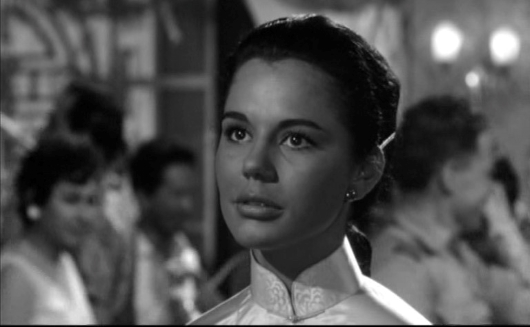
The Quiet American opens near the end of the story and works back from there in search of a beginning that will allow all the events and personalities involved to fall into place. The titular character (Audie Murphy) who remains unnamed throughout, unlike in Greene’s novel, is already dead when we viewers come on the scene. His body is floating face down near the banks of the river in Saigon, discovered by chance by revelers celebrating Chinese New Year. From here we are taken back to the months before his demise, to the time when he first arrived in Vietnam. So the bulk of the movie is related via flashback, unfolding from the point of view of Thomas Fowler (Michael Redgrave), a British journalist and acquaintance of the anonymous American, as he conducts a one-man wake in the morgue, reflecting on the life and death of the young man reposing on the slab before him. Those few months defined the course of the lives of three people: Fowler, the American, and Phuong (Giorgia Moll), the young Vietnamese girl who is loved by both of them. Regardless of the political background of the tale, and the points about the role of foreign intervention in South East Asia that Greene wanted to make, this is a love story first and last; remove that element and there is nothing to relate that has any resonance beyond contemporary concerns. What matters here, and what the movie focuses on, is the triangle formed by those three people, with Phuong acting as the anchor.
As I mentioned above, Greene felt aggrieved at the way the script radically altered the points he wanted to make in his book. I can understand that frustration on the part of the author, and I can sympathize with what he must have seen as wholesale distortion of his vision. I read and enjoyed his novel many years ago yet I still appreciate this movie for what it is, for what it does rather than what it does not. Basically, I see the changes that Greene disliked as only background details as far as the movie is concerned – those elements might be integral to the aims of the novel, but Mankiewicz was making a movie and both his medium and the aims he had were very different. I am of the opinion that any filmmaker who emphasizes the purely contemporary elements of a story at the expense of the timeless aspects is straying into the realms of commentary. In short, I see film as a form of artistic expression, an analysis of the human condition, and that is something eternal rather than ephemeral.

Ultimately, what counts is whether or not the movie works on the terms by which it was conceived. I regard it mainly as both a love story and as a contemplation of the way we frequently project visions of ourselves and the world around us onto those we love. As such, I consider it to have succeeded in achieving it aims. Of course one can dig deeper and read more into it all, seeing different slants on relationships adopted by the old world and the new, the contrasting views of young and old, and so on. Nevertheless, it all comes back to the portrayal and interpretation of love and what that means to various individuals in the end. The background of the story operates in relation to the characters like the MacGuffin in a Hitchcock film, but even then only up to a point. After all, when Fowler makes his fateful decision, he is motivated by a toxic cocktail of pride, jealousy, fear and thwarted passion and not something as prosaically dreary as political convictions.
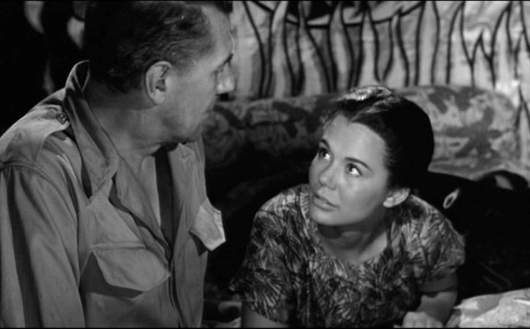
On paper, one would say that having Audie Murphy face off against Michael Redgrave would lead to an uneven and unfair contest. On celluloid and in fact , however, the contest is a remarkably even and productive one. Murphy had grown steadily as an actor by the late 1950s and this kind of dramatic role was well within his capabilities. There is still a lot of fresh energy about him, and that quality is used to superb effect when placed in contrast to Redgrave’s worn and dissipated cynicism. That fresh faced enthusiasm always cloaked a deeper steel and there is never any doubt about the resilience of the idealistic young man he was portraying. When he trades words with Redgrave’s weary writer, the latter may indicate disdain for their naivety but he never really questions their sincerity, and nor do the viewers. Redgrave is every bit as good as the complete opposite, a tired and spent man whose surface smugness masks chronic insecurity and desperation. We believe it when Murphy shows drive and positivity, and that sense of credibility is just as strong when Redgrave paints his own picture of desolation and emptiness.

Italian actress Giorgia Moll is wonderfully unknowable as the focal point for the affections of those two very different men. There is a lot of passivity about her character, right up till the end anyway. Her final scene adds a great deal of punch and power though, largely because of the apparent indifference and insouciance she displays earlier. The cast is fairly self-contained, but Claude Dauphin lends attractive support as the deceptively relaxed policeman who misses very little. Bruce Cabot has what amounts to a cameo as an American journalist and Richard Loo, who popped up all over the place throughout the 40s and 50s whenever an Asian character was required, is coolly efficient as Redgrave’s contact with the insurgents.

The Quiet American was given a release on Blu-ray by Twilight Time some years ago but I never got around to picking it up and have had to make do with less than stellar DVD versions. It’s a shame no company in the UK has been able to put this film on the market on BD so far. The story was filmed in 2002 by Philip Noyce, with Michael Caine and Brendan Fraser in the Redgrave and Murphy roles, and it stuck closer to the sentiments of the novel. I saw it at the time and while I thought it was fine (although I should say I’ve never been able to warm to Fraser in anything) I don’t think it was improved by being more faithful to its source. I can only say that I have never felt the need to revisit the 2002 film in twenty years whereas I’ve seen the Mankiewicz version multiple times.
Shake Hands with the Devil

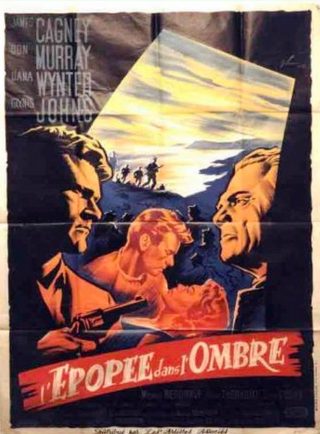
The conflict in Ireland has provided the backdrop for a number of quality movies over the years, and I’ve covered a few of them on this site: Odd Man Out & The Gentle Gunman. Those two films dealt mainly with the smaller mid-century campaigns in Northern Ireland or around the border. Shake Hands with the Devil (1959) steps a little further back to the early 20s and the War of Independence, concentrating on the south of the country. The “Tan War”, so named after the involvement of the British irregulars recruited to strengthen the RIC, remains an emotive subject in Ireland due to the atrocities perpetrated against the civilian population. I can clearly remember people of my grandparents’ generation, who lived through those turbulent and violent times, speaking with undisguised venom about the Tans. The film under examination here reflects that hostility, but doesn’t shy away from depicting the implacable fanaticism that characterized some elements within the Irish rebel movement at that time either.

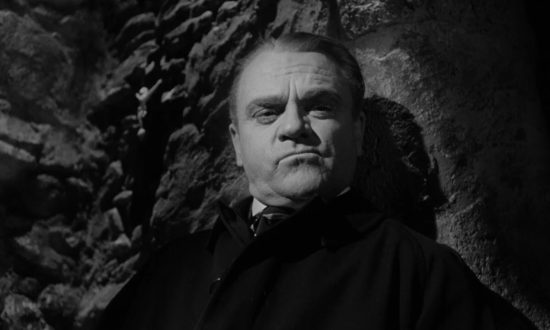
The prologue makes it clear that the Ireland of 1921 was a country in a state of war. The opening then takes place in a Dublin cemetery where a solemn funeral procession makes its way along paths lined with tombstones. Suddenly, a squad of Black and Tans appear and the cortege scatters amid the jarring sound of gunfire, leaving behind an upturned coffin spilling its load of rifles. This brief scene succinctly illustrates the nature of the war being fought: a covert organization facing off against a determined and ruthless enemy. The most interesting films dealing with the Irish conflict feature those caught somewhere in the middle, dragged into the fighting in spite of themselves. Kerry O’Shea (Don Murray) is such a man, an Irish-American studying medicine in Dublin in fulfillment of his late mother’s wishes. O’Shea happens to be visiting his parents’ grave when the Tans’ raid takes place, and he will find himself drawn deeper into the war as the story progresses. O’Shea’s father had been an old-time republican and he had fought in WWI himself; as such, we see a young man who has had his fill of killing. Still, circumstances don’t always allow a man to follow the path he would prefer – sometimes just being in the wrong place at the wrong time alters the course of a life. This is what occurs with O’Shea; he is walking along a street when an IRA ambush leads to the shooting of his friend and the subsequent leaving behind of his notebook at the scene during his flight from the violence. A direct consequence of this is the revelation that O’Shea’s lecturer and eminent surgeon Sean Lenihan (James Cagney) is a commandant in the IRA. As O’Shea, now regarded as a suspected terrorist, goes on the run, the combination of the brutality of the Black and Tans and the fact that Lenihan once saved his father convinces the young student that his place is standing shoulder to shoulder with the rebels. Yet despite O’Shea’s belief in the essential nobility of his cause, he becomes increasingly disturbed by the harsh, fanatical side of Lenihan. This feeling of unease is further strengthened when Lenihan’s customary dislike for and distrust of women is magnified after the taking of an important hostage; Jennifer Curtis (Dana Wynter), the daughter of a high British official, is abducted in reprisal for the imprisonment of an elderly republican sympathizer. Lenihan’s near pathological hatred of the young woman, and his keenness to see her executed, may prove the ultimate test of O’Shea’s loyalty.

Politically, Shake Hands with the Devil wears its heart on its sleeve, and makes no bones about its critical appraisal of the role of the Black and Tans in Ireland. The Tans are explicitly cast as the villains of the piece, their commander being portrayed as a quasi-fascist figure with a strong sadistic streak. The way O’Shea’s interrogation and beating is photographed, in a highly subjective manner, emphasizes the cold brutality of his tormentor. However, if there is a sustained effort to romanticize the rebels – most notable in the characterizations of Cyril Cusack, Michael Redgrave and Sybil Thorndike – it needs to be pointed out that we’re not looking at a whitewash job either. The internal discipline mechanisms of the IRA are shown in all their toughness, and the unyielding aspect of what would become the anti-Treaty forces – as represented by Cagney – is one of the major themes of the film.

Michael Anderson was a director capable of great visual flair – I’ve commented in the past on the Hitchcock-style touches present in a couple of his films – and Shake Hands with the Devil offers further evidence of his eye for interesting compositions. Aside from having a knack for capturing the correct mood, he staged and shot the action sequences very fluidly.  The early part of the movie was shot on location in a mean and moody Dublin, all expressionistic shadows and dripping in noir atmosphere. Later, the action moves out of the city to Bray and the coast, and again Anderson, aided by cameraman Erwin Hillier, makes the most of the windswept seaboard. The use of the lighthouse, where the rebels have set up a makeshift headquarters, gives a nice claustrophobic feel to the scenes where Dana Wynter is held captive. Generally, the authentic locations contribute to the sense of realism and, while the script does meander a little in the middle, Anderson’s assured and inventive direction holds the attention throughout.

What can one say about James Cagney? From gangster to song and dance man, and just about everything in between, he was and remains one of the greatest Hollywood stars ever. Shake Hands with the Devil was one of his last films before entering a retirement that he refused to be persuaded out of for over twenty years. The film saw him surrounded by top class performers and expert scene stealers, yet it’s Cagney who carries it and he’s the one who sticks in your mind. The tough little New York Irish pug had been strutting and swaggering across the screen for thirty years by that time and his presence was such that it positively demanded you sit up and pay attention. He was always an actor capable of great intensity, although there was always a liberal sprinkling of charm and humor just below the surface too, and he honed and perfected that quality over the years. The part of Sean Lenihan gave Cagney a chance to flex his not inconsiderable acting muscles; it’s a complex role where the character alternates between a sympathetic, gutsy figure and a dangerous obsessive with deep and dark personal issues.

Cagney was certainly the name at the top of the bill, but there was a long list of talented and big name performers filling the other roles. Michael Redgrave was credited simply as The General, a character who seems to have been based on the real life Michael Collins. Aside from a moment of ruthlessness, Redgrave imbues this man with a sense of dignity, nobility, and just the appropriate touch of tragedy. There’s also an excellent turn from Cyril Cusack as the poet turned revolutionary who befriends the lead; it’s a thoughtful performance and a pivotal one, anchoring the film and acting as a bridge between the driven Cagney and the more reluctant Murray. Frankly, Don Murray was handed something of a thankless task when he had to square off against such a battery of talent. Having said that, Murray is good enough and, while he hadn’t the same depth of experience as some of his co-stars, acquits himself very well indeed. Richard Harris would of course go on to great things and his part as one of the more thuggish and self-absorbed rebels was an early opportunity to show what he was capable of. As for the women, Glynis Johns and Dana Wynter have the meatiest parts. Johns was the loose and brassy barmaid while Wynter was the demure and well-bred gentlewoman. Both actresses were convincing and quite touching in these contrasting roles, coaxing the best and worst from the male characters. As has already been stated, the supporting players in this movie makes for impressive reading: Sybil Thorndike, Niall MacGinnis, Harry H Corbett, William Hartnell, Ray McAnally, John Le Mesurier, Allan Cuthbertson and Noel Purcell.

Shake Hands with the Devil is available on DVD in the UK via Metrodome. The film is presented in Academy ratio, which can’t be right for a 1959 production. I did try zooming to around 1.66:1 at a number of points and the image generally looked fine so I guess we’re looking at an open matte transfer here. Leaving aside the matter of the aspect ratio, the transfer isn’t bad in other respects – print damage is minimal and contrast levels and sharpness all look acceptable. The only extra features on the disc are a handful of trailers for other Metrodome releases. Regular visitors to this site will be aware that I try to highlight movies that aren’t always widely acclaimed. Naturally, some are of better quality than others and I feel comfortable in asserting that Shake Hands with the Devil really is something of a forgotten gem. It’s an interesting film from a historical perspective, focusing on a conflict and period that doesn’t get a lot of attention. Michael Anderson’s smooth direction is very attractive with the imagery frequently reminiscent of film noir. Add in some excellent acting and complex characterization, especially from Cagney, and we’re talking about a first-rate thriller.

Secret Beyond the Door

poster302

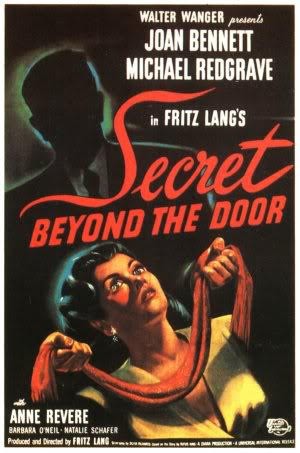
In the past I’ve written about a few Freudian thrillers from the 40s, Spellbound and The Dark Mirror for sure. The decade has many examples though as it was such a fashionable subject and seemed to blend effortlessly into the world of film noir. Looked at now, from a modern perspective, the cod psychological mumbo jumbo of these films is fairly risible. However, films are first and foremost an entertainment medium; we don’t watch them to gain, for example, a deeper insight into psychoanalysis. So, when a movie like Secret Beyond the Door (1947) presents us with a dubious scientific explanation for the odd behaviour of its characters it’s not really fair to criticize it too heavily on that score. Fritz Lang’s film really is an exercise in style over substance – the look, feel and mood of the picture is what carries it, not the plausibility (or lack of it) of the story or the questionable motives of the main characters.

The basic premise is a familiar one, various forms having been used over the years in a variety of films. There’s a young woman on vacation who meets a mysterious yet attractive stranger, falls in love, marries and, after a time, discovers that all is not what it initially seemed. The woman in this particular movie is Celia (Joan Bennett), an heiress who’s recently found herself alone in the world and has taken off on a trip to Mexico before returning to the States and settling down to a life of bland respectability. However, Celia is not the usual, run-of-the-mill innocent abroad. Contrary to appearances, there’s a darker, almost perverse, side to her nature that soon becomes apparent. Quite by chance, she witnesses the flare-up of a knife fight between two local men. This isn’t some matter of slighted honour, more a duel of passion; the men are vying for the affections of a woman. Instead of doing the sensible thing and walking away, Celia is rooted to the spot, fascinated by the events before her. The viewer isn’t the only one struck by the hungry, predatory look in Celia’s eyes as she absorbs this primitive ritual – another bystander’s attention is drawn to her. He is Mark Lamphere (Michael Redgrave), an architect of patrician background.

To cut to the chase, Celia and Mark fall in love, marry and move back to his out-of-town home in the States. Even before they leave Mexico though, it’s apparent that all isn’t well with Mark; he has a tendency to withdraw from intimacy without explanation. As the couple embark on their new life the skeletons begin to rattle in the family cupboard and, bit by bit, secrets and hints of a dark past start to emerge. Celia’s husband is a deeply troubled man who appears to have a morbid obsession both with historical murders and the rooms in which those crimes took place, while questions linger over the death of his first wife. The true roots of the problem are not immediately obvious but, even so, the new bride slowly comes to suspect that her own life may be in danger.

The script calls for a good deal of irrational behaviour on the part of the main characters, enough to sink many a movie. Despite that, the film still works and is pretty successful as a piece of highly strung noir melodrama. This is largely due to the work of director Lang and cameraman Stanley Cortez, between them creating a stylish and stylized visual experience. The opening segment in Mexico has a dreamy, unreal quality that perfectly fits the mood of the lovestruck Celia. As soon as the action switches to the Lamphere estate the look and feel alters too, the uneasy romanticism of the south of the border scenes switches to something more akin to the gothic nightmare that begins to unfold in Celia’s shadowy and threatening new home. It’s this aspect of the film that leads to comparisons being drawn between it and Hitchcock’s Rebecca. On the surface, there are parallels: newlyweds haunted by the spectre of the husband’s murky past, a family home where unwelcome memories seem to lurk in every shadow, and a distinctly odd household.

£6

For all that, the two movies are really quite different in essence, chiefly as a result of Joan Bennett’s characterization of Celia. Unlike Joan Fontaine’s second Mrs DeWinter, Joan Bennett is a tougher and more worldly woman. I’ve already mentioned the dark side of Celia that’s apparent from early on, but the perverse side of her character is further developed as the story progresses. A weaker, and maybe a saner, woman would likely hightail it back to the safety of the city when her husband first begins to exhibit signs of serious psychological imbalance. But not Celia; she chooses to stand her ground, whether through raw courage or her own fascination with danger, and stick it out to the bitter end. One of Bennett’s great strengths as an actress, and very likely the reason Lang chose to work with her so often, was her ability to combine feminine allure with the grit necessary to hack it in a grim world. I found Michael Redgrave’s performance much less satisfactory though. My biggest issue was that I never felt entirely convinced by his transition from the cool aristocrat to bug-eyed loon. However, in all fairness, this kind of thing is rarely especially easy to pull off. His best moment occurs in the short fantasy scene where he imagines himself on trial for murder. With a jury of literally faceless men looking on, Redgrave plays both prosecutor and defendant in the ultimate trial of conscience.

For a long time Secret Beyond the Door was one of Lang’s most elusive titles on DVD, at least in an acceptable form. As the rights in the US now appear to reside with LionsGate it’s probably not a good idea to hold your breath waiting for anything to appear from that source. There’s been a French disc available for a while but it suffers from the old problem of forced subtitles. However, last year saw two releases that fit the bill: a budget disc from Italy and a nicely packaged edition from Exposure in the UK. Both seem to use the same transfer for the movie, but the UK release sees more effort put into overall presentation. The movie gets a nice remastered transfer with very good contrast (vital for a film like this) and only the odd speckle here and there. For extras we get an extensive gallery and filmographies. There’s also a 12 page booklet that reproduces the original poster art on the cover and contains three separate articles by David Hughes, James Oliver and Claudette Pyne. In this era of cost-cutting MOD programmes, it’s a credit to a small outfit like Exposure that they have both the will and ability to produce a thoughtful edition like this. Anyone interested in collecting classic movies really ought to consider putting a bit of business their way and support such efforts. This film tends to be glossed over somewhat when Lang’s work is discussed, probably due to the absurdity of certain aspects of the plot, but it’s actually very enjoyable. Joan Bennett gives a good performance in the lead and Lang directs with great skill and style. Anyone who is interested in film noir, Fritz Lang, or just classy 40s movies should have a copy of this in their collection.