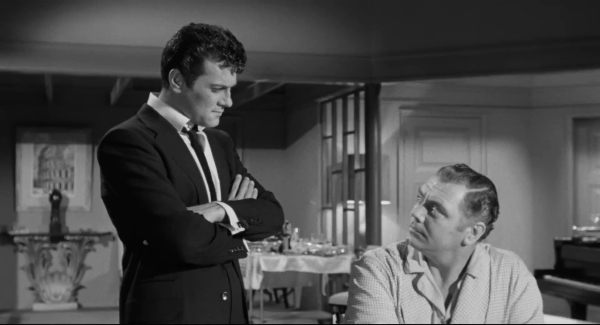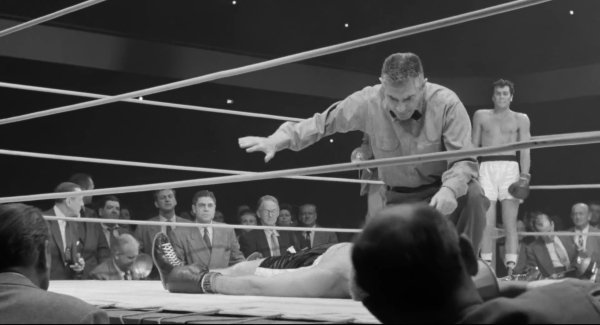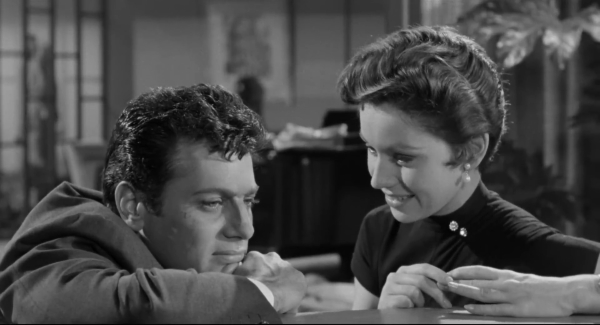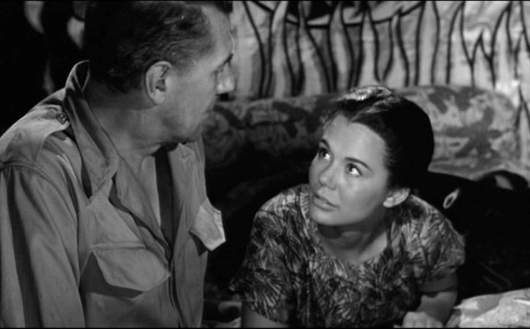
Thunderhoof

“There’s a story they tell that whoever catches him gets what’s coming to him, his judgment right here on earth.”

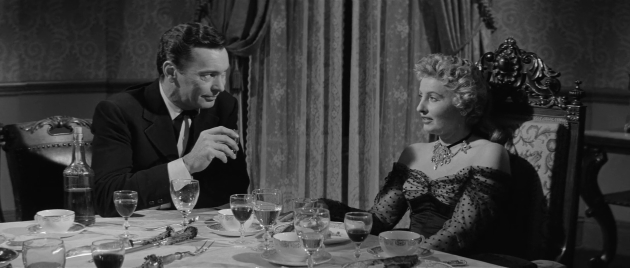
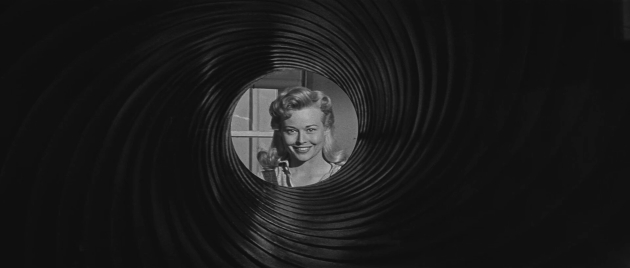
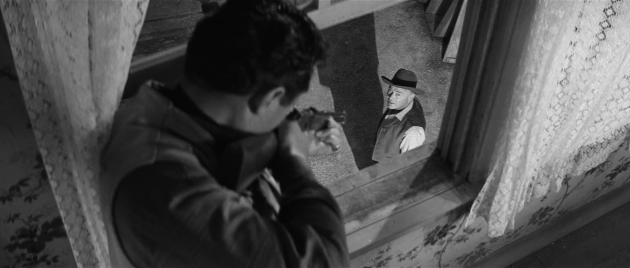
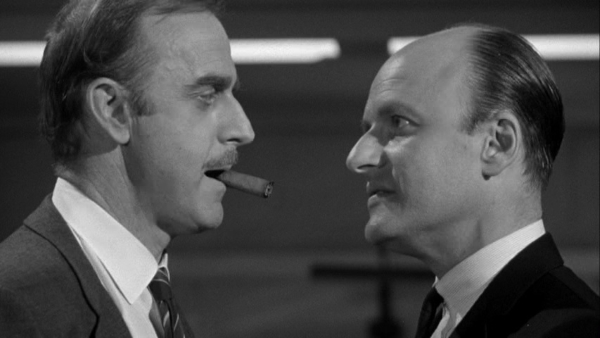
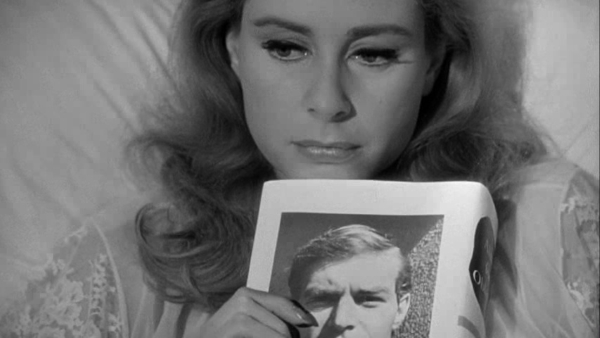
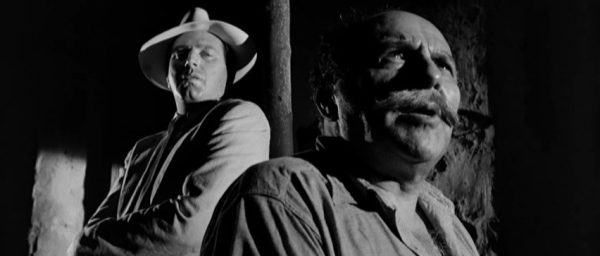
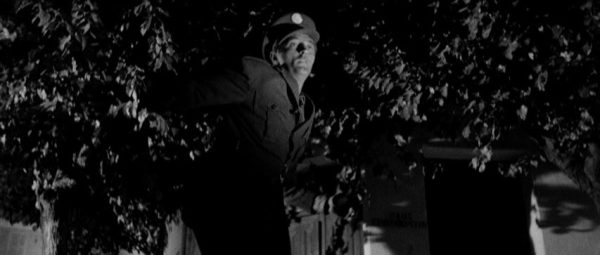
I think that one of the great delights of the cinema is its ability to be surprising, to reveal gems we the viewers had previously been unaware of.  I can’t see myself ever tiring of the movies for it seems that when I’m not revisiting old favorites to bask in the comforting warmth of their presence I’m reassessing those which I’d thought less successful to see what positives I may have missed. Then there are the discoveries, those new viewing experiences that remind me of the vein of riches yet to be mined. Thunderhoof (1948) is an example of the latter, although it may sound more than a little odd to think of a production that is over 70 years old as a new discovery. Still, from my perspective, that is exactly what it is, a title I only came to after some recent discussion about the work of director Phil Karlson brought it to my attention. A number of people whose judgement I trust sang its praises and, having now had the chance to see it for myself, I can only echo those sentiments.

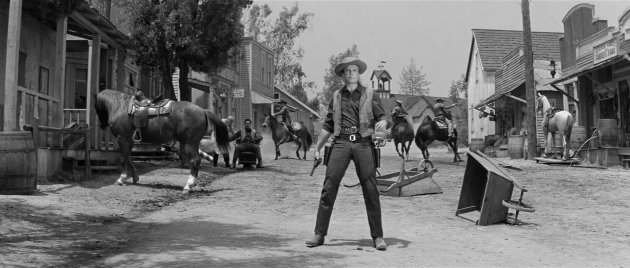
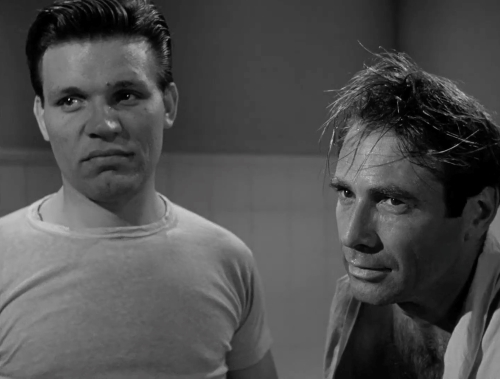
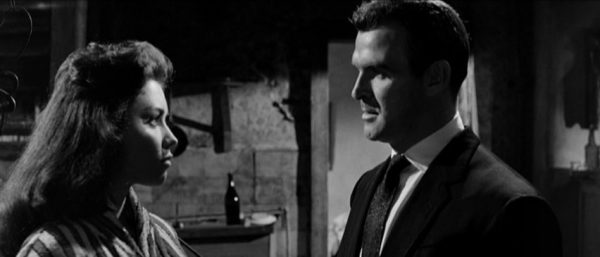
Thunderhoof is a film that never misses an opportunity to wrong-foot the viewer, tempting you to think one thing before deftly showing you how neatly your own expectations have allowed you to be deceived. That is how it opens, with Scotty Mason (Preston Foster), a man engaged in a tight race between his own encroaching middle-age and his desire to start a horse ranch, one which will permit him to offer his much younger wife Margarita (Mary Stuart) the type of life he wants for her. That opening has Margarita watching over a remote and deserted camp in the wilderness, rifle poised to fire in the face of any threat. Out of the desolate night comes a rider with what looks like the figure of a lifeless man slung across his saddle, and up goes the rifle to challenge him. There is no danger here though, it is only Scotty coming back and bringing with him The Kid (William Bishop), the nameless young man he rescued and raised. For a moment we’re encouraged to think The Kid is dead, but he’s merely dead drunk.

This film is at heart a study of proprietorship, both on a personal level and in a wider context. Scotty has ridden out in the night to find and restore The Kid to the triangular family unit formed by these characters. There is that old old proverb from the East claiming that to save a life means taking on responsibility for it thereafter and that is certainly the philosophy Scotty appears to adhere to; whether The Kid likes it or not, his mentor and former guardian intends to see to it that he’s taken care of. For his part, The Kid is consumed with the restlessness of youth, the need to break out and break away, although he too would not be averse to laying claim to Margarita’s affections. Powering all of this is Scotty’s ambition to own and later to breed a line sired by the fabled mustang Thunderhoof. When the chance to rope this wild beast arises, both men, who were at that very moment in the process of trying to kill each other, put their differences to one side temporarily. Thunderhoof’s capture comes at the cost of a broken leg for Scotty, a major impediment to survival in such a hostile environment. Scotty wants the horse and he also wants his wife, The Kid is set on Margarita alone, and she seems unsure of what she hungers for bar some nebulous and ill-defined notion of fulfillment. However, the only way for these disparate characters to have a shot at attaining their desires is by keeping the others alive and kicking.

Thunderhoof was written by Hal Smith, whose credits include the lesser known film noir Night Editor as well as The River’s Edge, The Defiant Ones and Inherit the Wind. That script is a marvelously tight affair with its focus firmly on the interactions and rivalries of the three characters. It takes a fairly simple scenario and spins as much suspense and doubt from it as possible. The small cast and spartan setting allow the themes of desire, trust and betrayal to be thoroughly examined, and the conclusions reached, as the three travelers discover their true natures, are remarkably satisfying. Karlson’s direction is smooth and refuses to shy away from the tougher aspects of the story and the less savory sides of its characters. A good part of it is shot at night, meaning cinematographer Henry Freulich gets to show off some superbly evocative shadow painting as Scotty, The Kid and Margarita play out their subtly shaded roles.

Preston Foster had a long career playing all kinds of characters. I enjoyed the ambivalence he brought to his role in Karlson’s Kansas City Confidential and he also did good work for De Toth in Ramrod. As Scotty Mason he had the chance to take on a fully rounded individual, one of those fascinating characters who spend their time chasing dreams while they are simultaneously doing their level best to outrun the relentless clutches of time. Superficially, it is a big, booming performance, earthy and rambunctious and indomitable. Yet in his quieter moments, there is doubt and a niggling fear of life or his own failings – the cold desperation we see writ large upon his shadow drenched features as he lies drifting in and out of fever, while The Kid and Margarita sing and laugh in the next room, is beautifully realized.

Mary Stuart is someone I know I’ve seen in a few movies but who hadn’t made much of an impression on me. Her greatest success came on television in a long-running role in daytime soap opera. I cannot comment on that aspect of her career but I do know that she was excellent in the part of former saloon singer Margarita. She juggled the loyalty she felt toward Scotty with the temptation to run off with The Kid and achieved the perfect balance in the process. Of course such a role is a plum one but it is to her credit that she carried it off so convincingly. Her climactic stumbling through the nighttime desert, abandoned, desperate and bereft till the figure of the man she truly loves rides into view to offer both physical and spiritual salvation is poetically shot and movingly played. William Bishop’s life was cut tragically short but he made a number of fine movies in the time he had. The role of The Kid presented him with what I think is the best, or most nuanced, part I’ve seen him play. I’m now keen to catch up with Lorna Doone, another movie he made with Phil Karlson. This piece would of course be incomplete without some mention of the title character. Dice was a horse that also appeared in Duel in the Sun and he was used well in this movie, first as the prize to be won and then later as savior. The scenes of his capture and of his breaking are excitingly filmed and I am of the opinion that the image of horses being broken tends to act as a metaphor for the taming of the West itself – something wild, beautiful and untamed that must be carefully and patiently brought under control, that is gradually transformed from a source of peril into a symbol of support and a means of ensuring survival.

Thunderhoof was a Columbia picture and was released on DVD some years ago by Sony as part of the now defunct Choice Collection MOD program. It looks solid throughout, sharp, clean and attractive. Part of me wishes I’d been aware of this movie years ago, but I’m pleased to have been guided towards “discovering” it recently. I am also grateful to be in the position now where I can recommend this rather wonderful little film to others.


The Quiet American

The Quiet American (1958) is an adaptation by Joseph L Mankiewicz of Graham Greene’s novel of the same name and it, unintentionally from the filmmaker’s point of view, poses the question of whether a movie is best approached or evaluated on an emotional or an intellectual level. Greene was very unhappy with the changes Mankiewicz made to his book, particularly with the alterations to the political sentiments the author had written into his story. Greene’s objection highlights what I think of as the intellectual approach, for viewing a film and assessing its worth or success in terms of its political perspective strikes me as a coldly intellectual exercise. Conversely, examining how a movie deals with the human interactions that underpin the story is surely a more emotional approach. Given that I have long been convinced that art is much more closely related to the heart than the head, it probably won’t come as any surprise to learn which view I tend to favor.

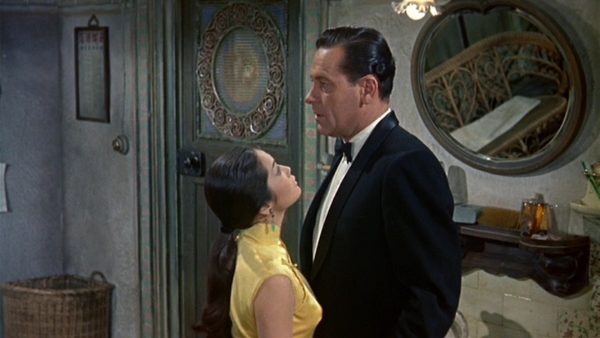
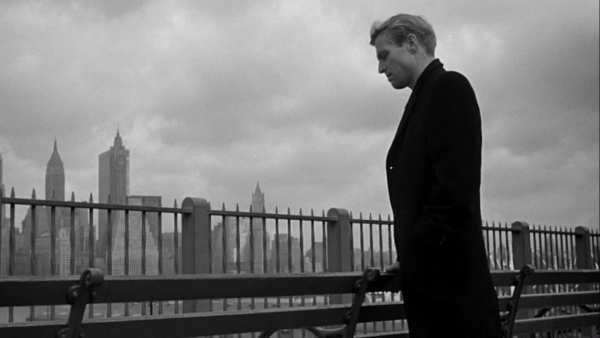
The Quiet American opens near the end of the story and works back from there in search of a beginning that will allow all the events and personalities involved to fall into place. The titular character (Audie Murphy) who remains unnamed throughout, unlike in Greene’s novel, is already dead when we viewers come on the scene. His body is floating face down near the banks of the river in Saigon, discovered by chance by revelers celebrating Chinese New Year. From here we are taken back to the months before his demise, to the time when he first arrived in Vietnam. So the bulk of the movie is related via flashback, unfolding from the point of view of Thomas Fowler (Michael Redgrave), a British journalist and acquaintance of the anonymous American, as he conducts a one-man wake in the morgue, reflecting on the life and death of the young man reposing on the slab before him. Those few months defined the course of the lives of three people: Fowler, the American, and Phuong (Giorgia Moll), the young Vietnamese girl who is loved by both of them. Regardless of the political background of the tale, and the points about the role of foreign intervention in South East Asia that Greene wanted to make, this is a love story first and last; remove that element and there is nothing to relate that has any resonance beyond contemporary concerns. What matters here, and what the movie focuses on, is the triangle formed by those three people, with Phuong acting as the anchor.

As I mentioned above, Greene felt aggrieved at the way the script radically altered the points he wanted to make in his book. I can understand that frustration on the part of the author, and I can sympathize with what he must have seen as wholesale distortion of his vision. I read and enjoyed his novel many years ago yet I still appreciate this movie for what it is, for what it does rather than what it does not. Basically, I see the changes that Greene disliked as only background details as far as the movie is concerned – those elements might be integral to the aims of the novel, but Mankiewicz was making a movie and both his medium and the aims he had were very different. I am of the opinion that any filmmaker who emphasizes the purely contemporary elements of a story at the expense of the timeless aspects is straying into the realms of commentary. In short, I see film as a form of artistic expression, an analysis of the human condition, and that is something eternal rather than ephemeral.

Ultimately, what counts is whether or not the movie works on the terms by which it was conceived. I regard it mainly as both a love story and as a contemplation of the way we frequently project visions of ourselves and the world around us onto those we love. As such, I consider it to have succeeded in achieving it aims. Of course one can dig deeper and read more into it all, seeing different slants on relationships adopted by the old world and the new, the contrasting views of young and old, and so on. Nevertheless, it all comes back to the portrayal and interpretation of love and what that means to various individuals in the end. The background of the story operates in relation to the characters like the MacGuffin in a Hitchcock film, but even then only up to a point. After all, when Fowler makes his fateful decision, he is motivated by a toxic cocktail of pride, jealousy, fear and thwarted passion and not something as prosaically dreary as political convictions.

On paper, one would say that having Audie Murphy face off against Michael Redgrave would lead to an uneven and unfair contest. On celluloid and in fact , however, the contest is a remarkably even and productive one. Murphy had grown steadily as an actor by the late 1950s and this kind of dramatic role was well within his capabilities. There is still a lot of fresh energy about him, and that quality is used to superb effect when placed in contrast to Redgrave’s worn and dissipated cynicism. That fresh faced enthusiasm always cloaked a deeper steel and there is never any doubt about the resilience of the idealistic young man he was portraying. When he trades words with Redgrave’s weary writer, the latter may indicate disdain for their naivety but he never really questions their sincerity, and nor do the viewers. Redgrave is every bit as good as the complete opposite, a tired and spent man whose surface smugness masks chronic insecurity and desperation. We believe it when Murphy shows drive and positivity, and that sense of credibility is just as strong when Redgrave paints his own picture of desolation and emptiness.

Italian actress Giorgia Moll is wonderfully unknowable as the focal point for the affections of those two very different men. There is a lot of passivity about her character, right up till the end anyway. Her final scene adds a great deal of punch and power though, largely because of the apparent indifference and insouciance she displays earlier. The cast is fairly self-contained, but Claude Dauphin lends attractive support as the deceptively relaxed policeman who misses very little. Bruce Cabot has what amounts to a cameo as an American journalist and Richard Loo, who popped up all over the place throughout the 40s and 50s whenever an Asian character was required, is coolly efficient as Redgrave’s contact with the insurgents.

The Quiet American was given a release on Blu-ray by Twilight Time some years ago but I never got around to picking it up and have had to make do with less than stellar DVD versions. It’s a shame no company in the UK has been able to put this film on the market on BD so far. The story was filmed in 2002 by Philip Noyce, with Michael Caine and Brendan Fraser in the Redgrave and Murphy roles, and it stuck closer to the sentiments of the novel. I saw it at the time and while I thought it was fine (although I should say I’ve never been able to warm to Fraser in anything) I don’t think it was improved by being more faithful to its source. I can only say that I have never felt the need to revisit the 2002 film in twenty years whereas I’ve seen the Mankiewicz version multiple times.

Where the Sidewalk Ends

Otto Preminger’s Where the Sidewalk Ends (1950) has the feel of something that might have been cooked up had Cornell Woolrich and William P McGivern ever decided to collaborate on a story. There is that quality of the inescapable nightmare, a fatalistic vortex relentlessly dragging the protagonist down, while he is one of those big city cops who appears to be as uncomfortable in his own skin as he is in the department he works for. The end result is a form of psychological trial by ordeal, where the moral fiber of a man is measured by his ability to meet the challenge laid down by his own past.

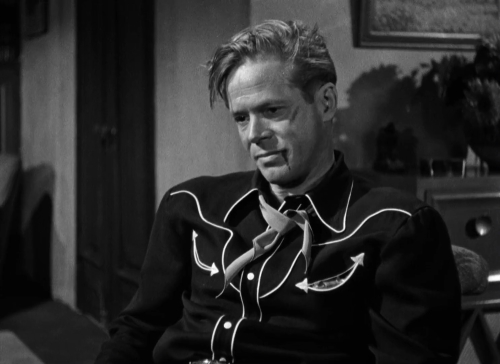
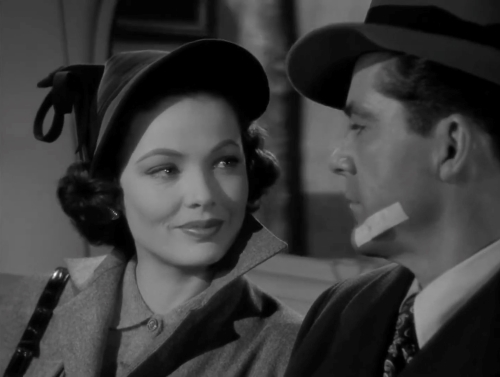
Right from the beginning it is clear that Mark Dixon (Dana Andrews) is a man in trouble. The patience of his superiors in the police department with his brutal, two-fisted approach to the job is wearing perilously thin. What is perhaps more dangerous though is his appraisal of himself. It’s not voiced yet the truculence that pervades features, manner and posture clearly announces a deep-rooted dissatisfaction. With a final warning still ringing in his ears, he sets out to investigate the death of a rich out of town businessman. The victim ought to have been the mark in a rigged game of dice, but a bit of bad luck on the part of the mobsters running the racket leads to a misunderstanding, which leads to a scuffle, which leads to a murder. So Dixon is one of the bulls sent to investigate and is soon on the trail of the man being lined up as fall guy for the killing. Seeing as this is a story that is full to the brim with ill fortune and bad judgement calls, it is somehow inevitable that a man with a hair trigger temper such as Dixon is going to get into deeper strife when he finds himself alone with an antagonistic suspect. That’s exactly what happens, blows are traded and the suspect, a war veteran with a metal plate in his head, winds up dead on the floor. And it’s here that everything begins to spiral completely out of control. Shocked and panicked, Dixon attempts to cover up the accidental killing, but once he sets the ball rolling the momentum generated threatens to crush everything and everyone in its path, not least the dead man’s father-in-law.

The entire business is further complicated by the fact Dixon finds himself falling in love with the estranged wife (Gene Tierney) of the man he’s just killed. What follows is a variation on that noir trope of a man investigating a killing he is responsible for, the hunter essentially hunting himself. The personal angle and the need to see that blame is not wrongly placed on an innocent man adds some spice, as does the fact Dixon is all the time fighting an internal battle borne of the fact his own father was a career criminal. It sets up an intriguing study of the concept of justice and how it may be best achieved, as well as looking at the potential for attaining personal and professional redemption.

Where the Sidewalk Ends feels like something of a watershed movie. That whistling intro with the opening bars of Alfred Newman’s Street Scene playing over credits chalked on the sidewalk, suggestive of the casual impermanence of a crime scene and the expedience of the methods used to mark it out, as anonymous citizens stroll past seems apt given the way film noir – that genre that wasn’t even aware of its own name at the time – was moving along into other areas. As the new decade went on noir would move gradually away from those tales of personal misfortune and shift its focus onto wider societal ills, organized crime and institutional corruption. The director too would soon be on his way, leaving behind the restraints imposed by being under contract to a major studio.

Recently, after revisiting Preminger’s Anatomy of a Murder I was watching one of the supplements on the Criterion Blu-ray where Foster Hirsch was commenting on the directors insistence on shooting that movie on authentic Michigan locations. Some of that fondness for using real locations comes through in Where the Sidewalk Ends too with much of the film shot on familiar Fox studio sets, but also taking the cameras out onto the streets of New York where possible to give it an air of genuine urban grit. The whole picture has a strong noir aesthetic, canted angles, telling close-ups, characters clustered in tight, claustrophobic spaces framed by doorways and windows, and plenty of shadows carefully lit and photographed by Joseph LaShelle.

Where the Sidewalk Ends was the fourth of five films Dana Andrews would make with Preminger. All of their collaborations are interesting and there’s not a bad movie among them. Andrews has always been a favorite of mine whatever genre he happened to be working in and I’m sure I’ve spoken before of that marvelous internalized style he used so effectively on so many occasions. The part of Mark Dixon allowed him to tap into that: his rage and hunger for violence barely contained every time he encounters Gary Merrill’s conceited gangster, the appalled horror at what he has done when he realizes the murder suspect is lying dead before him, and then the sickening, sliding sensation as he witnesses the net cast by the law drawing tighter around those who least deserve it. These are all different emotions and reactions yet all of them are perfectly conveyed with great subtlety and quietness by Andrews – superb screen acting. Gene Tierney was another veteran of Preminger’s movies, making four in total for the director over the years. One might say her character isn’t as directly involved in the story yet her presence is one of the primary drivers of the plot – the initial killing stemmed partially from her attendance at the dice game, her father called on her abusive ex and placed himself at the scene of the crime as a result of what happened to her, and Dixon’s journey back from the brink towards redemption could not take place without her.

Gary Merrill is good enough in the role of the villain, although he is off screen quite a bit. In a sense though, one could argue that Merrill is not the main villain, that honor belonging to Dixon’s father, the ghost of a long dead hoodlum haunting his son’s conscience and putting a hex on his character. An uncredited Neville Brand makes for a memorable sidekick, superficially tough but easy to crack under pressure. That pressure is applied not only by Andrews but also by Karl Malden as the newly appointed lieutenant who is keen to make a quick arrest. As Tierney’s cab driver father, and Malden’s prime suspect, Tom Tully is hugely endearing. Both Tully’s playing and Tierney’s devotion to him lend credibility to the conflict which assails Andrews as the plot unfolds. All of the supporting actors turn in good work, including Bert Freed, Craig Stevens and Ruth Donnelly. I want to add a brief word too for Grayce Mills, who only appears in one scene. Many of these studio productions contained seemingly throwaway moments, little vignettes that are easily overlooked yet frequently stick in the memory. Such is the case with the old widow living the basement below the apartment where Andrews runs into trouble – there is something touching and memorable about this old lady’s few telling lines about the insignificance of time to the aged, and how she sleeps in the parlor with the radio softly playing to assuage her loneliness.

Some years ago the Bfi released a Blu-ray set of three Otto Preminger films noir comprising Where the Sidewalk Ends, Whirlpool and Fallen Angel, but it now seems to have gone out of print. Anyone fortunate enough to have picked that set up will know that this movie (and the other two titles) looks exceptionally good so it’s worth keeping an eye out should it be reissued, or if a competitively priced used copy pops up.

So, this year ends with Where the Sidewalk Ends. My thanks to all of you who came along for the ride, and I hope I’ll be seeing you again in 2023.

Youngblood Hawke

Youngblood Hawke (1964) was the penultimate film directed by Delmer Daves, one of those melodramas he turned his attention to from 1960 onward. The critical response to these films has been mixed at best, although one could say that this characterizes the response to the director’s body of work as a whole. So far, I have only seen a smattering of these late career movies myself, but I fully intend to catch up with them all sooner or later. Youngblood Hawke is a classic rise and fall drama with a pleasing thread of self-discovery and renewal forming  the backbone of the narrative.

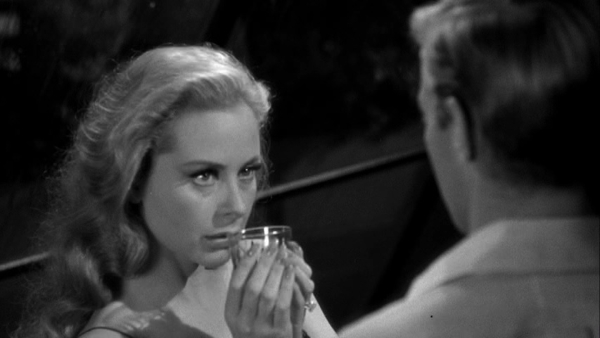
Arthur Youngblood Hawke (James Franciscus) is an aspiring writer, driving coal trucks in Kentucky by day and spending his nights working on his novel. His break comes just before Christmas, a phone call from a New York publishing house confirming its desire to publish his book and inviting him to the city to sign contracts and so on. So it’s with a mix of awe and joy that Hawke arrives in the metropolis, dazzled by the scale of the place, the skyscrapers and monuments, and scarcely able to absorb the fact that someone is prepared to pay him good money to do what he loves, to write. Before the day is over he will have made the acquaintance of two beautiful women, both of whom will alter the course of his life. He is taken in hand by his editor Jeanne Green (Suzanne Pleshette) who finds him a small attic room to rent in the same building she occupies in Brooklyn. That same evening, Christmas Eve, at a literary party he’s been asked to attend he meets Frieda Winter (Genevieve Page), wealthy, sophisticated, provocative, and married. In these early stages, every step Hawke takes is an ascending one, his career path rises promisingly before him, the critics and socialites flatter and flirt respectively, and he, as any young man thrust suddenly into such a position would, basks and revels in the attention and allure of it all.

So Youngblood Hawke is a success; he’s been declared just that by the men and women who create reputations, but those same people can crush them just as easily and just as quickly. The thing is, for all his apparent charm and his ability to write award winning prose, Hawke is at heart a novice in the art of living. He craves success and thinks that the appetizer he has been served up will lead naturally to a grander and richer main course. For it’s riches in the real, monetary sense that draw Hawke, not for their own sake – he’s not so mercenary as that – but for their ability to set him free from financial worry, free to pursue his art in earnest. This leaves him walking something of an ethical tightrope, performing a precarious balancing act between artistic integrity on the one hand and the lure of the fast buck on the other. That someone so inexperienced should falter and lose his way is only to be expected, and that lack of artistic or professional surety extends to his personal affairs as well. This of course provides the real meat of the story, the tug-of-war for his heart with the excitement and illicit unpredictability of Frieda on one side and the reliability and patient devotion of Jeanne on the other.

Youngblood Hawke was Delmer Daves’ first movie shot in black and white since Kings Go Forth, and while I understand budgetary considerations played a part in that decision I also think it works well in this story, and the cinematography of Charles Lawton (a frequent collaborator with Daves) is luminous in places. In truth, I think the story lends itself to monochrome with some of the more powerful scenes, particularly those in Hawke’s apartment, benefiting from the starkness. Daves had a lot of creative control on the movie, not only directing but also producing and adapting Herman Wouk’s novel. As such, I think it’s fair to say it’s very much his film and his trademark theme of placing complex people in difficult positions where there are no easy choices is fully explored. The script ties it all up in a much more positive way than I understand to be the case with the source novel. Again, this positive thrust is characteristic of the director’s work, there’s always that path towards redemption, or renewal and rebirth as far as Youngblood Hawke is concerned, in his films. His characters are put to the test by life’s challenges, forced to confront harsh and perhaps unpleasant realities, both with regard to themselves and those most precious to them. Yet there is a reward to be attained, a victory which is frequently richer and more satisfying by virtue of being so hard won.

The movie begins and ends at Christmas and it’s surely significant that the main character experiences the dawn of new phases of his life at both points. Is the whole film to be viewed as a parable of sorts, or perhaps as an allegory? Daves’ films do have a strong sense of the spiritual to them after all, so perhaps that’s not such a stretch. Hawke sets out on his journey from humble beginnings and winds up being lauded and celebrated, drawn across the river to Manhattan to be tempted by its glitter and glamor. Yet it proves to be something of a creative desert for him, sapping his creativity and his spirit, and so he retreats back to Brooklyn, back from the brink and back to life itself, to be reborn as another Christmas comes around.

I’ve heard it said that the casting of James Franciscus is one of the weaknesses of the film, but I’m not sure about that. For the most part he acquits himself well, catching that wide-eyed wonder of Hawke in the early stages and that ever present ambition that blinds him to the pitfalls ahead of him. If there is a touch of awkwardness in some aspects of his performance, it feels appropriate for a character who at times shows an astonishing lack of perception. Genevieve Page’s worldly Frieda points out the paradoxical contrast between his artistic voice with all its depth of appreciation of the human soul and the tone deaf naivety of his interactions in his private life.

It is the women in Hawke’s life who understand him better than he does himself, laying the foundation for two very strong roles for the characters of Frieda and Jeanne and the two actresses playing those parts produce correspondingly fine performances – of course Daves typically presents women in a highly positive light. Both women are drawn to the writer right from their first meetings but then find themselves repelled by the selfishness, pettiness, and latent prudery he fails to control on various occasions, although never quite enough to make a clean break with him. Daves had already worked with Suzanne Pleshette on Rome Adventure a few years earlier and her role as Jeanne allowed her to explore a down to earth sexiness that feels very authentic. As the more passionate and the more conflicted Frieda, French actress Genevieve Page has the showier part and has more to work with. She gets to play two fine scenes with Franciscus, one in her own home and one in his studio apartment, both of which run the gamut from passionate desire to a cauterizing self-disgust. There is some real rawness on display, in a very human performance, and it is to Daves’s great credit that he never invites the viewer to make cheap or facile judgements about this character and affords her a marvelously classy exit. She is written as a person with flaws and failings as well as strengths and virtues, Page plays her in that way, Daves directs her so, and the movie as a whole benefits from that frankness.

Aside from the leads, the supporting cast is deep and constitutes a major draw in itself. Among the highlights are the seemingly ubiquitous John Dehner as Hawke’s chiseling uncle offering a masterclass in misplaced overconfidence, Mildred Dunnock as his prim mother, juggling defiance and reproval, Edward Andrews as the critic who mixes smarm with acid, and Kent Smith’s cool, calculating cuckold. All those alongside Mary Astor and John Emery, Lee Bowman and Eva Gabor, Berry Kroeger, Werner Klemperer, Don Porter, and so on.

Youngblood Hawke is available on DVD via the Warner Archive and it offers a fine, crisp and clean widescreen transfer of the movie. There are no supplements whatsoever, which I feel is a pity as the film does merit some attention. Frankly, I found much to enjoy and appreciate in this film – the appealing cast, Charles Lawton’s cinematography, Max Steiner’s buoyantly memorable score, and of course Delmer Daves’ hearteningly positive view of people.

The Angry Hills

If I were to offer the choice of a movie with a thin plot stretched beyond the point of endurance or one so crowded and packed with incident that breathing space is at a premium, which one would you choose? Well, the wise viewer would most likely pick neither and instead plump for something more balanced. As one whose curiosity typically allows wisdom to be elbowed aside, I would probably try the overloaded option. I mean, that one ought to be pacier and potentially more exciting, right? Not necessarily. The Angry Hills (1959) is a movie that has some weighty themes baked into it, but there is frankly too much going on, too many plot developments and too many characters drifting in and out of proceedings. In the end, it loses focus, simultaneously reducing the entertainment value and blurring or trivializing the more serious points it might have made.

The Angry Hills takes place in 1941, on the eve of and then in the period just following the German invasion of Greece. It starts with the arrival in Athens of  journalist Mike Morrison.The situation in the city could charitably be described as fluid and he’s keen to move on as soon as possible, or as soon as he’s had the opportunity to clean up and sample some of the local night life at least. Journalists get to know all kinds of people in the course of their work and an old acquaintance of Morrison’s passes on a list of Greeks who will be able to filter information through to British Intelligence in the months and years ahead. The idea is that a pressman will be in a better position to smuggle such a list out of the country before the city is occupied. Morrison frankly wants no part of this but he gets stuck with the list nonetheless. As a result, the movie develops into what is essentially a long chase back and forth across the country with the Germans, and those who would collaborate with them, in hot pursuit of the reluctant courier. As Morrison tries to dodge the Gestapo commanded by the enigmatic Conrad Heisler (Stanley Baker), he is plunged into the interior of the country where he becomes involved with the fledgling partisans trying to organize resistance and has a brief and tragic romance with a peasant girl (Gia Scala). By the by, he ends up back in Athens, still hunted by Heisler and his local stooge Dimitrios Tassos (Theodore Bikel), still looking for a way out and still endangering all those who cross his path.

Director Robert Aldrich was apparently unhappy with the film being recut by producer Raymond Stross, losing 10 minutes or more of footage. He felt it unbalanced the movie, which may be so but I’m not sure it really needed additional scenes. While I can’t claim to know exactly what was trimmed, I suspect it was material that related to Morrison’s first exit from Athens, a section that is papered over somewhat via a voiceover and a few brief shots indicating a longer journey. I do think the film is a little disjointed and there is a clumsiness to the narrative, but more footage in that sequence wouldn’t fix any of those problems. I’d actually go so far as to say the entire in country section with Gia Scala and the partisans could have been excised and not have really harmed the movie. In fact, it might have tightened it up considerably. There are themes touching on betrayal and trust, on the lengths people will go to for the sake of those they love which appear at various points, indeed the whole climactic sequence hangs on just this premise. However, a movie that uses the mechanism of the chase to power its narrative needs to keep moving, and preferably in one direction. What happens in The Angry Hills is that Morrison flees Athens with his enemies in hot pursuit, gets chased through the mountains, and then doubles back to the capital to essentially finish up where he started. It’s all too circular and means that too much happens to too many people for too long and to increasingly little effect. The story is an adaptation, by A I Bezzerides, of a Leon Uris novel; I’ve never read any of the man’s work so I can’t say if that contributes to the general muddle and torpor of it all, but I do know that screen versions of his books tended to be pretty lengthy affairs. Exodus is worthy but that running time of three and a half hours is incredibly taxing, while Topaz remains, in my opinion, by far the dullest and least involving of Alfred Hitchcock’s movies.

While there is no escaping the fact that there are problems with the scripting and structure, the movie does have positives. A glance at the cast list alone ought to attest to that. Robert Mitchum tops the bill as the newsman who claims to believe in little, to have seen too much, yet who experiences something of a spiritual or ethical reawakening. The seeds of a compelling character arc are certainly present but, once again, it’s never given the attention it ought to have received. Mitchum only seems truly involved emotionally in the latter stages, when the effects of the relationship with Gia Scala and the subsequent turn of events become clear. It arrives late and I’m not convinced it’s fully earned. While Gia Scala herself is fine as the village girl who gets under his skin, the romance that grows up between them is a half-hearted one at best. That entire section of the movie should provide the emotional core that supports the final act but the combination of the slowing down of the plot and that slightly lackluster romance weakens it.

A starring role for Mitchum is always a draw, even when it’s not all it could be. Something similar could be said for Stanley Baker, who gets a nice meaty part as the conflicted Gestapo chief. It is the type of role that one would expect to be pretty one-dimensional yet it is far from that. Baker had great presence and he could add layers of menace with the most subtle of glances and gestures, but he could also use that finely modulated voice to inject a quiet authority, a hint of warped civility in this case that makes his character all the more fascinating. His Heisler is easily the most interesting character on show, a potentially cartoonish villain invested with much needed depth. Elizabeth Muller is the woman who connects Mitchum and Baker and as such it’s a pivotal role, but neither the writing nor the performance really exploits that. In support, Theodore Bikel is marvelously sinister and corrupt, willing even to use the charms of his sister to further his aims. As that sister, Jocelyn Lane is stunningly attractive and it’s a pity her part wasn’t expanded. Marius Goring flits in and out of the picture  as an effete but dangerous German officer. There are small parts too for both Sebastian Cabot and the recently departed Leslie Phillips, the latter clearly enjoying his view of a surprising (taking into account the era in which the movie was made) and earthily energetic topless cabaret performance by Marita Constantinou.

The Angry Hills has been released on DVD via the Warner Archives in a very  attractive anamorphic ‘Scope transfer. Both the cast and the setting caught my attention initially and, as someone who has lived for many years in Athens, I welcomed the fact that the location shooting offered a glimpse of the changes that have occurred to the look of the city over time. The movie overall is a decidedly mixed bag, an odd blend of overcrowded plot with too much incident yet not enough character development to allow the viewer to properly engage or empathize. In short, the cast and location work ensure it remains watchable despite the structural flaws.

The Texas Rangers

There is something wildly entertaining about dipping into that era when Hollywood thought nothing of gleefully ripping pages if not whole chapters out of the history books in order to mix and match the characters, events and consequences the writers had decided would feature in their story. What makes it especially enjoyable is the fact this unapologetic grinding up facts had no agenda whatsoever, no nods to knowing, joyless postmodernism, nothing more in fact than a desire to present a piece of straightforward entertainment. The Texas Rangers (1951) works on the principle that the key to success is to pack as many big name outlaws as possible into the plot and have the hero take on this rogues’ gallery. If you are after an accurate depiction of the past, then it’s probably best to give this one a miss. If, on the other hand, you’re in the market for a pacy and uncomplicated western, this one will fit the bill.

Somewhat at odds with the fanciful nature of the tale which will unfold, the opening scenes attempt to place the characters in some sort of context. Suffice to say that we’re in Texas in the years following the Civil War and the Reconstruction. There is then a brief introduction to the main outlaws: Sam Bass (William Bishop) looks to be a model of charm and courtesy, smiling as he efficiently robs a train, only allowing the facade of politeness to drop momentarily as he ruthlessly guns down a less compliant passenger; John Wesley Hardin (John Dehner) is dapper, cool and devious, a gentlemanly killer; the most sadistic of all is Dave Rudabaugh (Douglas Kennedy), grinning maliciously as he savagely drives a knife through another man’s hand in the course of a not so friendly card game. Then there is Johnny Carver (George Montgomery) who, along with Buff Smith (Noah Beery Jr), runs into trouble during a botched bank raid. Actually, he runs into a bullet fired by a treacherous Sundance Kid (Ian Macdonald) and consequently ends up serving hard time as an accessory to murder.

So, with Texas descending into near anarchy as a result of the activities of the gang headed up by Sam Bass, the authorities have to be seen to act. Desperate times call for desperate measures, and Major John B Jones (John Litel) of the Texas Rangers has Carver and Smith released on probation, on condition they serve under him with the aim of smashing the power of the Bass gang. And that is essentially what it is all about, a not unfamiliar story of men with an unsavory past given an opportunity to redeem themselves by taking on and ultimately infiltrating a criminal organization. Along the way, there are enough  brawls, chases, shootouts, betrayals and twists to satisfy even the most demanding viewer.

Phil Karlson, working from a story by Frank Gruber and a script by Richard Schayer, rarely lets the action portrayed on screen pause for breath. Incident piles on top of incident and no situation is allowed to hang around till it grows unwelcome. The plot is tied to that classic theme of redemption which is never far from the surface in so many westerns of the 1950s, but it’s never particularly emphasized here. Nevertheless, it is present for those who want it, and I’m certainly a person who appreciates this aspect, even when (or perhaps because) it serves to ground the most escapist fare. For a movie that is almost determinedly lacking in pretension and which prides itself on its sense of urgency, The Texas Rangers looks both handsome and stylish. Karlson never misses a chance to employ a telling close-up, to shoot from an unexpected angle or to frame a scene in an interesting way.

George Montgomery’s laid-back style is used to fine effect in this movie, there’s an assurance coupled with exuberance about him, and when you factor in the easy grace with which he moves around the frame it’s evident how comfortable he was in a western setting. His two big dramatic scenes, played out with Jerome Courtland and Noah Beery respectively, are handled competently enough but the fact is that area wasn’t his strongest suit. Beery is his usual homespun self, appealingly diffident and upright. Of the outlaw band, William Bishop gets more screen time as befits his role and he’s fine, although there’s not the menace about him one might expect. However, that is certainly not the case with Douglas Kennedy. He looks and acts implacably mean, being responsible for, and seeming to relish, some of the more reprehensible pieces of villainy. John Dehner rarely fails to impress, even in minor roles, and he adds some scene-stealing polish to his part as the untrustworthy killer. Ian Macdonald scowls effectively and Jock Mahoney takes another step on the path that would lead him from stuntman to star. The only woman in the film is Gale Storm but her part as a newspaperwoman whose father was murdered by the Sundance Kid is sadly underdeveloped, tracing an arc from hostility to devotion that never feels the least bit convincing.

The Texas Rangers doesn’t appear to be available as a DVD or Blu-ray anywhere, or at least I haven’t been able to come across any releases. If anybody reading this happens to know of one, I’d be pleased to hear about it. However, it can usually be viewed online, and with satisfactory picture quality too. A good many of George Montgomery’s westerns are now available, although there are still a few notable absences such as this. Generally speaking, I think a lot of Columbia’s second string westerns don’t get a lot of love. Sure many of them are pretty frugal affairs, shot fast and sometimes featuring casts that won’t have the name recognition to make them easily marketable to a modern audience. That said, it’s worth remembering that movies of this type were the staples that kept the genre going for so long. The Texas Rangers is not a classic, but it is an attractive film that never wastes a moment of its 75 minute running time. Perhaps the biggest compliment I can pay is to say that it is simply a pleasure to watch.

Experiment Perilous

Life is short and the art long. Decision difficult, experiment perilous.

That’s a loose translation of the words of Hippocrates, words first written over two thousand years ago and borrowed so as to be uttered by one of the characters in Jacques Tourneur’s Experiment Perilous (1944). There’s truth in that quotation, as there is in so much of what has been passed down over the centuries from those great men of the ancient world. It could be seen to apply to the limited time the characters in the movie have to react and respond to the events that unfold around them. Looked at now in retrospect, it might even be said to act as a neat descriptor of the career of Jacques Tourneur himself. His fairly lengthy apprenticeship segued into the comparatively brief period of peak creativity, a period that could be roughly defined as starting from 1942 when he made the first of his stylish hauntings for Val Lewton with Cat People and running through to 1957 when he so successfully recaptured some of that sensibility in Night of the Demon.

Experiment Perilous is a classic Gothic melodrama with a hint of film noir drifting around it, perhaps in the vague dissatisfaction that colors the moods and attitudes of its principals as much as anything. All through the movie there is a suspicion of something not quite right, of a group of people hurrying about their business and their lives amid an almost permanent state of flux and turbulence. Much of the story takes place in appalling weather, with only the brief flashbacks to the past appearing to offer a glimpse of brighter and calmer times. The present, on the other hand, seems to lurch from one stormy tableau to another, presenting a background that is forbidding enough to drive the characters indoors for much of the time, seeking shelter from the elements without yet finding other more insidious threats lurking within.

It all begins on a train, carving its way east through the night and assailed on all sides by a raging downpour. It is that lashing handed out by nature that provokes a fateful encounter between psychiatrist Hunt Bailey (George Brent) and a fluttery and nervy woman sharing the same car. Both are headed back to the city, back to work in the doctor’s case while the lady is on her way back to see her brother and his wife after a long absence. She is a faded type, ethereal and quirky enough to pique his interest and sympathy. Were it not for a mix up with the luggage on arrival in New York, and then the fact he later overhears a throwaway remark about the woman’s sudden death, he would most likely have thought no more of the incident. However, there was something in the woman’s words and manner, and of course her unexpected demise, that arouses his curiosity and prompts him to take advantage of an opportunity to meet the relatives she spoke of.

Nick Bederaux (Paul Lukas) fits the stereotype of the turn of the century European sophisticate, cultured, moneyed and impossibly debonair. There is something a little “off” about him though, his charm and politeness bordering on obsequiousness. Bailey senses that on their first meeting and it is further heightened when he is introduced to Bederaux’s wife Allida (Hedy Lamarr). She is a delicate beauty, like an exquisite piece of Dresden china which Nick has procured and now keeps on display in his oddly oppressive brownstone. Bederaux takes the opportunity to confide in Bailey that he worries about the psychological state of his wife, and the effect it may be having on their young son. More suspicious than convinced by these pleas, the doctor agrees to examine Allida with the unstated intention of delving deeper into the secrets of Bederaux himself and the tragic past which may be impinging on the future of his wife and son.

Experiment Perilous came out the same year as George Cukor’s Gaslight (which was a remake of Thorold Dickinson’s British movie), exploring a very similar theme and with a plot that follows a very similar arc. This does not have the gloss and polish of Cukor’s film, but the director brings his own special touch to it. One of Tourneur’s defining characteristics was his subtlety, never overcooking a situation of overstating a point. I appreciate that quality – it is a stylistic fingerprint to be found all over his work for Lewton and is evident too in his other productions – and what appeals most to me about such an approach is the fact that it shows a sincere respect for the intelligence of the viewer. The plot of Experiment Perilous is relatively straightforward and there are few surprises yet the stylish way in which Tourneur guides us through it all ensures it never drags. There is a refreshing frankness about the relationships too and the dynamics that power them. While the production code of the time would never permit such a direct admission, Tourneur’s sensitivity and assurance means the motivation at the root of Bederaux’s jealousy is alluded to in such a way that the observant viewer is led to believe that the character is essentially impotent. It speaks volumes about the director’s skill that he is capable of weaving such themes into the fabric of the narrative, of blending in layers of maturity, without needing to resort either to crudity or falseness.

Hedy Lamarr was of course a famous beauty but her acting ability should not be discounted. The role of Allida Bederaux called not only for vulnerability on her part but a degree of gullibility too. Bearing in mind what an intelligent and accomplished woman she was outside of the movie business, it’s all the more laudable how she managed to successfully essay the helplessness of her character – I guess that characteristic catch in her voice helps some. Anyway, her performance contains a lot of warmth and credibility. George Brent was a good choice for the lead, bringing his own brand of humility and empathy to a character who is not written as an especially interesting figure. Perhaps that was one of Brent’s great strengths, his knack for portraying essentially bland characters and investing them with a humanity it was easy to relate to. He was a solid and reliable presence in many a movie (I felt he was exceptionally good opposite Barbara Stanwyck in Curtis Bernhardt’s My Reputation) although he did not always appear to be the most exciting, which seems slightly odd if you stop to think that here was a man whose real life exploits saw him forced to leave his native Ireland during the War of Independence with a price on his head. Paul Lukas co-starred with Brent in two other movies – of those, I have Temptation lined up for viewing at some point in the future. There is great precision about his playing, an economy of expression if you like, that suits the buttoned up nature of Nick Bederaux so well. Of the supporting cast, Albert Dekker gets the mix of passion and dissipation just right as Brent’s artist friend, while Olive Blakeney is sweetly neurotic in her relatively brief screen time.

Experiment Perilous is not the hardest movie to access these days, having had DVD releases in the US (via the Warner Archive), the UK and France, and probably other territories too. As a long time fan of Jacques Tourneur’s work I consider it an easy recommendation.

The Strange Affair of Uncle Harry

Let’s start at the end and work backwards to the beginning. And no, that’s not a mere ploy to try to grab your attention. There are some movies where, due in large part to the nature of their endings, it is hard to talk in detail about them without straying deep into the kind of spoiler territory that I prefer to avoid if at all possible. The Strange Affair of Uncle Harry (1945) is one such movie, a film which features a significant twist, some might even say an outrageous one. I shall do my utmost to allow those coming fresh to the film to experience it as it should be, the end titles even include a contemporary appeal to audiences to respect this aspect after all, although I see no reason why we cannot discuss any and all developments freely in the comments section below.

The prologue informs us that we are in New England, in a town called Corinth to be exact. It feels somehow appropriate that events should unfold in a town whose name alludes to a classical past, for New England (to an outsider such as myself at least) always seems to have an air being connected to the past. The town bridges different eras (just as Corinth in Greece acts as a physical bridge between the mainland and the Peloponnese), or could one say they clash? The main square has a statue of a famous general and the whole place is dominated by the hulking prison-like mill which provides the main source of employment. Within the walls of this forbidding edifice we see a man toiling away in his studio/office. This is Harry Melville Quincey (George Sanders), a descendant of that worthy positioned for posterity astride a marble horse in the square. His is a humdrum existence; the glories of his ancestors mean little in the thrusting industrial age and he must content himself with designing yet another variation on a rosebud pattern for an everyday textile. Harry is a man who is not so much drifting into staid and uneventful middle-age as one who is firmly mired in a world of stifling decorum. If the town is still shackled to a degree to what came before, then the house where Harry lives is practically a mausoleum, a burial chamber for one’s dreams. The furniture and decor recall a faded gentility, weighed down by the combined pressures of expectation and disappointment. He shares this space with his two sisters, Hester (Moyna Macgill) is a wittering and fussing old maid while Lettie (Geraldine Fitzgerald) is a manipulative malingerer.

So Harry lives daily amid bickering and pettishness, punctuated by spells of tedium at a job which is eating away at his creativity and relieved only by his occasional star gazing via the telescope he has laboriously constructed in the summer house. This neatly sums up his character, the consummate ditherer and dreamer, forever focused on the faraway and the unattainable. Then all of a sudden that distant sparkle lands right in front of him in the form of Deborah Brown (Ella Raines), a designer from New York and a bracing breath of fresh air destined to blow away the cobwebs and wreak havoc in the plodding, predictable Quincey household. While love seeks Harry Quincey, something far less savory stirs in the heart of his needy and clinging sister Lettie. Passion, possessiveness and fear are set on a collision course, their meeting point to be decided by a man sat alone in his living room contemplating a small bottle of poison.

The tone of the movie shifts from a fairly light beginning, with some well-observed and self-deprecating humor provided by Sanders, Macgill and Sara Allgood, on through some tightly controlled melodrama towards a progressively darker destination. It is a smoothly blended process with no unseemly jarring observed, not till the very end anyway and the coda that is sure to displease some. I am willing to go out on a limb here and admit that I quite like this twist which occurs. It satisfies me on a number of levels and always has done. I feel sure others will disagree with me here , but I reckon it can be read or interpreted in a number of ways, not just the superficial and obvious one. I actually see it as a natural extension or growth of the character of Harry – one would hardly expect anything else of the man, and whether it is in fact meant to be taken at face value is, I think, left to the viewer’s discretion.
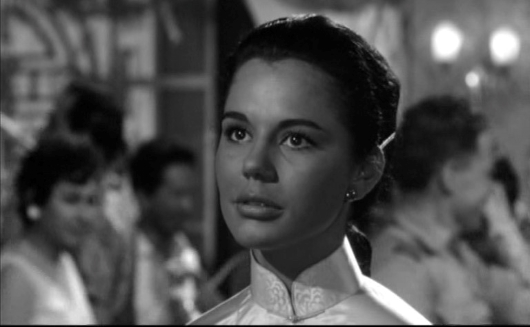
Robert Siodmak did as much as anyone to codify the look and conventions of film noir in that great run of movies in the 1940s from Phantom Lady right through to The File on Thelma Jordan. I imagine The Strange Affair of Uncle Harry will not be at the very top of the list of favorite films noir from the director for too many people yet it remains enjoyable and well crafted. Siodmak coaxed fine performances from all the main cast members with Sanders tapping into a diffidence that he often masked with his characteristic polished smugness. Here he allows that mask to slip and offers a peek at a man whose faltering weakness is recognizably human and sympathetic even if he’s not always likeable. Ella Raines , in her third of four collaborations with Siodmak, exudes a sexy, sassy big city confidence, her earthy frankness bowling Harry over from the very first moment. Harry’s character resides in a remarkably Irish household, with Belfast native Moyna Macgill (Angela Lansbury’s mother) alongside Dubliners Geraldine Fitzgerald and Sara Allgood. Macgill flutters delightfully and makes for a strong contrast to Fitzgerald’s intense self-absorption; the latter’s final confrontation with Sanders is overflowing with cracked malice and comes across as genuinely chilling. Sara Allgood is good value as the lugubrious housekeeper, clashing with the two sisters and giving as good as she gets while she philosophizes about her own longstanding engagement with gloomy resignation.

The Strange Affair of Uncle Harry has been released in the US on DVD and Blu-ray by Olive films, sporting an attractive albeit imperfect transfer. It took me many years to catch up with the movie as it was one of those titles that never seemed to get screened on TV. I finally got to see it when it was broadcast one summer when I was on vacation and I liked it immediately. Sanders’ low key characterization resonated with me and Ella Raines in her pomp could never be disappointing. While some (many?) viewers will gripe over the nature of the twist that I have attempted to dance carefully around, I believe there is more of an issue relating to what Deborah sees in Harry in the first place, and why she perseveres in the face of his inertia and his family’s obstructiveness. Ah well, love is… whatever one wishes it to be, I suppose. To borrow a repeated phrase from the film, that’s the way things are. Speaking as a dedicated fan of the films of Robert Siodmak, I obviously recommend seeing this movie. Sure there are weaknesses on show but it was made right in the middle of his best period and that alone ought to make it required viewing.

Lightning Strikes Twice

Melodrama is essentially just emotionally supercharged drama. Somehow it has garnered if not a bad reputation over the years then at the very least one which attracts a degree of critical sneering. Its defining characteristics, those heated and indeed often overheated passions and emotions, seem to embarrass a lot of cultural commentators, leaving them unable to assess the strengths and the draw of melodrama with any sense of proportion, something that rarely occurs with other genres. Would it not be odd to kick a western for featuring gunfights, a horror movie for including monsters, or a comedy for having the effrontery to raise a laugh? Yet there is no shortage of critics jostling for a prime place in the line formed up to sling brickbats at melodrama. As a result, few people want to associate their names or their company’s names with melodrama, preferring to slap another label on the product, one which is perceived as having more marketing clout and thus greater respectability. Lightning Strikes Twice (1951) is without doubt a melodrama, with all the heightened atmosphere and feeling that one would expect. However, I have seen it labeled film noir, which is both a disservice to the movie itself and a misleading descriptor for potential viewers.

The opening scene leads us to Death Row where a man, pacing his cell like some caged beast, awaits the hour of his execution after having been convicted of the murder of his wife. Then right at the last moment, following an oddly flipped situation which sees a priest seeking forgiveness from the condemned man, word comes through that a stay of execution has been granted in order to permit a retrial. It is soon learned that the new trial has ended with a jury split right down the middle and unable to reach a verdict. So Richard Trevelyan (Richard Todd) walks free, and promptly drops out of sight. It is here that the main point of view character is introduced: Shelley Carnes (Ruth Roman) is an actress on sabbatical for health reasons and riding a bus through Texas on her way to a dude ranch. By chance and coincidence, for no melodrama would be worth its name without a liberal sprinkling of both mechanisms, she runs into a middle-aged couple who are keen to extend help and hospitality, for reasons which will be revealed later. The upshot is Shelley winds up on a remote desert road in the middle of a huge downpour and is forced to seek temporary refuge in the first house she spies. The one person in residence, and he has only just arrived, is Trevelyan. As he tells his tale to Shelley, she is not unsympathetic. The story is incomplete though and the viewer, as well as the characters on the screen, is left unsure of exactly what happened.

So is this a film noir? Well no it’s not, and the fact is that, despite some gloriously inky cinematography by Sid Hickox, the script is not so much dark as muddy. It plunges the viewer into a dizzyingly complex set of interlocking, interlinking and interdependent relationships where jealousy, infidelity, despair and yearning all jockey for position. The screenplay by Lenore J Coffee packs in as much emotional tumult and turbulence as possible and the stark, broiling desert setting is a fitting location for it all. The ghost of Trevelyan’s late wife is ever present, haunting both the past and present of everybody involved. As in Hitchcock’s Rebecca, our never seeing this character lends her a power in death that is every bit as malignant as her influence in life is said to have been.

Perhaps there is a bit too much doubt or ambiguity injected into proceedings. The truth is that once one strips away the admittedly well rendered atmospherics the mystery at the heart of the film is not that hard to crack. Still,the direction of King Vidor (Duel in the Sun, Man Without a Star, Ruby Gentry) is a visual delight, exhibiting great style and creativity. He frequently captures characters either in reflection or in frames within frames. The effect here is that the full picture is never allowed to emerge, with something always obscured or placed strategically out of sight. This serves to heighten the sense of unease and suspicion, leaving viewers and characters unsure and feeling forever at a loss.

Both Richard Todd  and Ruth Roman were riding high at this point and getting some plum roles. Todd had just recently received great acclaim for The Hasty Heart and had taken the lead in Hitchcock’s Stage Fright. His career saw him take on a variety of square-jawed heroic parts but he was equally effective in more ambivalent roles too. Coincidentally, Ruth Roman was working with Hitchcock around this time as well, as the leading lady in the superlative Strangers on a Train. I’ve always felt she had an air of toughness about her, and while that quality is discernible here she never allows it to override the innate vulnerability which is essential for her role to make sense. If the careers of Todd and Roman were in the ascendancy, then the same cannot be said for Zachary Scott. His star was on the wane and this would be the  last movie he made at Warner Brothers. His part reflects this decline too, a supporting role at best which sees him only appear in the latter half of proceedings and with just one notable scene – an edgy nighttime drive across the desert with Roman. Mercedes McCambridge gives another masterclass in twitchy, quivering frustration as the owner of the dude ranch  – surely no other actress has been as accomplished at portraying dissatisfied, self-loathing types.

Lightning Strikes Twice is available on DVD via the Warner Archive and the transfer looks quite strong. Personally, I like this movie – the stars, director, genre and overall look and vibe appeal to me. However, I realize this type of thing is not going to work for everybody. Again, I feel it is a real stretch to call this a film noir and anyone approaching it on those terms is likely to come away feeling disappointed and short-changed. Sure it has the look of noir at times and one could say it does pause to light up a smoke and cast a glance down those murky cinematic alleys on occasion but it is melodrama all the way, and an enjoyable example of that genre for those who are happy to embrace it.

Drums Across the River

Revisiting Universal-International westerns is never a chore. While some are undoubtedly more challenging and engaging than others, there is a strong and distinctive visual aesthetic to them all. Add in the polish and pace of a well-oiled production system and there is usually much to savor. Drums Across the River (1954) was the last of three movies Audie Murphy made for director Nathan Juran and it is an enjoyable picture that blends a number of worthwhile themes into the action, although one could argue that there are too many of those themes for a sub-80 minute movie, too many to do full justice to at any rate.

Gary Brannon (Audie Murphy) and his father Sam (Walter Brennan) run a freight business in Colorado, one which is beginning to feel the pinch economically as the mines that had previously been the life blood of Crown City are yielding less and less. Desperate men naturally snatch at whatever straws of hope appear before them and in this case it is the neighboring land occupied by the Ute tribe, land which is known to be rich in gold reserves. This presents the main source of potential conflict in the movie and it is here that we dive into the action as Gary Brannon is about to defy his father and take part in an excursion onto Ute territory organized by Frank Walker (Lyle Bettger). Walker fully expects to encounter trouble, in fact he welcomes and pushes for it as his ultimate goal is to provoke a war with the Utes that will force the army to intervene and deliver the gold into his hands. Well, a skirmish does occur, despite the best efforts of Brannon Sr to broker peace, and the taking of captives by both sides means an exchange is going to have to take place.

It is at this point that another source of conflict arises, one that is crammed with potential. Sadly, this is only partially fulfilled though, as the fact that Gary’s mother was killed by a Ute warrior in the past comes to light. This explains his hatred for the Indians and introduces a needling note between father and son since the older man has come to terms with his loss and grown to respect the tribe and the Chief (Morris Ankrum) who atoned for the killing at great personal expense. The exchange, negotiated by Gary as his father is nursing a wound, sees him alter his perspective and thus the ethical and philosophical sea-change he experiences is effected a little too quickly and too soon. That is not to say it is unconvincing, merely that it robs the picture of the opportunity to delve deeper into a strong and involving theme. What follows is more standard albeit entertaining fare as the focus shifts to a more direct confrontation between Walker and Brannon Jr, where the former is increasingly determined to remove the stone in his shoe that the latter now represents. As such, we get kidnapping, blackmail and a frame-up all interspersed with copious action sequences as we wind our way towards a satisfying if not altogether unexpected conclusion.

Westerns that lean heavily on subterfuge as plot devices need the right people in the villainous roles. Under the circumstances, it is hard to think of anyone better suited to the part of arch puppeteer than the unctuous and Machiavellian Lyle Bettger. His shifty, slippery persona is ideal for the role of Walker and contrasts well with Murphy’s clear countenance and upright demeanor. Murphy himself is never overtaxed but does well, as one would expect, in the action scenes and brings that edgy intensity of his to some of the tougher moments. Walter Brennan is sympathetic as the older man who has made peace with himself and his environment. If anything, he is absent, or held captive by Bettger and his henchmen, for too long and his character’s measured wisdom and innate decency is therefore only sporadically highlighted. And speaking of characters who are not on screen as much as I would like, there is Hugh O’Brian’s sardonic and sadistic black-clad gunslinger. He brings a real sense of stylish menace to his scenes and it is a genuine pity he wasn’t given more to do. Jay Silverheels fares well as the Ute warrior who grows into responsible leadership and his stoic sense of right and justice contrasts markedly with the venality of the villains.

It has been suggested before that women in westerns do not always get as many opportunities to shine or make their mark. Now I’m not convinced that is really true, or least not true enough to be presented as a blanket statement. There are many examples of interesting and pivotal roles for women in the films of Ford, Hawks, Daves, Mann and Boetticher, and this is frequently true of second tier productions as well. Sadly though, this cannot be said for Drums Across the River, where neither Mara Corday as a saloon girl nor Lisa Gaye as the insipid and unnecessary love interest for Murphy are given any chance by the script.

Nathan Juran’s direction of the movie is fine in that he keeps it tight and it’s what I’d term a solid and professional piece of work. Still, it feels a little impersonal. He makes ample use of the studio backlot, which typically looked attractive in most of the movies where it was employed and this is certainly true of the sequence featuring the gallows in the rain, but does get to head out to Red Rock Canyon and San Bernardino for a bit of welcome location work too.

Drums Across the River has had multiple releases on DVD over the years so it ought to be easy enough to track down a copy. I watched the UK release by Simply Media, which has the film looking handsome and colorful in its correct widescreen ratio. Overall, this is a good Audie Murphy western that offers food for thought on Indian-settler relations and presents the Ute as more than just convenient bogeymen. I guess my only complaint would be the fact that the script moves so fast and tries to pack in so much that some the more interesting and worthwhile themes do not have much chance to breathe. Nevertheless, this is a movie that works hard to please and hits the target most of the time.