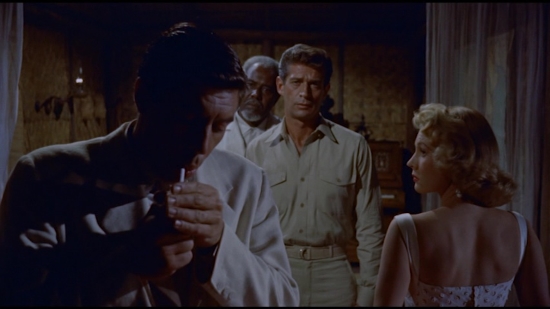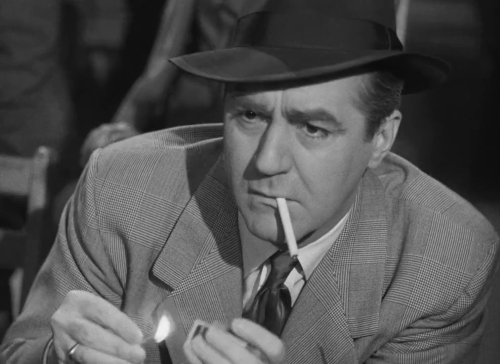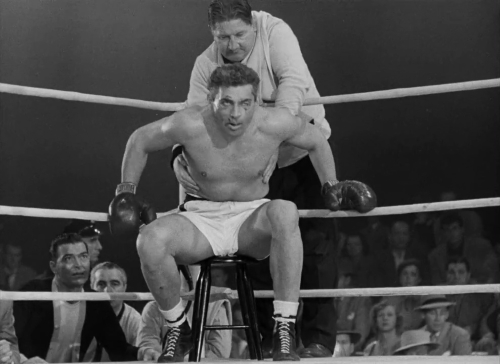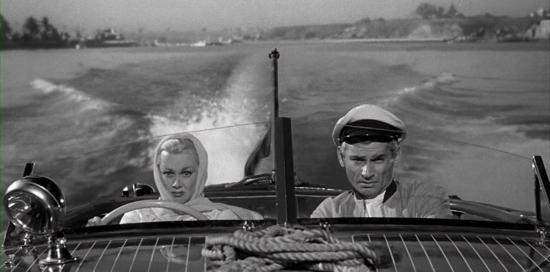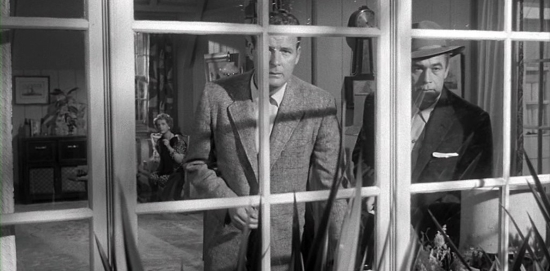
Home from the Hill

“Home is the sailor, home from sea,
And the hunter home from the hill.”

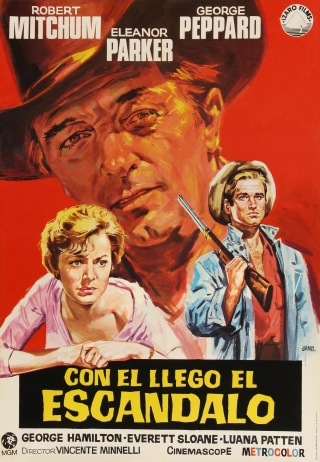
Those lines, the final two of Robert Louis Stevenson’s poem Requiem, introduce the movie featured today. The image of the hunter has long been a romantic one. In mythology Orion was not only renowned for his skills as a huntsman but also for his amorous exploits – in addition to his attractiveness, it is said that he fathered up to fifty offspring by as many different mothers. It is therefore apt that the protagonist in Vincente Minnelli’s Home from the Hill (1960) should also embody these characteristics. And as this hunter moves inexorably towards that repose alluded to in Stevenson’s short poem those features are repeatedly highlighted. In telling this story, Minnelli creates one of his grand melodramas, assembling from constituent parts which are at once discrete and also united in their focus on the deceptions that people lock themselves into in their quest to achieve contentment. How is that to be achieved? Through three interdependent actions: confronting the past, acknowledging the present, and securing the future.

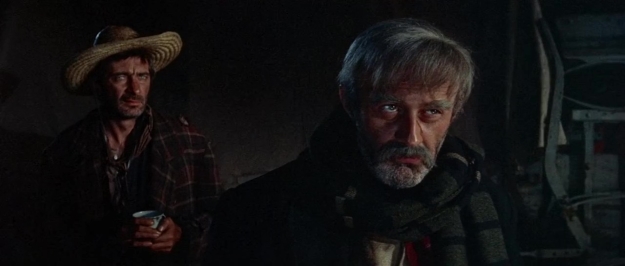
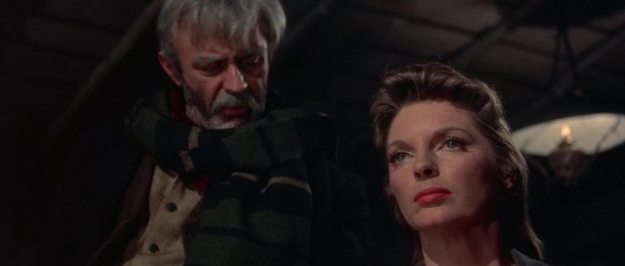
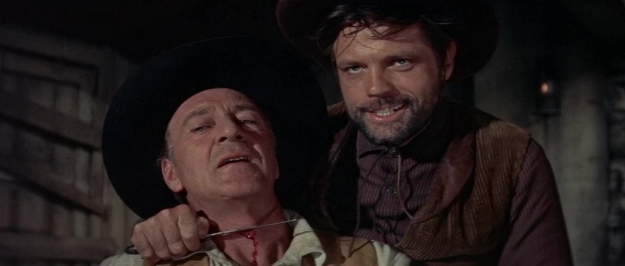
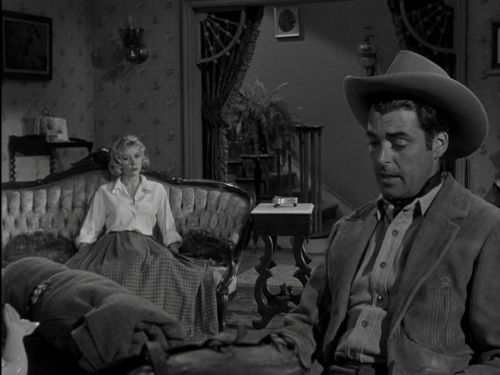
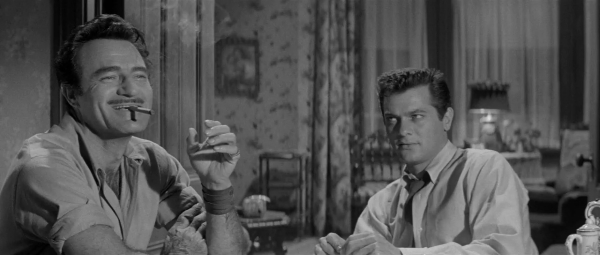
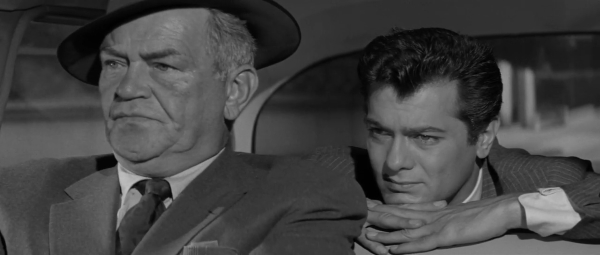
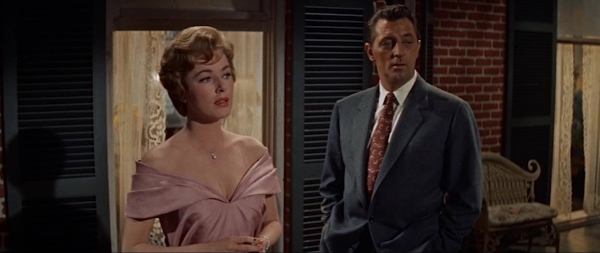
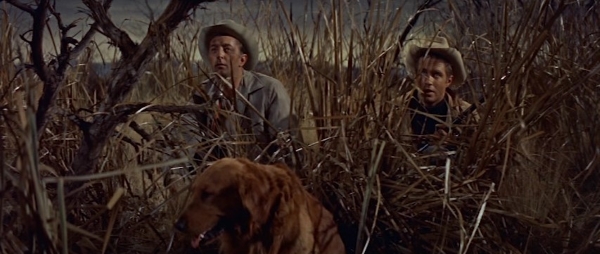
Small town America, the ultimate paradox in some ways, that curious blend of the idyllic and the deeply unattractive. There is something comforting, reassuring, even downright alluring about the sense of orderliness and stability that small, close-knit communities seem to exude. There is a security attached to everybody knowing everybody else, but of course the flip side of that is the preponderance of gossip, of long memories of a malicious type, a type which fosters and breeds grudges. Wade Hunnicutt (Robert Mitchum) is the town’s leading citizen – everybody calls him Captain, adding another layer of deference – wealthy, influential, a noted sportsman, and an infamous womanizer. The opening scene among the bulrushes in the middle of a duck shoot cements all these qualities, the latter one in particular being driven home with some force when Wade finds himself marked as prey by a desperate and indignant husband who has been wearing the horns of a cuckold. That Wade narrowly evades death at his hands is down to the sharp reactions of Rafe Copley (George Peppard) in knocking him just out of harm’s way at the critical moment. By and by, it becomes apparent that Rafe is his illegitimate son, a fact which irreparably soured his marriage to Hannah (Eleanor Parker) and led to her forbidding him to have any involvement in the raising of Theron (George Hamilton), their son who was born in wedlock. That all changes though when Wade comes to realize Theron has reached an age where he needs to learn some lessons that will see him graduate to manhood.

Manhood, however, entails a good deal more than being adept at hunting and the use of firearms, the sowing of wild oats, or even the kind of rugged individualism that Wade Hunnicutt espouses. Those are mere trappings, the panoply of masculinity that one may or may not need to adopt in certain situations, but the characteristics of a man are more nuanced, they run deeper and ask more of the individual than that. This of course forms the core of the movie, the processes, experiences and trials that one must pass through and absorb on the road that leads a boy to grow into a man. That road may be circuitous, forked, ill-defined or uncharted depending on the person who treads it and the destination won’t be the same for everyone yet it’s a journey none can avoid. Maybe more than anything it is the bumps and hollows encountered, and how they are navigated, that ultimately mark the man. For better or worse Wade Hunnicutt has grown into the man he is, and the meat of the tale is to be found in the trajectories followed by Rafe and Theron. The former moving through the roles of tutor, guide and confessor, creating an illusion of being the finished article while he’s really still only part way along on life’s learning curve. Theron is starting further back, having been cocooned in the cotton wool of innocence, his path to maturity seems more dramatic and raw as a consequence. His growing awareness of his father’s legacy, the galling revelations this exposes with regard to the family he thought he knew, and his rejection of a potentially redeeming love see him cast out, his full maturity if not denied then at least deferred.

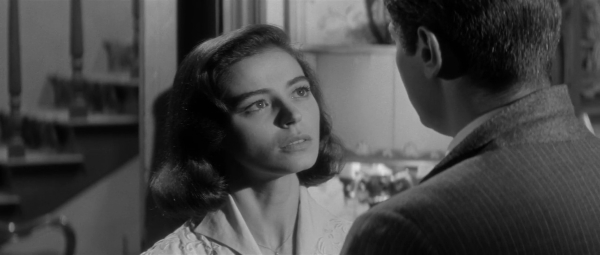
There is a degree of mirroring with regard to the behavior of the characters. Theron’s disgust at the hypocrisy he discovers at the heart of his family drives him away. He has already proved his physical courage in the wild boar hunt and then his loss of innocence sees him strike out alone seeking independence from his parents and thus indirectly fulfilling another of his father’s wishes. Still, his immaturity and callowness lingers and he ends up, through fear of both himself and his family’s history, abandoning storekeeper’s daughter Libby (Luana Patten), who he has left pregnant. Despite himself, he has acted as his own father did with Rafe’s mother. While Theron is fated to recycle the sins of the father, Rafe is afforded the opportunity to forestall some of the prejudice and rejection he suffered. The past throws long shadows though, especially in these small towns, and even the best intentions can be ambushed by small minded parochialism. Rafe’s selflessness and essential good nature is undermined by cheap gossip and leads to yet more tragedy, though perhaps one whose foundations had been laid long before.

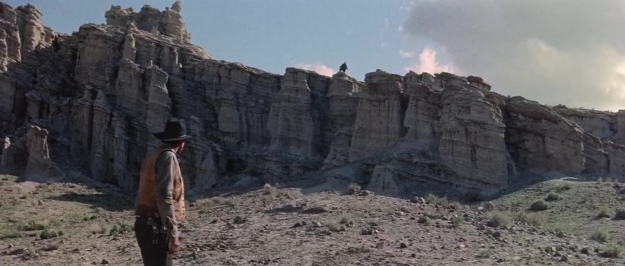
The screenplay for Home from the Hill came via Harriet Frank Jr and Irving Ravetch, adapting a novel by William Humphrey. The writing couple had come off two tricky William Faulkner adaptations directed by Martin Ritt, the rather fine The Long, Hot Summer and the less good but still worthwhile The Sound and the Fury. Now I’ve not read Humphrey’s novel but a quick bit of research suggests the screenplay made a number of changes to the story and characters, and I think the original tale must have been quite different as a consequence. What we get though forms the basis of a fine melodrama, the type of material that was ideally suited to Minnelli’s talents and vision. Perhaps it is a touch more subdued than some of his other melodramas, the palette chosen reflecting this to some extent. There is an earthiness on display in the soft green and brown hues which predominate. However, there are flashes of those vivid shades often found in Minnelli’s pictures at key moments – the crimson dress worn by Luana Patten in the waterside scene where she entrances Theron, the rich burgundy upholstery in Wade’s den where the affairs of men are raised and settled, and then the blood red tombstone in the final scene that is somehow triumphant, sedate and reassuring all at once. These are all instances of great passion and those varied tones of red capture the mood of the scenes perfectly. It’s noteworthy too that the site of Theron’s climactic revenge is backed by an acrid yellow, the noxious gases rising off the swamp matching the bitterness on show.

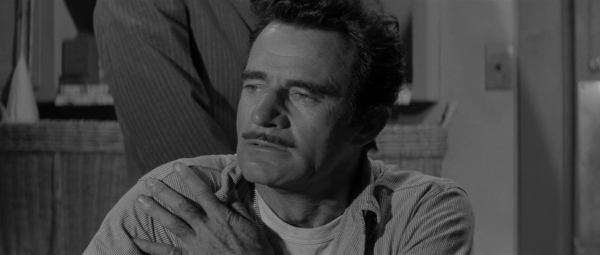
Robert Mitchum catches all the shades of his character, the arrogance born of privilege often to the fore and, in his more private moments, a hint of humility creeping through whenever he’s reminded of his personal failings. The scene which offered him the most to work with occurs during the barbecue arranged in the wake of the boar hunt. Sharing the screen with a pensive Eleanor Parker, both of them are on the porch overlooking the revelers on the front lawn. Mitchum starts out gently, reminiscing and quietly romancing the woman who has spurned him for so long. He seems to be making headway, gradually softening her with his talk of bygone and better days. And then just as he seems to have victory in sight, she slams the door, telling him in no uncertain terms that he’ll never have her. The wounded pride and the hurt of rejection, that sudden, sour realization that it’s all been for nothing flash across Mitchum’s features for no more than an instant yet he accomplishes it all so effortlessly. Fine acting.

Eleanor Parker is all frozen dignity and has a hugely influential role, her character’s actions motivating and coloring the lives of those around her. The strained marriage to Mitchum has led to her overprotecting her son and the decay that characterizes that union ends up blighting the latter’s life. George Hamilton gets the sullen immaturity of Theron across quite successfully and Minnelli would use him again, albeit less satisfactorily, in Two Weeks in Another Town a couple of years later. George Peppard, in just his third feature role, is excellent as Rafe. His character may have been denied a name and left unacknowledged but he carries himself more easily than Theron. While there is resentment inside, he covers it with a veneer of assurance and gets to play some of the most memorable scenes in the picture: the interlude in the cabin with Theron after the truth of his identity has been brought out into the open, his stepping up to the plate with the distraught and desperate Libby, and his tenderness after the marriage. The film is all about the attainment of manhood and the contentment that this brings and Rafe’s progression towards that goal is an immensely satisfying one to follow. Theron only gets to take the first faltering steps before being sidetracked by upheaval, but Rafe reaches his destination and gets there in some style.

The movie features two cemetery scenes and I guess there is some quality about that spot none of us can avoid which draws forth honesty and strips away the pretense. Both scenes involve Peppard and Parker, the first is wistful and touching as Rafe carefully tends the plot on “reprobate’s field” where his mother reposes. He’s come to terms with his regrets and there is a sense of a young man who has made his peace with who he is and his place in the world, while Hannah sees the beginnings of a thaw warming her heart. It’s all very understated and very effective. Then reminiscent of the final glorious scene in Some Came Running, Home From the Hill draws to a close in another cemetery. All at once memories and loss shed their sorrow, fusing instead into something rich and positive. The point where we witness resentment chase briefly across Rafe’s face before being banished permanently leads to a moment of catharsis and truth, the healing of a wound long suffered by both himself and Hannah achieved through an instance of shared decency and unity. A homecoming lent greater significance and value by being so hard-earned.

Perhaps I’ve rambled on a little too much about this movie, but it’s one I have always admired and it has stuck with me since I first caught a broadcast on TV by chance some forty years ago. It’s a strong addition to that wonderful run of melodramas that Minnelli embarked on in the 1950s and the early 1960s. I have spent a fair bit of time here on some of the performances and a handful of key scenes, but I’d also like to take the opportunity to mention the score by Bronislau Kaper. It is a marvelously evocative piece of work, those lush soaring strings backed by melancholic horns, plaintive as a hunter wearied by the chase. I’d just like to sign off on this piece with his main title theme to the movie.

Daisy Kenyon

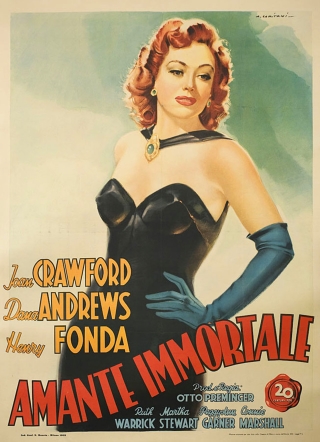
The magic of marketing – hang a label on a movie, point to the genre pedigree of the headline stars, and the director for that matter, and and there we have a film noir. Or actually we don’t, we have a film sold as such, at least it was back when Fox Film Noir was an ongoing line in the heyday of DVD releasing. Daisy Kenyon (1947) is a very well made and enjoyable post-war romantic melodrama but regardless of what it says on the tin, it’s certainly not a film noir. OK, having got that out of the way, I do want to take a look at a movie which sees three top stars all doing excellent work with one of Hollywood’s finest directors and getting plenty of mileage out of that frank openness about human relationships and bloomed in the years following WWII.

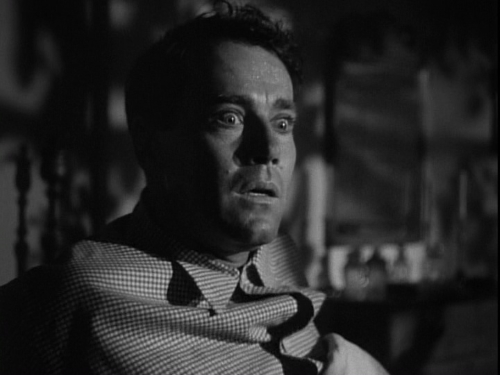
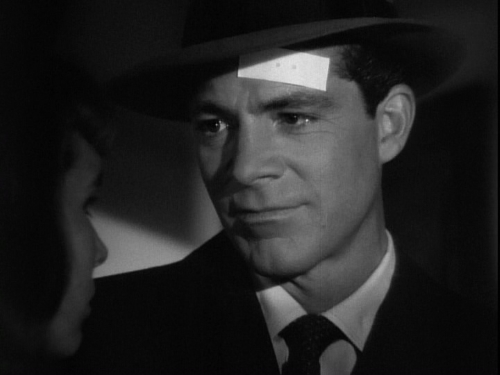
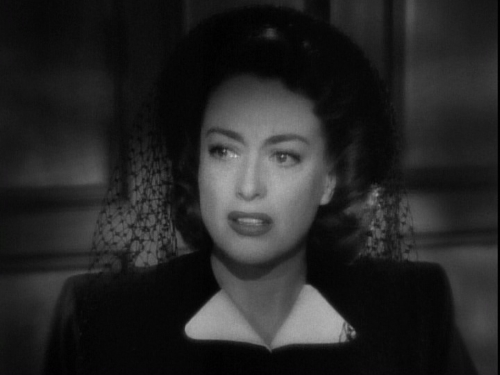
There is something attractive about frankness, especially with regard to those relationships that might be seen as falling below contemporary standards of propriety. Otto Preminger was always good at bringing such material to the screen and there’s a refreshing lack of judgement on display as we follow the complicated and meandering love lives of the three principals. At the center of it all is Daisy Kenyon (Joan Crawford), an unwed artist who has been carrying on an affair with a married hotshot lawyer, Dan O’Mara (Dana Andrews). Right from the first scene it’s apparent that this is unsatisfactory, from Daisy’s perspective anyway. She’s not stricken by guilt or remorse or any of the other trite reactions typically forced upon characters in this position. No, she’s just tired of taking second place whenever some important business or social engagement arises, and of course time is not in the habit of waiting around for anyone. With this in mind, she has one of her periodic spats with O’Mara and sets about preparing for a date with a new romantic prospect. Peter Lapham (Henry  Fonda) is a soldier and one time boat designer. In one of those delightfully quirky scenes that punctuate the movie, both her suitors run into each other in the doorway and wind up using the same cab to shuttle back and forth, just not together. The romantic rivalry between the two men hasn’t grown any teeth at this stage, that will come later but there is a quality to it from the off that I can only describe as screwball drama. If O’Mara is not the ideal pick for Daisy given his marital commitments, Lapham has other issues. it’s not explicitly stated but he’s clearly affected by PTSD, as well as a degree of guilt/remorse for the death of his wife. I don’t want to go into too many details here, suffice to say the story devolves into a kind of contest for Daisy’s heart with the well-being and contentment of O’Mara’s children as a form of collateral up for negotiation. Maybe the outcome isn’t entirely surprising but the road that takes us there is pitted with plenty of drama, a sprinkling of black humor and a liberal dose of good old-fashioned empathy.

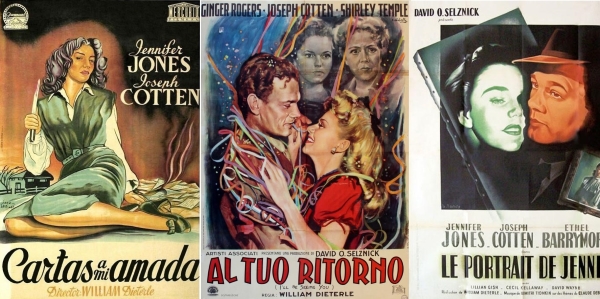
Preminger blends this all expertly, getting first class performances from his three leads. Henry Fonda was rebuilding his Hollywood career after wartime service in the navy. He would make My Darling Clementine and The Fugitive for Ford and then Fort Apache, with this movie and The Long Night giving him the chance to work with other directors in between. He brings something slightly offbeat to his role, an attractive quality which while not quite offering the lush oddness to be found in William Dieterle’s wonderful Portrait of Jennie and Love Letters is satisfyingly quirky and somehow authentic. Andrews is more grounded, less ethereal in his part. He’s driven by a desire that feels vaguely juvenile in its approach – as Crawford tells him late on, he’s as much spurred on by a need to escape responsibility as any need to achieve stability. Still, that unrest that Andrews was so adept at harnessing is always bubbling just below the surface. Crawford was riding high after her success in Mildred Pierce and gives a performance that is confident and credible. The fact is all three play off each other in a way that engages rather than overwhelms the viewer. Add in Leon Shamroy’s evocative camerawork and a characteristically classy score from David Raksin and the result is a polished and meaningful piece of filmmaking.

As I said at the start, Daisy Kenyon is not a film noir and I’m not sure how it came to be marketed as such. Perhaps it’s the combination of the reputations of the stars and director alongside some shadowy cinematography. The old Fox DVD sported a middling transfer, with some very blurry sections. I can’t say for sure whether or not this was intentional yet I doubt it somehow. Even though I understand the later Kino Blu-ray exhibits the same, I suspect print damage of some kind is more likely at the back of it. However, none of that should spoil one’s enjoyment of the movie. The DVD (and I think the Blu-ray too) has some worthwhile supplements with short features on the making of the movie and on Preminger’s career. Among the contributors is the always welcome and interesting Foster Hirsch  – revisiting this movie and listening to his comments has reminded me that I need to pick up a copy of his book on Preminger. I think anyone who hasn’t seen this film will find it a rewarding watch. Just don’t go in expecting to see a film noir.

Fate Is the Hunter

“When your number’s up, why fight it, right? And if it’s not, why worry about it?”

Fate and faith. That line quoted above is delivered with a kind of petrifying calm by Rod Taylor’s flyer during one of the many times he and his maker passed within a hair’s breadth of one another in Fate Is the Hunter (1964). He is by his words and by his actions a fatalist, believing that most of what happens in life, the larger scale concepts at any rate, are beyond one’s control. It’s part of his attraction, lending a devil may care aspect to him that draws people when it’s carried off with aplomb. And then there is faith, such an important and defining principle in the human condition. One may or may not subscribe to the former, but the latter (and not necessarily in a religious sense) surely touches all of us and influences our approach to life. Both of these ideas are explored in Ralph Nelson’s movie, where the trappings of the genre picture – in this case the aviation thriller/disaster movie – are used to frame a fairly simple tale of one man’s belief in the character of his friend and, consequently, in his own judgement.

There is a lengthy prologue, the routine preparations for a transnational flight filling up most of the time and introducing three main characters – pilot Jack Savage (Rod Taylor), his friend airline executive Sam McBane (Glenn Ford), and stewardess Martha Webster (Susanne Pleshette). So yes, all fairly routine, until it’s not. A fault in an engine, then a communications glitch, and then the other engine fails. And then the crash. Of those on board only the stewardess survives and it falls to McBane to sift through the little evidence available in order to fix the cause of the disaster. The airline seems keen to put pilot error on the part of Savage forward as the reason, and the air of raffish irresponsibility he spent his life cultivating backs up this approach. However, McBane is unconvinced, partly due to a sense of self preservation as his championing of Savage over the years has left his own acuity at least on the periphery of suspicion, but perhaps more importantly he balks at the notion his friend was so careless as to be the one solely responsible. In his efforts to see beyond the easy way out, he finds himself delving into the past, the past of Savage to be exact, trying to clear the man and in a way trying to clear his own conscience, to validate his faith in a friend and in himself.

Anyone going into this movie with the expectation of seeing a thriller of some kind is likely to be disappointed. There is the tense build up to the crash in the prologue, and a pretty suspenseful reconstruction undertaken right at the end, but that’s about it in terms of standard thrills. The rest of the movie, the bulk of the narrative, is a character study, an examination of who Savage was and why he acted as he did, largely told by means of multiple flashbacks, each one colored somewhat by the sensibilities of the person doing the telling but also by the spirit of the man himself. By the end, we have gained a broader perspective on this ebullient fatalist, the views of those touched most deeply by their contact with him having reshaped this both subtly and decidedly. The net result is that the truth is arrived at by a combination of chance and logic that is apt under the circumstances, and on a deeper level McBane feels vindicated not only since he has salvaged the reputation of his friend but because in so doing he has reaffirmed the primacy of faith.

Ralph Nelson had a spotty, patchy kind of career, veering wildly from genre to genre and hard to pin down stylistically. Fate Is the Hunter was a memoir penned by aviator Ernest K Gann, the stories contained in that book have given rise to a number of movies but this particular film just borrows the title. Maybe Gann himself was unhappy about the result but the movie is attractively shot by Milton Krasner, has a score by Jerry Goldsmith which manages to be both haunting and lush, and is thematically consistent in a way that is satisfying.

Ford plays it low-key for the most part, a quiet performance that suggests maturity and fits his character. Taylor could be big and showy on occasion all through his career, but he too had a quietness, an introspective side that he was able to tap into and it serves him well at a few key moments. The piecing together of the various facets of a man’s life and character through the vignettes presented in the flashbacks allows a succession of performers to drop in and sketch a few more lines in the emerging portrait of Savage. Mark Stevens’ noir heyday had passed yet he brings a fine sense of weary dissipation to the role of an alcoholic former buddy who owes much to Savage. Dorothy Malone ( The Tarnished Angels)gushes glamorously as a socialite ex-fiancée in a brief interlude, while Nancy Kwan (The World of Suzie Wong) has a slightly more substantial part and consequently adds a good deal more to our understanding of the pilot. Susanne Pleshette, on a good run around this time and only a year after co-starring with Taylor in Hitchcock’s The Birds, brings a touching bewilderment to it all, wondering why she should have been singled out to live when everyone else perished. She was an actress who always had a gutsiness about her and that aspect is on show when she has to confront her fears and thus make perhaps the vital contribution to the final resolution.

Fate Is the Hunter is the kind of film that isn’t quite what it seems to be on the surface. There is aviation drama to satisfy those drawn to the title by that aspect but that’s only incidental I’d say. At heart, the movie is about perceptions and assumptions, how chance and belief can combine to shape a life, how one’s impressions and suppositions may not be as dependable as we hope, and how reason can transcend the random while also bolstering faith and friendship.

Human Desire

Fate and free will, two philosophical concepts that go to the heart of the human condition and form the basis of a good deal of religious thinking and debate. They loom large in the world of film noir too, though that shouldn’t come as any great surprise since art and our perception of our place in the scheme of things are inseparably linked. Fritz Lang’s Human Desire (1954), made as he was approaching the end of his time in Hollywood, posits both fate and free will as drivers of his characters and invites viewers to make up their own minds on which exerts the more powerful influence. I’m of the opinion that Lang himself regards both of these concepts as being in play simultaneously and that there are certain points at which individuals have the opportunity to exercise their free will in order to determine which path of fate they will lock themselves into.

If one were to seek a visual metaphor for fate as a fixed and predetermined path, then a railway line is as good a one as any. Sleek and clean, indicative of precision and order, the lines forge the way ahead, carrying their passengers to a destination that lies at the end of the track as sure as a compass needle points to north. Yet the lines run in more than one direction and points do exist where it’s possible to shunt from one to the other. Human Desire opens with those railroad lines and the locomotives that carry all kinds of people to all kinds of places, starting and ending with absolute certainty at predefined locations that can no more be avoided or cheated than birth and death themselves. In between though, the choices are available, laid before the driver as he advances and by extension before those he brings along with him on the journey. Jeff Warren (Glenn Ford) is an engineer on the railroad, back home and back in his old job after serving in the Korean War. He is very much a regular guy doing a regular job, following those clearly defined lines in life in many ways. There’s nothing particularly special about him, he’s no medal adorned hero nor does he profess to have any ambitions beyond the desire for an uneventful life. However, a movie with this title must necessarily focus on desires affecting all kinds of people and even changing according to circumstances. Carl Buckley (Broderick Crawford) is an old acquaintance, a man who has risen to assistant yard master while Warren was off at war. He’s a blunt, brutish character, loud of mouth and quick of temper who manages to get himself fired for quarreling with his supervisor.

Desperate to get his job back – he’s only got a few more years to do before he qualifies for a pension after all – he badgers his wife into interceding on his behalf with a big city businessman who he figures has sufficient clout to see him reinstated. His wife Vicki (Gloria Grahame) is much younger and it’s immediately clear from her reaction that there is some history involving herself and the corporate bigwig that goes beyond the fact her mother was once his housekeeper. This is the catalyst for the snarl up in the lives of all concerned that follows. It’s made clear that Vicki gets Carl his job back by offering sexual favors. Even though he brought about this situation and essentially forced his wife into a compromising position, Carl is affronted, savagely beating her and making her an unwilling accessory to murder. A sordid business all round and one whose spreading ripples draw in Jeff Warren, who just happens to be riding the same train when the killing takes place and subsequently finds himself fatally attracted to Vicki.

Does one slaying inevitably lead to another? Do abusive, dehumanizing relationships become habit forming and addictive? Are the patterns woven by rotten choices and poor judgement indelible? Or can a virtual lever be pulled at the crucial point and send a life back onto a track that hauls it away from destruction? All of these questions are posed during the course of Human Desire and are answered at least in part by the close. While I’ve no wish to take any credit away from scriptwriter Alfred Hayes, adapting Jean Renoir’s own adaptation of an Émile Zola novel, it seems clear enough that these are themes Lang addressed on multiple occasions and thus carry the director’s imprint too.

Glenn Ford’s everyman qualities are to the fore in Human Desire. He plays Jeff Warren with a directness and simplicity that befits an uncomplicated working man who is unexpectedly snared in a web of temptation and desire. He is faced with the dilemma of succumbing to the vagaries of fate or using his free will to chart an alternative course. Ford’s ability to present frankness alongside a hint of personal dissatisfaction and discomfort works well under the circumstances. I see a touch of resentment early on in his realization that men like Buckley have prospered while he was doing his duty in Korea, it’s just barely there but I think it helps color some of his subsequent actions and decisions. In contrast, Gloria Grahame’s mistreated femme fatale is anything but straightforward, veering from victim to manipulator, cowering one moment and goading the next, and effortlessly alluring throughout. Her work alongside Ford here makes for an interesting companion piece to their previous collaboration with Lang in The Big Heat. Crawford too is neatly cast, by turns shambling and violent he’s a doomed figure haunted by his inadequacy and too ineffectual to challenge his own fate. On the other hand, Edgar Buchanan and Diane DeLaire as Ford’s landlord/colleague and his wife provide an alternative take on marriage. Their affectionate devotion in effect represents the other route available to Ford, in stark contrast to the dysfunctional dynamic of the Grahame-Crawford mismatch.

Human Desire ought to be easy enough to view these days. I have the UK Blu-ray from Eureka, a dual format release that looks terrific, and there is a Kino version available in the US as well. The main supplemental feature on the Eureka Blu-ray consists of an interview with Tony Rayns which fills in some background information on the making of the movie as well as comments on scriptwriter Hayes. I’m not sure the contributor fully gets the film though and he raises a number of points I found myself taking issue with, not least that tiresome critical gambit of looking at movies in terms of what they are not rather than what they are. Anyway, his is an interesting perspective, even if I don’t share all his conclusions. Personally, I’ve always been fond of Human Desire for its thoughtful exploration of themes and motifs that frequently grace Fritz Lang’s movies. Well worth checking out.

Cowboy

“You’re a dreaming idiot, and that’s the worst kind. You know what the trail is really like? Dust storms all day, cloudbursts all night. A man has got to be a fool to want that kind of life. And all that hogwash about horses! The loyalty of the horse! The intelligence of the horse! The intelligence? You know a horse has a brain just about the size of a walnut. They’re mean, they’re treacherous and they’re stupid. There isn’t a horse born that had enough sense to move away from a hot fire. No sensible man loves a horse. He tolerates the filthy animal only because riding is better than walking…. Pour me a little more whiskey there, will you?”

The myth, and how to deconstruct it. Those lines above, quoted by Glenn Ford’s world-weary trail boss as he lies in a hot bath he’s traveled the length of the country for, drinking whiskey from a china cup and shooting cockroaches off the wall, seem to rip the romantic facade away from the genre. We’re looking at a man who is bone tired, more than a little jaded and in no mood to indulge the highfalutin fantasies of Jack Lemmon’s lovesick hotel clerk. Delmer Daves’ Cowboy (1958) therefore creates the impression that the movie is going to dispense with legends and instead print some mean and ugly truths. In a way it does too, at least in the sense that the kind of codology Ford holds forth against gets short shrift, and for long stretches it looks as though the whole thing is building towards a grim revision of the genre. Nevertheless, the deeper myth, that which informs and elevates the western movie is, unsurprisingly, what Daves was searching for and what he skillfully reaffirms by the end.

The structure is classically circular, starting and ending in what what is nominally the same place, creating the impression of a tale turning back on itself but finishing up on a very different level as far as the development of the characters is concerned. The story is seen through the eyes of Frank Harris (Jack Lemmon), an ambitious young man first encountered working in a hotel in Chicago. This is not where he intends to spend the rest of his life though and the fact he has fallen for a young Mexican woman and incurred the displeasure of her father is one of the factor’s influencing his plans. When the expansive and free spending Tom Reese (Glenn Ford) and his rambunctious cowhands book into the establishment, this sets Harris thinking and a run of rotten luck at the card table for the trail boss provides an opportunity worth seizing. In short, Harris makes Reese a loan of his savings to get him out of trouble in return for a partnership on the upcoming cattle drive, one which will conveniently take him all the way to Mexico. What follows is a classic trail story, one beset by difficulties posed not only by the hardships of the terrain and the hazards of the Comanche, but also by those stemming from the personalities and idiosyncrasies of one’s traveling companions. This site often looks at westerns underpinned by the theme of redemption but here it’s not so much that aspect that grounds the film as those near relatives: growth and renewal.

Cowboy is based on an autobiographical work by Frank Harris called My Reminiscences as a Cowboy. Born on the west coast of Ireland in Galway, Harris went on to lead what might reasonably be termed a colorful life, traveling throughout the United States and Europe and earning fame or notoriety (depending as ever on one’s point of view) in the process. He certainly wouldn’t be the first writer who is alleged to have added some embellishment to his experiences so it is hard to say how accurate the source of what is presented on screen is. That notwithstanding, Cowboy, with its script by Edmund H North and and an uncredited and still blacklisted Dalton Trumbo, tells a rattling good yarn with plenty of incident, all of which is predicated on a solid core message.

Every time I come back to a movie directed by Delmer Daves I’m once again struck by his focus on the better aspects of human nature. I see this as the defining characteristic of his work, that simple faith in humanity and its capacity for rising above the petty and the ignoble, and that perspective forms a large part of what draws me back to his films regularly. As was mentioned above, the redemption motif is not present in the movie as it doesn’t feature characters who have wandered down the kinds of paths that require a trip to that destination. What we do get are men who have either lost touch with or have yet to attain a fully rounded appreciation of humanity. So growth and renewal are the dominant themes, which I regard as a welcome detour. Daves was always very much at home shooting outdoors and he makes fine use of the Arizona and New Mexico locations, beautifully photographed by Charles Lawton Jr and with a fine George Duning score to complement the imagery.

For a long stretch it appears as though the plot is going to chart a hard bitten course, Harris soon has the exuberance knocked out of him by the unforgiving nature of both the environment and his companions. The whole purpose of his trek across the border is shattered in one moment of appalling revelation, a moment which threatens to tip him into a pit of despair and bitterness that is deep and steep sided. Similarly, Reese spends much of his time indulging his cynicism and abrasiveness. To all intents and purposes, that dismissive diatribe quoted at the head of this piece starts to sound more and more like a summation of the myth-busting stall the film has set out. Yet it’s a deceptive impression, for the characters played by Lemmon and Ford respectively learn and grow as a result of their experiences and their effect on each other. Lemmon had a knack for essaying a unique type of passion and enthusiasm that often felt manic and brittle. He comes perilously close to cracking under the strain and the provocations that come his way, but he matures in the process and tempers his excesses in a way that transforms them into strengths. Ford’s destination is slightly different, but just as fulfilling for the character and the viewer too. His path is essentially one of rediscovery and renewal, the bluster and machismo discarded as he witnesses the negativity of his influence mirrored in the meanness that threatens to harden the heart and damn the soul of his youthful partner. In support Brian Donlevy plays it quiet and pensive in a way that he didn’t always get the chance to, a disillusioned gunslinger looking for a different kind of life. There’s something very moving about his ultimate fate, and it proves to be one of the prime catalysts spurring Ford’s epiphany. Anna Kashfi (Marlon Brando’s first wife) is the only woman in a very masculine movie and although her role is important for its impact on Harris in particular, she’s only in the film for a short time. Richard Jaeckel, Dick York, Frank DeKova and Strother Martin are among those who also provide telling little sketches that serve to flesh out the story.
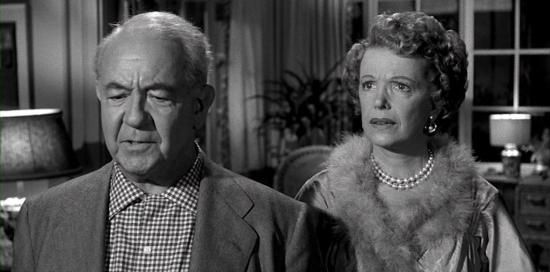
Cowboy is a fine Delmer Daves western, perhaps weakened somewhat by the lack of a more positive female character of the type that bolstered and added depth to his very best movies. Still, there’s much to admire in what we do get, visually, thematically and in the work of the principal cast members.

With this post I have now managed to cover all of the westerns directed by Delmer Daves. He’s a filmmaker whose work I never weary of sampling whatever the genre and his movies have been regularly featured here over the years. Below are links to all of his westerns that I have posted about.

Broken Arrow

Drum Beat

The Last Wagon

Jubal

3:10 to Yuma

The Badlanders

The Hanging Tree

Seven Ways from Sundown

It’s strange the way a modest Universal-International western can somehow encapsulate just about all the most important themes that propelled the genre to greatness in its heyday. Yet, in another way, it’s perhaps also appropriate this should be true of a movie starring Audie Murphy and coming at a point in time close to the end of what can now be regarded as the golden age of the western. Seven Ways from Sundown (1960) weaves threads incorporating such ideas as the gradual taming of the West, Fordian notions of printing the legend, sacrifice, and of course redemption into the fabric of its consistently entertaining sub-90 minute running time.
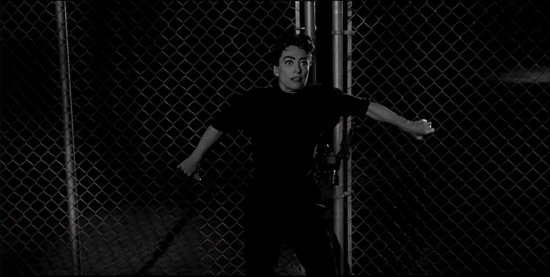
I like it when a movie pitches us right into the action. Seven Ways from Sundown opens with a shootout and the fire that ensues. The man responsible for this mayhem is Jim Flood (Barry Sullivan) and it’s soon established that he’s a man with an impressively fearsome reputation. Riding into the aftermath of Flood’s handiwork and drawing the ire of the exasperated townsfolk is an unsuspecting Texas Ranger rookie with the unique and memorable name of Seven Jones (Audie Murphy) – all the members of his family were unimaginatively named numerically, although his mother apparently tried to add some individual character and color by extending it to Seven Ways from Sundown Jones. His first assignment as a Ranger is to accompany a veteran sergeant, Hennessy (John McIntire), and effect the arrest of Flood. At this point the viewers are let in on a piece of information that Jones is not privy to, namely that Flood killed his elder brother. When Jones later catches up with Flood and sets about the laborious and perilous task of seeing him returned to face justice this hidden fact adds an anticipatory edge to the drama and alters the dynamic of the narrative to an extent. Suspense, guilt and the hint of another mystery are drawn into the story, further enriching it. This fluid, shifting quality is heightened and gains greater significance as we witness Flood’s roguish self-awareness slowly charm the simple and straightforward Jones. All told, it sets up a climax that manages to be at once fitting, affecting and satisfying.

Seven Ways from Sundown has what might be termed an interesting background. It was written by Clair Huffaker (Posse from Hell, Rio Conchos), adapted from his own novel and so has a solid pedigree to start off. A bit of browsing around the internet reveals that the movie was initially directed by George Sherman till an apparently serious row with Audie Murphy lead to Sherman’s departure and his replacement by Harry Keller (Quantez, Six Black Horses, Man Afraid). I’ve not been able to find a source for this though, nor have I managed to ascertain exactly how much of Sherman’s footage (if any) remains in the picture. The arc traced by the story and indeed the ethical journey undertaken by the main characters certainly seem like the kind of material that would have appealed to Sherman and which he would have handled with his customary sensitivity; the short interlude with the hero worshiping youngster, the brief yet still poignant moments spent over the old Ranger’s grave, as well as the low key romance with Venetia Stevenson all feel like the kind of thing Sherman would have relished.

Audie Murphy was doing some terrific work around this time – Posse from Hell, Hell Bent for Leather, The Unforgiven, No Name on the Bullet to name just a few westerns, as well as The Quiet American, every one of which are high quality movies. I would rate Seven Ways from Sundown as belonging up among his best movies, not necessarily due to Murphy’s own performance, which is perfectly fine, but more for the film that is built around it. Murphy plays it fresh and innocent even though he had over a decade’s worth of movies behind him at that point, and the contrast between the mentality and viewpoints of Jones and Flood is indicative of a West that was nearing a turning point. Murphy’s Ranger is open-hearted and honest, brimming with optimism and faith in man’s better nature, whereas Flood’s knowing charm masks if not cynicism then a touch of regret and an awareness that drifts near and flirts with an acknowledgement of the fact that his time is short. By the time this film was made change was in the air, the following decade would see the number of westerns produced drop off and a discernible shift in tone within a few years. Maybe this is not overtly expressed, but hints of it are there should you care to look for them.

Seven Ways from Sundown came out only a few years after Barry Sullivan had taken leading roles in westerns such as Dragoon Wells Massacre and Forty Guns, but it more or less marked the end of his time in such headline parts and he would shortly embark upon a two season run on television playing Pat Garrett in The Tall Man and then drift into supporting/character roles. Perhaps I’m reading too much into it, but I like to think his actions in the last reel represent something of a redemptive sacrifice when he’s confronted with both the impact of his actions and the realization that he’s finally running out of road – this complements and builds naturally on the moment of dreadful guilt that washed over him earlier when he understood that he had taken the life of an old friend. Venetia Stevenson, daughter of John Ford favorite Anna Lee and director Robert Stevenson, is someone I remember most for Day of the Outlaw and the effective low budget horror movie The City of the Dead. She shares a few good moments with Murphy, particularly towards the end when she puts him straight on the danger posed by Flood’s recklessness and then becomes an unwitting catalyst for the tragic yet apt climax. John McIntire could generally be relied upon to provide a touch of class to any movie and he does so here as Flood’s former associate. It’s a quiet performance and quite a touching one.

Seven Ways from Sundown has had a few releases on DVD in various European countries although I don’t think any of them present the movie in its correct widescreen ratio – it ought to be 1.85:1. I’ve certainly never seen it in anything other than open-matte, which while not ideal is at least better than a cropped version. All told, I consider it to be a superior Audie Murphy vehicle buoyed up by an eye-catching turn from Barry Sullivan that contains a generous measure of depth and subtlety.

Night and the City

“I just want to be somebody… “

Why does film noir continue to resonate? Why does it continue to pull in viewers, beguiled by its shadow drenched nightmares? That is does exert a draw on audiences is beyond question and part of it is maybe down to the look, the attitude, the charm of something at once recognizable yet lost in time. Still, I feel there’s something else at play for film noir is a very human form of filmmaking; it is predicated on the frank acknowledgment of weakness and frailty, perhaps growing out of character flaws, ill fortune, poor choices, or even some unholy trinity of them all. In a way, there is something about the lack of definition regarding film noir that points to its core appeal. There has been decades worth of conversation and controversy over when noir began, when it ended, what it actually is and whether it can even be referred to as  a genre. And at the end of it all, there remains no definitive answer, just schools of thought one might subscribe to. As such, is it possible that film noir is in essence a cinematic expression of uncertainty and confusion, mentally, morally and spiritually? Somehow it feels appropriate that the main character of Night and the City (1950) should say those words quoted at the head of this piece, struggling to articulate an ambition that he cannot fully visualize, much less define with clarity.
Movement and position matter. Anthony Mann frequently had his characters striving to rise, forging a path upward with mixed results, while Abraham Polonsky famously had John Garfield racing down from the heights. The characters in Jules Dassin’s Night and the City, on the other hand, start off at the bottom and remain resolutely anchored there. In a sense, nothing really changes throughout, at least not as far as Harry Fabian (Richard Widmark) is concerned. The opening and closing sequences see him racing through the streets of a broken post-war London, a grandiose chiseler with danger hot on his heels and the hope of sanctuary and salvation, even if it’s only temporary in nature, awaiting him in the form of Mary Bristol (Gene Tierney).

Harry Fabian is what can only be termed a dark dreamer, immature both emotionally and ethically. Mary loves him, that much is clear, not so much for what he is as what she imagines he could be, and Harry in a way is also in love with that projection of what he dreams he could be. The problem though is that neither Mary nor more importantly Harry himself is quite sure of who or what he might be. He is, as his neighbor observes, an artist without an art. We encounter him first as a strictly small time operator, a tout steering mugs to the clip joint where Mary sings, scratching around in the detritus of a city still partly bewildered in the wake of its wartime pummeling for any scheme that might turn a fast buck. Human nature being what it is, he’s not the first nor will he be the last person with his eye on the quickest way to reach easy street. The problem with this approach to life lies in the fact the route there is typically mined. Thus when Harry happens upon what seems like the perfect opportunity to muscle his way into the world of professional wrestling he fails to anticipate the the traps awaiting him. Blinded by his enthusiasm and unaware of how his smug efforts to play all of his rivals off against each other is actually weaving a Gordian knot of epic proportions, Harry is doomed by his own slickness.

It feels kind of appropriate that Jules Dassin would make Night and the City just as the appalling HUAC episode was reaching its peak. Zanuck had dispatched Dassin to London to shoot the movie where he would be beyond the reach of those congressional committees. By the time the movie was completed, the director was firmly on the blacklist and could no longer take any part in the editing process. Nevertheless, the result is portrait of bleak romanticism, where passion, ambition and duplicity all charge headlong towards an emotional intersection and the resulting collision leaves few survivors standing. I have seen assessments of the movie, both contemporary and subsequent, that lament the dearth of sympathetic characters, citing this aspect as a weakness. Such evaluations leave me wondering if I was watching the same movie. Perhaps it’s just me, but I’ve never seen the need to conflate admirable with sympathetic. I’ll concede that there are few truly admirable figures on show, but that does not mean there are none who are sympathetic. If anything, I would assert that almost all of the principals earn some sympathy.

Widmark’s role is almost as difficult to categorize as film noir itself. Fabian is neither hero nor villain in the proper sense of the words, nor would I be entirely comfortable referring to him as an anti-hero. Right up to the tragic moment which precipitates the climactic hunt, he does some contemptible things as he attempts to plug the leaks suddenly appearing in his plan, but the people he’s deceiving are no saints themselves so it’s hard to condemn him too much for that. As the various threads of his schemes become ever more entangled it’s a bit like watching an accident unfold in slow motion. Aside from his mounting desperation, a few moments such as the early scene in Tierney’s flat where the frustration of both  is emphasized, as well as the later exchange with an implacable hotel manager serve to add layers to the character and knock off some of the corners. I don’t believe either Dassin or screenwriter Jo Eisinger had any intention of passing judgment on Fabian and certainly don’t encourage the viewer to do so – he is merely presented as he is. His maneuvering does bring about tragedy, but that occurs indirectly. By the end, when he lies spent and bereft the appearance of Tierney framed in a doorway like some angel of the dawn affords him the opportunity to seek a form of redemption through personal sacrifice. Whatever one may make of the gesture, it does indicate a man who is not merely self-absorbed. What’s more, even though he may be abandoned and betrayed by almost everyone, there’s no getting away from the fact this woman loves him in spite of all his flaws – that in itself places the character on a different level.

That said, Tierney’s part is a relatively small one. Her important scenes bookend the movie and she’s only on screen intermittently in between. It seems that Zanuck was keen to have her in the cast and her role is a pivotal one despite the lack of screen time overall. By humanizing Harry Fabian and adding another dimension to his character, Tierney helps to ground the movie and give it greater emotional depth. The other major female role is that of Googie Withers, the discontented nightclub hostess who is trapped in a relationship for purely financial reasons, something which would not have been uncommon for a woman at the time. Sure she is underhanded and motivated by selfishness, but it’s not so difficult to understand how circumstances have driven her in that direction, nor do I believe it should be so hard to empathize with her efforts to extricate herself from a wholly unsatisfactory marriage. Her husband, played by the oppressively bulky Francis L Sullivan, is another figure who is far from perfect. Insecure despite his clout and dominance in the way such large men often are, he pulls strings and manipulates Harry Fabian like some malign puppeteer out of a desire to see him brought low and in so doing maybe hold onto the woman he so badly needs. It’s a performance that manages to be simultaneously dangerous, vindictive and pitiful.
Many of the other supporting players are portraying characters who are associated in one way or another with the wrestling world. This milieu is appropriate even if it’s not an area that has been extensively featured in film noir – Ralph Nelson’s Requiem for a Heavyweight is the only other notable example that I can think of off hand. Boxing tends to be the go-to sport and I find the choice here a telling one. Boxing might be susceptible to certain abuses,  it may attract corruption, but it still retains some inherent nobility, similar to the way Greco-Roman wrestling retains a link to the classicism of the ancient world and something finer. On the other hand, the crass vulgarity of professional wrestling exists on a much lower plane, a true moral wasteland. It’s that very cheapness, that sense of debasement which lies at the heart of Fabian’s flawed scheme and also forms the basis of the conflict between Herbert Lom’s shady underworld promoter and his scrupulously honest and dignified father. It’s highlighted too in the contrast between the easy superiority of that old athlete (Stanislaus Zbyszko) and the barely articulate coarseness of Mike Mazurki’s hulking and murderous pro.

Night and the City had two cuts, the shorter US version, which Dassin seems to have preferred, and a slightly longer British version. The UK Blu-ray from the Bfi, which now appears to be out of print and consequently is rather expensive, offered both cuts – I think the US Criterion also has both versions too though. I don’t know how popular a view this is, but I find I prefer the longer British cut of the film; perhaps the noir credentials are slightly weakened or some might say compromised yet I like the way it shades the character of Harry Fabian in another light. I find it provides another layer of tragedy and thus heightens the ambiguity of the experience. Nevertheless, this is prime film noir regardless of the version one favors and top filmmaking in anyone’s book. Widmark was only about a half dozen or so movies into his career at this point, already in the middle of a remarkable run of performances in very fine films while Dassin had just come off a short streak of excellent films noir. Under the circumstances, it’s hard to see how this one could miss. A first class movie all round.

Viewing Notes – Woolrich

Cornell Woolrich was the king of nightmare noir, his fables of fate and downright rotten luck, where everything than can go wrong does go wrong,  follow his hapless characters on a perpetual downward spiral. The accompanying sense of dread and doom makes for first rate film noir and a fair number of his novels and stories have been adapted for the screen over the years. I’ve featured a few on this site:

The Leopard Man

Phantom Lady

Black Angel

Night Has a Thousand Eyes

No Man of Her Own

Recently, I found myself viewing a handful of other screen versions of his work and thought I’d just post a few brief comments on them rather than full scale write-ups of the individual titles.

The Guilty (1947)

Jack Wrather was an oilman who decided to try his hand at producing films. While working on The Guilty he met and then married the leading lady Bonita Granville, a former child star who had drifted into B movies. She played identical twins in The Guilty, one of whom is a good girl while the other is most certainly not. The lead was taken by Don Castle, an old friend of Wrather’s whose career didn’t seem to be going anywhere after he’d returned from WWII service. Castle had what I’d term an effective noir persona, a slightly weary charm that felt as though it were only a step or two ahead of desperation. Granville is good enough in her dual role, and the ever reliable Regis Toomey makes for a credible cop. Director John Reinhardt makes the most of the budget and flashback heavy story, wrapping the whole thing up in little over an hour.

I Wouldn’t Be in Your Shoes (1948)

A year later both Castle and Toomey would appear together again in this adaptation, scripted by Steve Fisher and directed by William Nigh, for Monogram Pictures. The flashback technique features once more in this doom-laden tale that opens in the death house with Castle portraying another lucked out type, a dancer who can’t seem to catch a break. He spends his last few hours before that last lonely walk thinking back over how he got where he is. Meanwhile, on the outside his wife lurches between hope and despair as she tries to use what time is left to prove his innocence. Cats, shoes and obsessive love all figure strongly in a satisfying little movie.

Street of Chance (1942)

This movie opens with the main character getting clobbered by some debris falling from a building site. He’s not badly hurt but he does black out temporarily and subsequently discovers he’s not the man he thought he was. In brief, he’s suffering from amnesia and has been living a double life with two very different women, Claire Trevor and Louise Platt. In itself, this is hardly an ideal situation but it takes on that nightmare quality characteristic of Woolrich stories when he comes to realize he’s a wanted man, hiding out and on the run for a murder he has no recollection of committing. This is a strong premise (adapted from the novel The Black Curtain) and directed by Jack Hively, a man who called the shots with  George Sanders as The Saint on a number of occasions. Amnesia generally makes for an intriguing basis for noir and typically offers up lots of possibilities for drama and tension. Any picture with Claire Trevor is usually worthwhile too so the ingredients are undeniably promising. Overall, this is an enjoyable film although I have to say I don’t believe Burgess Meredith was leading man material – while I enjoy his work in character parts, I find he’s too quirky and frankly strange to be the lead. This same story was adapted again for television as part of The Alfred Hitchcock Hour and directed by Sydney Pollack. That version had Richard Basehart in the lead, another figure with strong noir credentials and I think he’s actually a better fit for the role.

There was a time when it was practically impossible to see these movies, and the thought of being able to do so in good quality was almost the stuff of fantasy. However, thanks to the efforts of Flicker Alley, Warner Brothers and Kino respectively all of them can now be enjoyed with excellent transfers. None of them could be classed as major films, but they are all very enjoyable and entertaining detours into the world of Woolrich.

Drango

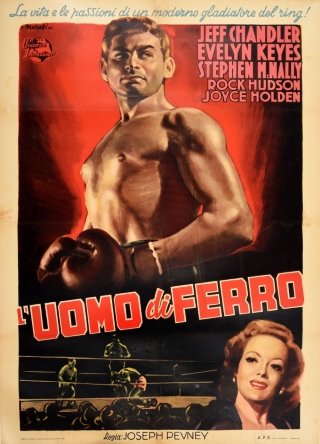
Drango (1957) is a somewhat obscure western that makes for interesting viewing. Taken as a document of the Reconstruction era in the wake of the Civil War, it doesn’t really succeed or at least it’s not especially convincing. On the other hand, it is very effective indeed as an examination of redemption, and in this case atonement. It’s far from the first time I’ve featured a movie driven by that theme as the classic western era is awash with examples. The fact that the film largely succeeds in spite of some of its weaknesses is due in no small part to the work of its star Jeff Chandler.

One can practically taste the hostility at the beginning of the film. The implacably  surly expressions of the inhabitants of the small town in Georgia which greet the new military governor give a strong indication of what lies ahead. It’s the post-Civil War period and the old wounds are still raw, old resentments still nurtured. The new governor is Major Drango (Jeff Chandler) and there is a brief, blink and you miss it reference to his past before more immediate concerns take over. Drango’s mission is to get things back to normal as soon as possible, which naturally involves seeing that law and order is restored. This kind of task requires considerable bridge building skills, something Drango sets about practicing as soon as possible. However, he is presented with an obstacle, a settler (Morris Ankrum) on an outlying farm turns up in his rooms hoping to persuade the Major to transport him to the nearest garrison for trial. This man was unsympathetic to the Confederacy and a raid on his property by returning veterans saw a man killed. Not unnaturally, he is dubious about receiving a fair trial in his home town. The rancor of his fellow citizens is tangible during his arraignment and his fears are to be proved correct when he’s subsequently abducted from the jail and lynched in the town square. It’s here that Drango’s guilt is first apparent, not least when faced with the scorn of the dead man’s daughter (Joanne Dru), and as the story progresses it becomes increasingly obvious that this is something he wears like a second skin. What is also clear is the fact that this guilt is rooted in something deeper, although exactly what is only revealed late in the day. In the meantime, he sets about winning hearts and minds, a goal made even more difficult by the subversive plotting of one of the town’s faded gentry (Ronald Howard), a man hell bent on fanning the flames of conflict once more.

Drango was made by Jeff Chandler’s production company Earlmar and he got hold of some fine talent to work on it. Elmer Bernstein wrote the score and those characteristic riffs and hooks he frequently employed can be heard throughout. The cinematography comes courtesy of James Wong Howe and his lighting of interiors and the nighttime scenes is as exemplary as one might expect. Hall Bartlett and Jules Bricken co-direct in a fairly matter-of-fact fashion but the pacing is good. Yet, as I mentioned at the top of this piece, there are weaknesses. If a film wants to be regarded as a serious consideration of the mood and effects of the Reconstruction era, then it’s not unreasonable to expect some reference to slavery. After all, this is set in a town in Georgia and a few of the characters live in the type of mansions to be found on plantations yet there is no mention whatsoever made of this. What’s more, the entire cast contains not one black face, which again strikes me as very odd indeed given the time and location depicted. The result is that there is a degree of artificiality to this image of a post-Civil War town and consequently the whole north-south friction aspect feels a bit fake. The film in essence starts to feel somewhat generic in its portrayal of post-conflict tensions. However, this is basically background material and what rescues the movie is the strong focus on atonement and redemption.

Jeff Chandler was an authoritative presence, a quality which grew as the years passed. He had what is commonly termed gravitas but that alone can make for dull viewing. Chandler’s great strength lay in his ability to convey a certain frailty behind the authority. He has a number of scenes where he gets to boss the situation, glaring down a horde of hungry and desperate townsmen as well as punching out a belligerent, bottle-wielding foe. He also makes a few speeches, which are heartfelt and impassioned but his best moments come in the smaller, quieter passages. The sensitivity of the man is clearly discernible when he has to extract a bullet from a patient who is still conscious, the concentration and reflected pain writ large on his features. Then there’s the potency of a simple and wordless scene where he leaves a few humble presents for a family of orphans on Christmas Day, and of course his carefully controlled outrage as he carries the remains of a youngster who has perished in a deliberate arson attack. All of this is buttressed by the corrosive guilt the man is carrying within – it’s only really when his true past is hauled out in the open that the reasoning which underpins his compassion makes sense.

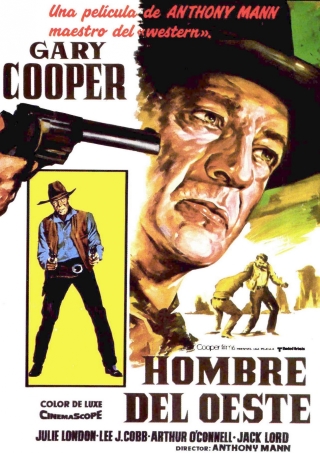
Joanne Dru exudes stoicism as the woman who has lost her father, lost everything in life if truth be told. Her slow drift from bitterness to acceptance and finally love is achieved naturally and organically. Ronald Howard, in his first Hollywood film, provides an object lesson in pride and ruthlessness as the Canute-like figure who yearns for even more bloodshed. Julie London (Saddle the Wind, The Wonderful Country, Man of the West) was always an attractive addition to any cast and while her part here is less developed and less interesting than that of Joanne Dru, she brings an air of class to proceedings whenever she appears. There’s good support from Donald Crisp, Walter Sande, John Lupton, Milburn Stone and the curmudgeonly Chubby Johnson.

Drango is a hard-edged and at times quite dark redemptive western. Maybe it does not do or get everything right, but it’s a movie with its heart in the right place all the same. This is bolstered by a characteristically compassionate performance from Jeff Chandler, an actor who rarely if ever disappoints. As far as availability is concerned, there are DVDs from France and Italy, the latter looking crisp and clean though almost certainly presented open-matte. All told, this is a satisfying western that is well worth a look.

Circle of Danger

Trails followed by hunters have a nasty habit of going cold very fast, but how long does it take a dish to get correspondingly cold? After all, there is that popular tip about the ideal temperature for serving up revenge. One would have thought five or six years ought to do the trick, and that’s about the time Ray Milland’s character takes to get round to seeking out the man responsible for the death of his brother towards the end of WWII in Circle of Danger (1951). Yet revenge is such a corrosive business, rarely bringing any kind of satisfaction to those who most desire it, and then there’s always that thorny question of whether or not it’s actually justified.

It’s perhaps a little unexpected to see a movie mainly shot in and featuring a cast and crew drawn largely from the UK opening on a salvage vessel operating off the Florida coast. Well that’s where we first come across Clay Douglas (Ray Milland) as he and his partner have just struck gold, or maybe I should say tungsten. This is the opportunity Douglas has been waiting for, five years of hard work finally paying off and allowing him to trade in his share in the business for thirty thousand dollars. He’s not looking to retire or anything, instead he’s been working to earn enough money to fund a trip to the UK in search of the truth about the demise of his younger brother. Despite his seemingly easy manner, Douglas is something of a driven man, fully focused on finding out how the kid brother he had almost single-handedly brought up came to die on a commando raid. People die all the time during major conflicts, even those plying trades nowhere near as perilous as that of a commando. So why would a man travel half way round the world to dig into this particular event? The fact is that the fog of war seems to lie especially thick around it all, and there was a rumor that the younger Douglas was dispatched by one of his own comrades in arms. The hunt for the truth has Clay Douglas cannoning round all the points of the compass, from London to the valleys of Wales and on to the Highlands of Scotland. Both the war and the subsequent passage of time has whittled the list of men who might be able to furnish him with the information he craves down to a mere handful. And it remains to be seen whether the tale that emerges is the one he had hoped to hear at the outset.

Straightforward revenge stories are never all that interesting. Sure there’s a certain visceral thrill to be tapped into if the elements are lined up in the right way, but such yarns tend to take on an exploitative feel which I generally find unappealing. The better examples, and I think Circle of Danger qualifies as such, raise questions that ought to make both the protagonist on the screen and the audience facing it a trifle uncomfortable. It all boils down to whether or not life’s thorny tangles can be adequately addressed in cut and dried, binary terms. I don’t think it’s giving too much away here to say that Philip MacDonald’s script turns the central quest back upon itself by the end, forcing not only the avenger to question himself, but also requiring the viewer to reassess a number of preconceptions we’ve been hitherto encouraged to blindly accept. This renders that three cornered confrontation on the Scottish moor all the more fascinating, and consequently leads to a resolution which is enriched by its acknowledgment of the sometimes ambiguous nature of justice. A delicate subject of this kind needs to be handled sensitively, not with a heavy lump hammer approach, so producers Joan Harrison and David E Rose deserve credit for securing the services of a director  with the lightness of touch and subtlety of Jacques Tourneur.

There has to be something steely and almost obsessive about a man who is prepared to hand over a significant chunk of his life in the pursuit of retribution. I wouldn’t want to claim it is a state of mind exclusive to the years following the Second World War but, in cinematic terms at least, it is a motif that was explored recurrently and came to characterize more than a few screen protagonists – James Stewart was a prime example of this phenomenon but he was certainly not the only one. This needs a quality of intensity to carry it off, something Ray Milland touches on throughout Circle of Danger, particularly in the climactic scenes in the Highlands, but probably not as consistently as he might have. That’s not to say his character is ever less than focused on the ultimate prize, but he does drift towards casualness bordering on nonchalance on occasion, not least when he’s flirting with Patricia Roc. She brings a freshness and vitality to the movie, a teasing allure that still allows her to switch to a more serious mode when she senses betrayal of one form or another. The other person vying for her attention is Hugh Sinclair’s reticent Scot, the one-time leader of the commando group and a man who seems none too keen on furnishing any more details on past than he can help. His is a key role and Sinclair does well in getting across both the caution of the man as well as what I can only term contained suffering. Then there is Marius Goring giving an energetic yet wholly credible performance as the man whose homosexuality is never openly stated (it is a 1951 movie after all) but which is very clearly alluded to. I think one of the most interesting aspects of the script in general is way it encourages the audience to make various initial assumptions about all three of the male characters before challenging these preconceptions and upending them.

Circle of Danger had been released on DVD by the now defunct Network in what was an entirely acceptable edition. However, it has recently reappeared on Blu-ray via Studio Canal – I haven’t seen that transfer yet but I would expect it to enhance the visuals, and there are some fine looking shots in the film courtesy of cinematographer Oswald Morris. This is a good movie, deftly directed by Jacques Tourneur and cleverly written by Philip MacDonald, drawing the viewer in, setting up certain expectations and then neatly subverting them in a way that continually poses questions which tend to defy pat or convenient answers. It’s a film I’m happy to recommend.