Apache

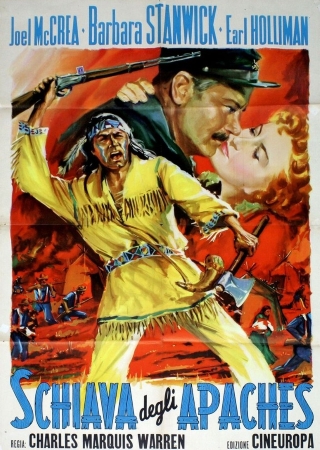
Which words get tossed around most often when the western is discussed? I guess I talk a lot about redemption, it’s the cornerstone of the genre for me. Others, depending on the direction from which they are approaching it, may look at the way it portrays expansionism, or how it charts and critiques civilization. Some like to focus on the elegiac aspects, and some go in for revisionism. But does anyone ever mention a sense of urgency? Maybe we should though. A lot of classic era westerns have a paciness to them, both for budgetary and for storytelling reasons. Yet when one stops to think not only of the relatively short window in time occupied by the historical concept of the Old West but also the equally brief flowering of the classic movie version, it somehow feels appropriate to regard urgency as at least one of the characteristics worth considering. Apache (1954) is what I would call an urgent movie. It is a motion picture in a very literal sense, the protagonist moves almost continually and it offers little respite for the viewer either as events unfold on screen. The theme too is one of an era drawing to a rapid close, of time threatening to overtake people and the consequent need to keep pace with it all.

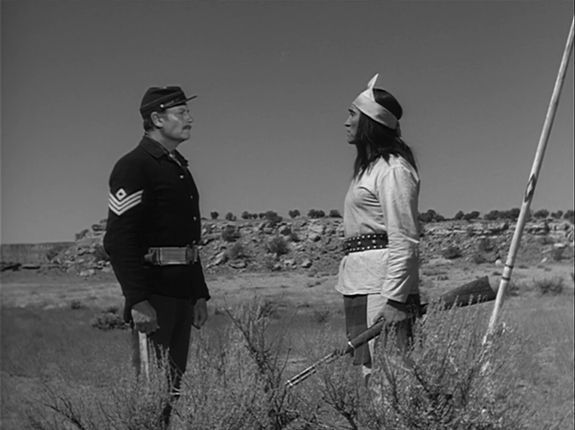
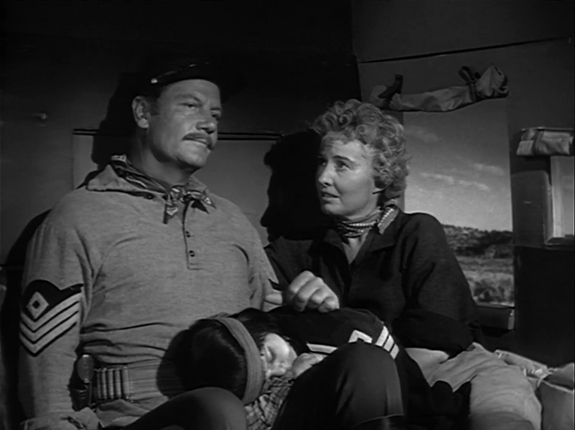
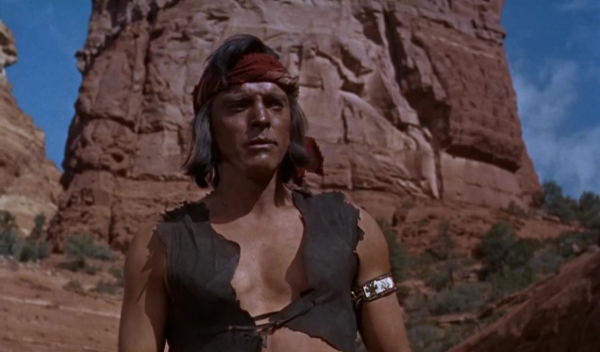
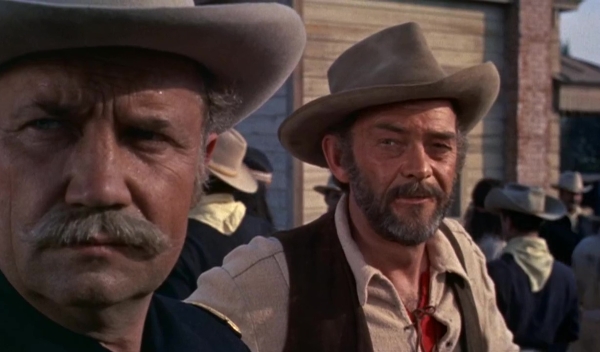
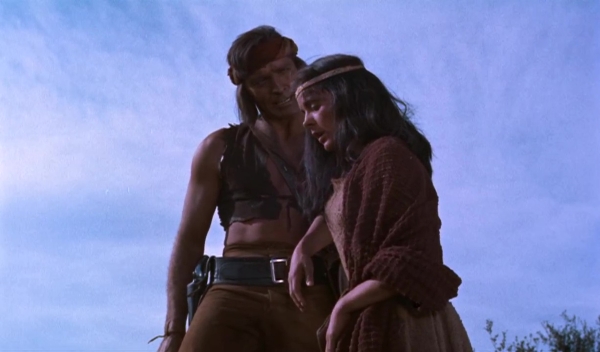
It opens with the surrender of Geronimo, the end of the Apache Wars and to all intents and purposes the closing of native resistance in general. One man at least is not keen on this capitulation and the first view of Massai (Burt Lancaster) has him riding in aggressively in a last ditch attempt to disrupt the event. It’s as good an introduction of the character as one could wish for, highlighting his belligerence, defiance and energy. Nevertheless, despite his bullish bravado, he’s not to succeed. Instead he is manacled with the other former fighters and placed on board a train headed for Florida. Even as the locomotive makes it’s way across the country, Massai’s restlessness and rebelliousness remains undimmed. Taking advantage of a temporary halt in Missouri, and the hubris of embittered Indian agent Weddle (John Dehner), he escapes. This leads to a brief yet fascinating interlude where Massai spends some time wandering around town, bemused and ultimately threatened by a way of life that couldn’t be more alien to him. That sense of urgency, that driving need to return to his roots while he still can, kicks in again and his overland odyssey is broken only by an encounter with a Cherokee in Oklahoma who has resigned himself to the reality of the newly civilized world. It leads to a wonderfully droll moment where Massai asks incredulously how it is that he has a wife but has to fetch and carry the water himself. The old Cherokee looks at him ruefully and admits with a sigh that some of the ways of the white man are indeed hard. The lessons Massai has learned along the way have given him hope though, hope that he may find the means to continue to exist as a free Apache, albeit less warlike and in the company of his love Nalinle (Jean Peters). This is not to be, however, and the drunken duplicity of Nalinle’s father as well as the distrust of the army and scouts see him back in chains. All the while, the movement never ceases, the cross-country trek, the recapture and later escape, and then the long run to the wilderness of desert and mountain, the settling of old scores and the desperate effort to reclaim some shreds of the past before the relentless advance of civilization rends them forever.

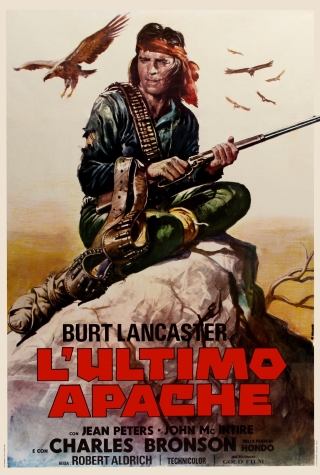
Apache fits neatly into that group of westerns taking a more sympathetic view of the native American  that had begun to appear in the early years of the decade. This pro-Indian cycle set in motion and characterized by the likes of Anthony Mann’s Devil’s Doorway and Delmer Daves’ Broken Arrow played a significant role in the evolution and maturation of the western which was taking place at this time. No doubt there are those who will protest the casting of Lancaster and Peters, as well as Charles Bronson, Paul Guilfoyle, Morris Ankrum and others, as Native Americans but it’s no more than a reflection of the casting practices, and indeed the choices available, at that time. Anyway, my own take on any spats over inauthentic casting is that surely acting is the adopting of roles and the presentation of characters and their traits. I see it as striving for some thematic and dramatic truth, and reality be damned. Was the theater of the ancients any less valid or lacking in artistic integrity as a result of the wearing of masks?

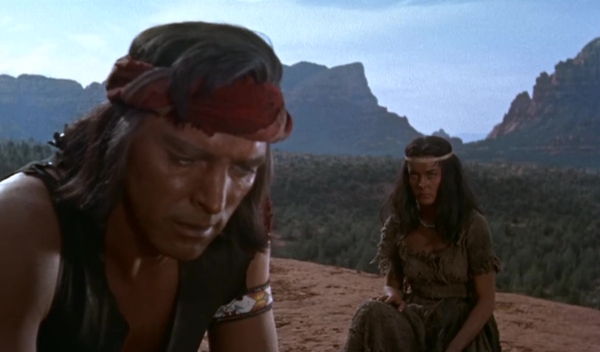
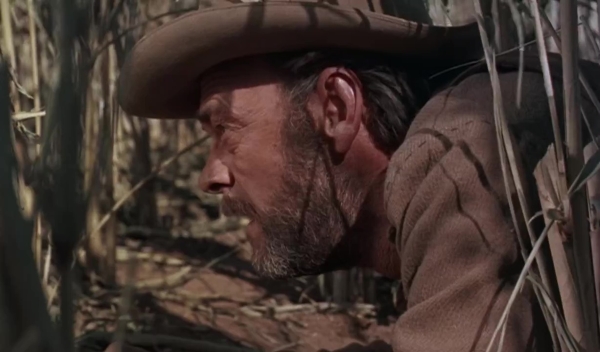
By maintaining the focus on Massai, and by extension the Indians who had not yet been fully integrated into an ever encroaching civilization, director Robert Aldrich and writer James R Webb also keep the focus on the overriding sense of urgency, of time running out. Massai admits to his woman at one point that he is aware of the fact he has perhaps only a few years at best ahead of him, that civilization and his consequent demise will catch up with him some day. And this is where the real urgency resides, the need he soon feels to lay some kind of lasting foundation, to provide some sense of continuity. In narrative terms, this is clearly indicated by the planting of seeds in the earth to grow corn, the idea introduced by the old Cherokee, tested unsuccessfully at first by Massai himself, and then encouraged and brought to full fruition by Nalinle. This notion of growth, of building a future out of nature itself is further highlighted by Nalinle’s pregnancy and the direction in which that development pushes the story. The “some day” Massai foresees arrives at the end. The climactic scene with John McIntire’s Al Sieber crawling through the undergrowth of the cornfield as he stalks the wounded warrior provides a visual metaphor for the creeping advance of civilization, threatening not only Massai’s last Apache, but the future he has tried to cultivate too. Still, the ending is one that is suffused with both hope and a hint of reconciliation.

Aldrich himself claimed not to have wanted to finish the movie in this way, preferring the more negative ending that was laid out in the novel Bronco Apache by Paul Wellman that formed the basis for the script. Some may see that as further evidence of the commonly held belief that Aldrich was first and foremost a cynic, but I’m not so sure. Perhaps that bleakness that could shine through some of his films on occasion was more prominent, rawer in some way, in his early efforts. Even if that is the case, I remain unconvinced that this should be seen as his defining characteristic. There are plenty of examples sprinkled through his work of him displaying if not a completely positive outlook then at least one which sees the better side of humanity in the ascendancy. I’m thinking here of Autumn Leaves, Hush… Hush, Sweet Charlotte, The Flight of the Phoenix and The Last Sunset, the latter being a movie I’m happy to admit I have come to reassess after being encouraged to give it another go. I recall a commenter on this site once referring to a certain writer as being in “the truth business”, even if I don’t now remember who was being so lauded. Anyway, that’s all by the by. The point is that the phrase stuck with me as it seems that it’s surely the goal of every artist to mine the truth. As such, it feels misguided to regard Aldrich merely as a cynic, as some critics would support, rather than a genuinely rounded artist in the sense that he too was a seeker after truth.

So, without deliberately spoiling matters for anyone yet to view it, I like the way the movie ends. It feels appropriate in that it validates the points made, the struggles endured and the promises alluded to throughout its running time. All that urgency that preceded it, the crowded, pressing framing frequently employed to create the sensation of a cramped and restricted set of circumstances eases. The simple yet instantly recognizable sound of a future long awaited calls a halt to what threatened to be impending tragedy and the “some day” that had loomed large is banished, to be replaced by the chance of a better day. In short, it’s a fine way to bring the story to a close.


The Trap

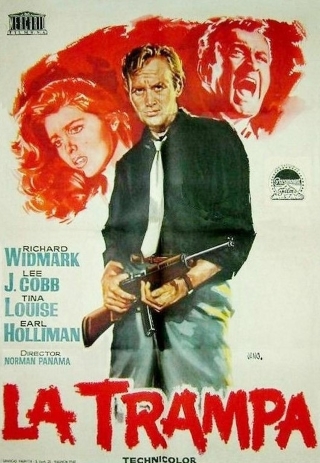
Corrosive family rifts, coercion and pursuit. These are attractive ingredients for a crime melodrama, hooking and holding the viewer rapt if blended skillfully. The Trap (1959) manages to pull this off for the most part. Perhaps there is a little too much back story to reveal, which is supposed to lend more heft to the central conflict, but that’s not really a deal-breaker. On the whole, the movie succeeds as a taut and lean crime story from  producer Melvin Frank and director Norman Panama, people one wouldn’t normally associate with this particular genre. That said, in the same year they turned out two enjoyable and accomplished movies outside of their perceived comfort zone in this title and The Jayhawkers.

Heat, dust and Joshua trees; one could almost be forgiven for thinking we have strayed unsuspectingly onto the set of a Jack Arnold movie. Well, the surroundings may create that impression at first, but those cars eating up the dust on the parched desert highway are in no danger of running into extraterrestrial interlopers. The threat here stems from an altogether more grounded source – mobsters.

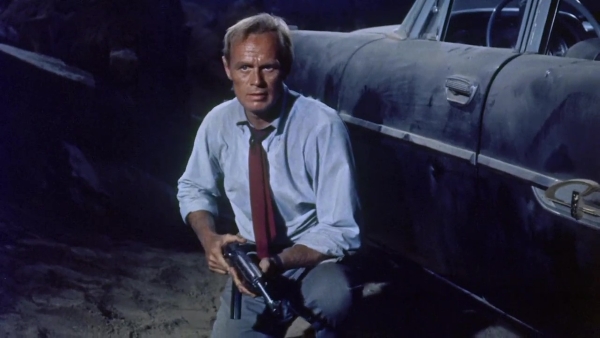
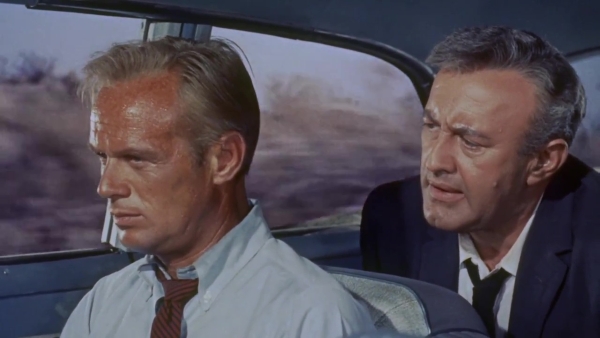
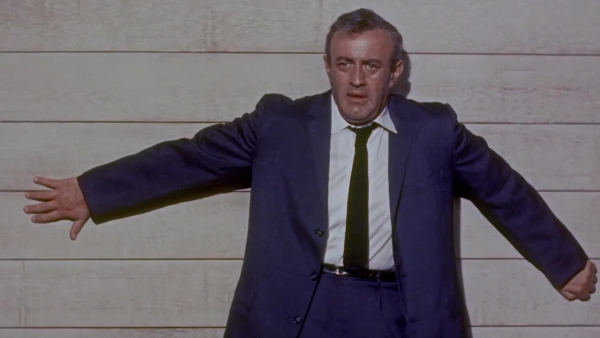
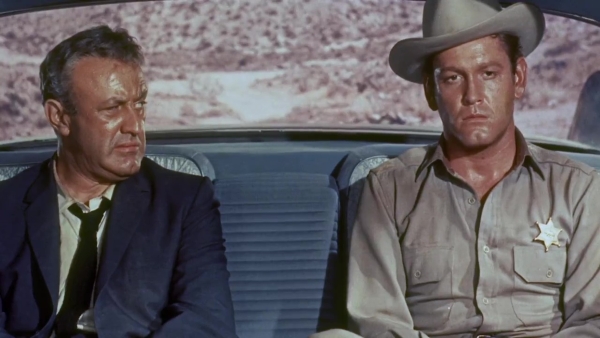
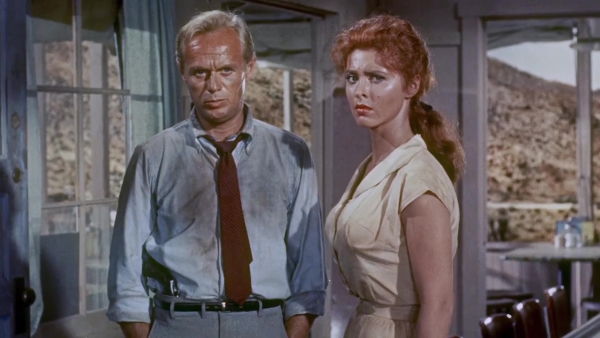
Ralph Anderson (Richard Widmark) is being driven back to the town of Tula, one of those unremarkable settlements clinging to the edge of the desert and no more than a speck on the map. If mobsters can be regarded as the enemy within as far as society is concerned, then Anderson is headed back to the town of his youth where he is seen as something of an enemy within his own family. His father (Carl Benton Reid), the local sheriff, has virtually disowned him, or so it seems, after a drunken escapade led to his being sent to reform school. His younger brother Tippy (Earl Holliman) is hitting the bottle hard himself, morose in his job as deputy and just barely hanging onto the frayed ends of a loveless marriage to Ralph’s old flame Linda (Tina Louise). So why does an apparently successful lawyer like Ralph Anderson come back to such an unwelcoming situation. The fact is he has no real choice, the mob are squeezing him to ensure he uses what influence he might still have over his family to ensure the local airfield is kept open and unguarded long enough to allow fleeing capo Victor Massonetti (Lee J Cobb) to get out of the country. If all goes well, it should be a simple affair. If all goes well. However, things are rarely simple when greed and jealousy get stirred up on an already baking hot afternoon.

Crime movies are a little like distance runners, they thrive on leanness and a well judged sense of pace. The Trap checks those boxes for the most part – the pacing remains pretty constant and is in keeping with the sense of urgency felt by the main players. There is leanness there too in the 80 minute run time and the comparatively small cast, especially once the action moves out of Tula and into the sandy desolation all around. Much of the action is confined to tense episodes of distrust and doubt in sweatbox cars, punctuated by interludes in the open where the tension remains. The idea of a desert as a claustrophobic environment is an interesting one. Sure it represents a heat trap, the stage where the actors tread being replaced by a griddle for them to hop around in perpetual danger and discomfort. However, it’s the anonymity of it, the threats concealed in the dips and hollows of its vastness, that has the greatest effect. The sight of the hero and his companions huddled behind rocks and bullet riddled bulk of their car as the light fades and the faceless, unseen enemy holds them pinned down feels marvelously restrictive.

These are the strengths of the movie, and in fairness they dominate. The earlier build-up in town has its purpose, it sets up the conflict between the brothers and the true reasons for that are gradually revealed. However, the action needed to move out, the story needed to strip away the extraneous details that could easily have bogged it down. It’s at its best out in the wilderness with the focus firmly fixed on just Widmark, Holliman, Cobb and Louise. It offered Widmark a comfortable run out, not stretching him greatly but presenting the chance to use his well developed screen persona effectively. Earl Holliman, who just recently passed away, is also on fairly familiar ground as a weak willed character who is aware of his failings but struggles to accept them. Cobb is Cobb, brash and loud, goading and sowing discord wherever he sees an opportunity to profit from it. Tina Louise was in the middle of a superb run of movies at this point with prominent roles that year in two very good westerns, the underrated The Hangman and De Toth’s superlative Day of the Outlaw. She does fine here as the woman who is living with regret and is far from happy to be the cause of added friction between the two brothers. Lorne Greene may be absent from the screen for much of the time but he adds menace early on as the perspiring heavy responsible for fixing up Cobb’s escape.

I like The Trap quite a lot, especially once the action moves out of town and the cast and story itself are pared down to the essentials. This isn’t a western yet it retains some of the flavor of that genre, both as a result of its desert backdrop and also the pitting of what ultimately amounts to a man alone against a more powerful and lawless adversary. And of course there is the redemptive thread that runs through it. It’s well worth checking out for fans of Widmark, or any of the principals for that matter.

The Tarnished Angels

Where possible, I like opening a post with a quote that either sums up the sentiments of a movie or at least captures something of its mood. There was a comment by Douglas Sirk on his own work that I felt would be apposite here yet, for the life of me, I can’t locate it just now. As such, I’ll have to settle for the gist of it: it ran along the lines that he liked to make movies about characters who were forever in pursuit not of some dream of the future but instead of their own past selves, straining to reconnect with or recapture something of their youth, something precious lost in the midst of the messy business of living. That notion is steeped in the kind of melancholic reverie that is very appealing. It encapsulates enough unattainability to lend an air of tragedy to any drama and at the same time there is too the promise that maybe some flavor of a spirit since departed can be held onto, some faltering beacon to serve as an anchor. The Tarnished Angels (1957) has a lot of that spirit coursing through it, describing a cyclical, circular path of beginnings and endings, and still offering a shot at renewal and rediscovery as it draws to a close.

The entire concept of the barnstorming pilots traversing the country every season and spending much of their time racing around the massive pylons that mark the course of their near suicidal races is in itself circular. Round and round they all go, chasing the prize money and the fleeting adulation of a crowd of vicarious thrill seekers who will forget the broken daredevils before the ambulance or hearse hauls away whatever remains of them when the shrieks and cheers have faded away. Yes, round they go with all the futility of dogs chasing their own tails, tarnished by their own cut price way of life and with no realistic chance of ever touching the person they once were. Yet, no matter what might pick away at one in the darker moments of life, human nature is sustained not by defeatism but by hope – it is one of the key or defining elements of the human condition after all. So it is with Roger Shumann (Robert Stack), his wife LaVerne (Dorothy Malone), son Jack (Chris Olsen) and their mechanic Jiggs (Jack Carson). These four live a nomadic, gypsy existence, knowing no home beyond their own dreams. Roger Shumann is a figure carved from classical tragedy, a hero in the eyes of others who is terrified by his own limitations. He is one of those post-war lost souls, a man cast adrift in a world that celebrated the feats of courage he once displayed and now bewildered by the artificiality of trying to recreate that daring. And there’s guilt too, that illogical but unshakeable questioning of many who lived through conflict of why one has survived while others paid the ultimate price. It’s a blind too for his own insecurities as he substitutes recklessness in the air for paucity of courage in his personal life. Of course, the route Shumann takes towards redemption in this respect forms one of the major pillars of the story – the brooding intensity of the man is well realized by Stack as he shies away from true affection and then plumbs the absolute depths of moral dissoluteness. His request that LaVerne should quite literally prostitute herself to secure the use of a plane is a shocking moment, the decay of a soul laid bare. From this nadir though he rises again, finally, to first acknowledge his love and then take to the skies to make a last attempt at touching what he once was, and earning for himself something of value through an act of unplanned heroism.

The setting fits in with the cyclical theme too, taking place over the course of Mardi Gras in New Orleans, that carnival celebration that peaks and fades every year and marks the end of indulgence and the last chance to feast and cut loose before the penance and deprivation of Lent begins. It signals the end of Roger Schumann’s time; he has been afforded a taste of his days as a better man and it also represents the opportunity for his wife and child to start afresh. Dorothy Malone did the best work of her career for Sirk – she had won an Oscar for Written on the Wind and The Tarnished Angels was a chance to work again with the same core team of Sirk,  producer Albert Zugsmith, writer George Zuckerman, Stack and Rock Hudson. Her performance here is every bit as good and perhaps better than that award winning role, LaVerne Shumann being a marvelously true creation and wholly credible in her disappointment and disillusionment yet never lacking that spiritual vitality that sustains life. Sirk’s camera lingers with care and tenderness on her features time and again, as she reads My Antonia, sips her drink, smokes her cigarette, or just surrenders to lonely wordless reflection.

She is at her best in her interaction with Hudson’s alcoholic Burke Devlin, the journalist who ended up a hack reporter but who sees the Shumanns as his way back into the world. He starts out with his mind set on exploiting a bit of cheap sensationalism before coming to the realization that the story he thought he was covering is only a cloak for a more timeless tale, something that is worth telling in its own right and which may represent his salvation too. Hudson gets to deliver a superb monologue right at the climax, one that is in turns heavy with reprobation and hope. However, some of the finest moments are those quiet ones in his run down apartment with Malone where all the bumps and hollows of life are navigated in the half light.

Tragedy pays a visit to all those characters, but it doesn’t loiter around them. It wipes the slate in a sense before passing on and leaving the door at least ajar for something more positive to slip in. Jack Carson’s Jiggs is maybe the exception, his destination left undefined at the end. Carson was a great character actor, bulkily comedic in many a picture though generally with a strong sense of pathos about him. Jiggs is a loyal figure, but there is a strong suggestion that the loyalty is largely as a result of his unfulfilled love for LaVerne. He has a couple of standout moments in the movie; his appalled outrage at Shumann’s insensitivity first when he displays jaw-dropping cheapness in drawing spots on a pair of sugar cubes to simulate dice and then proceeds to use them to shoot for the responsibility for bringing up Laverne’s child, and then his reaction to Roger’s shameless exploitation of his wife. Finally, there is that moment at the end of Roger’s wake when everyone drifts away and the lights are slowly doused, when he stands alone in the shadows abandoned and bereft. The other supporting roles are filled with accomplishment, but less shading overall by Robert Middleton and the perpetually sneering Robert J Wilke. A quick word too for Chris Olsen. The child actor only had a brief screen career but a glance at some of his credits – The Tall T, The Man Who Knew Too Much, Bigger Than Life – reveals a lineup to be proud of.

I think The Tarnished Angels is Douglas Sirk’s best film, though I suppose some others might opt for one of his other melodramas. William Faulkner certainly seems to have considered the movie the best adaptation of his writing, something I wouldn’t want to argue with. I’ve seen the film many times over the years and it affects me strongly on each viewing, generally revealing some new insight or idea as all the great pictures do. Sit back and watch it if you haven’t done so, or just watch it again if you have.


She Played With Fire

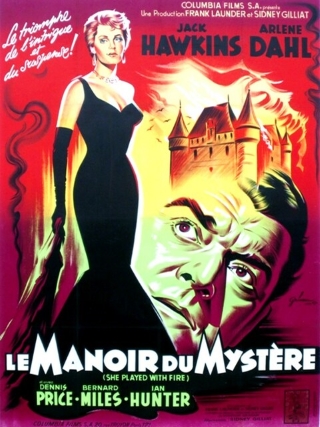
I sometimes think I spend far too much time on associations, images that recall other images, movies that bring to mind other movies, or names that automatically start me thinking of other people. Such is the case with Frank Launder and Sidney Gilliat, mention of whose names inevitably sparks thoughts of Alfred Hitchcock as a result of their having produced the script for The Lady Vanishes. That association feels a little stronger when viewing She Played With Fire (1957), which is also sometimes referred to as Fortune is a Woman, as it derives from a story by Winston Graham and he of course wrote the novel which  formed the basis of Hitchcock’s last great film Marnie. This all sounds as though the movie has a wonderful pedigree, which I suppose it has even if the attractively packaged end product isn’t quite as satisfying as one might hope.

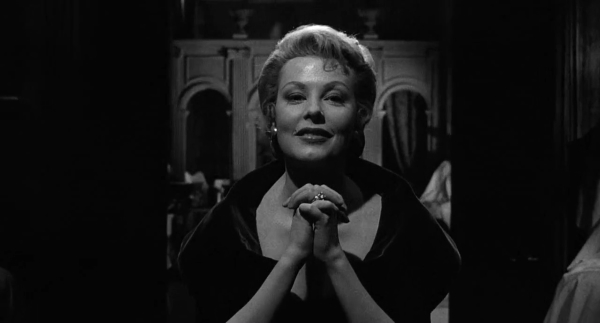
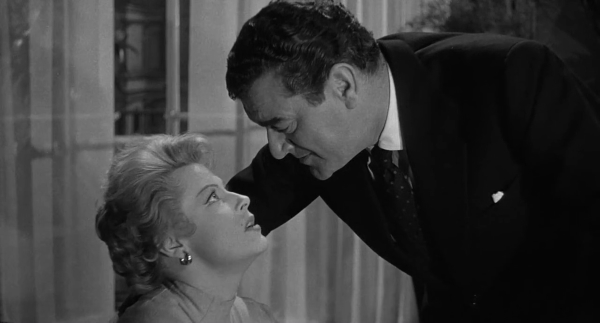
Some premises hook viewers early or even immediately in exceptional cases. Personally, I struggle to work up a huge amount of enthusiasm over plot devices like insurance fraud, a swindle can clearly make for an engaging and involving storyline but it’s usually when a human face is seen to suffer. That said, a good movie ought to be able to rise above the potentially mundane aspects of its plotting – it’s a visual medium after all and a touch of style in that area can gloss over a lot. She Played With Fire does display a degree of visual panache and the opening blend of dreams and reality by way of art sets everything up nicely. In brief, Oliver Branwell (Jack Hawkins) is an insurance man, one of those post-war types who has spent a good deal of his time overseas and always comes across as a bit of a square peg in the round hole he’s chosen to lodge himself in. An investigation into a fire and the resultant damage to some pictures at a stately pile in the country brings Branwell abruptly and unexpectedly face to face with his own past. The claimant is Tracey Moreton (Dennis Price), a vaguely decadent asthmatic, but the surprise from Branwell’s perspective is Moreton’s wife Sarah (Arlene Dahl). She is the woman he once romanced and then lost in the Far East and the embers of that fling have evidently not quite cooled. Everything remains very proper though despite the ever present temptation. In time however, the pair are drawn closer together, and then the possibility of a clever bit of fraud comes accidentally to the attention of Branwell. Without going into too many details, he is soon questioning the good faith of Sarah and then finds himself plunged into a truly messy affair as a nighttime investigation of the Moreton mansion coincides with a massively destructive conflagration and the discovery of the owner’s corpse just before everything goes up in flames. This all leads to some foolhardy deceit, a whirlwind romance, blackmail and the uncomfortable possibility that a supposedly dead man might actually be still alive.
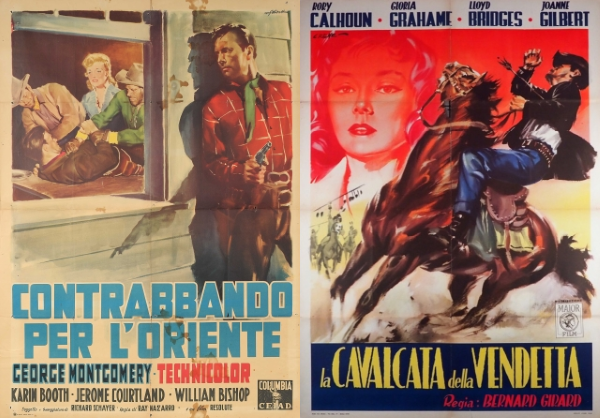
I have seen this movie labeled a film noir and while I can see how some of Gerald Gibbs’ striking high contrast cinematography, as well as the convoluted deceptions and tangled interpersonal relationships, are suggestive of this, I wouldn’t describe it as such myself. I can’t say I object to anyone categorizing the movie as noir but I tend to regard it as a classic mystery with a smattering of noir tropes. Does it succeed on those terms? To a point it does yet there’s an unevenness to it as a whole that weakens it. The tension arising out of the blackmail strand is dropped or allowed to slacken too early and this robs it of suspense and urgency. A bigger issue though is the fact the whole fraud and murder mystery which ought to underpin the film is frankly nowhere near as compelling as it needs to be.
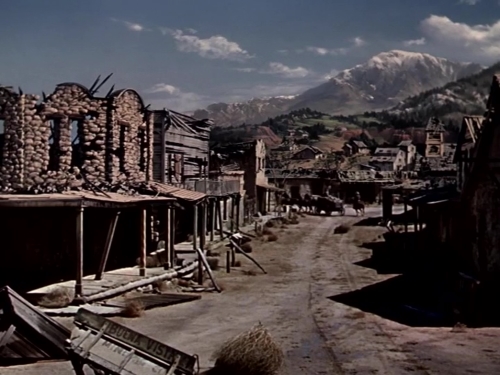
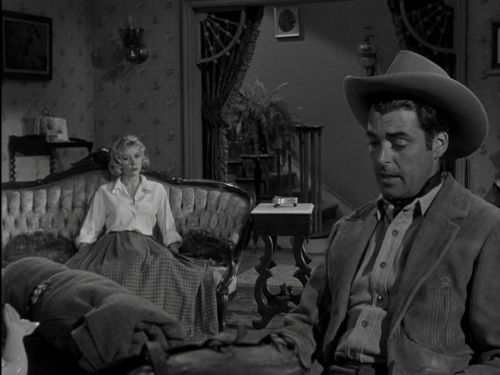
What does keep it all afloat is a combination of Gibbs’ lighting and some evocative composition and framing from director Gilliat. In short, this is a movie that looks good all the way through. The acting helps matters along too, especially from the ever reliable Hawkins. He could generally be depended on to produce a pained stoicism, earnest and honest but leavened with something of a twinkle in the eye that prevented everything from sliding into dourness. Arlene Dahl was highly decorative and has a hint of duplicity about her, enough to generate some suspicion though perhaps not enough to sustain it all the way through to the end. Dennis Price was born to play wastrels and does so effortlessly here, it’s just a pity he’s not given more screen time. Bernard Miles is a touch theatrical as the seedily adenoidal would-be extortionist, but it’s a memorable turn for all that. Greta Gynt seemed to be enjoying herself immensely as an incorrigible good time girl, a lovely piece of light comedic acting, while Christopher Lee pops up in a blink and you’ll miss him cameo as one of her unfortunate conquests. It was also a nice touch to cast father and son Malcolm and Geoffrey Keen as two generations of the insurance firm Hawkins is working for.
She Played With Fire was a Columbia film which was released first on DVD in the US by Sony as part of their MOD line and then later it was licensed out to Kit Parker Films and appeared on Blu-ray in one of the company’s multi-title film noir collections. I’ve often wondered why the film never made it to Blu-ray in the UK, especially when Indicator were releasing a lot of Sony/Columbia product not to mention the fact they like to highlight British cinema titles where possible. Perhaps the slightly odd fact the movie has the kind of plot that is simultaneously too convoluted and too slight discouraged them? Still, the deep cast of familiar British character actors and the inevitable if incidental links to Hitchcock would seem to invite the kind of analysis to be found among the supplementary features of many Indicator discs. All told, an enjoyable albeit imperfect movie.

Campbell’s Kingdom

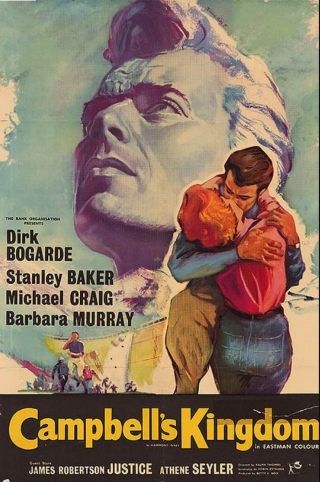
When is it reasonable to call a movie a western? Well the simple answer would be when it’s located within that area typically defined as the American West, essentially the far side of the Mississippi, and inside a relatively short period of time, although the jury is surely out on how rigorously the latter should be applied. Actually, even the geographical aspect is given a bit of leeway too in reality. Plenty of westerns have been set in Mexico and  others have stretched up into Canada too. The action in Campbell’s Kingdom (1957) takes place north of the border in contemporary Alberta so some might like to think of it as a western. Personally, I wouldn’t call it such, I see no need to hang that label on it or to scratch around in an effort to shoehorn it into the genre. It’s a British outdoor adventure, with a seam of intrigue running though it and a hint of romance almost as an afterthought. It’s also a very enjoyable movie with splendid visuals and some well executed sequences that blend action and suspense successfully.

The whole story revolves around Bruce Campbell (Dirk Bogarde), newly arrived from England in the frontier town of Come Lucky. That’s one of those place names that positively drips irony, the kind of small settlement just about hanging onto the ragged coattails of civilization, its economic viability precarious at best. And there’s irony too in the fact Campbell should end up there. If the town has a dubious future, then the lead character is a man with none at all. He’s been given only months to live and has made his way half way round to world to take up the tainted legacy left him by his grandfather. The old man, whose body is only glimpsed in the opening scene, has died an outcast, widely blamed for a swindle that fleeced the town’s inhabitants. I guess no man likes the thought of departing without leaving something positive behind and that was true both of the elder Campbell and the doomed nephew now seeking to make restitution for the past and peace with the present. Campbell’s route to familial redemption is not be a smooth one, the land bequeathed to him by his grandfather was thought to hide reserves of oil but the survey results filed appear to contradict that. Instead of providing a source of wealth that might help the town thrive once more, Campbell’s “kingdom” is due to be flooded subsequent to the construction of a dam. Morgan (Stanley Baker) is the ruthless and pugnacious construction boss who is determined to get the dam up as soon as possible, and Campbell and his kingdom swept aside. The plot basically devolves into a race to prove the existence of an oil field, and thus restore his family’s reputation, before the construction outfit and the mining interests behind it sink the entire endeavor.

Campbell’s Kingdom is an adaptation of a Hammond Innes novel, the script of which was initially worked on by Eric Ambler,but the final product came via another novelist turned screenwriter Robin Estridge, with the cooperation of Innes himself. Typically, an Innes novel focuses on a lone protagonist, usually some competent, professional type, thrust into an adventure that has a reasonably compelling mystery at its core and that makes use of a potentially threatening natural environment. All of these elements are present in Campbell’s Kingdom, with the doomed hero aspect and the sins/secrets of the past angle exploited quite effectively. The location shooting, Ralph Thomas directing and Ernest Steward handling the cinematography, with the Italian Dolomites standing in for Alberta, has a crisp beauty and integrates seamlessly with the interiors filmed at Pinewood Studios. Thomas might appear a bit of a left-field choice for this type of story, he made a lot of quite light comedies (not least the series of Doctor adaptations of Richard Gordon stories with Dirk Bogarde), but the fact is he was one of those versatile journeymen able to take on almost anything that came his way. He made a few good thrillers in Venetian Bird, Checkpoint,The High Bright Sun and The Clouded Yellow, a slightly pedestrian but not wholly unworthy remake of The 39 Steps, as well as the classic war movie Above Us the Waves and some interesting dramas in The Wind Cannot Read and No Love for Johnnie.  The section where a landslide is triggered and a bridge dynamited to buy enough time for a convoy of trucks to sneak its way up the mountain via a cable hoist is deftly put together and offers some genuine suspense.

I don’t suppose Dirk Bogarde is anyone’s idea of an action hero, but he’s not playing that anyway. His character is a former insurance clerk, and one who has been in poor health to boot. As such, he does fine as the part is written and a few criticisms I have come across, both current and contemporary, questioning his suitability for the role seem churlish as a consequence. He was always better in more introspective moments and there are a smattering of those which allow him to play to his strengths. Stanley Baker has a one-dimensional part as Morgan, lots of drive and bullishness so he can show off that provocative intensity he displayed so well. It never taxes him though and there’s not much shading, but that’s no criticism of the man’s performance. Michael Craig is stoic and reliable as the sidekick – he has the somewhat thankless task of playing a man who loses out in the vaguely insipid love triangle, and doesn’t even get the chance to play a scene venting his frustration. Barbara Murray represents the other side of said triangle and she does have her moments, she’s not relegated to the type of decoration and background hand-wringing which sometimes befalls heroines in action films. The rest of the cast is a virtual Who’s Who of British cinema: Athene Seyler, Sid James, John Laurie, Robert Brown, Finlay Currie and so on. This results in a variety of ersatz accents that sometimes hit the mark. James Robertson Justice has a biggish part as the drilling expert and all the way through he speaks with the oddest Scottish burr I have ever come across – perhaps he was supposed to have some Scandinavian connection?

Campbell’s Kingdom was released on a fabulous looking Blu-ray by Network in the UK before that company folded. It also came out on DVD before that, and I think it’s had a BD release in the US as well. This is one of those movies that has no pretensions whatsoever. It’s not of the thick-eared variety, but nor is it straining to be anything other than a solid adventure. All told, this is an undemanding piece of entertainment with its heart in the right place.

This is a couple of days early – what’s a day or two between friends anyway! – but it’s close enough to the anniversary of my first ever blog post, which was all of seventeen years ago. There have been a fair few movies watched, written up and talked about in that time.

Man of the West

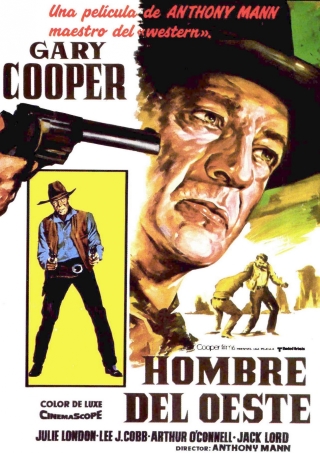
The western, when it hits the heights of its artistic potential, traces the route of its characters along a path that leads them to salvation, redemption, fulfillment or any combination thereof. When this is achieved then the audience gets to follow, to catch a glimpse of, and thus on some level share vicariously in those rewards – this is one of the riches of cinema and it’s to be found in abundance in the very best of the classic era of the western, not least as it approached the zenith of its power. And for directors who could be said to have had a clear view of what they wanted to do within the genre this same progression towards a destination marked fulfillment can also be discerned. Anthony Mann started making westerns at the beginning of the 1950s with Devil’s Doorway and Winchester ’73 and, particularly in that great cycle with James Stewart, dug deep into the heart of the genre. His work laid bare the tormented souls of his characters yet also applied a kind of spiritual healing balm that meant the harsh journeys he took them on finished up at a place that promised them peace. Man of the West (1958) follows this template and while it wasn’t the last of Mann’s westerns, it does represent the apogee of his work in the genre.

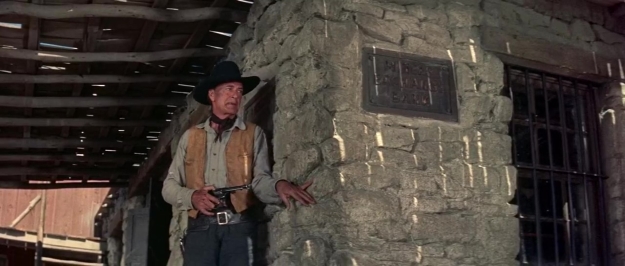
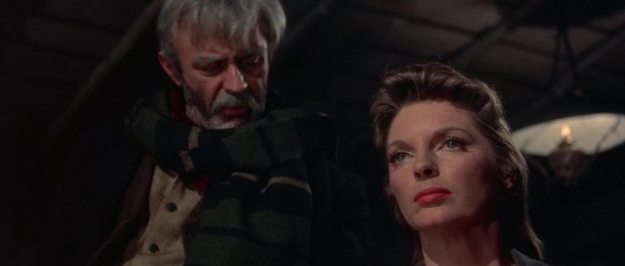
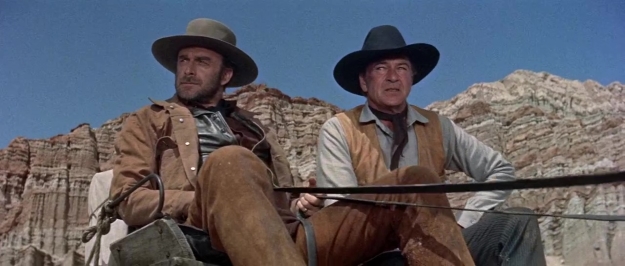
On the surface, the plot of Man of the West is a simple and straightforward one. Link Jones (Gary Cooper) is a man clearly out of his element, a true man of the west who is spooked by his first view of a train and bemused by civilization’s apparent determination to squeeze him into the smallest space manageable. Still, the west of his past is never far away and a neatly executed raid sees him relieved not only of his luggage (and the money he’s been carrying to hire a teacher for his town’s new school) but also the discomfort of his poorly designed seating. Stranded in the middle of nowhere in the company of garrulous card sharp Sam Beasley (Arthur O’Connell) and  saloon singer Billie Ellis (Julie London), he has no option but to set out in search of shelter. The thing is though, Link is no helpless hick – he evidently knows where he’s headed as he soon comes upon an old homestead that he seems familiar with. In short, this is very definitely a man with a still unrevealed history, one who thought he had outrun that past only to find it catching up with him and drawing him back into its unwelcome embrace. There had been hints of that in his shifty avoidance of the law back at the train halt, but it’s here that the full extent of his involvement with criminality is dragged out into the light, or into the flickering shadows of a dank and dangerous cabin to be precise. The gang who robbed the train are taking orders from Dock Tobin (Lee J Cobb), the notorious uncle who brought up and shaped – or perhaps twisted – the character of the younger Link. His delight at having his protégé back is matched by Link’s carefully concealed disgust at being snared once again by the kind of people he thought he had escaped for good.

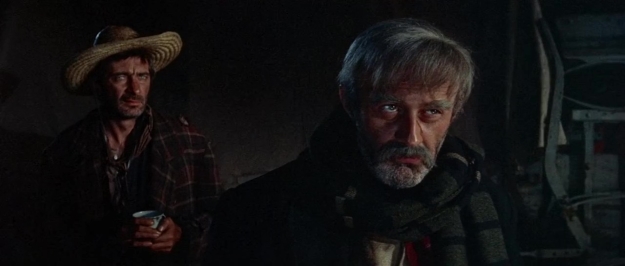
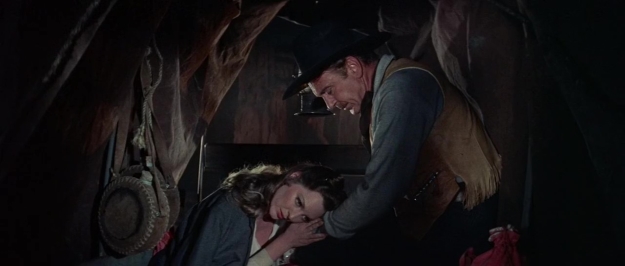
The tone of the movie shifts radically at this point. Link’s caginess grows and is clarified at the same time, and the worthlessness and utter inhumanity of Dock and his gang increases by the minute. The cabin itself is hugely oppressive, shot by Mann in the shadowy menace of guttering flames with a heavy and smoke darkened ceiling regularly in view, its narrow and tight dimensions seem to press from every side. As Dock raves and booms about a past steeped in blood and brutality, Link’s burgeoning despair is just about held in check. He had set out to recover the money entrusted to him by poor and trusting people and now finds himself responsible for both his own well-being (he has a dependent wife and children relying on his safe return) and that of two helpless people he has led into danger.

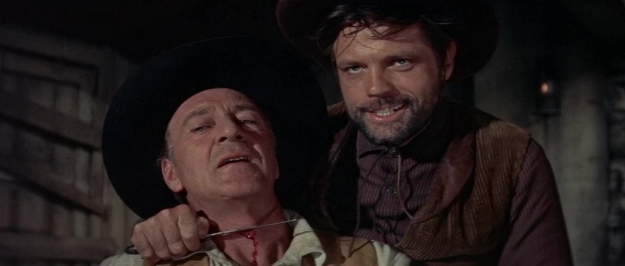
This long sequence in the cabin gradually takes on the feel of a visit to one of the deeper circles of Dante’s Inferno, where depravity is let loose and one starts to wonder if light will ever be permitted in again. Dock resides here, a malignancy at the center of a web he has spun around himself,  goading his companions to ever greater excess. When the degenerate Coaley (Jack Lord) demands that Billie strip for their amusement and holds the outraged Link captive, a knife cutting into the flesh of his throat, there is a real sense of terror on show. This entire section is impossibly tense, dark and forbidding, so much so that there is a palpable sense of relief when events move the characters out, when a new dawn breaks and the possibility of getting into the open beckons.

Here, in the closing act of Mann’s beautifully shot tragedy, those classic themes of revenge, redemption and renewal are played out against a dusty and sun-bleached backdrop that is as unforgiving as it is honest. Link is handed the opportunity to avenge the indignity and barbarity of Coaley, meting out a retribution that is chilling in its bleakness and also unsatisfying as a result of the further hurt it unwittingly inflicts on the innocent. The message of course is that revenge never achieves anything of value, a theme that Mann revisited time and again throughout his career. By the time it all draws to a conclusion with a sudden gunfight high up on one of the director’s characteristic elevated spots, more horror has been confronted and further pain endured. For all that harshness and violence and loss, Mann’s essential commitment to the durability and resilience of humanity, to the ultimate triumph of decency over malice never falters. When the damaged survivors come together briefly at the end before the inevitable parting, making their peace with themselves and the challenges posed by life itself, there is no doubt that catharsis and renewal have been earned and won. This holds true of the characters, maybe it can be said of the director, and it brushes off on the viewer too .

I know the casting of the movie has not met with universal approval, but I find it works fine for me. Sure Cooper was probably too old for the part as written but his work here allows me to ignore that. The fact he had such a natural affinity for western roles is a terrific boon in itself and then there is that minimalist approach to acting he had perfected over the years. Those eyes that dart like fugitives while the face remains taut, that guarded catch in the voice, the pauses and the silences all add up to wonderful screen acting and I find it hard to see how anyone else, regardless of their age, could more convincingly impart the mix of caution, fear and guts required. Does Lee J Cobb crank it up too high? Maybe so, but as I see it his character is a monstrous creation, deluded and demented by his own turpitude. Dock Tobin lives in an unreal cocoon and surrounds himself with lowlife sycophants so it’s arguably a valid interpretation on the part of the actor to play him with such studied bombast.

Julie London’s lonely saloon girl is well realized and she deftly captures the precarious position occupied by a woman in such circumstances. All her western roles were fine but this one presents her with a number of challenges – the natural toughness of the saloon singer is neatly juxtaposed with her innate vulnerability and she handles the scenes where she’s subjected to both physical and psychological assault with sensitivity and grace. She excels in her scenes in the cabin and barn, playing effectively off Cooper’s reticence and reserve, and then has two other memorable scenes with her leading man in the wagon, the first tender and bittersweet while the second exposes the full horror of Tobin’s bestial character. In support John Dehner plays it tightly coiled as Cooper’s cousin, coolly disgusted by the decline he sees in Tobin and never once deceived by Link’s maneuvering. Royal Dano is memorably manic as the mute Trout, Robert J Wilke sneers and threatens on cue while Arthur O’Connell is all blather and blarney till he stops a bullet at the end of one of the film’s most shocking scenes.

Man of the West saw Anthony Mann take the western to the place he wanted it to be. All the themes he’d touched on and explored throughout the preceding decade are on view and placed under the microscope. Having won acclaim as a director of film noir, his westerns hold onto some of that darkness – the visual aesthetic may have gradually become less pronounced as he moved to frontier tales but the fascination with the less savory aspects of humanity remained. What separates his westerns from his earlier noir work though is the focus on reaching for something finer, the scramble towards redemption and an escape from the darkness both within and around the characters. By the time he made Man of the West he had discovered how to set those characters firmly on that path.

The Western Range

If one is to accept that the second string western, or the programmer or B movie depending on the terminology preferred, represented the bread and butter of the genre during its heyday in the 1950s (and I strongly believe that the assertion should be accepted) then it’s not unreasonable to assume those films would have much in common. Yet, leaving aside the personnel who turn up time again both in front of and behind the camera, there was in fact quite a wide variety on show. I recently watched Cripple Creek (1952) and Ride Out for Revenge (1957) back to back and was struck by how very different these two “lesser” westerns were. Both featured stars (George Montgomery and Rory Calhoun respectively) who are closely associated with such westerns and both work pretty well when taken on their own terms. Nevertheless, tonally, visually and with regard to aims, one might just as easily compare movies from two entirely different genres.

So what have these two pictures got in common? Well the 19th century setting and the locations (Colorado and the Black Hills) are fine for westerns, and both movies have the hunt for gold worked into their scripts. But that’s about as far as it goes. Cripple Creek is in essence a crime movie taking place against  western backdrop, all about gold robberies, smuggling and intrepid Secret Service agents working undercover. And despite a few harder edged scenes, it has a lighter feel to it overall – I’d hesitate to say juvenile, but it does have the kind of cut and dried ethical simplicity about it that means it can be enjoyed by just about anybody regardless of age. I can’t say for sure if I saw the movie myself when I was a youngster but it is the kind of Saturday matinee fare that I tended to lap up at an impressionable age. George Montgomery is heroically square-jawed as the gutsy G-man while William Bishop and John Dehner never leave the viewer in the slightest doubt that they are up to no good. Only Richard Egan, gradually working his way up the billing towards stardom, shows a bit of shading in his characterization. Ray Nazarro serves up a colorful and broadly frothy concoction, a frank piece of lightweight entertainment that never tries to  cajole the viewer into believing it’s anything more than that.

Conversely, Ride Out for Revenge is a much more serious affair. Bernard Girard is clearly shooting on a tight budget but making fine use of Floyd Crosby’s stark black and white cinematography. This is weightier stuff with conflicted marshal Rory Calhoun butting heads with a drunken and incompetent soldier played by Lloyd Bridges. The story explores greed, intolerance and the corrosive effects of unfettered hate on individuals and whole communities. There’s not much to smile about in this movie and there’s a hardness to it befits an exploration of the themes mentioned. There is an interracial romance which is central to the plot – sidelining Gloria Grahame, who appears so completely detached that hers is practically a non-performance – and has the guts to end on a far more hopeful note than is often the case with such storylines in westerns of the time. An early outing for Kirk Douglas’ Bryna Productions, Ride Out for Revenge challenges all types of prejudice and even the whole idea of manifest destiny.

So, there you have it: two westerns made just five years apart, both a step below the A list yet both radically different in look, theme and mood. The sheer malleability of the western in the classic era has always struck me and I guess I could have chosen plenty of other examples from this general time period to illustrate this.


The Midnight Story

“Nothing is more wretched than the mind of a man conscious of guilt.”

 Titus Maccius Plautus

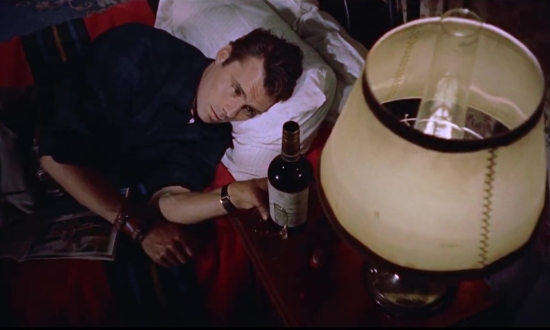
Guilt, doubt and suspicion are some of the key ingredients of dramatic tragedy. One of Aristotle’s four pillars of tragedy is suffering and the aforementioned features can certainly be said to form the basis of that. The concept of guilt runs all the way through The Midnight Story (1957), every major character is assailed by this feeling as it hounds, worries and tears at them insistently. Of course all tragedy really only has a point if it follows its natural path towards a sense of catharsis, a relief or clearing up granted to the characters, not to mention the audience, a lightening of the dramatic load. If guilt and all its gnawing associates can be viewed in a classical context, it can also be seen in religious terms too, especially from a Catholic perspective. In such cases the catharsis we move towards is frequently expressed as a form of redemption. The Midnight Story manages to fuse all of these ideas into a beautifully constructed film noir that draws the viewer deep into dark and despairing places before finally emerging in a brighter, more hopeful landscape.

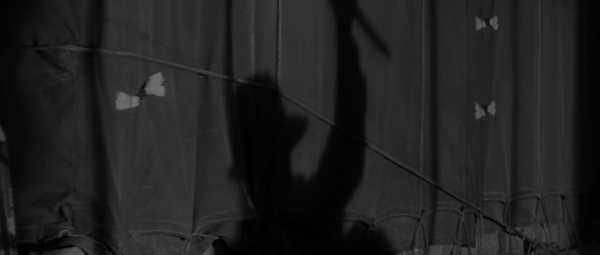
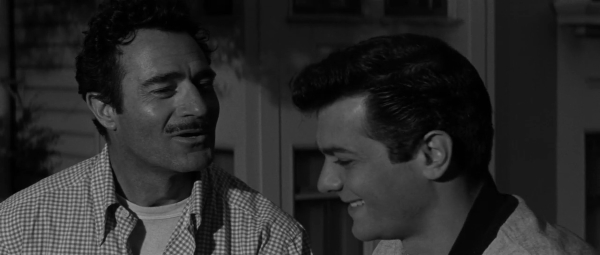
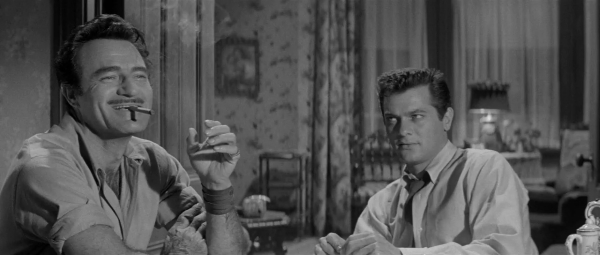
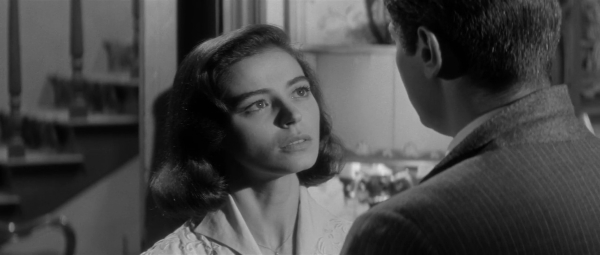
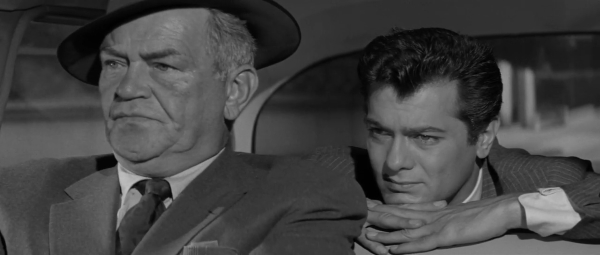
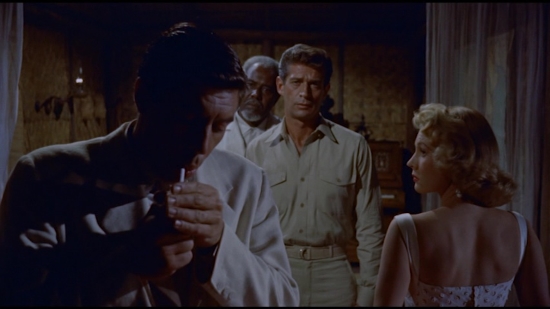
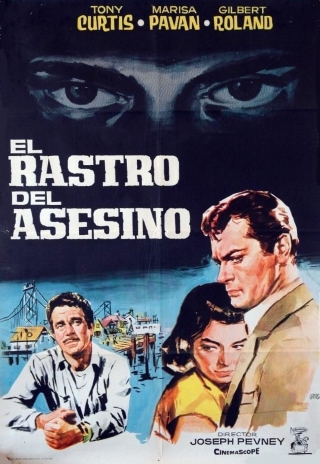
The opening is stark and shockingly abrupt, the caption informing us that the studio set represents an approximation of a side street on the San Francisco waterfront. A priest strolls out of the shadows towards the camera, his attention suddenly caught by a voice softly calling his name. We zoom in on his eyes as they register curiosity, maybe recognition and a touch of fear. This is  Father Tomasino and we’re witnessing his final moments as a knife-wielding assailant, seen only as a shadow cast against the tarpaulin of a truck, strikes him down. It’s one of those crimes that outrages people, particularly those who knew and respected the victim. One such person is Joe Martini (Tony Curtis), a young traffic cop who grew up in an orphanage and owes his job and much besides to the murdered priest. Martini wants the killer and he vainly presses his superiors to let him in on the investigation. At the funeral he notices a man who seems to be more deeply affected, tormented even, than the other mourners. There is something about the intensity of this man’s grief that gives Martini pause and indeed leads to him temporarily turning in his badge in order to pursue his own inquiries. The person who has attracted his attention is Sylvio Malatesta (Gilbert Roland), the owner of a seafood eatery and a familiar figure on the waterfront. Deftly and swiftly, Martini inveigles his way into Sylvio’s life, becoming a friend, employee and even a guest in his home.

Guilt haunts the characters from start to finish. There is obviously the overarching guilt that stalks whoever the killer may be, but Martini carries it with him too all the way. As has been stated, he owes almost everything to Father Tomasino and there is surely a sense of guilt that, despite his job as a protector of society, he was unable to be there to ensure the safety of this man. One of the orphanage nuns he speaks to advises against going around with hate in his heart, but I’d argue that his guilt and shame, a feeling of inadequacy (albeit misplaced) due to his not being there at the crucial time, is his true motivation. Then that same feeling steals over him as he works his way into the affections of not only Sylvio but his family too. This is exacerbated by his falling for Anna (Marisa Pavan), the niece from Italy, and her clear devotion to him. All of this is further heightened by the accompanying doubts and suspicions: suspicions about Sylvio that ebb and flow with the depressing regularity of the ocean tides, and those corrosive doubts about the propriety of his own actions, the dubious morality of exploiting the love and trust of innocents regardless of the cause which is supposedly served. Soon every look and gesture is brought under the microscope, no word or comment is so trivial as to be discarded, no alibi can be relied upon or taken at face value. Everything has to be questioned, everyone suspected in some way. And still the guilt persists.

Besides probing its central theme, The Midnight Story functions both as an engrossing whodunit and as a snapshot of working class family life. There is irony in the fact Martini has only been able to achieve the bonding and acceptance that grows out of membership of a family though deception. In seeking justice for the death of his mentor and friend, not to mention a quest to make amends for imagined failings, Martini risks the loss of all that he most desires. The notion of only being able to win by losing everything is a sour-tasting one indeed. Consequently, there are moments of genuine, heartbreaking darkness in this movie, although it does aim for a redemptive quality, and I think it succeeds in that respect. The crushing burden of guilt is finally lifted in the end by the confession and then the quiet nobility of the final scene, where the feelings of the innocent are spared, absolving them of further undeserved shame, Martini simultaneously washing away his guilt for the deceit perpetrated.

I think it’s fair to say The Midnight Story is Joseph Pevney’s best film. Working from a story and script by Edwin Blum (The Adventures of Sherlock Holmes, Stalag 17), he clearly had an affinity with both the themes explored and the subtle blend of film noir and melodrama. Those intimate little scenes in the Malatesta home, often around the dinner table, but not exclusively, reveal some fine character work from a hard-working cast. The spiritualism inherent in the story and its development is never far from the surface, sometimes overtly but frequently buried a bit deeper in the rambunctious and passionate instances of simple family interaction where the real sense of redemption resides and thrives. The final fade out encapsulates that eloquently as inner strength, belonging and renewal all collide and give meaning to everything that has gone before on screen.

Once again, Tony Curtis is given the chance to prove how adept he was at straight drama and he carries it off successfully. I have probably mentioned this before, but I think it’s worth restating: when actors gain a reputation as skilled light entertainment or comedic performers they seem to get stuck with that label and regarded as capable of only that type of work. Sure some play up to it, and Curtis did choose poorly in his later roles yet it seems a pity that his dramatic work, which is generally very strong, is neglected or at best downgraded as a result. The sincerity and determination of his character is never in doubt and he handles the ups and downs experienced, depending on how his investigation happens to be progressing, most convincingly. Marisa Pavan, who only passed away last December, is very soulful and controlled as Anna. It is this control and emotional caution she displays that gives added fire to the scene where she succumbs to her true feelings as the dangerous game her betrothed appears to be playing is laid bare. There is solid support from Ted de Corsia and Jay C Flippen as the senior cops, the former typically bullish and aggressive while the latter gives another of his slightly dyspeptic avuncular turns.

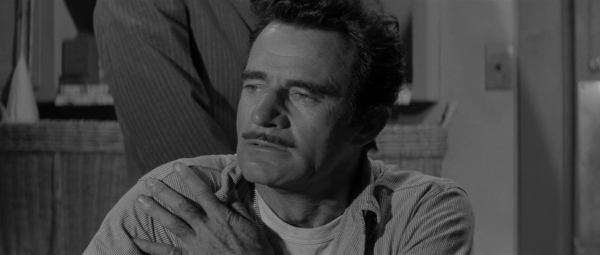
And that leaves only Gilbert Roland. His was long career and one which saw him get better as the years passed. The leading roles were not to be his at that stage but the presence of the man lent gravitas and truth to many a film. The part of Sylvio Malatesta was an extraordinarily difficult one to carry off, but he does so with considerable aplomb. While there is plenty of scope for his trademark bravura, the part is in fact complex and multi-layered, gradually revealing itself in increments over the course of the movie. The inner torments of the man, the history he hauls around inside himself, are subtly presented, held carefully in check and only occasionally allowed to make their presence known. Frankly, he gives a beautifully judged performance that is fully three dimensional – his work here is the rock which anchors the movie and provides real substance to the story.

This brings me to the end of my trawl through a selection of Joseph Pevney directed movies this summer. It’s something I’ve been wanting to put together for a while now and I’m pleased to have finally done so. I only hope it’s been as enjoyable for visitors to follow along as it has been for me watching and writing about these titles.

Congo Crossing

There was a time when jungle adventures gave the impression of being all the rage in Hollywood. Most of these were shot locally so the budget was kept low and the air of exoticism was easily achieved. As a sub-genre of the adventure/thriller such movies rarely aspired to be more than entertaining diversions. Congo Crossing (1956) saw Joseph Pevney heading for an imaginary central African state in the company of Virginia Mayo, George Nader and Michael Pate, with a weary Peter Lorre popping in and out to add a touch of wry humor.

The setting is Congotanga, a place one character refers to as essentially a criminal colony on the western border of the then Belgian Congo. It is so labelled because its lack of extradition agreements has made it a magnet for various fugitives from justice the world over. The law is nominally represented by Colonel Arragas (Peter Lorre) but the real power lies in the hands of shady types like Rittner (Tonio Selwart). The main focus though is on David Carr (George Nader), who has been hired to carry out a river survey on behalf of the Belgian mining concerns. He’s puzzled by this as he’s of the opinion nothing will have changed since the last time one was carried out. Nevertheless, a job’s a job. As he sets off down the river he’s accompanied by one new arrival and one of the old hands. The former is Louise Whitman (Virginia Mayo), a one time model running from a murder rap in France, while the latter is O’Connell (Michael Pate) and he’s simply there due to the fact he’s been hired to kill the woman as soon as possible. Beset by tsetse flies, crocodiles and the murderous attentions of Rittner’s henchmen, the party has more than its share of hazards to navigate. The main plot point here hinges on shifting river courses and the consequent effects this has on borders and thus on jurisdictions. Basically, nobody wants to see Carr come back safely with the results of his survey. There are double-crosses, ambushes, some romance and the usual jungle thrills as the story makes its way to a literally explosive climax.

Congo Crossing is fine as a lightweight adventure, but it’s a minor affair for director Pevney and all concerned. I guess the premise of a border disappearing as a result of one of nature’s whims has some points in its favor, but it’s not something the viewer can get excited about. It’s a MacGuffin really and what matters more is the reaction of the characters to all this. Then again, that requires those characters should be more than stock variations and that isn’t really the case. The hero is honorable and dedicated, the leading lady may not be all she says she is and the villains are just out and out bad guys. It makes for a passable viewing experience, but nothing more than that.

Virginia Mayo is a highly decorative presence as she sashays through the wilderness and she’s an actress I’m always happy to watch. However, this is another of those roles where she is asked to do little that is important and even the touch of conflict written into her character is not all that unexpected. George Nader had a brief window where he was cast in a variety of leading parts at Universal-International. I prefer him in the noir/crime pictures he made as there was a bit more depth to those roles whereas this is much more standard fare. Again, he’s fine in the movie, it’s just that there is little scope for him to do anything beyond the routine heroics. Michael Pate does his usual solid work as the villain and he carries the attendant air of menace comfortably. Peter Lorre only appears at the beginning and then again during the climactic scenes, sweating and sighing and never seeming to take any of it too seriously.

Congo Crossing has been released on DVD and Blu-ray in Germany and the movie looks attractive as Pevney’s films generally do, aided in this case by the cinematography of Russell Metty. I suppose I don’t sound all that enthusiastic about the movie although I have to say I did enjoy it well enough. It’s quite competently put together and passes the time satisfactorily, but the fact is just about everyone involved did better or more interesting work elsewhere. All in all, I’d say it’s a fun picture but slight and far from essential for the casual viewer.

Iron Man

Everybody loves a winner, right? Well actually they don’t, there are those whose behavior draws crowds in the hope they are going to see them get a licking. It’s not just winning, rather it’s how a person wins and perhaps also why they win or even want to. Once upon a time, success in sports, and indeed life itself, was predicated not only on the results achieved or the prizes attained but also on the manner in which the game was played. Is boxing the ultimate sport? Perhaps it was at one point, or perhaps it only appeared to be so for a brief moment in time before sliding into a seemingly unrepentant morass of glitz and trash-talking. Still and all, there is at the heart of it all the seeds of nobility, and I think Iron Man (1951) attempts to tap into some of that. There is something about the image of two men pitting themselves against one another in a formalized setting, mathematically bounded spatially and in terms of timing, equipped with nothing but their guts, guile and sense of fair play. It appeals on an almost atavistic level, but that appeal is heavily dependent on both parties adhering to the rules, the rules of the game and by extension of humanity. It’s only when those rules are bent or warped either by the antagonists or those observing them that some of the purity is lost.

If the duel promises a contest of honor, the same quality cannot always be said to be evident among those watching it. One hears about the roar of the crowd, but what lies behind that?  Look at the eyes and listen, especially listen. All the passion that is embodied in the strained faces, the anxiety, the fear, the trepidation and for some the blood lust. And this is amplified in the sound, cheers and jeers, and if the latter dominates then what? This is the scene presented at the beginning of Iron Man – the announcer holding sway in the center of the ring, barking into the suspended microphone as the arc lights cast their harsh gaze, heralding the start of a world championship fight, calling out the names of the contenders. As the reigning champion steps up the voice of the thousands banked around the roped off area rises not in celebration but in reprobation. Coke Mason (Jeff Chandler) is the focus of this disapproval and he appears to drink it all in dispassionately, feeding off the negativity surrounding him. The view shifts to the spectators, one woman in particular. This is Rose (Evelyn Keyes), Mason’s estranged wife and she sits detached from the screams and boos, thinking back to how these circumstances came to be and of her own role in bringing them forth. We dissolve into a long flashback as Rose leads us back to the coal mines of Pennsylvania, to the man Coke Mason once was before he set out on the path that has led him to fortune and infamy. So we follow Mason as he embarks on the journey out of the grime and hazards of the mines, facing off against mindless prejudice from a belligerent co-worker, finding himself practically reborn after the trauma of a cave-in, on towards his early days as a rough and ready prize fighter egged on by Rose and his ambitious brother George (Stephen McNally). Right from the off Mason is a slugger without technique and, more crucially, without a true sense of why he is fighting. Maybe it would be more accurate to say, he does know why he’s fighting – for the money of course, but also as a reaction against his own deep personal insecurity – it’s just that he is incapable of controlling the fires in his soul. This is what drives him, the internal rages which once ignited are virtually unstoppable and threaten both his opponents and himself.

Iron Man boasts a George Zuckerman/Borden Chase screenplay from a novel by W R Burnett. Those are pretty impressive credentials right there and the movie moves smoothly through its hour and twenty minute run time to a conclusion that some might see as predictable but which  is deeply satisfying for its redemptive and restorative qualities. Director Joseph Pevney keeps it fluid and scenes are generally well paced. It’s the type of material that suited the talents of Pevney and the team around him and cinematographer Carl Guthrie creates some fine images, especially the early stuff below ground in the mine and then later in the fight sequences. Pevney and Guthrie shoot and cut expertly here, making use of starkly lit close-ups alternating with wider pans to draw the viewer into the fight and heighten the tension. The outcome might not be in serious doubt yet the stylish way it is presented is a pleasure to watch, and the emotional and thematic payoff is undoubtedly worth it.

Jeff Chandler handles the conflicted aspects of his character as well as one would expect. The reluctant fighter who is simultaneously motivated and frightened by what he carries around inside offers him plenty to play around with. He reportedly put in a fair bit of work on the practical physical aspects of the role and the fight scenes benefit from that. He never displays much grace in those moments, but that’s the part he’s portraying, a fundamentally awkward man who powers his way to dominance without bothering about the style. Rock Hudson is fine too, albeit in a lighter role as Chandler’s friend who moves from second in the corner to rival in the ring. Stephen McNally was never less than versatile and his flashy turn as the brother who rarely lets a scruple stand in the way of a fast buck is up to his typically high standard. His realization of the harm he has caused, alongside Evelyn Keyes’ similar conversion, is central to the resolution. Keyes cultivates her character nicely as the movie develops and her move from opportunism to remorse feels very natural. Jim Backus drifts in and out of proceedings as a reporter who ends up moonlighting as a promoter. It feels like an odd progression at first but it’s another key role and makes sense as the story unfolds.

Iron Man is another of those Universal-International titles which Kino have scrubbed up and marketed on Blu-ray in their impressive film noir line. The movie does undoubtedly highlight moral ambiguity and explores some dark places in the soul, and it’s a boxing film. Even so, I’m not sure I’d class it as film noir – others may see it differently and I can’t say labeling it or categorizing it in this way bothers me much one way or the other. It pleases me to see this film available in good shape and that’s really all that counts. In the final analysis, this is a good movie with the cast and crew all turning out very creditable work.