Hell Bent for Leather

hbl1

You know, the more westerns I watch, and discuss with others, the more convinced I’ve become that the smaller, less ambitious productions actually offer a better representation of the strengths and weaknesses of the genre. The leaner budgets mean that the writing, shooting and performances are more honed, less indulgent, and therefore maybe a little more honest and direct. Hell Bent for Leather (1960) is what is known as a programmer; the B western had disappeared and been absorbed by television, but there was still a place for those movies which weren’t going to open as headline A features. The movie is a fine example of economy filmmaking; it demonstrates the benefits of a simple yet tight plot, a small and experienced cast, and a director capable of making the most of his locations.

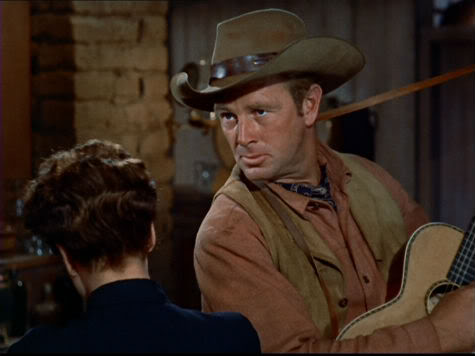
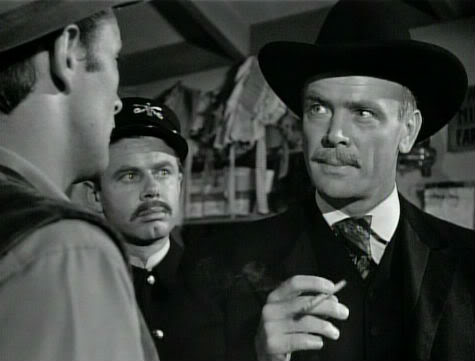
The story is a very simple one, a case of mistaken identity leading to a desperate manhunt. At the risk of overselling it, Hell Bent for Leather tells a kind of Kafkaesque tale of senseless persecution, the reasoning behind it all only gradually becoming apparent as the narrative unfolds. It opens starkly, with a lone figure staggering out of the wilderness, clutching a shotgun. It’s clear the man is dehydrated and nearing exhaustion, but salvation is at hand – he spies a horseman who has just stopped to eat and rest. This is Clay Santell (Audie Murphy), a horse dealer travelling on business. No sooner has Santell extended the hand of hospitality to the bedraggled figure who’s stumbled upon his camp than that gesture backfires spectacularly. Finding himself viciously clubbed to the ground and his mount stolen in payment for his kindness, Santell only has time to loose off a single shot, winging his assailant and causing him to drop his distinctive shotgun. Santell is now in a similar fix to the man he foolishly tried to help, forced to make his way on foot to the nearest settlement. After this shock beginning, the plot slowly takes on a surreal, nightmarish quality. That shotgun Santell picked up has a history; it belonged to a notorious outlaw who’s been terrorizing the area, in fact most of the townsfolk are at that moment burying his latest victims. However, descriptions of the wanted man are vague, vague enough to fit a lot of men, someone like Santell for instance. There does remain one hope though, the marshal who’s been on the killer’s trail and knows him by sight. Incredibly though, when this lawman, Deckett (Stephen McNally), turns up, he immediately identifies Santell as his quarry. In the face of such a predicament, Santell takes the only option open to him: he makes a break for it with a local girl, Janet (Felicia Farr), as hostage and heads for the hills. What remains to be seen is whether Santell can stay one step ahead of the relentless posse, convince anyone of his innocence and, crucially, discover what motive lies behind Deckett’s seemingly inexplicable actions.

£2

It’s difficult to watch any western from this period that is shot in and around Lone Pine, featuring a limited central cast and a minimalist plot, and not be reminded of Budd Boetticher. I wouldn’t go so far as to suggest Hell Bent for Leather measures up to the quality of Boetticher at his best (there are issues with the script, which I’ll come back to, preventing such comparisons) but it certainly treads a nearby path. The film was presided over by George Sherman, one of those journeymen directors whose work, in spite of a long and varied career, tends to be glossed over if not wholly neglected. However, a look at his credits for the late 40s and on through into the 50s reveals a number of quality genre pieces. Sherman shot the bulk of this film outdoors on location, and made the most of Lone Pine’s distinctive rock formations. These serve both as the backdrop and also the main stage upon which the drama is played out. Whether the camera was positioned at ground level, the viewers’ gaze straining upwards to pick out the tiny figures scrambling over the sun-baked surface, or high above and aimed down through the narrow gaps with cold objectivity, the primal, treacherous nature of the terrain is always apparent. Also, for a movie that involves comparatively little gunplay, Sherman maintains the sense of danger and menace, both through the expert handling of his locations and by ensuring that the pace is never allowed to flag.

As I mentioned, the biggest problem with this film comes from the writing, or at least one aspect of it. When you look at a Boetticher movie, especially those written by Burt Kennedy, you’re immediately struck by the quality of the characterization. Those films all provide the leads with plausible and relatively full backstories. Now, Hell Bent for Leather is essentially a three-hander, revolving around Santell, Janet and Deckett. The details concerning the latter two are filled in as the story goes along, quite deftly too, but Santell’s background is not. By the end of the movie, we don’t know any more about this man than we did in the opening minutes. As a result, the lead, the man with whom we must sympathize, is left as a kind of cipher, a guy to whom bad things happen just because – very existentialist but not entirely satisfactory.

Given the lack of assistance from the script, it says a lot for Audie Murphy’s abilities that he was able to make the part of Clay Santell work. Murphy rarely gets much credit for his acting, but he could turn in a decent enough performance when the film was of some quality. Even though his part is provided with virtually no background, he still makes Santell a man worth rooting for in Hell Bent for Leather. Being cast in what’s essentially the role of the underdog naturally helps to garner sympathy but he also managed to keep the character real, remaining convincing as he moved from bemusement and disbelief through panic and determination.

£3

Felicia Farr had already shown she could handle the role of a western heroine with some accomplishment in a series of films with Delmer Daves, and continued that trend here. Her character is fleshed out as the movie progresses, and she does come across as a woman with an inner strength that keeps her going in the face of adversity. The best, or most interesting, part in the movie was handed to Stephen McNally, an actor who was always a strong supporting player. He really gets under the skin of the driven, slightly unhinged Deckett. At first, this might appear to be a fairly one-dimensional character, but he develops further towards the end. By the time we reach the climax, there’s been enough revealed about Deckett to explain his actions and even create a touch of pathos.

At the moment, Hell Bent for Leather is available on DVD in three countries: Spain, France and Germany. The German release comes via Koch Media, and it’s another of their strong efforts. The film is presented in anamorphic scope, with good levels of detail and rich colour. As for extras, there’s the theatrical trailer, a gallery and booklet of liner notes in German. The disc offers both the original English soundtrack and a German dub, there are no subtitles at all. It’s also worth mentioning that Pegasus in the UK are rumoured to have this movie lined up for release so, bearing in mind the high quality transfers of Universal titles they have recently put out and their competitive prices, it may be worth holding off on this one for a bit. I feel this film is a superior little programmer that’s well acted and directed, and looks very attractive. It’s one of Audie Murphy’s most enjoyable pictures and also highlights the directorial skills of the underrated George Sherman. All in all, this is a solid, nicely crafted western that represents the genre well and shows what can be achieved with a limited budget and a bit of imagination.


Johnny Guitar

jg1

“You know, some men got the craving for gold and silver. Others need lots of land, with herds of cattle. And then there’s those that got the weakness for whiskey, and for women. When you boil it all down, what does a man really need? Just a smoke and a cup of coffee.”

So says the eponymous hero of Johnny Guitar (1954) Nicholas Ray’s overwrought, subversive western. This is a simple philosophy, espoused by a deceptively simple man. And yet, the film itself is rich, complex and fascinating, both visually and thematically. Over the years, it’s come to be regarded as a cult item, a film so loaded with allegory and subtext that it positively demands analysis. For all that though, it’s a difficult film to try to analyse; there’s so much going on, both on and below the surface, that it’s hard to do it justice. I’ve toyed around with the idea of featuring this movie for a long time now and kept putting it off for one reason or another. However, after a recent viewing, I’ve decided to finally have a go at presenting my take on one of the most startling westerns to come out of the 50s, or any other decade for that matter.

The action opens with a bang, literally. Johnny Logan (Sterling Hayden) – although using the pseudonym Johnny Guitar – rides along the base of a hill which the railroad company are in the process of blasting away. As he tops a ridge, his attention is drawn by the sounds of more violent activity; down below, a stagecoach robbery is taking place. Johnny merely watches passively, turning his mount away and continuing on his journey. His destination is an isolated saloon and gambling house, standing alone in the Arizona wastelands. He arrives right in the middle of a ferocious dust storm, the desert winds whipping the red earth up into a furious maelstrom. As he bursts through the doors of the saloon, he finds himself in a curiously still and peaceful world. But this is a brooding, intense stillness, like that found at the eye of the storm. In truth, that’s where we are, right at the centre of a devastating and destructive emotional storm that’s about to sweep across the screen and lay waste to all in its path. This incongruous establishment is run by the equally unusual Vienna (Joan Crawford), a gun-toting woman in jeans and boots who, in the words of one of her employees, thinks like a man and acts like a man.

It’s clear enough that Johnny and Vienna have a history, and it’s later revealed that they were once lovers before he abandoned her. However, things have changed now that Vienna’s in trouble and in need of protection: she’s built her saloon in anticipation of the arrival of the railroad and the business it will bring in tow, but elements in the neighboring town are hell-bent on ensuring that won’t happen. Vienna’s chief rival is Emma (Mercedes McCambridge), a repressed and frustrated spinster, backed up by the blustering and bullying McIvers (Ward Bond). Superficially, this opposition is based on a desire to prevent the railroad moving in and the hordes of new settler it must surely bring. In reality though, there’s an entirely different desire driving Emma on; it’s a potent and unpleasant mix of jealousy and hatred, jealousy of Vienna and the passions she’s capable of stirring and hatred of her own emotional vulnerability. Radically, from the point of view of the classic western, it’s these two women who are the active protagonists at the heart of the drama. It’s the actions and reactions of Vienna and Emma which power the narrative and shape events. And ultimately, in a complete reversal of the conventions of the genre, it will all come down to a face-off between two determined and driven women.

£2

Nicholas Ray made some pretty good films, but I reckon he was responsible for three great ones: In a Lonely Place, Bigger Than Life and Johnny Guitar. These movies are markedly different in terms of genre and theme, but they do all share an emotional intensity and feature obsessive lead characters. Johnny Guitar is the most self-consciously stylized, and therefore probably the most misunderstood, of the three. Ray wasn’t aiming for any kind of realism, rather he deliberately played up the heightened sense of unreality (what the critics usually refer to as the baroque aspects) to complement the fantastic nature of the story and characterization. With Harry Stradling operating the camera, Ray used the interiors, especially the main set of Vienna’s place where the back wall seems to be hewn from the living rock, to create an otherworldly feeling. A similar effect is achieved through the use of colour, particularly when it comes to the costumes. Vienna always appears in strong primary colours (scarlets, greens, yellows and whites) and contrasts sharply with the subdued tones of those around her. This is most notable in the case of Emma, who appears in all but one scene clad in funeral black, where the drabness of her dress emphasizes not only her pinched and cruel features but also marks her out as the visual antithesis of Vienna. The men in the film all appear in softer, less striking colours too, which serves to draw attention both to the softness of their character and to the subsidiary roles they play. Aside from the skewed representations of gender, Ray and writer Philip Yordan take a swipe at the McCarthyite politics of the time. The posse led by Emma gradually morphs into an implacable panel of self-appointed judges, contemptuous of the rule of law, using betrayal and deceit as a means to punish guilty and innocent alike. The masterstroke here was the ironic casting of Ward Bond (a prime mover in the Motion Picture Alliance for the Preservation of American Ideals) as Emma’s chief ally.

This leads me to the casting in general, an area where I can’t honestly find any fault. Joan Crawford is hardly a figure one would normally associate with the western, and Johnny Guitar represents one of her few forays into the genre. Crawford’s career can be roughly divided into three phases: her siren/starlet years up to the end of the 30s, her reinvention of herself as a noir/melodrama heroine in the 40s, and finally as a fixture of schlock horror pictures in the 60s. This movie came towards the end of her second phase, and it forms a kind of bridge between the tough post-Mildred Pierce roles and the gallery of grotesques still to come. While the western environment may seem an odd place to find Crawford, the feeling of otherness she brings is entirely appropriate in context. In addition, the years had hardened her looks and seen them take on that almost masculine aspect that fits the role of Vienna; I can’t think of another actress of the period who could have been plausibly been cast in the part. As Emma, Mercedes McCambridge was another ideal choice. She possessed the shrillness of voice and sharpness of features to perfectly embody a woman barely in control of the raging and conflicting emotions boiling away within her. I think it’s fair to say that no other actress has thus far managed to quite nail the corrosive, consumptive effects of twisted and repressed sexuality to such terrifying effect.

£3

Sterling Hayden in the title role, as the only man who displays anything approaching strength or dignity, made good use of both his physical presence and craggy face to impose himself upon all those around him. However, there’s more than just muscle and machismo to his playing; the scene where he and Crawford mull over their past reveals a sensitivity and shows him to be a fully rounded character, perhaps the only one in the film. Scott Brady as The Dancing Kid was the figure at the heart of Vienna and Emma’s rivalry, an essentially feminine role, and he gets across the kind of inherent weakness demanded. His cocksure confidence is basically a front to mask his essential impotence – he’s no match for Hayden’s easy assurance when the chips are down. Among Brady’s sidekicks, Ernest Borgnine remains the most memorable. His performance as the untrustworthy blowhard can be viewed as something of a dry run for a similar part in Bad Day at Black Rock.

To date the best DVD release of Johnny Guitar is the version available throughout continental Europe via Paramount. I have the French DVD and it’s a very pleasing transfer, a vast improvement on the UK release by Universal. There’s no noticeable damage to the print, sharpness is acceptable and, crucially for such a film, the colour is well rendered. Subtitles are not a problem, a range of languages are available and can be disabled on the original soundtrack via the setup screen. There are no extra features at all offered. The title will shortly be made available in the US by Olive Films on both DVD and Blu-ray, as a result of that company licensing the Republic catalogue, and I would imagine the same print will be used as a source. If so, it should look pretty good in high definition. Johnny Guitar is one of those movies that viewers are likely to either love or loathe; it’s too heady a cocktail to elicit a lukewarm response. I count myself among the former, and it’s a film I never tire of revisiting. This article I’ve written really only scratches the surface of what’s on offer and tries to give a flavour of this very rich concoction – I haven’t even gone into the resemblances the plot bears to Leone’s Once Upon a Time in the West, or the matter of the expansion of the railroad and the clash between progress and tradition. Like all the best pieces of cinema, Johnny Guitar reveals new things on each viewing. I’d say it’s a must for any serious western fan.


The Tall Target

I’ve mentioned before that I’m a big fan of thrillers taking place in isolated or self-contained settings such as old dark houses, ships or trains. The restrictions necessarily imposed are a marvelously effective way of maintaining focus, both for the filmmakers and the viewers. It also makes for effortless suspense as the options open to the characters involved are narrowed down, and a tense, claustrophobic atmosphere is easily achieved. The bulk of the action in The Tall Target (1951) takes place on a train, and the movie uses this cramped stage to enact its dramatic events to great advantage. What makes the film all the more impressive in my view is the fact that there’s not much of a mystery to solve. Nevertheless, what unfolds on the screen holds the attention from beginning to end.

The story is one inspired by a real event – a plot to assassinate Lincoln before his inauguration coud take place. It’s 1861 and the president-elect is due to make a short stop in Baltimore, Maryland before heading on to Washington to take power. Naturally, these are troubled times and talk of secession and war is on everyone’s lips. With Lincoln’s elevation to the highest office in the land it’s only a matter of time before the South declares independence, and war has to be the next logical step. As such, there are those with a vested interest in seeing that the man never gets to Washington. John Kennedy (Dick Powell) is a detective who feels sure he’s stumbled onto a plot to assassinate Lincoln as soon as he sets foot in Baltimore. The problem is no-one wants to believe him, and his chief even goes so far as to threaten him with dismissal if he insists on pursuing the matter. Unfazed by this stonewalling, Kennedy turns in his badge and hotfoots it to the station. His intention: to board the Baltimore train, foil the conspiracy and discover the identity of the ringleaders. However, he immediately hits a snag; his contact, along with his ticket, has disappeared and someone else is claiming to be the real John Kennedy. A quick inspection reveals that the detective’s friend has been murdered, but there’s no way he can prove this. Such an inauspicious start would give most men pause for thought, but Kennedy is nothing if not resourceful and he turns to an acquaintance to back him up. Colonel Jeffers (Adolphe Menjou) is the one man aboard the train who can identify Kennedy and vouch for his credentials. So the soldier and the policeman form an uneasy alliance – Jeffers is no lover of Lincoln’s politics – in the hope of flushing out the would-be killers. The list of suspects is a relatively short one: Jeffers himself, a blowhard industrialist (Will Wright), a young brother and sister apparently traveling on to Georgia (Marshall Thompson & Paula Raymond). Although the villain’s identity is revealed around the halfway mark, I’m not going to spoil things for any people who have yet to see the movie. Anyway, that’s not the point of the film. The greatest anxiety is generated by the doubts over whether Kennedy can prevent the assassination from taking place. Now anyone with even the most rudimentary knowledge of American history knows the answer to that one, but where the script really triumphs is in its ability to leave you hanging on the edge of your seat in spite of this.

Although Anthony Mann had already embarked on his western phase by this time, The Tall Target harks back to the tight little noir thrillers with which he had made his name throughout the preceding decade. Instead of the wide open spaces of the frontier where the drama was played out against a harsh landscape, this film is a closed affair that was shot on sound stages. The actors don’t have a lot of room to move around freely, and that’s entirely fitting for a story where the characters’ capacity for manoeuvre in any sense is severely limited. There are also a lot of typically disconcerting low-angle shots and close-ups of strained faces. Mann seemed to be blessed with good cameramen through most of his career, and Paul Vogel did some excellent work on this movie. Vogel had already shot a number of noir pictures – Lady in the Lake, High Wall, Dial 1119 – and brought that sensibility to The Tall Target. This couldn’t be termed a film noir yet it has the look and feel of one. What we get is primarily a suspense thriller, and it’s a combination of good writing and characterization, as well as atmospheric direction and photography, that ensures it remains gripping. When Kennedy finds himself facing the twin dilemma of being pursued by both the assassins and the suspicious authorities, Mann gets a lot of mileage from such a simple setup as the search for a berth to hide in. Time and again he draws the maximum degree of tension from situations that the viewer knows deep down are going to be resolved favourably. It’s no mean feat to deftly turn potentially trite circumstances into something that has you biting your nails – in fact, I’d say it’s one of the factors which sets the artist apart from the mere journeyman.

Compared to the kind of stuff he’d been doing before, Dick Powell took his career in a completely different direction when he was cast in the role of Marlowe in Murder, My Sweet in 1944. I like the way he worked on the tough guy persona in the following years and carved out a little niche for himself. The Tall Target was one of his last cinema roles before he turned his attention to directing and TV, and he handles the part just fine. Playing a professional detective meant he had to do a bit of a balancing act, conveying the increasing desperation of a lone cop in a race against time yet still keeping just the right side of panic. He got some excellent support from Adolphe Menjou as the newly commissioned colonel. He adds some of his trademark polish to his performance and has the kind of ambiguous quality that helps round out his character. Will Geer brought a lightness of touch to the part of the frustrated conductor, and it’s a welcome contribution amid all the severity. I was also impressed by the sensitivity that Ruby Dee displayed as the slave girl torn between loyalty to her owners and a natural sympathy for Powell’s cause. Paula Raymond and Marshall Thompson were less effective, the former having the misfortune of being handed pretty much a nothing role, while the latter just seemed wooden. To be honest, I’ve never been all that taken with Thompson in anything I’ve seen him in; he always appeared too stiff and repressed for my liking. The cast was filled out with a whole host of character actors who should be familiar faces, including Florence Bates, Will Wright and Percy Helton.

To the best of my knowledge, the only DVD of The Tall Target is the MOD disc available via the Warner Archives. The transfer on that disc isn’t bad; it doesn’t appear to have had any work done on it but it’s in reasonable condition. There are the usual cue blips and the like to be found on unrestored movies though the image is satisfactorily sharp. With MOD discs you generally don’t get any extra features, but this one has the trailer included. I’m a great admirer of Anthony Mann’s work and The Tall Target is a good, solid effort. It has to be said that it’s neither as famous nor as complex as his best films. The lack of complexity shouldn’t be taken as any criticism of Mann, that’s just the way the characters are written, but it may partly explain why it’s not better known. Anyway, it’s a finely crafted little thriller that moves at a good pace and offers plenty of entertainment value. I have no complaints.

Foreign Correspondent

fc1

There’s something very attractive about movies involving or based around journalists, at least I think so anyway. Classic era Hollywood generally played up the positive, virtuous side of the profession, with a few exceptions of course, which isn’t altogether surprising given the number of writers who had a background in journalism. Alfred Hitchcock’s Foreign Correspondent (1940) follows in that tradition; it paints a heroic portrait of the newsman and his craft, though it’s not above slipping in the odd sly dig at the less ethical practices of reporters. Of course, it’s also an early wartime propaganda piece and a very effective one, never allowing the message to overwhelm or overtake the necessity of telling a good yarn. This success comes down to a happy blend of inventive direction, strong writing and memorable performances. If it’s not one of Hitchcock’s best known films that may well be due to the fact that it doesn’t have the depth or intensity of his other works. Despite the serious themes and events it depicts, the movie has an almost deceptive lightness of touch that keeps it entertaining.

The story tells of the exploits of one Johnny Jones (Joel McCrea) – he’s saddled with the appalling pseudonym of Huntley Haverstock by his boss, but I’m going to refer to him throughout as Jones to avoid confusion – a down to earth crime reporter and a veritable babe in the woods when it comes to the labyrinthine complexity of pre-war European political chicanery. Nevertheless, that’s the assignment his boss, exasperated by the vague non-news coming his way, hands him: travel to a Europe teetering on the brink of the abyss and dig up something worth printing. So this “fresh, unused mind” arrives in London and, through sheer good fortune, ends up sharing a cab with Van Meer (Albert Bassermann), the Dutch politician said to hold the key to the volatile situation that’s brewing. The movie is essentially divided into three distinct segments: the opening London sequence playing up the humorous side and setting up what will follow; the lengthy mid-section in Holland, with its gradually darkening tone; and then a return to England for the climactic developments and revelations. The Dutch section contains some of the film’s best images and set pieces, including the famous assassination amid a sea of rain slicked umbrellas. It’s here that the pace really quickens and a half-comic car chase leads to another notable setup. Hitchcock is said to have decided to feature a scene with windmills simply because Holland is famous for having them. Whatever the truth of the origins of said sequence, it results in one of the most atmospheric and visually striking passages in the picture. Every drop of suspense is extracted from having Jones creep about the gloomy, twisting spiral staircase accompanied only by the grinding of the mill’s gears and the indistinct mutterings of the villains he’s spying on. While the intrigue thickens all around him, Jones also finds time to spar with and romance Carol Fisher (Laraine Day), the daughter of a renowned peace activist (Herbert Marshall). By the time the action returns to London, Jones has been identified as a threat and plans are laid to ensure his removal from the scene. This offers Hitchcock the opportunity to blend comedy and danger yet again as Jones, accompanied by one of the most genial hitmen in cinematic history (Edmund Gwenn), comes perilously close to taking a spectacular swan dive off a cathedral. The film climaxes with a well staged plane crash that is both technically impressive and satisfying as a resolution.

£42

On the WB DVD of Foreign Correspondent there is an accompanying making-of documentary which makes the point that the film contains a number of visual motifs that would pop up again in later Hitchcock productions, notably in North by Northwest. As I mentioned in the introduction, I think this film is somewhat underrated since it appears, superficially at least, to be more of an adventure romp than the darker and more critically acclaimed movies Hitchcock was to make in the 50s. It’s true that it doesn’t delve into any especially complex psychology but it does showcase the director’s visual flair. Aside from the assassination and windmill scenes, there’s a beautifully composed section in the latter stages where the captive Van Meer is being tortured by the villains in a disused theatre in an attempt to extract the details of clause 27, the film’s MacGuffin. Hitchcock, and cameraman Rudolph Maté, creates an expressionistic setup that foreshadows the look of classic film noir to emphasise the evil and menace Jones and his friends are up against; it even conjures up the slightly surreal image of a group of ghoulish theatre patrons watching the drama unfold before them. It’s also worth noting that producer Walter Wanger, for whom the director was working on loan, seems to have given Hitchcock greater freedom than was the case when he worked for Selznick – the film doesn’t display the kind of lush romanticism that David O encouraged. In addition to the look of the picture, its success is helped by a highly polished and sophisticated script. A whole battery of top flight writers were involved – Joan Harrison, Charles Bennett, Robert Benchley, James Hilton and an uncredited Ben Hecht – and all of them contributed to the smooth, cohesive and witty piece of work we see.

Apparently, Hitchcock originally wanted Gary Cooper for the role of Johnny Jones, but had to settle in the end for Joel McCrea. I can’t see any problem with that piece of casting as McCrea had the easy-going openness that the part demanded, and was able to walk the fine line between comic stooge and man of action. He’s entirely believable as the fish out of water, the no-nonsense crime reporter suddenly thrust into the middle of a huge political storm with nothing but his own wits to see him through. I thought Laraine Day was also fine as the romantic interest and handled both the lighter moments and the more serious stuff quite capably. The film benefits too from a large and talented supporting cast, Herbert Marshall and George Sanders providing a lesson in cinematic suavity. Marshall was handed a plum role as Stephen Fisher, the most complex and easily the most interesting character in the film. I feel he hit the right note at just about every stage and his performance turns out to be quite a moving one in the end. Albert Bassermann was nominated for an Oscar for the part of Van Meer (ultimately losing out to Walter Brennan in The Westerner) and it’s not to hard to see why; he brings a weariness and a kind of innocence to the role, and his key moment during the torture scene is almost hypnotic. As Rowley, the smiling killer, Edmund Gwenn seemed to be having a ball, his brief appearance adding a lovely touch of macabre humour to proceedings. And when it comes to humorous characterization, it’s impossible to ignore Robert Benchley’s turn as Stebbins, the dissipated London correspondent. His wit is as dry as one would expect of a man forced onto the wagon for health reasons, and he steals every scene he appears in.

£43

The R1 DVD of Foreign Correspondent from Warners is a very nice presentation. The image is sharp and fairly clean and never displays any major flaws. In terms of extra features, the disc offers the half hour documentary that I mentioned earlier and the theatrical trailer. For a two hour movie, everything moves along at a terrific lick, never pausing for breath once the hero arrives in Europe. The only time you actually become conscious of the fact that this is really a propaganda piece is during the coda, and even that is done with style and doesn’t feel as contrived as can often be the case. Although this may not be one of Hitchcock’s better known movies it would be unfair to call it a minor work. It’s an incredibly stylish example of filmmaking that’s visually rich and just plain fun throughout. I rate it very highly.


The Red House

rh1-1

“Did you ever run away from a scream? You can’t…it will follow you through the woods…it will follow you all your life!”

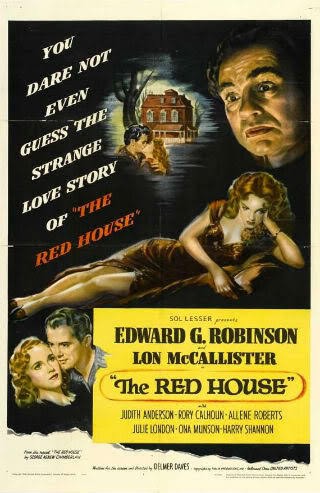
Last time, I looked at a movie that grafted film noir tropes onto a western story and setting. To the purist, noir really ought to be set in a contemporary, urban location, but there are always examples that prove the exception to the rule. Delmer Daves’ The Red House (1947) has its characters battling their demons in a superficially wholesome and clean rural environment, but it does take place in modern times. The tale also imports some of the elements and trappings of the ghost story, largely for the sake of atmosphere and to create a oneiric quality. However, this is no supernatural affair and the only phantoms on view are those locked away in the subconscious mind.

Everything revolves around the reclusive Morgan family: Pete (Edward G Robinson), his sister Ellen (Judith Anderson) and the girl they have adopted, Meg (Allene Roberts). Their self-imposed seclusion has given rise to rumours and wild conjecture about what goes on in their private world. As viewers, we gain entry to this odd household via a young boy, Nath Storm (Lon McCallister), who has been hired to help out with the farm chores. Our first impressions of the Morgans, especially Pete, are positive, and the overall feeling is that this is a simple, kindly family interested only in minding their own business and not overly concerned about the opinions of others. Nevertheless, there is an undercurrent, almost imperceptible at first, that all is not well. Gradually, it becomes apparent that this Garden of Eden houses its own serpent, lurking deep in the shadows of the past and awaiting the opportunity to uncoil itself and strike at the present. The trigger is Nath’s arrival and the refreshing sense of openness that his presence introduces into the musty Morgan home. This impacts most noticeably on Meg, a young girl on the cusp of womanhood and eager to sweep away the cobwebs of superstition woven around her. The root of the mystery and the doom-laden atmosphere is the Red House of the title. Pete’s ominous warnings to Nath to avoid the forest at night and his allusions to the menace emanating from the house within don’t have their intended effect. Nath is a young man brimming with self-confidence and Pete’s urgings, while building up the mythic stature of the Red House, serve only to stir his contempt for what he sees as mere old wives tales. The upshot of all this is a growing determination on Nath’s part, aided by Meg and his girlfriend Tibby (Julie London), to find the house and crack its secret. Yet, the deeper the young people penetrate into the forbidding woods and the closer they come to discovering the elusive house, the more pronounced Pete’s paranoia and desperation become. It’s painfully obvious that we’re not being confronted with just the foolish ramblings of a hick farmer, but rather some dark and shameful event in the past that cannot and will not remain buried.

£55

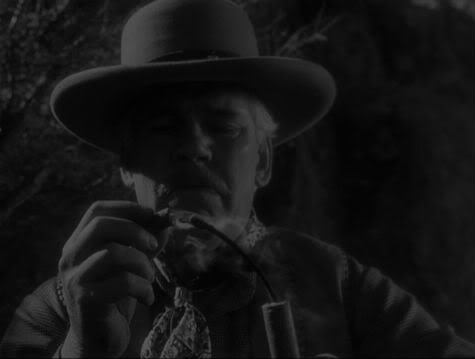
Delmer Daves took on both the directing and writing duties (although IMDB claims Albert Maltz was also involved) for The Red House so much of what appears on-screen is down to his efforts. The whole film builds slowly and relentlessly towards the solution of the central mystery and, in terms of pacing, rarely puts a foot wrong. The early stages paint a picture of idyllic rural life, with only the odd hint of something unpleasant slumbering below the surface. The first discernible cracks appear when Nath decides to defy Pete’s melodramatic pleas to avoid the woods and the horrors he claims they hide. Daves’ direction, Bert Glennon’s photography and Miklos Rozsa’s lush, haunting score all combine to glorious effect in the sequence that sees Nath stumbling through the woodland in the midst of a gale. What looked like a peaceful, untroubled paradise by day is transformed into a sinister and menacing jungle by night. The howling wind, the groping branches and the darkness all contribute to the creation a nightmarish landscape that threatens to take possession of the boy. Throughout the film Daves and Glennon draw attention to the contrast between the bright cheerfulness of the days where youthful optimism and hope hold sway, and the gloomy nights when the despair of the older generation casts its long shadow. In the last third, the pace quickens, the visuals darken and the revelations come thick and fast. The result is a powerfully affecting climax that offers excitement, tension, revulsion, and tugs a little at your heart. The ending itself, which emphasises the idea that there’s no escaping the past, is both moving and apt.

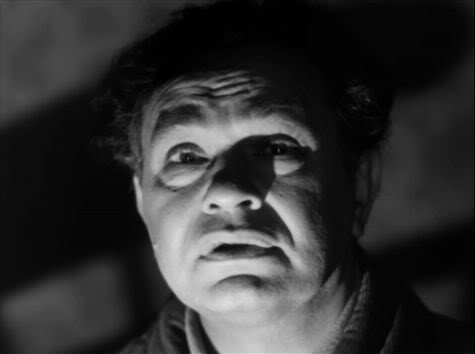
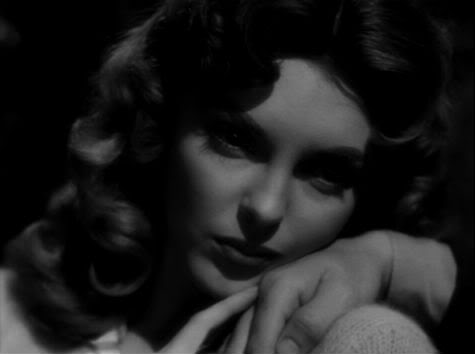
Edward G Robinson came to his part on the back of some sterling work for Billy Wilder, Orson Welles and Fritz Lang. I reckon he was at the peak of his powers at this time, and his role as Pete Morgan is a further illustration of his versatility. His time at Warners may have made him famous, but some of his best and most memorable work was done elsewhere. His turn as the lovesick loser in Lang’s Scarlet Street has justifiably earned many plaudits, and I feel his performance in The Red House makes for a nice companion piece. It’s a complex role that calls for a subtle touch to convincingly achieve the transition from the avuncular figure at the beginning to the guilt crazed shell of a man he becomes by the end. He got some fine support in the shape of Judith Anderson, exercising great restraint as the sister who has repressed and subordinated her own desires to maintain the illusion of a united family – there’s a touching moment where we see her stealing a glance onto the porch at the man whose love she spurned, and thus condemned herself to a life of lonely spinsterhood for the sake of her brother. Julie London and Rory Calhoun both had interesting parts too, as good for nothing wasters, and they seemed to have a bit of chemistry in their scenes together. That’s more than I can say for Lon McCallister and Allene Roberts, who never convince as a couple of burgeoning sweethearts. Individually though, they weren’t bad; McCallister had the right kind of cocksure quality for a young man trying to prove himself, and Roberts managed a nice line in wistful confusion and frustration that befitted a girl brought up in such a murky and secretive household.

£54

The Red House is one of those films that seems to have been a staple of the PD market for as long as I can remember, regularly turning up from a variety of distributors in generally rotten transfers. Until recently, the best edition available was the one included on the Edward G Robinson double feature from VCI, although that too displayed problems such as interlacing and a mediocre soundtrack. Last month, the film was released as a region-free DVD/Blu-ray combi by HD Cinema Classics, and it’s the best I’ve seen the film looking and sounding. However, it’s not a perfect release: the DNR has been liberally applied to achieve a smoother look and the brightness has been boosted too. While this is far from ideal, it has to be said that even this digitally manipulated image is streets ahead of what was previously available. The new release also features a commentary track with William Hare and a before-and-after restoration comparison. Bearing in mind the PD status of the film, this is likely to be about the best we’re going to see. The movie is a great piece of rural noir, a slow-burning melodrama that’s visually impressive and emotionally involving. I guess that the unsatisfactory condition of previous editions of The Red House have contributed to its not getting the attention or respect it deserves, but it’s a wonderful and neglected example of film noir for all that. The excellent performances of Robinson and Anderson, and the moody, assured direction of Daves earns it a solid recommendation from this viewer.


Pursued

Anyone who has visited this site a few times must be aware of my fondness for both film noir and westerns, and it shouldn’t therefore come as any surprise to learn that I find myself drawn to what we might call crossover movies. The noir influence that can be detected in so many 40s films is especially noticeable in a number of westerns, and Raoul Walsh’s Pursued (1947) is one example where this is very evident. Now this is by no means a perfect movie; I’m not convinced that the basic premise of the story, which isn’t fully revealed until the end, is all that logical or capable of bearing too much close scrutiny. However, film noir, regardless of its setting, was never heavily dependent on wholly logical motivation or reactions. In terms of appearance, tone and mood, Pursued is a very stylish piece of western noir that emphasises and revels in its more melodramatic aspects.

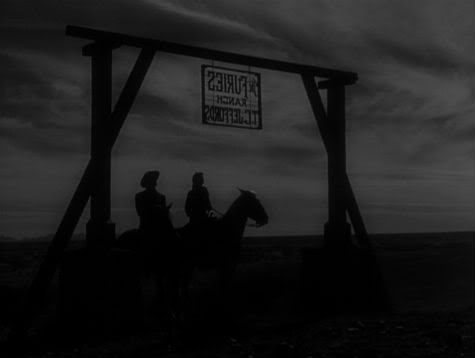
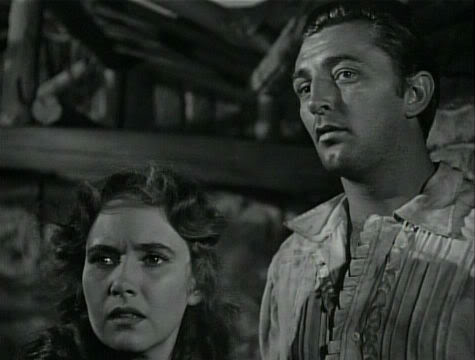
The opening has an edgy, breathless quality with Jeb Rand (Robert Mitchum) holed up in the ruins of a New Mexico homestead, waiting for some inevitable showdown. With the arrival of his girl, Thor (Teresa Wright), Jeb begins delving into their shared past in order to try to make sense of their current predicament. It’s abundantly clear that Jeb is in a heightened emotional state, and the lengthy flashback which occupies the bulk of the running time seems to take on the dizzying, disorienting characteristics of a fever dream at some points. The story traces Jeb’s life from childhood, from the point where he was found cowering and confused by Ma Callum (Judith Anderson) in his deserted home. She adopts the youngster and raises him as her own along with her two natural children, Thor and Adam (John Rodney). Young Jeb has no memory of his life before the night Ma Callum discovered him, and it’s clear that this is the result of some deeply traumatic events that occurred. The practice of employing Freudian theories about the roots of psychological issues and the whole process of memory recovery was woven into the plot strands of many a regular film noir, but it’s something of a departure to see it play such a prominent role in a western. Right from the beginning Jeb is seen to be a victim; not only does he feel a gnawing sense of self-doubt over his failure to fully recall his past, but his life is threatened on numerous occasions. Early on we learn that the principal danger is posed by Ma Callum’s brother-in-law, Grant (Dean Jagger), but the reasons for his apparent determination to see Jeb in his grave are only vaguely hinted at. Grant’s animosity stems from the existence of a vendetta between the Rand’s and the Callum’s and, like Jeb, the viewer has to wait and discover the meaning as the story unfolds. This element of mystery serves the twin purpose of maintaining our interest and also of emphasising the fatalistic nature of Jeb’s life – a man continually stalked by phantoms lurking in the shadows of his childhood.

The movie’s title is highly appropriate, in both a literal and figurative sense, as Jeb spends almost all of his screen time on the run from a variety of perils. Raoul Walsh’s direction, helped enormously by the masterly photography of the great James Wong Howe, hammers the point home by reducing the wide open spaces of the frontier to a series of dark, claustrophobic compositions. Even the exteriors have a tight, constricted quality to them – the ruins of the Rand homestead with broken and burnt rafters clawing despairingly at the lowering sky, and the huge, featureless rock formations that seem to dwarf the tiny riders scampering across their face. In addition, the cramped interiors are often filmed from low angles and bathed in expressionistic shadows, thus enhancing the mood of doom and paranoia. The action scenes, for which Walsh earned a lot of praise throughout his long career, are infrequent but well-shot and jarringly effective. All told, Pursued is arguably one of Walsh’s most artistic and stylized pieces of work. I think the director’s own macho dismissal of pretentious theorizing about subtexts or the artistic value of his vision goes some way towards explaining why he remains an underrated figure, although his reputation has seen some steady growth and reappraisal. The only major weakness I can detect lies in the script, or the resolution to be more precise. Niven Busch’s writing holds out the possibility of a big reveal that ought to shock, although close observers should more or less work things out for themselves anyway, yet fails to deliver on that promise. As I mentioned above, there’s a certain lack of logic to the climactic revelations that I found mildly disappointing.

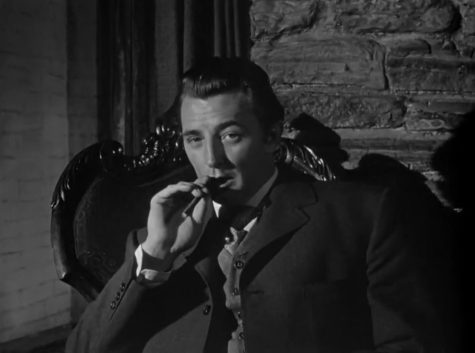
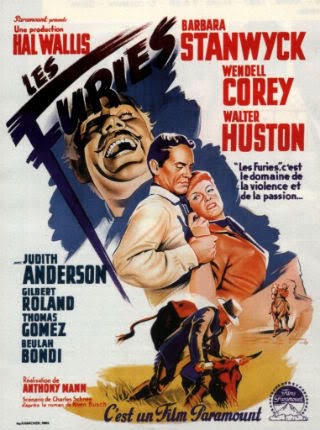
Pursued is probably the movie that saw Robert Mitchum really hit his stride as an actor, and his star was in the ascendancy from this point. His tough, laconic persona had already been put to use in westerns, and the underlying hint of vulnerability meant that he could move comfortably within the shadowy and uncertain world of film noir. This movie’s artful blending of the two filmmaking styles was therefore an ideal showcase for Mitchum’s talents. The sleepy-eyed passivity that he was able to project fits in with the fatalistic character who appears to have grown to accept the fact that life has and will continue to kick dirt in his face. As the architect of the ill-fortune that has dogged Mitchum’s footsteps, Dean Jagger makes for a formidable rival. He gives an electrifying performance as the driven man, consumed with hate for the Rand’s, who thought nothing of losing an arm to even up a score. There’s something chilling about the manic gleam that comes onto his eyes whenever the opportunity arises to compromise Mitchum further. Judith Anderson ought to be a cinematic legend if only for her turn as Mrs Danvers in Hitchcock’s Rebecca, and she’s very good here too. She didn’t feature in too many westerns – this and Anthony Mann’s The Furies being the most notable – but her role as Ma Callum represents another memorable characterization. She’s a pivotal figure in the development of the story and brings a strong sense of believability to her part. I have to say I was less impressed by Teresa Wright, whose evolution from Girl Friday to femme fatale and back again lacked both consistency and plausibility. Again, this may be more the fault of the leaps in logic demanded by the script than any particular deficiency on the part of the actress.

The R1 DVD of Pursued from Artisan is a middling effort at best. The disc carries a note that the film was restored by the UCLA but there’s inconsistency in the presentation. Early on, there’s a short section that’s noticeably weaker than the rest of the movie, and the sharpness and clarity varies throughout. There are no extra features offered. The film belongs in the Republic library, the recent acquisition of which by Olive in the US has seen the announcement of a number of titles on Blu-ray. I don’t know if this movie is seen as a candidate for a future release in the HD format but it would need to undergo some additional work for that to be a viable option. All in all, I see Pursued as an interesting attempt to fuse the western with film noir and throw some Freudian psychoanalysis into the mix. Personally, I like it and I reckon it should offer something to fans of both types of movie.

The Man from Laramie

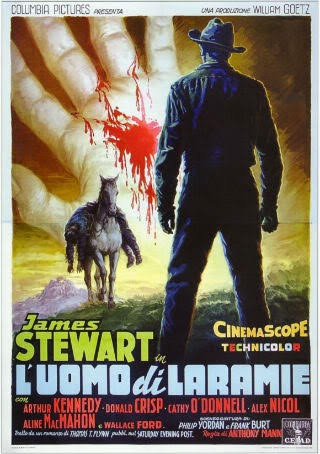
In 1950 James Stewart and Anthony Mann embarked on a series of groundbreaking and influential westerns that would play a significant role in shaping the evolution of the genre. Mann’s visual and narrative sense, honed by years spent producing tight and economical noir thrillers, and the painful angst that Stewart seemed to tap effortlessly into following his wartime experiences combined to push the western in new and exciting directions. Within five years though, this rich partnership had run its course and both men would go their separate ways. The Man from Laramie (1955) was to be the last picture they completed together, and it both built upon and expanded on the themes explored in their earlier collaborations. All of Mann and Stewart’s films exhibit a powerful intensity in the characterization, but The Man from Laramie adds a touch of violent sadism to the mix to achieve an even more potent result.

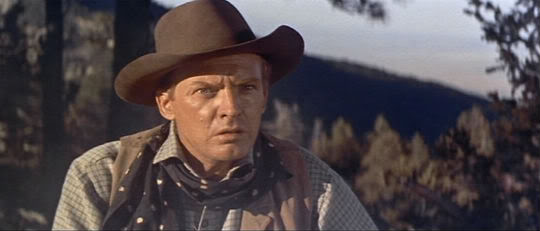
Once again we have a saga of a man seeking revenge, recompense for a loss he has suffered at the hands of others. Will Lockhart (James Stewart) is the titular character, a man whose real background is only revealed gradually throughout the course of the story and never fully even by the end. He’s first seen hauling a load of freight from Laramie to the small town of Coronado, but a brief stop on the way lets us know that his real purpose is something else. This short, early scene is a fine example of how a skillful filmmaker can impart vital plot details economically and with resorting to dialogue-heavy exposition. We’re shown Lockhart wandering round the burnt out remains of an army patrol that was ambushed and massacred by the Apache. All this information is gleaned from the visual clues and the telling use of some music cues. The way Lockhart gazes wistfully at the charred hat of a fallen soldier makes it clear that the events which unfolded at that lonely spot have some deep, personal significance for him. In time, it’s revealed that Lockhart’s younger brother was among the slain, and his reason for coming to Coronado is to find the man or men who brought about his death by supplying the Apache with repeating rifles. Before he can make any progress with his investigation, he finds himself drawn into conflict with the most powerful man in the territory. An unexpected and violent encounter with Dave Waggoman (Alex Nicol), the petulant and vindictive son of a local rancher, appears to temporarily distract Lockhart from his primary goal. However, as he’s drawn deeper into the complex relationship between Dave, his father (Donald Crisp) and top hand Vic Hansbro (Arthur Kennedy), it begins to dawn on Lockhart that this curious family arrangement may be connected to his own quest. Again in a 50s western, there’s an examination of the father/son dynamic and how men interact with other men. Alongside all this, there’s the inclusion of quasi-religious symbolism through the suffering and humiliation Lockhart has to endure – being bound and dragged through flames, and then the brutal mutilation of his hand that invokes overtones of crucifixion and the stigmata.

Philip Yordan and Frank Burt’s screenplay is beautifully constructed, with three strands playing out simultaneously and then folding neatly together to form the whole. Lockhart, Vic and Dave are all essentially men in search of some anchor in their existence, all homeless creatures to some extent. Lockhart never says where he comes from, claiming that home is wherever he finds himself; Vic has been taken in by old Alec Waggoman and treated like a surrogate son, but he’s aware that he’s an outsider and never quite comfortable or sure of his place in the world; and Dave is the overgrown boy who knows in his heart that he’s fallen far short of his tough father’s expectations. For both Lockhart and Vic, there appears to be the possibility of salvation or some grounding in the person of Barbara Waggoman (Cathy O’Donnell), but Dave is essentially a lost cause. These three also share a common character trait in that all of them are given to extremes of emotion under the right circumstances. At various times during the picture we get to see all of these men driven into situations where their balance is tested, and ultimately their ability or lack of it to rein in their feelings is the factor which will determine who emerges victorious.

Anthony Mann’s typical motifs are again in evidence in The Man from Laramie, particularly the idea of characters climbing and driving themselves to ever higher places. The structure of the movie follows this pattern, with the early scenes played out in the lowlands (especially the salt flats where Lockhart has his initial run in with Dave) before reaching its climax high among the barren rocks. Mann used this visual metaphor time and again to indicate both the struggle of his characters to reach up for something just beyond their grasp and to let the audience know when the point of redemption has been achieved. It also has the effect of distancing the men from the mundane, seeing them rise above the everyday concerns to do battle in lofty and remote locations. In fact, almost all the significant confrontations take place in isolated spots (the exception being the brawl in Coronado) which emphasises the private nature of their conflict. Mann, with cameraman Charles Lang, makes the most of both the New Mexico locations and the CinemaScope lens to blend character and landscape into a tough, lonely vision of the west. The only concessions to civilization come in the interior scenes in the homes of Barbara and Kate (Aline MacMahon), where the feminine influence softens the ruggedness that dominates elsewhere.

The Man from Laramie saw James Stewart taking another turn around the darker corners of his own personality. Where The Naked Spur had him portray a man filled with self-disgust at what he had become, this movie concentrates less on the negative aspects of the character. Lockhart is another lonely and driven figure but the anger and hatred that simmer just below the surface aren’t directed inwards. As such, this is a more straightforward and traditional characterization, albeit an especially intense one. The sudden outbursts of violence that punctuate the movie act as the trigger that sees Lockhart’s emotional balance tilted. I don’t know what demons Stewart let loose at these moments but the result is certainly mightily effective on film. There’s something quite startling about the way his eyes take on a desperate, maniacal cast and his voice fails him at these moments. In the middle of the brawl with Dave and later when his hand is mercilessly maimed, Stewart almost appears a man possessed. In contrast, Arthur Kennedy starts out as a much more composed character, tough but always in control. However, as the story progresses, and the pressure on all concerned mounts, cracks begin to appear too. Kennedy was playing a man who was much more self-absorbed than Lockhart, yet an equally volatile one given the right circumstances. He’s very good at channeling the kind of guilt and shifty paranoia that’s entirely appropriate for a character deeply uncertain about his position in life. No matter how many times I watch the film I can never make up my mind about Alex Nicol’s Dave. At times I feel he’s indulging in a piece of shouty overacting, and at others I’m convinced he’s really nailed the spoiled and perverse nature of his character – an odd yet interesting performance. Donald Crisp was a seasoned old pro who could handle a part like the aging and weakening Alec Waggoman in his sleep by this stage in his career. And now to the women in the movie: Aline MacMahon and Cathy O’Donnell. The former takes on the maternal duties in the film, ministering to men who have been damaged both physically and psychologically. O’Donnell, on the other hand, represents what would normally be termed the love interest, but this isn’t much of a romance. The only love that’s on view is the rough paternal kind that has warped both Vic and Dave. I think the roles of both MacMahon and O’Donnell, whose spinster lifestyles mirror each other, exist mainly to emphasise the emptiness of lives wasted waiting on men who are unattainable.

The UK DVD of The Man from Laramie from Columbia/Sony has been on the market for a long time now. The movie is presented in anamorphic scope and it’s a reasonable enough transfer, but a revisit wouldn’t hurt as I feel the colour can be a little inconsistent at times. The film saw Stewart and Mann’s partnership end on a high note and it’s one of the best of their collaborations. Some may claim it is their strongest work together, but I’m undecided. I still feel that The Naked Spur is difficult to surpass – it’s a tighter story, smaller and more self-contained, with greater depth and realism to Stewart’s character. Nevertheless, The Man from Laramie remains one of the great westerns to come out in the 50s and it’s capable of standing shoulder to shoulder with any of its rivals. It’s a fantastic piece of work, rich in drama and complexity, that never loses its appeal and encourages analysis. Very highly recommended.

The Iron Curtain

The 50s saw the red scare, fanned by McCarthyite rhetoric, blaze into life in Hollywood. With the HUAC inspired blacklists casting a dark pall over the movie capital, there was a kind of desperation in the air, a need to prove one’s patriotism and simultaneous rejection of the evils of communism. This meant the decade saw the production of a number of films directly addressing the issue and sending out a message to the witch-hunters that the industry was aware and prepared to play ball. Whatever contemporary reactions may have been, these films, by and large, not only seem lousy when viewed today but they also remind us of all those careers and lives left in tatters by the taint of the blacklist. From a purely artistic standpoint, the ham-fisted presentation of political dogma and the judgemental tone adopted both bog down the narrative and, in the worst cases, leave a very sour taste. However, there are always exceptions, and William Wellman’s The Iron Curtain (1948) is one of the more polished and less hysterical pieces of work from a generally unsavoury interlude in cinema history. I think this is partly due to the skills of Wellman as a filmmaker, and partly as a result of the production taking place right at the beginning of HUAC’s reign of terror, before it’s raging paranoia had fully matured.

In keeping with a lot of Fox movies of the time, the film opens with a declaration that what we’re about to see is a true story, shot on real locations. The cool, authoritative tone of the narrator further enhances the sense that this is something more than mere Hollywood fantasy. I’ve often found that there’s a tiresome quality to some of these earnest eulogies to the dedication and responsibility of various government agencies remaining ever vigilant in the face of multiple threats from without and within. What sets the introduction of The Iron Curtain apart is its location if nothing else. The entire film takes place in Ottawa, Canada, so we are spared yet another hymn to the efficacy of the FBI, Treasury agents or other assorted G Men. Instead, the plot follows the establishment of a Soviet fifth column in Canada during the war and its subsequent dismantling as the big freeze of the Cold War set in. As I said, the movie doesn’t takes us behind the scenes of one of those complex government sting operations that were much favoured by contemporary filmmakers, but concentrates on telling the tale of how one man brought a spy ring to its knees off his own bat. The man in question is Igor Gouzenko (Dana Andrews), a cipher clerk freshly assigned to the Soviet embassy in Canada. The first third of the film goes to great pains to establish how loyal Gouzenko was to his own country and political system, one of those resolute, unthinking servants of the state with clear and direct convictions. As we observe the steadfast Gouzenko going manfully about his duties, we’re also afforded a view into the closed world of the Soviet diplomatic mission. And it’s a drab, forbidding world at that, peopled with stony-faced officials and dripping an atmosphere of suspicion and secrecy. There’s also a glimpse at the careful construction of the spy network, whose eventual unravelling provides the dramatic backdrop for the latter stages of the story. It’s Gouzenko who brings the whole thing crashing down, and his motivation for doing so is a slow realization that he’s serving a flawed master. The catalyst for his decision is the arrival in Canada of his wife Anna (Gene Tierney), and the birth of a son. The presence of this human element greatly strengthens the story and adds to the dramatic tension of the final third. By doing so, the political aspects necessarily take a back seat to the unfolding drama of a family suddenly cast into a perilous situation.

Even if it’s viewed purely as a propaganda piece, then I think The Iron Curtain is remarkably successful. The reason for that is the script and Wellman’s ability to sidestep the trap of sensationalism and instead adopt a more matter of fact tone, letting the events and their inherent drama speak for themselves. Of course, the air of quiet dread that seems to hang over the scenes in the embassy emphasises the stifling lack of personal and intellectual freedom, but this is quite subtly achieved. The ever-present music from Soviet composers, the inclusion of which in the score apparently caused something of a minor international incident at the time, has the effect of building up the brooding, sinister feel. The only time we take a detour into the realm of direct political preaching is when one of the Soviet residents (Eduard Franz) seals his own fate by getting drunk and lamenting the betrayal of the ideals of the revolution by the apparatchiks who have risen to prominence in Moscow. As a thriller, the film really comes into its own in the final third, as Gouzenko decides to take that leap of faith and defect. Wellman, and cameraman Charles G Clarke, employ classic film noir techniques of lighting and shooting angles to ratchet up the tension during Gouzenko’s theft of incriminating documents from the embassy, and then again in the climactic standoff in his apartment. Another notable aspect of the film is how the government agencies – I’m guessing the Canadian setting facilitated this slight subversion – are conspicuous by their lack of involvement. In fact, there’s initially a downright refusal on the part of the authorities to become involved in what they take to be the ravings of a lunatic.

Dana Andrews was never one of the most emotive or demonstrative of actors, the kind of guy who tended to keep it all inside and bottled up. Such characteristics can unfairly lead to accusations of woodenness when the truth is it’s simply another, and no less effective, style of performing. As it happens, that tight-lipped anxiety that he had a talent for fits the character of Gouzenko to a tee. After all, this is a man who’s been trained to exert self-control in the first place and who then finds himself in a situation where both his own and his family’s survival depends on the maintenance of a facade. Still, Andrews conveyed more than a blank countenance when he had to, the eyes in particular registering the mounting pressure Gouzenko was subjected to. Gene Tierney was making her fourth film alongside Andrews, the most successful being their partnership in Laura a few years earlier, and was good enough in a fairly undemanding role. Her main purpose was to act as a softening and humanizing influence on her previously stiff and determined husband, and that’s how she comes across. However, arguably the most memorable work is produced by the supporting cast. Berry Kroeger was making his screen debut as the shadowy head of Canada’s communists and carries off the part of the principal villain with aplomb. Playing such a Machiavellian puppet master required a good deal of restraint combined with implicit menace. Kroeger was blessed with the features and voice that were ideally suited to this kind of role and he makes a very strong impression. Stefan Schnabel also shines as the head of the NKVD, masking a dangerous ruthlessness with an outwardly reasonable persona. And finally, June Havoc appears as the embassy secretary with a wandering eye and a special brief to vet the reliability of all new staff.

I think the only DVD edition of The Iron Curtain to date is the one issued in Spain by Fox/Impulso. In terms of picture quality, it’s one of their mid-range efforts. There hasn’t been any restoration work done, as can be seen from the cue blips and so on, but the print used is in generally good condition and doesn’t display noticeable wear. Extras are limited to the usual gallery and text data on the cast and crew. The disc offers English and Spanish soundtracks – the Spanish subtitles are optional and can be deselected via the setup menu. While I certainly don’t think this film represents Wellman at his best, it is an interesting addition to his body of work. The main attraction of The Iron Curtain though lies in its historical significance, coming as it does near the beginning of the red scare. It’s interesting to observe the comparatively restrained approach it takes to its emotive subject matter in contrast to some of the more hyperbolic and offensive offerings that the following decade would eventually produce. Generally, this is worthwhile viewing for fans of Wellman and for providing a snapshot of early Hollywood reactions to the HUAC assault.

The Asphalt Jungle

Experience has taught me never to trust a policeman. Just when you think one’s all right, he turns legit.

It could be said that John Huston created the template for the private eye movie with his version of The Maltese Falcon; I think the same is also true of The Asphalt Jungle (1950) and the heist movie. In terms of plotting and development, this film lays out the pattern that almost all subsequent efforts have followed. Others have played around with the structure and characterization within this sub-genre, but the basic concept of a group of professional thieves assembling to plan and execute a raid before seeing everything fall apart remains the standard formula to this day. Aside from its influential status, The Asphalt Jungle is also a first-rate film noir and a compelling crime drama. Unlike Criss Cross or The Killers, the gang are not foiled by a scheming femme fatale or by having their judgement clouded by emotion. Instead, their downfall is hastened by mistrust born of greed and the little glitches that even the coolest planner couldn’t hope to foresee.

The credits fade from the screen and are replaced by a bleak, deserted and forbidding cityscape where a cruising patrol car prowls ominously. As it does so, a man keeps to the shadows and flits silently from one piece of cover to the next, like prey being stalked by a relentless hunter. The man is Dix Handley (Sterling Hayden) and at this stage the only thing we can say with any degree of confidence is that he’s anxious to avoid a brush with the law. Later, we learn that Dix is what’s termed a hooligan, a low-class common criminal using violence and brawn rather than brains and finesse. Dix is the man we follow throughout the movie, and it’s by this means that we’re introduced, one by one, to all the major players in the drama: Gus (James Whitmore), the physically deformed wheelman; Cobby (Marc Lawrence), the bookie with connections in both high and low places; Doc Riedenschneider (Sam Jaffe), the ex-con with a big reputation; and eventually Lon Emmerich (Louis Calhern), the big-time lawyer in need of money. When Riedenschneider emerges from prison with an apparently foolproof plan for a headline grabbing jewel heist, the scene is set for the paths of all the main characters to cross in a game of lies, betrayal and violence. By the time the end credits roll, a daring plan is hatched and put in place, enormous wealth is stolen, promises are broken, and men die abrupt and bloody deaths.

One of the more remarkable aspects of the film is the way the career criminals come across in a far stronger light than the traditional representatives of law, order and respectability. The Asphalt Jungle was made by MGM just as Louis B Mayer’s time in charge was drawing to a close. Apparently, the old mogul wasn’t the least bit impressed by what he saw as a movie peopled by a succession of disreputable types. The fact that the police are portrayed as oafish and corrupt, and that the patrician lawyer is in reality an adulterous confidence man must have raised a few eyebrows at the bastion of wholesome, all-American values that was MGM during the Mayer years. The inclusion of a crusading, moralizing police commissioner (John McIntire) looks suspiciously like a sop to silence the protests of the outraged sections of the studio brass. If that was the intention, then I’m not sure it worked out – the almost insufferable, whiter than white sermonizing results in his becoming little more than a cardboard cutout compared to the complex and layered figures ranged against him. Frankly, there’s a lot of John Huston’s fondness for the perverse in this whole setup. The director had a great eye for skewed, noirish imagery throughout his career, and he was also drawn to those dramas that featured characters who were either flawed or were a step or two removed from the mainstream. The film is full up of perfectly realized scenes that highlight the twilight world of these off-centre people: the threatening opening, the charged atmosphere of the planning sessions in Cobby’s back room, and the cool detachment of the heist itself. The latter sequence, with its minimal use of dialogue is a wonderful example of extended tension. In fact, dialogue all through the film is treated as a precious commodity, every word being weighed and delivered to extract maximum effect so that even seemingly throwaway lines are actually loaded with significance. In a similar vein, the use of Miklos Rozsa’s score is rationed too, lending it greater impact when it’s finally allowed to burst forth during Dix’s frantic and fateful drive home.

Sterling Hayden’s performance as Dix is the glue that holds everything together and keeps the narrative focused. Physically, Hayden was ideal casting as the muscle of the gang, and his presence dominates every scene where he appears. His cocksure contempt for the trashy city types that circumstances have forced him to associate with is evident in his arrogant, swaggering manner around the other hoods. The only time he allows the mask of tough insolence to slip a little is when he’s alone with Jean Hagen’s Doll. This fragile woman seems to draw out Dix’s humanity and it’s her presence that encourages him to reminisce with a touching innocence about a happier, cleaner youth growing up on his Kentucky farm. Despite the strident claims of the police commissioner that Dix is a man without conscience or feeling, the viewer can clearly see that he’s an all too human figure. He may be hardened by the necessities of the life he’s had to lead, but the heart of a simple farm boy beats strong below the surface. Although Jean Hagen’s role may have been a small one she is spot on in her portrayal of a lonely and vulnerable woman adrift in the apathetic environment of the big city. The one thing that almost all the characters have in common is their desire to escape the stifling confines of their urban wilderness. Sam Jaffe’s Doc sees the heist as the ideal means to secure a leisured retirement in Mexico and Emmerich views it as an opportunity to dig himself out of the financial and personal wasteland in which he’s mired. Of course both these characters also share a fatal fondness for the company of young women, and that weakness is partly responsible for their coming to grief. Jaffe’s calm inscrutability was well suited to the part of the mastermind who comes to realize that even the most intricate planning and preparation can only take one so far, sooner or later the vagaries of fate step in and throw a spanner in the works. I don’t think I’ve seen Louis Calhern do anything better than his Lon Emmerich, a study in dissipated disillusionment that’s simultaneously sympathetic and repulsive. Huston often shoots him in close-up to catch the shifting emotions and self-doubt that are particularly evident in the eyes – a wonderfully subtle performance. I’d also like to single out Marc Lawrence, whose sweaty turn as Cobby, the real weak link in the chain, is a fine piece of twitchy character acting. Finally, it’s worth mentioning that although she’s prominently featured in the reissue poster I’ve used above, Marilyn Monroe has a relatively minor part in the movie.

The Asphalt Jungle is widely available on DVD from Warner Brothers, and the transfer on the US disc is especially strong. The image is clean and sharp, and the excellent contrast highlights the skills of cameraman Harold Rosson. The disc includes a commentary track by Drew Casper and James Whitmore, along with a short filmed introduction by John Huston. All told, it’s a very nice presentation of the movie and one that I have no complaints about. The film is a highly accessible slice of prime film noir, whose only weakness is the inclusion of the inserts involving John McIntire’s commissioner and his upstanding officers. These bland, colourless figures are an unconvincing addition, however, they do serve to emphasise the authenticity of the playing around them. This one is a great movie that can be viewed time and again without losing any impact. An easy recommendation.

10K!

I just realized that I’ve passed a small milestone, namely that I’ve recorded over 10,000 visits since moving over to the new site. So, if you’re one of those who have passed through here in the last few months I’d like to say thanks. And keep calling back!

JKNYJB5PEFQM