Campbell’s Kingdom

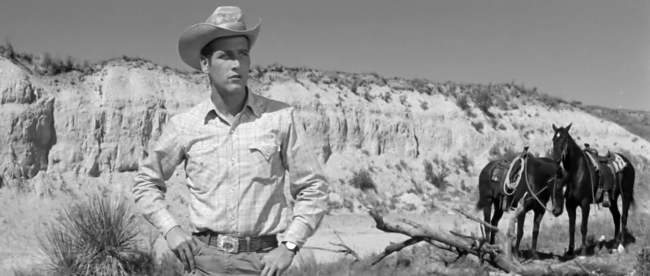
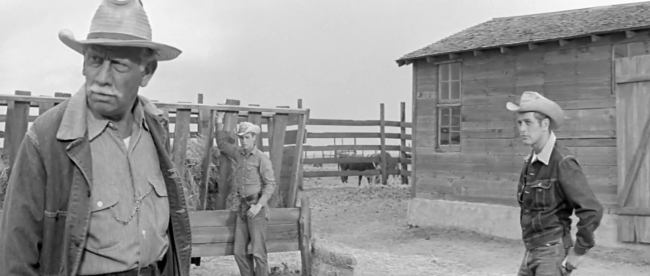
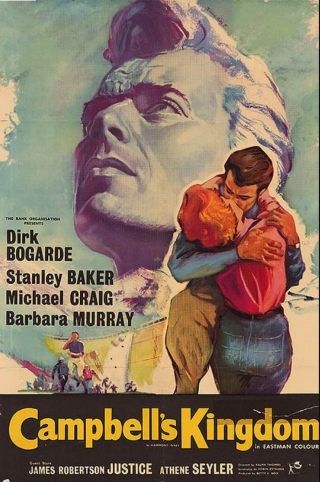
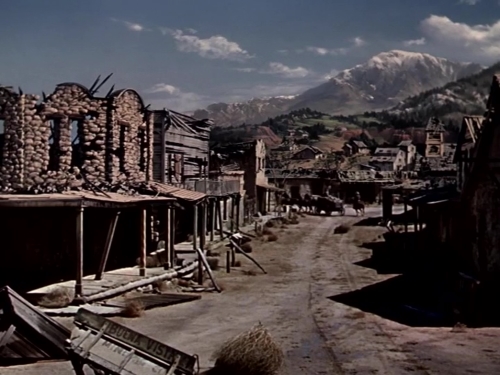
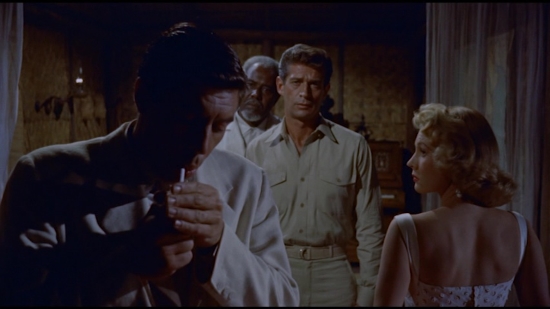
When is it reasonable to call a movie a western? Well the simple answer would be when it’s located within that area typically defined as the American West, essentially the far side of the Mississippi, and inside a relatively short period of time, although the jury is surely out on how rigorously the latter should be applied. Actually, even the geographical aspect is given a bit of leeway too in reality. Plenty of westerns have been set in Mexico and  others have stretched up into Canada too. The action in Campbell’s Kingdom (1957) takes place north of the border in contemporary Alberta so some might like to think of it as a western. Personally, I wouldn’t call it such, I see no need to hang that label on it or to scratch around in an effort to shoehorn it into the genre. It’s a British outdoor adventure, with a seam of intrigue running though it and a hint of romance almost as an afterthought. It’s also a very enjoyable movie with splendid visuals and some well executed sequences that blend action and suspense successfully.

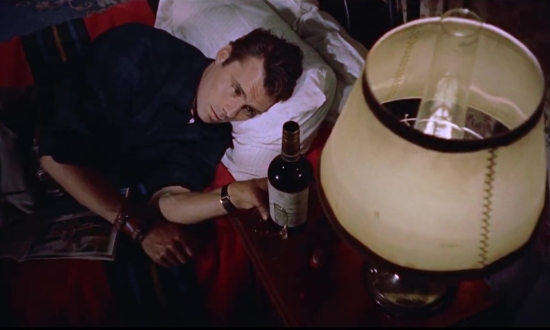
The whole story revolves around Bruce Campbell (Dirk Bogarde), newly arrived from England in the frontier town of Come Lucky. That’s one of those place names that positively drips irony, the kind of small settlement just about hanging onto the ragged coattails of civilization, its economic viability precarious at best. And there’s irony too in the fact Campbell should end up there. If the town has a dubious future, then the lead character is a man with none at all. He’s been given only months to live and has made his way half way round to world to take up the tainted legacy left him by his grandfather. The old man, whose body is only glimpsed in the opening scene, has died an outcast, widely blamed for a swindle that fleeced the town’s inhabitants. I guess no man likes the thought of departing without leaving something positive behind and that was true both of the elder Campbell and the doomed nephew now seeking to make restitution for the past and peace with the present. Campbell’s route to familial redemption is not be a smooth one, the land bequeathed to him by his grandfather was thought to hide reserves of oil but the survey results filed appear to contradict that. Instead of providing a source of wealth that might help the town thrive once more, Campbell’s “kingdom” is due to be flooded subsequent to the construction of a dam. Morgan (Stanley Baker) is the ruthless and pugnacious construction boss who is determined to get the dam up as soon as possible, and Campbell and his kingdom swept aside. The plot basically devolves into a race to prove the existence of an oil field, and thus restore his family’s reputation, before the construction outfit and the mining interests behind it sink the entire endeavor.

Campbell’s Kingdom is an adaptation of a Hammond Innes novel, the script of which was initially worked on by Eric Ambler,but the final product came via another novelist turned screenwriter Robin Estridge, with the cooperation of Innes himself. Typically, an Innes novel focuses on a lone protagonist, usually some competent, professional type, thrust into an adventure that has a reasonably compelling mystery at its core and that makes use of a potentially threatening natural environment. All of these elements are present in Campbell’s Kingdom, with the doomed hero aspect and the sins/secrets of the past angle exploited quite effectively. The location shooting, Ralph Thomas directing and Ernest Steward handling the cinematography, with the Italian Dolomites standing in for Alberta, has a crisp beauty and integrates seamlessly with the interiors filmed at Pinewood Studios. Thomas might appear a bit of a left-field choice for this type of story, he made a lot of quite light comedies (not least the series of Doctor adaptations of Richard Gordon stories with Dirk Bogarde), but the fact is he was one of those versatile journeymen able to take on almost anything that came his way. He made a few good thrillers in Venetian Bird, Checkpoint,The High Bright Sun and The Clouded Yellow, a slightly pedestrian but not wholly unworthy remake of The 39 Steps, as well as the classic war movie Above Us the Waves and some interesting dramas in The Wind Cannot Read and No Love for Johnnie.  The section where a landslide is triggered and a bridge dynamited to buy enough time for a convoy of trucks to sneak its way up the mountain via a cable hoist is deftly put together and offers some genuine suspense.

I don’t suppose Dirk Bogarde is anyone’s idea of an action hero, but he’s not playing that anyway. His character is a former insurance clerk, and one who has been in poor health to boot. As such, he does fine as the part is written and a few criticisms I have come across, both current and contemporary, questioning his suitability for the role seem churlish as a consequence. He was always better in more introspective moments and there are a smattering of those which allow him to play to his strengths. Stanley Baker has a one-dimensional part as Morgan, lots of drive and bullishness so he can show off that provocative intensity he displayed so well. It never taxes him though and there’s not much shading, but that’s no criticism of the man’s performance. Michael Craig is stoic and reliable as the sidekick – he has the somewhat thankless task of playing a man who loses out in the vaguely insipid love triangle, and doesn’t even get the chance to play a scene venting his frustration. Barbara Murray represents the other side of said triangle and she does have her moments, she’s not relegated to the type of decoration and background hand-wringing which sometimes befalls heroines in action films. The rest of the cast is a virtual Who’s Who of British cinema: Athene Seyler, Sid James, John Laurie, Robert Brown, Finlay Currie and so on. This results in a variety of ersatz accents that sometimes hit the mark. James Robertson Justice has a biggish part as the drilling expert and all the way through he speaks with the oddest Scottish burr I have ever come across – perhaps he was supposed to have some Scandinavian connection?

Campbell’s Kingdom was released on a fabulous looking Blu-ray by Network in the UK before that company folded. It also came out on DVD before that, and I think it’s had a BD release in the US as well. This is one of those movies that has no pretensions whatsoever. It’s not of the thick-eared variety, but nor is it straining to be anything other than a solid adventure. All told, this is an undemanding piece of entertainment with its heart in the right place.

This is a couple of days early – what’s a day or two between friends anyway! – but it’s close enough to the anniversary of my first ever blog post, which was all of seventeen years ago. There have been a fair few movies watched, written up and talked about in that time.

Dieterle – Flaws, Fragility & Romanticism

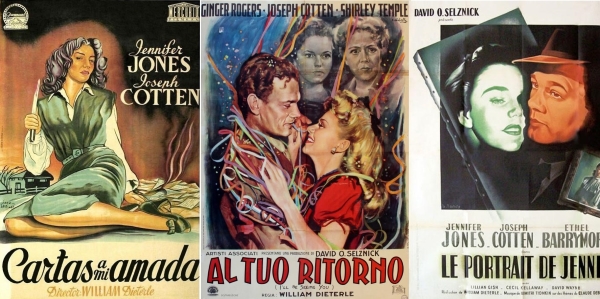
Ford famously labeled himself, somewhat disingenuously perhaps, a director of westerns. Hitchcock styled himself and entered the public consciousness as the Master of Suspense. DeMille cast himself as the consummate showman, the king of the epics. Mann and Boetticher are closely associated with the western, Siodmak with noir. Kramer seemed to want to challenge the viewer’s conscience, Capra went in search of the heart of America. So many filmmakers, so many associations. Watch enough movies and the mere mention of certain names, for better or worse, call to mind particular genres, themes or aims. I found myself reflecting on this recently as I settled down to revisit a trio of William Dieterle movies from the 1940s: I’ll Be Seeing You (1944), Love Letters (1945) and Portrait of Jennie (1948). They are all different movies, they tell different stories in different ways yet they all have in common that overwhelming sense of flawed romanticism which seems to have appealed to the director. Seeing them again in fairly close succession, the impression I was left with, and which I’ve noted before is the compassion and humanism underpinning Dieterle’s work.

Joseph Cotten is the male lead in all three movies and his slightly stiff air that picks at the facade of confidence and nonchalance he presents is routinely on view. In some instances, notably in I’ll Be Seeing You where his character’s PTSD is one of the plot drivers, this vague “otherness” is to the fore. That element is still there in Love Letters, although it is much less pronounced and clearly secondary to the traumatic amnesia of Jennifer Jones’ enigmatic ingenue. And Portrait of Jennie – arguably Dieterle’s masterpiece – raises unresolved questions about his overall grip on reality. There his Eben Adams is an artist whose need for a muse and concomitant quest for a solid basis for his art (reflecting that universal need to seek out a basis for our very existence) plays out as a dreamy fantasy where art, love and time itself are fused magically. Jones again is the fey presence at the heart of it all and it’s interesting to compare her oneiric style of performance to the more grounded approach adopted by Ginger Rogers in I’ll Be Seeing You.

Anyway, watching these films again, thinking about their commonality and the sensibility they share had me assessing my own journey towards ever greater acceptance of the whole notion of the auteur. At one time I was more resistant to the theory, and I know a number of visitors to this site are at least skeptical of it, but I have grown much more comfortable with it over the years. It doesn’t apply to all filmmakers of course and not all had a discernible vision that they impressed upon their pictures. However, when that vision can be detected in a number of major works – as in the case of Dieterle, and this despite the heavy hand of a dominant producer like Selznick in some of those films – then I think the auteur principle deserves to be given serious consideration. I certainly haven’t seen everything by William Dieterle but what I have, regardless of genre, typically touches on that romanticism whose strength lies paradoxically in its imperfection. The three movies I have mentioned here all display this in spades, to such an extent that I find it impossible to ignore.

Man of the West

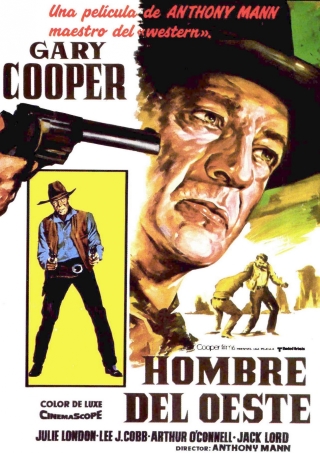
The western, when it hits the heights of its artistic potential, traces the route of its characters along a path that leads them to salvation, redemption, fulfillment or any combination thereof. When this is achieved then the audience gets to follow, to catch a glimpse of, and thus on some level share vicariously in those rewards – this is one of the riches of cinema and it’s to be found in abundance in the very best of the classic era of the western, not least as it approached the zenith of its power. And for directors who could be said to have had a clear view of what they wanted to do within the genre this same progression towards a destination marked fulfillment can also be discerned. Anthony Mann started making westerns at the beginning of the 1950s with Devil’s Doorway and Winchester ’73 and, particularly in that great cycle with James Stewart, dug deep into the heart of the genre. His work laid bare the tormented souls of his characters yet also applied a kind of spiritual healing balm that meant the harsh journeys he took them on finished up at a place that promised them peace. Man of the West (1958) follows this template and while it wasn’t the last of Mann’s westerns, it does represent the apogee of his work in the genre.

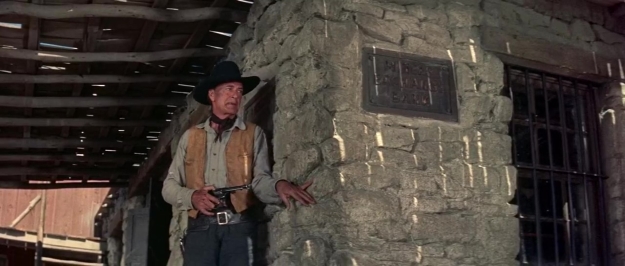
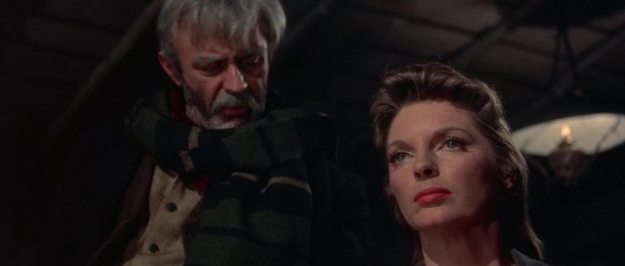
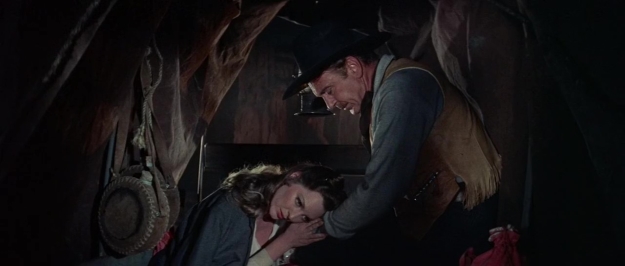
On the surface, the plot of Man of the West is a simple and straightforward one. Link Jones (Gary Cooper) is a man clearly out of his element, a true man of the west who is spooked by his first view of a train and bemused by civilization’s apparent determination to squeeze him into the smallest space manageable. Still, the west of his past is never far away and a neatly executed raid sees him relieved not only of his luggage (and the money he’s been carrying to hire a teacher for his town’s new school) but also the discomfort of his poorly designed seating. Stranded in the middle of nowhere in the company of garrulous card sharp Sam Beasley (Arthur O’Connell) and  saloon singer Billie Ellis (Julie London), he has no option but to set out in search of shelter. The thing is though, Link is no helpless hick – he evidently knows where he’s headed as he soon comes upon an old homestead that he seems familiar with. In short, this is very definitely a man with a still unrevealed history, one who thought he had outrun that past only to find it catching up with him and drawing him back into its unwelcome embrace. There had been hints of that in his shifty avoidance of the law back at the train halt, but it’s here that the full extent of his involvement with criminality is dragged out into the light, or into the flickering shadows of a dank and dangerous cabin to be precise. The gang who robbed the train are taking orders from Dock Tobin (Lee J Cobb), the notorious uncle who brought up and shaped – or perhaps twisted – the character of the younger Link. His delight at having his protégé back is matched by Link’s carefully concealed disgust at being snared once again by the kind of people he thought he had escaped for good.

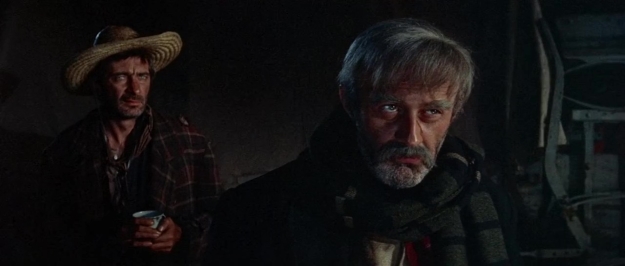
The tone of the movie shifts radically at this point. Link’s caginess grows and is clarified at the same time, and the worthlessness and utter inhumanity of Dock and his gang increases by the minute. The cabin itself is hugely oppressive, shot by Mann in the shadowy menace of guttering flames with a heavy and smoke darkened ceiling regularly in view, its narrow and tight dimensions seem to press from every side. As Dock raves and booms about a past steeped in blood and brutality, Link’s burgeoning despair is just about held in check. He had set out to recover the money entrusted to him by poor and trusting people and now finds himself responsible for both his own well-being (he has a dependent wife and children relying on his safe return) and that of two helpless people he has led into danger.

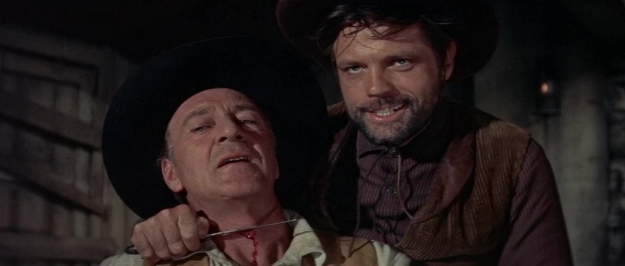
This long sequence in the cabin gradually takes on the feel of a visit to one of the deeper circles of Dante’s Inferno, where depravity is let loose and one starts to wonder if light will ever be permitted in again. Dock resides here, a malignancy at the center of a web he has spun around himself,  goading his companions to ever greater excess. When the degenerate Coaley (Jack Lord) demands that Billie strip for their amusement and holds the outraged Link captive, a knife cutting into the flesh of his throat, there is a real sense of terror on show. This entire section is impossibly tense, dark and forbidding, so much so that there is a palpable sense of relief when events move the characters out, when a new dawn breaks and the possibility of getting into the open beckons.

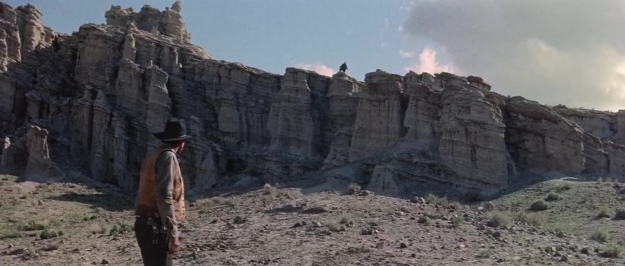
Here, in the closing act of Mann’s beautifully shot tragedy, those classic themes of revenge, redemption and renewal are played out against a dusty and sun-bleached backdrop that is as unforgiving as it is honest. Link is handed the opportunity to avenge the indignity and barbarity of Coaley, meting out a retribution that is chilling in its bleakness and also unsatisfying as a result of the further hurt it unwittingly inflicts on the innocent. The message of course is that revenge never achieves anything of value, a theme that Mann revisited time and again throughout his career. By the time it all draws to a conclusion with a sudden gunfight high up on one of the director’s characteristic elevated spots, more horror has been confronted and further pain endured. For all that harshness and violence and loss, Mann’s essential commitment to the durability and resilience of humanity, to the ultimate triumph of decency over malice never falters. When the damaged survivors come together briefly at the end before the inevitable parting, making their peace with themselves and the challenges posed by life itself, there is no doubt that catharsis and renewal have been earned and won. This holds true of the characters, maybe it can be said of the director, and it brushes off on the viewer too .

I know the casting of the movie has not met with universal approval, but I find it works fine for me. Sure Cooper was probably too old for the part as written but his work here allows me to ignore that. The fact he had such a natural affinity for western roles is a terrific boon in itself and then there is that minimalist approach to acting he had perfected over the years. Those eyes that dart like fugitives while the face remains taut, that guarded catch in the voice, the pauses and the silences all add up to wonderful screen acting and I find it hard to see how anyone else, regardless of their age, could more convincingly impart the mix of caution, fear and guts required. Does Lee J Cobb crank it up too high? Maybe so, but as I see it his character is a monstrous creation, deluded and demented by his own turpitude. Dock Tobin lives in an unreal cocoon and surrounds himself with lowlife sycophants so it’s arguably a valid interpretation on the part of the actor to play him with such studied bombast.

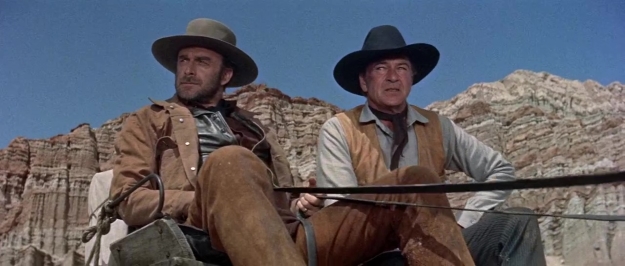
Julie London’s lonely saloon girl is well realized and she deftly captures the precarious position occupied by a woman in such circumstances. All her western roles were fine but this one presents her with a number of challenges – the natural toughness of the saloon singer is neatly juxtaposed with her innate vulnerability and she handles the scenes where she’s subjected to both physical and psychological assault with sensitivity and grace. She excels in her scenes in the cabin and barn, playing effectively off Cooper’s reticence and reserve, and then has two other memorable scenes with her leading man in the wagon, the first tender and bittersweet while the second exposes the full horror of Tobin’s bestial character. In support John Dehner plays it tightly coiled as Cooper’s cousin, coolly disgusted by the decline he sees in Tobin and never once deceived by Link’s maneuvering. Royal Dano is memorably manic as the mute Trout, Robert J Wilke sneers and threatens on cue while Arthur O’Connell is all blather and blarney till he stops a bullet at the end of one of the film’s most shocking scenes.

Man of the West saw Anthony Mann take the western to the place he wanted it to be. All the themes he’d touched on and explored throughout the preceding decade are on view and placed under the microscope. Having won acclaim as a director of film noir, his westerns hold onto some of that darkness – the visual aesthetic may have gradually become less pronounced as he moved to frontier tales but the fascination with the less savory aspects of humanity remained. What separates his westerns from his earlier noir work though is the focus on reaching for something finer, the scramble towards redemption and an escape from the darkness both within and around the characters. By the time he made Man of the West he had discovered how to set those characters firmly on that path.

The Western Range

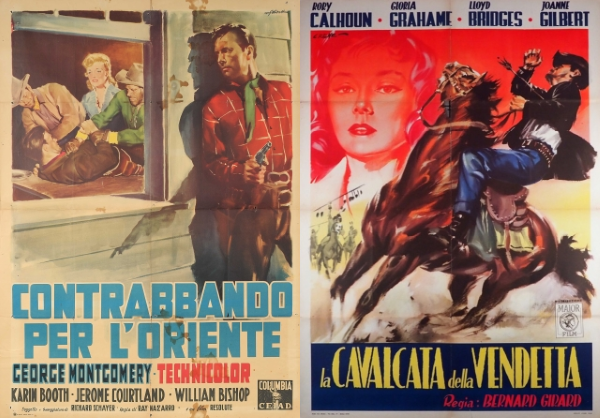
If one is to accept that the second string western, or the programmer or B movie depending on the terminology preferred, represented the bread and butter of the genre during its heyday in the 1950s (and I strongly believe that the assertion should be accepted) then it’s not unreasonable to assume those films would have much in common. Yet, leaving aside the personnel who turn up time again both in front of and behind the camera, there was in fact quite a wide variety on show. I recently watched Cripple Creek (1952) and Ride Out for Revenge (1957) back to back and was struck by how very different these two “lesser” westerns were. Both featured stars (George Montgomery and Rory Calhoun respectively) who are closely associated with such westerns and both work pretty well when taken on their own terms. Nevertheless, tonally, visually and with regard to aims, one might just as easily compare movies from two entirely different genres.

So what have these two pictures got in common? Well the 19th century setting and the locations (Colorado and the Black Hills) are fine for westerns, and both movies have the hunt for gold worked into their scripts. But that’s about as far as it goes. Cripple Creek is in essence a crime movie taking place against  western backdrop, all about gold robberies, smuggling and intrepid Secret Service agents working undercover. And despite a few harder edged scenes, it has a lighter feel to it overall – I’d hesitate to say juvenile, but it does have the kind of cut and dried ethical simplicity about it that means it can be enjoyed by just about anybody regardless of age. I can’t say for sure if I saw the movie myself when I was a youngster but it is the kind of Saturday matinee fare that I tended to lap up at an impressionable age. George Montgomery is heroically square-jawed as the gutsy G-man while William Bishop and John Dehner never leave the viewer in the slightest doubt that they are up to no good. Only Richard Egan, gradually working his way up the billing towards stardom, shows a bit of shading in his characterization. Ray Nazarro serves up a colorful and broadly frothy concoction, a frank piece of lightweight entertainment that never tries to  cajole the viewer into believing it’s anything more than that.

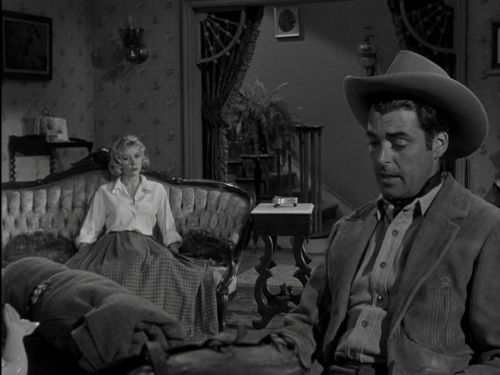
Conversely, Ride Out for Revenge is a much more serious affair. Bernard Girard is clearly shooting on a tight budget but making fine use of Floyd Crosby’s stark black and white cinematography. This is weightier stuff with conflicted marshal Rory Calhoun butting heads with a drunken and incompetent soldier played by Lloyd Bridges. The story explores greed, intolerance and the corrosive effects of unfettered hate on individuals and whole communities. There’s not much to smile about in this movie and there’s a hardness to it befits an exploration of the themes mentioned. There is an interracial romance which is central to the plot – sidelining Gloria Grahame, who appears so completely detached that hers is practically a non-performance – and has the guts to end on a far more hopeful note than is often the case with such storylines in westerns of the time. An early outing for Kirk Douglas’ Bryna Productions, Ride Out for Revenge challenges all types of prejudice and even the whole idea of manifest destiny.

So, there you have it: two westerns made just five years apart, both a step below the A list yet both radically different in look, theme and mood. The sheer malleability of the western in the classic era has always struck me and I guess I could have chosen plenty of other examples from this general time period to illustrate this.


The Midnight Story

“Nothing is more wretched than the mind of a man conscious of guilt.”

 Titus Maccius Plautus

Guilt, doubt and suspicion are some of the key ingredients of dramatic tragedy. One of Aristotle’s four pillars of tragedy is suffering and the aforementioned features can certainly be said to form the basis of that. The concept of guilt runs all the way through The Midnight Story (1957), every major character is assailed by this feeling as it hounds, worries and tears at them insistently. Of course all tragedy really only has a point if it follows its natural path towards a sense of catharsis, a relief or clearing up granted to the characters, not to mention the audience, a lightening of the dramatic load. If guilt and all its gnawing associates can be viewed in a classical context, it can also be seen in religious terms too, especially from a Catholic perspective. In such cases the catharsis we move towards is frequently expressed as a form of redemption. The Midnight Story manages to fuse all of these ideas into a beautifully constructed film noir that draws the viewer deep into dark and despairing places before finally emerging in a brighter, more hopeful landscape.
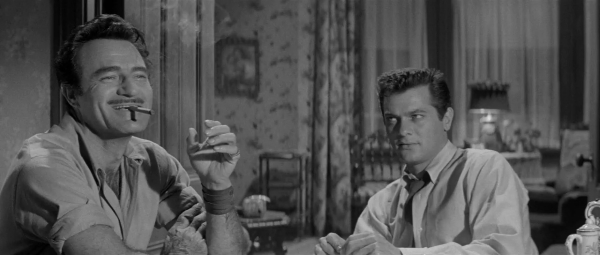
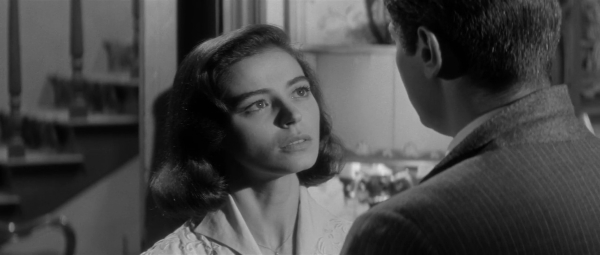
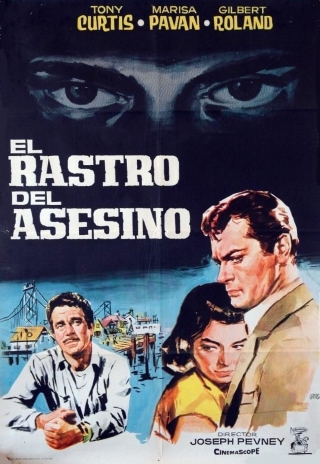
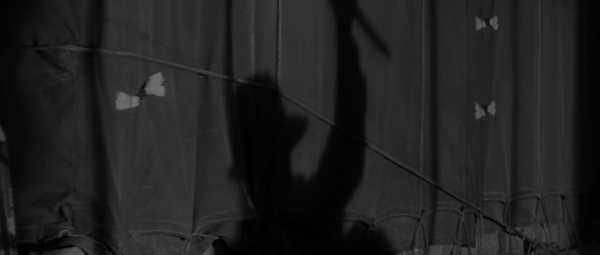
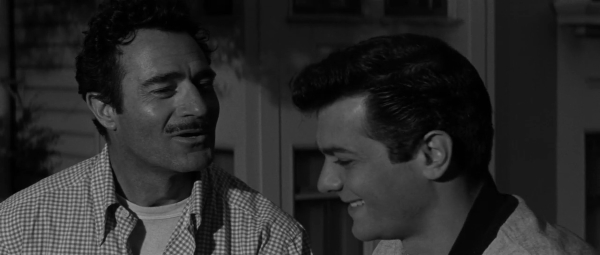
The opening is stark and shockingly abrupt, the caption informing us that the studio set represents an approximation of a side street on the San Francisco waterfront. A priest strolls out of the shadows towards the camera, his attention suddenly caught by a voice softly calling his name. We zoom in on his eyes as they register curiosity, maybe recognition and a touch of fear. This is  Father Tomasino and we’re witnessing his final moments as a knife-wielding assailant, seen only as a shadow cast against the tarpaulin of a truck, strikes him down. It’s one of those crimes that outrages people, particularly those who knew and respected the victim. One such person is Joe Martini (Tony Curtis), a young traffic cop who grew up in an orphanage and owes his job and much besides to the murdered priest. Martini wants the killer and he vainly presses his superiors to let him in on the investigation. At the funeral he notices a man who seems to be more deeply affected, tormented even, than the other mourners. There is something about the intensity of this man’s grief that gives Martini pause and indeed leads to him temporarily turning in his badge in order to pursue his own inquiries. The person who has attracted his attention is Sylvio Malatesta (Gilbert Roland), the owner of a seafood eatery and a familiar figure on the waterfront. Deftly and swiftly, Martini inveigles his way into Sylvio’s life, becoming a friend, employee and even a guest in his home.
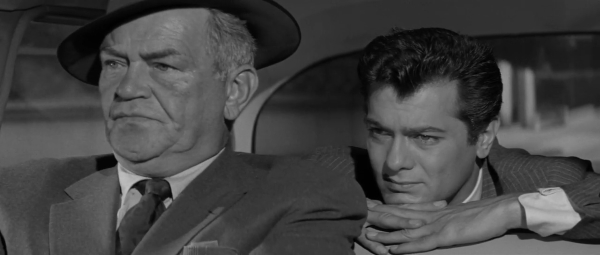
Guilt haunts the characters from start to finish. There is obviously the overarching guilt that stalks whoever the killer may be, but Martini carries it with him too all the way. As has been stated, he owes almost everything to Father Tomasino and there is surely a sense of guilt that, despite his job as a protector of society, he was unable to be there to ensure the safety of this man. One of the orphanage nuns he speaks to advises against going around with hate in his heart, but I’d argue that his guilt and shame, a feeling of inadequacy (albeit misplaced) due to his not being there at the crucial time, is his true motivation. Then that same feeling steals over him as he works his way into the affections of not only Sylvio but his family too. This is exacerbated by his falling for Anna (Marisa Pavan), the niece from Italy, and her clear devotion to him. All of this is further heightened by the accompanying doubts and suspicions: suspicions about Sylvio that ebb and flow with the depressing regularity of the ocean tides, and those corrosive doubts about the propriety of his own actions, the dubious morality of exploiting the love and trust of innocents regardless of the cause which is supposedly served. Soon every look and gesture is brought under the microscope, no word or comment is so trivial as to be discarded, no alibi can be relied upon or taken at face value. Everything has to be questioned, everyone suspected in some way. And still the guilt persists.

Besides probing its central theme, The Midnight Story functions both as an engrossing whodunit and as a snapshot of working class family life. There is irony in the fact Martini has only been able to achieve the bonding and acceptance that grows out of membership of a family though deception. In seeking justice for the death of his mentor and friend, not to mention a quest to make amends for imagined failings, Martini risks the loss of all that he most desires. The notion of only being able to win by losing everything is a sour-tasting one indeed. Consequently, there are moments of genuine, heartbreaking darkness in this movie, although it does aim for a redemptive quality, and I think it succeeds in that respect. The crushing burden of guilt is finally lifted in the end by the confession and then the quiet nobility of the final scene, where the feelings of the innocent are spared, absolving them of further undeserved shame, Martini simultaneously washing away his guilt for the deceit perpetrated.

I think it’s fair to say The Midnight Story is Joseph Pevney’s best film. Working from a story and script by Edwin Blum (The Adventures of Sherlock Holmes, Stalag 17), he clearly had an affinity with both the themes explored and the subtle blend of film noir and melodrama. Those intimate little scenes in the Malatesta home, often around the dinner table, but not exclusively, reveal some fine character work from a hard-working cast. The spiritualism inherent in the story and its development is never far from the surface, sometimes overtly but frequently buried a bit deeper in the rambunctious and passionate instances of simple family interaction where the real sense of redemption resides and thrives. The final fade out encapsulates that eloquently as inner strength, belonging and renewal all collide and give meaning to everything that has gone before on screen.

Once again, Tony Curtis is given the chance to prove how adept he was at straight drama and he carries it off successfully. I have probably mentioned this before, but I think it’s worth restating: when actors gain a reputation as skilled light entertainment or comedic performers they seem to get stuck with that label and regarded as capable of only that type of work. Sure some play up to it, and Curtis did choose poorly in his later roles yet it seems a pity that his dramatic work, which is generally very strong, is neglected or at best downgraded as a result. The sincerity and determination of his character is never in doubt and he handles the ups and downs experienced, depending on how his investigation happens to be progressing, most convincingly. Marisa Pavan, who only passed away last December, is very soulful and controlled as Anna. It is this control and emotional caution she displays that gives added fire to the scene where she succumbs to her true feelings as the dangerous game her betrothed appears to be playing is laid bare. There is solid support from Ted de Corsia and Jay C Flippen as the senior cops, the former typically bullish and aggressive while the latter gives another of his slightly dyspeptic avuncular turns.

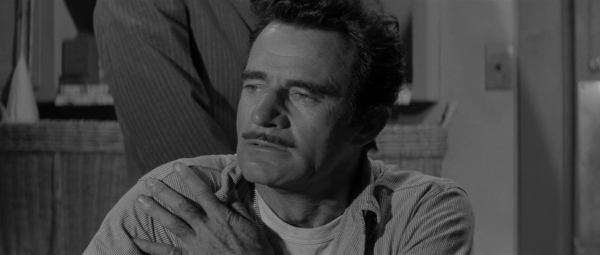
And that leaves only Gilbert Roland. His was long career and one which saw him get better as the years passed. The leading roles were not to be his at that stage but the presence of the man lent gravitas and truth to many a film. The part of Sylvio Malatesta was an extraordinarily difficult one to carry off, but he does so with considerable aplomb. While there is plenty of scope for his trademark bravura, the part is in fact complex and multi-layered, gradually revealing itself in increments over the course of the movie. The inner torments of the man, the history he hauls around inside himself, are subtly presented, held carefully in check and only occasionally allowed to make their presence known. Frankly, he gives a beautifully judged performance that is fully three dimensional – his work here is the rock which anchors the movie and provides real substance to the story.

This brings me to the end of my trawl through a selection of Joseph Pevney directed movies this summer. It’s something I’ve been wanting to put together for a while now and I’m pleased to have finally done so. I only hope it’s been as enjoyable for visitors to follow along as it has been for me watching and writing about these titles.

Congo Crossing

There was a time when jungle adventures gave the impression of being all the rage in Hollywood. Most of these were shot locally so the budget was kept low and the air of exoticism was easily achieved. As a sub-genre of the adventure/thriller such movies rarely aspired to be more than entertaining diversions. Congo Crossing (1956) saw Joseph Pevney heading for an imaginary central African state in the company of Virginia Mayo, George Nader and Michael Pate, with a weary Peter Lorre popping in and out to add a touch of wry humor.

The setting is Congotanga, a place one character refers to as essentially a criminal colony on the western border of the then Belgian Congo. It is so labelled because its lack of extradition agreements has made it a magnet for various fugitives from justice the world over. The law is nominally represented by Colonel Arragas (Peter Lorre) but the real power lies in the hands of shady types like Rittner (Tonio Selwart). The main focus though is on David Carr (George Nader), who has been hired to carry out a river survey on behalf of the Belgian mining concerns. He’s puzzled by this as he’s of the opinion nothing will have changed since the last time one was carried out. Nevertheless, a job’s a job. As he sets off down the river he’s accompanied by one new arrival and one of the old hands. The former is Louise Whitman (Virginia Mayo), a one time model running from a murder rap in France, while the latter is O’Connell (Michael Pate) and he’s simply there due to the fact he’s been hired to kill the woman as soon as possible. Beset by tsetse flies, crocodiles and the murderous attentions of Rittner’s henchmen, the party has more than its share of hazards to navigate. The main plot point here hinges on shifting river courses and the consequent effects this has on borders and thus on jurisdictions. Basically, nobody wants to see Carr come back safely with the results of his survey. There are double-crosses, ambushes, some romance and the usual jungle thrills as the story makes its way to a literally explosive climax.

Congo Crossing is fine as a lightweight adventure, but it’s a minor affair for director Pevney and all concerned. I guess the premise of a border disappearing as a result of one of nature’s whims has some points in its favor, but it’s not something the viewer can get excited about. It’s a MacGuffin really and what matters more is the reaction of the characters to all this. Then again, that requires those characters should be more than stock variations and that isn’t really the case. The hero is honorable and dedicated, the leading lady may not be all she says she is and the villains are just out and out bad guys. It makes for a passable viewing experience, but nothing more than that.

Virginia Mayo is a highly decorative presence as she sashays through the wilderness and she’s an actress I’m always happy to watch. However, this is another of those roles where she is asked to do little that is important and even the touch of conflict written into her character is not all that unexpected. George Nader had a brief window where he was cast in a variety of leading parts at Universal-International. I prefer him in the noir/crime pictures he made as there was a bit more depth to those roles whereas this is much more standard fare. Again, he’s fine in the movie, it’s just that there is little scope for him to do anything beyond the routine heroics. Michael Pate does his usual solid work as the villain and he carries the attendant air of menace comfortably. Peter Lorre only appears at the beginning and then again during the climactic scenes, sweating and sighing and never seeming to take any of it too seriously.

Congo Crossing has been released on DVD and Blu-ray in Germany and the movie looks attractive as Pevney’s films generally do, aided in this case by the cinematography of Russell Metty. I suppose I don’t sound all that enthusiastic about the movie although I have to say I did enjoy it well enough. It’s quite competently put together and passes the time satisfactorily, but the fact is just about everyone involved did better or more interesting work elsewhere. All in all, I’d say it’s a fun picture but slight and far from essential for the casual viewer.

Iron Man

Everybody loves a winner, right? Well actually they don’t, there are those whose behavior draws crowds in the hope they are going to see them get a licking. It’s not just winning, rather it’s how a person wins and perhaps also why they win or even want to. Once upon a time, success in sports, and indeed life itself, was predicated not only on the results achieved or the prizes attained but also on the manner in which the game was played. Is boxing the ultimate sport? Perhaps it was at one point, or perhaps it only appeared to be so for a brief moment in time before sliding into a seemingly unrepentant morass of glitz and trash-talking. Still and all, there is at the heart of it all the seeds of nobility, and I think Iron Man (1951) attempts to tap into some of that. There is something about the image of two men pitting themselves against one another in a formalized setting, mathematically bounded spatially and in terms of timing, equipped with nothing but their guts, guile and sense of fair play. It appeals on an almost atavistic level, but that appeal is heavily dependent on both parties adhering to the rules, the rules of the game and by extension of humanity. It’s only when those rules are bent or warped either by the antagonists or those observing them that some of the purity is lost.

If the duel promises a contest of honor, the same quality cannot always be said to be evident among those watching it. One hears about the roar of the crowd, but what lies behind that?  Look at the eyes and listen, especially listen. All the passion that is embodied in the strained faces, the anxiety, the fear, the trepidation and for some the blood lust. And this is amplified in the sound, cheers and jeers, and if the latter dominates then what? This is the scene presented at the beginning of Iron Man – the announcer holding sway in the center of the ring, barking into the suspended microphone as the arc lights cast their harsh gaze, heralding the start of a world championship fight, calling out the names of the contenders. As the reigning champion steps up the voice of the thousands banked around the roped off area rises not in celebration but in reprobation. Coke Mason (Jeff Chandler) is the focus of this disapproval and he appears to drink it all in dispassionately, feeding off the negativity surrounding him. The view shifts to the spectators, one woman in particular. This is Rose (Evelyn Keyes), Mason’s estranged wife and she sits detached from the screams and boos, thinking back to how these circumstances came to be and of her own role in bringing them forth. We dissolve into a long flashback as Rose leads us back to the coal mines of Pennsylvania, to the man Coke Mason once was before he set out on the path that has led him to fortune and infamy. So we follow Mason as he embarks on the journey out of the grime and hazards of the mines, facing off against mindless prejudice from a belligerent co-worker, finding himself practically reborn after the trauma of a cave-in, on towards his early days as a rough and ready prize fighter egged on by Rose and his ambitious brother George (Stephen McNally). Right from the off Mason is a slugger without technique and, more crucially, without a true sense of why he is fighting. Maybe it would be more accurate to say, he does know why he’s fighting – for the money of course, but also as a reaction against his own deep personal insecurity – it’s just that he is incapable of controlling the fires in his soul. This is what drives him, the internal rages which once ignited are virtually unstoppable and threaten both his opponents and himself.

Iron Man boasts a George Zuckerman/Borden Chase screenplay from a novel by W R Burnett. Those are pretty impressive credentials right there and the movie moves smoothly through its hour and twenty minute run time to a conclusion that some might see as predictable but which  is deeply satisfying for its redemptive and restorative qualities. Director Joseph Pevney keeps it fluid and scenes are generally well paced. It’s the type of material that suited the talents of Pevney and the team around him and cinematographer Carl Guthrie creates some fine images, especially the early stuff below ground in the mine and then later in the fight sequences. Pevney and Guthrie shoot and cut expertly here, making use of starkly lit close-ups alternating with wider pans to draw the viewer into the fight and heighten the tension. The outcome might not be in serious doubt yet the stylish way it is presented is a pleasure to watch, and the emotional and thematic payoff is undoubtedly worth it.

Jeff Chandler handles the conflicted aspects of his character as well as one would expect. The reluctant fighter who is simultaneously motivated and frightened by what he carries around inside offers him plenty to play around with. He reportedly put in a fair bit of work on the practical physical aspects of the role and the fight scenes benefit from that. He never displays much grace in those moments, but that’s the part he’s portraying, a fundamentally awkward man who powers his way to dominance without bothering about the style. Rock Hudson is fine too, albeit in a lighter role as Chandler’s friend who moves from second in the corner to rival in the ring. Stephen McNally was never less than versatile and his flashy turn as the brother who rarely lets a scruple stand in the way of a fast buck is up to his typically high standard. His realization of the harm he has caused, alongside Evelyn Keyes’ similar conversion, is central to the resolution. Keyes cultivates her character nicely as the movie develops and her move from opportunism to remorse feels very natural. Jim Backus drifts in and out of proceedings as a reporter who ends up moonlighting as a promoter. It feels like an odd progression at first but it’s another key role and makes sense as the story unfolds.

Iron Man is another of those Universal-International titles which Kino have scrubbed up and marketed on Blu-ray in their impressive film noir line. The movie does undoubtedly highlight moral ambiguity and explores some dark places in the soul, and it’s a boxing film. Even so, I’m not sure I’d class it as film noir – others may see it differently and I can’t say labeling it or categorizing it in this way bothers me much one way or the other. It pleases me to see this film available in good shape and that’s really all that counts. In the final analysis, this is a good movie with the cast and crew all turning out very creditable work.

Female on the Beach

The Gothic mystery / romance characteristically placed wide-eyed young females from generally sheltered backgrounds in perilous situations. As often as not, they found themselves alone, or practically so, in some rambling old pile they had inherited and threatened by some as yet unknown figure. It’s a hoary old trope, but a it’s also proved to be an attractive one and pretty successful as a consequence. The classic variant still turns up of course and it has also been tweaked and updated to make the standard formula a better fit for changing circumstances and the demands or tastes of audiences. Female on the Beach (1955) is essentially a modernized take on the Gothic mystery. Sure the trappings have been altered and the setting has waves gently lapping on sultry shores rather than launching raging assaults on mean and jagged rocks, but the core elements remain in place – there’s a lone woman taking up residence in an expensive house, a romance with a shadowy and potentially dangerous man, an escalating series of threats and a correspondingly mounting sense of panic and anxiety. As is frequently the case with a lot of this type of material, some of it works very well while other parts suffer from exposure to the overheated atmosphere.

The first female seen on a beach in this movie is one who has just taken a swan dive off the veranda of her seafront home. She had been drinking, heavily, quarreling querulously with a lover and then in a fit of alcohol soaked remorse and self-pity rushed out onto the balcony to stumble and crash through the guard rail. The last we see is the final twitch of her hand, flicking farewell to the busted remains of a brandy balloon. The entire business had an air about it that was as much pathetic as it was tragic. One out, one in – the next arrival is the actual owner of the house. This is Lynn Markham (Joan Crawford), the widow of a big time gambler and a woman looking for nothing so much as solitude. What she ends up getting is the initially unwelcome attention of resident beach bum Drummond Hall (Jeff Chandler). He seems to be suspiciously familiar with the house, and there are little relics of his previous visits littering almost every corner of the place. None of this should be much of a surprise; Drummy (as everyone calls him) is an unapologetic gigolo, albeit something of a reluctant one. He was the man who exited the house pursued by the drunken entreaties of the last tenant just before she moved out permanently and suddenly. He appears to be set on continuing where he left off, business is business after all and a guy has to make a buck whatever way he knows best. Lynn Markham doesn’t intend to become the next mark to pick up Drummy’s checks though and tells him so in no uncertain terms. All of this recalls the tale of Zeus once realizing that the fox that can’t be caught and the hound that can’t lose its prey sets up a paradox of Olympian proportions. In short, something’s got to give. Well it does, love blossoms or lust triumphs – take your pick. And yet there’s a lingering doubt regarding the death of Lynn’s predecessor – accidents ,suicides and murders all produce the same result and it’s easy to mistake one for the other. With a persistent and dissatisfied police lieutenant lurking in the background, Lynn runs the gamut of passion, suspicion and outright fear as she falls for Drummy yet can’t shake the feeling that he may be looking to dispose of his catch as soon as he has secured all the wealth and benefits that come with it.

Director Joseph Pevney was on a solid and at times hugely impressive run of movies throughout the 1950s. There were some misfires and a few frankly humdrum efforts along the way, and some like Female on the Beach which look stylish despite an inherent modesty in terms of production, tease and flatter to deceive in scripting and development, and still manage to be entertaining despite some major flaws. The movie raises questions about the nature of love and betrayal, the importance of trust and the brittleness of human relationships. And the ending, the conclusions reached, is less than satisfactory. It ties everything up in a neat enough way but that doesn’t make it particularly convincing, nor I would argue does it offer a resolution with any promise. None of this is the fault of Pevney of course, the script being an adaptation by Robert Hill of his own play. Pevney, and cinematographer Charles Lang, create some attractive images despite or inspired by the natural staginess of the material. Somehow though, the melodrama and the thrills don’t blend as seamlessly as they might, curdling instead and leaving the finished product lumpy where it ought to have been smooth.

Jeff Chandler made a number of movies with Pevney and all that I’ve seen have been worthwhile on some level. Female on the Beach does have a certain superficiality to its sandblasted Gothic chic, but Chandler always brought an enticing mix of authority and vulnerability to his roles regardless. While dissatisfied self-awareness crossed with brooding calculation isn’t the easiest look to put across, he succeeds in doing so. Joan Crawford was nearing the end of her strong mid-career revival, the slightly trashy but very enjoyable Queen Bee and the very fine Autumn Leaves would soon be followed by a run of exploitative titles of gradually diminishing quality. Female on the Beach had her running on autopilot, suffering, emoting and tossing out some stinging barbs but never stretching herself. Jan Sterling was generally good value in any movie she appeared in and spars successfully with Crawford here. That said, the tone of her performance overall is ramped up a little too high, and again I feel the script is to blame for that. Cecil Kellaway and Natalie Schafer are wonderfully seedy as Chandler’s sponsors and handlers while Charles Drake is solidly unremarkable as the dogged detective – I think I prefer him in his more ambiguous roles.

Female on the Beach is easy to access for viewing, as are so many Universal-International movies these days. It was released on DVD in the US long ago in a box of vaguely noirish thrillers and then on Blu-ray by Kino. I have the UK DVD that Odeon put out some years ago and I think it’s a more than satisfactory presentation. To sum up, Pevney does his customarily slick job, Chandler and Crawford add some star power, but the script rarely rises above the mediocre.

This launches a short series of posts on the movies of Joseph Pevney that will be featured this summer.

Home from the Hill

“Home is the sailor, home from sea,
And the hunter home from the hill.”

Those lines, the final two of Robert Louis Stevenson’s poem Requiem, introduce the movie featured today. The image of the hunter has long been a romantic one. In mythology Orion was not only renowned for his skills as a huntsman but also for his amorous exploits – in addition to his attractiveness, it is said that he fathered up to fifty offspring by as many different mothers. It is therefore apt that the protagonist in Vincente Minnelli’s Home from the Hill (1960) should also embody these characteristics. And as this hunter moves inexorably towards that repose alluded to in Stevenson’s short poem those features are repeatedly highlighted. In telling this story, Minnelli creates one of his grand melodramas, assembling from constituent parts which are at once discrete and also united in their focus on the deceptions that people lock themselves into in their quest to achieve contentment. How is that to be achieved? Through three interdependent actions: confronting the past, acknowledging the present, and securing the future.

Small town America, the ultimate paradox in some ways, that curious blend of the idyllic and the deeply unattractive. There is something comforting, reassuring, even downright alluring about the sense of orderliness and stability that small, close-knit communities seem to exude. There is a security attached to everybody knowing everybody else, but of course the flip side of that is the preponderance of gossip, of long memories of a malicious type, a type which fosters and breeds grudges. Wade Hunnicutt (Robert Mitchum) is the town’s leading citizen – everybody calls him Captain, adding another layer of deference – wealthy, influential, a noted sportsman, and an infamous womanizer. The opening scene among the bulrushes in the middle of a duck shoot cements all these qualities, the latter one in particular being driven home with some force when Wade finds himself marked as prey by a desperate and indignant husband who has been wearing the horns of a cuckold. That Wade narrowly evades death at his hands is down to the sharp reactions of Rafe Copley (George Peppard) in knocking him just out of harm’s way at the critical moment. By and by, it becomes apparent that Rafe is his illegitimate son, a fact which irreparably soured his marriage to Hannah (Eleanor Parker) and led to her forbidding him to have any involvement in the raising of Theron (George Hamilton), their son who was born in wedlock. That all changes though when Wade comes to realize Theron has reached an age where he needs to learn some lessons that will see him graduate to manhood.

Manhood, however, entails a good deal more than being adept at hunting and the use of firearms, the sowing of wild oats, or even the kind of rugged individualism that Wade Hunnicutt espouses. Those are mere trappings, the panoply of masculinity that one may or may not need to adopt in certain situations, but the characteristics of a man are more nuanced, they run deeper and ask more of the individual than that. This of course forms the core of the movie, the processes, experiences and trials that one must pass through and absorb on the road that leads a boy to grow into a man. That road may be circuitous, forked, ill-defined or uncharted depending on the person who treads it and the destination won’t be the same for everyone yet it’s a journey none can avoid. Maybe more than anything it is the bumps and hollows encountered, and how they are navigated, that ultimately mark the man. For better or worse Wade Hunnicutt has grown into the man he is, and the meat of the tale is to be found in the trajectories followed by Rafe and Theron. The former moving through the roles of tutor, guide and confessor, creating an illusion of being the finished article while he’s really still only part way along on life’s learning curve. Theron is starting further back, having been cocooned in the cotton wool of innocence, his path to maturity seems more dramatic and raw as a consequence. His growing awareness of his father’s legacy, the galling revelations this exposes with regard to the family he thought he knew, and his rejection of a potentially redeeming love see him cast out, his full maturity if not denied then at least deferred.

There is a degree of mirroring with regard to the behavior of the characters. Theron’s disgust at the hypocrisy he discovers at the heart of his family drives him away. He has already proved his physical courage in the wild boar hunt and then his loss of innocence sees him strike out alone seeking independence from his parents and thus indirectly fulfilling another of his father’s wishes. Still, his immaturity and callowness lingers and he ends up, through fear of both himself and his family’s history, abandoning storekeeper’s daughter Libby (Luana Patten), who he has left pregnant. Despite himself, he has acted as his own father did with Rafe’s mother. While Theron is fated to recycle the sins of the father, Rafe is afforded the opportunity to forestall some of the prejudice and rejection he suffered. The past throws long shadows though, especially in these small towns, and even the best intentions can be ambushed by small minded parochialism. Rafe’s selflessness and essential good nature is undermined by cheap gossip and leads to yet more tragedy, though perhaps one whose foundations had been laid long before.

The screenplay for Home from the Hill came via Harriet Frank Jr and Irving Ravetch, adapting a novel by William Humphrey. The writing couple had come off two tricky William Faulkner adaptations directed by Martin Ritt, the rather fine The Long, Hot Summer and the less good but still worthwhile The Sound and the Fury. Now I’ve not read Humphrey’s novel but a quick bit of research suggests the screenplay made a number of changes to the story and characters, and I think the original tale must have been quite different as a consequence. What we get though forms the basis of a fine melodrama, the type of material that was ideally suited to Minnelli’s talents and vision. Perhaps it is a touch more subdued than some of his other melodramas, the palette chosen reflecting this to some extent. There is an earthiness on display in the soft green and brown hues which predominate. However, there are flashes of those vivid shades often found in Minnelli’s pictures at key moments – the crimson dress worn by Luana Patten in the waterside scene where she entrances Theron, the rich burgundy upholstery in Wade’s den where the affairs of men are raised and settled, and then the blood red tombstone in the final scene that is somehow triumphant, sedate and reassuring all at once. These are all instances of great passion and those varied tones of red capture the mood of the scenes perfectly. It’s noteworthy too that the site of Theron’s climactic revenge is backed by an acrid yellow, the noxious gases rising off the swamp matching the bitterness on show.

Robert Mitchum catches all the shades of his character, the arrogance born of privilege often to the fore and, in his more private moments, a hint of humility creeping through whenever he’s reminded of his personal failings. The scene which offered him the most to work with occurs during the barbecue arranged in the wake of the boar hunt. Sharing the screen with a pensive Eleanor Parker, both of them are on the porch overlooking the revelers on the front lawn. Mitchum starts out gently, reminiscing and quietly romancing the woman who has spurned him for so long. He seems to be making headway, gradually softening her with his talk of bygone and better days. And then just as he seems to have victory in sight, she slams the door, telling him in no uncertain terms that he’ll never have her. The wounded pride and the hurt of rejection, that sudden, sour realization that it’s all been for nothing flash across Mitchum’s features for no more than an instant yet he accomplishes it all so effortlessly. Fine acting.

Eleanor Parker is all frozen dignity and has a hugely influential role, her character’s actions motivating and coloring the lives of those around her. The strained marriage to Mitchum has led to her overprotecting her son and the decay that characterizes that union ends up blighting the latter’s life. George Hamilton gets the sullen immaturity of Theron across quite successfully and Minnelli would use him again, albeit less satisfactorily, in Two Weeks in Another Town a couple of years later. George Peppard, in just his third feature role, is excellent as Rafe. His character may have been denied a name and left unacknowledged but he carries himself more easily than Theron. While there is resentment inside, he covers it with a veneer of assurance and gets to play some of the most memorable scenes in the picture: the interlude in the cabin with Theron after the truth of his identity has been brought out into the open, his stepping up to the plate with the distraught and desperate Libby, and his tenderness after the marriage. The film is all about the attainment of manhood and the contentment that this brings and Rafe’s progression towards that goal is an immensely satisfying one to follow. Theron only gets to take the first faltering steps before being sidetracked by upheaval, but Rafe reaches his destination and gets there in some style.

The movie features two cemetery scenes and I guess there is some quality about that spot none of us can avoid which draws forth honesty and strips away the pretense. Both scenes involve Peppard and Parker, the first is wistful and touching as Rafe carefully tends the plot on “reprobate’s field” where his mother reposes. He’s come to terms with his regrets and there is a sense of a young man who has made his peace with who he is and his place in the world, while Hannah sees the beginnings of a thaw warming her heart. It’s all very understated and very effective. Then reminiscent of the final glorious scene in Some Came Running, Home From the Hill draws to a close in another cemetery. All at once memories and loss shed their sorrow, fusing instead into something rich and positive. The point where we witness resentment chase briefly across Rafe’s face before being banished permanently leads to a moment of catharsis and truth, the healing of a wound long suffered by both himself and Hannah achieved through an instance of shared decency and unity. A homecoming lent greater significance and value by being so hard-earned.

Perhaps I’ve rambled on a little too much about this movie, but it’s one I have always admired and it has stuck with me since I first caught a broadcast on TV by chance some forty years ago. It’s a strong addition to that wonderful run of melodramas that Minnelli embarked on in the 1950s and the early 1960s. I have spent a fair bit of time here on some of the performances and a handful of key scenes, but I’d also like to take the opportunity to mention the score by Bronislau Kaper. It is a marvelously evocative piece of work, those lush soaring strings backed by melancholic horns, plaintive as a hunter wearied by the chase. I’d just like to sign off on this piece with his main title theme to the movie.

Daisy Kenyon

The magic of marketing – hang a label on a movie, point to the genre pedigree of the headline stars, and the director for that matter, and and there we have a film noir. Or actually we don’t, we have a film sold as such, at least it was back when Fox Film Noir was an ongoing line in the heyday of DVD releasing. Daisy Kenyon (1947) is a very well made and enjoyable post-war romantic melodrama but regardless of what it says on the tin, it’s certainly not a film noir. OK, having got that out of the way, I do want to take a look at a movie which sees three top stars all doing excellent work with one of Hollywood’s finest directors and getting plenty of mileage out of that frank openness about human relationships and bloomed in the years following WWII.

There is something attractive about frankness, especially with regard to those relationships that might be seen as falling below contemporary standards of propriety. Otto Preminger was always good at bringing such material to the screen and there’s a refreshing lack of judgement on display as we follow the complicated and meandering love lives of the three principals. At the center of it all is Daisy Kenyon (Joan Crawford), an unwed artist who has been carrying on an affair with a married hotshot lawyer, Dan O’Mara (Dana Andrews). Right from the first scene it’s apparent that this is unsatisfactory, from Daisy’s perspective anyway. She’s not stricken by guilt or remorse or any of the other trite reactions typically forced upon characters in this position. No, she’s just tired of taking second place whenever some important business or social engagement arises, and of course time is not in the habit of waiting around for anyone. With this in mind, she has one of her periodic spats with O’Mara and sets about preparing for a date with a new romantic prospect. Peter Lapham (Henry  Fonda) is a soldier and one time boat designer. In one of those delightfully quirky scenes that punctuate the movie, both her suitors run into each other in the doorway and wind up using the same cab to shuttle back and forth, just not together. The romantic rivalry between the two men hasn’t grown any teeth at this stage, that will come later but there is a quality to it from the off that I can only describe as screwball drama. If O’Mara is not the ideal pick for Daisy given his marital commitments, Lapham has other issues. it’s not explicitly stated but he’s clearly affected by PTSD, as well as a degree of guilt/remorse for the death of his wife. I don’t want to go into too many details here, suffice to say the story devolves into a kind of contest for Daisy’s heart with the well-being and contentment of O’Mara’s children as a form of collateral up for negotiation. Maybe the outcome isn’t entirely surprising but the road that takes us there is pitted with plenty of drama, a sprinkling of black humor and a liberal dose of good old-fashioned empathy.

Preminger blends this all expertly, getting first class performances from his three leads. Henry Fonda was rebuilding his Hollywood career after wartime service in the navy. He would make My Darling Clementine and The Fugitive for Ford and then Fort Apache, with this movie and The Long Night giving him the chance to work with other directors in between. He brings something slightly offbeat to his role, an attractive quality which while not quite offering the lush oddness to be found in William Dieterle’s wonderful Portrait of Jennie and Love Letters is satisfyingly quirky and somehow authentic. Andrews is more grounded, less ethereal in his part. He’s driven by a desire that feels vaguely juvenile in its approach – as Crawford tells him late on, he’s as much spurred on by a need to escape responsibility as any need to achieve stability. Still, that unrest that Andrews was so adept at harnessing is always bubbling just below the surface. Crawford was riding high after her success in Mildred Pierce and gives a performance that is confident and credible. The fact is all three play off each other in a way that engages rather than overwhelms the viewer. Add in Leon Shamroy’s evocative camerawork and a characteristically classy score from David Raksin and the result is a polished and meaningful piece of filmmaking.

As I said at the start, Daisy Kenyon is not a film noir and I’m not sure how it came to be marketed as such. Perhaps it’s the combination of the reputations of the stars and director alongside some shadowy cinematography. The old Fox DVD sported a middling transfer, with some very blurry sections. I can’t say for sure whether or not this was intentional yet I doubt it somehow. Even though I understand the later Kino Blu-ray exhibits the same, I suspect print damage of some kind is more likely at the back of it. However, none of that should spoil one’s enjoyment of the movie. The DVD (and I think the Blu-ray too) has some worthwhile supplements with short features on the making of the movie and on Preminger’s career. Among the contributors is the always welcome and interesting Foster Hirsch  – revisiting this movie and listening to his comments has reminded me that I need to pick up a copy of his book on Preminger. I think anyone who hasn’t seen this film will find it a rewarding watch. Just don’t go in expecting to see a film noir.