Golden Salamander

In the years following the war the British film industry was turning out some quality pictures. The best of them remain rightly celebrated and the poorer efforts have been all but forgotten. There is, however, a kind of murky middle ground crammed full of the kind of movies that were a cut above the average yet not quite top flight material either. I often find myself drawn to these films as there’s much to admire but, seeing as they’re largely off the radar of present day viewers, little or no critical analysis to be found. The Golden Salamander (1950) is a handsomely shot movie, well acted, engagingly plotted and filmed on location. All in all, it has a lot going for it – it should be better known but the fact is it’s something of an obscure film. If this blog has any purpose other than providing a platform for me to record my thoughts then it’s to be hoped that, from time to time, it also introduces someone, somewhere to the kind of picture they might never otherwise have heard of or thought about.

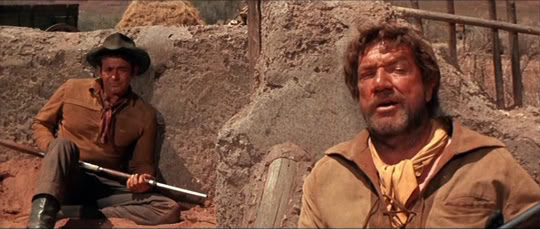
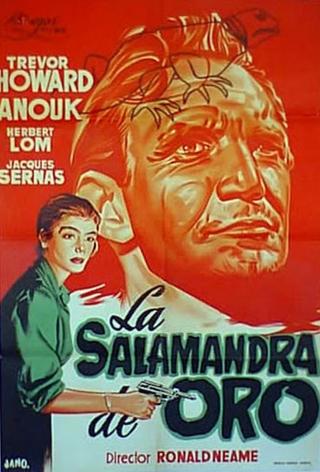
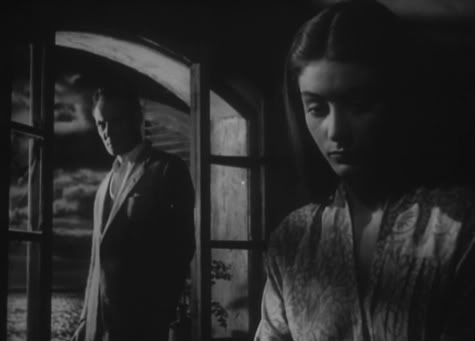
The movie kicks off strongly and initially looks like it’s going to play out like a noir picture. A car is making its way along a stretch of road in Tunisia in the middle of a violent storm. The rain is hammering down relentlessly and the darkness is closed in oppressively on all sides with only the headlights cutting a feeble path ahead. Hunched in the gloom, the driver squints through the rain-streaked windscreen and forges on. By sheer luck he avoids running slap into a landslide that’s taken out the road. As he gets out to try to discover a way round the obstruction, he comes upon a wrecked and abandoned truck. His good fortune in avoiding an accident is revealed to be one of those sneaky tricks of fate when he finds that the truck was apparently part of a gun running operation. This whole sequence takes place without a word of dialogue and the murkiness of a rotten night is only broken by the occasional flashes of lightning that draw attention to the important sights. That wonderful atmosphere is retained as the tired and muddy traveller makes his way to the nearest town, and the welcoming light of the local inn. It’s here that we learn his identity: David Redfern (Trevor Howard), a British archaeologist sent to catalogue and collect some ancient artifacts (including the golden salamander of the title) before overseeing their shipping. His close call on the washed out road has placed him in a perilous position though, with the gun runners suspecting (though at first not sure) that he’s seen something. What draws him deeper into danger is his becoming romantically involved with the young proprietress of the inn, Anna (Anouk Aimee), whose brother is part of the smuggling gang. The plot is a straight thriller that sees Redfern first wrestling with indecision before resolving to take action when a tragic turn of events forces his hand. Even then he has to face up to the fact that the town is a nest of corruption where it’s impossible to be sure who, if anyone, can be trusted.

The two greatest strengths of the film are the visuals and the location work. This was one of director Ronald Neame’s earliest efforts and he, along with cameraman Oswald Morris, takes turns at bathing the screen first in deep, moody shadow and then in bright sunlight. For an up and coming director Neame shows great skill in his handling of composition and framing too, drawing the eye to the pertinent and subtly altering the mood with clever placement of characters and objects. The location shooting in Tunisia adds an air of realism that’s a big asset and lends a greater sense of openness to the exterior work. So much for the positives; the weakness lies primarily in the script, as is so often the case. While I understand that the romance between Redfern and Anna is a necessary ingredient and provides the motivation for the hero to finally act decisively, it has to be said that it’s never a convincing one and, furthermore, slows the story too much in the middle. It leads to that old problem of a strong opening and climax held together by a slightly stodgy and flabby middle section.

Of course, the fact that so much of this part of the story depends on the interaction between Trevor Howard and Anouk Aimee is a contributory factor too. Howard plays the role of Redfern with a slight stiffness, but in fairness I think that’s simply a part of the character and can’t really be taken as a criticism of the performance. The thing is he looked a good deal older than his years at that time and having him play off a teenage Anouk Aimee is a little disconcerting. Additionally, she was acting in only her first English language film and that does seem to have had an effect on her performance – her delivery is never natural and she looks vaguely uncomfortable throughout. Still, there are some fine supporting turns to shore matters up: Herbert Lom is first class as the main heavy, Miles Malleson downplays his comic side as the local policeman, and Wilfrid Hyde-White has a great little part as the slightly seedy pianist channeling Hoagy Carmichael.

I used to have a copy of Golden Salamander that I got as a freebie with a Greek newspaper years ago, and it was a fairly ropey transfer. However, the film has just recently been released in the UK on DVD by Odeon. The disc isn’t a perfect one, there’s a softness to the image here and there, and a few speckles. Having said that, there are also stronger sections where detail is much better defined and print damage is generally minimal. Extras are a selection of trailers for other Odeon titles, a photo gallery and a booklet of liner notes. I’m not going to claim that this movie is a classic just waiting to be rediscovered; there are the issues with scripting and structure to take into account. Still and all, it is a good mid-range effort that has more than enough plus points in its favour to earn it a recommendation.

Sunset Boulevard

The Hollywood of the 1950s was a fascinating time from the perspective of movie fans. It was a period of innovation, upheaval, recrimination and soul searching. The decade counts as my favorite (although the 1940s runs it a close second) due to the consistent quality of product that it rolled out. It was very much a transitional era, when television would mount a serious and sustained assault on the movies in its effort to become the predominant medium for mass entertainment. When combined with the increasingly paranoid political climate, the looming break up of the studio system, and the fact that a new generation of filmmakers were beginning to assert themselves a certain maturity could be seen developing. As in all aspects of life, maturity often brings reassessment, an examination of self. So it’s hardly surprising that the 1950s saw a number of pictures where Hollywood turned the lens back upon itself. Sunset Boulevard (1950) – along with later examples such as The Bad and the Beautiful and The Big Knife – saw Billy Wilder casting a jaundiced eye over the industry.

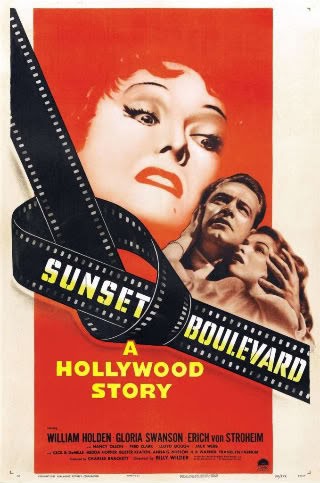
The Hollywood of Sunset Boulevard is a far cry from the glittering glory days of the 20s, despair and the fear of failure having replaced the opulence and optimism of the early years. This is the world Joe Gillis (William Holden) inhabits; both his apartment and car are beyond his means while his career as a screenwriter has ground to a virtual halt. With the debts piling up, his attempts at hawking his hackneyed scripts coming to nothing and the repo men breathing down his neck, a sudden blow out on a tire sees him taking an unscheduled detour into the driveway of a crumbling mansion on Sunset Boulevard. Despite appearances, this isn’t just some derelict throwback. It’s the home of former silent star Norma Desmond (Gloria Swanson), living in decaying splendor with her butler, Max (Erich von Stroheim), as her sole companion. To a man like Gillis, faced with the humbling prospect of slinking back to Ohio with his tail between his legs, Norma Desmond represents a second bite at the cherry. Cocooned from the modern world by both her wealth and the careful attention of Max, she has allowed her delusions to run wild and convinced herself that the world is waiting with baited breath for her return to the screen. She even has a script prepared, a retelling of the tale of Salome with her, naturally, playing the lead. When Gillis is offered the job of editing her screenplay into something presentable, he senses an opportunity; he knows it’s ludicrous trash but a drowning man will grasp at anything. Thus he finds himself drawn ever deeper into a macabre world as Norma’s companion, plaything and muse. Yet despite the comforts of his new lifestyle, Gillis finds himself repelled by the parasitic, introspective existence he’s tangled up in. The more Norma’s dependence on and love for Gillis grows, the greater is his need to break free of his gilded cage and return to the living. The stifling, closeted world of Norma, Max and Gillis can be seen as a microcosm of Hollywood itself: a self-contained community whose members readily humiliate and lie to themselves in order to perpetuate a dream, ultimately losing touch with that blurred line between fantasy and reality.

I adore the films of Billy Wilder. His caustic take on life could strip characters and situations right down to the bone. Yet he also understood people, understood what made them tick and he sympathized with them. Even his grotesques and monstrosities have a human heart that can be wounded. For all the dark sourness of Sunset Boulevard, the main characters are all fully rounded people who earn our compassion at one point or another. Wilder doesn’t ask the viewer to stand in judgement of these damaged individuals but rather his criticism is leveled at the system that has brought them to this pitiful state. Even here, his vision of Hollywood is a complex one; on the one hand, he paints a depressing picture of the hazards of living in the past and subsisting on former glories, while he also takes merciless shots at the ephemeral nature of the motion picture business and its fondness for forgetting its roots and those who made it what it is. The film is full of innuendo and references: Norma sitting playing bridge with the ‘waxworks’ (Buster Keaton et al) and watching herself in Queen Kelly while Max runs the projector. The latter is a wonderful touch when you bear in mind that von Stroheim’s directing career came to an end when that film ran into difficulties – the irony becoming even more shocking when the true nature of Max and Norma’s relationship is revealed later on. And in the midst of all the tragedy and bitterness, there are moments of marvelous black humor too: Gillis arriving on the very day Norma’s pet chimp is to be laid to rest; one monkey coming to replace another.

Sunset Boulevard is one of those movies where almost everything seems to blend seamlessly. The script and direction are full of riches but the performances of the three lead players hold it all together. William Holden was a good choice as Gillis, the former golden boy whose career was just starting to languish must surely have identified with the character of the struggling writer. Superficially, Gillis may appear the least complex of the trio but there a number of sides to him. He’s both a chiseler and a dupe, initially weaseling his way into Norma’s household but then failing to appreciate how much she has come to love him. He’s also a cynic (his floating corpse’s narration is loaded with hard boiled idiom) while remaining a kind of noble innocent, his final actions being motivated by a sense of personal honor as much as anything else. Erich von Stroheim’s Max is a very restrained portrait of selfless devotion. I don’t want to say more than that in case anyone hasn’t seen the film – his conversation with Gillis in the shadow drenched garage is a powerful and quite shocking reveal that shouldn’t be spoiled. What I will say is that while all that stony Germanic reserve remains intact throughout the film, his eyes convey perfectly the depth of his feelings for his mistress. However, the real star of the show is unquestionably Gloria Swanson. Her features have all the dramatic expressiveness that befit a veteran of the silents and it’s entirely appropriate that she should make use of this quality in the context of the character she plays. Norma Desmond is a woman who’s never really moved on from her heyday in the 1920s, and Swanson’s incorporation of silent techniques into her performance captures that. There’s a larger than life theatricality about her because that’s the way Norma Desmond sees herself. Additionally, Swanson nails the brittle vulnerability of a woman who’s balanced on the very edge of reason. The final scene may well be a famous one, but it’s Swanson who ensures that its fame is justified.

Generally, I write about movies that I’ve been watching at home. In this case, however, I had the pleasure of seeing Sunset Boulevard projected on the big screen at an outdoor cinema in Athens last night. There’s always something that bit special about seeing classics presented the way they were supposed to be viewed, and it was particularly enjoyable to be part of a full house too. There was a very nice and clean print used – the old R1 DVD (I can’t speak for the newer Centennial Edition) from Paramount is said to suffer from compression issues, although I can’t say I ever noticed anything especially bad about it. The movie is easily one of Wilder’s best in a long line of first class pictures – rewarding, satisfying and oozing class.

The Naked Spur

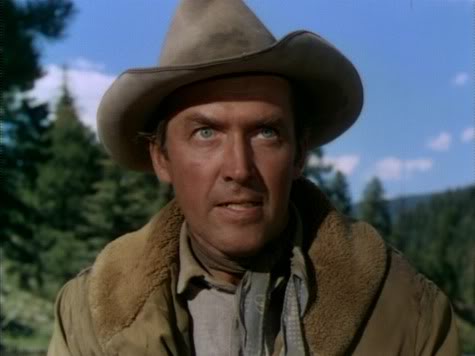
Anthony Mann and James Stewart – one of the three great director/actor partnerships (the others, of course, being John Ford and John Wayne and Budd Boetticher and Randolph Scott) that made such an impact on the western and how it was to develop. The importance and the legacy of their collaborative body of work is undeniable; I think it’s safe to say there’s consensus on that. A thornier issue, or at least a more subjective one, is attempting to settle on their best work. When it comes to Stewart and Mann I reckon a case could be made for any one of their westerns – although I do feel that The Far Country is probably the least of them – which is a testament to the consistency of their quality. However, having given it a good deal of consideration, I feel The Naked Spur (1953) just about gets its nose in front. There are two major, interdependent, factors for this: the obsessive and relentless tone that never lets up, and a lead performance by Stewart that I can only describe as magnetic in its intensity.

That this is going to be a dark and tense affair is evident right away as Bronislau Kaper’s moody score plays over the blood red credits. A solitary rider slowly dismounts and ever so cautiously picks his way towards some target he’s spotted up ahead. This is Howard Kemp (James Stewart), a man who’s been doggedly pursuing a wanted murderer all the way from Kansas. On this occasion he doesn’t have his man, it’s merely an old prospector, Tate (Millard Mitchell), he’s stumbled upon. However, the two men strike a bargain to track what may be Kemp’s quarry. Before they can run down their man though they’re joined by another traveller: a flashy young man, Lt Anderson (Ralph Meeker), who’s just been drummed out of the army with a dishonourable discharge. Immediately, the viewer is caught a little off guard as there’s no clearly identifiable hero figure: Kemp is a driven, secretive man who’s exhibiting signs of instability; Anderson is a vain, amoral criminal; and Tate is a sly opportunist. When we finally see the fugitive, Ben Vandergroat (Robert Ryan), he’s all smiles and affability, and he’s even got a beautiful young girl called Lina Patch (Janet Leigh) as company. Who are we to root for here? As the story progresses it does become clearer where our sympathies are being drawn. Nevertheless, at no point does it become a simple black hat vs white hat exercise. Apart from one short skirmish with a party of faceless Blackfeet, it’s these five, disparate characters who dominate proceedings as they trek across a breathtakingly beautiful landscape towards Kansas. The real conflict of the picture is contained within this tight group, and more specifically within the heart of Howard Kemp.

Anthony Mann’s direction is tight as a drum, never slackening the pace for more than a moment or two at a time and maintaining the high pressure atmosphere right to the end. He keeps the viewer on edge throughout with a bombardment of disorienting high and low angle shots and extreme close-ups, yet intersperses these with enough long range views to ensure that the geography of the action remains apparent. Even here though, where William C Mellor’s camera showcases the natural beauty of Colorado, the binding together of the five travellers is highlighted – simultaneously dwarfed by the towering mountain backdrops and still hemmed in by their need keep each other as close as possible at all times. There are also examples of what Jim Kitses refers to as Mann’s visual motif of a man straining to scale a high place. Kemp is the one who struggles, and fails initially, to reach that higher ground. By the end he succeeds, he’s no longer overreaching himself and consequently achieves the redemption he’s been searching for all along.

It’s the redemptive quest that marks The Naked Spur out as a genuine classic western, but what ensures its successful execution is the power of James Stewart’s performance. Stewart’s wartime experiences gave him a quality that’s very difficult to define but very easy to discern. He could still draw on and display the old geniality of his earlier years, yet there’s an edge there too. His eyes could suddenly fill up with doubt and paranoia, and that “aw shucks” drawl could just as easily strangle itself into a choked stammer. Both Anthony Mann and Alfred Hitchcock got him to tap into this and coaxed performances from him that are almost painful in their honesty. Stewart’s Howard Kemp is a real three dimensional character, a man who marched off to war to do his duty yet finds that in so doing he has ended up at war with himself. He’s driving himself to reverse the mistakes of the past while also loathing the kind of man he’s forced himself to become in the process. In contrast, Robert Ryan’s Vandergroat is a man at peace with himself; he knows he’s no good, he feels no regret for his past actions, and has no hesitation in turning any situation to his own advantage. Ryan was usually best when he was bad, and in this movie he turns on the charm as the unscrupulous student of human weakness to whom manipulation is second nature.

It’s always disappointing when a top movie is handed a less than ideal presentation. The R1 DVD of The Naked Spur from Warner Bros is not a terrible transfer, but it is weak. Clearly, there was no restoration done on this title, and while there isn’t any significant print damage visible there is a softness and lack of detail in the image. These muted visuals are especially noticeable in the long shots. Extras on the disc are confined to a couple of shorts and the theatrical trailer. Anyway, I feel this film remains the pick of the Mann/Stewart westerns, although that’s not to be taken as a criticism of the other films they made together. I’d just place it at the top of an already highly elevated group of films.

The Ox-Bow Incident

poster48

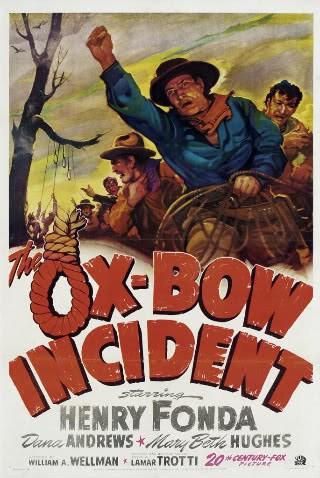
The western is genre that often gets a raw deal in the image stakes. And it’s not just a matter of waning box-office popularity in recent times. It’s rarely afforded the respect that other genres seem to court so easily and instead finds itself weighed down by the notion that it’s somehow unsophisticated. The term oater is applied, I’ve used it myself, in an affectionate way, yet it carries a certain air of condescension when you stop and think about it too. I guess the stereotype of uncouth figures riding horses, firing guns and chasing Indians is such a strong one that it’s managed to sideline the genre in the minds of many people. The paradox is that the western is actually one of the richest forms of cinema around. Leaving aside the frequently breathtaking visuals, the setting offers the opportunity to tell an almost unlimited range of stories and explore as many themes as it’s possible to imagine. The vast geographical expanses and the absence (or at best the bare rudiments) of civilization create a kind of nearly blank canvas onto which a skilled filmmaker can paint, with both bold and subtle strokes, whatever he likes. William Wellman was certainly highly skilled and his westerns are never less than interesting, and usually challenging too. The Ox-Bow Incident (1943) is a powerful and memorable piece of work that stays with you and is one of those films that proves the western is capable of being not only an entertainment but an intellectual stimulant as well.

The plot is a simple one and it’s that lack of complexity in the storytelling that’s one of its greatest strengths. The film has a moral point to impart and too much narrative trickery would only be a distraction and water down the central message. Events begin to unfold in a little backwater settlement where the neighbouring ranchers have been struggling with the perennial problem of cattle rustling. When a youngster comes racing into town to breathlessly announce that one of their own has been apparently murdered and his livestock taken a tragic chain reaction is set in motion. The jaded and bitter populace experience disbelief and outrage and are teetering on the edge, poised to ride out and hunt down like animals the alleged killers of their friend. For a brief moment, it looks like reason and decency may prevail as the aged storekeeper Davies (Harry Davenport) appeals to their better nature. But this is not to be – ex-soldier Tetley (Frank Conroy) soon turns the townsfolk back to their base instincts, and a rag-tag posse is formed. Not wanting to draw the ire of the town upon themselves, two cowboys, Gil Carter (Henry Fonda) and Art Croft (Harry Morgan), reluctantly join the eager hunting party. It’s not long before the posse cut the trail of three men (Dana Andrews, Anthony Quinn and Francis Ford) who seem to fit the bill of the murderers. From this point on the movie becomes a kind of ethical struggle between the ineffectual Davies and the implacable Tetley for the souls of the posse members, with the fate of the three captives hanging in the balance.

£17

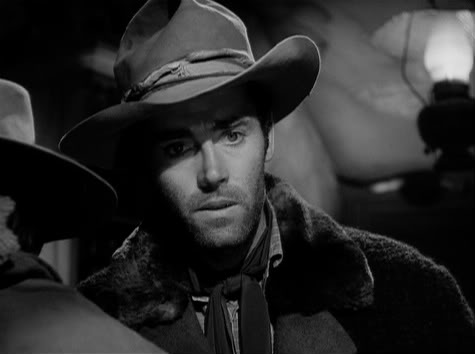
The Ox-Bow Incident is based on the novel of the same name by Walt Van Tilburg Clark and, although it’s been quite a few years since I read the book, I recall it as being a pretty faithful adaptation. Wellman’s direction captures the heavy, moody and ultimately tragic tone of the novel very well. There aren’t many true exterior scenes, most of the film seeming to have been shot on sets, and this (along with the high contrast photography) helps to pile on the sense of claustrophobia and doom. While the outcome is fairly predictable, the director still maintains the tension and, crucially, that isn’t lost even with repeated viewings. In fairness, a lot of that comes down to the performances too; Dana Andrews, as the leader of the suspected murderers, was billed below Henry Fonda but his work plays a large part in the success of the movie. His initial disbelief and growing desperation at the nightmare situation he finds himself in is built steadily. He did a fine job of conveying an awkward mix of fear and nobility that positively demands the sympathy of the viewer. In a sense, Fonda plays something of a supporting role in this one, only taking centre stage at a few points. Perhaps his best moment is in the saloon at the end when he reads Andrews’ letter to his illiterate friend. The letter itself is a powerful and emotive one that expertly outlines the author’s twinned concepts of justice and conscience. Fonda’s delivery of the words, as Wellman shot him in extreme close-up – partly obscured at first and then full face – is perfectly timed and enunciated to maximise their impact. However, for long stretches, he’s portraying the confused man in the middle, caught between the opposing ideals of Tetley and Davies. It’s this conflict that’s at the heart of the picture: how reasonable and civilized men can be browbeaten into submission, how the cult of personality can sway the masses and turn them into an unthinking mob, bereft of ethics and robbed of conscience. It’s both an indictment of the failings of the law – the sheriff has left town, the judge is a procrastinator, and the deputy is little more than a barbarian – and a warning that that same law is all we have to prevent our descent into inhumanity.

The R1 DVD of The Ox-Bow Incident from Fox is an excellent presentation of the film; there’s hardly any damage to be seen, the detail level is fine, and the crisp image has the kind of strong contrast necessary for this type of movie. There’s also a fine selection of extras: a commentary track by William Wellman Jr and Dick Eulain, a biography of Fonda, and a gallery  of images. This title is due for a Blu-ray release by Koch Media in Germany in August. Seeing as the extras are to be replicated it’s reasonable to expect that the same film elements will be used, therefore a first class transfer should be on the cards. As I said in the intro, The Ox-Bow Incident is a good example of a thinking man’s western, yet for all that, it never loses sight of the fact that it has to entertain and grip the viewer too. A superb film.


Pickup on South Street

Movies that focus on the post-war obsession with the Red Scare can be a bit trying to watch with modern eyes. The forced patriotism and tendency towards speech-making rarely add up to a satisfying viewing experience. But on occasion, they can work and rise above the poisonous politics of the time to present a genuinely good film. Pickup on South Street (1953) is an excellent example – Sam Fuller’s commie baiting has a cynical, sardonic edge that makes it almost refreshingly subversive, especially given the climate in which it was produced.

Skip McCoy (Richard Widmark) is a small time grifter, a pickpocket back plying his trade on the subway just after being released from prison. He’s also a three time loser (one more conviction and he gets life) and may have taken a step too far this time. In one of the most erotically charged pieces of larceny committed to film, he eases a wallet out of the purse of a girl in a crowded carriage. The girl, Candy (Jean Peters), unfortunately happens to be under observation by the FBI, who want to trace the man she’s to deliver the contents of the wallet to. McCoy’s light-fingered work leaves everyone in a spot: Candy can’t make the drop and has to break the bad news to her communist boyfriend, the Feds have had the perfect sting snatched away from them, and McCoy finds himself with a piece of microfilm that both the law and the reds are prepared to nail him to get. The result is that McCoy winds up walking an especially precarious tightrope, holding the cops at arm’s length while he attempts to extort $25,000 from the communists. All the while, Candy is asked to use her ample charms to retrieve the coveted microfilm one way or another. In the end, McCoy does what the Feds want and eventually gives up both the film and the spy ring. What distinguishes this movie from the standard anti-communist fare of the time though is the attitude and motivation of McCoy throughout. He quite literally sneers at the earnest appeals to his patriotism that the FBI man naively hopes will sway him. When he does finally look beyond narrow self-interest it’s not because he just thought about the flag and suddenly felt all mushy inside, it’s because he has witnessed the brutality of the people he’s trying to bargain with and owes a debt of loyalty and gratitude to friends. So, while McCoy ultimately “does the right thing”, his own personal integrity and disdain for authority remain more or less intact.

Pickup on South Street represents Sam Fuller at or near his best; the stripped down plot, the cheap, hard-boiled idiom of the dialogue that snaps like a whip, and the pulp trashiness of the characters all combine with the director’s gut-punching bluntness to deliver eighty minutes of great cinema. Some of the best scenes in the movie take place in McCoy’s waterfront shack, where Joe MacDonald’s camera makes the most of the shadows and confined space to create mood and atmosphere. Of particular note is the sequence when McCoy returns to find Candy searching the place by torchlight. Not even suspecting that it’s a woman, he slugs the half seen figure full on the jaw and lays her out, then casually brings her to by pouring his river chilled beer over her. What follows is a sexy and darkly romantic scene, where McCoy gently massages Candy’s bruised face as the two of them draw ever closer, and the camera moves in for an increasingly tight close-up. In a completely different but equally effective scene, Fuller and MacDonald have the villain holed up in the smallest, darkest space imaginable – a dumb waiter stalled between floors as the Feds peer through the openings above and below – and once again use the tight framing to great effect.

Pickup on South Street was the first of two movies Richard Widmark would make with Sam Fuller (the other was the following year’s Hell and High Water – a glossier, more cartoonish and less interesting work) and it provided him with one of his better roles. He’d moved on from playing out and out villains and seemed to enjoy the anti-heroic status of the part. Skip McCoy is an unapologetic thief, with a streak of mild sadism too, who revels in his life outside the law and normal society. Widmark was probably the ideal choice as a character whose default reaction to noble ideals and patriotic fervor was a curled lip and stinging sarcasm. As the foil, and romantic interest, for this cocky and contemptuous figure, Jean Peters was another fine piece of casting. As Candy, she exudes a kind of earthy sexuality that’s incredibly attractive in a cheap, slightly sleazy way. It’s never made exactly clear what her background is, but there are allusions to a tawdry past that she’s trying to live down. Also, the fact that she endures fairly rough treatment at the hands of McCoy (including a full-on punch in the face) and a bad beating from her boyfriend without a whimper of self pity indicates that she’s familiar with the unsavory side of life.

While these two dominate the film’s narrative, the show is damned near stolen every time Thelma Ritter’s Moe makes an appearance. Her world weary stoolie, who dreams only of scraping together enough cash to ensure she avoids a pauper’s funeral, is highly memorable. Aside from the fatalism and melancholy of her character, she draws a huge amount of sympathy from the viewer just by appearing plainly human. As such, it’s no surprise that it’s the fate of Moe which affects McCoy deeply enough to take decisive action. The main villain is Candy’s boyfriend, played by Richard Kiley. He’s the stuff of stereotypes, all sweaty and gutless, but the movie needs such a figure to act as the focus for the audience’s resentment.

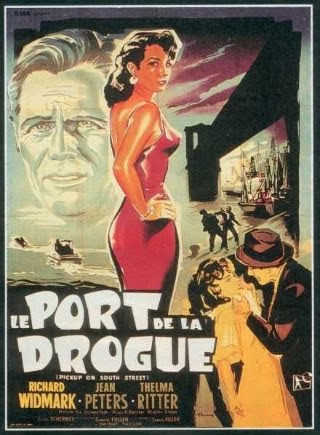
The UK DVD from Optimum offers a very strong transfer of the film. It’s clean, sharp and has good contrast. Unfortunately, there are absolutely no extras included on the disc. In terms of supplementary material, the US Criterion release is clearly the way to go. However, if you just want to see the film itself given a fine presentation then it’s hard to beat the Optimum release – especially if you take the difference in pricing into account. Pickup on South Street remains one of the best examples of Sam Fuller’s talents, a first rate film noir where he never allows the political backdrop of the tale to bog down or derail things. In fact, the picture was initially released in France in a dubbed version where all references to the red spy ring were excised in favor of a storyline involving narcotics – which goes to show that the core narrative is strong enough to stand alternative interpretations being welded on. An excellent movie all round.

Ulzana’s Raid

poster242

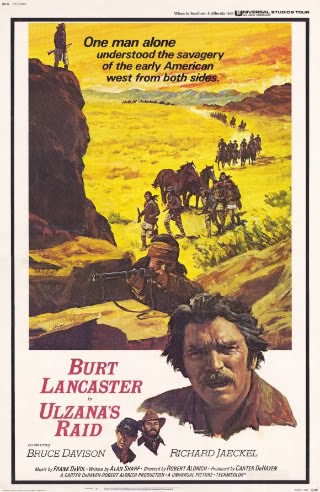
By the 1970s revisionism had hit the western in a big way; it had started the previous decade of course, but the social upheval of the period brought it fully to the fore in those last painful days of the Vietnam War. Conflict and domestic unrest have a way of drawing a nation’s gaze inward and it’s hardly surprising that the most iconic cultural markers are the ones upon which attention is most strongly fixed. Such was the case with the western, that most readily identifiable symbol of America’s heritage, and the brutal campaigns against the Indians provided a rich background to use as a parallel for a contemporary war. Ulzana’s Raid (1972) is frequently cited as an allegory for US involvement in South East Asia, and it’s hard to argue with that – inexperienced soldiers battling a largely faceless foe in hostile and unforgiving territory, exposing strengths and weaknesses, prejudices and virtues in the process.

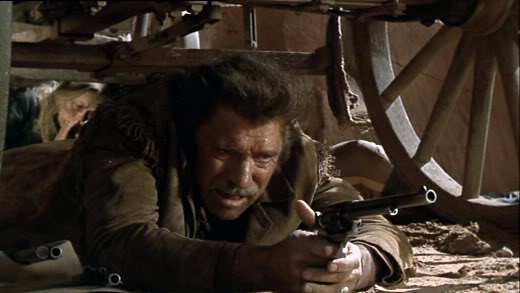
The tale concerns the breakout by a band of Apache led by Ulzana (Joaquin Martinez) from the reservation, and their subsequent rampage across Arizona. In response, the army sends out a detachment under the command of a green officer, Lieutenant DeBuin (Bruce Davison), with orders to capture or kill the fugitives. DeBuin is to be aided in his task by two scouts, an Apache, Ke-Ni-Tay (Jorge Luke), and a white veteran, McIntosh (Burt Lancaster). DeBuin’s initial approach, fuelled by the fact that his father is a clergyman, is an almost evangelical one, wherein he views the Apache as a misguided and misunderstood people who need to be coaxed back to the bosom of white civilisation. The scouts, McIntosh in particular, have no illusions on this score though – to them the runaway Apache are no aspiring white men who have strayed from the flock, they are a dangerous and cunning enemy worthy of both fear and respect. As DeBuin’s troop follow Ulzana’s blood-soaked trail, encountering one horrific atrocity after another, the young lieutenant sees his faith in the essential goodness of humanity challenged. His reactions range from shock, leading him to question a bemused Ke-Ni-Tay about the motivation for such cruelty, to a kind of outraged vindictiveness as he demands his Apache scout bury the mutilated remains of yet another butchered settler. Throughout all this McIntosh remains dryly philosophical, guiding his young charge as best he can and providing the voice of reason when hate and revenge threaten to displace logical action. What we end up with is an examination of white America’s attempts to come to terms with an adversary whose psychology and beliefs are so alien and incomprehensible that they defy conventional means of tackling them. In the end, it’s only by worming his way into Ulzana’s thought processes that McIntosh is able map out a way to defeat him, although the ultimate irony is that it’s another Apache, and not all the might and firepower of the army, that finally brings closure.

£23

I think Ulzana’s Raid might just be Robert Aldrich’s best movie, blending action and harsh visuals perfectly. The cruel and pitiless Arizona and Nevada landscapes are a fitting backdrop for the brutal events that play out on the screen. There’s barely an interior shot in the whole picture, the bulk of it taking place amid the dust, rocks and canyons. Where he was a little coy about trumpeting his politics in earlier works here he indulges in a kind of liberal realism that never patronises or descends into sentiment. There’s clearly sympathy for the deprivation that has driven Ulzana and his band off the reservation in search of the spiritual power they crave, but at no point does Aldrich allow the Apache to be seen as the kind of dippy mystics that is the stuff of caricature. He never shies away from depicting the merciless nature of Ulzana and his men, but nor does he seek to cover it up in politically correct excuses – to paraphrase both McIntosh and Ke-Ni-Tay, the Apache are what they are and that’s how it’s always been. The main focus though is on how the young lieutenant and his men cope with the reality of fighting an enemy that they can neither seem to catch nor even understand. Bruce Davison had suitably innocent and freshly-scrubbed features to portray a man about to have all his high-minded illusions shattered. He matures nicely as the story progresses and McIntosh’s wisdom gradually sinks in. As the grizzled old scout, Lancaster dominates the movie with his wry observations helping to ground it all. He displays a sense of fatalism that befits a man whose years of living on the frontier have exposed him to the brutal nature of men in general. Richard Jaeckel also deserves a mention for his sergeant who’s been through the wars and learnt that while officers need to be obeyed and respected their judgement is not always to be trusted.

Universal’s UK DVD of Ulzana’s Raid presents the film at about 1.78:1 anamorphic. The disc contains no extra features at all, but the movie itself looks very handsome with good detail, sharpness and colour. I should mention that the UK version has a number of mandatory BBFC cuts for horsefalls – these don’t amount to much in terms of time but they do result in slightly jarring editing when they occur. As far as I know, the continental European versions do not have any of those cuts present. As I said, this is probably Aldrich’s best work and it makes for a western that’s both intelligent and engrossing. It casts a cool eye on the old west that refreshingly avoids being either judgemental or romantic – the viewer is expected to be enough of an adult to make up his or her own mind without being led by the nose. Highly recommended.


Nevada Smith

poster246

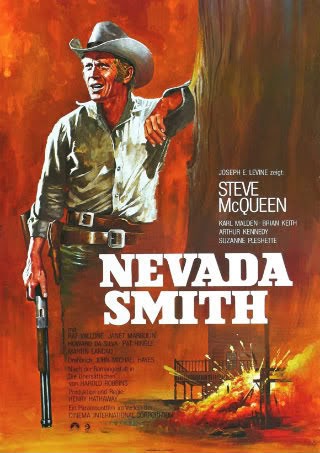
The theme of revenge has always been one of the staples of the western genre and, despite a slightly bloated running time, Nevada Smith (1966) is a fairly standard example of this. Perhaps one of the most interesting aspects of the movie is its focus on a mixed race protagonist. However, while this lends a different slant to the usual quest for vengeance, the casting dilutes it a little and it’s easy to forget the whole racial angle for extended periods, except when the characters on screen make explicit reference to it.

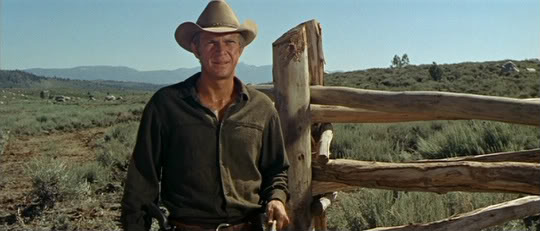
Max Sand (Steve McQueen) is the half-breed son of a white man and a Kiowa woman, and the story opens with him innocently directing three men (Karl Malden, Arthur Kennedy and Martin Landau) who claim acquaintance with his father to the family home. These men aren’t paying any friendly call though and Max realizes this sobering fact too late. By the time he makes his way back home the men have fled, but there’s a horrifying sight left behind for Max to find. In a vain attempt to extort money the father has been cut, burned and shot to death, while the mother has been skinned alive. Mercifully, none of this is shown on screen but the reactions of Max and his subsequent burning to the ground of his home and all that it contains still add up to a powerful scene. With his whole world literally reduced to ashes, he sets out to track down the torturers of his family and kill them. If the casting of McQueen as a half-breed is a bit of a stretch then it’s even less credible to see him as a callow youth with no real world experience. Still, that’s how we’re supposed to take it, and his green foolishness almost ends his quest before he’s even got properly started. It’s his chance encounter with a travelling arms dealer, Jonas Cord (Brian Keith), that turns things around for him. Cord takes the young man under his wing, teaching him the rudiments of gunfighting and giving him some basic education. From here on, the film is divided into three distinct sections, each focusing on how Max (he only adopts the Nevada Smith alias in the final segment) locates his man and goes about his reprisals. The first and third sequences work best, the former for its brevity and the latter for its tension. The middle of the movie (the part dealing with Arthur Kennedy’s comeuppance) is much more problematic though. The way it’s set up – Max having himself jailed to get close to his victim – strains believability in the first place. But the real problem is the way it goes on too long and virtually turns into a separate movie within the main narrative. It slows things down terminally and results in the entire production having a disjointed feel. Such is the draining effect of this sequence that the superior final part has some of its impact lessened by the time we get round to it.

£22

Nevada Smith is a prequel to The Carpetbaggers, a movie I’ve never seen so I can’t comment on whether it holds up in terms of continuity. Henry Hathaway can usually be counted on to deliver tight, economical movies that rarely outstay their welcome. However, with a filmography as long and varied as his there will inevitably be some that turn out better than others. In this case, I think Hathaway suffered from the episodic nature of the script he had to work with. The narrative ends up bolted together rather than flowing seamlessly from one situation to another. As I already said, the mid section is where it stumbles and the impetus is lost. In fairness, this part does serve to illustrate the development and progression of McQueen’s character. The thing is it’s not actually a weak section on its own; the problem, for me at least, is that it doesn’t quite gel with either the tone or pace of what precedes and follows. Of course Hathaway is aided enormously by having Lucien Ballard shooting the picture for him, the outdoor scenes in particular being beautifully rendered. The miscasting of McQueen is especially noticeable when you consider his age – he was in his mid-thirties, and looked it, and was being asked to play the part of someone at least fifteen years younger. The only saving grace lay in the fact that McQueen had the ability to project a kind of childlike innocence when he wanted. While this cannot entirely paper over the incongruity, it does go some way towards compensating for a major weakness. Karl Malden, Arthur Kennedy and Martin Landau were a fine trio of villains, and there’s a good deal of satisfaction to be derived from seeing them get what’s coming to them. Malden easily has the best role and he does a good job of portraying a man descending into terrified paranoia as a result of the relentless pursuit by his faceless nemesis. The only female role of any substance was handed to Suzanne Pleshette, as the girl who falls for McQueen and aids him in his escape from the swamp ringed prison, and she manages to be both sexy and tragic.

Back when Paramount were still in the business of issuing catalogue titles on DVD it was rare to come across a poor transfer. Nevada Smith is no exception in that respect, the anamorphic scope image on the R1 disc being strong, detailed and colourful. It’s a totally barebones affair though with no extras whatsoever. So, to recap, we have a fairly standard western tale of revenge – and the ultimate futility of it all – that’s reasonably satisfying. Apart from the odd central casting, I feel the movie could have been improved a good deal by a bit of judicious editing to strip away some of the flab in the script. Still, the end product is entertaining enough and I’d give it a qualified recommendation.


Man in the Shadow


vfsg98e

Another modern western, and another message film. Man in the Shadow (1957) treads a similar path to Bad Day at Black Rock by having a lone individual take a stand against a racially motivated murder. The main difference is that this time the hero is not an outsider who’s swooped down on an alien world seeking justice. In this movie our protagonist is a familiar face in his small community but whose sense of personal and professional honour bring him into direct conflict with with those he’s known all his life.

Ben Sadler (Jeff Chandler) is the sheriff of a sleepy western town. The routine and mundane nature of his job is highlighted early on when he opens up the cells to release the town drunk who’s been sleeping off a heavy one. He hands him a stern warning, which we know is really only for show, and then bids the old timer good day. That’s the kind of town we’re in – one where crime is generally confined to manageable, petty affairs that tend not to represent a major threat to the community. Within moments however, a much more serious matter is to be laid before Sadler, one which is not only reprehensible in itself but also, as a result of what any investigation will entail, poses a threat to the finances and, by extension, the very viability of this small backwater. Sitting huddled and almost forgotten in the office is an old Mexican with a story to tell that’s about to present the sheriff with a moral and professional dilemma. The old man has witnessed the murder of a young friend by two cowboys at a nearby ranch. He doesn’t really expect anyone to take his tale seriously, partly because of his lowly immigrant status and partly due to the identity of his employer. Virgil Renchler (Orson Welles) is a big man, both physically and financially, and his ranch is the life blood of the town. Without the patronage of his sprawling ranch the businesses would quickly wither and even the railroad stop might fall into disuse. Sadler is aware of the clout wielded by Renchler but, unlike his slovenly and skulking deputy, he’s also conscious of his duties as the representative of the law. So, it’s with some reluctance that he gives his word to the old man and begins to tentatively look into the allegations. Renchler, though, is a throwback to the old cattle barons, a man whose self-sufficiency and power has led him to believe in his own infallibility. When he tells Sadler that he has no business asking questions of him and dismisses the killing as nothing more than an insignificance, the sheriff’s indignation is aroused. Thus we have one of those perennial western themes, the clash between the laws of civilization and the moneyed big shots who see themselves as being above such naive concerns. The thing is though that Sadler isn’t merely up against a powerful rancher, the influence and fear that Renchler inspires in the country is such that virtually the entire population of the town turns against their lawman. Sadler’s only allies are Renchler’s disgruntled daughter, Skippy (Colleen Miller), and the Italian immigrant barber – not exactly a pair of heavy hitters. Still, in spite of the enmity of his former friends, an attempt on his life and a public humiliation, Sadler presses ahead with the investigation that nobody wants.

£14

Although the racism implicit in the murder is acknowledged and explored, that’s not the real issue of the movie. The primary concern is the corrupting influence of business and how entire communities can be effectively blackmailed into abandoning their awareness of right and wrong for the sake of financial gain. While this moral issue remains at the forefront throughout, Jack Arnold’s direction ensures that it’s conveyed dramatically rather than by means of noble speeches and the like. The pace is brisk and the development direct so there’s not much room for complex characterisation; we know where we stand as regards the principals right from the beginning and that doesn’t change much by the close. Welles does manage to elicit some slight sympathy as the man whose blustering independence has painted himself into a corner. That’s one of the things about Welles as an actor – even when he played villains it was hard not to feel a little for him. He does lay it on a little thick at times, but complaining about Welles’ tendency to ham it up is akin to decrying John Wayne for his machismo – it’s part of the package and you know that when you go in. Jeff Chandler is pretty good too as the isolated sheriff who knows full well that he’s probably biting off more than he can chew, but whose own personal code precludes his backing down. The main weakness lies in the script, not that it’s poorly executed but that it’s themes are too familiar. There’s nothing especially new or groundbreaking in the plot and although it’s carried off professionally there is a certain unavoidable staleness to it all.

Man in the Shadow is available on DVD from a number of sources: from Germany, France and a recent DVD-R from Universal in the US. I have the German release from Koch Media and it’s a very nice presentation. The movie is in anamorphic scope with very crisp black and white images and obviously came from a clean, strong print. There are no forced subtitles on the English track and there are some attractive extras too. Apart from the trailer and gallery, there’s a 14 minute interview with Jack Arnold where he talks about his memories of working within the studio system and the changes in filmmaking he observed down the years. The movie is an entertaining and pacy one that has a point to make. I found the performances and direction all up to scratch, and the only problem was the lack of originality in the story. Still, it’s not a bad way to spend an hour and a quarter or so – and anything that involves Orson Welles’ participation has to be considered worthwhile.


Bad Day at Black Rock

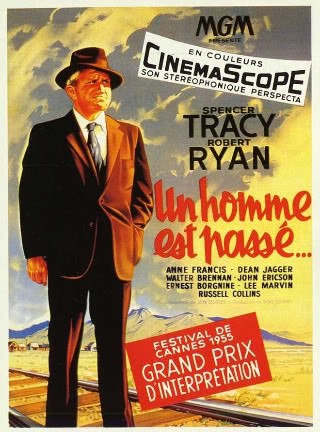
Bad Day at Black Rock (1955) is what’s termed a modern western. Of course, from a strictly purist point of view, the western really ought to take place within a narrow time period and location. This film is certainly set in the correct location – the arid southwest – but the events take place not in the late nineteenth century, but immediately after the end of WWII. Still, even if the trappings belong to a later era, the basic themes of the classic western are present: a simple tale of good vs evil wherein a lone, righteous figure grapples with the hostility of both the environment and his fellow men. Despite the apparently straightforward nature of the plot, the film is a powerful one that tackles at least two major themes; one of which is very obviously presented, the other is less explicit and takes something of a back seat but it’s there all the same.

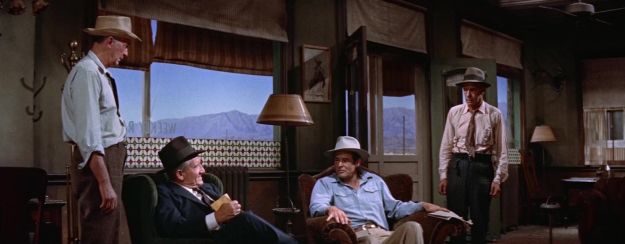
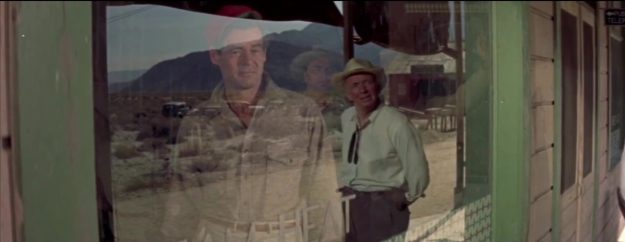
The opening is aggressive and dramatic, with a mean-looking black engine, hauling blood red carriages, hurtling through the desert to the accompaniment of Andre Previn’s ominous score. As this impressive and relentless juggernaut grinds to a halt outside the tiny, desolate town of Black Rock, it’s as clear to the viewer as it is to the awestruck locals (the train hasn’t stopped there in four years) that something important is about to happen. The figure that alights is an incongruous one, a middle-aged man with a stiff arm, clad in an austere, black business suit. He could be a businessman, a government man, a gangster – what he’s not is local. This man is John J Macreedy (Spencer Tracy), and the reactions provoked by his unexpected arrival progress from incredulity to suspicion and finally open hostility. Everybody he encounters is consumed with curiosity regarding his errand in their midst. However, this is not the normal sense of wonder that would occur in any small, isolated community when its members are confronted with the presence of a stranger. There’s fear in the air, fear of the man and what he might discover. As Macreedy finds himself repeatedly stonewalled when requesting even the most basic kind of assistance, he’s also on the receiving end of questions from the locals. But these questions have an edge, they’re of the cagey variety where the asker doesn’t really want to know the answer. What all this means is that fear has a companion in Black Rock – guilt. A great sin has been committed in this community and Macreedy has descended upon the residents like some instrument of judgement or retribution. It’s soon made apparent exactly what has happened, a Japanese farmer has died in mysterious circumstances, and who bears the responsibility. Reno Smith (Robert Ryan) is the big man around town, and the one Macreedy must deal with. Perhaps more important than the violent climax is the verbal face-off between these two men outside the gas station. This scene highlights the two principal themes in the movie: the first is the ugly matter of racism, the second is the nature of the west itself. Of the two, I find the latter more interesting, mainly because it’s approached in a much more subtle manner. When Smith points out that suspicion of the unfamiliar is just a natural throwback to the old days, Macreedy observes that he always thought the old west was characterised by hospitality. And there’s the point, that the myth of the old west was subverted through time into the kind of small-minded defensiveness represented by Black Rock. To Smith, this new west has been neglected and forgotten, of interest only to academics or businessmen seeking a quick buck. Although it’s never explicitly stated, the inference is that the responsibility for the death of an innocent Japanese doesn’t rest merely on the shoulders of the bunch of ignorant rednecks who dealt the final blow. The suggestion is that these people have been bypassed by progress (the train that never stops) and abandoned to their own prejudices – an embarrassing by-product of the apathy in wider society.

This is another of John Sturges’ tightly-paced, economical works, stripped down to the basics and direct. From the moment the train thunders into view at the beginning, until the circle is completed eighty minutes later with the same locomotive making another rare stop at Black Rock, the pace never slackens. Additionally, Sturges’s camera uses the wide lens to excellent effect, the dearth of close-ups serves to keep the characters at a distance and accentuates the isolation of both them and the setting. Despite the high proportion of outdoor shots, there’s still a claustrophobic atmosphere about the whole thing. It’s as though the frontier has shrunk and this western drama is played out within the stifling confines of a town that has ceased to look outwards and has turned its gaze in upon itself. The only time a sense of space is apparent is during the credits sequence, and when Macreedy drives out to the ruins of the Japanese property – the railroad and a murdered foreigner representing the openness that was once the mark of the west. Besides the visuals, this is also a film of words, and although it’s dialogue heavy there’s a snap and colour to the lines that make them instantly memorable. I’ve seen some criticism of Andre Previn’s score, citing its intrusiveness, but I feel that the urgent, driving quality of the music is the ideal accompaniment for the threatening uncertainty that unfolds on screen.

Spencer Tracy’s naturalistic style of acting was greatly admired at one time, but the rise of the method saw it fall out of favour and opinions are likely to remain divided to this day. Personally, I like it; there’s always the feeling that you’re watching a real person reacting in much the same way you might do yourself to the circumstances. The passage of time, and drinking, weathered his features and the bristling aggression that he displayed as a younger man gave way to middle-aged gravitas. Tracy could be seen as the face of moral America, not in a narrow, disapproving or prudish sense, rather the slightly imperfect conscience of everyman. As such, he was ideally cast as John J Macreedy – a man who’s trying to do one last decent thing before bowing out of life. There’s a certain ambiguity about what he means by that of course, I’ve seen it claimed that the character had been contemplating taking his own life until the challenge of exposing the rotten little secret of Black Rock reawakened his appetite. I’ve also come across the suggestion that Macreedy could be taken for a supernatural figure, the fact that Smith’s detective can find no evidence of his existence is the reasoning behind this. It’s an interesting idea, reinforcing the notion of his being the embodiment of a higher justice, but I’m not convinced that it’s actually the case.

As Macreedy’s chief opponent, Robert Ryan represents a kind of distorted reflection – another craggy individual, but one whose motives are far from admirable. If Tracy stands for the kind of fundamentally right man we’d like to be, then Ryan is the total antithesis; a bullying, bigoted braggart who’s become twisted by his own inadequacy and a country that has rejected him on every level. Reno Smith is a man to be both pitied and despised in equal measure, and Ryan nailed that quality. Caught somewhere in the middle, like most ordinary people I suppose, are the supporting players: Walter Brennan’s Doc (I feel for you, but I’m consumed with apathy) and Dean Jagger’s sheriff might be jaded but still retain some ethical sense, while Lee Marvin and Ernest Borgnine are suitably menacing as the loutish sidekicks interested only in doing their master’s bidding. The latter pair refer to themselves as cowboys but there’s no sign anywhere of any ranching taking place – Black Rock isn’t so much a one horse town as a no horse town.

The R1 DVD from Warner Brothers has Bad Day at Black Rock looking great. The anamorphic scope transfer is clean and crisp, and the colours are rich and strong. The extras are a commentary track by Dana Polan and the trailer for the movie – it’s not what you’d call a stacked edition but there’s no reason for complaint either. The film is a very strong effort from John Sturges, both entertainingly tense and thought provoking. He did some of his best work through the 50s and this is right up near the top – a definite and easy recommendation.

Spellbound

I’ve heard Alfred Hitchcock’s Spellbound (1945) described as a tale of the lunatics taking over the asylum, and that’s actually not a bad summation. Despite sounding like a glib dismissal, it neatly encapsulates the basic premise of this movie. Exploiting the then fashionable trend for psychoanalysis, and enthusiastically supported by firm believer David O Selznick, it’s a romantic mystery served up as a kind of Freudian stew – and a very tasty one at that. Like all of Hitchcock’s films made for Selznick the producer’s fingerprints are visible everywhere, but there are plenty of instances of that familiar visual flair to ensure that you never forget who directed it.

Amnesiacs always make good protagonists in any movie, the blanked out memories that need to be recovered before any sense of order can be restored automatically generate mystery, and so it is with Spellbound. Our hero (Gregory Peck) is referred to variously as Dr Edwardes, JB, and finally as John Ballantyne (I’ll stick with JB for the purposes of this piece as that’s the moniker he carries for most of the running time) while he struggles to find out his real identity, and more crucially whether or not he’s a murderer. His arrival at a New England psychiatric hospital posing as the new director is initially taken at face value. There are a few comments passed regarding his relative youth for such a responsible position, but there are no other eyebrows raised. What it does spark though is an unsuspected passion in the emotionally repressed Dr Constance Petersen, thus providing JB with one priceless ally. Such a deception cannot hope to endure long though and, sure enough, it’s inevitably revealed that the real Dr Edwardes is in fact dead and the impostor taking his place is very likely his killer. So, still in search of who he is and what he did, JB goes on the run with Constance joining him after a short interval. It’s here that the picture comes into its own, as Constance, with the aid of her old tutor Dr Brulov (Michael Chekhov), employs Freudian psychoanalytic techniques in a race against time to probe the depths of JB’s subconscious and discover the truth. It all culminates in the famous dream sequence, designed by Salvador Dali, whose interpretation lays bare all the secrets. The whole thing is pure, escapist hokum but it’s executed with such style and conviction that you’re completely drawn in. It’s a good illustration of how, apart from his technical achievements, Hitchcock was masterful at taking stories that were essentially tosh and coaxing the viewer into accepting their credibility for the duration of the movie.

I mentioned earlier Selznick’s enthusiasm for the subject matter, and I’d say that’s directly responsible for the film’s biggest weakness. Such was the producer’s zeal that he insisted on the involvement of an adviser on all things psychoanalytical. The result is an overly pious attitude towards the science depicted, from the cloyingly reverential foreword to the kind of mangled dialogue that even Ben Hecht was hard pressed to shape into something presentable. The contrast between the kind of clumsy exposition that Selznick wanted and Hitchcock’s talent for economical storytelling is clear to see in one scene near the end. In the space of a thirty second montage, consisting only of close-ups of Ingrid Bergman’s increasingly desperate features and a few imploring lines, the the trial, conviction and sentencing of JB is dealt with fully. Similarly, the whole, lengthy sequence at Brulov’s house could have proven intolerable in the hands of a lesser director. Instead, through the combination of a wonderfully idiosyncratic performance by Michael Chekhov, Hitchcock’s arresting visual style and the scoring of Miklos Rozsa (alternating between lush romanticism and the unnerving strains of the theremin), it stands as the strongest section of the entire film. Of course, in other places, some of the bravura touches could be said to serve no better purpose than to draw attention to their own inventiveness: the revolver discharged directly into the camera at the end springs to mind, but that’s such a memorable shot that it feels uncharitable and unnecessarily sniffy to complain about it.

It’s said that Hitchcock originally wanted Cary Grant for the lead, and Peck’s performance has been criticized for being a touch too aloof. I can understand where that’s coming from, Peck had yet to find his feet fully in cinema, although I also feel he was actually right for the part. Had Grant been cast I have a hunch he would have brought too much of himself, that innate self-confidence, to the role and thus rendered it less believable. As it stands, Peck had just the right measure of insecurity about him to get across the edginess of a man who doesn’t even know his own name let alone whether or not he’s a criminal. Whatever reservations anyone may have about Peck, it’s hard to fault Ingrid Bergman’s Constance Petersen. She brings real charm and innocence to the part of the slightly uptight academic who gradually learns that there’s a vast gulf between theory and practice when it comes to matters of the heart. There’s nothing the least bit goofy about her, she’s clearly a highly intelligent and capable woman but there’s also a touching vulnerability as a result of her sheltered lifestyle. Aside from the principal performers, there are a couple of excellent cameos in the mix too – the middle-aged cop and his partner discussing the issues he’s having with his mother who are in some ways reminiscent of the travelling salesmen in The 39 Steps, and Wallace Ford as the persistent pest in the hotel lobby – these don’t add anything at all to the narrative but they do enrich the whole experience.

Spellbound has had a variety of releases on DVD in different territories; my copy is the old Pearson release from the UK, which I think has been repackaged and subsequently issued by Prism. I guess there may be better versions out there but that old UK disc is pretty good to my eyes. There aren’t any problems with the transfer, which is clean, sharp and free from damage. There are a range of extras, from text bios and trivia to a gallery and a few clips of Hitchcock interviews etc – I’m pretty sure the latter is replicated on the other Hitchcock titles from Pearson. The movie itself is one of Hitch’s better than average 40s offerings, not as good as Notorious or Shadow of a Doubt but still technically accomplished and very entertaining. There are the familiar motifs (the wrong man on the run and the blonde Girl Friday) and the psychoanalysis angle is quite enjoyable. Like most of the director’s films, it has a high rewatch value regardless of how familiar the plot may be – recommended.