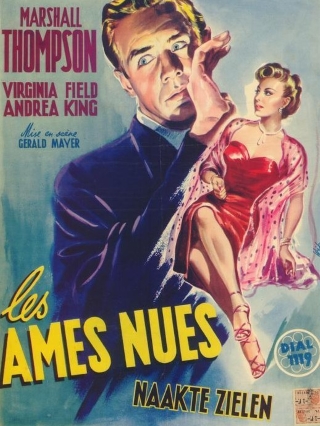
Give me a small cast of characters, ideally a cross-section of humanity, from the happy and hopeful to the hapless and despairing, lock them into some confined space in a way that shouldn’t be too contrived and I’m generally satisfied. Those limits and restrictions imposed by the situation tend to bring about some excellent drama. So it is with Dial 1119 (1950), something of a low budget sleeper which generates a good deal of suspense and tension from its simple premise. It demonstrates what can be achieved by a smart and focused script allied with a professional lineup devoid of big name stars.
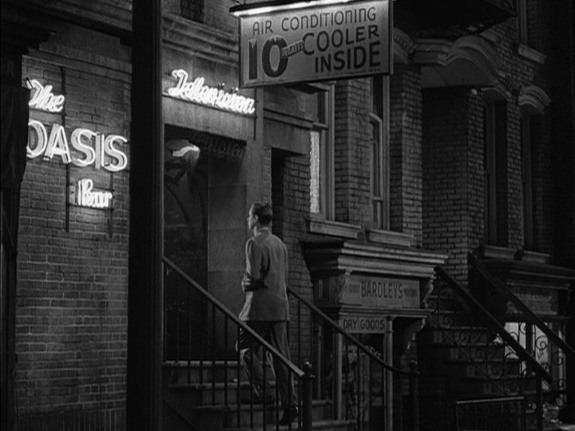
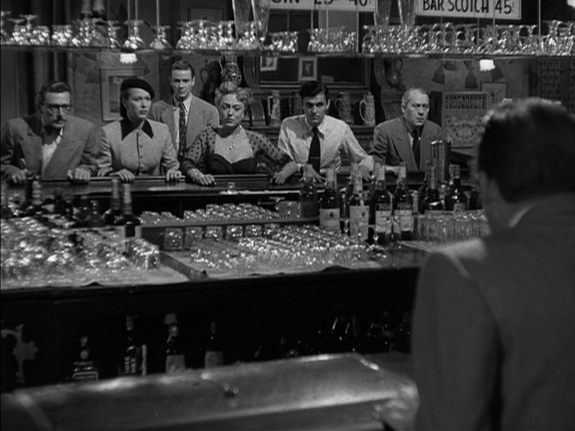
Think of an oasis and the notion of growth and fertility, of life itself, tends to spring to mind. It’s the name of the bar in which perhaps 90% of the action in Dial 1119 takes place, though this particular bar is in reality something of a dead end in more ways than one. Aptly enough, one of the first characters we see is a reporter (James Bell) who has arrived at the weary middle-aged conclusion that his job has indeed led him up a blind alley, that the place he’s at is all it’s ever going to be. He talks of quitting, of throwing in the towel on the whole business, but as a colleague tells him he’s not really serious about it, and payday is just around the corner after all. No, he decides to go round the corner, in a manner of speaking, and drop into his local bar for a drink on the way home. And there’s the woman (Andrea King) drifting toward the dispiriting prospect of spinsterhood at the ripe old age of 28. She’s getting ready to try to stave off that blank future by heading out to meet a man (Leon Ames), although she tells her (off screen) mother that she’s going away on a trip with a girlfriend. She too is headed for that same bar. Then there is the bar itself, a walk up place that claims to offer all the luxuries of the day, from air-conditioning to one of those newfangled TV sets. It’s a dour spot though, with a barman going by the name of Chuckles (William Conrad) who looks like he’s not cracked a smile since he grew his first tooth and who carps about the cheap clientele he’s saddled with. As the small group of customers drifts in and sets about tackling whatever drowsy numbness dulls their particular senses another joins them, an intense young man called Gunther Wyckoff (Marshall Thompson).
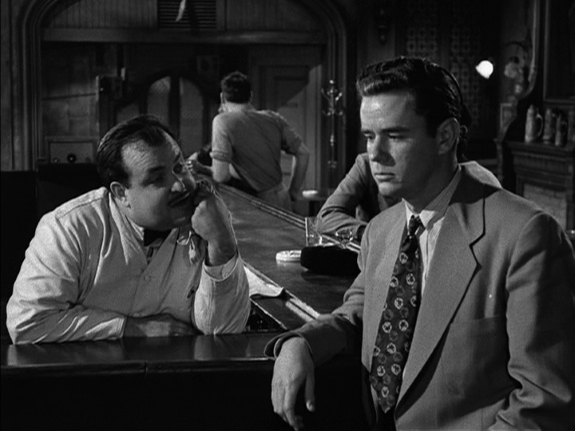
The viewer has already seen what Wyckoff is capable of since it’s been made clear that he’s on the run from a psychiatric hospital and we’ve seen him calmly shoot down a bus driver just because he got in his way. While we catch glimpses of the lives of the others in the bar, in addition to those mentioned there is also the alcoholic good time girl (Virginia Field) and the expectant first-time father (Keefe Brasselle), the TV in the background starts to broadcast news of a fugitive who has just killed a man. As the bartender grows uneasily aware that this killer looks a lot like the neurotic young guy who is stationed at the far end of the counter, we too have realized that the situation is poised on a particularly sharp knife’s edge. Before long more violence takes place and a state of siege develops with Wyckoff barricading himself and his ill-starred hostages in the saloon while the police wait outside and weigh up the pros and cons of allowing the killer’s shrink in to talk to him.
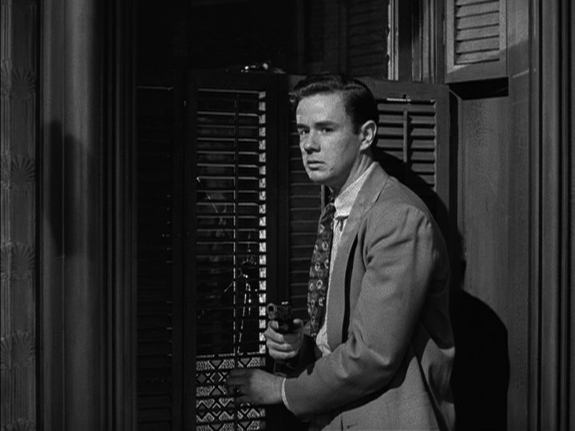
Aside from the drama inherent in this kind standoff situation, the film deftly notes the growing and evolving role of the media, especially the broadcast media, at the time. The film opens with a radio announcer telling the time and introducing a dance music show before cutting to a newsroom where the aforementioned disgruntled reporter is tapping out a would-be resignation letter. Soon, after Andrea King’s desperate romantic dreamer has been presented, the action segues into the screen of the TV mounted above the bar of the Oasis. In this way the three major sources of information of the era are shown in succession, and it is the latter which will have the most powerful influence on how matters develop. It provides the means by which Wyckoff’s identity is established by the bartender and then it offers live coverage of the siege from right outside the door, allowing the hostages inside the opportunity to watch the world on the outside watching them, simultaneously highlighting the gradual subordination of the traditional print media in the process. Somehow this feels appropriate given the fact the movie was directed by Gerald Mayer (nephew of MGM supremo Louis B Mayer), a man who made only a handful feature films himself and who would go on to work on a long list of successful TV shows over the following four decades.
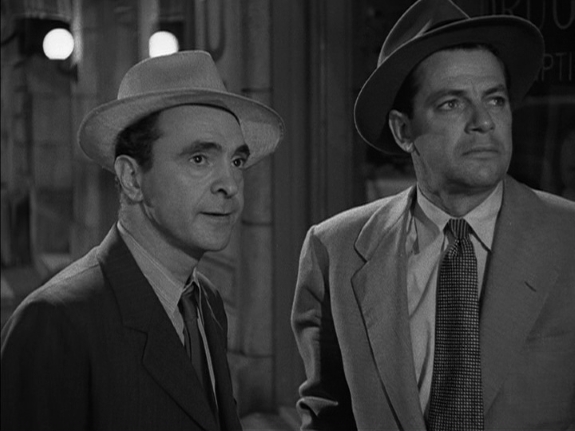
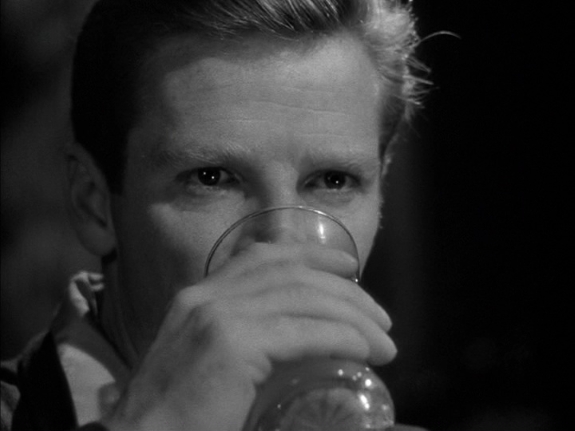
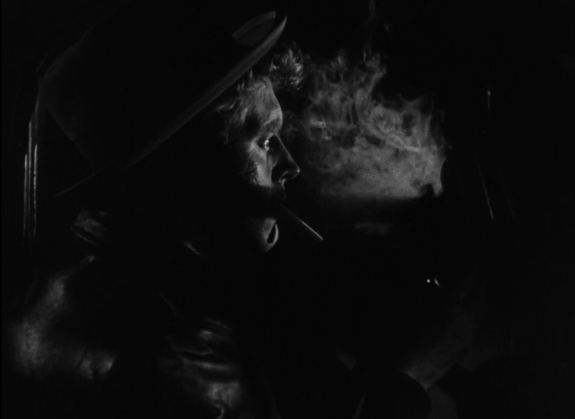
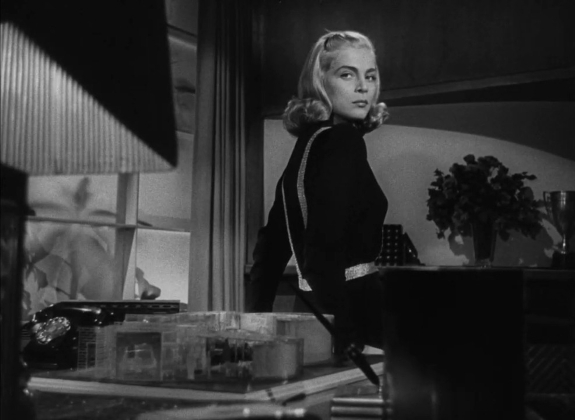
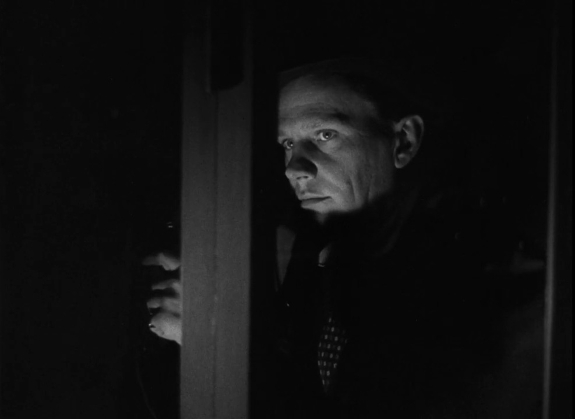
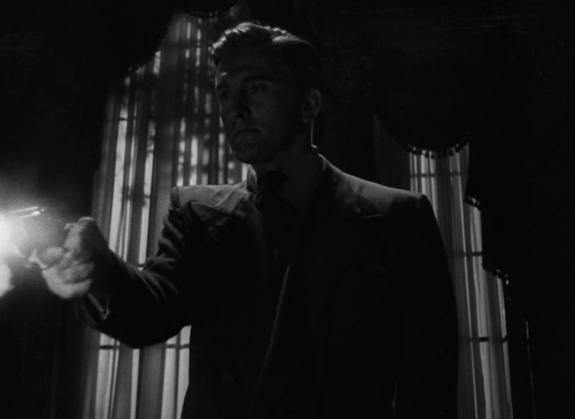
Marshall Thompson was top billed as the delusional Wyckoff and he is suitably detached, a dangerous man with a vaguely sullen baby face, killing coolly and with no apparent regrets. Without wanting to delve too deep into spoiler territory for anyone who hasn’t seen the movie, I found the neat subversion of the classic noir scenario of a returning veteran traumatized by his experiences and struggling to adapt to post-war life to be most interesting. Should anyone wish to comment on or make any observations on that aspect, they are welcome to in the comments section below, but I’m going to refrain from doing so myself in the body of the piece here. Small films with correspondingly small casts frequently operate as ensemble pieces and I think this is generally true of Dial 1119. Even if everyone gets an opportunity to hold the spotlight at some point, the one who most consistently draws the attention is Virginia Field. It’s something of a foolproof role as written but still needed a capable actress to pull it all together. Field comes over as faded, jaded yet incorrigibly sassy at the same time and she also gets to make the pivotal move during the climactic scene. Andrea King’s part offers less scope, but it’s well played. Leon Ames is superbly insincere in a fairly standard part, while the ever reliable James Bell carries around the quality of watchful intelligence that has bolstered many a movie. Sam Levene could play any role under the sun – though for some reason I tend to visualize him mainly as a cop – and he’s suitably earnest as the doctor. Noir stalwart Richard Rober played the actual cop while William Conrad, as usual, managed to do quite a lot with very little.
Dial 1119 was an MGM production, not a studio generally noted for its contributions to film noir. It was released on DVD years ago by Warner Brothers in one of the later film noir collections, paired on disc with Phil Karlson’s The Phenix City Story. A lot of WB sets from around that time have proven to be unreliable, but so far my own copies of this noir box all remain functional, thankfully. It might not be all that well known yet it is a terrific little tough luck chamber piece which packs a lot into its hour and a quarter running time. Highly recommended.

 Riding the High Country