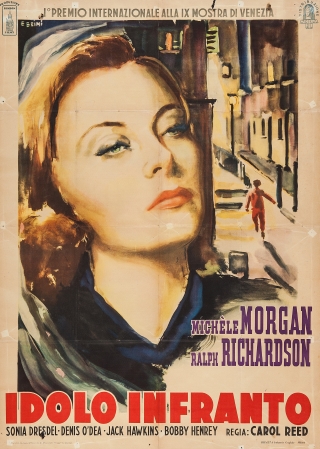
Is it possible to encapsulate the cinema of a nation in just a word or a phrase? I guess received wisdom, or maybe some sense of deference to the depth and breadth of most cultures, would nudge many people towards a negative answer. Still and all, I think that sometimes the essence of a nation’s approach to filmmaking (and the artistic temperament that lies back of that) can be neatly summarized thus. While this idea has occurred to me before, it was while I was revisiting Carol Reed’s The Fallen Idol (1948) the other day that I found myself mulling it over again. The movie itself is one of the director’s finest, a study in suspense and longing, a powerful melodrama observed primarily through the eyes of a fanciful child and shaded accordingly. And so it was that as I watched the drama play out the word “quiet” floated insistently into my thoughts. Somehow that quietness, or restraint if one prefers, that pervades the film felt like it was actually a byword for the best offerings of British cinema.
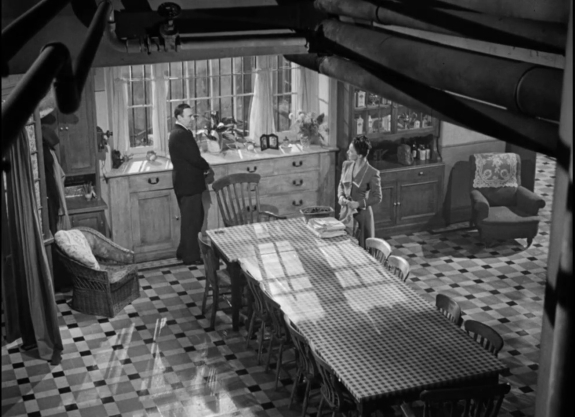
Belgravia, a location that exudes solidity, tradition and indeed diplomacy. Those imposing structures with their sense of permanency and the home to many an embassy have something of that quiet dignity I referred to about them. There’s an orderliness to it all, and what better way to put a human face on that concept than to represent it in the shape of a very proper English butler. Such a figure is familiar to almost everyone via literature, film and television if not in the flesh. He exists as a link of sorts, offering a vague connection between the present and some distant semi-feudal past, between high born aristocrats and the ordinary citizen. He is, in short, soft-spoken, impassive, dignified and authoritative, a paragon of decorum. Or is he? Is it right or reasonable to label any man a paragon of anything other than the mass of foibles and feelings that make up his inner self? Baines (Ralph Richardson) is the butler in the household of the ambassador of some unnamed nation. He is efficient and intelligent, diligent and charming. And his private life is a tangled mess of bitterness, betrayal and seemingly impossible passion. His marriage is a barren and loveless wasteland, a stale and frequently argumentative co-existence with a wife (Sonia Dresdel) who has grown suspicious and discontented. On the surface, his relief from this emotional desert comes via the whimsical and easy-going rapport he has developed with Philippe (Bobby Henrey), the lonely and over-imaginative son of the ambassador.
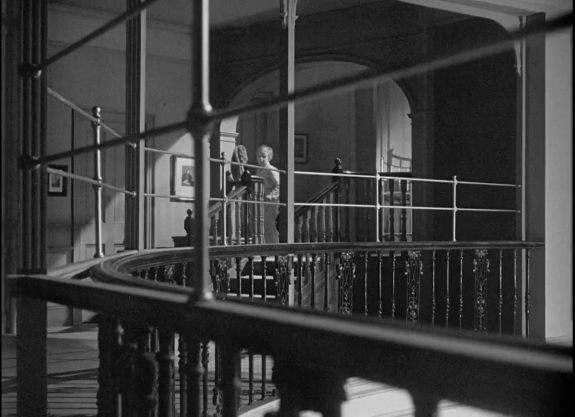
Nevertheless, as is so often the case in life, the image presented to the world at large tells only half of the tale. The Baines who ensures the smooth and comfortable running of his employer’s home, the spinner of yarns for the eager ears of a credulous and adoring Philippe has another outlet for the emptiness he experiences. He is quietly and discreetly engaged in an affair with Julie (Michele Morgan), a typist at the embassy. This fact is revealed by accident when Philippe innocently follows his hero one day and chances upon the lovers meeting quietly in the mundane setting of a nearby tea shop. Such is the simplicity and ingenuousness of childhood that the nature of the relationship is lost on the youngster and he happily and unquestioningly accepts that Julie is Baines’ niece. Still, the complications of the adult world must inevitably intrude as suspicion and desperation lead to confrontation. In that adult universe, jealousy and longing make for an explosive combination as the truth is inexorably brought to light. The audience see the argument between Baines and his wife all the way through and know how it resolves, but the boy (reflecting the half-understood perceptions of the very young) witnesses only part of it, fascinated and frightened by the heightened emotions laid bare before him. As he scrambles up and down the fire escape, peering in dread through the windows while the argument rages within, he misses out on the crucial moment and sees only the lethal consequences. Carol Reed’s direction is superb not only during these set piece scenes, but all the way through. The subsequent investigation, the possibilities that gradually emerge, the doubts and fears of all concerned are conveyed with marvelous subtlety. The master stroke of course is the way the entire thing is viewed and presented through the prism of a child’s faltering awareness and mounting despair.
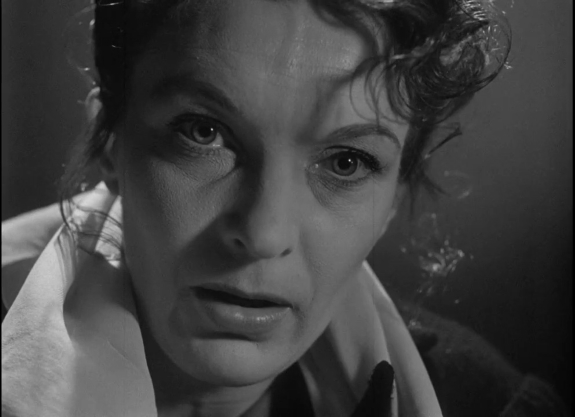
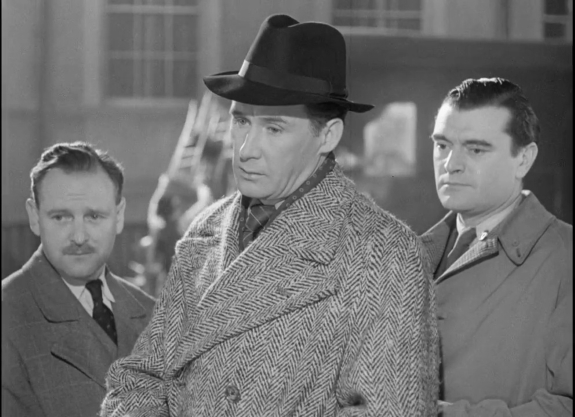
Aside from that marital spat that leads to tragedy, the quietness of it all dominates. While I feel this is a quality that pervades British cinema of the era, it is clearly a deliberate stylistic choice on the part of the filmmakers here. Many key exchanges are only half heard, uttered softly and intimately, with the kind of discretion that is the specialty of lovers or close confidantes, or indeed professionals who live by a code of caution. The conversations are frequently sotto voce, heard in snatches and presented with the contrived nonchalance adults sometimes adopt to shield the very young from the harsh complexities of life. This air of calculated concealment sets the mood for the picture precisely because it is a story seen from the standpoint of a small boy. It’s evident in the interactions of the trio of policemen, not least Denis O’Dea’s gently probing inspector, though ably supported by a watchful Jack Hawkins and a humorous turn from Bernard Lee as the interpreter whose talents appear questionable.
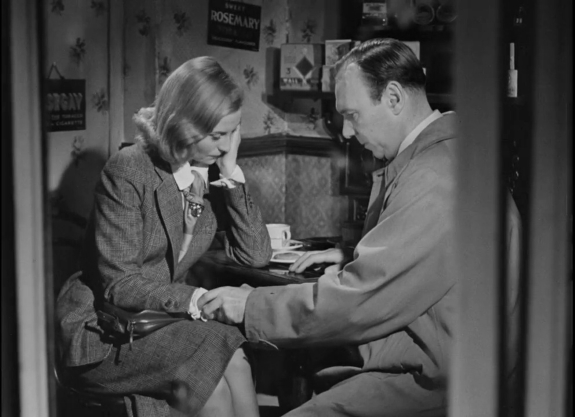
Ralph Richardson delivers a performance that is that is wholly authentic, displaying an outward bounce and buoyancy to charm and beguile a wide-eyed Philippe – so memorably portrayed by Bobby Henrey. Richardson sails rather close to eccentricity in these moments but he does so in such an attractive fashion that it doesn’t especially matter. He layers the character beautifully too and that sad little scene played out in the tea shop is heartbreakingly poignant in its restraint, and arguably because of it. It’s not just some stiff upper lip pose either but rather it’s a barely suppressed emotional crisis held in check largely due to the presence of the young boy who couldn’t possibly comprehend or grasp the powerful passions ebbing and flowing across the table before him were they to be let loose. Michele Morgan does fine things with her eyes and voice to supplement all this but it’s Richardson who owns the scene, who wrings truth out of the simplicity and ordinariness of the setting; that turning away when Julie exits, the fiddling with the newspaper, the shuffling round the shop his eyes downcast as he struggles to master the despair that threatens to overwhelm him is suffused with gut-wrenching pathos. But so very quietly.
The Fallen Idol was the first of three adaptations of works by Graham Greene that Carol Reed brought to the screen. The Third Man is undoubtedly the most highly regarded of those, but The Fallen Idol is every bit as good in its own way. Actually, when one pauses to remember that those two movies preceded by Odd Man Out were all made one after another between 1947 and 1949, it really does serve to highlight Reed’s greatness as a filmmaker. I don’t believe there’s any doubt that this is a movie everybody should make the time to see.


That is a very intriguing take, Colin – I agree, that English soft-spoken quality, that emotional reticence and sheer stillness is very powerful here. I always think just of that sound of the hair pins popping on the pillow. And it a sense of Englishness especially, contrasted with “foreigners” in Reed’s extraordinary trio (Irish and American in the other two) that really brings them into relief.
LikeLiked by 1 person
You know, I also find there is some of the quality we’re talking about here to be found in Claire Bloom’s performance in The Man Between. Admittedly, that film itself is a step down from his the other genuine classics
LikeLiked by 2 people
Agreed. British cinema was having an incredible few years then with those unforgettable films from Asquith, Powell & Pressburger, David Lean, Launder & Gilliat, Thorold Dickinson, et al.
LikeLiked by 1 person
Absolutely, a real mini golden age.
LikeLiked by 2 people
As I said in my review a while back the problem with Reed’s 50s movies is that after those three masterpieces in quick succession in the late 40s one expects every subsequent movie to be another towering masterpiece. The Man Between isn’t a towering masterpiece but it’s an excellent movie.
LikeLiked by 1 person
Personally, I don’t have any particular problem with the movies Reed made in the 1950s. By and large they were very good and there aren’t any that I dislike or consider weak films.
As far as I’m concerned, acknowledging that they are not on the same level as that trio that rounded off the 1940s doesn’t have to equate with saying they are poor. I think the 40s masterpieces represent a powerful bloc as a result not only of their individual strengths but also the fact they were produced back to back and had a similar aesthetic.
LikeLiked by 1 person
I totally agree. I think his 50s movies are very under-appreciated. I like them a lot.
LikeLiked by 1 person
I’m a big fan of the 1959 Graham Greene-Carol Reed collaboration Our Man in Havana. I adore the novel as well. A delicious spy spoof.
I have never looked at a vacuum cleaner the same way since.
LikeLiked by 1 person
I haven’t seen it in well over a decade but I know I liked it and thought it rather deftly negotiated the fine line between comedy and tragedy to focus on the absurdity of the whole espionage business.
I’m also fond of The Running Man and I was delighted when it got a Blu-ray release.
LikeLiked by 2 people
You’ve talked me into it. I’ve just ordered The Running Man on Blu-Ray. Expensive, but it is a Carol Reed movie and I like Laurence Harvey.
LikeLiked by 1 person
I don’t recall it costing me a lot when it first came out via Arrow, but maybe it’s harder to find now.
LikeLiked by 1 person
Blu-Ray prices in Australia are outrageously high.
LikeLiked by 1 person
I don’t suppose they are exactly cheap anywhere these days, nor is anything likely to get cheaper in the future given the clown show currently playing out before us.
I think I bought the movie in question with the assistance of a rewards discount direct from Arrow. Anyway, it wasn’t all that costly at the time.
LikeLiked by 2 people
I know its BIG in capital letters and perhaps impersonal in style but I like Reed’s ‘The Agony and the Ecstasy’ ever since I watched it in Art class. I like ‘Lust for life’ better by Minneli but Reed’s is interesting all the same to me .
LikeLiked by 1 person
I’m fine with it too, Chris. If you want to look at them in terms of a showdown of “artists on film” movies, Minnelli’s is certainly the superior one. As ever though, there’s no reason why both can’t be enjoyed on their own merits.
LikeLiked by 1 person
Totally agree with that sentiment.
LikeLiked by 1 person
I love this one so much. It’s as close to perfect as films can get.
One of the best we ever made.
LikeLiked by 2 people
True, Reed could do little wrong at this point in his career and was producing an enviable string of classics.
LikeLiked by 1 person
I think Odd Man Out is my favourite of the three; there’s something quite magical about it, a fairy tale for adults, maybe (oh that ending!). I can understand why The Third Man gets more attention, but… Odd Man Out is just SO good. I watched The Fallen Idol a few years back on Blu-Ray and enjoyed it, but it didn’t hit me between the eyes like Odd Man Out did. Seems time I gave that disc another spin.
LikeLiked by 1 person
Yes, I adore it too, maybe my background and the time I spent in Belfast as a student adds to that bond I feel with it. It’s a magical film though, regardless of how anyone comes to it. When Johnny asks, half in hope and half in resignation: “Is it far?” Well, my heart always breaks a little.
LikeLiked by 1 person
I happened to read the original story recently: “The Basement Room,” 1936. Interesting to observe the significant recasting for the film — presumably with Greene’s cooperation, as he shares script credit. In the original, the mistress is not a Frenchwoman. The catastrophe is more accident than manslaughter. And the boy does not deliberately lie about the event. Also, Baines’s boasting about his colonial exploits over “the niggers” makes him a less sympathetic figure than the one Richardson portrays.
LikeLiked by 2 people
I haven’t read the story myself for some years, but I think all those changes are for the better, as far as the film is concerned anyway. Had the script been scrupulously faithful to Greene’s original work, it would have been a cooler affair all round and I think the warmth that Reed brings to it all, via the performances of Richardson, Morgan, Henrey and O’Dea, is one of its great strengths.
LikeLiked by 1 person
Oops! I got one thing backwards. [SPOILER ALERT] In the story, Mrs. Baines falls while struggling with her husband in an (understandable) jealous rage. The film represents her rage faithfully, but the fall is more of an accident.
LikeLiked by 1 person
In the film it is completely accidental, recklessness resulting from jealous frustration, and not something Baines could have done anything about as he wasn’t even close to her at that point. That we know this as viewers makes the appalled suspicion and desperate efforts at a cover-up on the part of Philippe all the more poignant.
LikeLiked by 1 person
Well Greene did write the screenplay himself. And he understand movies. And liked movies. He understood what worked in a novel and what worked in a movie.
And the short story is such an early one. By 1948 he was a much more accomplished much more confident writer.
LikeLiked by 1 person
Early Carol Reed gets a bit overlooked. Night Train to Munich, from 1940, is lesser Reed movie but it’s a train thriller about spies so of course I enjoyed it.
LikeLiked by 1 person
I like it, but I guess the inevitable association/comparison with The Lady Vanishes has diminished it somewhat.
LikeLiked by 1 person
Yes, when it comes train thrillers you have Hitchcock’s two efforts, The 39 Steps and The Lady Vanishes, and then there’s the rest. Nobody used trains in movies better than Hitch.
Incidentally was Rome Express (1932) the movie that kicked off the whole train thriller thing? It’s fascinating that it was a real British cinema thing. They do love their trains.
LikeLike
While it’s just my impression, maybe Hollywood had a preference for aerial dramas. Nevertheless, they made some good dramas/thrillers based on train journeys. Shanghai Express was a notable early one ( might that be the earliest example?). That was redone years later as Peking Express, and then there was The Narrow Margin of course.
LikeLike
You’re right, Shanghai Express probably was the first.
I love aerial dramas as well! One of the delights of 1930s movies (and movie serials) was the enthusiasm for modern technology.
LikeLike
Yes, although horror/Sci-Fi movies started to cast a slightly jaundiced eye in that direction quite quickly – The Invisible Ray and so on.
LikeLiked by 1 person
A more positive 30’s view of science can be found in THE MAN WHO LIVED TWICE (1934) which at first,I thought was a Karloff Columbia flick. Sci Fi trappings abound as hideously scarred gangster Ralph Bellamy is transferred into a kindly doctor by brain & plastic surgery. Film moves at a fast clip and twists at every turn and is very well acted especially by Ward Bond and Isabel Jewell.
LikeLiked by 1 person
Sounds interesting. I’ve never seen that one, John. Actually, I too thought for a moment it was a Karloff movie, I probably confused it with The Man With Nine Lives as the titles are easy to mix up. Or they are for me ant any rate.
LikeLike
Great review Colin 🙂 I love The Fallen Idol every bit as much as I love Odd Man Out and The Third Man 🙂
LikeLike
Thanks, John. It’s notable that all three of those movies are quite different with regard to plotting and theme yet are also recognizably the work of one particular first rate filmmaker at the height of his powers.
LikeLiked by 1 person
You got that right Colin 🙂
LikeLike
Richardson could be an epic scenery-chewer but I agree that he’s splendid here. A perfectly judged performance.
Carol Reed knew how to get the best out of an actor. Joseph Cotten’s performance in The Third Man is the best of his career.
LikeLiked by 1 person
Richardson was theatrical actor first and foremost so a certain largeness could creep into his work, depending on the role of course. Nevertheless, like all the great theatrical knights, he was extremely accomplished and very disciplined when he needed to be. At his best, he was capable of great subtlety and powerful emotion at the same time. It was definitely apparent in this movie.
LikeLiked by 2 people
Yeah? He made the American a moron.
LikeLike
You mean Holly Martins?
That’s the whole point of the movie and it’s The Third Man‘s main claim to being film noir. Holly is a nice guy but the flaw that leads him to disaster is his wide-eyed innocence. He doesn’t have a clue what’s going on or what he’s doing but he just keeps right on doing it and making things worse.
This is a Graham Greene story after all and he tended to create characters who messed up really badly and were in various ways losers.
And Holly Martins does have some similarities to Alden Pyle in The Quiet American.
LikeLiked by 1 person
That is what and who I mean, an innocent abroad, a damn fool, representing, of course, the Americans who saved his world. Just arrogant pseudo intellectal wise guy crap.
LikeLiked by 1 person
If that is what yoU want, a fool who admires Zane Grey above other writerA, a girl who rEjects him, a parrot that bitEs him and harry who plays him for a sucker at every moment
LikeLike
I’m Backing Britain …….
To snatch a phrase from Harold Wilson’s UK,certainly a more positive time than now, I thought I would comment on some recent Brit Flicks I’ve viewed lately some old faves,but several new to me.
They Drive By Night (1937)
Arthur Woods’ early Brit Noir presents,strikingly,a rain swept England where petty crook,ex con, with a huge chip on his shoulder (Emlyn Williams) takes to the roads to aviod a murder rap. Not much hope for women in this World who are referred to as either “Janes” Lorry Girls or Dance Hall Girls (Dime a dance girls) That Crown Prince Of The Weird, Ernest Thesiger plays a serial killer. A very stylish film that deserves a desent restoration.
Take My Life (1947)
Ronald Neame’s generally unheralded Brit Noir has a really stellar climax on a train that will have you gripping the edge of your seat. Marius Goring steals the film turning the chill factor up to 11. Would make a wonderful double bill with CIRCLE OF DANGER.
For Them That Trespass (1949)
Calavacanti’s film may actually top his previous THEY MADE ME A FUGITIVE. Upper middle class writer Stephen Murray thinks he needs to experience “real life” so he delves into Glasgow’s often feral underclass with unexpected results. Part Social Drama part Brit Noir part Murder Mystery when all is said and done it’s a tale of redemption and retubution. Visuals are striking. This film needs to be restored.
Other old and new favourites THE DARK TOWER (1943) DUAL ALIBI (1947) Both excellent Circus chillers with Herbert Lom. APPOINTMENT WITH CRIME (1947) and John Baxter’s JUDGEMENT DEFERRED (1952) Baxter’s third reworking of his 1933 DOSS HOUSE which he reworked as a Musical Comedy later in the 30’s. Third time lucky JUDGEMENT DEFERRED is the best version in my view.
LikeLike
Believe it or not, I’ve not seen a single one of those. I do have a copy of Appointment with Crime lurking around somewhere though so I’ve no real excuse for not watching that. I’d certainly be keen on seeing some of those others now they’ve been brought to my attention.
LikeLiked by 1 person
Same here. I haven’t seen any of them.
Why do I have an awful sinking feeling that all of them will turn out to be totally unobtainable?
LikeLike
Most,if not all of these can be tracked down through the Digital Underground,and Dee I know you do not view films online but for digital copies you can contact Vic Pine which I have mentioned here before. Vic ships free overseas and also provide a “disc only” service. Most of these are in good nick apart from FOR THOSE THAT TRESPASS which is at least watchable. I’ve approached both Studio Canal and Indicator about releasing this film. Vic also has a nice copy of Lance Comfort’s masterpiece TEMPTATION HARBOUR a Langian tale of guilt and suppressed passion. Vic,sadly does not have THEY DRIVE BY NIGHT but it is out there…seek and ye shall find! BTW Dee, congrats on getting a Blu Ray player.
LikeLiked by 1 person
APPOINTMENT WITH CRIME is excellent,really William Hartnell is the whole show on the revenge trail for the mob that betrayed him. Hartnell’s nastiness and ruthless persona are something to behold. Among all the murder and mayhem there are moments of dark comedy so often a staple in Brit Noir. The darkly comic moments are provided by Alan Wheatley and Ivor Barnard and are a joy to behold. I envy you watching this gem for the first time.
LikeLiked by 1 person
That sounds great, John. I hope I manage to get to it soon!
LikeLike
William Hartnell was a fine actor. A pity he’s only remembered for Doctor Who.
LikeLike
He was a supporting player throughout his career – albeit one who gave a plenty of memorable performances – so it’s not that surprising that top billing in a TV show has come to overshadow much of that.
LikeLike
And,indeed what would Brit Noir and British Cinema in general have been without the contributions of Hartnell and Herbert Lom.
LikeLike
Herbert Lom was versatility itself. He too seemed to turn up with a dizzying regularity, and in all kinds of roles. Some of those parts were tiny, others were quite substantial but all of them made an impression. It’s no mean feat to do that time and again over a very long career.
LikeLike
I don’t think I’ve ever seen a bad performance from Herbert Lom.
LikeLike
I’m still backing Britain…………
No,not today but certainly in the 30’s and 40’s and to a certain extent the 50’s.
What never ceases to amaze me is the decline of veteran British film makers as the 50’s dawned. I’m talking here about the likes of Maurice Elvey,Lance Comfort,Bernard Knowles,Henry Cass,Lawrence Huntington,John Harlow,John Baxter,Arthur Crabtree and to a certain extent Monty Tully.
While many of these gentlemen could hardly be listed as major British Film Makers all had made some highly regarded films often featuring major stars of the era. As the 50’s began they all saw their decline into B Movies and TV series some more slowly than others. Basil Dearden arguably a cut above the others carried on successfully mainly because most of his films performed well at the box office.
As the 50’s dawned times were ‘a changing;there were a new breed of younger Film Makers,talented and cutting their teeth on B Movies. Most of these guys would go onto bigger budgets and several to success in Hollywood. I’m talking about J Lee Thompson,Lewis Gilbert,John Guillermin,Ken Hughes,John Gilling and Guy Green among others.
Later in the 50’s the older guys were further compromised by the New Wave directors like Anderson,Schlesinger,Richardson and Reisz. It’s somewhat sad to see talented directors like John Baxter and John Harlow in their decline years reduced to Old Mother Riley and similar nonsense. Baxter’s last film RAMSBOTTON RIDES AGAIN (1957) a comedy Western with Arthur Askey and Sid James was certainly a comedown from say LOVE ON THE DOLE but hey, a guy has to eat,pay the rent,whatever and besides the film was a big hit in the UK at the time.
LikeLike
I feel the 1950s was a decade of huge change in cinema in general, and not only in British cinema. Technology was literally changing the shape of the movies, the market was in flux, society and politics were confronting new realities and audience expectations were developing in different directions too. All change. And the competition from TV cannot be overstated – it did draw in a number of old cinema hands, and then went on to give rise to a lot of new names and faces as well. Personally, I prefer to see the old pros moving to the small screen rather than to bottom of the bill and frequently bottom of the barrel productions – it just feels more dignified, if that makes sense.
LikeLiked by 1 person
Over the course of the 1960s the British cinema-going audience did not decline. It vanished.
George Perry talks about this in his fascinating history of the British film industry, The Great British Picture Show. In the 60s the industry was kept alive artificially by massive inflows of American money. For complicated reasons the American money dried up at the end of the 60s. Which doomed the British film industry.
TV killed the popular film industries of Britain, France, Germany, Italy and every other country.
LikeLike
Those 1960s British New Wave movies are now just about unwatchable. Would anyone voluntarily watch a Lindsay Anderson movie today?
LikeLike
Never.
LikeLiked by 1 person
It is a style of cinema, like all styles I suppose, which has its fans. It has never worked well for me but some examples – This Sporting Life, The Entertainer, The Servant – I find more interesting or watchable.
The ideas or themes explored are fairly timeless and can be found in movies of all eras, but the visual style, the mood perhaps, may be more problematic. I think a certain amount of this, over time, spilled over into television, UK TV in the 70s and on into the 80s have elements of it. However, there is a starkness and bleakness to a lot of the imagery that limits the appeal.
LikeLike
Given the awful visual quality of broadcast TV in the 60s it might have been smarter to make stylish visually impressive movies to tempt people into movie theatres.
I dislike the French New wave as much as I dislike the British New Wave. Both saw themselves as rejecting what they saw as the glossiness, shallowness and trivialness of 50s Hollywood. Instead they would offer viewers bleakness, misery, emptiness and despair. All very adolescent.
LikeLike
It was the beginning of the idea that an Important Serious Film should be dull and miserable.
LikeLike
Yes,it makes perfect sense.
LikeLike
The above was a reply to Colin’s earlier comment but at least,for some reason the “like” feature now works after a considerable time,for me at least.
LikeLiked by 1 person
Maybe WordPress are beginning to iron out some of the bugs that have made interaction difficult for some time?
LikeLike
I need to revisit Fallen Idol as well. I remember being stunned by its superb craftsmanship, nuanced performances, and deeply explored themes. Third Man may be Reed’s most celebrated film, but I believe Fallen Idol is his finest, by far.
LikeLiked by 1 person
It probably defies genre conventions or expectations more and that can create some challenges for the way a movie is perceived.
LikeLiked by 1 person