Viewing Notes – A Month with Hitchcock

Without having initially planned to do so, I ended up watching a selection of movies directed by Alfred Hitchcock all through September. I tried to choose those titles I had not seen for quite some time and have been jotting down and recording my thoughts on each in brief as I’ve gone along. Having done so, I figured I might as well assemble them here as an end of month round-up. So here goes:
The Birds (1963)

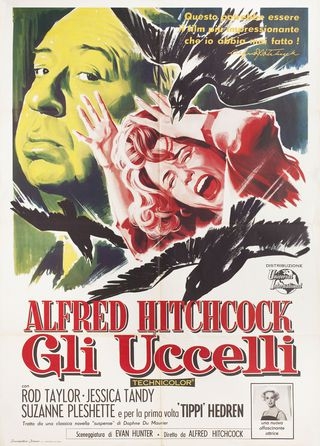
It’s been many years since I last watched this and I’d forgotten just how well constructed it is, not to mention its technical proficiency bearing in mind the era.
That long, slow build-up is the work of a deeply confident filmmaker. It’s never boring or tedious and the gradual, estrogen-fueled tension, with all the cats among the pigeons, is drawn ever tighter in tiny but finely judged increments. When the full chaos is finally unleashed in the apocalyptic latter half Rod Taylor does get to flex bit of muscle, literally and figuratively.
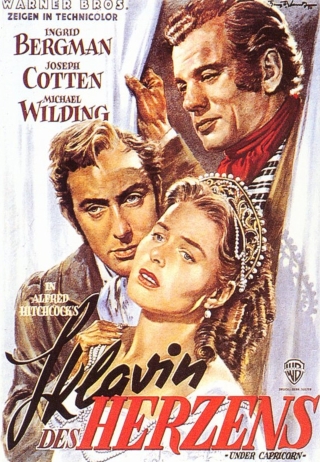
Under Capricorn (1949)

Very much lesser Hitchcock, a movie which barely anyone ever has a good word to say for. Well, I’ll at least say that it is handsomely shot, courtesy of Jack Cardiff, and the acting is fine even if Michael Wilding does lay the whimsy on with a trowel at times.
But yes, it is a problematic movie. And that is largely because it tells a story which is thin, not uninteresting in itself but too thin for its running time. It needed to be trimmed and compressed, which would have been hard to do because of the other great flaw – the director’s insistence at the time on experimenting with long takes. It hamstrung the previous year’s Rope (though that one has other issues dragging it down too) and was a technique that was antithetical to Hitchcock’s style.
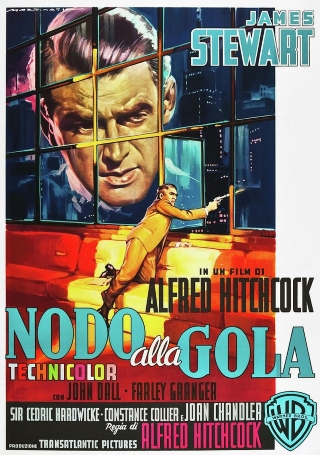
Rope (1948)

I’ve never especially liked this. The technical ambition is admirable, and I’ve always been somewhat hypnotized by the seamless skill involved in the gradual change in the lighting of the studio bound skyline as the tale unfolds in real time. However, the whole continuous take conceit imposes huge limitations on the cast and crew and the process must have been a genuine pain for everyone involved. As with Under Capricorn, the entire business works to undermine the director’s natural strengths.

The biggest problem I have with the movie though is the coldness and indeed the malice at its core. Nobody aside from Cedric Hardwicke’s anxious and compassionate father comes out of it well. That’s not to say it’s badly played of course. Granger could do that weak sister act with his eyes closed and Dall has the clinical and supercilious aspects down pat too – he always seemed to manage that though and there’s a hint of that inherent unlikeability also found in Laurence Harvey in all his parts. James Stewart nails the creeping suspicion that blossoms into horror and then outrage and (self?) disgust. But his character is not really sympathetic either – a man of his intelligence ought to have realized the kind of seeds his intellectual posing was planting.
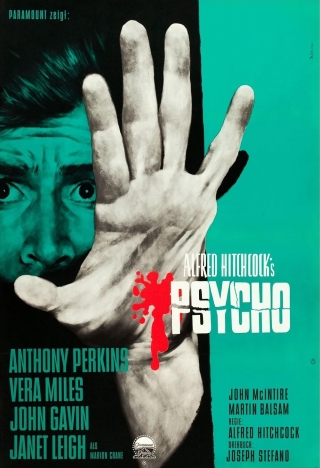
Psycho (1960)

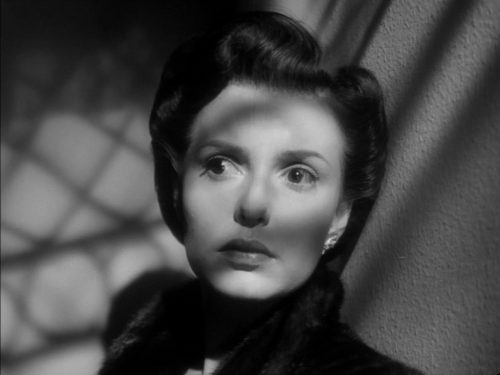
It’s probably 15 years, maybe even more, since I last watched this. The first half always worked best for me and I still feel the same. The paranoia and gnawing guilt of Janet Leigh’s Marion is perfectly encapsulated in the minimalist style of that whole opening section – the rain, the ever more frantic musing, Herrmann’s nervy score and those seemingly permanent close ups of Leigh’s huge, expressive eyes.

And then there’s that frankly sublime sequence in the motel cabin. Cagey and uncomfortable, pathetically flirtatious and taut all at the same time. I reckon it’s the best scene in the entire movie. What follows in the last hour engages me less. It remains visually astounding and technically flawless, but too much of the artful subtlety drains away with the bath water. It still grips and shocks at times, just much more conventionally and it never again approaches the emotional precipice that was teased by the interaction amid stuffed birds, sandwiches and milk.

Nevertheless, it is still undeniably a great piece of cinema, the heights approached and attained in that first hour and the total assurance of a director genuinely in love with his medium are enough to ensure that.
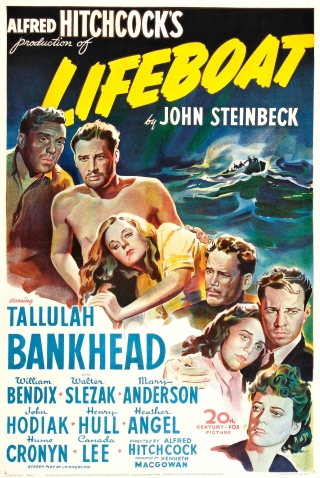
Lifeboat (1944)

A wartime propaganda picture from Hitchcock. Still, being a Hitchcock movie there’s more to it than that – by a circuitous route it winds up as something of a celebration of cohesiveness. Just about every stratum of western society is represented, from Henry Hull’s super rich kingpin to John Hodiak’s blue collar revolutionary, from the stoicism of Canada Lee to the louche decadence of Tallulah Bankhead. All the disparate characters are by turns gulled, threatened and finally drawn together by the malignant presence of Walter Slezak’s cool and cunning Nazi.

It’s another of the director’s challenges to himself, an exercise in the potential of confinement that makes up for in intensity what it arguably lacks in suspense. Alongside the more eye-catching dramatics of those further up the cast list, it’s satisfying to watch the slow development of a gentle romance between fairly regular Hitchcock collaborator Hume Cronyn and Mary Anderson, an actress who never much graduated beyond supporting roles except perhaps in the rarely seen but rather good Chicago Calling.
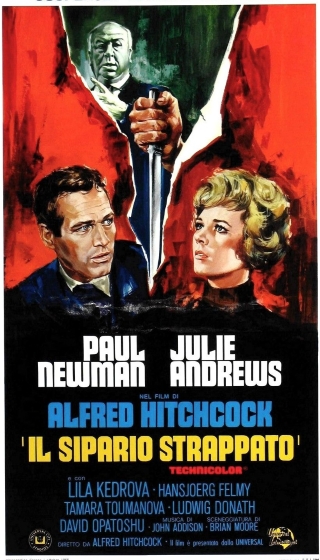
Torn Curtain (1966)

This is the point at which Hitchcock’s decline can be discerned. This Cold War thriller starts out as a double-cross drama where the bluff is drawn out too long before turning into a more successful cross-country chase, the kind of affair Hitchcock could make with his eyes closed.

The first half of the movie misses more than it hits, the brief bookstore scene in Copenhagen errs just on the right side of oddness, but the drab grey/green palate when events move to East Germany reflects the dullness of much of that section, not helped by a listless and detached performance by Paul Newman and an uncomfortable looking Julie Andrews. Some of it does work though – I like the entire build up to the farmhouse scene where the Stasi spook Gromek is laboriously disposed of, and Ludwig Donath is spikily entertaining as a caricatured professor.

The bus ride/pursuit has its moments, helped by John Addison’s slightly eccentric score and an earnest David Opatoshu. There are a few late flourishes too – the hiding among a crowd/creating a distraction ploy is revisited for at least the fourth time – off the top of my head variations thereof are employed in The 39 Steps, Saboteur and North By Northwest if not more.

So, a mixed bag all told. I guess it does more wrong than it does right yet I’ve always had a greater fondness for it than it probably deserves.
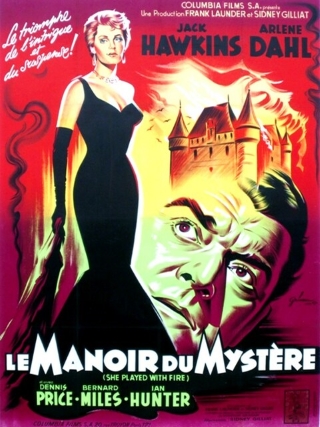
She Played With Fire

I sometimes think I spend far too much time on associations, images that recall other images, movies that bring to mind other movies, or names that automatically start me thinking of other people. Such is the case with Frank Launder and Sidney Gilliat, mention of whose names inevitably sparks thoughts of Alfred Hitchcock as a result of their having produced the script for The Lady Vanishes. That association feels a little stronger when viewing She Played With Fire (1957), which is also sometimes referred to as Fortune is a Woman, as it derives from a story by Winston Graham and he of course wrote the novel which  formed the basis of Hitchcock’s last great film Marnie. This all sounds as though the movie has a wonderful pedigree, which I suppose it has even if the attractively packaged end product isn’t quite as satisfying as one might hope.

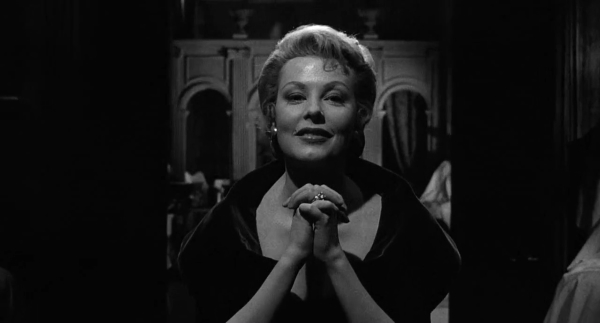
Some premises hook viewers early or even immediately in exceptional cases. Personally, I struggle to work up a huge amount of enthusiasm over plot devices like insurance fraud, a swindle can clearly make for an engaging and involving storyline but it’s usually when a human face is seen to suffer. That said, a good movie ought to be able to rise above the potentially mundane aspects of its plotting – it’s a visual medium after all and a touch of style in that area can gloss over a lot. She Played With Fire does display a degree of visual panache and the opening blend of dreams and reality by way of art sets everything up nicely. In brief, Oliver Branwell (Jack Hawkins) is an insurance man, one of those post-war types who has spent a good deal of his time overseas and always comes across as a bit of a square peg in the round hole he’s chosen to lodge himself in. An investigation into a fire and the resultant damage to some pictures at a stately pile in the country brings Branwell abruptly and unexpectedly face to face with his own past. The claimant is Tracey Moreton (Dennis Price), a vaguely decadent asthmatic, but the surprise from Branwell’s perspective is Moreton’s wife Sarah (Arlene Dahl). She is the woman he once romanced and then lost in the Far East and the embers of that fling have evidently not quite cooled. Everything remains very proper though despite the ever present temptation. In time however, the pair are drawn closer together, and then the possibility of a clever bit of fraud comes accidentally to the attention of Branwell. Without going into too many details, he is soon questioning the good faith of Sarah and then finds himself plunged into a truly messy affair as a nighttime investigation of the Moreton mansion coincides with a massively destructive conflagration and the discovery of the owner’s corpse just before everything goes up in flames. This all leads to some foolhardy deceit, a whirlwind romance, blackmail and the uncomfortable possibility that a supposedly dead man might actually be still alive.
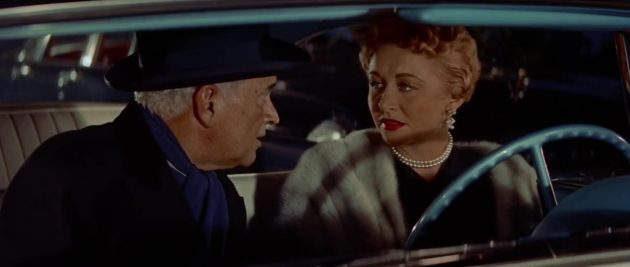
I have seen this movie labeled a film noir and while I can see how some of Gerald Gibbs’ striking high contrast cinematography, as well as the convoluted deceptions and tangled interpersonal relationships, are suggestive of this, I wouldn’t describe it as such myself. I can’t say I object to anyone categorizing the movie as noir but I tend to regard it as a classic mystery with a smattering of noir tropes. Does it succeed on those terms? To a point it does yet there’s an unevenness to it as a whole that weakens it. The tension arising out of the blackmail strand is dropped or allowed to slacken too early and this robs it of suspense and urgency. A bigger issue though is the fact the whole fraud and murder mystery which ought to underpin the film is frankly nowhere near as compelling as it needs to be.

What does keep it all afloat is a combination of Gibbs’ lighting and some evocative composition and framing from director Gilliat. In short, this is a movie that looks good all the way through. The acting helps matters along too, especially from the ever reliable Hawkins. He could generally be depended on to produce a pained stoicism, earnest and honest but leavened with something of a twinkle in the eye that prevented everything from sliding into dourness. Arlene Dahl was highly decorative and has a hint of duplicity about her, enough to generate some suspicion though perhaps not enough to sustain it all the way through to the end. Dennis Price was born to play wastrels and does so effortlessly here, it’s just a pity he’s not given more screen time. Bernard Miles is a touch theatrical as the seedily adenoidal would-be extortionist, but it’s a memorable turn for all that. Greta Gynt seemed to be enjoying herself immensely as an incorrigible good time girl, a lovely piece of light comedic acting, while Christopher Lee pops up in a blink and you’ll miss him cameo as one of her unfortunate conquests. It was also a nice touch to cast father and son Malcolm and Geoffrey Keen as two generations of the insurance firm Hawkins is working for.

She Played With Fire was a Columbia film which was released first on DVD in the US by Sony as part of their MOD line and then later it was licensed out to Kit Parker Films and appeared on Blu-ray in one of the company’s multi-title film noir collections. I’ve often wondered why the film never made it to Blu-ray in the UK, especially when Indicator were releasing a lot of Sony/Columbia product not to mention the fact they like to highlight British cinema titles where possible. Perhaps the slightly odd fact the movie has the kind of plot that is simultaneously too convoluted and too slight discouraged them? Still, the deep cast of familiar British character actors and the inevitable if incidental links to Hitchcock would seem to invite the kind of analysis to be found among the supplementary features of many Indicator discs. All told, an enjoyable albeit imperfect movie.

Circle of Danger

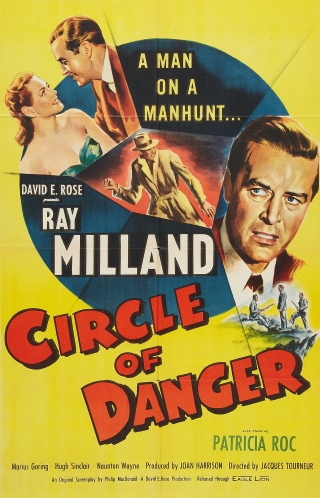
Trails followed by hunters have a nasty habit of going cold very fast, but how long does it take a dish to get correspondingly cold? After all, there is that popular tip about the ideal temperature for serving up revenge. One would have thought five or six years ought to do the trick, and that’s about the time Ray Milland’s character takes to get round to seeking out the man responsible for the death of his brother towards the end of WWII in Circle of Danger (1951). Yet revenge is such a corrosive business, rarely bringing any kind of satisfaction to those who most desire it, and then there’s always that thorny question of whether or not it’s actually justified.

It’s perhaps a little unexpected to see a movie mainly shot in and featuring a cast and crew drawn largely from the UK opening on a salvage vessel operating off the Florida coast. Well that’s where we first come across Clay Douglas (Ray Milland) as he and his partner have just struck gold, or maybe I should say tungsten. This is the opportunity Douglas has been waiting for, five years of hard work finally paying off and allowing him to trade in his share in the business for thirty thousand dollars. He’s not looking to retire or anything, instead he’s been working to earn enough money to fund a trip to the UK in search of the truth about the demise of his younger brother. Despite his seemingly easy manner, Douglas is something of a driven man, fully focused on finding out how the kid brother he had almost single-handedly brought up came to die on a commando raid. People die all the time during major conflicts, even those plying trades nowhere near as perilous as that of a commando. So why would a man travel half way round the world to dig into this particular event? The fact is that the fog of war seems to lie especially thick around it all, and there was a rumor that the younger Douglas was dispatched by one of his own comrades in arms. The hunt for the truth has Clay Douglas cannoning round all the points of the compass, from London to the valleys of Wales and on to the Highlands of Scotland. Both the war and the subsequent passage of time has whittled the list of men who might be able to furnish him with the information he craves down to a mere handful. And it remains to be seen whether the tale that emerges is the one he had hoped to hear at the outset.

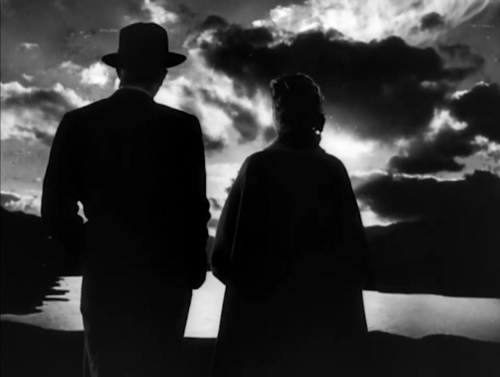
Straightforward revenge stories are never all that interesting. Sure there’s a certain visceral thrill to be tapped into if the elements are lined up in the right way, but such yarns tend to take on an exploitative feel which I generally find unappealing. The better examples, and I think Circle of Danger qualifies as such, raise questions that ought to make both the protagonist on the screen and the audience facing it a trifle uncomfortable. It all boils down to whether or not life’s thorny tangles can be adequately addressed in cut and dried, binary terms. I don’t think it’s giving too much away here to say that Philip MacDonald’s script turns the central quest back upon itself by the end, forcing not only the avenger to question himself, but also requiring the viewer to reassess a number of preconceptions we’ve been hitherto encouraged to blindly accept. This renders that three cornered confrontation on the Scottish moor all the more fascinating, and consequently leads to a resolution which is enriched by its acknowledgment of the sometimes ambiguous nature of justice. A delicate subject of this kind needs to be handled sensitively, not with a heavy lump hammer approach, so producers Joan Harrison and David E Rose deserve credit for securing the services of a director  with the lightness of touch and subtlety of Jacques Tourneur.

There has to be something steely and almost obsessive about a man who is prepared to hand over a significant chunk of his life in the pursuit of retribution. I wouldn’t want to claim it is a state of mind exclusive to the years following the Second World War but, in cinematic terms at least, it is a motif that was explored recurrently and came to characterize more than a few screen protagonists – James Stewart was a prime example of this phenomenon but he was certainly not the only one. This needs a quality of intensity to carry it off, something Ray Milland touches on throughout Circle of Danger, particularly in the climactic scenes in the Highlands, but probably not as consistently as he might have. That’s not to say his character is ever less than focused on the ultimate prize, but he does drift towards casualness bordering on nonchalance on occasion, not least when he’s flirting with Patricia Roc. She brings a freshness and vitality to the movie, a teasing allure that still allows her to switch to a more serious mode when she senses betrayal of one form or another. The other person vying for her attention is Hugh Sinclair’s reticent Scot, the one-time leader of the commando group and a man who seems none too keen on furnishing any more details on past than he can help. His is a key role and Sinclair does well in getting across both the caution of the man as well as what I can only term contained suffering. Then there is Marius Goring giving an energetic yet wholly credible performance as the man whose homosexuality is never openly stated (it is a 1951 movie after all) but which is very clearly alluded to. I think one of the most interesting aspects of the script in general is way it encourages the audience to make various initial assumptions about all three of the male characters before challenging these preconceptions and upending them.

Circle of Danger had been released on DVD by the now defunct Network in what was an entirely acceptable edition. However, it has recently reappeared on Blu-ray via Studio Canal – I haven’t seen that transfer yet but I would expect it to enhance the visuals, and there are some fine looking shots in the film courtesy of cinematographer Oswald Morris. This is a good movie, deftly directed by Jacques Tourneur and cleverly written by Philip MacDonald, drawing the viewer in, setting up certain expectations and then neatly subverting them in a way that continually poses questions which tend to defy pat or convenient answers. It’s a film I’m happy to recommend.

Spy Hunt

Sampling the pleasures of the uncomplicated world of B movies is something I never tire of. Remember, despite what some glib types might tell you, a B movie does not mean a bad movie. There is an art to producing a slick and brisk piece of entertainment on a budget. Back in the days of the big studios, this was easier to do of course. There were specialized units dedicated to churning out support features and a large pool of talent on both sides of the camera who could be relied on to produce work that might not have cost a lot but was still polished and professional. Spy Hunt (1950) is an example of this, a 75 minute mystery adventure, shot with a certain elan by George Sherman using an attractive cast and benefiting from a script derived from a Victor Canning novel.

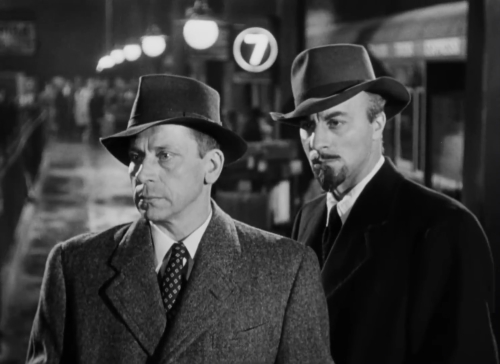
As soon as the titles appear on screen, it will be apparent to anyone familiar with films of this era that we’re in solid B territory. Those titles are accompanied by the immediately recognizable music that was used to introduce the Rathbone/Bruce Sherlock Holmes series for Universal throughout the 1940s.  Others may disagree, but I find something rather comforting in that, like meeting up with old friends after a long separation. Then the opening scene takes place on a train, even better a train speeding through the night to some unspecified destination – and so we are powered along from the sense of the familiar towards the unknown, with pace, urgency and mystery jogging by our side. A furtive figure locks himself in, and proceeds to conceal a strip of microfilm inside a cigarette. Disembarking on a platform in Milan, that same man lights up, takes a brief drag on the cigarette, and then discards it with elaborate casualness. He’s caught the attention of someone first, however. Someone who nonchalantly recovers that cigarette and saunters off alone. The someone in question is a woman by the name of Catherine (Marta Toren), a spy or courier for some government – the name is never revealed and it’s not something the viewer needs to know anyway as the microfilm itself is in the nature of a Hitchcockian MacGuffin, a plot device that is vital to the characters but of only  marginal importance to the audience. Some sly subterfuge on Catherine’s part ensures that said microfilm ends up secreted within the collar of one of a pair of panthers being transported across Europe and eventually on to a circus in the US.  To do so, she first has to distract the big cats’ escort, a drifter called Steve Quain (Howard Duff) who is keen to earn his passage back to the States. It all sounds like a neat if somewhat convoluted plan, but others are on to it and what ought to have been a harmless deception ends up with the freight car being uncoupled and derailed, two dangerous cats inadvertently released into the wilds of Switzerland, and Quain facing the threat posed by a ruthless but unidentified antagonist who is eager to reclaim the elusive microfilm.

The title says it all really, the film being essentially a pursuit by spies and assorted agents of a piece of damning evidence, blending in elements of the whodunit (the identity of the villain is deftly kept a matter of suspicion and conjecture till near the end) and the outdoor adventure. The fact that the escaped panthers pose a real danger to all who cross their path, animals and people alike, provides an original twist to what would otherwise be a fairly standard espionage yarn. While I’ve read a few Victor Canning novels and seen a number of adaptations of his work – Golden Salamander, Venetian Bird, The House of the Seven Hawks, and Hitchcock’s Family Plot – I’ve not yet had the opportunity to read Panther’s Moon, which was the basis of this film, but scanning a brief synopsis of its plot suggests the movie is quite faithful to the source material. George Sherman directs with assurance, wasting no time on the irrelevancies and managing to create a few notable setups that emphasize the suspense, from the atmospheric views of the railway siding by night to carefully composed overhead shots in the Swiss inn as well as some fine close-ups.

Howard Duff presents an honest, two-fisted likeability in the lead that was a trademark of his time at Universal. Marta Toren makes for a resourceful spy and an attractive headache for Duff. Neither one is stretched dramatically yet they turn in the type of work that makes it no chore whatsoever to spend an hour and a bit in their company. Robert Douglas and Philip Friend are dutifully suspicious in  support and are well backed up by Walter Slezak, Philip Dorn and Kurt Kreuger. Watching these actors do their thing had me thinking how I often find myself influenced by the roles I first saw certain performers take on. For instance, Slezak has a relatively benign part in this movie, but somewhere at the back of my mind (and this is despite my knowledge of his work in sympathetic roles such as that in Mankiewicz’s People Will Talk) I still associate him with sinister characters like those he played in Lifeboat or The Fallen Sparrow. Similarly, for better or worse, I find I forever associate Philip Dorn with Passage to Marseille and Kurt Kreuger with Preston Sturges’ Unfaithfully Yours.

Spy Hunt has been released by Kino in the US in one of their film noir sets. Previously, it had been a title, like so many Universal-International movies, that one read or heard about while wondering if a copy that was viewable would ever turn up. The last few years has seen some remarkable progress in that area and there are now far fewer of these “lost” rarities. Having said that, I do want to point out that I can see no real justification for marketing this movie as film noir. That’s not meant as a criticism of the film, just a footnote for those who haven’t seen it to make them aware that it’s an espionage mystery first and foremost. Of course if the film noir label makes it easier to market it and get it out there for people to see, then so be it.

Viewing notes – in brief

Just a few very brief comments to ensure the place doesn’t stagnate completely, which I’ve posted elsewhere, all on some movies I’ve been revisiting lately. Normal service should be resumed soon. I hope.


The Magnificent Seven (1960)

God knows how many times I’ve seen this over the years. Even so, as soon as Bernstein’s famous score kicks in there’s that same tingle of excitement and anticipation I first experienced as a child. Even though John Sturges is almost certainly best remembered for his longer movies such as this and The Great Escape, I think he did his most effective work on the shorter and more tightly structured films he made in the previous decade. While the first half of this one has some terrific scenes and moments – Calvera’s initial appearance, the ride up to Boot Hill and back etc – there is padding there too.
Something else I’ve become aware of over time is the way Steve McQueen’s “look at me” performance has lost a lot of its appeal. I find it very self-conscious, mannered and less satisfying every time I see it. On the other hand, Brynner’s work stands up well while Bronson is crafty, subtle and quite affecting.


The 39 Steps (1935)

Donald Spoto reckoned this movie improved with age and familiarity and I fully agree. It’s the best version of Buchan’s story (not the most faithful by any means, but that’s neither here nor there) and I consider it the best of Hitchcock’s British movies. The Lady Vanishes might run it close, but it’s the little moments, what John Ford would refer to as grace notes, such as Peggy Ashcroft’s aching wistfulness or Lucie Mannheim’s doomed spy that elevate it.


The Wrong Man (1956)

More Hitchcock and this time a man trapped in the relentless and merciless machine that is the justice system. I’ve a hunch I only saw this film once before, and that was a very long time ago. In some ways it is atypical Hitchcock, stylistically anyway – measured, sober, with a gritty realism. In another sense, thematically, it’s very characteristic with the title itself telling us that and it’s also very Catholic, even more so than I Confess.

My memory was of a rather harsh and decidedly grim picture and that’s exactly what it is, and it’s possibly the reason why it’s so long since I revisited it. Still, it’s a terrific movie which is held together by two fine, understated performances. Henry Fonda was always an immensely dignified actor, even down to his posture and gait, that quality adding much to his portrayal of a shell-shocked regular guy. Of course the real gut punch comes from what happens to Vera Miles, something which can’t be easy to convey in such a controlled way.

Take One False Step

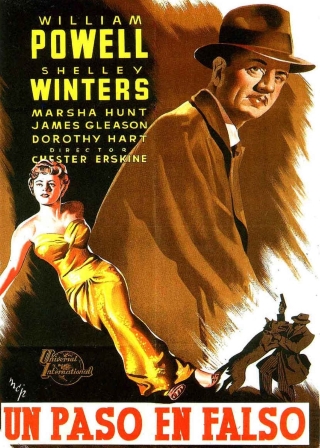
Any time I come across a mention of William Powell the name of Nick Charles springs to mind. The Thin Man and the series of sequels he made alongside co-star Myrna Loy represent only a fraction of his output, but it came to be something of a signature role for him. Those movies were enormously entertaining and Powell was perfectly cast in a part that allowed him to be smart, debonair and funny. Take One False Step (1949) came along much later, long after he had left Nick Charles behind, yet there is a hint of those light and stylish mysteries about it, easily as much as the film noir elements that its recent reissue might encourage one to believe to be dominant.

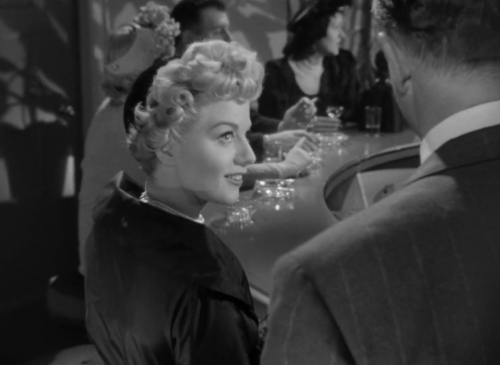
How much store should one set by the superficialities surrounding a film? I’m referring to the title, the credits, perhaps even the promotional material. The reason for posing that question is the fact that the opening credits for Take One False Step, and maybe the title itself, are strongly suggestive of some kind of late era screwball comedy. Of course all of this is emphasizing the need to remain vigilant, lest some major or minor catastrophe should befall one. The opening shot proper continues this theme, keeping the focus on a man’s feet as he enters a bar to order a drink before being addressed by some female counterparts. Well, it catches the attention. The man in question is Andrew Gentling (William Powell), a professor in the process of getting a new university off the ground. The woman who hails him from the bar is Catherine Sykes (Shelley Winters), an old flame he hasn’t seen in years, not since the war when both parties were unmarried and less burdened by life’s more mundane concerns. Should old acquaintances share a cup of kindness, or a couple of martinis at any rate? This pair do so and then part, as befits respectably married people. That ought to be the end of the matter, but Catherine is a restless type, pining for the immediacy of those dangerous wartime years, a woman prone to acting on her impulses. She calls Andrew up and invites him to a party, twisting his arm in a sense, but in a jokey, lighthearted way. Poor judgment, or momentary weakness, has been the undoing of many a noir protagonist and there is a whiff of that to Andrew’s acquiescence.

He soon discovers that he’s not only the guest of honor at this bash, but essentially the only guest. There’s nobody else present aside from another mutual friend Martha (Marsha Hunt) and she’s only there because her house happens to be the venue. Andrew is no longer the swashbuckler or adventurer Catherine remembers and perhaps he never really was, but he’s got a good heart and takes it upon himself to see the lady back home. She’s not so keen on this and he ends up taking a short stroll to let the fact sink in that there is to be no rekindling of lost romances on the agenda. Returning, he sees Catherine totter unsteadily back along the sidewalk towards her own place. However, that is only the beginning of the tale – the following morning brings news of Catherine’s disappearance, with only a bloody scarf, his scarf, left behind. Rather than go directly to the police, Andrew listens to some questionable advice and sets out to look into the business himself first. This leads to more trouble, with the cops, Catherine’s shady husband, a potentially rabid dog, and a race against time from Los Angeles to San Francisco.

Is it reasonable to say Take One False Step is a film noir? I wouldn’t use the term myself, though I understand how parts of the movie could attract such a legend. The setup does point in that direction, with the innocent man finding himself in over his head very quickly, and his actions and their effects achieving a nightmarish quality. Franz Planer’s cinematography fits the bill too, getting some real value from the everyday and unremarkable. In truth though, this is a straight up mystery, not that far removed from the kind of material William Powell was headlining back in the 30s when he was playing Nick Charles or Philo Vance. There is a touch of humor in it too, as that credit sequence suggests. It’s not overwhelming, simply lightening the mood on occasion and I can’t say I found it unwelcome. Those going in looking for an uncompromising noir picture may find it grating, but as I said that’s not the way to approach this movie. Chester Erskine was the director and he does good work, conjuring up some attractive compositions and keeping a handle on the pacing. Nevertheless, I think it would be fair to say his credits as a writer (Angel Face, Split Second) and as a producer (The Wonderful Country) are more significant than his assignments as a director.

William Powell simply oozed sophistication, ever graceful and charming regardless of how difficult a situation might threaten to become. This was his stock-in-trade, the foundation of his screen persona and he made use of it in almost every genre he appeared in. Yet he carried along with it a kind of wry awareness of the fact this was a persona, enabling him to look at himself, his fellow characters and the circumstances in which they find themselves with a knowing air. This worked well in classy comedies and he was able to blend it into his mystery roles too. I mentioned the part of Nick Charles at the top of this piece as I have a hunch that characterization will be more familiar to many readers, which is not meant to suggest it was his only notable role. I also referred in passing to Philo Vance and I imagine those who have seen him play that part might agree he was an ideal fit. Personally, I find that any time I read Van Dine I have the image of Powell in mind. As the hapless professor he is less in control of events than he was in some of those mysteries, but this affords him the opportunity to exploit those characteristics that made him attractive to viewers – that smoothly polished exterior with a hint of panic stirring beneath, but with good manners and restraint holding it in check. There is one particularly effective scene, full of grim humor, around the mid-point, where the professor is seriously concerned about a bite he suffered and has sought medical assistance from a grouchy doctor (Houseley Stevenson) who tests his patience, and that of the viewer, to the limit.

Shelley Winters was in some excellent movies around this time, in what I think of as her dissatisfied vamp period, before A Place in the Sun saw her get nudged towards playing more needy types. She brings a lot of energy to the early scenes before Marsha Hunt steps into the spotlight. Hunt, who passed away last year at the ripe old age of 104 and who was one of those almost hounded out of the business during the shameful HUAC episode, is the faithful best friend, a classic Girl Friday part which she embraces and excels at. As the lawmen on the trail of Powell’s fugitive academic, Sheldon Leonard and James Gleason are responsible for most of the humor. Leonard is his usual loud self, forever on the brink of exasperation, while Gleason provides another variation on that hard-bitten but likeable cop that he brought to both the Miss Withers and The Falcon series. Another notable supporting part is filled by the instantly recognizable Felix Bressart, in his last role. He had appeared with William Powell years before in the rather good, if rarely mentioned, Crossroads and specialized in playing the kind of quirky middle European types he takes on here.

Kino has been instrumental in rescuing a whole raft of Universal crime, noir and mystery pictures, titles that were hitherto either impossible to see or only available in dreadful beat up prints. Take One False Step has been included in one of their film noir boxes and while I see how there are traces of noir to be found, it really is more of a straight mystery with a few comedic touches here and there. I have to say I thoroughly enjoyed this film, it’s of a type that I find most appealing and the cast are uniformly excellent. I strongly recommend checking it out.

Bedelia

The movie industry has always been keen to capitalize on what is perceived to be a winning formula, one glance at the franchise-heavy roster of movies that get approved these days ought to provide ample evidence of that. When Otto Preminger’s adaptation of Laura proved successful, it should not comes as any surprise that another novel by Vera Caspary with a single word title derived from a woman’s name soon caught the attention of filmmakers. So it was that Bedelia (1946) came to the screen, not via Hollywood this time though, but through Rank in the UK. It is an interesting yet not wholly successful work, partly due to the fact that inverted mysteries such as this tend to be tricky subjects at the best of times, and partly as a result of a cast that, the leading lady excepted, feels a little lackluster.

The opening plays out over a portrait of Bedelia (Margaret Lockwood), with a narrator leading the viewer into the story, placing the opening scene in pre-WWII Monte Carlo. The narrator is a man by the name of Chaney (Barry K Barnes), ostensibly a painter but it’s clear enough that this is not his real profession. He’s a hunter of sorts, I suppose, and it is apparent that the title character is his quarry. She is on her honeymoon, having just married the older and decidedly staid Charles Carrington (Ian Hunter). Chaney quietly finagles his way into making the acquaintance of this couple of newly-weds. Carrington is a man in love, starry eyed and besotted in the myopic way that only those caught up in the romance of a late spring can be. Chaney has no such illusions to trouble or dazzle him and he, as do we the viewers, sees that Bedelia has constructed an elaborate cocoon of deceit around her, a shell of deception to hide her true motives and character. I don’t think it constitutes a major spoiler if I state outright that this woman is what we would now refer to as a serial killer, one who collects well-to-do if not explicitly wealthy husbands in order to dispose of them and cash in on the insurance. Carrington has become her latest acquisition, and by the time they return to his home in England, his fate has effectively been sealed. It only remains to be seen whether, or indeed how, her scheme will succeed, or whether Chaney, her husband or those in their social circle will manage to put paid to it.

Vera Caspary’s source novel was set in the US, but the film saw the action shifted to the UK. Like all inverted mysteries, it is essentially a tale of suspense, relying on the viewer becoming absorbed in the process of following a criminal who is planning out what they hope will be an undetectable crime. The suspense arises from our being that half step ahead, knowing what the ultimate goal is, and juggling hope and frustration as we will the would-be victim to shake the sleep from their eyes, and wonder how or if the inevitable can be sidestepped. In a sense, it is hard to avoid comparing this film to Laura, although I dislike doing so in general and on principle – I reckon if a writer or filmmaker has taken the trouble to produce a work for our entertainment, then the least we can do is try to appreciate it or assess it as a discrete entity. As I say though, the temptation is there, and I feel the film comes up a little short under the circumstances. The story is good enough, Lance Comfort’s direction is smooth and suitably stylish, and Freddie Young’s cinematography contains some attractive flourishes, although it’s not difficult to see where it’s all headed.

Margaret Lockwood was one of the biggest stars of British cinema in the 1940s, courtesy of her work for Hitchcock, Carol Reed and the Gainsborough melodramas. She is fine as the title character, a deeply disturbed woman who successfully buries her greed and duplicity beneath a poised and polished exterior. We are onto her right from the beginning, those petty lies and that odd reluctance to be photographed or even have her portrait completed sending out strong signals of the presence of a wrong ‘un. Yet she displays a kittenish charm that serves to dilute the evil we know lurks beneath the surface, and adds the kind of layering to the character that allows the viewer to care about her even as we hope to see her machinations foiled. I won’t go into details here as I think that would be straying too deep into spoiler territory, but it’s worth noting that a separate and radically different ending was shot for US audiences. I’ve only seen the British ending myself, and I feel it is both appropriate and satisfying in the context of all that went before.

Ian Hunter had a long an varied career, starring in a number of early films for Hitchcock before heading to Hollywood and working with the likes of Frank Borzage and John Ford. By the mid to late 1940s he was back in Britain and Bedelia presented him with a worthwhile role. There is a good deal of high octane melodrama in this picture and his calm, slightly wounded stoicism acts as a counterweight to Lockwood’s more highly strung central performance. He grounds it all and provides the sympathetic figure the audience needs to identify with. This is all the more important as Barry K Barnes invests the character of Chaney with a rather colorless and oddly fey quality, somewhat remote and chilly. As for the others, Anne Crawford probably has the other fairly significant part yet, as with most of the supporting players, there is a sense of someone flitting in and out of proceedings without really making a lasting impression.

Bedelia was released on DVD in a very nice print from Odeon/Screenbound a few years ago, but it looks as though it has since drifted out of print. It’s a solid mystery/melodrama with a hint of film noir about it and definitely worth checking out should the opportunity arise. The inverted structure may not work for everybody and the cast, apart from Lockwood and Hunter, feel a bit anonymous. That said, it does look good and the resolution is bleakly satisfying.

Murder Without Crime

Looking at the beginning of a filmmaker’s career can be an eye-opener, either for good or bad reasons. Some directors start out with only a shadow of the confidence and assurance they would later develop, resulting in debut efforts that are clearly the work of a novice. Others hit the ground running, creating the illusion that they had been in this line of work forever. Murder Without Crime (1950) was the first feature directed by J Lee Thompson, a man whose subsequent career would be a lengthy and varied one. The movie has a great deal going for it in terms of both pacing and visuals, although there are other aspects of it which are more problematic. All told though it suggested that the man in the director’s chair had a promising future ahead of him.

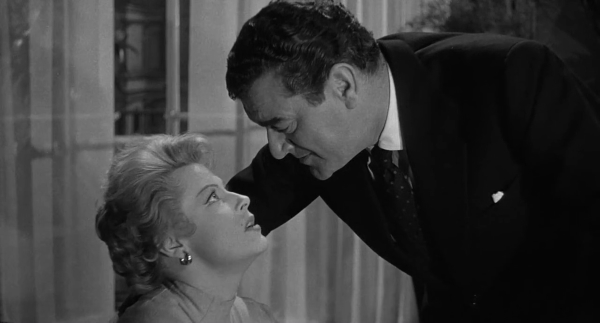
Murder Without Crime is a self-contained affair following the fortunes of just four Londoners over the course of one evening. Stephen (Derek Farr) is, according to the narrator, an author of moderate success. He is married to Jan (Patricia Plunkett), but it does not appear to be a happy union. Jan suspects infidelity and Stephen doesn’t have the demeanor of an  entirely trustworthy man. They row, tempers become frayed, accusations and threats get tossed around, and Jan storms out vowing never to return. What then is a churlish and vaguely immature man supposed to do under the circumstances? Why, allow his smug and supercilious landlord Matthew (Dennis Price) to take him out on the town to drown his sorrows in a Soho night club. That then is the location where the fourth piece of the ensuing puzzle makes her appearance; Grena (Joan Dowling) is a hostess in the club and the lovelorn Stephen catches her attention. To cut to the chase, Stephen and Grena eventually end up back at his place, where he veers disconcertingly between maudlin and passionate while she is simply kittenish. Things take a nasty turn though with Grena feeling rejected and insulted before it escalates into a tussle over an antique dagger that sees Stephen shove her, causing her to fall and strike her head.

Such a turn of events would be enough to panic even the most levelheaded and self-assured individual, neither of which characteristic could be used to describe Stephen. His first thought is to conceal the deed, but he is not taking account of the suspicious and predatory nature of the ever vigilant Matthew in the flat below. The opportunity now exists to apply some pressure on the hapless Stephen, with Matthew sadistically teasing and tormenting him with allusions to his  guilt, toying with him pitilessly before blackmailing him.

J Lee Thompson had started out as a writer and one of his earliest plays went by the name of Double Error. It seems to have enjoyed some success, being performed in the West End as well as later revivals in the US. In 1950 Thompson had the chance to make his first movie and Double Error was adapted for the screen as Murder Without Crime. The stage origins are apparent in the small cast and limited locations but the cinema version has some very striking visual flourishes, with sharply canted angles and moody noir style cinematography helping to build up atmosphere and suggest a world where the mentality of the people we follow is as skewed and quirky as the imagery on the screen.

Everything moves along at a comfortable pace, scenes never drag and it all wraps up in a way that is brisk without being rushed. However, there are some weaknesses that shouldn’t be glossed over. Firstly, there is a voice-over that adds little to the proceedings and comes off as smug and smarmy where I suspect it was actually aiming for knowing sophistication. Then the score by Philip Green is one of those intrusive efforts, making its presence felt far too strongly and drawing attention to itself far too often – I have always felt a score ought to complement the visuals, enhance the mood rather than stomp all over it. Finally, there are the characters who people this drama. I don’t reckon it is necessary for audiences to be able to identify with the characters they watch but there should be someone they can at least sympathize with. The problem with Murder Without Crime is that nobody is actually all that likeable.

Dennis Price was a fixture of many British movies throughout the 1940s and 1950s, excelling at playing men at once remote and bilious. Kind Hearts and Coronets may well be his best work but there are numerous examples of delicious unpleasantness in his list of credits. As Matthew he is seedy, louche and superior, and downright mean-spirited. Up against Price is Derek Farr, in a role that really needs to have some feature we the viewers can root for. What we get, however, is a portrait of a weak and truculent type, a man who is struggling to save up to make a down payment on a chin. While Stephen surely feels sorry for himself and worries a lot about how everything will pan out, I was of the opinion that any misfortune he suffered was richly deserved.

The women fare only marginally better. Patricia Plunkett rightly walks out on Stephen at the beginning, but her resolve weakens far too quickly. When she returns it is hard to see how she is justified in helping out this man who is clearly unworthy of her. That she continues to do so even after she learns how he behaved had me scratching my head. The tragic Joan Dowling does some good work as the clinging hostess but, once again, it is difficult to like her. The fact is all four of these actors turn in good performances, but the the characters they play are for the most part distasteful.

Murder Without Crime is a modest picture, telling a simple yet twisty story economically. Network released the movie on DVD almost a decade ago and it looks like it has now gone out of print, although used copies can still be picked up at reasonable prices. That old DVD was quite strong and boasted the kind of transfer that did justice to the visuals. It is a tight little crime story from a director who was just starting out and even if it has some weaknesses (which I hope I haven’t overstated here), it still makes for an enjoyable way to spend eighty minutes of your time.

Accused of Murder

Years ago I put up a short post on films noir shot in color. I included at the end a list of movies I had found online that were supposed to fit the bill. While I had seen most of those titles at that time, there were, however, a few which had eluded me. Having recently caught up with Joseph Kane’s Accused of Murder (1956), I can now say I’ve viewed all of them. I can also state that, despite my own broad and inclusive approach to such categorization, this movie falls outside of the parameters of film noir. To me, it’s a straightforward crime or mystery picture.

There are gangsters and night clubs, cops and killers, but there’s not a lot of ambiguity on display. The opening scene sees Ilona Vance (Vera Ralston) making her debut singing in a club and watched by the man who (apparently without her knowledge) has secured the job for her. He is Frank Hobart (Sidney Blackmer), and he has just made the fatal mistake of double-crossing a mobster and compounded that error by threatening the enforcer (Warren Stevens) sent to put the squeeze on him. After Hobart tries to pressure Ilona into spending the evening with him, and she declines, his body, replete with a .38 slug, is discovered round the corner from a cheap clip joint. A bad break for Hobart of course, but it’s not good news for Ilona either as she was the last person seen in his company. There is a witness, a tired and jaded hostess (Virginia Grey), who could place the scar-faced enforcer at the scene of the crime but she has her eyes on the main chance. The investigation falls to the cautious Lieutenant Hargis (David Brian) and his impulsive subordinate Sergeant Lackey (Lee Van Cleef), whose contrasting methods and views of the suspect provide the meat in the ensuing drama.

Joe Kane was a prolific filmmaker, a Republic “house director” who took charge of all kinds of movies, but is probably better known, or more highly regarded, for his westerns. In spite of the large number of films he made in the course of his long career, I have only seen a handful. Shot in Naturama, a ‘Scope format used by Republic, Accused of Murder is a very colorful affair. Some of the early scenes have a noirish look, taking place at night and featuring the kind of lighting and angles commonly associated with that style or genre. For the most part though, it has a bright and sunny appearance, and the ultra-widescreen process is only intermittently used to its best advantage.

I get the impression that the movie was aiming for the glossy and polished look of a Ross Hunter production (admittedly, the presence of Virginia Grey, who appeared in more than a few of Hunter’s films, might be influencing me here) but it doesn’t quite achieve that. I’m not sure whether it’s the exclusive use of studio sets or the art direction, but there is more of a television vibe than anything else. Kane’s sense of pace is fine, however, and the story never outstays its welcome. This is just as well as the plot is a thin one and  wouldn’t have stood up to unnecessary padding or stretching. As I said earlier, there is no real ambiguity, and even if there is an attempt to add a twist towards the end, it still plays out without any surprises. The script was by W R Burnett, adapting his own novel, and bearing in mind some of the other films from this source (High Sierra, Dark Command, The Asphalt Jungle, to name a few), one might be forgiven for hoping for something with a bit more punch.

So, here we have another Republic movie where Vera Ralston was handed the lead. Last year, I looked at The Flame, where I felt she did reasonably well without ever being the least bit memorable. Her work in  Accused of Murder is, however, weaker. Firstly, the writing does her no favors by having what feels like countless people telling us time and again how sweet and good she is;  this drains all doubt from the viewer’s mind about a role where one ought to be wondering which of the two cops on the case has a handle on her true character. Ralston does what she can with the part but she wasn’t the most expressive actress at the best of times and there is little real sense of anguish or turmoil conveyed. I think David Brian tended to be more enjoyable in villainous or less sympathetic parts, he had that kind of face, but he could and did play sympathetic types equally well. He grounds the movie as the thoughtful cop attracted to the chief suspect yet unable to entirely shake off his reservations.

Speaking of actors with a face best suited to an unsympathetic part, Lee Van Cleef surely ranks high among them. Accused of Murder afforded him the opportunity to snarl and smirk to his heart’s content, and his ultimate conversion consequently feels slightly disappointing. Warren Stevens has a ball threatening and terrorizing all who get in his way, and he is genuinely intimidating. Virginia Grey had that weary look down pat, a faded glamor that was well used in those aforementioned Ross Hunter pictures. Her would-be chiseler comes in for some rough treatment from Stevens and this adds a real edge to the movie. Smaller supporting roles are filled by Barry Kelley, Frank Puglia and a whiny, sweat-stained and unscrupulous Elisha Cook Jr.

To the best of my knowledge, Accused of Murder has not had any official release on physical media anywhere. Nevertheless, it is easy to track down online versions of the movie for viewing, and in remarkably good condition to boot. I don’t feel it is a film noir, although I should also say I find myself increasingly of the opinion that labels are of little importance. As a film, it is so-so; it holds the attention, looks attractive and features a few solid performances, yet it never rises far above mediocre. Even if I wasn’t bowled over by it, I’m certainly pleased to have seen the movie and I suspect others may get more out of it.

Moss Rose

Call a movie contrived and it immediately conjures up images of some wholly unrealistic scenario, something the hardheaded among us will insist gravely could never come to pass. And thus, with wisdom intact, we dismiss it and move on to something more credible and by inference something altogether better. Perhaps the years are encouraging me to be more contrary but I find I’m increasingly at a loss to understand why a lack of realism in any form of artistic expression  – and I’ve yet to hear a convincing answer offered as why those two concepts need to be forced into an uncomfortable marriage anyway – has to be regarded as “a bad thing” and avoided at all costs. The Gothic romance is one of those areas where the contrived situation is commonly found, and that seems to be even more apparent in the 1940s variety which frequently flirted with film noir. Moss Rose (1947) is one such movie, a murder mystery requiring the viewer to resolutely suspend disbelief and take some unlikely behavior at face value.

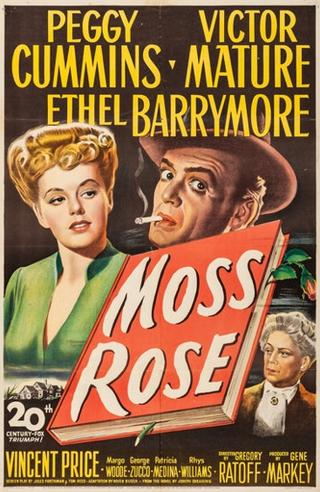
Edwardian London: Hansom cabs clatter over slick cobbles while tendrils of fog curl themselves seductively around softly glowing gas lamps, and our narrator breathlessly begins her tale. Belle Adair (Peggy Cummins) – it’s her stage name but it’s the one we first encounter her under so I’ll continue to use it here – is a young chorus girl who tells of a mysterious stranger she’s often spotted slipping in and out of the shadows next to the boarding house she occupies along with a number of other performers. She assumes it’s the latest conquest of one of her friends. When that same friend then turns up drugged and strangled in her room Belle is convinced the killer must be that same man and the fact she actually saw him scurrying guiltily from the scene of the crime appears to seal it. With persistence, considerable brass and a sprinkling of luck, she manages to trace the man to one of the better hotels in town. He turns out to be one Michael Drego (Victor Mature), a wealthy gent who just happens to be on the verge of wedding a well-bred beauty. To go into further details would I feel spoil it for anyone unfamiliar with the movie so I’ll confine myself to saying that Belle strikes an odd bargain with Drego, one which falls a step short of blackmail but which is every bit as risky.

Director Gregory Ratoff seems to have been one of those effortless all-rounders who could be found in classic era Hollywood, a director, actor, writer and producer. Aside from Moss Rose, I’ve only seen a couple of his movies (Intermezzo and The Corsican Brothers) and both of  those quite some time ago, although I have a copy of Black Magic with Orson Welles somewhere. Everything about his handling of the movie feels very smooth and confident, his camera seems to enjoy drinking in the rich details of the elaborate Fox sets and the melodrama at the heart of the story is fully embraced. That story is an adaptation of a Joseph Shearing novel and the script is at least partly due to Niven Busch, who was responsible for the last entry on this site Distant Drums. While that was a  somewhat flat affair, Moss Rose has a little more of the kind of off-kilter psychology one often comes across in scripts by Busch. While this doesn’t have the depth or power of some of his best writing, there is that trademark motif of a dark and disturbing past reaching out spectral fingers to toy with passions in the present.

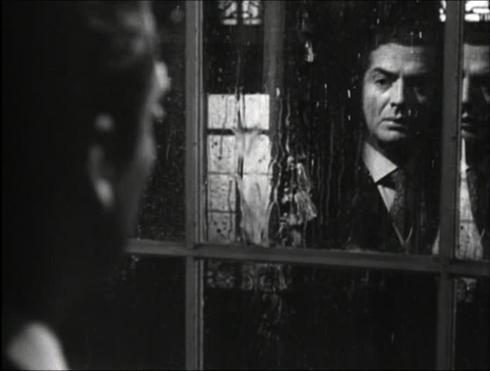
Victor Mature took the lead in a role which was a fine fit for him, the soulful, tortured look he found so easily had served him well in many a film noir and he exploits it here to good advantage. We’re used to seeing him as a heroic figure, perhaps a pressured and hunted one but a sympathetic character nonetheless. His casting in Moss Rose as the chief suspect subverts those expectations and teases the viewer, and Ratoff’s careful shot selection, with the help of cameraman Joseph MacDonald, emphasizes this. Peggy Cummins, in her first Hollywood production, is another good pick as the vulgar ingenue straining to sample the dream she’s nurtured since her impoverished childhood. There is something touching about the frank idiocy of it and the peril she’s willing to expose herself to, although I guess it’s this aspect which those who pine for greater realism will find least appealing.

Among the many pleasures of watching movies from the major studios in this era is the depth and quality of the supporting casts. Vincent Price’s silken charm was a boon to every production he appeared in and at this stage in his career, before he’d earned the right to have the whole show to himself, my only regret is that he’s not on screen longer. The deceptively effete, flower loving, detective he plays in Moss Rose is a neat turn, and disguises the character’s cool, steely intelligence. Rhys Williams as his poker faced subordinate is the ideal foil and they make for an entertaining team every time they appear. If you had to pick one actress to project an otherworldly quality, then Ethel Barrymore would have to be among the strongest contenders. That fey persona, as of one only paying the occasional flying visit to the rest of us, is to the fore again here. Patricia Medina and Margo Woode add to the background glamor, and it has to be said that any house boasting George Zucco as the butler  should be automatically viewed with suspicion.

Moss Rose came out on DVD some years ago as part of the Fox MOD line and subsequently popped up in Europe. The copy I viewed is in reasonably good condition, perhaps the contrast is a little too harsh here and there but it looked solid enough overall. I enjoy these gaslight Gothic thrillers with a hint of noir in the background but I acknowledge they may not be everyone’s bag. As I said at the start, stories such as this have a tendency to rely heavily on contrived situations and that can present a problem for some viewers. If, on the other hand, you’re happy to take the movie on its own terms, there is a great deal of pleasure to be had viewing Moss Rose.