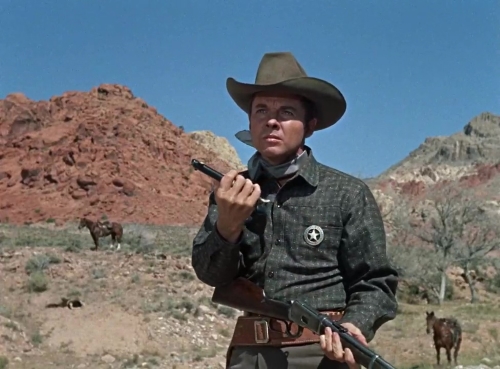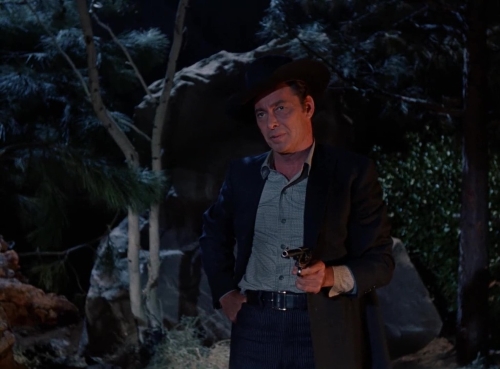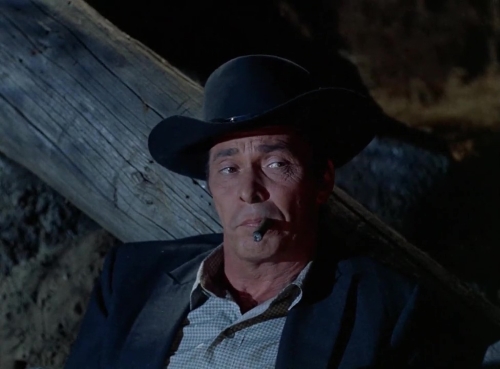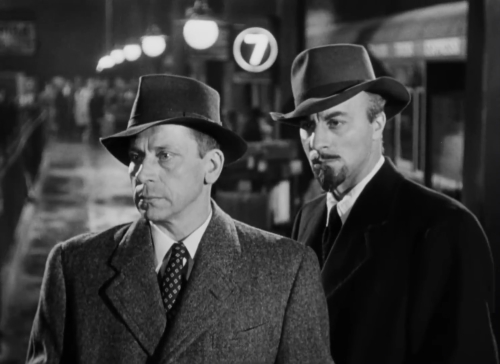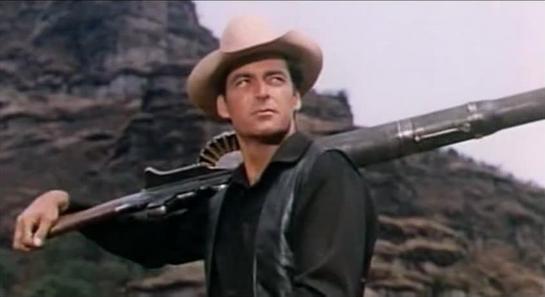
War Arrow

Something about the mid-range westerns that Universal-International was producing in the 1950s points to that hard to define quality which makes the genre so attractive. It’s partially down to the look, the color and locations, and partially the no nonsense style of storytelling. It’s not always easy to come up with a movie that offers entertainment while quietly making some point about a given issue. Universal-International movies often managed this, and the westerns directed by George Sherman during his time at the studio from the late 1940s on are a good example of this. In particular, his films that give some prominence to Indian or Native American affairs sidestep the ponderous or pretentious  pitfalls that have bedeviled many a well intentioned movie. War Arrow (1953) will not be found on any ‘best of’ lists and there’s no reason why it should; it breaks no new ground, nor does it do anything especially startling. However, the film is enjoyable, it uses its strong cast effectively, and Sherman’s characteristic sympathy for the Native American is subtly and seamlessly blended into the narrative.
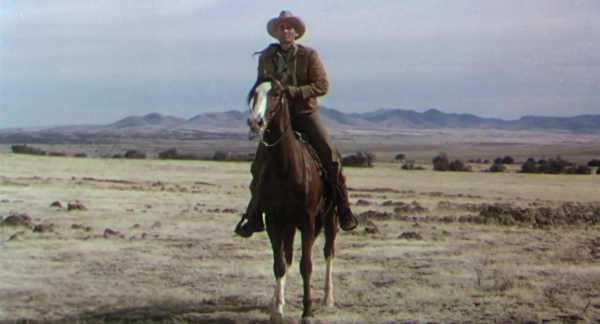
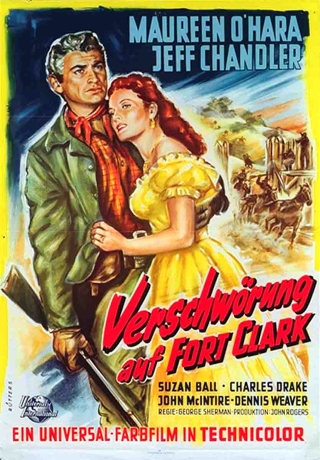
War Arrow is one of those westerns that takes its inspiration from some real historical event, in this instance the recruitment of Seminole tribesmen as cavalry scouts. I say inspiration here because it is a movie after all, not some attempt to represent real history. The film starts out with Major Brady (Jeff Chandler) and two sergeants (Noah Beery Jr and Charles Drake) on their way to Fort Clark, Texas. They have been sent to help in the struggle to contain the raiding parties of Kiowa that have been sweeping the state. They come across the grisly aftermath of one of those raids, with corpses and a burnt out wagon strewn like broken and discarded playthings on the scorched grass. Quite what three individuals are supposed to achieve where the full complement of a fort have failed is anybody’s guess. Their arrival is greeted with some suspicion by the local commander Colonel Meade (John McIntire), a feeling that will gradually be distilled into open hostility as he sees his approach sidelined and his authority not quite usurped but certainly undermined by Brady’s willingness to think outside the box. Meade is an adherent of the West Point manual, rigid in his views of both military tactics and the local tribes. Brady, on the other hand, is an opportunist at heart, a man who is prepared to take a more unorthodox path, and to improvise where necessary. His plan is to employ the kind of guerilla methods the Kiowa themselves have perfected, fighting fire with fire in a sense. And he’s keen to go a step further, to use the dispossessed and dislocated Seminoles as a sort of semi-official, roving commando. As the friction between the two schools of military thought grows in intensity there is another complication elbowing its way into Brady’s life.  The widow (Maureen O’Hara) of one one of the fort’s officers who is missing presumed dead has caught his eye. In itself, that ought not to represent a great problem were it not for the fact that she appears uneasy, and perhaps unconvinced, over the fate of her husband, while the frankly radical daughter (Suzan Ball) of the Seminole chief is also showing signs of interest.
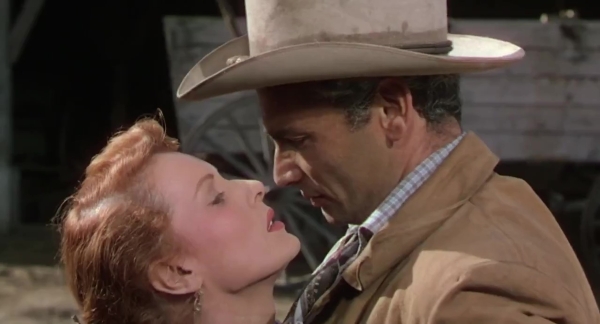
Sherman was a director who knew the genre and how to bring in a movie according to the studio’s requirements. Universal-International seemed to suit him and his time there saw him do some of his best work. I won’t claim that War Arrow represents him at his best, but it is an example of how he could produce a solid piece of entertainment from fairly ordinary material and get worthwhile work from his cast. His depiction of the Native Americans is as sympathetic as one would expect – granted the Kiowa do not come off well and act as bogeyman villains open to outside manipulation, but the Seminole fare much better. The script is by John Michael Hayes, someone who hadn’t much of a pedigree in westerns and who I tend to think of more in relation to his work for Hitchcock in the 50s, and it presents the Seminole in a strong light. They come across as indispensable to the success of the campaign planned out by Brady. They are seen as gutsy and committed, and a good deal more honorable than the frequently petty and hidebound Meade and his junior officers. Sherman gives plenty of time to this aspect, and shoots the battle scenes and skirmishes in a way that is both exciting and which highlights the contributions of the Seminole.
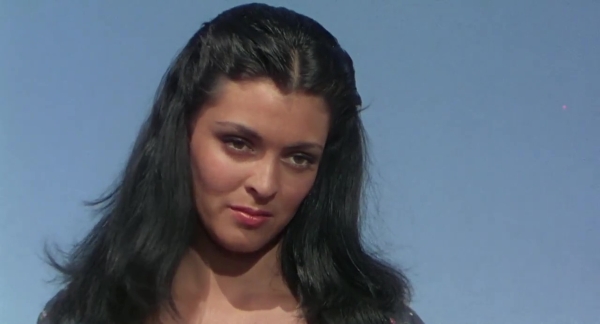
Jeff Chandler typically was good in military roles, either in westerns or contemporary war movies. Gravitas and authority came easily to him and these qualities could be tempered by thoughtfulness, inner conflict or iron determination as required. The part of Major Brady is a relatively straightforward one, an easy run out for him in essence and he carries it off with his usual smooth accomplishment. Maureen O’Hara made a number of films for George Sherman, including the director’s last Big Jake, with variable results. Personally, I think the actress did her best work in the genre for Ford, but this isn’t a bad effort and she is better in the latter stages where her character is given a little more depth. Suzan Ball was the other female star and she is marvelously forthright and assertive, although probably anachronistically so. It’s an attractively spirited performance and serves to emphasize the cruel tragedy of her short life – cancer would claim her just two years later at the age of 22. I think it’s fair to say that any movie benefits from the presence of John McInitre, a class act who could play it mean or sympathetic and who manages to inhabit the obduracy of his character here. Charles Drake and Noah Beery Jr add some lightness to proceedings, while Henry Brandon – still a few years away from his most memorable role as Scar in The Searchers – is the Seminole chief Maygro, with Dennis Weaver and Jay Silverheels filling the other native parts.
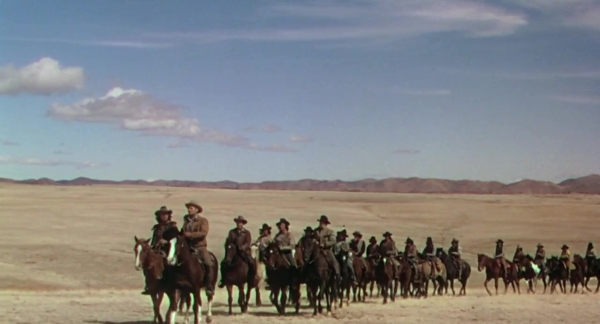
It always pleases me to sit down with a George Sherman film, especially one of his westerns. Even if War Arrow isn’t among his top titles, it still shows his professionalism and his sensibilities as a director are apparent, not least with regard to how he viewed Native Americans. The movie shouldn’t be that difficult to track down on DVD although the German Blu-ray, originally released by Koch Media, that I picked up years ago sadly seems to have drifted out of print.

I’m offering this as a contribution to the Legends of Western Cinema Week being hosted by Hamlette’s Soliloquy and others.

Seven Ways from Sundown

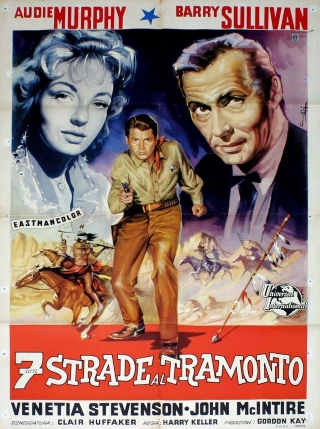
It’s strange the way a modest Universal-International western can somehow encapsulate just about all the most important themes that propelled the genre to greatness in its heyday. Yet, in another way, it’s perhaps also appropriate this should be true of a movie starring Audie Murphy and coming at a point in time close to the end of what can now be regarded as the golden age of the western. Seven Ways from Sundown (1960) weaves threads incorporating such ideas as the gradual taming of the West, Fordian notions of printing the legend, sacrifice, and of course redemption into the fabric of its consistently entertaining sub-90 minute running time.

I like it when a movie pitches us right into the action. Seven Ways from Sundown opens with a shootout and the fire that ensues. The man responsible for this mayhem is Jim Flood (Barry Sullivan) and it’s soon established that he’s a man with an impressively fearsome reputation. Riding into the aftermath of Flood’s handiwork and drawing the ire of the exasperated townsfolk is an unsuspecting Texas Ranger rookie with the unique and memorable name of Seven Jones (Audie Murphy) – all the members of his family were unimaginatively named numerically, although his mother apparently tried to add some individual character and color by extending it to Seven Ways from Sundown Jones. His first assignment as a Ranger is to accompany a veteran sergeant, Hennessy (John McIntire), and effect the arrest of Flood. At this point the viewers are let in on a piece of information that Jones is not privy to, namely that Flood killed his elder brother. When Jones later catches up with Flood and sets about the laborious and perilous task of seeing him returned to face justice this hidden fact adds an anticipatory edge to the drama and alters the dynamic of the narrative to an extent. Suspense, guilt and the hint of another mystery are drawn into the story, further enriching it. This fluid, shifting quality is heightened and gains greater significance as we witness Flood’s roguish self-awareness slowly charm the simple and straightforward Jones. All told, it sets up a climax that manages to be at once fitting, affecting and satisfying.

Seven Ways from Sundown has what might be termed an interesting background. It was written by Clair Huffaker (Posse from Hell, Rio Conchos), adapted from his own novel and so has a solid pedigree to start off. A bit of browsing around the internet reveals that the movie was initially directed by George Sherman till an apparently serious row with Audie Murphy lead to Sherman’s departure and his replacement by Harry Keller (Quantez, Six Black Horses, Man Afraid). I’ve not been able to find a source for this though, nor have I managed to ascertain exactly how much of Sherman’s footage (if any) remains in the picture. The arc traced by the story and indeed the ethical journey undertaken by the main characters certainly seem like the kind of material that would have appealed to Sherman and which he would have handled with his customary sensitivity; the short interlude with the hero worshiping youngster, the brief yet still poignant moments spent over the old Ranger’s grave, as well as the low key romance with Venetia Stevenson all feel like the kind of thing Sherman would have relished.

Audie Murphy was doing some terrific work around this time – Posse from Hell, Hell Bent for Leather, The Unforgiven, No Name on the Bullet to name just a few westerns, as well as The Quiet American, every one of which are high quality movies. I would rate Seven Ways from Sundown as belonging up among his best movies, not necessarily due to Murphy’s own performance, which is perfectly fine, but more for the film that is built around it. Murphy plays it fresh and innocent even though he had over a decade’s worth of movies behind him at that point, and the contrast between the mentality and viewpoints of Jones and Flood is indicative of a West that was nearing a turning point. Murphy’s Ranger is open-hearted and honest, brimming with optimism and faith in man’s better nature, whereas Flood’s knowing charm masks if not cynicism then a touch of regret and an awareness that drifts near and flirts with an acknowledgement of the fact that his time is short. By the time this film was made change was in the air, the following decade would see the number of westerns produced drop off and a discernible shift in tone within a few years. Maybe this is not overtly expressed, but hints of it are there should you care to look for them.

Seven Ways from Sundown came out only a few years after Barry Sullivan had taken leading roles in westerns such as Dragoon Wells Massacre and Forty Guns, but it more or less marked the end of his time in such headline parts and he would shortly embark upon a two season run on television playing Pat Garrett in The Tall Man and then drift into supporting/character roles. Perhaps I’m reading too much into it, but I like to think his actions in the last reel represent something of a redemptive sacrifice when he’s confronted with both the impact of his actions and the realization that he’s finally running out of road – this complements and builds naturally on the moment of dreadful guilt that washed over him earlier when he understood that he had taken the life of an old friend. Venetia Stevenson, daughter of John Ford favorite Anna Lee and director Robert Stevenson, is someone I remember most for Day of the Outlaw and the effective low budget horror movie The City of the Dead. She shares a few good moments with Murphy, particularly towards the end when she puts him straight on the danger posed by Flood’s recklessness and then becomes an unwitting catalyst for the tragic yet apt climax. John McIntire could generally be relied upon to provide a touch of class to any movie and he does so here as Flood’s former associate. It’s a quiet performance and quite a touching one.

Seven Ways from Sundown has had a few releases on DVD in various European countries although I don’t think any of them present the movie in its correct widescreen ratio – it ought to be 1.85:1. I’ve certainly never seen it in anything other than open-matte, which while not ideal is at least better than a cropped version. All told, I consider it to be a superior Audie Murphy vehicle buoyed up by an eye-catching turn from Barry Sullivan that contains a generous measure of depth and subtlety.

Spy Hunt

Sampling the pleasures of the uncomplicated world of B movies is something I never tire of. Remember, despite what some glib types might tell you, a B movie does not mean a bad movie. There is an art to producing a slick and brisk piece of entertainment on a budget. Back in the days of the big studios, this was easier to do of course. There were specialized units dedicated to churning out support features and a large pool of talent on both sides of the camera who could be relied on to produce work that might not have cost a lot but was still polished and professional. Spy Hunt (1950) is an example of this, a 75 minute mystery adventure, shot with a certain elan by George Sherman using an attractive cast and benefiting from a script derived from a Victor Canning novel.

As soon as the titles appear on screen, it will be apparent to anyone familiar with films of this era that we’re in solid B territory. Those titles are accompanied by the immediately recognizable music that was used to introduce the Rathbone/Bruce Sherlock Holmes series for Universal throughout the 1940s.  Others may disagree, but I find something rather comforting in that, like meeting up with old friends after a long separation. Then the opening scene takes place on a train, even better a train speeding through the night to some unspecified destination – and so we are powered along from the sense of the familiar towards the unknown, with pace, urgency and mystery jogging by our side. A furtive figure locks himself in, and proceeds to conceal a strip of microfilm inside a cigarette. Disembarking on a platform in Milan, that same man lights up, takes a brief drag on the cigarette, and then discards it with elaborate casualness. He’s caught the attention of someone first, however. Someone who nonchalantly recovers that cigarette and saunters off alone. The someone in question is a woman by the name of Catherine (Marta Toren), a spy or courier for some government – the name is never revealed and it’s not something the viewer needs to know anyway as the microfilm itself is in the nature of a Hitchcockian MacGuffin, a plot device that is vital to the characters but of only  marginal importance to the audience. Some sly subterfuge on Catherine’s part ensures that said microfilm ends up secreted within the collar of one of a pair of panthers being transported across Europe and eventually on to a circus in the US.  To do so, she first has to distract the big cats’ escort, a drifter called Steve Quain (Howard Duff) who is keen to earn his passage back to the States. It all sounds like a neat if somewhat convoluted plan, but others are on to it and what ought to have been a harmless deception ends up with the freight car being uncoupled and derailed, two dangerous cats inadvertently released into the wilds of Switzerland, and Quain facing the threat posed by a ruthless but unidentified antagonist who is eager to reclaim the elusive microfilm.

The title says it all really, the film being essentially a pursuit by spies and assorted agents of a piece of damning evidence, blending in elements of the whodunit (the identity of the villain is deftly kept a matter of suspicion and conjecture till near the end) and the outdoor adventure. The fact that the escaped panthers pose a real danger to all who cross their path, animals and people alike, provides an original twist to what would otherwise be a fairly standard espionage yarn. While I’ve read a few Victor Canning novels and seen a number of adaptations of his work – Golden Salamander, Venetian Bird, The House of the Seven Hawks, and Hitchcock’s Family Plot – I’ve not yet had the opportunity to read Panther’s Moon, which was the basis of this film, but scanning a brief synopsis of its plot suggests the movie is quite faithful to the source material. George Sherman directs with assurance, wasting no time on the irrelevancies and managing to create a few notable setups that emphasize the suspense, from the atmospheric views of the railway siding by night to carefully composed overhead shots in the Swiss inn as well as some fine close-ups.

Howard Duff presents an honest, two-fisted likeability in the lead that was a trademark of his time at Universal. Marta Toren makes for a resourceful spy and an attractive headache for Duff. Neither one is stretched dramatically yet they turn in the type of work that makes it no chore whatsoever to spend an hour and a bit in their company. Robert Douglas and Philip Friend are dutifully suspicious in  support and are well backed up by Walter Slezak, Philip Dorn and Kurt Kreuger. Watching these actors do their thing had me thinking how I often find myself influenced by the roles I first saw certain performers take on. For instance, Slezak has a relatively benign part in this movie, but somewhere at the back of my mind (and this is despite my knowledge of his work in sympathetic roles such as that in Mankiewicz’s People Will Talk) I still associate him with sinister characters like those he played in Lifeboat or The Fallen Sparrow. Similarly, for better or worse, I find I forever associate Philip Dorn with Passage to Marseille and Kurt Kreuger with Preston Sturges’ Unfaithfully Yours.

Spy Hunt has been released by Kino in the US in one of their film noir sets. Previously, it had been a title, like so many Universal-International movies, that one read or heard about while wondering if a copy that was viewable would ever turn up. The last few years has seen some remarkable progress in that area and there are now far fewer of these “lost” rarities. Having said that, I do want to point out that I can see no real justification for marketing this movie as film noir. That’s not meant as a criticism of the film, just a footnote for those who haven’t seen it to make them aware that it’s an espionage mystery first and foremost. Of course if the film noir label makes it easier to market it and get it out there for people to see, then so be it.

River Lady

Movies that exist at the periphery regularly catch my attention. They may be movies that occupy a place on the margins of a particular genre, they may be transitional efforts that straddle different eras, or they may even be a bit of both. Such is the case with River Lady (1948) a film which is not entirely successful, partly as it’s difficult to pin down the genre – a hint of the western, a dash of riverboat melodrama, and a pinch of the frontier adventure – and partly due to the time it was made. While it might not be the kind of movie that broke new ground or made a strong enough impression to encourage frequent revisits, it is still engaging in the way so many of George Sherman’s titles are.

I’ve lost count of how many westerns have turned a spotlight on the encroachment of civilization on the frontier. Sometimes it’s a matter of the railroad hammering out an iron clad tattoo across the plains and relentlessly shoving the old world to one side. At other times it is the stringing of the telegraph line, or the gradual extension of the reach of the law itself. River Lady concerns itself with the expansion of organized business interests, in particular the conflict between small, independent logging outfits and the hungry syndicates. Nevertheless, corporate kerfuffles of any type have a limited appeal at best and it’s always advisable to bring the human drama and the human faces of the players and antagonists to the fore. So it is that attention is focused on a roughneck logger called Dan Corrigan (Rod Cameron) and Sequin (Yvonne De Carlo), the owner of the titular paddle boat and undisclosed boss of the syndicate which is buying up all the struggling outfits on the river. This allows for a double-edged conflict, both the tangled business affairs and the romantic tug-of-war between a hardheaded free spirit such as Corrigan and the ambitious and manipulative Sequin. And any time the mixture looks like drifting off the boil the silky and stealthy Beauvais (Dan Duryea) is on hand to stoke it up once again.

As has been stated, in terms of genre, there’s a fluidity to the movie that mirrors the flow of the timber down the river. I guess that could be seen as versatility in the script, or even as a determination to resist the imposition of boundaries on the part of the filmmakers. However, it makes it hard to get a handle on the movie, a situation I’ve found can crop up from time to time in mid to late 1940s westerns, where it’s possible to detect elements of breezier B pictures rubbing shoulders with themes that carried a bit more weight. One could even say something similar about George Sherman’s career trajectory itself at this point. The rights to the story drifted around Universal for many years before the movie was finally made and perhaps this fairly lengthy gestation period has something to do with the feeling that the finished product imparts.

Rod Cameron is third billed but has the leading role. He provides a strong physical presence, although he does end up on the receiving end of a terrific beating meted out by Duryea at one stage. His acting is adequate overall, but the way his character is written is problematic. I think it’s clear enough that the intention is for a redemptive arc to be traced, which is fine as far as it goes. The thing is though that, as written, Corrigan isn’t really a likeable figure for much of the film’s running time. He’s not just a man who is on a learning curve, he’s downright unpleasant to the women in his life and comes across as spoiled and petulant instead of grittily independent. Duryea, as the villain of the piece, actually brings more nuance and therefore more interest to his part. I suppose it comes down to the fact that Duryea, even when we was showboating shamelessly or backstabbing with the worst of them, had a soulful air about him. Top billing went to Yvonne De Carlo but she is off screen for far too long and her role ends up largely undeveloped. Helena Carter is her romantic rival for Cameron’s affections and actually gets the more rewarding part. In support, John McIntire, Florence Bates and Jack Lambert all have their moments.

As a Technicolor production, River Lady might be expected to look better than it does. I have a German DVD that is acceptable all told, but there is a certain muddiness to it too. Perhaps the fact the movie is part of a George Sherman box that has it packaged alongside solid Blu-ray versions of The Last of the Fast Guns and Red Canyon serves to draw attention to its weaknesses.

Red Canyon

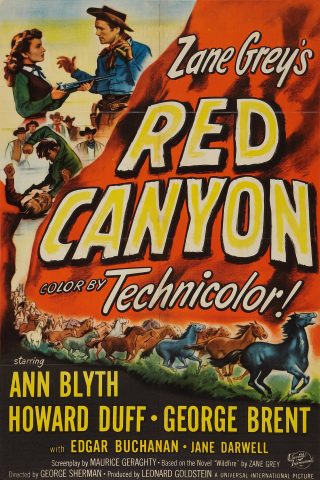
Redemption – have I mentioned that concept before? Well, it would be practically impossible to maintain a site which has devoted so much space to the consideration of the classic Hollywood western for so many years and not do so. After all, that was one of the main drivers of the genre, the cornerstone on which everything else rests, and we cannot even approach the western in an intelligent way, let alone attempt to pin down its essence, until we acknowledge the primacy of this core ingredient. One of the more compelling attractions of the western is its multifarious nature, those layers and variations which are woven into the fabric of the genre. George Sherman’s Red Canyon (1949) offers yet another of those spins on the theme of redemption.

Many a movie has been built around the notion of the outlaw seeking to outrun his past deeds, the gunman grown weary of the endless challenges and the fame or notoriety which has come to be a curse. Yet what about a reputation foisted upon a man not through his own actions but second hand? What about the idea of guilt by association, or in this case as a result of one’s bloodline? This is the central theme of Red Canyon, the tale of a man looking to break loose from the shadows cast by his disreputable family. Such a task requires not only grit and resolve but money too for new beginnings come with a hefty price tag. To that end, Lin Sloan (Howard Duff) has determined to catch, break and race a famed wild stallion known as Black Velvet. This is the secondary thread running through the picture, the hunting and taming of this magnificent force of nature. And it is that quest which brings Sloan into contact with Lucy Bostel (Ann Blyth), the romantic angle which then develops forming the third plot strand and acting as a bridging device of sorts. That relationship starts out out in a lighthearted manner – Sloan’s arrogance results in Lucy temporarily losing face and losing her prized thoroughbred, while she seizes an unexpected opportunity to pass on some indignity by way of repayment – but folds into the main narrative when it deepens. It is complicated by the fact that Sloan’s family is responsible for the death of Lucy’s mother in a raid and her father (George Brent) has consequently sworn vengeance against the entire clan. A situation is thus set up whereby all the main players have no alternative but to defy their past histories, and one of them might perhaps earn that coveted redemption for his family name if nothing else.

Red Canyon ranges widely in tone, the lightness of the early scenes should by rights contrast sharply with the action of the finale and the deep-rooted schism which provokes it. It is a credit to George Sherman’s assured direction that all the tonal shifts which occur feel so smooth. Working from a Maurice Geraghty script which is an adaptation of a Zane Grey novel, Sherman seamlessly blends all the ingredients in this tale about breaking a horse and breaking with the past. Ultimately, Lin Sloan does redeem his family name by decisively cutting the bonds that have tethered him all his life. The movie celebrates the restoration of harmony and balance, in nature, relationships and in life itself. By reclaiming his identity, Sloan also ensures that the Bostels, both father and daughter, are freed from the shackles imposed by long held grudges. Of course the stallion is set free too, this symbol of unfettered nature has been instrumental in restoring the emotional equilibrium but it is patently clear that such a potent and primal force could only ever be tamed temporarily.

Howard Duff made a number of films with George Sherman and had a pretty good run in general up until the mid-1950s without ever breaking through to the very top rank of stars. He had that tough persona which made him a good fit for crime movies and westerns and Sherman gets good value from him in Red Canyon. An exuberant and vigorous Ann Blyth (who turned 93 earlier this year) plays off Duff’s ruggedness and deals credibly with both the romantic and more tomboyish aspects of her role. I guess she will be best remembered as Joan Crawford’s ungrateful daughter in Mildred Pierce but she did plenty of varied and interesting work well into the following decade.

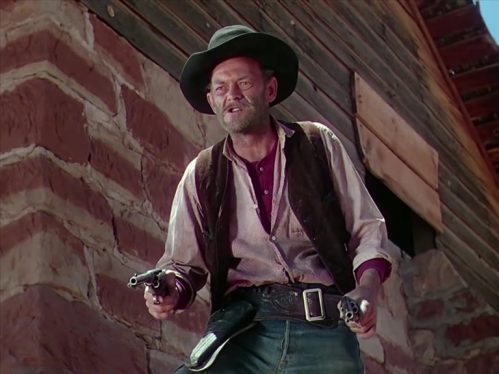
As is the case with so many studio productions of the era, the supporting cast is positively crammed with talent and familiar faces. John McIntire gives one of his memorably mean performances as Duff’s no-good father while Denver Pyle and a rather vicious Lloyd Bridges are his siblings. George Brent, who is not an actor usually associated with westerns, is suitably stern and implacable as the head of the Bostel household. Among all the drama there is welcome comic relief provided by Jane Darwell, Chill Wills and the wonderful Edgar Buchanan as a delightfully self-aggrandizing windbag.

Red Canyon has had a Blu-ray release in Germany via Koch as part of a George Sherman collection also containing The Last of the Fast Guns and a DVD of River Lady. I still have to pick up a copy of that set but I should imagine it is a strong transfer as even standard definition copies of Red Canyon are hugely impressive with Irving Glassberg’s  stunning Technicolor cinematography looking terrific. Comparatively speaking, this movie will be regarded as a minor western. Sure there are bigger, bolder and unquestionably better films to be found in the genre, but it does have a great deal of charm and that attractive sensibility typically found in Sherman’s work.

While this might not be my final post of 2021, it will definitely be the last one to be published before Christmas is upon us. With that in mind, I want to take the opportunity to wish all the visitors here, both the regulars and those who have just come across the site, a merry and peaceful Christmas.

Larceny

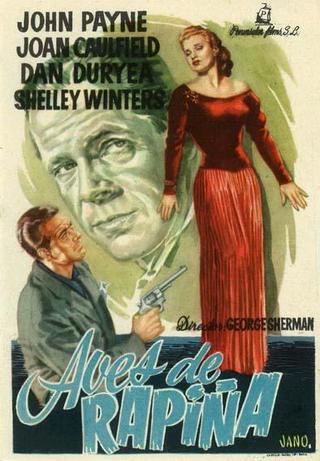
Larceny (1948) spins a yarn which revolves around a scam, a con. The con man, the grifter if you like, is one who naturally, and as the name implies, trades on confidence. There is of course his own polished brass exterior, his professional mask, but of greater significance is the confidence he inspires, wins, and ultimately betrays in the mark. It’s a dirty business when all is said and done, the sacrifice of something as pure as trust for something as cheap and mired among our base instincts as greed  is the stuff of disillusionment. A famous parting line spoke of the stuff that dreams are made of, but then again it could be said that it’s only a short step from dreams to disillusionment, and therein lies the essence of film noir.

It opens with a sting almost gone wrong. Two sharp and smooth types, Rick Mason (John Payne) and Silky Randall (Dan Duryea), have been bleeding a wealthy Florida citizen and his similarly well-heeled friends, for a yacht club that will never be. They have amassed in the region of a quarter of a million dollars by the time their victim grows suspicious enough to confront them . And so it’s time to move on, this time to small town California and a grieving and gullible war widow. The goal this time is broadly similar: sell the notion of a fictitious war memorial to a scarred soul, and skip out when as much cash as possible has been obtained. A wholly reprehensible scheme, but one with a fair chance of success in a uniquely receptive social landscape, one still reeling from post-war mourning and confusion and casting around for some grain of hope to latch onto. Yet within the soft soap of Randall and Mason there are other gritty little grains: the uncontrolled passion and wandering eye of Randall’s trashy girlfriend (Shelley Winters), the professional and personal jealousy of two mistrustful rivals, an almost impossibly credulous widow (Joan Caulfield) and, most important of all, something called a conscience.

George Sherman is not a man one would normally associate with film noir. This is not to say he wasn’t suited to the form, the movie here is proof he was more than capable of handling its tropes and motifs with great skill, but his real forte lay elsewhere in terms of genre. Sherman’s westerns, particularly those from the golden era of the 1950s, are almost all (those which I’ve seen anyway) imbued with the spirit of redemption and renewal. It’s his apparently natural affinity for and empathy with these positive attributes which make him such a fascinating director of westerns. When it comes to film noir though, these strengths may, for some anyway, be regarded as a handicap. Personally, I don’t buy that; this is partly due to what I’d like to think of as an open-minded or expansionist approach to the genre. Essentially, I’m not keen on locking myself into absolutist positions since it rarely seems to offer us much as viewers if we start excluding and proscribing certain movies as a result of their failure to adhere to rigid, imposed dogma on what should or shouldn’t be permissible. That’s not to advocate a total free-for-all of course, but a little flexibility never hurts.

Just as the director of Larceny didn’t spend his career confined to one genre, neither did its stars. The personnel at the time may not all have been fans but the beauty of the studio system lay in the diversity of material it allowed (or forced, if you prefer) contracted actors and crew to become exposed to and familiar with. John Payne was a personable presence in musicals and romances, but the post-war years saw him shift the focus of his career radically. Larceny represented his first foray into “tough guy” territory and film noir, alongside westerns, saw him do some of his finest work. He’s in great form here, scamming Caulfield, fencing with Duryea and trading clinches and barbs with a spiky and sexy Shelley Winters. And Winters is possibly as good in her role as I’ve ever seen her, firing off some of the finest one-liners anyone was ever handed in a film noir. Duryea is as compelling as he always was (Silky is a superb name for a character and sums up the actor’s manner perfectly) and he displays a marvelous sense of menace. I remember not being all that impressed with Joan Caulfield’s range in The Unsuspected and I found myself having similar thoughts here – I can see how her character needs to project the kind of purity necessary to push the plot in the direction it ultimately takes, but I felt her innocence was overdone at times. But that’s just my take on it. As for support, it’s worth mentioning some fine contributions from Dan O’Herlihy, Dorothy Hart, Percy Helton and Richard Rober.

I would be utterly delighted were I able to post here that I had managed to track down a sparkling and pristine release of Larceny, one which could be eagerly snapped up by fellow movie fans. Sadly, that is not the case; the movie remains, to the best of my knowledge, unavailable for purchase. I watched it online, viewing a print that was very far from optimum condition. This is most certainly not the ideal way to see anything and I only resorted to this as no other option exists at the moment. At the risk of sounding like a hopelessly scratched vinyl recording, I can only reiterate my ongoing dismay at the absence of so many Universal-International title on DVD and/or Blu-ray.

I think it’s worth noting here at the end of this piece that it appears to be the 100th title I have tagged as a film noir, a small milestone. Mind you, I’ve no doubt that a number of those I’ve included over the years will be regarded by some as marginal entries. Ah well, so be it.

Reprisal

I get a kick out of looking at the way trends and perspectives develop and evolve. Anyone who has followed along on my journey through cinema over the last decade and more may have noted that I come back to this, and other matters besides, on a fairly regular basis. As I do so I can’t avoid also observing changes that have taken place in my own perspective over the years. Films and filmmakers have alternately risen and fallen in my estimation, and what I find especially interesting is how certain individuals who only came to my attention relatively late in the game have become not only firm favorites but people whose artistic merits I now rate very highly and examples of whose work I I seek out with genuine enthusiasm. That’s how it is with George Sherman and that’s the frame of mind in which I approached Reprisal (1956), and I can’t say I was disappointed.

Drama thrives on conflict, in fact it’s said to be one of the integral components. A good deal of conflict in art, and indeed in life itself, derives from the land. And land of course derives its own importance as much from what it represents as what it is.  So what does it represent? Permanence, stability, belonging and, crucially, identity. The western as a cinematic art from draws heavily upon the myths nurtured on the American frontier, myths which had their roots in the notion of the land and all its associated ideals. There is something primal at work here, it is after all what we all spring from and, ultimately, what we return to. Allied to this is the feeling that ownership of land, although perhaps possession or stewardship would be more apt terms given our ephemeral or transitory nature in comparison, affords a strong sense of belonging.

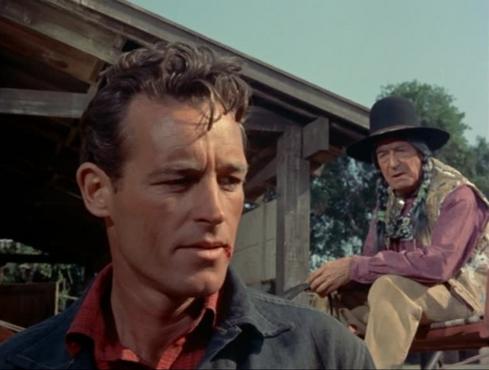
This is all a slightly circuitous way of leading in to Sherman’s Reprisal, a film which confronts this eternal ambition existing at the very heart of the human condition. The theme crops up again and again in classic westerns and it plays a critical role in ensuring that the genre never really loses its relevance. Here, we follow Frank Madden (Guy Madison) as he struggles to establish himself as a new landowner. His desire (one of the characters speaks of a hunger for land) to literally put down roots is all-consuming for this man. It is his shot at permanence, his chance to attain a sense of identity that will define him. I don’t want to go into too much detail concerning plot here as, in a movie like this, saying a little is so close to saying a lot and I’d like people to be able to come to the film fresh and without too much information that might color their perceptions. Let’s just say that it’s a pretty thorough examination of a man’s gradual coming to terms with his real self, reaching an understanding with that self and perhaps finding a love worthy of him. The film’s strength lies in both its frank appraisal of the core themes and its courage in refraining from providing pat or easy answers to the questions raised.

Sherman takes what I feel is a characteristically thoughtful approach to his story and there is a large measure of the type of optimism and positivism I’ve come to associate with a director like Delmer Daves on view. I’m always on the lookout for redemptive themes but that’s not really the focus here; but it could, I suppose, be argued that a shade of that is to be seen in the arc followed by Felicia Farr’s character. Instead, we’re presented more with some near relatives, namely sacrifice, renewal and rebirth. Madden’s quest to find his own spiritual equilibrium necessitates his sacrificing some of his most cherished dreams, part of himself in truth, in order to achieve some kind of internal rebirth. Sherman switches between some handsome Arizona locations and interiors and uses the landscape quite effectively. There is the image of the hanging tree casting its shadow over the movie at key moments and this – trees being typically symbolic of cycles of renewal as well as the concepts of nature and permanence – mirrors the use of similar imagery in such powerful films as Ride Lonesome and The Hanging Tree.

Felicia Farr made a number of film with Delmer Daves throughout the 1950s – Jubal, The Last Wagon and best of all 3:10 to  Yuma – and would appear in Hell Bent for Leather, another strong movie for Sherman a few years later. If one stops a moment and considers this little group, it’s hard not to come to the conclusion that Farr deserves to be rated as one of the most important actresses in westerns, her contribution to what are all quite major genre works cannot be overstated. As I mentioned above, Reprisal doesn’t attempt to present easy answers or to gloss over human weakness and ambiguous attitudes. Farr plays a woman who is superficially a standard western heroine but her character has layers and these are only slowly revealed as the story unfolds – it’s a characteristically subtle and alluring performance.

In terms of actors featured on this site, there have been some notable absences and I’ve been trying to plug a few gaps in recent months. The focus of this place suggests that someone like Guy Madison ought to have made an appearance by now but, for no particular reason, he ended up being overlooked – no doubt his name will appear again in future though. Reprisal offered him a very strong role and came along in the middle of his long run on TV playing Wild Bill Hickok. I think what stands out most about Madison’s work on this movie is the restraint he displays. There are some very powerful emotional currents in this film and the fact he underplays lends them even greater potency. The way the lead, the director and the writers consistently sidestep the predictable options is another big plus for this production.

Felicia Farr got the top female billing but there is a worthwhile role for Kathryn Grant (Gunman’s Walk) as a potential rival for Madison’s attention and affections. As the heavies, the ever reliable and versatile Michael Pate is cast as the impassioned yet confused one of a trio of brothers gunning for Madison. Edward Platt is a more straightforward proposition as the older and more clearly hate-fueled sibling while Madison’s real-life younger brother Wayne Mallory appears as a slightly cliched hothead.

As far as I know, Reprisal hasn’t had any official release on disc in the US. However, there are DVDs available from France and Italy. As a 1956 production this movie would have been shot for widescreen projection (probably 1.85:1) but the current  DVDs appear to be open-matte 1.33:1 presentations. Leaving aside the aspect ratio, the movie looks to have been well preserved and is colorful and sharp. Over time I have grown into a big fan of George Sherman and I think this is a very strong effort from the director. I’d like to think his reputation is being reassessed and upgraded, it most certainly ought to be. I still have a good number of his movies to catch up with and every time I come across a pleasure like Reprisal I find myself looking forward to the next one all the more keenly.

The Treasure of Pancho Villa

Last time I had a look at a political thriller and noted how the politics, in the classic style of the Hitchcockian McGuffin, acts as a powerful motivation for the characters inside the drama while remaining nothing more than a plot device in the eyes of the audience. The classic western rarely went down the overtly political route and tended to reserve its commentary for broader sociological and philosophical issues. Even in those cases, messages were, as often as not, delivered via implication and with the kind of subtlety which left it up to the viewer to decide how much or how little attention to give them. More direct political points could be said to appear in films set on the Mexican side of the border, and in particular those which make explicit reference to the revolution. The Treasure of Pancho Villa (1955) plays out in such an environment, a number of the characters being clearly driven by their convictions and stating that fact on a few occasions, but this really isn’t the main focus of the movie, neither from the perspective of the figures on screen nor we who watch them.

The post-credits caption places the events in 1915, right in the middle of the revolution. Tom Bryan (Rory Calhoun) and Juan Castro (Gilbert Roland) are under siege in wilderness and taking a breath, ruefully commenting on their fabulous wealth as the Federales creep ever nearer. Somewhat paradoxically, we find ourselves beginning at the end of the tale as follows on from his point is delivered via flashback. The machine-gun wielding Bryan is the classic mercenary figure, tough and bluntly proud of his own love for cash and corresponding disinterest in ideals. He’s introduced providing the firepower to facilitate the raids necessary to secure the finances Villa needs to stay in the revolutionary business. Despite professing a desire to retire and enjoy the profits of his toil, he finds himself drawn back into one more caper – all in the name of friendship. Castro is one of Villa’s colonels and Bryan’s fiend, and it’s hard to say no to an old friend when he asks you to help take a gold-laden troop train and then transport the spoils overland. Initially, the American seems to have been swayed principally by the rewards promised, but the presence of an idealistic woman (Shelley Winters), also from the US, and a shifty bandit (Joseph Calleia) who has a score to settle with Castro play an increasingly important role.

I can’t get enough of George Sherman’s work, particularly those films made in the 1950s. I find it addictive and entertaining, becoming progressively stronger and more complex as the decade wore on and building towards such beautifully realized pieces as The Last of the Fast Guns. I mention that movie here because not only is it arguably Sherman’s finest and most accomplished, but it also shares some features whose roots can be seen in The Treasure of Pancho Villa. The setting is, of course, the obvious link and a number of locations appear in both productions. There’s even something on the costuming of the leads – Calhoun is clad predominantly in black with Roland largely favoring white, which seems to be foreshadowing the completely black/white outfits adopted by Mahoney and (again) Roland in the later film. Still and all, it’s that theme of redemption which never ran far below the surface of any 50s western that draws the attention more. Sure there are some noble words on freedom and justice voiced by the characters (mainly Winters) but such proselytizing is rarely interesting or effective in my opinion, and I get the impression that neither Sherman nor screenwriter Niven Busch were all that enthused themselves. Instead, greater emphasis is given over to more personal motifs – loyalty, friendship and the discovery of something deeper and more meaningful within oneself.

Calhoun had a terrific run in westerns in the 50s and this film offered him an excellent showcase for his talents. The hard-boiled mercenary with one eye ever on the main chance  was the type he could carry off in his sleep, and the way that role then develops and becomes more textured as the story progresses shows that he had sufficient depth when called upon. I’m struggling to think of a part played by Gilbert Roland that I didn’t enjoy – the energy he invested in his characters is quite infectious and it’s easy to be swept along by his charm. Any film that saw him handed an expanded part is invariably worthwhile. On the other hand, I’ve rarely been all that taken with Shelley Winters – too often she was assigned needy and, ultimately, irritating roles. While that’s not the case  in The Treasure of Pancho Villa, she’s asked to play the kind of starchy and self-righteous woman who again fails to elicit a lot of sympathy. This is a weakness in the film for sure, however, everything is handily shored up by a great bit of villainy and duplicity from the typically excellent Joseph Calleia.

Generally, where possible, I like to make some comment about the availability of films which are featured on this site, not least because people often wonder about the relative merits of what copies are currently on the market. In the case of The Treasure of Pancho Villa, there is a DVD which has been released in Spain (also, I think there’s an Italian version – possibly the same print –  too) but the quality is frankly poor and it’s not a disc I’d be happy to recommend to anyone. I’ve heard rumors before that Warner Brothers in the US is working on a restored version of the title and I’d like to think that is true – this is a fine movie and it deserves to be seen in far better quality that what is out there right now. The setting in revolutionary Mexico almost immediately conjures up images of spaghetti westerns, and in turn the image of the lead with a machine-gun might well make you think of the likes of Django. Nevertheless, this is very definitely a western out of the classic mold, with all the sensibilities that implies – very enjoyable and highly recommended.

Comanche

poster53_zpstmnatcfz

So that’s the way it is. Comanches kill Mexicans to get even with the Spanish. And the Mexicans kill Comanche in revenge for that. It’s become a way of life.

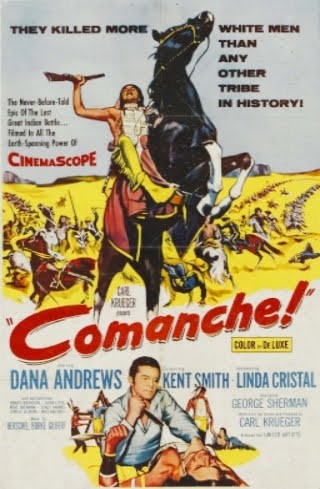
Westerns, naturally enough, have a habit of featuring a fair number of real life historical figures. For the most part, these portrayals are heavily fictionalized since the films are dramas first and foremost. We’ve seen outlaws and lawmen, soldiers and natives transposed to the big screen, and it’s those in the latter category who, despite what some might tell you, actually tend to fare best in terms of sympathetic depictions. Comanche (1956) looks at Quanah Parker, the son of a captive woman, who rose to prominence as a war chief among his tribe, and presents him in a highly flattering light.

The onscreen prologue informs us that in 1875 a bitter and age-old war continues to rage between the Mexicans and the Comanche. The latter raid and massacre the unprotected villages close to the frontier with the US with impunity, while the former still pay out a bounty for Comanche scalps. The result is a brisk trade among the despised scalp-hunters and also pressure from the Mexican government on their northern counterparts to do something about the frequent cross border incursions. The opening sees one of those sleepy villages razed to the ground, its inhabitants largely butchered and the young women taken as captives. The scene then shifts to the land just across the Rio Grande, where part of the raiding party stumble upon a team of scalp-hunters and quickly overpower them. Just as the prisoners are about to be roasted alive, their grisly death is halted by the intervention of a more powerful presence. This is Quanah (Kent Smith), and his actions serve to raise the ire of his subordinate Black Cloud (Henry Brandon) and also to raise questions in the viewer’s mind. Why should this man make such a magnanimous gesture towards those preying on his people and simultaneously risk alienating the more hot-headed types like Black Cloud? The army’s chief scout Jim Read (Dana Andrews) has a hunch it’s a means of sending out signals of peace. When the US and Mexican governments decide to act, it’s Read who suggests heading into Comanche territory to sound out Quanah on his intentions, and maybe open negotiations with him instead of going straight for the military option. We later discover that there’s an intriguing connection between these two men, although both will have to address betrayals from within their own ranks by those with hawkish tendencies if any rapprochement is to be achieved.

What can be termed pro-Indian sentiments are to be found scattered throughout the westerns of the 1950s, and Comanche is yet another example of this trend. Part of the beauty of these movies, for me anyway, is the realistic way this is handled. We’re not presented with some blind diatribe, demonizing one side or the other for the sake of cheap point scoring. Instead, by focusing on a few individuals, there’s a more balanced perspective offered – the rights and wrongs, along with the brutality and cruelty perpetrated by both camps is acknowledged and confronted. As with almost everything in life, it’s only through such consideration of the subtle shadings that a mature appreciation is possible. And remember, it can’t be stated often enough that the 1950s was the decade when the western itself attained full maturity as a cinematic art form.

Comanche was directed by one of this site’s favorites, George Sherman. He was no stranger to the pro-Indian western and his strong visual sensibility is always in evidence too. This is very much an outdoors picture, shot by Jorge Stahl around Durango, and the tough, dusty landscape provides a harsh and bleak canvas upon which the human drama is played out. Sherman frequently makes full use of the wide scope lens, that primal backdrop packed with hordes of Comanche warriors or snaking columns of cavalry, to create an epic feel at times.

The character of the cavalry scout is a pivotal one from the audience’s point of view as the impartial intermediary acts as the eyes through which we view the unfolding events. Such a role needs to be filled by a man who can convey a sense of integrity alongside a stoic quality, yet he must also maintain an air of the outsider about him since he’s essentially got a foot in both camps. Step forward Dana Andrews. If ever an actor was possessed of the aforementioned characteristics, then it must surely be Andrews. He’s obviously best known for his noir parts, particularly those with Preminger and Lang, but he was equally fine in the western too. Kent Smith might seem like an odd choice to play Quanah, still I think he’s satisfactory. You could argue his role is a touch too noble and one-dimensional, I suppose; even so, he invests the part with a great deal of dignity and you get a feeling of the power of the character. The villainous types are played by Henry Brandon (interestingly taking on the part of the enemy of his own son, if you read The Searchers as a loose adaptation of the Parker story), Stacy Harris and Lowell Gilmore. And then there’s the beautiful Linda Cristal, making her Hollywood debut as the traumatized captive girl. She is pretty good although her character doesn’t get quite as much development as it deserves. Anyway, Sherman was obviously sufficiently impressed by her talents to use her again as the female lead in The Last of the Fast Guns a couple of years later.

Comanche has been available on DVD in France and Spain for a while now but I held off buying it as it seemed the picture quality was nothing special and then there was also the forced subtitle issue on the French disc. It’s just been released in the UK by 101 Films, who have put out a number of western title in recent times, and so I thought I’d take a chance. First, the good news: the film is presented in its correct 2.35:1 scope ratio. And now for the bad news: the disc is not anamorphic so the image is surrounded by heavy black bars that can only be reduced by zooming in, with the resultant loss of resolution. Also, the print used is clearly an old one which, although not showing all that much damage, is somewhat faded and lacking in detail. All told, it’s a very disappointing presentation of the film, one which I can’t recommend in good faith. What makes this even more frustrating is the fact that the film itself is a very worthwhile one that deserves far better treatment than it’s been afforded so far.

By way of a postscript, I’d like to add that this blog was eight years old a few days ago. Normally, I like to mark the occasion with a posting but circumstances conspired against me this time. Anyway, I reckon this movie is an appropriate way to celebrate the anniversary, albeit a couple of days late.


Dawn at Socorro

– Who’s coming after you?

– My past. Every dark, miserable day of it.

I guess that short exchange, coming near the end of the movie, sums up much of what Dawn at Socorro (1954) is all about. It’s a classic 50s western scenario, the hunger for a fresh start, a chance to slay the demons of one’s past once and for all. In the case of this film there’s the added interest of the disguised Earp/Holliday elements in the story, although this aspect is really only peripheral, and I think it’s no bad thing the names are changed and some of the events portrayed are used primarily as an inspiration – it allows the theme to develop without weighing it down with unnecessary historical baggage.

The story opens with a reminiscence, the words of an old man drawing us back into a past he experienced and into the lives of people he was once intimate with. Our point of entry comes in a cheap saloon, one of those basic drinking spots with low ceilings and lit by guttering lamps. The Ferris clan arrives en masse, planning to pick up the youngest member, Buddy (Skip Homeier), and head back to their ranch. But Buddy’s a hot-blooded guy, at that stage in life where he needs to show off in public how much of a man he is. Reluctantly, his kin leave him to his own devices, but still under the watchful eye of gunman Jimmy Rapp (Alex Nicol). The back room is occupied by the Ferris’ mortal enemies, Marshal McNair (James Millican) and ailing gambler Brett Wade (Rory Calhoun), and it’s only a matter of time before Buddy talks himself into a fight, one which will leave him dead and bring the feud between his family and McNair and Wade to a head. What we’re looking at here is a fictional account of the build up to the confrontation between the Clantons and Earps. It culminates in what is essentially the gunfight at the OK Corral in all but name. And the upshot of the killings is that the Holliday figure, Wade, is convinced of the folly of his lifestyle up to this point. He resolves to make a change, to get out of the territory and do something about his weakening health. Sharing a stage to Socorro with a bitter and self-loathing Rapp, he makes the acquaintance of fellow passenger, Rannah Hayes (Piper Laurie). Unknown to him, Rannah has been disowned by a father who believes the worst of her, and chooses to believe her lie that she’s on her way to meet her future husband. The truth is though that Rannah is going to become a saloon girl, working for Dick Braden (David Brian), a gambler whom Wade has clashed with before. It’s the realization of what is actually happening that leads Wade to put his plans to move on to Colorado on hold, to try to regain something of his youthful promise, to halt the waste and do something of worth before it’s too late.

There have been plenty of positive words about George Sherman on this site before, and Dawn at Socorro is another example of quality work from the director. The opening twenty minutes lays the groundwork for the Ferris (Clanton) and McNair (Earp) feud and the subsequent gunfight. The lengthy passage in the saloon, where the character dynamics are clearly defined, is beautifully shot and loaded with atmosphere. Sherman made good use of close-ups throughout the film, but these early scenes see them employed especially effectively. Although this is largely a town based, and therefore interior heavy, film, there is also some nice location work during the eventful stagecoach trip to Socorro. Also impressive is the shooting and composition of the key duel late in proceedings between Wade and Rapp – at the vital moment the camera is positioned high above both protagonists as they face off on the deserted Socorro street. The unusual angle chosen assigns the viewer the role of dispassionate observer gazing down on two regretful men, their individuality diluted by the distance as they become merely a pair of gunfighters on a dusty thoroughfare, their actions mirroring each other and the fatal shots appearing as simultaneous bursts of smoke.

So many westerns have concerned themselves with the dogged pursuit of individuals by the sins of their past, and the salvation, redemption or personal understanding or acceptance which grows out of this. It can be seen as a general western motif I suppose, but in the 50s in particular almost every genre entry of worth features these themes. I may be way off base here (so feel free to pull me up on this if it appears I’m mistaken) but I’m now of the opinion that this phenomenon has its roots in the post-war climate of coming to terms with the events of the past. The world had only recently recovered some kind of equilibrium after years of violence and uncertainty. Those war years represented a loss of innocence for a generation, a time of intense emotional and physical challenge, so it seems natural that the modern art form of the cinema should try to address that. I can imagine audiences of the time would have identified with tales of people struggling to escape the horrors of a violent past and by doing so perhaps regain at least a shred of their former innocence.

The Brett Wade character is very obviously based on Doc Holliday, featuring all the familiar traits which have become associated with Wyatt Earp’s ally in many films over the years. It always provides a strong role for whoever plays it and Rory Calhoun is given plenty to get his teeth into. The combination of swaggering bravado on the outside and corrosive introspection in private automatically rounds out the Wade figure – there’s that essential loneliness and otherness that the more intriguing western characters tend to display. But there’s solidarity too as most of the main players in the drama are consumed with a desire to get back to an imagined idyll, a simpler existence they still recall yet have misplaced through time. When Mara Corday’s disillusioned saloon girl wistfully inquires “How do you turn back the clock?” you know that nobody will be able to hand her a satisfactory answer.

Piper Laurie does some good work too as the young woman rejected by her father and facing a highly uncertain future, trying to convince herself of her suitability for the new life she’s prepared to take on while still dreaming of the one she’s been deprived of. And then we have Alex Nicol, an ever interesting actor, who plays a Johnny Ringo type. Nicol is embittered from the moment we first see him, drinking heavily to deaden some half-defined inner pain, and later overcome and ultimately destroyed by a sense of guilt and inadequacy – I find him the most fascinating figure in the whole movie. The real villain is played by David Brian, a man whose career started off very strong but seemed to stutter soon after. He’s suave, slippery and deadly, a guy with no redeeming features but an excellent foil for the hero. The supporting cast is full of fine actors and it’s pity there wasn’t more for some of them to do: James Millican Lee Van Cleef, Skip Homeier, Kathleen Hughes, Edgar Buchanan and Roy Roberts being the most notable of the long list of familiar faces.

The last few years have seen more and more frequently neglected films from this era getting releases, and Dawn at Socorro is now reasonably easy to get hold of. There was a box set of Universal-International westerns (Horizons West) put out a few years ago and this title was included. There’s also a Spanish DVD, which I have, and the film seems to be available to view on YT as well. I’d imagine a 1954 movie would be shot with some widescreen process in mind – IMDb suggests 2.00:1 – but my Spanish copy presents it full frame, as can be seen from the screen captures above. That aside, the transfer is generally strong, with the Technicolor looking vibrant and the image sharp. There are a few incidences of print damage, but nothing all that distracting. Dawn at Socorro is a western I like very much, with good work by Calhoun and director Sherman. The whole thing has a handsome look, is pacy and well scripted with characterization developed as the story progresses rather than through tiresome and unnatural exposition. One to look out for if you haven’t yet seen it, or to view again if you’re already acquainted.