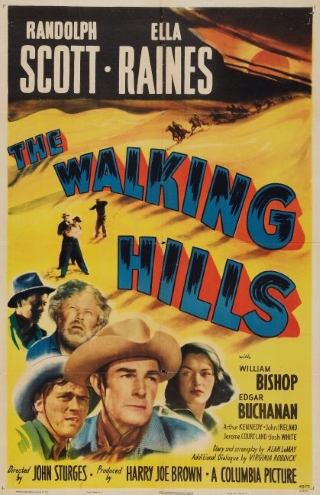
In 1948 John Huston had a small yet ill-assorted bunch of fortune hunters looking for gold and finding it paved the way to something far darker in The Treasure of the Sierra Madre. A year later, John Sturges took another disparate group from the back room of a cantina in Mexicali and had them cross the border into the US on a quest for the yellow metal. The Walking Hills (1949) is a less ambitious picture, smaller in scale but using that same lure of gold to trigger a range of reactions among his treasure seekers, and in so doing to offer a commentary on people and what makes them tick. Where Huston finished off with the dry desert winds blowing away the remnants of a tarnished dream to the accompaniment of a fatalistic laugh, Sturges uses his dust storm to scour away the mendacity and suspicion which has dogged his characters and to hold out the possibility of renewal.
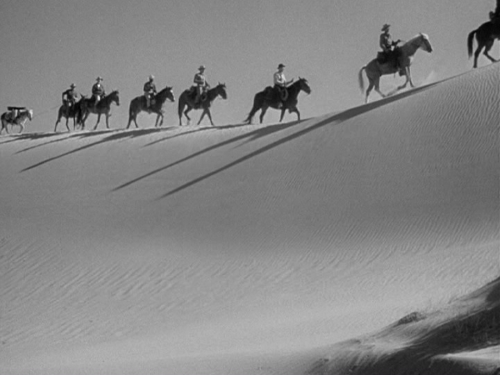
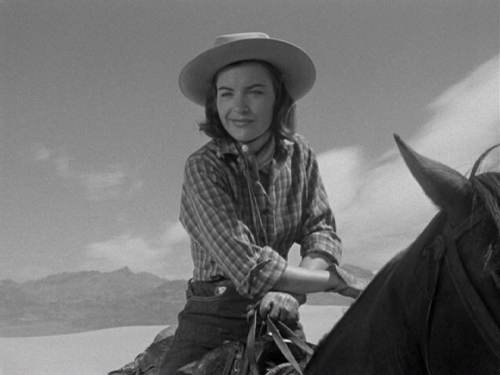
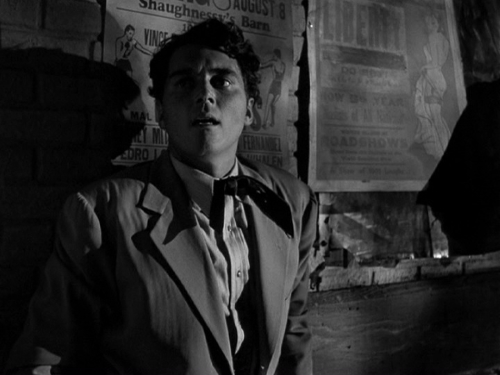
A chance remark during a card game in a cantina sets it all off. The men around the table had been musing and joking over the fate of a wagon train said to have been loaded with gold that had vanished in the wilderness almost a hundred years earlier. Then one of them mentions seeing what looked like an old wagon wheel sticking out of the ground on his last trip. Just as he says those words, a silence descends. A silence pregnant with meaning, as each person in that room thinks the same thought at the same moment, and then they realize that this shared knowledge binds them all together in an uneasy alliance of greed and distrust. They are an odd cross-section of humanity, dreamers and fugitives, drifters and grifters, the kind of people who have nothing much in common save a yearning for something better than the life they are currently leading. Most notable among them is Jim Carey (Randolph Scott), a horse breeder with a mare in foal to worry about – that foal acting as an overt symbol of rebirth and a new beginning and quite literally carried by Scott right to the end of the movie – and then there is Shep (William Bishop), who is a cowboy with a secret he is keen to keep, especially from the brash Frazee (John Ireland). So this diverse band sets out to cross the border back into the US and into the desert, where fates and loyalties shift as suddenly and unpredictably as the sands beneath them. No sooner have they left civilization behind than another rider appears on the horizon, having followed them from Mexicali. This is Chris (Ella Raines), a woman with past ties to both Jim and Shep.
With the sun beating down and the trappings of the modern world stripped away, something approaching truth is gradually revealed. Hasn’t the concept of entering the desert, the wilderness, represented the confrontation of temptation and the attainment of spiritual renewal from Biblical times on? The desert of this movie serves a similar purpose, bringing the secrets of the past out into the open and finally laying out the prospect of a new beginning for those whose resolve is strong enough to withstand the siren call of greed. Is it too convenient that there are so many potential suspects all brought together, and that all of them should be tormented by the prickly discomfort of a guilty conscience? Perhaps there is convenience too in the neat way the hunter proves himself to be little better, and in some senses arguably worse, than the hunted. Yes, all of this can be taken as contrivance, but it is a story after all, a parable with a lesson to impart, and not a factual entry in a diary. So long as it all leads to the resolution writer Alan Le May and director Sturges desire and the realization they wish to encourage, then it ought to be permissible to bend credibility a little.
Once again, we see a movie which underscores the steps Scott was taking towards the full flowering of his screen persona, one which would reach its apogee in the Ranown cycle. There’s the air of charm and civility cloaking a steely core that was so characteristic. Added to that is the wounded nobility that is his guiding principle. There is something heartfelt about the way his pride prevents him from correcting Chris when she misinterprets his motives and berates him – just the use of body language and the terseness of his tone is enough to convey how holding oneself to a high standard can be tough, and that expecting others to be capable of comprehending that is an even bigger ask. Then there is the climax, where his generosity of spirit is admirable. It is clear how much it costs him emotionally to grant Shep the facility to redeem himself. Still, he does so, that innate sense of nobility or propriety nudging him to sacrifice his shot at personal fulfillment in order to present others with that same prize.
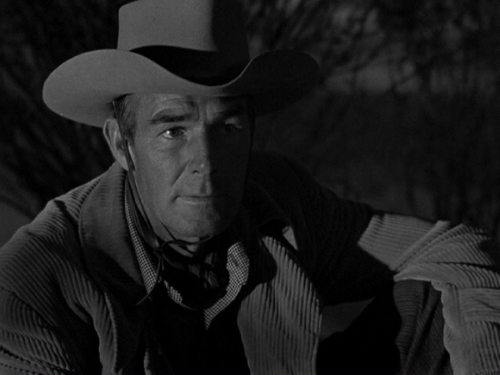
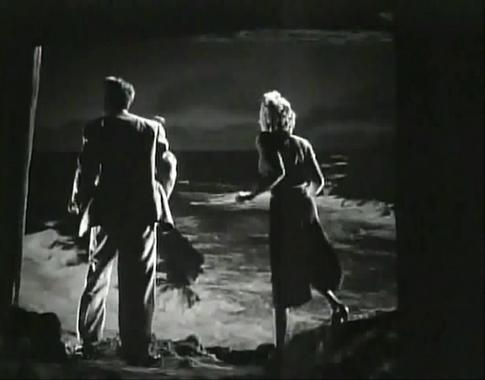
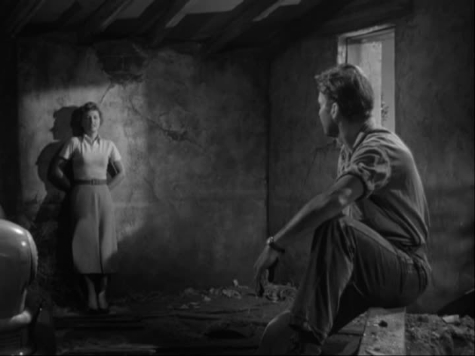
It has been said that The Walking Hills has noir overtones, but they are really only incidental, Charles Lawton casts some captivating shadows at times and the use of flashbacks to fill in the backstory for William Bishop and Ella Raines is suggestive, but nothing more. Bishop makes good use of the restlessness and ambiguity he brought to his better roles and keeps everyone guessing for a long time. Ella Raines is always a welcome sight and she offers some much needed empathy and selflessness to leaven the greed and antagonism that threatens to boil over in that raw and searing environment. In the small cast everyone gets to contribute something, Arthur Kennedy only really coming into his own as a delightfully sniveling ne’er-do-well towards the end. John Ireland displays his customary air of menace in a largely unsympathetic part, while Russell Collins, Edgar Buchanan, Jerome Courtland and Josh White all have their moments to shine, the latter via some terrific blues songs.

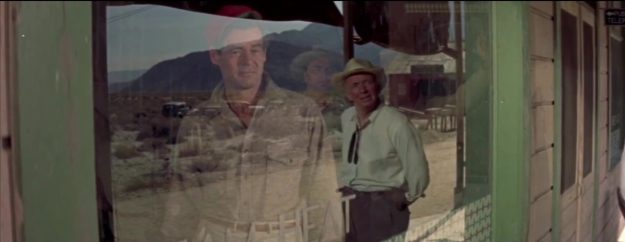
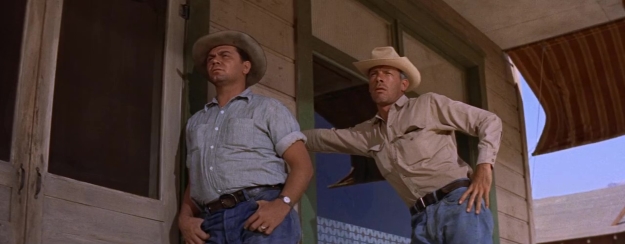
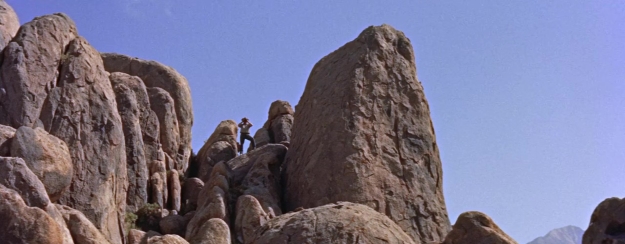
The Walking Hills got a DVD release as part of a Randolph Scott box from Sony years ago – I don’t know whether it has been upgraded to Blu-ray in the interim – and looks generally fine, highlighting Lawton’s cinematography and Sturges’ confidence shooting outdoors on location. Personally, I enjoy what could be termed contemporary westerns, especially something like The Walking Hills where it feels as though the classic west is within touching distance, easily accessible by simply riding beyond the city limits yet with a spectral, intangible quality too. It is one of those tight, compact pictures that Sturges excelled at and is well worth seeing.










 Riding the High Country