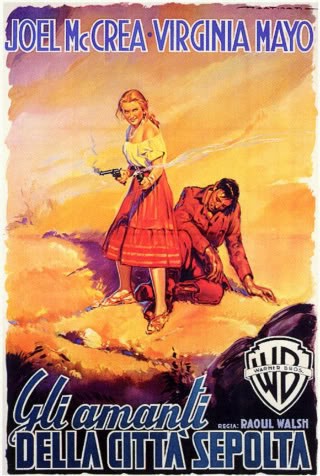
Ten of the Best – Women of the West

Over a decade ago (it really doesn’t seem that long… ) I posted a list of western actors. I followed that up with a post on western directors, film noir directors, and film noir stars. The latter included a mix of male and female stars and it has long been my intention to put up a list that would balance that first entry by turning the spotlight on the women who made significant contributions to the western. I’m not sure why I’ve left it so long, I guess other things just kept getting in the way and it got shunted off for another day. There are those who would say the western is an inherently masculine genre, but I don’t feel that’s a fair or just assessment. The western was and remains one of the greatest of all cinema genres precisely because it was so malleable, was so dependent on absorbing myriad influences, and drew highly creditable work from such a wide range of personnel. So, let’s cut to the chase and have a look at ten actresses who added immeasurably to my my enjoyment of my favorite genre.

Felicia Farr
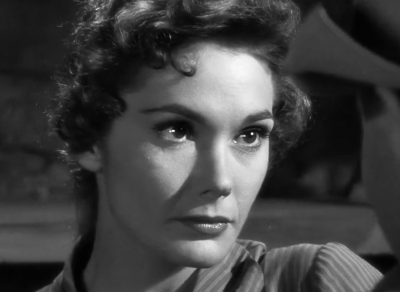
I can’t imagine opening this list with anyone else. Felicia Farr’s part in 3:10 to Yuma is comparatively small yet it’s a pivotal one. Those short scenes she shares with Glenn Ford’s outlaw are memorable and powerfully touching, adding another layer of yearning and regret to an already poignant movie. Director Delmer Daves also used Farr in two other fine westerns, The Last Wagon and Jubal, while George Sherman cast her to good effect in Hell Bent for Leather and Reprisal.

Virginia Mayo
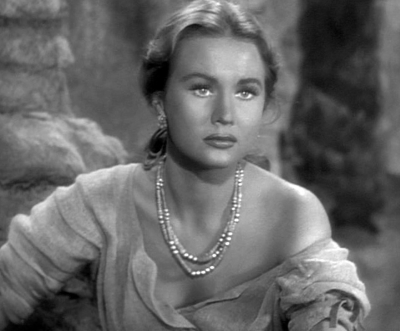
Making her western debut in Colorado Territory, Raoul Walsh’s remake of his own High Sierra, Mayo impressed herself on the genre right away. I won’t go into spoilers here for those who haven’t seen it but the climax of that film is as tragic as it is poetic, and Mayo’s actions give it its power. Walsh would cast her again in the underrated Along the Great Divide while she had other good parts in The Proud Ones, Great Day in the Morning and  Fort Dobbs to name just a few.

Dorothy Malone
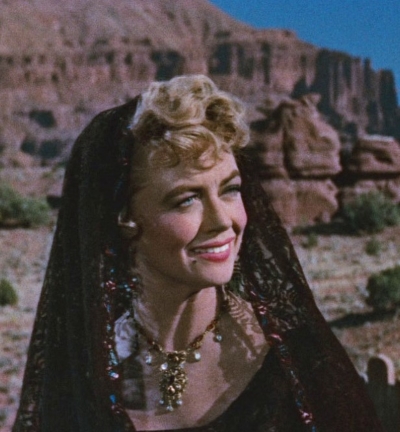
While Virginia Mayo was the passionate, beating heart of Colorado Territory, her rival for the affections of Joel McCrea’s doomed outlaw was a coquettish and calculating Dorothy Malone. She would take on some terrific roles throughout the 50s, including some very respectable films noir as well as a couple of plum parts for Douglas Sirk – the superlative The Tarnished Angels and an Oscar winning performance in Written on the Wind – and of course plenty of westerns. Among the highlights are At Gunpoint (why has this movie never had a decent release anywhere?), Pillars of the Sky, Quantez, The Last Sunset and Warlock.

Barbara Stanwyck

One of cinema’s great actresses, Stanwyck made  couple of westerns in the 1930s and 1940s (Annie Oakley, Union Pacific and California) but it was in the 50s that she made her mark on the genre, and fell in love with it in the process. Starting off with the emotionally charged and wondrously melodramatic The Furies for Anthony Mann, she would regularly return to the west. Some of those films were only partially successful, but a movie like The Violent Men has much to recommend it and Samuel Fuller’s Forty Guns is an enduring classic in my opinion.

Vera Miles

Anyone who worked with John Ford, and was cast in major roles in his films has to be worthy of consideration here. Vera Miles had started out in the genre with a part in The Charge at Feather River and in Jacques Tourneur’s Wichita. These are fine movies by any standard yet a top role in The Searchers, which is arguably the best western of all time, and one of the best films of any kind, lifted her into a different league. The fact Ford cast her again in The Man Who Shot Liberty Valance, one of the key films marking the close of the classic western era cements her place for me.

Maureen O’Hara

The Ford connection is strong with the next entry on the list, even if their western collaboration was limited. The fiery Irish redhead had already made Comanche Territory when Ford used her opposite John Wayne in Rio Grande, unfairly regarded by some as the least of the director’s Cavalry Trilogy. She would work memorably with Ford and Wayne again in other genres and went on to make good westerns such as War Arrow (George Sherman) and The Deadly Companions (Sam Peckinpah’s debut feature).

Claire Trevor

Sticking with Ford (and indeed Wayne) for the present, we now come to Claire Trevor. It’s hardly too much to say that Stagecoach was instrumental in boosting the status of the western, lifting it firmly and decisively into the A class where it would continue to hold a dominant position for the next quarter of a century. Trevor’s turn as Dallas, the “fallen woman” driven out of polite society only to find love, respect and a future with Wayne’s Ringo Kid, is a superb piece of work. Perhaps her subsequent westerns didn’t offer the same scope for her abilities – Texas, Dark Command (Raoul Walsh), The Desperadoes, The Stranger Wore a Gun – but she was a regular visitor to the cinematic west, and that ride on the Lordsburg stage counts for a lot.

Katy Jurado

The Mexican actress with maybe the most soulful pair of eyes in the business. The wistful look she bestows on Gary Cooper as he stands alone in an empty street in High Noon is as good a way to announce one’s arrival in the genre as I can think of. She brought her unique quality to such movies as Broken Lance, Man from Del Rio and The Badlanders throughout the 1950s. Her appearances in westerns tailed off after that, One-Eyed Jacks with Brando in the next decade and then a small but hugely affecting part in Sam Peckinpah’s Pat Garrett and Billy the Kid.

Julie Adams

Anyone familiar with my writing over the years will be aware of how much I enjoy the output of Universal-International, and the westerns that studio produced are among my favorites. Sometimes it feels as though it’s impossible to watch a U-I western and not see her. Budd Boetticher frequently used her in his movies for the studio – Wings of the Hawk, Horizons West, The Man from the Alamo – and she had good roles for Anthony Mann in Bend of the River and Raoul Walsh in The Lawless Breed and then later on in Joseph M Newman’s The Gunfight at Dodge City.

Debra Paget

Starting out with some small roles in notable films noir (House of Strangers, Cry of the City), Paget struck western gold in the influential Broken Arrow for Delmer Daves. In a sense, one could say she became typecast in westerns, finding herself playing yet again a Native American in White Feather (scripted by Daves) and the powerful and visceral The Last Hunt for Richard Brooks. Typecast or not, she brought a great deal of dignity to those parts and the western genre would be poorer without her performances.

So there it is, my list of ten actresses who have enriched the western over the years. I had to indulge in a bit of ruthless trimming to keep it down to ten, but that’s to be expected and I also anticipate that my picks aren’t going to satisfy everyone. Well, that’s the nature of lists and half the fun is hearing others point out who they would have included instead. Feel free to disagree in the comments section below.
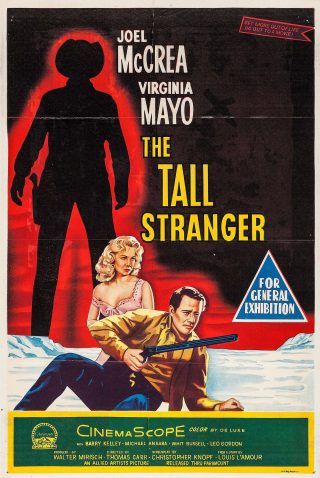
The Tall Stranger

Thematically, what is the western all about? That’s a big question, bearing in mind the breadth and endurance of the genre. So many themes have been encompassed over the decades and plots have woven all types of ideas into the fabric of the genre. I frequently return to the notion of redemption and it naturally crops up time and again, but I’m inclined to think the western is all about searching. Sure John Ford made one of the greatest movies of all time with that word and idea helping to form its title, but the concept of groups and individuals forever ranging towards a mythical west in search of something is at the root of so many stories. Even that is a nebulous comment and open to all kinds of interpretations so I’ll try to nail it down a bit. I reckon the western is primarily about seeking out a place of one’s own, either a spiritual or physical promised land, somewhere for characters to fulfill themselves, to add that last elusive piece to the puzzle of their own existence. For one reason or another, I found myself mulling this over the other day as I watched The Tall Stranger (1957), a decidedly modest western and one which I doubt the filmmakers actively thought of in those terms. Still, just because a theme may not have been foremost in the minds of those making a movie does not mean it is not there, or that is any less relevant as a consequence.

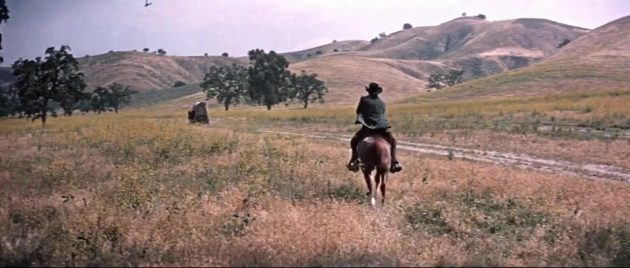
From feuds and fights to romance and reputations, The Tall Stranger has no shortage of ideas to bulk out its 80 minute running time. The opening image is a staple of the genre, with a lone rider making his way across the wilderness, his eyes probing the horizon and beyond, searching for something. Ned Bannon (Joel McCrea)  chances upon a group of men riding herd on some cattle and, out of curiosity, pauses to take a better look. That proves to be a mistake, costing him his horse and almost his own life at the hands of an unseen sniper. As he lies on the ground seriously wounded and at the edge of consciousness, he glimpses the gold-plated rifle and fancy spurs sported by his assailant. However, Bannon is a lucky man and is rescued and nursed back to health by a wagon train of former Confederates heading west and hoping for a fresh start in California. In among those is Ellen (Virginia Mayo), a woman bringing up a little boy on her own. These two people find themselves drawn to each other, perhaps as a result of their shared status as outsiders, Bannon’s having been a Union officer adding to his otherness next to the Southerners. A few of those plot elements are therefore seeded quite early, but the depths of the feuding and conflict are mined later. We first learn that Bannon is headed back to the ranch run by his half-brother, a man who has sworn revenge on him for the death of his only son during the war, then there is another layer of conflict to come as the settlers, under the influence of a manipulative opportunist, make their minds up to stake out a piece of the sprawling ranch for themselves. As such, everything is set up for a showdown between these competing forces and personalities, all of them looking to carve out and lay claim to a little corner of the world to call their own.

While The Tall Stranger is not a particularly ambitious movie, or certainly not one which sets out its stall to deal head on with big themes, it manages to incorporate some of those core ingredients of the genre into its compact form and structure. The concept of competing factions in conflict over the land itself is timeless, one that underpins not just the western but so much human drama. That the events on screen take place in the immediate aftermath of a war over control of the country emphasizes the never ending nature of this struggle among men for mastery of the land, of the hunger to make it theirs. Yet it is the more personal need to achieve a sense of belonging and permanence that is of greater interest. Bannon is a man made rootless by his personal feuds and the scars of battle. He is, however, an optimist in the best western tradition, forever looking ahead to greener pastures and better times. In Ellen he discovers someone else cast adrift in the world, a self-confessed fugitive from tutting puritanism. The need of these two lonely people for something as simple as a home, a place to lay down their own roots and tend to them quietly, provides the heart of the story, and in its own way is an unpretentious reflection of the perennial appeal of the western.

Joel McCrea was one of the linchpin actors of the western, as essential to its development as John Wayne, James Stewart, Randolph Scott or Gary Cooper. All the great western actors brought something unique and special to the table, and in McCrea’s case it was that sense of dignified and courtly decency. He shares some fine moments with Virginia Mayo, not least an early scene where he rides off, perhaps never to return as far as the two of them are concerned at that stage, and the unspoken regret and hurt of both is palpable. Later, there is the scene outside the ranch house, where Mayo tells of her past with raw frankness and McCrea perfectly encapsulates the innocent bewilderment of his character. Both Mayo and McCrea had starred in Raoul Walsh’s marvelous Colorado Territory almost  a decade earlier and The Tall Stranger reunited them. While the relationship in this movie may not have the hot and tragic passion of that in Walsh’s work, their quiet, understated yearning is every bit as powerful and compelling.

The supporting cast is deep and strong, with Leo Gordon and Michael Pate in rare sympathetic roles and Barry Kelley providing plenty of meaty bluster as McCrea’s hardheaded half-brother. The villains of the piece are a flashily dangerous Michael Ansara and George Neise as the chief pot stirrer. Ray Teal and Whit Bissell have small parts and their presence is as welcome as ever.

With a script by Christopher Knopf (Hell Bent for Leather) from a Louis L’Amour novel, The Tall Stranger packs a lot into its relatively brief running time. Director Thomas Carr has it looking reasonably good and uses the ‘Scope frame well, but there is, in my opinion anyway, an over-reliance on day-for-night filters. I don’t believe the movie has had a release on disc anywhere which respects the aspect ratio. However, it can usually be viewed in the correct ‘Scope format online, and in very good quality too.

Sometimes the least likely places harbor the clearest truths, pared down modesty serving to draw attention to the essentials where intricacy and ambition can perhaps end up obscuring them – Sir Isaac Newton once made a similar point in much more elegant terms when he said: “Truth is ever to be found in simplicity, and not in the multiplicity and confusion of things.” So, to finish up, The Tall Stranger will never make anyone’s list of top westerns yet it contains within it, and maybe even in spite of itself, a lot of what makes the genre work.

Backfire

All right. What’s certain? Two things… death and taxes…

There aren’t too many films noir set in and around the holiday season, Christmas Holiday and Lady in the Lake probably being the best known, as it’s clearly more marketable to focus on the upbeat and cheerful rather than the dark or cynical side of life. Backfire (1950) isn’t strictly speaking a seasonal noir but a number of its key events do play out over the festive period. As such, I thought it would be an appropriate choice for what ought to be my last full review piece for this year.

It’s November of 1948, the war’s been over a few years now but the scars haven’t fully healed. In a veterans hospital in California Bob Corey (Gordon MacRae) is still recuperating from his wounds, a serious back injury which has required thirteen operations. Still, he’s on the road to recovery and has hopes of going into the ranching business with his old army pal Steve Connelly (Edmond O’Brien), and also of marrying the nurse, Julie Benson (Virginia Mayo), who’s tended him. The holidays are rapidly approaching and Bob is growing anxious that his buddy hasn’t been around of late. Then, late on Christmas Eve as his medication is just kicking in, he has a visit from an unknown woman, a foreigner whom none of the hospital staff can subsequently recall seeing. As he lies in a narcotic haze, she tells him that Steve is in serious trouble, laid up with a shattered spine and desperately in need of help. What’s a guy to do when he learns his best buddy is in such dire straits? As soon as his discharge comes through in the New Year, he resolves to track down the mystery woman and, by extension, Steve. In the world of noir nothing’s quite that simple though, and he finds himself picked up by a squad car upon leaving the hospital. Ferried to the homicide department, our bewildered hero fears the worst, but instead discovers that Steve is top of the police wanted list for the murder of a prominent gambler. And so begins a twisting quest for the truth which dips in and out of the past, a winding path that’s driven by gambling and jealousy, and has death as its final stop.

The problems faced by returning veterans, particularly the difficulty of establishing one’s place back in civilized society, was a recurring theme (perhaps one of the most prominent in truth) in film noir and was arguably the factor which gave greatest momentum to the post-war boom in that genre. Backfire comes at this on three fronts, focusing on the physical, social and psychological barriers to be overcome. While the latter aspect is the one which acts as the catalyst for the violence and tragedy in the plot, its causes are hinted at rather than fully explored – although it does at least make an effort to acknowledge the matter and avoids going down the road that led to such an unsatisfactory conclusion to The Blue Dahlia a few years before. Speaking of which, I have a hunch the coda of the movie here was tacked on as a softening touch – I hasten to add I have no evidence to suggest this is so beyond a feeling that the fade out preceding it may have been deemed a bit too much of a downer.

Vincent Sherman was one of those studio directors who made mainly professional if not wholly memorable pictures. Generally, I’d say I enjoy his work well enough  – Lone Star was quite disappointing but I think Nora Prentiss, The Garment Jungle, The Unfaithful and The Damned Don’t Cry all have worth. The plot does become pretty complicated as it goes along but Sherman uses the flashbacks intelligently and keeps the pace up. There’s some good use of the Los Angeles locations and Carl Guthrie lights the interiors nicely to create the requisite atmosphere.

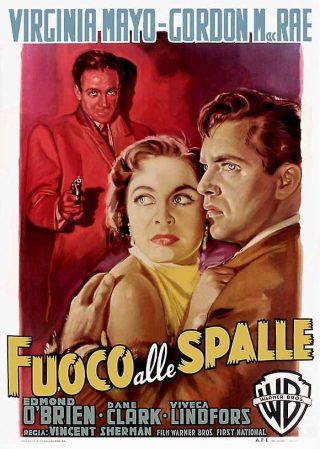
The poster art is a little misleading, although understandably so in the wake of White Heat. It gives the impression that Virginia Mayo is playing the kind of vampish femme fatale so beloved of noir. The fact is, however, that she’s cast as that other staple of the form, the Girl Friday who lends support to the hero. She’s fine in this role and I think it’s a pity she didn’t get to feature a bit more. Gordon MacRae is the everyman figure who leads us through the complexities – he was primarily a musical star and seems an odd choice at first for this type of film but actually works out OK as the innocent cast into a world which is clearly alien to him. Edmond O’Brien, on the other hand, was very much at home in film noir and does great work (tough, weary but fundamentally decent) in his flashback scenes. While the presence of a femme fatale  – and that doesn’t have to be a “bad girl”, just one whose sexuality leads men into danger – isn’t always necessary, it never hurts either. Viveca Lindfors fits the bill in Backfire, positively smouldering at times and always convincing as a woman unconsciously capable of tempting men to risk it all for. Dane Clark was always busy as an actor but never seemed to really make it as a star; he was excellent in Borzage’s Moonrise and I thought he did well in a number of crime/noir films he made in Britain. His role here is a vital one and he handled it very capably in my opinion. Notable support is provided by the always reliable Ed Begley and John Dehner pops up in an uncredited bit part.

A Warner Brothers production, Backfire is available on DVD as part of that studio’s Film Noir Classics Collection Vol. 5. It’s paired up on disc with Deadline at Dawn and looks good throughout. The transfer is mostly clean with very little damage visible and a nice level of detail. There are no extra features offered. Although this isn’t one of the better known films noir it’s a solid movie with some good performances. The script maybe tries to be a tad too clever at times and I did notice one plot hole which irritated me somewhat (I won’t go into it here as I don’t want to get into spoiler territory) but it remains enjoyable overall. A reasonably entertaining thriller then with a tangential connection to the holidays.

The Proud Ones

22_zpsq5pfdja6

The minute you people smelled money, this town got an attack of larceny. I don’t blame it on Barrett; I blame it you. You’re supposed to be respectable. You talk about law and order; you’d sell out for a copper penny – any one of you. You’re robbin’ and stealin’ the same as he is, with your fifty dollar boots and your twelve dollar hotel rooms. If I was on this council, I couldn’t look in the mirror without vomiting!

Occasionally, there are films which I fully intend to feature but somehow they seem to slip through the net at the last moment. I’m not entirely sure why that happens as they’re rarely poor or unmemorable. For one reason or another they don’t get written up and I find my attention has moved on to something else. A good example of this is The Proud Ones (1956), although the fact this movie has cropped up in discussions and comments here a few times lately means it’s never been too far from my mind. As 50s westerns go The Proud Ones remains a pretty solid effort, using a fairly common town tamer storyline to look at a handful of people bound together by events from their pasts that can’t be shaken off, and also slipping in a few sly digs at the way progress and prosperity have a way of shepherding in the beginnings of moral decay.

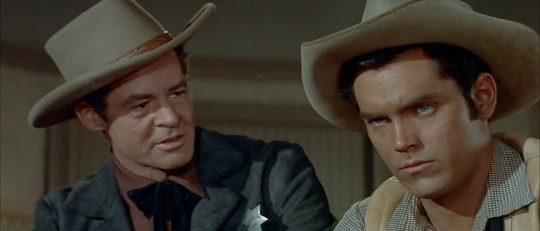
Cass Silver (Robert Ryan) is one of those lawmen who moved from one hot spot to another, his latest port of call being the peaceful town of Flat Rock. However, Flat Rock is about to undergo something of a transformation as the arrival of the first cattle drive promises an upturn in economic fortunes, as well as the potential for increased lawlessness. Westerns tend to focus on the trouble stirred up by visiting cowboys eager to blow off some steam and cut loose after a long period in the saddle. In this case though the source of the problem isn’t the cowboys champing at the bit for whiskey and women; all the trouble that arises stems from the town itself, or its newest arrival anyway. “Honest” John Barrett (Robert Middleton) has just moved in and taken over the running of the saloon and the gambling tables. The thing is Barrett is a sharp operator, not averse to using hired guns and crooked dealers, and he has a bit of history with Silver. Both men locked horns in the past and the result was that Silver apparently ended up being run out of town. A further layer of pressure comes in the form of Thad Anderson (Jeffrey Hunter), another new arrival whose father was gunned down by Silver years before. While the marshal has to deal with the needling of Barrett and the alternating hostility and confusion of Thad, he’s faced with an altogether more serious danger. A man in such a position needs the full use of all his faculties at the best of times, but Silver comes to the sobering realization that he may be in danger of losing his sight just as matters are coming to a head.

21_zpsh77feqgs

I’ll have to admit that I’m not very familiar with a lot of director Robert D Webb’s work – apart from the neglected White Feather and the less satisfactory Seven Cities of Gold – but what I have seen indicates that he had a good eye for wide scope compositions. The wide screen tends to work best with films that are heavily dependent on the use of landscape – movies featuring a significant amount of location shooting. Arguably, films which contain a lot of interior shots, as is the case with this production, require greater care if they’re photographed in scope. An overeager or lesser director might  succumb to the temptation to pack out the frame with too many characters and movement, throwing the composition out of kilter and muddling the focus. It’s to Webb’s credit, no doubt aided by having Lucien Ballard as cameraman, that he resisted those temptations and went for clarity instead. Many scenes take place in Silver’s office/jail, and the wide frame is expertly used to highlight the character interaction of the principals whilst also drawing attention to the little gestures and reactions of the peripheral figures. Lionel Newman is the credited composer and the melancholy whistling theme is an understated and ideal accompaniment for the action on the screen.

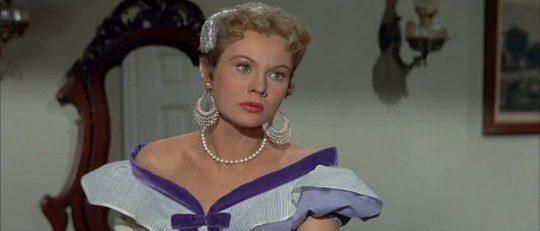
I’m a big fan of Robert Ryan, a subtle actor of great depth and range who seemed equally at home in both westerns and film noir. A quick look through his credits for the 40s and 50s makes for impressive reading, with hardly a bad performance on view despite the variable quality of some of the projects he was involved in. The Proud Ones offered Ryan the opportunity to play a man whose outward toughness masks the uncertainties and regrets he really feels. His character’s back story is filled in gradually as we go along and, together with the failing eyesight angle, helps to build audience sympathy. Ryan also managed a good rapport, in contrasting ways, with both Jeffrey Hunter and Robert Middleton. While I’m not sure the relationship between Ryan and Hunter quite works, I wouldn’t lay the blame at the door of the actors. I reckon Hunter was and is criminally underrated and tends to get dismissed as a pretty boy who brought little of substance to his roles. Frankly, I don’t go along with that and find him more than satisfactory in most films – I’d go so far as to say he was excellent in Nicholas Ray’s The True Story of Jesse James for example –  succeeding in getting across the sense of confusion of his character here. Middleton was a versatile character actor, but always made an especially effective heavy. He brings a nice sense of smugness to his role that provides the necessary counterweight to Ryan’s edginess. There’s also a hint, never fully explored, that both Middleton and Ryan were former rivals for the affections of Virginia Mayo. Whilst Mayo gets a more fully developed character to work with here than was often the case, she seems to put a little too much into her performance. This is understandable for an actress who was frequently handed thankless parts, but it does jar a bit. The supporting cast is long and noteworthy with Walter Brennan (slightly wasted as Ryan’s laconic sidekick) and Arthur O’Connell as the distracted deputy heading it up. I mentioned the swipe the script takes at the greed and moral decline accompanying the financial boom, and the opening quote refers to that. Edward Platt and Whit Bissell catch the eye as representatives of the respectable citizenry easily corrupted by the promise of riches.

2_zps7yyxshri

Fox released The Proud Ones on DVD in the US some years ago but it remains a very strong transfer. The disc offers the film in its correct anamorphic scope ratio on one side while the reverse has a (redundant) pan and scan version. Color and detail are well rendered and the print used is very clean and practically undamaged. Extra features are limited to a handful of trailers. I don’t think Robert Ryan ever made a poor western and The Proud Ones, even though it may not be among his best known pictures, is a fairly strong effort. One could say it’s a generic 50s western and while it’s hard to argue with that assessment it shouldn’t be taken as a criticism either. I feel Mayo overcooks it a little and the central dynamic between Ryan and Hunter could have been improved by the writers. Still, despite these few quibbles, the movie does work when taken as a whole. I’d call it a solid, above average example of the genre.

P.S. – This is just one of those infrequent updates I’ll be adding to the site over the summer – full, normal service shall be resumed some time in September.

Westbound

In the past I’ve looked at six of the seven westerns Budd Boetticher made in collaboration with Randolph Scott. Somewhat belatedly, I now turn my attention to the one remaining title. Of this little group of films, Westbound (1958) is the least significant. Taken on its own merits and judged as a stand alone movie, it’s actually not a bad little picture. However, what I’ve just suggested is a large part of the problem; the Scott/Boetticher films are so interconnected and so influential that it’s very difficult to weigh them up in isolation. I’m not saying that they should be viewed as essentially one film – although others have certainly put forward that theory – yet there is a thematic pattern running through them. They all share certain identifiable characteristics that mark them out as clearly being the work of Scott and Boetticher in tandem, all but Westbound that is. There’s nothing in the movie that bears the hallmark of this important cinematic partnership. What I mean is that the film might just as well be any one of the westerns that Randolph Scott made throughout the 50s with other directors. Now that in itself isn’t an especially bad thing, but it does result in a weaker effort when viewed in context.

John Hayes (Randolph Scott) is a captain serving in the Union army during the Civil War who finds himself pulled off active duty to undertake a different kind of task. His pre-war business was running a stage line and, with the North needing to ensure the smooth transfer of gold from California to bolster the war effort, he is asked to resume his old trade. This necessitates moving west to Colorado and taking over his old operation. However, on arrival, he discovers that his former associate Clay Putnam (Andrew Duggan) has shut up shop and is unwilling to offer any assistance. Putnam’s reluctance, and barely veiled hostility, stems from two factors: he’s a Confederate sympathizer, and he has married Hayes’ old sweetheart Norma (Virginia Mayo). Throw the involvement of a wounded vet and his wife (Michael Dante & Karen Steele) into the central conflict between Hayes and Putnam, and there’s the plot of Westbound in a nutshell. It’s a brisk, no-nonsense affair that entertains as it goes along, yet something is missing. For me, that something is the personal element, the vital ingredient that underpinned all the other Scott/Boetticher pictures. The whole patriotic angle is far too remote and impersonal to really grab you, and the possibility of emphasising the love of both Hayes and Putnam for Norma is glossed over and underplayed if anything. As the story progresses, the ruthlessness of Putnam, and his chief henchman (Michael Pate), does add a little dash to Hayes’ motives, but the truth is it’s too little and comes too late. The result of all this is a film that feels somewhat shallow and disposable in comparison to the director and star’s other works. As such, we get a piece of passable entertainment, but that’s all that can be said.

For Boetticher, Westbound was really nothing more than a matter of fulfilling a contract. If the storyline has a blandness that sets it apart from his best films, it’s not helped by being shot away from his trademark Lone Pine locations and featuring far too many interiors – never one of his strengths. Having said all that, he does turn in a professional and polished pice of work, and the action scenes have a style to them; the best is arguably the raid on the villains hideout as the climactic shootout, though excitingly staged, is marred by having the conscience-stricken townsfolk join in. Randolph Scott’s performance has the kind of affability that often characterized his western roles. That’s not meant as a criticism of the actor at all, I could happily spend days on end watching his movies, but it does evoke memories of some of his more run of the mill movies as opposed to the depth of feeling associated with his Ranown roles. Virginia Mayo was an actress that, on occasion, was handed underwritten parts. That’s not exactly the problem here, but the script does sell her character a little short by not allowing her to have sufficient impact on events. Despite being billed lower, Karen Steele is much more effective as the tough wife of a disabled soldier – the scene where she delivers a full on punch in the face to one of her husband’s tormentors is one of the most memorable in the whole film. In a sense, Steele was the ideal Boetticher heroine – a beguiling mix of gutsy allure. The casting of the villains highlights another area where this movie underperforms in context. Andrew Duggan was competent enough but there’s no sense of his being any match for Scott when the chips are down. And Michael Pate, despite nailing the mean and heartless aspect, has none of the ambiguous charm that Lee Marvin, Richard Boone or Claude Akins brought to their parts.

Having long sworn that I wouldn’t buy into the whole MOD business, I finally caved and bought a number of titles late last year when Barnes & Noble ran a sale on Warner Archive titles. I’ve since heard that Westbound has been released in Spain, but I haven’t seen it listed by any of the usual online outlets. The Archive disc is a real barebones DVD-R, no proper menu and chapter stops inserted at ten minute intervals. The film has been given an anamorphic widescreen transfer that boasts reasonably vibrant colour but has an overall softness or dullness that leads me to rate it a bit lower than the other Scott/Boetticher titles released by Sony and Paramount. However, it is a fair enough presentation. I realise I’m probably labouring the point here, but an understanding of context is everything when it comes to assessing this picture. If one were new to Randolph Scott movies then Westbound wouldn’t necessarily be a bad place to start. If, on the other hand, you’ve heard about the special place Scott’s work with Boetticher holds in the hearts of western fans and critics alike, then this is definitely not the film to show it off. And that’s as fair as I think I can be.

Colorado Territory

The sun travels west…and so does opportunity.

Are remakes ever better than the originals? The common consensus usually says no and there are countless ill-judged and frankly cack-handed examples that would seem to back that up. However, once in a while, it is possible to come across those rare exceptions to the rule. John Huston’s version of The Maltese Falcon is a notable case in point, although that movie had the luxury of building on two predecessors that were markedly inferior. What’s altogether more difficult is to improve upon something that was pretty good in the first place, and it’s inevitable that opinion is going to be divided over the alleged improvement – Hitchcock’s two shots at The Man Who Knew Too Much being a good example. Colorado Territory (1949) is in a similar position since it’s a reworking by Raoul Walsh of his earlier hit High Sierra, and in my opinion the remake comes out on top this time.

Wes McQueen (Joel McCrea) is a notorious outlaw, languishing in jail and awaiting a date with the hangman. However, a visit from an old dear professing to be his aunt leaves McQueen in possession of the articles he needs to effect his escape. It turns out that this was all arranged by an old associate who has need of McQueen’s services one more time. Making his way west by stagecoach he finds himself sharing the ride with a new settler and his daughter Julie Ann (Dorothy Malone). A deadly encounter with a gang of thieves en route highlights McQueen’s particular skills, and earns him the gratitude and (perhaps) the friendship of his fellow passengers. This sequence also draws attention to the fact that here we have a man grown weary of his profession, who dreams instead of starting a new life and sees in Julie Ann a reflection of the woman he once loved and lost. If he’s ever to have a crack at that longed for new beginning though he must first get this final job out of the way. It soon becomes apparent to McQueen that he’s going to have his hands full just keeping his shifty cohorts in line, and it’s not made any easier by the presence of a sultry half-breed called Colorado Carson (Virginia Mayo). The bulk of the movie’s mid section takes place in an old ruined town populated solely by the would-be robbers and the ghosts of the past. This bleak and desolate setting contributes enormously to the sense of doom and despair that hangs over the whole film, and it’s also a perfect backdrop for the escalating tension and jealousy among the characters. When the robbery does take place nothing goes according to plan (or at least not the way McQueen planned it) but it does give Colorado the chance to show her worth and her loyalty. Just when it looks like these two might have a chance to break out of the world they’ve spent so long locked into fate comes along and deals another blow, leading McQueen to comment: It means we’re a couple of fools in a dead village dreaming about something that’ll probably never happen. This leads to a powerful climax, atop a sun baked mountain and among the ruins of an ancient Indian settlement, that packs a real emotional punch and is sure to stick in the mind of anyone who’s seen it.

Raoul Walsh’s direction is highly assured and tight as a drum right from the beginning. A good portion of the movie takes place outdoors and with a liberal sprinkling of action, both elements playing to the director’s strengths. His handling of the attempted stagecoach hold-up near the start and the later train robbery is exemplary with editing, camera placement and pacing all judged to perfection. With Walsh you kind of expect him to get those things right, but he doesn’t disappoint in the more intimate scenes either. It helps a lot that his principal stars were all on form, and I couldn’t fault any of the performances of McCrea, Mayo or Malone. Joel McCrea was great in stolid parts and he put his talents to good use in this anti-heroic role. He had that low key quality that usually shines in westerns and the part of Wes McQueen seemed to fit him like a glove. The scene where he finally tumbles to the true nature and motives of Julie Ann is a fine example of his underplaying, and it’s all the better for that. Which brings me to Dorothy Malone; her role is that of a grasping and shallow woman and if it’s compared to Joan Leslie’s in High Sierra it would be fair to say that Malone invested it with considerably more depth. However, Virginia Mayo is the one that acts everyone else off the screen with her blend of toughness, vulnerability and sensuality. She truly owns the climax of the picture but she has other memorable moments too, not least the aftermath of the robbery when she has to operate on the wounded McCrea. Comparing the performances of the three leads in Colorado Territory to those in High Sierra, I’d say that McCrea just about holds his own against Bogart’s more famous and more intense playing (both men brought very different viewpoints and styles to their work) whereas both Mayo and Malone outshine Lupino and Leslie respectively.

As far as I can tell, there are currently only two ways to obtain Colorado Territory on DVD. I viewed the Warner R2 release from Spain, and the transfer to disc is no more than adequate. There aren’t any major issues like tears or splices and the image is generally quite detailed with good enough contrast. Nevertheless, the print is clearly in need of a good digital scrub as there are speckles, scratches and cue blips all the way through. From the few comments I’ve seen the Warner Archive disc from the US sounds like it suffers from the same sort of problems, so it may be they both used the same master. The R2 disc is completely barebones, with English and Spanish audio. The subs on the English version can be switched off via the remote – the main menu seems to suggest that the subs aren’t optional but that’s thankfully not the case. Colorado Territory is another first class western from Raoul Walsh, and I feel it generally trumps High Sierra. I’m very familiar with the Bogart picture and I like it an awful lot, but I have to give credit to Walsh for revisiting his earlier work and tweaking it successfully. This is an even darker and bleaker film with performances that are at least equal or, particularly those of the two actresses, superior to the original version. I recommend this one highly.

Along the Great Divide

78_zpszloc5xwd

-You’re new in the territory.

-The law isn’t.

That exchange takes place during the tense standoff that opens Raoul Walsh’s Along the Great Divide (1951). This is a film that examines notions of law and justice and, like any quality western, also looks into the hearts of the characters and their motivations. The framework of the story is a fairly standard pursuit through vast open spaces but the fact that it’s got a relatively small cast allows time for the psychology of each of the main players to be thoroughly probed.

When Len Merrick (Kirk Douglas), a US Marshal, chances upon a mob of angry cattlemen bent on a lynching he’s duty bound to call a halt to proceedings. His dogged determination to see the law run its prescribed course will plunge him into a tangled mess of jealousy, revenge and violence. The man on the end of the rope is Pop Keith (Walter Brennan), a homesteader whose fondness for rustling has landed him in deep trouble. Keith has been accused of the murder of the local cattle baron’s son, and the father is keen to visit justice on the old man personally. With the reluctant help of his two deputies (John Agar and Ray Teal) Merrick takes the prisoner into custody and sets about escorting him back to what passes for civilisation, and a fair trial. However, the relentless pursuit of the lynch mob means that the lawmen, with Keith’s daughter Ann (Virginia Mayo) in tow, need to alter their plans. If their prisoner is to be delivered into the hands of the proper authorities then the only way to do so is by traversing the unforgiving desert in high summer. This punishing trek is further complicated by ambush, treachery and the psychological taunting of the marshal. Keith has stumbled upon a dark secret in Merrick’s past relating to his father, and baits him mercilessly every step of the way. The situation isn’t made any easier when Merrick not only finds himself becoming attracted to the daughter but he also realizes that his doubts regarding Keith’s guilt are growing by the day. By the time the climax rolls round, Merrick will have to face down both his enemies and the demons of his past before he can make peace with his own conscience.

£6

Along the Great Divide is typical Raoul Walsh fare, with hard men braving a hostile environment and battling both the elements and themselves. For the most part, the movie was shot outdoors on location at Lone Pine and the director made the most of what the landscape had to offer. The ambush among those familiar rock formations is skilfully handled, and the desert crossing has a realistically dusty and arduous feel. This was the first western role that Kirk Douglas took on and he seemed to slip very naturally into the genre. He portrays Merrick as a complex yet competent man who tries his best to do the right thing, even though he’s not always sure what that is. Walter Brennan is as reliable as usual as the wily old timer whose amiability and charm are undercut by a streak of malice that he freely indulges at Merrick’s expense. In the role of the tomboyish daughter Virginia Mayo is also highly effective, with her tough and feisty character giving a grittier edge to the romantic angle. As for the support cast, John Agar and Ray Teal are fine as Merrick’s deputies, the former loyal and steadfast while the latter is conniving and slippery.

This movie has made an appearance in R1 as part of the Warner Archive programme, but there’s an excellent pressed disc available in R2 from France. Warner obviously had a strong print to work with for that R2 disc presents the film very appealingly. The image is sharp and highly detailed (with the exception of a few zoom shots which are softer and have heavier grain) with little in the way of damage. Bearing in mind the short running time and the total absence of extras, it seems a bit odd that the movie has been granted a dual layer disc. However, this means that there’s no issue with compression. As with all Warner French releases I’ve seen, the subtitles are optional and can be switched off via the main menu. It’s hard to go wrong with a western directed by Raoul Walsh, and Along the Great Divide is one of his usual polished and well-crafted works. Recommended.