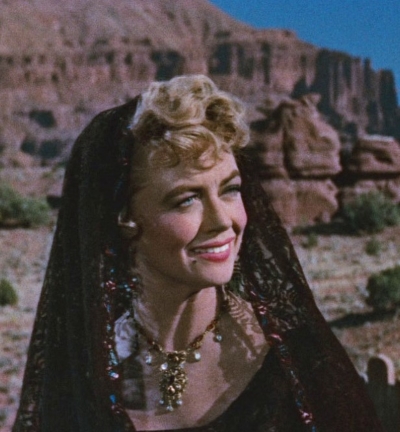
Viewing Notes – A Month with Hitchcock

Without having initially planned to do so, I ended up watching a selection of movies directed by Alfred Hitchcock all through September. I tried to choose those titles I had not seen for quite some time and have been jotting down and recording my thoughts on each in brief as I’ve gone along. Having done so, I figured I might as well assemble them here as an end of month round-up. So here goes:
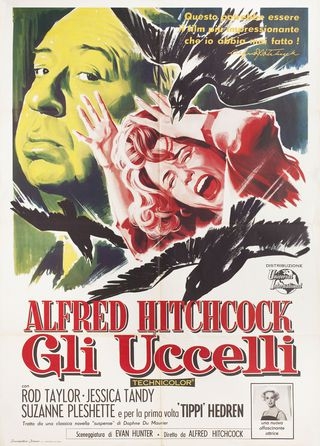
The Birds (1963)

It’s been many years since I last watched this and I’d forgotten just how well constructed it is, not to mention its technical proficiency bearing in mind the era.
That long, slow build-up is the work of a deeply confident filmmaker. It’s never boring or tedious and the gradual, estrogen-fueled tension, with all the cats among the pigeons, is drawn ever tighter in tiny but finely judged increments. When the full chaos is finally unleashed in the apocalyptic latter half Rod Taylor does get to flex bit of muscle, literally and figuratively.
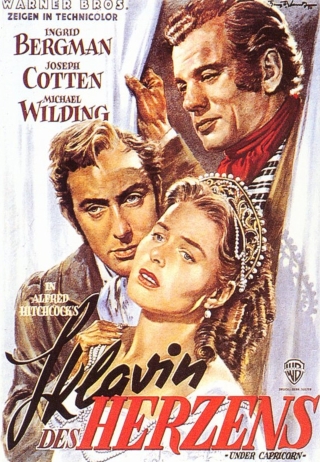
Under Capricorn (1949)

Very much lesser Hitchcock, a movie which barely anyone ever has a good word to say for. Well, I’ll at least say that it is handsomely shot, courtesy of Jack Cardiff, and the acting is fine even if Michael Wilding does lay the whimsy on with a trowel at times.
But yes, it is a problematic movie. And that is largely because it tells a story which is thin, not uninteresting in itself but too thin for its running time. It needed to be trimmed and compressed, which would have been hard to do because of the other great flaw – the director’s insistence at the time on experimenting with long takes. It hamstrung the previous year’s Rope (though that one has other issues dragging it down too) and was a technique that was antithetical to Hitchcock’s style.
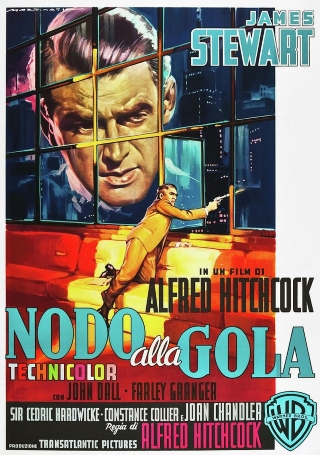
Rope (1948)

I’ve never especially liked this. The technical ambition is admirable, and I’ve always been somewhat hypnotized by the seamless skill involved in the gradual change in the lighting of the studio bound skyline as the tale unfolds in real time. However, the whole continuous take conceit imposes huge limitations on the cast and crew and the process must have been a genuine pain for everyone involved. As with Under Capricorn, the entire business works to undermine the director’s natural strengths.

The biggest problem I have with the movie though is the coldness and indeed the malice at its core. Nobody aside from Cedric Hardwicke’s anxious and compassionate father comes out of it well. That’s not to say it’s badly played of course. Granger could do that weak sister act with his eyes closed and Dall has the clinical and supercilious aspects down pat too – he always seemed to manage that though and there’s a hint of that inherent unlikeability also found in Laurence Harvey in all his parts. James Stewart nails the creeping suspicion that blossoms into horror and then outrage and (self?) disgust. But his character is not really sympathetic either – a man of his intelligence ought to have realized the kind of seeds his intellectual posing was planting.
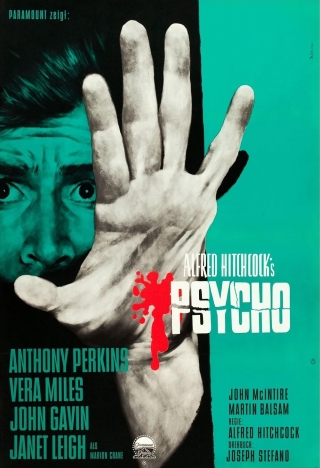
Psycho (1960)

It’s probably 15 years, maybe even more, since I last watched this. The first half always worked best for me and I still feel the same. The paranoia and gnawing guilt of Janet Leigh’s Marion is perfectly encapsulated in the minimalist style of that whole opening section – the rain, the ever more frantic musing, Herrmann’s nervy score and those seemingly permanent close ups of Leigh’s huge, expressive eyes.

And then there’s that frankly sublime sequence in the motel cabin. Cagey and uncomfortable, pathetically flirtatious and taut all at the same time. I reckon it’s the best scene in the entire movie. What follows in the last hour engages me less. It remains visually astounding and technically flawless, but too much of the artful subtlety drains away with the bath water. It still grips and shocks at times, just much more conventionally and it never again approaches the emotional precipice that was teased by the interaction amid stuffed birds, sandwiches and milk.

Nevertheless, it is still undeniably a great piece of cinema, the heights approached and attained in that first hour and the total assurance of a director genuinely in love with his medium are enough to ensure that.
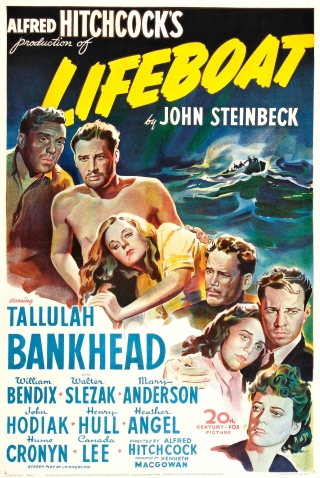
Lifeboat (1944)

A wartime propaganda picture from Hitchcock. Still, being a Hitchcock movie there’s more to it than that – by a circuitous route it winds up as something of a celebration of cohesiveness. Just about every stratum of western society is represented, from Henry Hull’s super rich kingpin to John Hodiak’s blue collar revolutionary, from the stoicism of Canada Lee to the louche decadence of Tallulah Bankhead. All the disparate characters are by turns gulled, threatened and finally drawn together by the malignant presence of Walter Slezak’s cool and cunning Nazi.

It’s another of the director’s challenges to himself, an exercise in the potential of confinement that makes up for in intensity what it arguably lacks in suspense. Alongside the more eye-catching dramatics of those further up the cast list, it’s satisfying to watch the slow development of a gentle romance between fairly regular Hitchcock collaborator Hume Cronyn and Mary Anderson, an actress who never much graduated beyond supporting roles except perhaps in the rarely seen but rather good Chicago Calling.
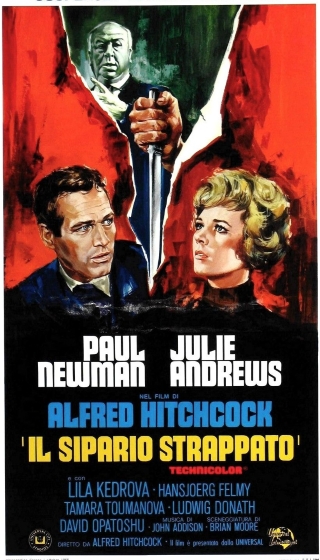
Torn Curtain (1966)

This is the point at which Hitchcock’s decline can be discerned. This Cold War thriller starts out as a double-cross drama where the bluff is drawn out too long before turning into a more successful cross-country chase, the kind of affair Hitchcock could make with his eyes closed.

The first half of the movie misses more than it hits, the brief bookstore scene in Copenhagen errs just on the right side of oddness, but the drab grey/green palate when events move to East Germany reflects the dullness of much of that section, not helped by a listless and detached performance by Paul Newman and an uncomfortable looking Julie Andrews. Some of it does work though – I like the entire build up to the farmhouse scene where the Stasi spook Gromek is laboriously disposed of, and Ludwig Donath is spikily entertaining as a caricatured professor.

The bus ride/pursuit has its moments, helped by John Addison’s slightly eccentric score and an earnest David Opatoshu. There are a few late flourishes too – the hiding among a crowd/creating a distraction ploy is revisited for at least the fourth time – off the top of my head variations thereof are employed in The 39 Steps, Saboteur and North By Northwest if not more.

So, a mixed bag all told. I guess it does more wrong than it does right yet I’ve always had a greater fondness for it than it probably deserves.
Ten of the Best – Women of the West

Over a decade ago (it really doesn’t seem that long… ) I posted a list of western actors. I followed that up with a post on western directors, film noir directors, and film noir stars. The latter included a mix of male and female stars and it has long been my intention to put up a list that would balance that first entry by turning the spotlight on the women who made significant contributions to the western. I’m not sure why I’ve left it so long, I guess other things just kept getting in the way and it got shunted off for another day. There are those who would say the western is an inherently masculine genre, but I don’t feel that’s a fair or just assessment. The western was and remains one of the greatest of all cinema genres precisely because it was so malleable, was so dependent on absorbing myriad influences, and drew highly creditable work from such a wide range of personnel. So, let’s cut to the chase and have a look at ten actresses who added immeasurably to my my enjoyment of my favorite genre.

Felicia Farr

I can’t imagine opening this list with anyone else. Felicia Farr’s part in 3:10 to Yuma is comparatively small yet it’s a pivotal one. Those short scenes she shares with Glenn Ford’s outlaw are memorable and powerfully touching, adding another layer of yearning and regret to an already poignant movie. Director Delmer Daves also used Farr in two other fine westerns, The Last Wagon and Jubal, while George Sherman cast her to good effect in Hell Bent for Leather and Reprisal.

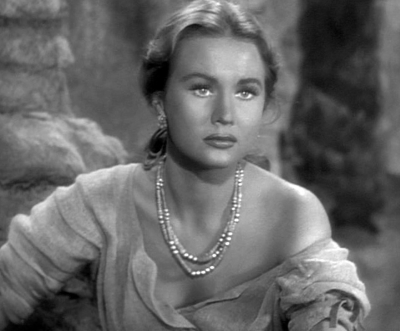
Virginia Mayo

Making her western debut in Colorado Territory, Raoul Walsh’s remake of his own High Sierra, Mayo impressed herself on the genre right away. I won’t go into spoilers here for those who haven’t seen it but the climax of that film is as tragic as it is poetic, and Mayo’s actions give it its power. Walsh would cast her again in the underrated Along the Great Divide while she had other good parts in The Proud Ones, Great Day in the Morning and  Fort Dobbs to name just a few.

Dorothy Malone

While Virginia Mayo was the passionate, beating heart of Colorado Territory, her rival for the affections of Joel McCrea’s doomed outlaw was a coquettish and calculating Dorothy Malone. She would take on some terrific roles throughout the 50s, including some very respectable films noir as well as a couple of plum parts for Douglas Sirk – the superlative The Tarnished Angels and an Oscar winning performance in Written on the Wind – and of course plenty of westerns. Among the highlights are At Gunpoint (why has this movie never had a decent release anywhere?), Pillars of the Sky, Quantez, The Last Sunset and Warlock.

Barbara Stanwyck

One of cinema’s great actresses, Stanwyck made  couple of westerns in the 1930s and 1940s (Annie Oakley, Union Pacific and California) but it was in the 50s that she made her mark on the genre, and fell in love with it in the process. Starting off with the emotionally charged and wondrously melodramatic The Furies for Anthony Mann, she would regularly return to the west. Some of those films were only partially successful, but a movie like The Violent Men has much to recommend it and Samuel Fuller’s Forty Guns is an enduring classic in my opinion.

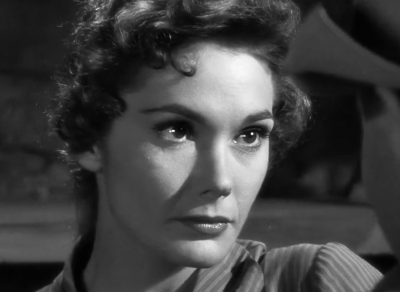
Vera Miles

Anyone who worked with John Ford, and was cast in major roles in his films has to be worthy of consideration here. Vera Miles had started out in the genre with a part in The Charge at Feather River and in Jacques Tourneur’s Wichita. These are fine movies by any standard yet a top role in The Searchers, which is arguably the best western of all time, and one of the best films of any kind, lifted her into a different league. The fact Ford cast her again in The Man Who Shot Liberty Valance, one of the key films marking the close of the classic western era cements her place for me.

Maureen O’Hara

The Ford connection is strong with the next entry on the list, even if their western collaboration was limited. The fiery Irish redhead had already made Comanche Territory when Ford used her opposite John Wayne in Rio Grande, unfairly regarded by some as the least of the director’s Cavalry Trilogy. She would work memorably with Ford and Wayne again in other genres and went on to make good westerns such as War Arrow (George Sherman) and The Deadly Companions (Sam Peckinpah’s debut feature).

Claire Trevor

Sticking with Ford (and indeed Wayne) for the present, we now come to Claire Trevor. It’s hardly too much to say that Stagecoach was instrumental in boosting the status of the western, lifting it firmly and decisively into the A class where it would continue to hold a dominant position for the next quarter of a century. Trevor’s turn as Dallas, the “fallen woman” driven out of polite society only to find love, respect and a future with Wayne’s Ringo Kid, is a superb piece of work. Perhaps her subsequent westerns didn’t offer the same scope for her abilities – Texas, Dark Command (Raoul Walsh), The Desperadoes, The Stranger Wore a Gun – but she was a regular visitor to the cinematic west, and that ride on the Lordsburg stage counts for a lot.

Katy Jurado

The Mexican actress with maybe the most soulful pair of eyes in the business. The wistful look she bestows on Gary Cooper as he stands alone in an empty street in High Noon is as good a way to announce one’s arrival in the genre as I can think of. She brought her unique quality to such movies as Broken Lance, Man from Del Rio and The Badlanders throughout the 1950s. Her appearances in westerns tailed off after that, One-Eyed Jacks with Brando in the next decade and then a small but hugely affecting part in Sam Peckinpah’s Pat Garrett and Billy the Kid.

Julie Adams

Anyone familiar with my writing over the years will be aware of how much I enjoy the output of Universal-International, and the westerns that studio produced are among my favorites. Sometimes it feels as though it’s impossible to watch a U-I western and not see her. Budd Boetticher frequently used her in his movies for the studio – Wings of the Hawk, Horizons West, The Man from the Alamo – and she had good roles for Anthony Mann in Bend of the River and Raoul Walsh in The Lawless Breed and then later on in Joseph M Newman’s The Gunfight at Dodge City.

Debra Paget

Starting out with some small roles in notable films noir (House of Strangers, Cry of the City), Paget struck western gold in the influential Broken Arrow for Delmer Daves. In a sense, one could say she became typecast in westerns, finding herself playing yet again a Native American in White Feather (scripted by Daves) and the powerful and visceral The Last Hunt for Richard Brooks. Typecast or not, she brought a great deal of dignity to those parts and the western genre would be poorer without her performances.

So there it is, my list of ten actresses who have enriched the western over the years. I had to indulge in a bit of ruthless trimming to keep it down to ten, but that’s to be expected and I also anticipate that my picks aren’t going to satisfy everyone. Well, that’s the nature of lists and half the fun is hearing others point out who they would have included instead. Feel free to disagree in the comments section below.

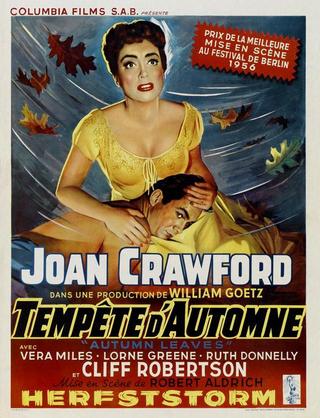
Autumn Leaves

The present is made up of little bits of the past.

Recently, I spoke a little about filmmakers venturing outside of their perceived comfort zone and the how the ability to do so successfully can be taken as an indication of their artistic skill. The classic era of Hollywood moviemaking could be seen as a factory environment which encouraged specialization among performers, writers and directors. I say could because it’s not really the case at all and once one looks beyond a handful of headline titles it’s an assertion that rarely stands up to any scrutiny. Even the unsung journeymen were afforded the opportunity to try their hand at a range of genre pictures. I think the better or more interesting directors understood the challenge presented by these opportunities, that the form and conventions of genre (that frequently maligned term) could be adopted, applied or discarded as appropriate in the pursuit of their art. It’s easy to look at the films of Robert Aldrich and decide he was simply a classy purveyor of tough cynicism, and indeed I’ve been guilty of doing so myself in the past. However, I’d like to think that the years bring us if not exactly wisdom then at least a broader critical perspective. So in that spirit, let’s look at Autumn Leaves (1956), a superficially atypical offering from one of cinema’s great talents.

The story opens with Millie Wetherby (Joan Crawford) hard at work. She spends her days in her neat bungalow typing up manuscripts for writers, putting the finishing touches to the experiences and adventures of others, a vicarious existence if ever there was one. Her life is a mundane one, and a lonely one at that. When a satisfied customer passes on a couple of concert tickets he doesn’t need she accepts them and decides to treat herself to a rare evening out. A brief flashback sequence triggered by the familiar music makes it plain that Millie’s solitary life is the result of sacrifices she made to care for an ailing parent, that time and opportunity just passed her by. And yet her walk home takes her past a small eatery, a place that catches her eye for no special reason other than a reluctance to let the evening end. Still, taking those tickets and yielding to that impulse to stop off for a bite to eat before returning to the empty home prove to be pivotal moments in this humdrum and inconsequential life. As she sits alone in her booth, prim and composed, listening to the movie’s title song on the jukebox the shadow of a wistful smile plays across her features. Another shadow enters the frame at this point, another customer hoping to share some table space in the crowded restaurant. This is Burt Hanson (Cliff Robertson), a fresh-faced and talkative young man, one more soul adrift in the urban anonymity. Here we have the beginnings of a tentative and rather sweet romance, a predictable setup in many ways. Yet the tone and direction alter radically in the second half as a far from attractive past barrels its way into the fragile present, and the threat to that fragility is what forms the basis of the drama which subsequently unfolds.

The cinema of the 1950s is an endlessly fascinating subject for this viewer. There are of course the technical advances which were ongoing and literally changing the shape of the movies, but it’s the thematic probing that seems to characterize this decade of filmmaking which intrigues me most. The promise and potential, the surface gloss of this brave new post-war world seemed to offer so much food for artistic contemplation. Time and again we encounter the notion of rebirth and renewal in 50s cinema, and indeed the characters played by Crawford and Sheppard Strudwick openly discuss the concept of being reborn in what is otherwise one of the more prosaic scenes in this picture. However, I’m of the opinion that reinvention is perhaps a more appropriate word to describe the central theme of Autumn Leaves. Millie certainly reinvents herself in the role of carer which she appears to have occupied all her life, although one might argue the ending does look to a future beyond that. Burt is without doubt the most obvious source of reinvention; he adopts and discards aspects of his past and present at the drop of a hat, unconsciously creating whatever reality feels expedient on any given occasion. Of course the consequent psychological meltdown and the road back from the mental abyss into which he descends is another part of that process.

So what can one say about Aldrich, and is there cynicism on view here? Well yes and no. If one takes the view that peering beyond the veils of society to get nearer the truth is cynicism, then perhaps Aldrich can be said to be a cynic. I’m not sure that is the case though; for one thing cynicism suggests a sourness, particularly on a personal level. As I see it, Aldrich wasn’t going down that route. On the contrary, I see a man casting a sidelong glance at society on an institutional level, almost like a more abrasive version of Douglas Sirk. Unlike Sirk’s more sumptuous, glossy presentation of a flawed idyll, Aldrich’s visual approach is starker and more direct with Charles Lang’s noir-shaded cinematography and the canted angles and mise-en-scène emphasizing the narrow range of options open to his trapped and tormented characters.

Joan Crawford’s career on screen could be separated into distinct eras, with Autumn Leaves coming close to the end of a very successful run starting with Mildred Pierce. Her role as Millie Wetherby is a strong one and a good fit for her at this stage in her life and career. There’s an open acknowledgement of all the little (and not so little) insecurities that come with ageing. There are, as expected, a number of “big” moments but it’s actually some of the smaller, more intimate instances that stick in my mind, that early scene in the restaurant for example, or some of the exchanges with Ruth Donnelly. Cliff Robertson landed a plum part as the deeply disturbed Burt and his handling of the character’s slow disintegration is well done, with vague hints dropped from early on and casual lies imparted before their enormity is finally revealed.

Both Vera Miles and Lorne Greene are fine too as the calculating ex-wife and the frankly sinister father respectively. I mentioned before Aldrich’s less than reverent view of institutions and his take on an appallingly dysfunctional family is deeply shocking. Miles’ glacial turn as the entitled and contemptuous ex is marvelously mean – leaving that cigarette smouldering in the ashtray in Crawford’s bungalow is a nice touch. And Greene is on top form as the bullying, creepy patriarch. If family is seen as representing the bedrock of society, the horrors implicit in Burt’s domestic background offers as withering a criticism of the post-war American Dream as one could imagine. In support, the aforementioned Ruth Donnelly is a joy every time she appears and there are small parts for Maxine Cooper (Velda from Kiss Me Deadly) and, as a gloriously jaded and world weary waitress, Marjorie Bennett.

Autumn Leaves is one of Robert Aldrich’s early films that seems to get much less attention than his other work from around that time. Frankly, it deserves better as all those involved give a good account of themselves, not to mention the fact the movie tackles a tricky subject with confidence. Rather than resort to dry cynicism, Aldrich takes an unflinching look at the process of decay in certain institutional pillars but reserves a cautious optimism for the individuals at the heart of his drama and for their simple hopes. And, last but by no means least, there’s Nat “King” Cole’s superb theme song:

Wichita

poster2741

Some years ago I ran a short series of pieces on the various representations of Wyatt Earp in the movies*. I covered almost all the major productions, but one – Wichita (1955) – was omitted for the simple reason that I won’t ever write about a film which I haven’t had the opportunity to view recently. Well, now’s the time to fill in a notable gap in the aforementioned series. For a character whose name has become such an iconic part of the history and mythology of the old west, there is a good deal of variation when it comes to assessment of his motives. While some writers have sought to build up the man’s legend, others have dedicated their efforts to chipping away at it, and then there’s always the stories that Earp himself chose to spin. Despite the diversity of opinion on Earp in literature, I think it’s safe to say that cinema has, for the most part, chosen to cast him in a heroic mold. The historical veracity of those pictures where his character played a prominent part may be open to question, but there can be no doubt that Earp provided filmmakers with a rock solid basis for their portrayals of tough, unflinching lawmen.

Wyatt Earp (Joel McCrea) is introduced a man hoping to start up business in the burgeoning cow town/railhead of Wichita, Kansas. Two early scenes, one involving a couple of light-fingered cowboys and another depicting a foiled bank raid (where Sam Peckinpah appears uncredited as the teller), make it abundantly clear that Earp is a man skilled in the use of firearms. However, for all his adept gunplay, he has no interest in wearing a badge and using his talents to enforce the law. Wichita is shown to be a town facing something of a dilemma; the railroad is attracting the big cattle outfits and the money that they bring with them, but the town’s also faced with the challenge of lawlessness. Hard men who have spent long weeks riding dusty trails, deprived of liquor and female company, are only too eager to spend their earnings and blow off steam. Everyone of influence in Wichita knows what’s going to happen as soon as the first big cattle drive arrives. These town elders are anxious to fully exploit the financial gains, but they also need someone strong and reliable to ensure that some semblance of law and order is maintained too. Earp would appear to be the natural choice but, as the newspaper editor (Wallace Ford) points out, he hasn’t yet come to terms with his calling in life. It’s only after a child is killed by a stray bullet that Earp bows to the inevitable and pins on a badge.

The script doesn’t concern itself too much with the documented facts – having Earp team up with a fresh young reporter by the name of Bat Masterson (Keith Larsen) for example – but it does give at least a grudging nod in their direction. In reality, Earp finally left Wichita after political disagreements and headed for Dodge City to make money in some questionable ventures. The film ends with our hero setting off for Dodge in order to continue along what’s claimed to be his destined path as a dedicated peace officer. And the political disputes, albeit of an entirely different nature, do form a significant part of the plot. The script sees Earp come into conflict with the business interests in Wichita, men who are prepared to turn a blind eye to violence as long as the dollars keep rolling in. While some people may try to tell you that Hollywood productions of the 50s were generally right-wing in perspective, I’ve never seen too much evidence of that. Wichita is yet another film that champions basic morality above any narrow political consideration.

Wichita is very fine film, where both visuals and theme vie for the viewer’s attention. All of the great directors had the ability to move with ease between genres, and Jacques Tourneur was no exception. Having made what I have no hesitation in referring to as masterpieces in the horror and noir fields, he went on to prove that he was equally at home with westerns. Wichita was shot in scope and Tourneur handles the wide lens beautifully throughout. The opening, which highlights the vast open spaces of the frontier, quickly draws the eye to a tiny speck, a lone figure off on the horizon. This is the first view of Wyatt Earp, a fine visual introduction for a character who remains resolutely apart from the milieu throughout the film. Now that’s a considerable feat in my book, encapsulating the essence and core of a character through the use of one long shot. A good deal of the action in Wichita takes place in interiors, and again Tourneur employs the scope camera to great effect, altering angles to highlight the dominance and physicality of McCrea, to create a sense of chaos or remoteness as required, and generally positioning his actors within the frame in such a way as to focus on the emotional relationships between them. All of this, along with a strong sense of pacing, marks out the work of a top flight director.

With regard to theme, I’ve already mentioned the political sensibilities, but there’s more going on than that. The best classic westerns dealt with the internal struggles of their heroes, men trying to come to an understanding with themselves and to decide on the right path to follow. The Wyatt Earp of Wichita faces this eternal dilemma too, but with the added complication of unavoidable destiny thrown into the mix. Time and again the script makes reference to men being unable sidestep or ignore the responsibilities that fate has laid before them. If one bears in mind that Earp ultimately chooses to pursue what’s morally right then the picture has an uplifting quality. However, it’s not quite so simplistic; in order to fulfill his destiny the hero must do things that offend him personally. I think the minimalist artwork used for the poster sums up that aspect very well – a hunched, regretful figure, full of remorse in his moment of triumph, surveying the body of his slain opponent.

Joel McCrea was an excellent piece of casting as Earp. He may not bear any physical resemblance to the man but both his size and commanding presence ensure he dominates the picture. McCrea was one of the top half-dozen western stars, a man who simply belonged in the genre. He often brought a good deal of warmth to his characterizations, though his role in Wichita sacrifices that to an extent in order to play up other qualities. His Earp is a man who’s not quite satisfied with himself, a reluctant hero whose awareness of his deadly skills pains him. He communicates the dour, steely nature of his character well, and leaves no doubt in our minds as to why this man held such a fearsome reputation. Vera Miles was cast as the romantic interest, and she’s fine given the limitations of her role. The film isn’t a romance so Miles has few dramatic opportunities. Under the right circumstances, she was a very good actress – something like Hitchcock’s The Wrong Man should offer ample evidence – but she’s never stretched here. Lloyd Bridges and Edgar Buchanan played the main villains, the former as a vengeful cowhand and the latter as a conniving, duplicitous businessman, and provide solid opposition to McCrea. The supporting cast is filled with plenty of familiar faces: Peter Graves, Carl Benton Reid, Robert J Wilke, Wallace Ford, and the ever dependable Jack Elam.

Wichita is available as part of the Warner Archive in the US, but I recently picked up a release from La Casa del Cine in Spain that pairs the film with The Oklahoman. Both movies come on their own discs and Wichita looks very good. The film is presented in anamorphic scope and the print seems to be in excellent shape, without significant damage and boasting solid colours. There are no extra features offered but the two movies can be had for less than 5 Euro. Spanish subtitles are removable via the setup menu, however, I did notice that they seem to be burnt in during the opening credits for Tex Ritter’s theme song, and there’s a brief instance of a sign being similarly translated. I think this is an exceptionally good movie, intelligently scripted, beautifully directed by Tourneur and featuring a strong central performance by McCrea. Check this one out.


*Other films featuring the character of Wyatt Earp:

Frontier Marshal

My Darling Clementine

Winchester 73

Gunfight at the O.K. Corral

Cheyenne Autumn

Hour of the Gun

Tombstone

Wyatt Earp

23 Paces to Baker Street

The films which I’ve been writing about lately have all been fairly heavy on symbolism and meaning, so maybe it’s time to dip into something lighter for a change. As such, I feel that a tight, solid mystery that has no pretensions of being anything other than a piece of entertainment is as good a choice as any under the circumstances. This seems a fair summation of 23 Paces to Baker Street (1956) – a not especially well-known thriller that nevertheless features an intriguing plot and polished, professional work from all the participants. The movie belongs in a small sub-genre of films (e.g. The Spiral Staircase, Rear Window, Wait Until Dark) where the hero/protagonist is suffering from either a temporary or permanent disability. There’s nothing particularly exploitative about these films, the disability in question serving merely as a means of increasing tension or suspense – and often, paradoxically, emphasizing the superiority of the hero over the villain.

The story here derives from a book by Philip MacDonald (author of some excellent mysteries like The Rasp and The List of Adrian Messenger)  and concerns a blind playwright who finds himself inadvertently drawn into a shadowy plot. Phillip Hannon (Van Johnson) is an American residing in London, having suffered some unspecified accident which has left him blind. That this misfortune has shaped his somewhat irascible character is established early on when his work is disrupted by the unexpected arrival of an old flame, Jean Lennox (Vera Miles), who evokes understandably painful memories of happier times. It’s as a result of this visit that Hannon, perhaps wanting to prove his independence, sets off alone to a local pub for a drink. And here’s where the mystery begins; while seated in a booth, he overhears snippets of a conversation through the partition with the adjoining lounge bar. Of course his lack of sight rules out the possibility of identifying the man and woman involved, but what he hears is sufficient to arouse his suspicions that something, conceivably an abduction, is being planned. The problem is that with his disability preventing a straightforward pursuit, and the police’s subsequent insistence that the meaning of the fragmented dialogue is open to interpretation, he’s at a loss to know how to proceed. However, bit by bit, through a combination of good fortune and dogged amateur sleuthing by Hannon, Jean and his servant (Cecil Parker), the body of evidence starts to grow. Everything builds relentlessly towards a tense climax that is reminiscent of Rear Window, where the hero finds the means to turn his physical handicap to his own advantage.

What makes a story like this succeed is the presence of the physical disadvantage which the protagonist has to overcome. Having a hurdle such as Hannon’s blindness to negotiate makes it easier to sustain the viewer’s interest and demands an added touch of creativity in the scripting. I’ve often found that when a tale involves merely exploiting the massive manpower and resources available to law enforcement agencies, it’s much more difficult to feel sympathy for the hunters. Maybe that’s just my natural identification with the underdog coming through, but the (almost) lone and struggling figure always seems more attractive. Henry Hathaway’s direction is smooth and professional in a movie where the action is largely confined to interiors – entirely appropriate since the focus is on a man whose mobility is necessarily limited by his condition. The wide screen of scope is ideal for creating a sense of space in outdoor shots, but Hathaway’s experience meant that he was also aware that careful composition resulted in equally effective visuals in interiors. Generally, there’s a tense atmosphere maintained throughout, but there’s also a nicely judged comedic interlude where Hannon sends his servant/secretary off in pursuit of a suspect; Cecil Parker brings a welcome, lightly comic touch to this stalking sequence and the subsequent reporting of his progress. In the lead, Van Johnson is mostly fine in conveying an alternating mix of frustration and enthusiasm, the shape of the investigation both reflecting and influencing his moods. I also found him convincing as a blind man, the only time he let it slip a little was during the climax where a few reactions didn’t quite ring true. Vera Miles wasn’t given a lot to do as the faithful former lover, much of the time playing a clichéd and stereotypical character. Of course, that no real criticism of the actress, just the part she was handed. The supporting cast is full of fine British character actors: the aforementioned Cecil Parker, Maurice Denham, Estelle Winwood, Patricia Laffan and, in a droll turn as an assassin that reminded me a little of Edmund Gwenn in Foreign Correspondent, Liam Redmond.

23 Paces to Baker Street is a Fox production and remains absent on DVD in both the US and the UK, however, I believe there’s a copy of the film available in Spain but I haven’t seen it. Instead I picked up the Australian release by Bounty Films when it was issued late last year. The disc is completely barebones, but the transfer is pretty good. The movie is presented correctly in anamorphic scope and although it doesn’t appear to have undergone any kind of restoration there’s no especially distracting damage either. The colours are strong, the film has been transferred progressively and the price is acceptable. The only beef I have with the presentation, and it’s a very minor one, is the curious decision to market the title as part of the Bounty Noir Classics line – this is a standard mystery/whodunit and doesn’t even approach noir territory. This is an entertaining, glossy and well-paced thriller that’s capable of holding the viewer’s interest from beginning to end. I found it satisfying and have no problem giving it the thumbs up.