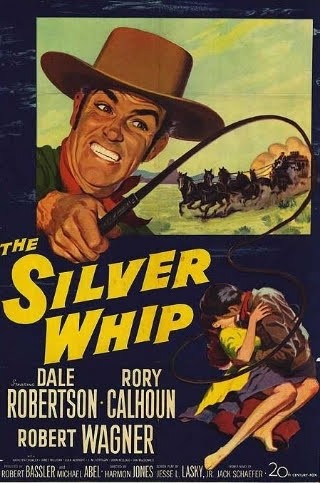
The Silver Whip

poster203_zps7wmbybyt

As far as I’m concerned, one of the great pleasures of maintaining this site, maybe the greatest if I’m honest, derives from the feedback received. so many posts here have prompted discussion, debate, spitballing and recommendations. The latter has been invaluable to me by drawing my attention to movies of which I was either only vaguely aware or which were entirely new to me. There’s something quite invigorating about the realization that not only is one on a learning curve, but also that this curve continues to grow and expand as one moves along it. I guess all of that is just a long-winded way of saying there’s always new stuff to discover and appreciate. As a result of comments made here in the past I was particularly keen to see The Silver Whip (1953), and I’d like to offer a big thank you to John K for his help in making that possible.

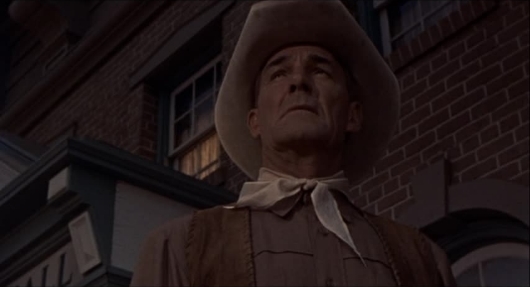
What we have here is both a coming of age story and also a parable on the way mistakes and poor judgment can have both positive and negative influences on the lives of those concerned. The events in The Silver Whip are seen from the perspective of Jess Harker (Robert Wagner), a young man with ambition and dreams, for whom responsibility remains no more than an ill-defined word rattling round his consciousness. Harker’s opening narration makes it clear that his greatest desire is become a stagecoach driver, cracking the whip over a team of horses and pressing ever further at the boundaries of the frontier. However, it’s always been the case that one of the closest companions of youth is frustration, with impatience frequently tagging along in reserve, and it’s no different for Jess Harker. He’s stuck with a team of mules and a mail run that’s barely worth the name. What makes it worse is the fact he’s living in the shadow of men like Race Crim (Dale Robertson) and sheriff Tom Davisson (Rory Calhoun), guys who blazed trails back in the days when the law was simply something people talked about rather than lived by. Harker is restless, he’s got an itch that needs to be scratched, and he’s ready to pack up and move out. But, like most young men, he’s got a girl, Kathy Riley (Kathleen Crowley). This girl wants him badly, bad enough to go to Race Crim and beg him to do something to keep Jess in town. Race’s inherent decency leads him to use his influence to get Harker the job of driving the next stage, and it’s here that the mistakes start to be made. This run, along with passengers, will involve carrying a gold shipment, and gold has a habit of attracting the wrong kind of people. A hold-up is going to take place, people are going to die, and others are going to have to live with the consequences. Without going into further plot details, that’s what the movie is all about – the effect, on two men in particular, of a couple of poor decisions at vital moments.

The Silver Whip is adapted from First Blood by Jack Schaefer (who should be a familiar name for Shane and Monte Walsh among other films) and deals with the way those decisions lead one man towards the heart of darkness and another to enlightenment and maturity. In a sense it’s that eternal fork in the road, that choice of paths we’re all presented with, although perhaps not in such dramatic fashion, as we make our way through life. The hold-up pushes one man off course, or detours him at least, when he allows his base instincts to take control of him. Conversely, it signals an awakening in another, acting as a catalyst for his first steps towards manhood. And yet, while the routes chosen appear to diverge and head off in different directions, the final result is a convergence, an arrival at a common destination. Salvation and redemption are integral to the 50s western, they cannot be removed without taking away something of the soul of a film and the genre itself. The Silver Whip sets its characters on a journey away from their initial personae, testing them morally and spiritually, before drawing them back towards completion. Harmon Jones’ direction and composition alternately highlights the isolation of both Jess and Race, to draw attention to the uncertainty of the former and the cold determination of the latter. But there’s also the blending of both men into opposing camps too, where their individuality is at times absorbed into the groups they come to represent. And of course there’s the ultimate convergence right at the end, the meeting of mind and spirit which offers closure.

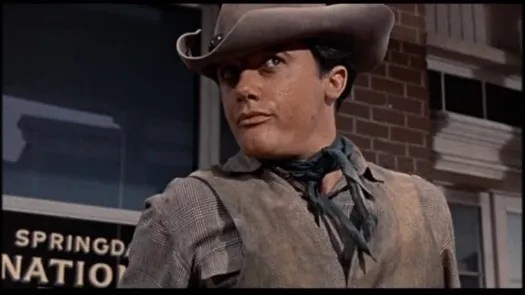
One of the first things you notice about The Silver Whip is the strength of the casting. A very young Robert Wagner was an excellent choice as the green and callow Jess Harper, and his gradual awareness of his place in the world and the results of his actions upon others is nicely realized. He acts as our point of reference, the one through whose eyes everything unfolds, and I think Wagner was fine at conveying the development of his character. Having said all that, Dale Robertson gets the plum role of Race Crim, and really runs with it. He moves seamlessly from an open and affable man to one totally consumed by a desire for revenge and weighed down by an enormous sense of guilt. Positioned between these two is Rory Calhoun as the sheriff whose duty puts him in conflict with his former friend. Calhoun’s role is essentially a supporting one but it’s no less important for being so. And also in support there’s another well-judged turn by James Millican, playing the stage boss whose tough edge hasn’t been quite worn away by his desk job. It’s sometimes thought that women get sidelined in westerns, but that’s rarely the case. While both Kathleen Crowley and Lola Albright have limited screen time, there can be no question about the significance of their respective parts. Crowley is marvelously tender in her understanding of Wagner’s foolishness and Albright impresses deeply in her three brief scenes. Her portrayal of the saloon girl, Waco, is pivotal in the transformation of Robertson – the scenes in the saloon and at the beginning of the stage trip establish his devotion to her, and then the aftermath of the hold-up is the moment when his destiny is mapped out.

The Silver Whip is a 20th Century Fox production and is now available as a MOD DVD via that studio. The transfer to disc looks like an off-the-shelf one where the elements were in reasonable shape but haven’t undergone any restoration. The image is acceptably sharp and detailed throughout but there is the odd scratch and mark visible. I also think the contrast is set a little high as whites can look a bit blown at some points. Overall though, the movie looks fine and is certainly quite watchable. I have to say I got a lot of enjoyment out of my first viewing of this film and I can easily see myself returning to it. There are strong performances from all the cast and Jones’ direction is both pacy and thoughtful. A very pleasant surprise for me, and a film I recommend seeing.

I Confess

Hitchcock films get mentioned and written about all the time, but it’s almost always the same dozen or so that receive all the attention and plaudits. A good many of his movies are really only spoken of in passing, often referred to as bridges between his major works and, while it’s rare to see them dismissed outright, it sometimes seems that the perceived flaws and (relative) lack of success is what draws most comment. I Confess (1953) probably belongs in this category, being regarded as a little too personal and flirting with inaccessibility as far as non-Catholics are concerned. Whatever the popular view might be, it’s a film I’m very fond of, and one which of course contains the now familiar wrong man theme.

The movie opens in a typically quirky and macabre fashion, a succession of street signs flashing before our eyes and leading inexorably to the scene of a murder. As the camera peers through the open window the corpse is laid out on the floor and the door is just closing on the exiting killer. We follow the murderer through the shadowy, cobbled streets, his silhouetted figure suggesting a clergyman. Then, as he casts off the soutane, it becomes apparent that the priestly garb was no more than a convenient disguise, no doubt inspired by the fact that this man earns his keep working for the church. When a man has committed the ultimate sin, has compromised his soul and is wracked with guilt and fear, then it’s not unnatural that he should seek solace and sanctuary in a holy place. The man in question is Otto Keller (O E Hasse) and his entering the church is witnessed by chance by one of the priests, Father Michael Logan (Montgomery Clift). Keller insists that Fr Logan hear his confession and the latter duly obliges. Much has been made of the fact that non-Catholics may have difficulty appreciating the seal of the confessional, the inability of a priest to ever reveal what he hears under such circumstances. I understand how there are those who might be unaware of this but the absolute confidentiality is made clear in the script so I think it’s not really reasonable to criticize the film on this score. Anyway, both the viewers and Fr Logan are aware of the identity of the murderer almost from the beginning, but further complications are to arise and cast official suspicion in a different direction. If all those signs in the opening sequence led us to a dead man, another set of pointers lead the police, headed up by the dogged and practical Inspector Larrue (Karl Malden), towards Fr Logan. The murderer’s literal cloak of convenience helps of course, but the priest’s connections with the victim, a blackmailing, shyster lawyer, fan the flames of suspicion. As the reasons for Logan’s seemingly odd behaviour are laid bare and the object of the blackmail becomes known, the priest’s refusal or inability to speak up damns him in the eyes of the law. With the wheels of blind justice now in motion, Logan finds himself morally trapped and apparently powerless to protect either himself or those he cares about.

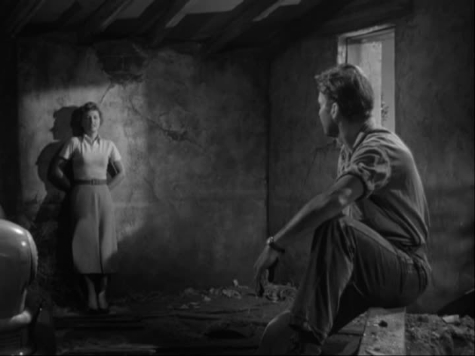
Anyone who has ever read anything about Hitchcock will be aware of two facts: his Catholic upbringing, and the distrust he felt for the law and the institutions of justice. Both of these influences on the director’s life are very much to the fore in I Confess. Church dogma colors every aspect of Logan’s behaviour throughout, cutting down his options and, again through no fault of his own, leaving both him and those around him exposed to misguided moral outrage. And of course all this leaves him at the mercy of a justice system which is unsympathetic to what it’s unaware of. Essentially, Hitchcock is presenting us with an ethical conundrum, a true dilemma where betrayal (be it spiritual or emotional) lies in wait whichever path is chosen. Really, it’s a classic noir scenario, with fate seemingly laying a complex and delicate trap for the unsuspecting protagonist – every act, the noble and the innocent most of all, being misconstrued and misinterpreted. Robert Burks’ lighting and photography, particularly the night scenes, is bathed in expressionistic shadow and Hitchcock blends the tilted angles, telling close-ups, tracking shots and deep focus beautifully. You could say the symbolism is laid on a touch heavily at times – the allusion to the trek to Calvary springs to mind immediately – but it’s all so wonderfully composed that it sounds a little churlish to harp on it too much.

I’ve mentioned before that I’m not a fan of the Method approach to acting, finding it phony and distracting for the most part. However, there are always exceptions, and it’s nice to be able to highlight a positive example. Montgomery Clift was one of the first (perhaps the first?) practitioners of the Method on the big screen, and I feel he was generally very successful. I like internalized performances and I like subtlety, and Clift was a first-rate exponent of this. Great screen acting comes from the little things, the barely perceptible changes of mood and the altered thought processes which we sense as much as see. Clift had many blessings but among the most significant were his composure and his eyes. The early scene in the confession box is a marvelous bit of work with those eyes revealing so much. And the same can be said for every important plot development – the increasing desperation and hopelessness of the situation is perfectly conveyed but never exaggerated. At one time I felt that Anne Baxter was less than satisfactory as Clift’s former love, but I now feel she judged it well enough. Again, it’s a role that calls for as much to be held inside as freely expressed. The longish flashback which clarifies the nature of her relationship with Logan is told from her point of view and it’s probably here that she comes across best. Frankly, there are good performances all round: Malden’s probing and restless detective, Brian Aherne’s rakish prosecutor, O E Hasse as the craven yet pitiful killer, and of course Dolly Haas as his conscience-stricken wife.

A film like I Confess, one which is so heavily dependent on its visuals, needs to be seen in good quality. Fortunately, the Warner Brothers DVD offers a strong transfer that shows off the contrast between light and dark to good effect. It’s clean and acceptably sharp, a solid-looking presentation. The disc also has a “Making of” documentary included, which provides some analysis along with production and background information – a worthwhile extra in my opinion. The film continues to be underrated as far as I can tell, and that probably says more about the strength of Hitchcock’s body of work than it does about the movie itself. I reckon it accomplishes about all it sets out to do but others may disagree with that assertion. Either way, I’d urge people to give it a chance, or perhaps watch it again if they’re already acquainted with it – I believe there are plenty of positive aspects to  focus on.

It Came from Outer Space

– It’s alive.

– And yet it looks so dead out there.

– Oh no, it’s alive and waiting for you, ready to kill you if you go too far. The sun will get you, or the cold at night. A thousand ways the desert can kill. Where are you? What do you look like? What am I supposed to be looking for? I know you’re out there, hiding in the desert. Maybe I’m looking right at you and don’t even see you…

Visitors to this site might get the impression I only watch or appreciate a narrow range of movies, westerns and noir thrillers in the main. Well those happen to be my favorites, and therefore get featured a lot, but it shouldn’t be taken as a dismissal on my part of other genres. The fact is I watch all kinds of stuff, even if it doesn’t get written up here with any kind of regularity. Sci-Fi has only made one other appearance on the site, despite the fact I do enjoy it, and I feel it’s time to offer some company to that solitary post. I should also say that Kristina’s recent flurry of Sci-Fi and horror/fantasy related posts over at Speakeasy encouraged me to do something about it. Let me say right away that my favorites in the genre can be found among the classic era material from the 50s and, to a lesser extent, the 60s and early 70s. As such, I’ve decided to run with It Came from Outer Space (1953), one of the best and most literate of the “fear of the unknown” variety.

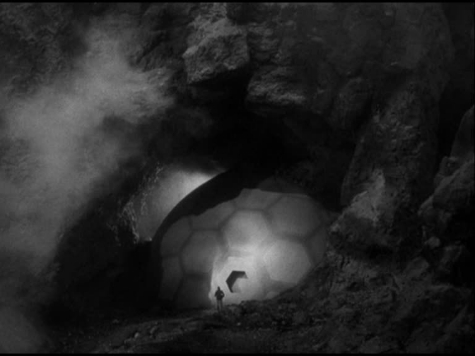
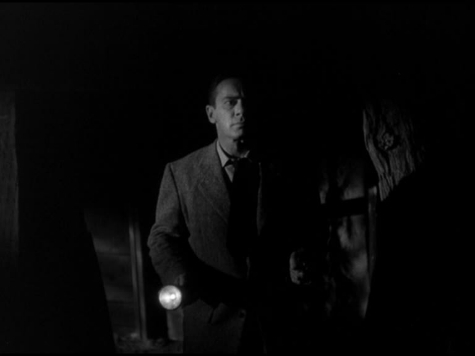
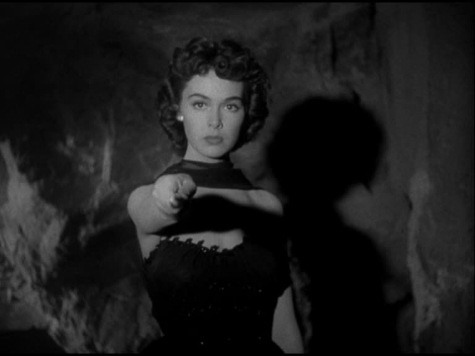
Any movie with a relatively short running time owes it to the viewers to grab the attention as abruptly as possible, and this movie does just that by having a glowing spherical object hurtle menacingly towards the screen right at the beginning. We soon learn that this strange sight is an extraterrestrial spacecraft careering blindly towards the desert on the outskirts of a small Arizona town. Sand Rock is one of those close-knit communities where everyone knows everyone else, and strangers generally have to toil in order to overcome the inherent suspicion of the locals. John Putnam (Richard Carlson), an astronomer and relative newcomer, finds himself in that position when, along with his fiancée Ellen (Barbara Rush), he witnesses what looks like a meteor blazing its way across the night sky and ploughing into the arid wastelands beyond the town limits. Fortunately or unfortunately, depending on one’s perspective, Putnam is the first to explore the crater gouged out by the impact and also the only one to see the clearly alien craft that caused it. A major rock slide succeeds in burying all trace of the find, and leaves him in the unenviable position of trying to convince others of the significance of what’s just happened. Perhaps not unnaturally, his claims are met with almost universal skepticism, Ellen being the only one not to doubt him, and borderline hostility from one particular quarter. Matt Warren (Charles Drake) is the local sheriff who clearly has feelings for Ellen and this arguably colors his reaction to Putnam’s assertions. However, something otherworldly has landed in Sand Rock, something capable of assuming the form of whoever suits its purposes. Aside from the neat mirroring of attitudes  – both Putnam and the alien interlopers are on the receiving end of essentially the same suspicion and paranoia – the plot develops in an interesting, and quite refreshing direction, in terms of the visitors’ motivations and objectives. Before all of this is resolved though, there’s plenty of opportunity for the suspense to build.

The 50s science fiction boom seems to have been a direct result of the mood of the times – a curious cocktail of fear and hope. There was the paranoia stemming from the dread of devastation raining down from the skies coupled with a wariness over the possibility of an enemy within. This was at least partly balanced by the optimism of the post-war era, where the flip side of the technological revolution was the realization that boundless possibilities for progressive discovery also existed. Putnam’s character, as much as the aliens themselves, could be said to represent these twin concepts, and I feel it’s to the filmmakers’ credit that it’s the positive rather than the reactionary aspect which is embraced in the end.

It Came from Outer Space was to be the first Universal picture shot in the new 3D process. I’ve only seen it flat and it plays fine that way, although there’s a documentary on the DVD which points out how certain shots (not just gimmicky, throwing stuff at the screen material) were carefully composed to highlight the added depth of the extra dimension. The film was shot in California, standing in for Arizona, and good use is made of the Mojave Desert locations. The sense of remoteness, and the attendant perils of such a harsh and bleak environment, is woven into the plot, notably through passages of associated dialogue retained from Ray Bradbury’s original screen treatment. Although he had worked on a number of shorts, this was one of Jack Arnold’s earliest full length features, and his assurance as a director is already evident. Clifford Stine’s moody cinematography obviously helps things along, but Arnold sets everything up and keeps the story moving forward smoothly. Initially, it was planned not to show the aliens to the audience (a principle which I feel probably should have been adhered to) and focus on a combination of reaction shots and first person filming via a distorted lens. As it stands, I think some of the most effective scenes in the film are those where the threat is unseen – the sinister figures of Joe Sawyer and Russell Johnson silhouetted in a doorway, or a simple jump scare provoked by a light suddenly illuminating as mundane an object as a Joshua tree.

Richard Carlson had appeared in a whole variety of movies, some memorable and others less so, by the time this picture was made, and it introduced him to the Sci-Fi genre. He had the kind of square-jawed yet thoughtful features that lent themselves to playing heroes with a brain, a quality which would see him cast in a number of other films in this genre in the years to come. In the role of Ellen, Barbara Rush is asked to do little more than provide a supportive and sympathetic presence at first, but she later gets to have a little more fun as her own doppelgänger in the final act. Ms Rush was near the beginning of her long career in this movie and I’ve no doubt her composed performance helped raise her stock as an actress. While her cinema credits are impressive enough, she has worked extensively on TV, including a highly memorable part in a show I can’t seem to get away from mentioning of late – yes, it’s The Fugitive again. Charles Drake took on all kinds of roles over the years, as was the lot of contract actors, though I always feel he was at his best when cast as weaselly or less than sympathetic types. As such, playing the hot-headed, resentful sheriff suited him well and added an intriguing layer to the relationships at the center of the movie.

My DVD of It Came from Outer Space is the old Universal UK release, which is serviceable enough but could be improved. Personally, I’m not that bothered about the absence of a 3D version, although others will likely feel differently, but the open matte transfer is more disappointing. A film like this really needs to get a Blu-ray release in the correct widescreen ratio, and also provide the option of viewing it in 3D for those who wish to do so. On the plus side, there are some good extra features: a commentary track with Tom Weaver and a half-hour documentary on the film and it’s place in 50s Sci-Fi filmmaking. The film remains important as Jack Arnold’s first science fiction project, the genre his name is now most strongly associated with, and also for its position as an early classic in what has become a very crowded field over the years. I think the best, or most interesting, Sci-Fi films use their fantastic or otherworldly elements to tell us something about ourselves above all. It Came from Outer Space neatly challenges expectations and prejudices and encourages us to look within as much as without, which is one of the reasons I enjoy revisiting it. Recommended.

A Lawless Street

The snarling beast… can’t you hear it growling out there? Listen! This town is like a wild animal in chains, Molly. It doesn’t fight back right away, it just lies there and snarls, waiting for a chance to pounce on you.

The hero stalked by his past, living with the legacy of a reputation earned the hard way but not actively sought out, is a common enough theme in westerns. Generally, the inevitable confrontation with the past is undertaken only with the utmost reluctance, with the full knowledge that destruction rather than salvation may await. What’s less common though is a scenario where it’s the cumulative effects of times gone by that are addressed, and where aspects of those times are actually yearned for. A Lawless Street (1955) has such a concept at its heart – a man haunted not by misdeeds but by missed opportunities, and slowly being worn down by conscience, regret and just a hint of fear.

Calem Ware (Randolph Scott) is the marshal of Medicine Bend, and was initially brought in to ensure this frontier town abides by the civilized values one of its leading citizens, Asaph Dean (James Bell), wants to see upheld. Ware is one of those itinerant lawmen sometimes referred to as town tamers, having worked some tough western settlements and built up a name for himself as a gunman of note in the process. One of the things I particularly like about the 50s western is the way such aspects of a man’s character or background are rarely glossed over or glamorized. The memorable opening scene has a lone horseman slowly ride along the empty main street, his body language and general demeanor suggesting he has something serious on his mind, and when the camera zooms in and focuses on his sidearm, then we know pretty well the exact nature of his business. This man is in town to settle a score with the marshal and word of what’s probably in store doesn’t take long to get around. Ware is the type who knows only too well the importance of maintaining a facade, he makes a big play of his apparent nonchalance, projecting an image of supreme confidence regardless of the danger that lie in his path, Yet the viewer knows this for what it is; the brief quote I added at the beginning is a line he lets slip to his landlady as she prepares breakfast for him before he sets off to do his duty. If we have any doubts though, it’s made clear when he returns to his office after the inevitable shooting – the stress of forever living in the shadow of violent threats and the debilitating effects of knowing he’s had to cut short another life are plain to see once he has closed the door against the prying eyes of the townsfolk. The local doctor (Wallace Ford) is aware  of this, and says as much when he later helps to tend to Ware’s injuries after a bruising encounter with the dead man’s brother. The point here is that there’s a marked contrast between the private and the public face of Calem Ware, something that’s further explored when a musical star, Tally Dickenson (Angela Lansbury), arrives to put on a show at the theater. Ware and Tally have a shared past, a framed photo of her stashed in his room alludes to that early on, but its true nature is only revealed gradually. While much of the plot revolves around the machinations of a couple of businessmen (Warner Anderson & John Emery) who want Ware out of the way, and hire gunfighter Harley Baskam (Michael Pate) to that end, the heart of the picture is driven by the relationship between Tally and the marshal, and indeed the marshal’s own intrapersonal relationship.

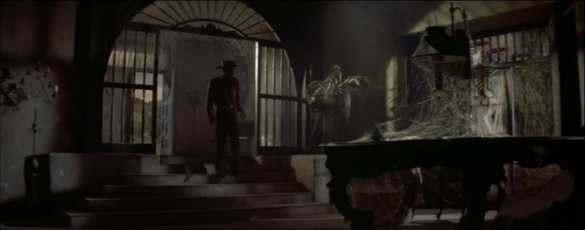
I don’t believe I’ve seen a film by Joseph H Lewis that wasn’t interesting, either in terms of theme or the visual language he employed in the telling. Although the plot of A Lawless Street isn’t especially original, the way Lewis goes about presenting it elevates it all considerably. Apart from one brief sequence, the entire movie plays out within the confines of Medicine Bend, with all the significant events taking place indoors. The director, and cameraman Ray Rennahan, creates a look and mood which approach film noir at some points and contain a fair amount of symbolism. The image below is, of course, a notable example — the wounded Ware hiding out in his own jail, the shadows of his past and his sense of duty pinning him in place just as surely as the shadows cast by the bars. Note too how the real man seems small and tense next to the solid and imposing image of himself. In fact, a great deal of this film is concerned with the concepts of illusion and reality; one of the main sets is the theater where Tally performs, and what is the theater if not a palace of illusion. As Tally plays her role on the stage, and the marshal assumes his watching from the box seat, the reality is only shown when they move backstage. In the same way, Ware’s office represents his “backstage”, the sanctuary which allows him to strip away the greasepaint of invincibility. Also, let’s not forget the notion of rebirth, the allusion to spirituality, which is frequently found in 50s westerns. The climax toys with the idea of resurrection, of a man back from the dead to reclaim his position in society, and by doing so attaining the spiritual and emotional equilibrium for which he’s been yearning.

Randolph Scott has been featured on this site more than any other actor and I guess most of the reasons for his enduring appeal as a western lead have been covered in depth. For me, A Lawless Street is yet another step along the path Scott was treading in the post-war years, a path that would culminate in the iconic roles he played for both Boetticher and Peckinpah. The part of Calem Ware has enough depth to make it interesting, and Scott had acquired sufficient gravitas by this stage in his career to render his portrayal credible. Angela Lansbury has had a long and distinguished career but the western isn’t a genre that she’s had much association with. A Lawless Street is the only genuine example as far as I’m concerned, as The Harvey Girls is a musical first and foremost. I understand Ms Lansbury has been dismissive of the film and her participation in it, which is a bit of a shame. Aside from the fact the whole production has much to recommend it, her own role is a pretty good one with enough drama and internal conflict to give her something to get her teeth into, and of course there’s the opportunity to show off her singing skills in the theater number.

Michael Pate, John Emery and Warner Anderson are a fine trio of villains: Pate gets across the cunning and menace of his character very successfully, and even outdraws Scott quite spectacularly, while Anderson and Emery are as slimy a pair of puppet masters as you could wish for. Wallace Ford is one of those character actors whose presence is always welcome, and he had a strong pedigree in westerns. As the town doctor, and Scott’s only true friend, he has a good share of screen time and is solid and reassuring throughout. Of the remaining support players, both Jeanette Nolan and Jean Parker deserve a mention for the sense of poignancy and pathos they bring to their small but pivotal roles.

A Lawless Street has been available on DVD for many years via Columbia/Sony, and looks reasonably good. The 16:9 transfer could use a bit more sharpness and some minor work but it’s quite acceptable as it stands. In my opinion, this film is as near the top tier of Scott westerns as makes no difference. The theme, built around a standard genre plot, is rich and has the kind of depth which makes it a pleasure to revisit. The direction by Joseph H Lewis has the pace, the eye for composition and the stylistic flourishes that make his work a rewarding experience. When you factor in the mature and assured performance of Scott, who was very close to hitting his peak, then the result is a deeply satisfying film. All things considered, I give this movie my strong recommendation.

Cape Fear

Recently, I wrote about Brainstorm, commenting on its connections to classic film noir. Another movie from the same decade, albeit a few years earlier, with an arguably stronger affiliation to the world of noir is Cape Fear (1962). Sourced from the hard-boiled, pulpy writing of John D MacDonald, the film is a merciless examination of some of the darkest areas of human nature. While almost all the varied aspects of the filmmaking process, and the artists and craftsmen involved, blend together to produce the finished product, much of its power derives from the central performance of Robert Mitchum. For a man who initially didn’t want to do the picture, Mitchum fully inhabits his part and brings a level of feral brutality to the character that makes Max Cady one of the most memorable and formidable villains the screen has known.

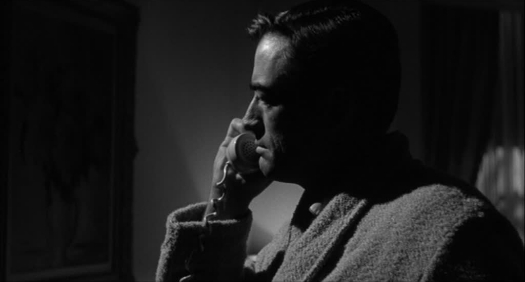
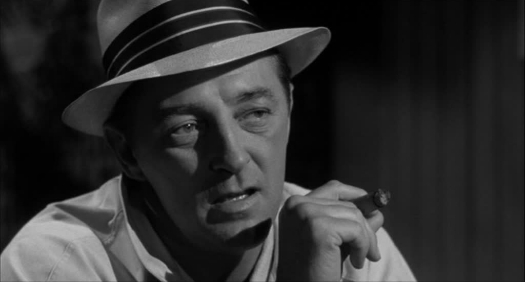
The story is a relatively simple tale of revenge and retribution, a face-off not only between the principal characters but between the law and justice too. Sam Bowden (Gregory Peck) is a successful lawyer, married with a teenage daughter and living in some comfort. A typical noir scenario frequently sees the protagonist cornered by circumstance, and what better way to achieve that than to have the past come crashing violently into the present. In Sam Bowden’s case the unwelcome past is represented by the swaggering, cigar-chomping figure of Max Cady (Robert Mitchum), a man who’s spent eight years in prison on the basis of Bowden’s testimony against him. The question of his own guilt doesn’t occur to Cady, he simply regards himself as a victim of Bowden’s meddling and is thus intent on exacting vengeance for what he considers a life denied him. From his first encounter with Bowden outside the courthouse, a mock affability barely concealing his threats, Cady becomes omnipresent in the attorney’s life. Everywhere he goes, his arrogant nemesis seems to follow, and the veiled intimidation is gradually cranked up with each successive meeting. With the danger to his family becoming ever more apparent, Bowden turns to his friends in the police department in the hopes of using his establishment connections to rid himself of Cady. However, if he thinks he can bend the law to his benefit, he soon finds out how mistaken that assumption is – Cady is clever, cunning and more than capable of turning the tools of Bowden’s trade back on him. Bit by bit, the lawyer is drawn, through mounting desperation, towards that fine line between legality and criminality. Ultimately, Cady’s goading will lead him right up to the rim of the moral abyss and dare him to take that final fateful step.

J Lee Thompson had begun his directing career in British cinema a decade earlier and had made a number of films which showed he had a talent for both action and suspense. While working on The Guns of Navarone, he so impressed star Gregory Peck that he was promptly asked to take charge of this film. There are action sequences in Cape Fear, particularly during the harrowing climax, but it’s primarily a suspense picture, a dread infused journey of terror and moral compromise. As Bernard Herrmann’s ominous score pounds away, Thompson smoothly dials up the tension in tantalizing increments  – clever cutting and camera setups lending an air of danger to such mundane and traditionally secure settings as the family home and the daughter’s school. And cameraman Sam Leavitt plays his part too, alternating between the sun drenched Savannah locations where Sam Bowden walks tall and proud as a leading citizen, and the inky shadows of his home and later the river as his thoughts turn to subverting the law which he serves in order to protect his family.

I said at the start that Cape Fear is a film which benefits from fine work all round. Peck was always good at portraying upright, heroic types. The role of Sam Bowden was a comfortable fit for him, and he catches the slight stiffness that makes the character ever so vaguely unlikable very well; Peck had the ability to convey a kind of prim smugness at times, a quality which fits in nicely in the early stages when he’s calling in favors from Martin Balsam’s accommodating police chief in an effort to run Cady out of town. I found it interesting that Lee Server’s biography claims Mitchum regarded the Peck character as the bad guy until the brutality of the second half of the film clarifies matters. Actually, it not so hard to see where he was coming from with that theory as the story has the establishment figures closing ranks against the outsider in the early stages. Of course the full extent of Cady’s depravity and ruthlessness is starkly revealed as the story unfolds, but that faint touch of ambiguity at the beginning adds further interest to my mind.

Regardless of the solid work from Peck, Polly Bergen, Telly Savalas, Lori Martin, Barrie Chase et al, it’s really Mitchum’s show all the way. He’d proved how well he could take on villainous roles in Charles Laughton’s dreamy and magical The Night of the Hunter but I feel playing Max Cady saw him step up to another level altogether. He’s genuinely electrifying every time he appears on screen, strutting and swaggering and dominating every frame with his sheer physicality. To refer again to the Server biography, it’s said that he invested himself in the role so deeply that he terrified Barrie Chase – something that’s clearly visible in the movie itself – and almost had to be restrained during the climactic assaults on both Bergen and Peck. The film was remade 30 years later by Martin Scorsese, with Robert De Niro as Cady, and featuring cameos by both Mitchum and Peck, but it didn’t work anywhere near as well for me. That remake, despite attempts to add some intriguing new aspects to the characters’ relationships, suffers badly from a cartoonish performance by De Niro that pales before the raw dynamism of Mitchum’s work – the sheer primal power of the man burns itself into your memory.

I just recently watched the film again on Blu-ray, which I picked up bundled with the remake for a very good price, and it benefits from the increased resolution but not in any startling way. If Cape Fear isn’t generally referred to as film noir, then it comes awfully close as far as I’m concerned. It’s dark, brooding and tough – the ending does see justice prevail, just, but it comes at a heavy price and nobody really walks away unscathed. For anyone laboring under the illusion that Mitchum tended to phone in his performances, or that J Lee Thompson was simply Cannon fodder, Cape Fear ought to put those myths permanently to rest.

Broken Lance

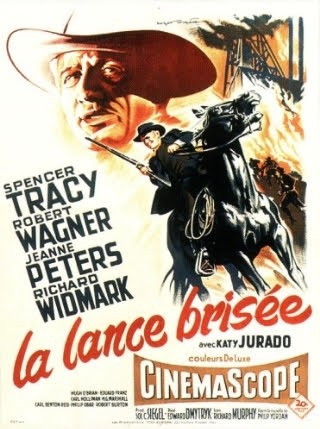
Remakes have popped up here from time to time in the past and they often divide opinion among movie fans, not only based on their relative merits but also on whether there’s any point in producing them at all. For me, the best remakes, or at least the more interesting ones, try to do something different with the material. For example, the casting may radically alter perspective, or the source material (say, a novel which has been adapted) might be adhered to more faithfully. Shifting from one genre to another – which I feel was successfully achieved with High Sierra and Colorado Territory – is another potentially fruitful option. And this leads me to Broken Lance (1954), which essentially recycles Philip Yordan’s screenplay for House of Strangers and transposes the action from New York to the old west.

Newly released from prison, Joe Devereaux (Robert Wagner) is “invited” to the governor’s office in town to be presented with a proposition. His three brothers – Ben, Mike and Denny (Richard Widmark, Hugh O’Brian and Earl Holliman) – aren’t exactly thrilled to meet him and instead offer a ranch in Oregon and $10,000 in cash, on condition he catches the next train out of town. At  this stage it’s unclear to the viewer why Joe’s siblings are so keen to see the back of him, or why he so contemptuously deposits the proffered money in a spittoon. It’s only after a ride across the vast, open country to the now abandoned family home that the pieces begin to fall into place. As Joe stands amid the dust-choked remnants of his old life, staring at the huge portrait of his now deceased father, his thoughts drift back to earlier days. We see Matt Devereaux (Spencer Tracy), the gruff Irish patriarch who has tamed a land and is now doing his level best to tame his four sons. Joe is the youngest and his favorite, born of his Indian wife (Katy Jurado), while the others are the product of an earlier marriage. That Mike and Denny are bad apples is immediately apparent when they’re caught attempting to rustle cattle from their own ranch, and Ben’s resentment is seen to be simmering close to the surface as well. The main theme – although it’s by no means the only one – is that of fractured family relations. As the boys have grown into men and the frontier is similarly maturing, the cracks within the Devereaux clan are starting to show. The old man, while not without charm, is of that hard, pioneering breed accustomed to enforcing their will with a six-gun, a whip or a rope. However, times move on and priorities alter along with them. Ben feels that progress requires a change in the way the family business is run, yet he lacks the courage to face down his father directly to effect that change. So there’s tension in the air, but it really only comes to a head when pollution leaking from the local copper workings leads Matt into violent confrontation with the miners. Sadly, from the aging rancher’s perspective, frontier justice has no place in this new world where corporate interests are beginning to assert themselves. With the prospect of a lengthy prison term for his father looming, Joe offers to shoulder the blame as his brothers shirk the responsibility one by one. What ought to have been a nominal sentence turns into a long stretch though as Ben flat refuses to pay the hefty compensation demanded. The result is the exposure of all the old wounds and ultimately the disintegration of a family.

Edward Dmytryk couldn’t be said to be a western specialist yet he made a couple of very strong entries with this one and Warlock. One thing that’s apparent right from the opening credits is the director’s comfort with the wide CinemaScope ratio. Dmytryk’s use of the wide lens (though cameraman Joe MacDonald deserves credit here too) to capture the sense of enormous, uncluttered spaces is quite awe-inspiring at times; it contrasts nicely with the packed interior scenes in town, and neatly highlights the restrictive nature of the advance of progress. This aspect is further highlighted during the trial sequence, where Matt Devereaux, formerly at ease and supremely confident out on the range, alternately squirms and blusters on the stand. Of course it’s also a tribute to Tracy’s acting skills that this works so well. He was arguably the greatest of all naturalistic performers, reacting as opposed to acting. His irascible bravado has an undercurrent of twitchy nervousness, he moves uncomfortably in his chair under the disapproving glare of prosecutor and judge, and is in sharp relief to his earlier scenes where he’s “holding court” in his own home. What we have is a man out of time, or almost, becoming increasingly limited by both the law and his own physical frailty, just as the frontier itself is slowly withering in the face of encroaching civilization.

In a sense, westerns represent an opportunity to dip into the past, to catch a glimpse of an era now gone and existing as no more than a memory. Broken Lance actually mirrors this within its narrative structure, by means of the long central flashback. As viewers we’re invited to take a trip to yesteryear via images on a screen, and Joe Devereaux does something very similar before our eyes; as he gazes upon the imposing portrait of his late father he finds himself transported back to the days and weeks leading up to his imprisonment. Characters pass comment on how much Joe has changed after his incarceration, and I feel Wagner did highly creditable work in the movie. There is a noticeable difference in both his bearing and attitude in the contemporary bookend sequences and the flashback. Wagner isn’t often praised for his acting but I reckon he quite successfully makes the transition from fresh-faced enthusiasm to bitter maturity over the course of the film’s 90 minutes. No doubt the fact he was up against such heavyweights as Tracy and Widmark helped him up his game. Widmark though seems to have little to do for long stretches, really only coming into his own in the final third. His discontented elder sibling is always there as a brooding sideline presence, but the full effects of the denial of parental trust and affection only break through gradually. When the explosion finally comes we’re treated to vintage Widmark – all snarling hatred and half-repressed racism.

The racial matter is never entirely to the fore in the film, although it is of significance and always lurks just below the surface. The difficult legal position in which Matt Devereaux finds himself is at least partly exacerbated by his marriage to an Indian, and then there’s the prejudice the Governor (E G Marshall) cannot overcome at the thought of his daughter’s (Jean Peters)  involvement with a half-breed. The casting of Katy Jurado, the cinematic epitome of soulful dignity, really hammers home the anti-racist message for me. As her family first squabbles and then tears itself apart in an orgy of greed and ambition, she remains the one calm, loving and forgiving constant, surrounded by a sea of pettiness and jealousy. It’s interesting too that following her husband’s death, she moves back to her own people while the three sons of the first marriage relocate to the town and luxury – the ranch lying abandoned, the most positive figure reverting to traditional ways and the negative ones embracing the brave new world of progress. As such, I think this film earns a slot in what we sometimes refer to as the pro-Indian cycle of westerns. Aside from Jean Peters as the spirited love interest for Wagner, most of the others in the fairly big cast are subsidiary characters. E G Marshall gets to indulge in a bit of stiff self-reproach, but Hugh O’Brian and Earl Holliman have little else to do other than skulk around in Widmark’s sneering wake.

Broken Lance is widely available on DVD nowadays – it’s out on Blu-ray in France although I suspect that edition will have forced subtitles, and the Spanish version is reportedly a BD-R. I have the old UK release from about 10 years ago, which is still a very strong disc. The image is very sharp and clean and does a fine job of showing off the widescreen cinematography. Unfortunately, for such a rich movie, there are no extra features whatsoever offered. As remakes go, Broken Lance is one of the very best in my opinion. House of Strangers (which can itself be taken as a spin on King Lear) is a fine film in its own right but I feel the story is actually improved upon in this instance. By moving the location and turning it into a western, a number of other themes are more productively (or maybe more interestingly) explored  – anyway, it’s sufficiently different and worthwhile to be judged on its own terms rather than comparatively. The characterization is complex, the writing smart, and the direction and cinematography are first class, with what looks a lot like a nod to Anthony Mann in the climactic scene high among the rocks – a highly recommended western that stands out even in the crowded field of 50s classics.

Jeopardy

You’re smart… honest. I like smart women. They got cat in ’em.

Current trends in cinema indicate that audiences prefer ever-increasing running times, or at least the major studios seem to interpret it that way. In terms of minutes spent in front of the screen, you could definitely say you’re getting your money’s worth out of a movie these days. But is it really possible to reduce the worth of a movie, or any piece of art for that matter, to such crude terms? I’m fine with long films if the story or its telling merits the added time. The problem though is that this is rarely the case; simple stories are padded to the point they lose their edge, and true epics no longer as potent. It wasn’t always so. Once upon a time filmmakers knew that quality and quantity were not equal partners, that it was unnecessary to tie them together in a marriage of inconvenience. Today, let’s look at Jeopardy (1953), a movie that does all it needs to do in under seventy minutes.

There’s something wholesome and reassuring about family vacations, especially the hard-earned ones. Doug Stilwin (Barry Sullivan), along with his wife Helen (Barbara Stanwyck) and their young son Bobby (Lee Aaker), are driving south to get away from it all the stresses and strains of life. They’re heading to Mexico, to a deserted fishing cove Doug remembers visiting with an old army buddy, and everything seems right with the world. As they cross the border and move away from the big towns Helen’s narration catches some of the optimistic flavor of the early 50s – there’s an air of domestic contentment, but there’s an edge to her voice at times that warns of a tale which will take a twist before it runs its course. We get the odd hint of an undercurrent of tension  – Doug doesn’t like being told what to do and Helen is obviously not a woman to be undervalued – but the first real sense of danger comes when the family encounters a police roadblock. The reason for the spot check becomes apparent later. For the time being, things couldn’t be better – Doug finds his secluded beach and the family settle down to relax in glorious solitude. However, to borrow from another noir narrator, fate has put its finger on this particular group of people. While exploring the old jetty, Bobby gets his foot stuck in the decaying timbers and his father has to go and free him. It’s at this point that everything, quite literally, falls apart. The upshot is that Doug finds himself trapped in the shallows by a fallen pile, and the tide is rising. With all attempts to extricate him coming to nothing, Doug convinces Helen to drive back to the last settlement they passed in search of help. Reluctantly, she does so, leaving Bobby behind to keep him company. What she encounters though is Lawson (Ralph Meeker), the object of the aforementioned police dragnet. As the water level rises, and Helen’s sense of desperation matches it, we learn exactly how far a woman is prepared to go to save the life of the man she loves.

I’ve commented before on how there’s something very attractive about John Sturges’ work in the 50s, which is not to say I dislike the bigger, and more ambitious films he made in the years to come. I feel he was at his best in the 50s though; there’s a tightness, a kind of taut economy, in his filmmaking during that period. Jeopardy is a straightforward and direct story – there’s no explanation of who Lawson is or what precisely he’s wanted for, but a handful of telling shots let the audience know all that’s necessary about his character and the things he’s capable of. Time is of the essence for the man trapped on the beach, and Sturges never once lets go of that sense of urgency. The almost constant use of motion – the crashing waves, Helen’s chaotic drive to the settlement, and Lawson’s similarly frantic journey back – offer no respite from the tension. Not a moment is wasted, nor a word uttered superfluously. In visual terms, Sturges was as fine an exponent of the wide screen process as it’s been my pleasure to see. While this film was framed for, or at least is presented in, Academy ratio, the director’s spatial awareness and composition is always in evidence. The high, objectifying angles increase the sense of isolation of the characters in a barren and hostile environment, and the close-ups catch every twitch of emotion on their faces.

Barbara Stanwyck was in her mid-40s when she made Jeopardy, and showing few signs of relinquishing her grip on leading roles. By this stage she’d had plenty of experience playing tough broads who knew their way round the world and were capable of giving as good as they got. Unlike similarly strong actresses like Bette Davis or, more especially, Joan Crawford, whom I often find off-putting, Stanwyck retained that toughness without descending into hardness. While she worked in a variety of genres, there was an edge and earthiness which made her a good fit for westerns and thrillers. Jeopardy gave her top billing and plenty to get her teeth into – the painful decisions circumstances have forced her into making are never shied away from and her reactions to them remain entirely credible. Barry Sullivan would go on to make another two movies with Stanwyck – most notably Sam Fuller’s Forty Guns – and he worked well with her on screen. The film has no shortage of high drama and thus needed a strong, stable presence to anchor it all. Sullivan is very good as the man used to taking charge and calling the shots, who’s reduced to helplessness. Even so he’s stoic throughout, and his interaction with Lee Aaker (who also appeared in Hondo the same year) is genuinely touching at times. Just the other day I saw Ralph Meeker described, not at all disparagingly, as “a poor man’s Brando”, and I can see how that could be the case. He had the kind of brutal machismo that made him a terrific and interesting Mike Hammer a few years later in Kiss me Deadly, and he has ample opportunity to show that off here. I think it’s also worth noting that even in a film as lean and pared down as Jeopardy, Meeker’s character still has the chance to earn redemption by the end.

Jeopardy was released on DVD in the US some years ago as part of a Stanwyck box set, and the disc was also available individually. It shares that disc space with To Please a Lady, and the transfer is quite good. The print is generally sharp, clean and without damage. The theatrical trailer is provided as an extra along with the radio adaptation of the story. I’m very partial to sparse, brisk storytelling, even more so nowadays as it seems to have become something of a lost art; men like John Sturges knew how to do it well, and Jeopardy is a solid example of that.

Good Day for a Hanging

Since when is a young rattlesnake any less poisonous than an old one?

First and foremost, a good film needs to be entertaining. The more interesting ones ask questions and have a clear theme which dominates the plot. For this viewer, the theme is always important as it indicates the  direction the picture is likely to take. As such, I’m always a little disappointed when the theme is underdeveloped or poorly developed. One is left wondering what point the filmmakers are trying to make, what their position really is. Good Day for a Hanging (1959) is an example of this, suggesting that it’s going to offer a critique of justice and the death penalty. However, it loses focus and ends up being neither fish nor fowl, dragging our sympathies in one direction before wrong-footing us and apparently contradicting the line it was initially following.

Ben Cutler (Fred MacMurray) is an ex-lawman living in an idyllic Nebraska town. He’s a widower with a grown-up daughter and only weeks away from marrying Ruth Granger (Maggie Hayes), another single parent. His plans for a peaceful domestic future are thrown into disarray though by the arrival of a five man gang intent on robbing the bank. The heist doesn’t go entirely smoothly, resulting in a shoot-out and pursuit with a hastily assembled posse. The upshot of all this is the aging marshal (Emile Meyer) ends up dead, and the man accused of killing him is a former resident of the town, Eddie Campbell (Robert Vaughn). Cutler manages to wound Campbell and bring him back to town for trial, although the situation is complicated by the fact his daughter (Joan Blackman) was the outlaw’s childhood sweetheart and still carries a torch for him. Well the trial comes to pass, and Campbell ends up convicted of murder and sentenced to hang, principally on the evidence of Cutler who has been drafted in as a replacement marshal due to his previous experience. Throughout it all Campbell maintains his innocence with the support of Cutler’s daughter, who refuses to believe her former love capable of murder. As Campbell’s date with the gallows approaches the discontent within the town grows – Cutler’s isolation also increases as first his daughter, then his betrothed, and finally the citizenry turn their back on him and question his judgment and motives.

Nathan Juran is best known now for his science fiction and fantasy movies but he directed a number of pretty good westerns, notably with Audie Murphy. Good Day for a Hanging was a low-budget affair (recycling the score from 3:10 to Yuma throughout), resembling a TV western in some respects but quite competently handled by Juran. The opening quarter-hour is pretty stylish and tense as the build up to and execution of the bank robbery take place, Juran alternating nicely between wide shots and telling close-ups. The truth is the direction remains smooth all the way and the climactic shoot-out is well done. The script, however, is less satisfactory. One is left with the impression that the writers were unsure or undecided what point they wanted to press home. On the one hand, the whole movie seems to be building towards a condemnation of the death penalty, but then changes tack for the climax. There also seems to be that typical 50s concern with disaffected youth, but again the payoff is at odds with the end result. And then there’s the character of Cutler – the inner conflict of a man of principle is certainly explored, but he’s portrayed as such an implacable and frankly unsympathetic figure that even that doesn’t really hit the mark. All of this amounts to a very average western, and you can’t help but feel let down when you think of the creative and thematic heights the genre had reached by the end of the 50s.

Generally, I like Fred MacMurray in westerns, although I understand he wasn’t all that enthusiastic about doing them. His best roles always had a touch of ambiguity about them, and those where he was downright unsympathetic were probably the strongest. As Cutler, he had the opportunity to play to his strengths, his unbending conviction on the outside causing plenty of internal turmoil. For long stretches it’s hard not to see him as the villain of sorts, apparently oblivious to the mounting pressure from family, friends and community. But I’m not totally convinced that’s how we’re supposed to view him. Once again, I feel the writing is fault here rather than MacMurray – we’re encouraged to see him as others do as opposed to how he sees himself. And then there’s an element of unreality to it all; would any man honestly jeopardize his relations with those closest to him, those he genuinely loves, for what is at best a highly debatable principle? Pitted against him was Robert Vaughn, a man whose place in western lore was just a year away from being cemented in John Sturges’ The Magnificent Seven, but who would find his true niche in TV, particularly as The Man from U.N.C.L.E. He’s fine as the troubled youth as far as it goes, but I feel he suffers from the confused scripting too. The supporting cast features, Emile Meyer, Maggie Hayes, Joan Blackman, Denver Pyle and The Virginian, James Drury, all in perfectly acceptable if unremarkable roles.

Good Day for a Hanging was released some time ago in the US by Columbia – TriStar on DVD and should be easily available. The transfer to disc is OK, but nothing more. It’s in the correct widescreen ratio and doesn’t display any noticeable damage, but it’s a lackluster affair for all that. The image is a bit dull and faded, mediocre at best. Even so, this is the kind of film that’s unlikely to have a lot of care lavished on it so I’m happy enough to have it available in acceptable form. Have I been unduly harsh in my overall assessment? Perhaps, and others may disagree. For me, context is the key here; 1959 saw the release of some of the best films the western genre had to offer, and Good Day for a Hanging looks weak when set against them. I don’t think it’s a bad movie, MacMurray and Vaughn are very watchable and Juran does all that’s asked of him, but it promises a lot more than it ultimately delivers.

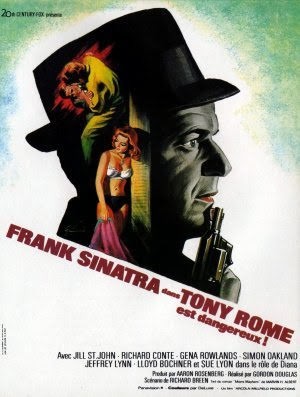
Tony Rome

 This isn’t a family. It’s just a bunch of people living at the same address. 

Trends in cinema are constantly changing with genres rising and falling in popularity all the time. Despite that, the detective story has never really gone out of fashion, in the same way that the literary version stretching back to its earliest appearance in the works of Poe and Dickens remains consistently popular. Sure the style has altered over time, the snappy sophistication of the Van Dine and Queen influenced movies of the 30s giving way to the tougher hard-boiled dialect of the Hammett and Chandler adaptations of the 40s and so on. While the trappings and presentation may shift according to the mood of the times, the central figure of the detective is always with us. Whether these characters happen to be public servants or private investigators they are seekers after truth, and occasionally justice gets a look in too. By the 60s the gumshoe or shamus had passed through the period of post-war cynicism and, though some vestige of that weary attitude was still to be found, taken on an air of cool detachment. Under the circumstances, it’s hard to think of a better choice than Frank Sinatra to play the title character in Tony Rome (1967), a private eye yarn retaining most of the familiar motifs of the sub-genre and blending them into the more permissive atmosphere of the late 60s.

Tony Rome (Frank Sinatra) is a Miami based investigator, just about getting by, making enough to eat and pay off the gambling debts he’s fond of running up. A phone call from his ex-partner, Turpin (Robert J Wilke), lands him a job he’s not especially keen on but it doesn’t look like it’s going to require any great effort on his part either. A young woman (Sue Lyon) checked herself into the flea-pit hotel where Turpin is working as the house dick and promptly passed out under the influence of copious amounts of alcohol. Well so what? The thing is the hotel doesn’t need any further hassle from the law and the young lady just happens to be the daughter of Rudy Kosterman (Simon Oakland), an influential construction magnate. Rome stands to earn some easy money by simply delivering the tycoon’s daughter back home and ensuring no awkward questions are asked. Kosterman’s naturally happy to have the girl back but he’s also worried about her recent behavior – she’s been spending prolifically and it’s increasingly difficult for either her father or her incompetent milquetoast husband to control her. Firstly, Kosterman hires Rome to look into his daughter’s activities, then before he gets out of the door the millionaire’s wife (Gena Rowlands) wants to retain his services for an investigation of her own. When the motor launch that doubles as his home is ransacked by a couple of toughs convinced he must know the whereabouts of a jeweled pin the last thing he needs is another client. And yet that’s exactly what he gets the following morning as the Kosterman girl turns up and wants him to locate the jeweled pin (yes, that one) she mislaid in the course of her date with the whiskey bottle. Aside from the potential conflict of interests involved, an apparently straightforward assignment is beginning to turn into fairly complex mess. And that’s only the beginning; after Turpin turns up dead in Rome’s office the bodies start piling up with almost depressing regularity, threatening to sour his long-standing relationship with the police in the shape of Lieutenant Santini (Richard Conte), not to mention a potential relationship of another kind with divorcee Ann Archer (Jill St John). By the time the case is concluded Rome will lay bare the secrets the Kosterman family would prefer to keep under wraps – to reach that point he’ll have to pick his way through a maze peopled by a lesbian stripper, an effete drug pusher, a crooked jeweler and blackmailers.

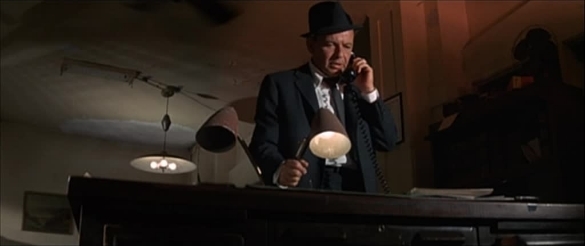
This was the first of three crime movies director Gordon Douglas would make with Sinatra, the others being Lady in Cement (reprising the Tony Rome character) and The Detective. The latter is clearly the best and most layered of the trio, but Tony Rome is probably the most entertaining. The story derives from a Marvin H Albert novel – a writer whose work I’ve never read despite the fact I’ve seen a few movies now based on his books – and treads a fine line between glamor and seediness, intrigue and humor. Douglas, along with cameraman Joseph Biroc, makes the most of the Florida locations and there are some nicely composed setups (see above) which evoke the look and mood of the classic private eye movie. The plot does become pretty complicated but Douglas keeps the pace even and there’s enough incident to ensure interest never drifts. A good deal of the humor comes via the by-play between Sinatra and Jill St John; although there’s also a glorious, innuendo-laden interlude in Rome’s office, when a frumpy middle-aged woman tries to get him to look into the matter of her depressed pussy and see if he can make it smile again.

Sinatra was well cast as Rome, boozing, smoking and wisecracking his way around Miami and the Keys, mingling effortlessly with both high society and a range of lowlife characters. As a singer he was always capable of going from a buoyant cockiness to almost painful self-awareness, and he brings the same quality to his performance here. The smart, assured dialogue rolls of his tongue as he trades threats and jibes with equal ease, and yet there’s also the honest acceptance of his own weaknesses and failings as a human being. Recently, I’ve been chatting elsewhere about the nature of the detective in crime fiction/filmmaking, and I think Sinatra does well conveying the image of an imperfect but essentially honorable man surrounded by violence and deceit. Jill St John is fine too as the woman looking for a few laughs and finding herself regularly fobbed off as Rome’s investigation takes another interesting turn at just the wrong moment for her. The supporting cast is packed with familiar faces – Simon Oakland, Gena Rowlands, Robert J Wilke, an increasingly exasperated Richard Conte, Jeffrey Lynn, Lloyd Bochner, and cameos for boxer Rocky Graziano and restaurateur Mike Romanoff.

Tony Rome is a 20th Century Fox production and the DVD form that studio is very good – I have the UK box set containing the three Sinatra/Douglas crime films. The movie is presented in anamorphic scope and comes from a nice clean print, the colors are natural looking and I can’t say I’m aware of any significant damage. The movie itself is a good, solid detective story with a well-judged central performance by Sinatra. In fairness, it’s not the star’s best movie, not even his best with Douglas, but it is a good one, entertaining and engaging from beginning to end. It ought to be more than satisfactory for anyone into mysteries, detective stories or Sinatra.

Shotgun

poster29_zpskwqo3v6h

Certain directors seem to get mentioned or name checked quite a lot on this site, particularly in discussions following on from the main posts. One of those is Lesley Selander, a man with a long and varied career but something of a specialist in low-budget westerns. Anyway, he’s a guy who crops up a lot here yet, despite having seen a number of his films now, I’ve never actually featured any of his work. Well, I guess it’s time to put that right by taking a look at Shotgun (1955), a tough little western with a good cast and some nice location shooting.

What we have is a classic revenge tale, although perhaps a quest for justice fits too. The central character is Clay Hardin (Sterling Hayden), a marshal in a small town, working in partnership with his older mentor, Fletcher (Lane Chandler). Lawmen have the unfortunate tendency to make enemies in the course of their work, and these two are no exception in that regard. Ben Thompson (Guy Prescott), a hardened criminal, has just spent six years in prison after having been brought in by Fletcher and Hardin, and he’s quite literally gunning for them. However, things don’t go entirely as planned, Fletcher finding himself on the receiving end of double shotgun blast while Hardin remains unharmed. Their task only half completed, the killers beat a hasty retreat. Meanwhile, Hardin vows to avenge the death of the man he called a friend. As the pursuit gets underway another subplot is introduced, a deal between Thompson and a band of renegade Apache for the delivery of a consignment of repeating rifles. Along the way, Hardin acquires a couple of traveling companions – Abby (Yvonne De Carlo), a former saloon dancer desperate to get to California and a new life, and Reb Carlton (Zachary Scott). Reb’s a smooth-talking bounty hunter and an old acquaintance of Hardin’s. These three form an uneasy and brittle alliance, initially born of a combination of convenience and potential profit, that may either help Hardin achieve his goal, or possibly prevent him from doing so.

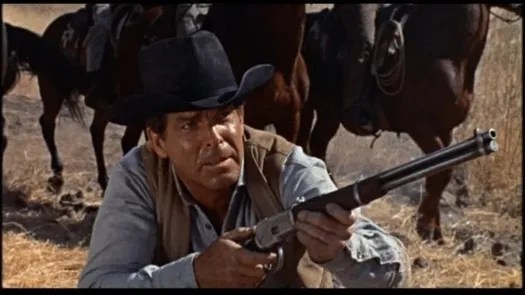
I called Shotgun a tough little western, and I think that’s a fair description; it starts out with a feeling of menace and becomes downright mean in places as it progresses. The character of Hardin grounds it all with a sense of honor, but even so it’s of the hard-bitten and hard won variety. The screenplay, by Clarke Reynolds and actor Rory Calhoun, never shies away from highlighting the less savory aspects of the old west – the cool murder of Fletcher, the aftermath of an Apache raid, torture (involving stakes, wet rawhide and a rattlesnake), and a particularly nasty death. No, this isn’t a movie that pulls its punches or romanticizes the frontier. As a result, there’s a sense of danger, or maybe a lack of security might be more accurate, at all times. Selander seemed to have a knack for directing these gritty kinds of westerns; I watched Fort Yuma not that long ago and it displayed a similar frankness towards violence. Context, of course, is everything, and Selander wasn’t using violence in a gratuitous way. The instances of cruelty on screen don’t take place merely for cheap entertainment, they are consistent with the characterizations and the consequences are never glossed over. The most important characteristic Selander brings to the picture though is urgency, the kind of forward movement necessary for any pursuit drama to succeed. There’s never any shortage of incident as we follow Hardin, always pressing ahead towards his ultimate objective. Selander doesn’t let the pace drop, framing the action against the harshly beautiful Arizona landscape but never lingering on it, and wraps the whole thing up in around eighty minutes.

Sterling Hayden appears to have had a penchant for appearing in westerns featuring off-center elements. Johnny Guitar is chock full of strangeness, Terror in a Texas Town opens and closes with a harpoon taking on a six-gun, and Shotgun also climaxes with a highly unorthodox duel. His large frame and loud, somewhat abrupt style of delivery made him an imposing figure, well suited to film noir and westerns. He had a directness too, bordering on aggression, that made him believable here as a former outlaw brought in from the cold. There’s always the feeling that, despite his inherent loyalty to a murdered friend and the ideals he learned from him, he’s only a step or two away from breaking all the rules in his thirst for vengeance.

Zachary Scott never played too many heroes, he didn’t really have the face or personality for it. His specialty was the urbane villain, or at least a highly ambiguous character. His bounty hunter role in Shotgun isn’t especially villainous, but there’s plenty of his typically venal and insincere charm on show. He’s happy enough to tag along with Hayden so long as there’s a chance he may outmaneuver him and collect a nice fat reward, but he remains essentially untrustworthy. The bonus, however, is that his mercenary part means he gets some of the choicest dialogue. Caught somewhere between Hayden’s avenger and Scott’s opportunist is Yvonne De Carlo. Always a striking screen presence, De Carlo spends much of her time enduring the various hardships encountered on the trail, though she does get to indulge in a memorably provocative bathing scene. The outright villain is played by Guy Prescott, all scowls and ruthlessness. In support there’s Lane Chandler, Rory Mallinson and the reliably unpleasant Robert J Wilke.

Shotgun, an Allied Artists picture, is widely available – in a VCI western set in the US, on individual disc in France, and this western set, which I have, from the UK. The UK release has the same titles, spread over two volumes, as the US version so I imagine the transfers should be broadly similar. The film is given a 16:9 transfer but hasn’t been restored at all – there’s not much distracting damage, although the opening could be described as a little rough in my opinion, but the color varies from time to time. Overall, I’d say it’s an acceptable presentation, just. It’s a good mid-range western which holds the attention, helped by the highly watchable cast, and I reckon it would serve as a good introduction to Selander’s no-nonsense approach to filmmaking.


You can also read other views on the movie by both Jeff and Laura.