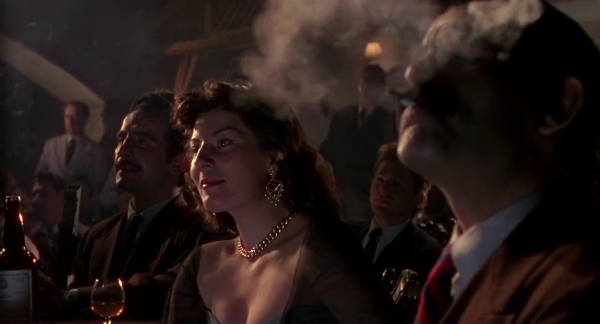
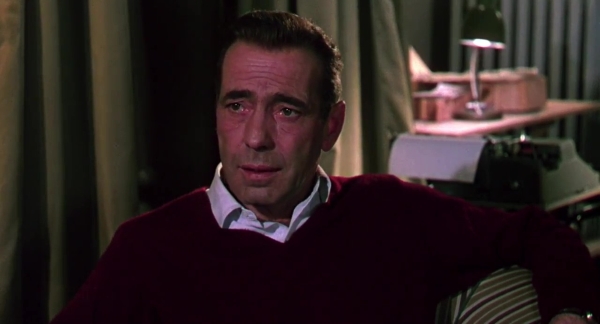
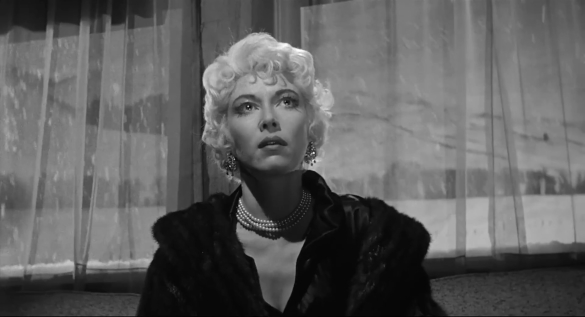
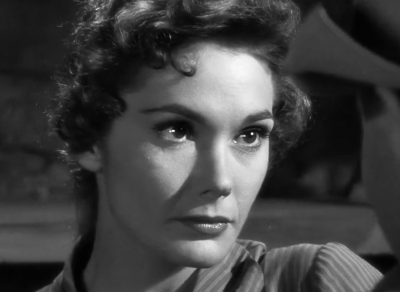
The Last Frontier

“Civilization is creepin’ up on us…”

There’s a similar sentiment, and indeed similar words, expressed at the start of Raoul Walsh’s The Tall Men. Indeed it could be said that variations on this theme run all through the western genre. Can it be said then that the western is at heart an unfolding elegy? One would certainly be justified in applying that label to many of those movies made in the late 1960s and on into the following decade, what have come to be referred to as revisionist works. Yet the roots of that can be found in the classic era, the golden age of the genre in the 50s, when the spirit of celebration, of hope and redemption, were just beginning to be tinged with a hint of regret at the gradual drift away from an ideal. Even the title of Anthony Mann’s The Last Frontier (1955) catches a flavor of that crossing of the Rubicon. Granting that the notion of the Old West as some pastoral idyll was as much myth as reality, it seems fitting that the process which plays out before the viewer is not framed in terms of tragedy, although there are clearly tragic elements woven into it all, but is instead presented as a natural and perhaps desirable step towards the inevitable.

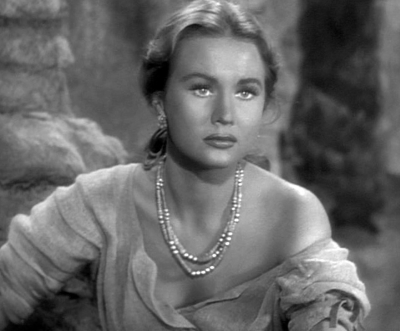
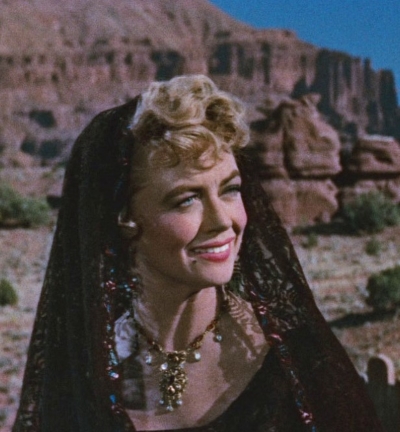
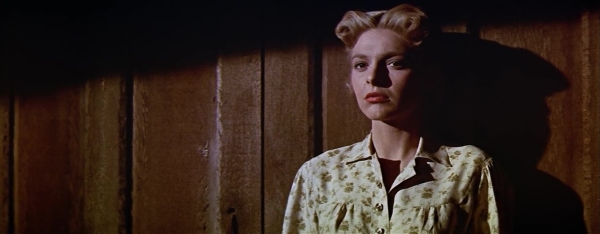
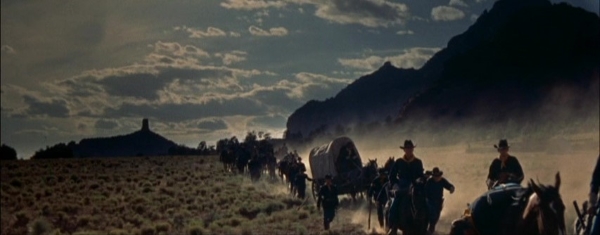
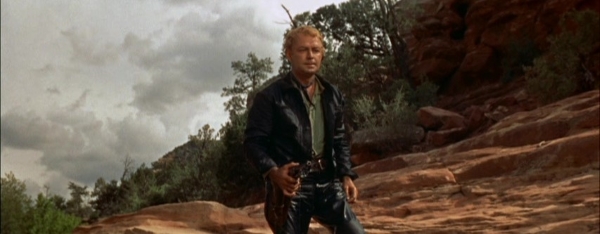
The opening of The Last Frontier presents an image of perfect wilderness, of a land largely untouched by man. Yet we see three men making their through the rocks and trees. This is Jed Cooper (Victor Mature) and his two companions Gus and Mungo (James Whitmore and Pat Hogan), and before long the earth around them seems to take on another form as an encircling band of Sioux rise up from the grass and scrub as though they were children of the soil itself. The thing is both groups, the trappers and the Sioux alike, give the impression of being just another natural extension of their environment. Nevertheless, the trappers are made aware of the fact they have come to represent the intruder, are promptly deprived of their weapons, horses and bearskins and warned to stay clear of the forests. Why? In brief, the arrival of the army and the construction of a fort has altered the way the Sioux now perceive them. Indignant and resigned yet still alive, Cooper makes for the fort in search of some form of compensation for the loss of a year’s worth of hides. What he gets, however, is the offer of employment as a scout under the young acting commander Captain Riordan (Guy Madison). Despite the reservations of his friends, Cooper is beguiled by the thought of a blue tunic with brass buttons and wonders if he might not get to wear one at some point. Thus he begins to fall under the spell of civilization, a feeling further enhanced when he makes the acquaintance (albeit in a drunken and rambunctious state) of Mrs Marston (Anne Bancroft), the wife of the absent senior officer. Colonel Marston (Robert Preston) is at that point on the other side of Red Cloud’s Sioux, which by Cooper’s calculation means he’s probably dead.

As it turns out he’s very much alive and Cooper’s efforts to guide him and what remains of his command back to the safety of the fort earn him little in the way of gratitude. Marston is far from being a well man, psychologically at least. He carries the scars of shame and defeat, haunted by the ghosts of the 1500 souls he led to their graves at Shiloh. The western is full of men in desperate need of redemption, though as often as not the wounds they seek to heal are neither so deep nor so raw as those which afflict Marston. His goal is to excise the pain of defeat through victory over Red Cloud. Unwittingly, Cooper’s growing need to embrace civilization and all he perceives it as offering leaves him pinned at the center of both an emotional and military crisis that Marston is hell bent on engineering. Ultimately, all the elements will be drawn together in a swirling maelstrom of dust and death.

The westerns of Anthony Mann are among the greatest of the classic era. They typically feature driven and obsessive heroes, and of course the concept of redemption is never far from the surface. That sense of redemption, of restoring oneself spiritually, of paying one’s debts and regaining one’s rightful path in life is a powerful one and Mann spent a decade exploring it. In The Last Frontier the character most noticeably driven is Marston, a man who has hounded himself to the brink of sanity and even of humanity. He is not the hero of the piece, though one could say that if he doesn’t quite redeem himself he does get to earn his peace, although it comes at a considerable cost to others. Cooper is the undoubted hero, a crude and unfinished product of nature, one who doesn’t need redemption in the sense of making atonement but rather one who has reached a critical point in life and requires guidance. I guess there’s something ironic in the figure of the pathfinder in the wilderness threshing around at the gates of civilization and needing help to regain his course. Yet that is what happens.

I think that the message of this movie is that no state or situation is to be sought in itself, that the myth of the free and open west is only sustainable and valid if it’s viewed as a stage in a process, an attractive stage in many ways but not a permanent destination. Marston’s relentless drive toward confrontation comes to the only end that it can, and of course history leaves us in no doubt that the staunch resistance to change of Red Cloud was similarly doomed. So what then of the other options? There is a strong feeling that the settler can only go so far till the siren call of civilization drowns out the pull of the untamed land. There is a pivotal moment late on when Mature, having abandoned the fort in the wake of one of those brutal fights so typical of a Mann film, must confront the fact that he can go no further. His journey is going to have to continue along a different path, one which leads back to civilization or whatever form of it he cares to shape for himself. Mungo, the native, is not restrained in the same way and is thus free to proceed on his own trek, one which is expressed in Mann’s characteristic cinematic language as a journey forever upwards, always ascending and always seeking to attain some higher place. Maybe both are heading for the same destination, just taking different routes to get there?

I haven’t given a lot of attention to the performances in this movie, which is a bit of a departure from my usual formula. That’s mainly due to my choosing to focus more on the themes and ideas underpinning the movie, as well as the fact that all of the principals are uniformly excellent. However, I would like to single out some remarkable work from the often maligned Victor Mature – he really gets into the character of the unpolished trapper, investing the part with a passion and raw energy that is wholly convincing as he cannons back and forth between confusion, wonder and enthusiasm. I think it’s a terrific performance. A word too for the cinematography of William C Mellor, where he and Mann fashion a neat juxtaposition of dark and claustrophobic conditions within the (confining, civilizing or both?) walls of the fort and the bright, open airiness of the surrounding landscape. As far as I know, the only Blu-ray release of The Last Frontier is the German edition. It is a good if not great transfer, certainly a step up from the rather indifferent DVD but I must say I’m mystified why this interesting Anthony Mann film remains unreleased in the US or UK with the kind of supplementary material it surely warrants.

As an aside, and for what it’s worth, yesterday marked sixteen years to the day since my first uncertain blog entry.

Drum Beat

The idea that in order to resolve a problem one ought to have first hand knowledge of it appears sound. That’s the theory that Drum Beat (1954) puts forward, that a the best man to negotiate a peace is one who has been intimately involved in the hostilities. It’s a variation of sorts on the notion of setting a thief to catch a thief, only imbued with the kind of latent optimism that characterizes the work of writer and director Delmer Daves. It takes some real events and people from the Modoc War and uses them as the basis for a story that champions the need for rapprochement, hammering home the point that the harder it is to win, the more meaningful it becomes. The movie shares some similarities with Daves’ groundbreaking Broken Arrow, although it’s not as good that earlier film. Nevertheless, all of the director’s westerns are worthwhile in my opinion and even if Drum Beat doesn’t quite measure up to his stronger efforts, that is not to say there is nothing to recommend it.

The movie opens in Washington, in the White House in fact. There’s a marvelous informality to this, something that is hard to conceive of nowadays, as Johnny MacKay (Alan Ladd) simply walks right in and states that he has an appointment to see President Grant. It’s all about a new initiative aimed at bringing the Modoc War to an end. Washington wants to see the conflict resolved through negotiation and diplomacy, and that is where McKay comes in. His brief is to make contact with the Modoc chief Captain Jack (Charles Bronson) and attempt to coax him back to the reservation. MacKay would appear to be an odd choice for the role of peacemaker given his history as a famed Indian fighter, not to mention the fact his family had been slaughtered in an earlier massacre. Yet he’s the one selected and it’s precisely because of his background that he has made the cut. Jack is not the type to be swayed by professional purveyors of platitudes, he too is a man of action and as such more likely to pay heed to someone whose fearsome reputation precedes him. MacKay is of course aware of the magnitude of the challenge facing him and once back on the frontier it quickly becomes apparent to the viewer too. When two antagonistic cultures are living in close proximity then resentment can easily flare into something much more dangerous as a result of pettiness and relatively minor gripes getting out of hand. That proves to be the case as slights and harsh words lead to aggression and then senseless killing, only to be followed up by more tit for tat revenge before exploding into full on warfare. All the while, MacKay has to maintain his own self-discipline and sense of duty, partly as he’s given his word and partly because he gradually realizes that his mission represents the only way out of the impasse.

Drum Beat was the second western for Delmer Daves, following on from Broken Arrow and sharing some common themes, including the quest for some kind of peaceful co-existence between settlers and the native population, and also the idea of interracial relationships. Broken Arrow dealt with both more effectively, perhaps because of the characterizations of Jeff Chandler and Charles Bronson as Cochise and Captain Jack respectively, and also because the leads in both films approached their roles in a different way, but I’ll come to that a little later. Daves would go on to write the script, but did not take on the director’s responsibilities, for the following year’s White Feather and that too is a more satisfying movie all round. While there are aspects of this movie which are less successful, what does work is the director’s eye for a beautiful composition. There are some terrific shots of the Arizona locations on view, the mythic landscape dominating the CinemaScope frame and the frequently minuscule figures within it in a way that recalls Ford.

I’ve read some critiques of the movie that state it presents a far less favorable image of the Modoc than Daves’ previous western. I can see how that impression can be formed and I’ll admit there are some grounds for it, but I’m not convinced it’s entirely accurate. Jack’s faction is shown as reckless, mercurial and belligerent, but that’s as much a reflection of the character of the man as anything. The other side of the coin is presented by Marisa Pavan and Anthony Caruso as the siblings who favor reaching some kind of accommodation. What’s more, the whole point of the story, as I see it at least, is the that the drive for peace between two implacable forces is never going to be an easy process and it’s difficult to convey such a message without emphasizing warlike tendencies. Admittedly, Jack’s Modocs do appear more violent and their grievances receive precious little attention while the inherent prejudice and shortsightedness of the other side is mainly confined to Robert Keith’s hot headed character. What Daves does eschew is piety and self-righteousness. The character of the easterner Dr Thomas is portrayed as pompous, priggish and ultimately ineffectual, while the preacher who attends Jack in his cell at the end is given short shrift.

What then can we say about the actors? Alan Ladd had just made one of the great westerns in Shane and his career was at its peak. For all that, his performance here is decidedly subdued, not just the usual quiet understatement he often brought to the screen, but a calm detachment that seems overdone. I get that his character is a man who has had to rein in his emotional reactions in order to fulfill the mission he’s been handed, but all the provocation, tragedy and bubbling passions that are erupting around him arguably call for a more dynamic response. Charles Bronson fares better in a showy part as the Modoc warlord, strutting and powerful and with a gleam in his eye. It’s an entertaining turn, but there’s not a lot of nuance to it. Daves typically got good results from the female cast members and I think Marisa Pavan in particular comes across well in her selfless devotion to Ladd’s character. I find it pleasing that Pavan (the twin sister of Pier Angeli) is still with us and I hope to feature more of her work here – The Midnight Story is a film I plan to get round to in the (hopefully) not too distant future. Happily, Dubliner Audrey Dalton is another screen veteran who is still going strong. She represented the other point in the romantic triangle alongside Pavan and Ladd, although I don’t feel that whole subplot really plays out in an especially compelling way. That coolness and distance displayed by Ladd does it no favors. As for support, we’re somewhat spoiled with a long list of names drifting in and out including Warner Anderson, Rodolfo Acosta, Elisha Cook Jr, Frank Ferguson, Willis Bouchey, Robert Keith, Isabel Jewell and more.

Drum Beat was impossible to see in its correct ‘Scope ratio  for a long time until it came out via the Warner Archive. I’ve not yet seen a movie by Daves that I dislike, and most of them are films I unreservedly love. However, Drum Beat is a bit disappointing, not least when it is set beside the towering achievements of his other westerns. It looks beautiful in places and it has that intuitive feel for the Old West that one expects. Still, his trademark sensitivity only appears sporadically, not surprisingly most evident in those scenes where his female characters are prominent – Pavan’s sacrifice and its aftermath, the dignity and regard she and Dalton extend to each other, Isabel Jewell’s cameo, and so on. I’d term it a good western for the most part, but only a moderate entry among this director’s credits.

Time Lock

The simplest stories can sometimes be the most absorbing. Having just spent a very rewarding hour and a half viewing Time Lock (1957), I reckon it would also be fair to say such films can be among the most suspenseful too. In this case it really is down to the quality of the story itself. The budget must have been slight, the cast is limited and has no especially big names, and the direction is not particularly showy. However, the subject matter is such that it grabs the attention and then holds it in a steely grip right up to the moment the end credits roll.

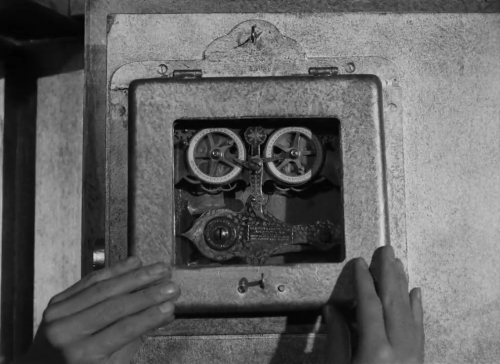
Toronto on a sleepy Friday afternoon in the middle of July. It’s a time when most people will be thinking of the days ahead, pleased to have left the trials and pressures of another working week behind them. In a sense, all the danger signs are present in that period of time, a soporific blend of relief at what’s been relegated to the past and anticipation for what the future may hold leading to casualness or indeed carelessness in the present. It should come as no surprise then that the arrival of Lucille Walker (Betty McDowall) at the bank where her husband Colin (Lee Patterson) works is accompanied by a degree of laxness on the part of everyone there. Pretty much all of the staff, the manager (Alan Gifford) included has at least half an eye on something other than work. It’s also the Walkers son’s sixth birthday and he’s naturally being treated with even more indulgence than usual.  As he scampers around the bank clutching his new flashlight and seeking out various nooks and crannies to test its effectiveness, there is the sound of a collision on the street outside. It draws the attention of everyone, even the manager and Colin Walker, who are in the process of setting the time lock on the vault. A quick glance through the windows shows that nothing serious has occurred, not outside anyway. And then the vault door is swung shut and the locks activated. Just as the heavy, unyielding steel seals itself, an even heavier realization descends on those in the bank – the boy is nowhere to be seen, and has clearly been shut up tight in a strongroom that cannot be opened till Monday morning. Disbelief is soon shooed aside by panic, which in turn finds itself chased away by a gnawing sense of desperation. The air supply is finite, the vault virtually impenetrable, and the only man who might know how to get in (Robert Beatty) is off for a weekend of fishing.

It’s a very simple and uncomplicated story, a small boy trapped in a vault and a race against time to free him. However, it is the simplicity that makes it work so well. It is a situation that is both unthinkable yet also entirely credible. These two factors add an edge to the suspense that grows naturally from any race against the clock tale. At first, I was a little surprised to see that the script was derived from a play by Arthur Hailey. There is the temptation to see his bestselling novels and their adaptations for the big and small screen as large scale, sprawling affairs – Airport and Hotel certainly spring to mind.  Yet even those are quite contained in a sense, and there’s no getting away from the fact that his subject matter favored scenarios where unexpected drama was wrought from essentially mundane circumstances.

Perhaps more surprising is the production team behind Time Lock. When the credits announce that the feature is directed by Gerald Thomas and written and produced by Peter Rogers, well one would be forgiven for jumping to the conclusion that a ribald comedy was on the cards. After all, those two were responsible for the long running Carry On series of movies. You’d never know that from a viewing of this film though, the tone remaining deadly serious all the way through as befits such a tense premise.

Looked at from today’s perspective, the movie had one big star – Sean Connery. However, this was right at the start of his career and his role is small, as one of the workmen called in to see if there was any chance of their oxyacetylene cutting gear making an impression on the vault door. The main parts are filled by Lee Patterson and Betty McDowall as the helpless parents who are unable to anything other than wait and hope and pray. Alan Gifford, who shared the screen with Patterson the same year in the rather good The Flying Scot, gets a reasonably juicy part as the guilt-ridden bank manager. Robert Beatty heads the cast, even though he only enters proceedings about half way through, as the expert on safes. When he does appear he ushers in a sense of even greater urgency, brisk and brusque in his management of a situation whose margins of error have by then been shaved right down to the bone.

I don’t think Time Lock has ever had a DVD release in the UK, although it has appeared in the US, included in one of Kino’s British Noir sets, and in Australia in the past. It would have been a good title for Network’s British Film line, but the company’s sad and sudden demise means that will never happen now. Anyway, it remains a terrific little suspense yarn that manages to do a lot with limited resources. I definitely recommend the film to anyone who is not yet familiar with it.

So Evil My Love

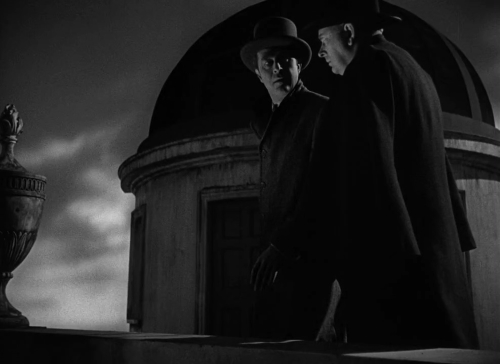
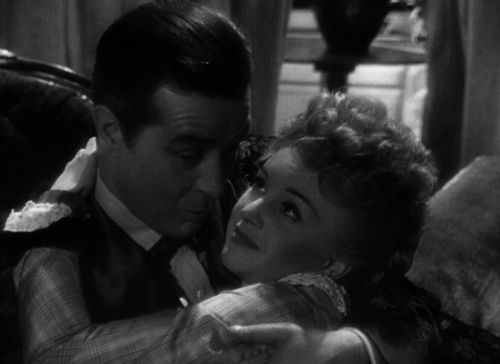
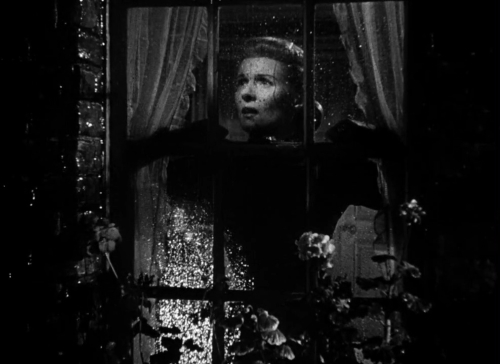
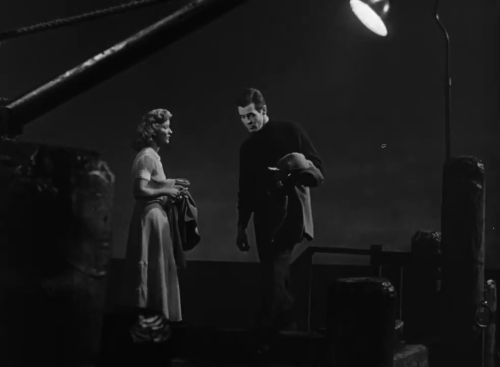
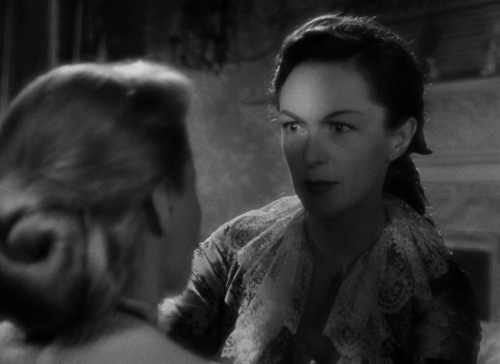
Guilt, corruption and obsession. That’s a heady mix for any movie, though it could be said to be nothing out of the ordinary for film noir. So Evil My Love (1948) is a kind of film noir, more Gothic melodrama I suppose yet it’s still dark and fatalistic enough, both visually and thematically, to just about make the cut as far as I’m concerned. It is something of a hybrid in more ways than one. Leaving aside any discussion of its noir credentials, the movie is one of those Hollywood funded and produced pictures that were made on location in the UK, and in this case making use of a cast of largely British and Irish actors – although all of the principals were working mainly in the US at this point. While there is much to enjoy and admire in the movie, there is a weakness which I feel ought to be mentioned. It has a marvelous visual sheen and well judged sense of atmosphere, but there’s also one central performance that I regard as deeply problematic, though fortunately it’s not as harmful overall as the issue that blighted Caught for me.

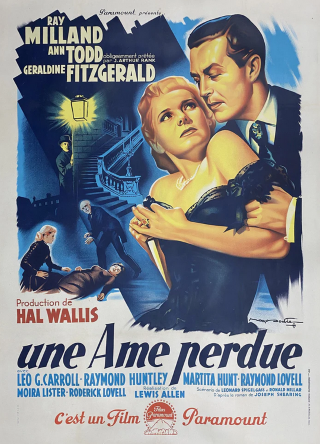
On a ship carving its way across the ocean from Jamaica to England a lone figure stands on deck, either oblivious to the spray on her face and the pitching deck beneath her or perhaps enjoying the experience. Olivia Harwood (Ann Todd) has been recently widowed, the death of her missionary husband leaving her with no option but to return home. She allows herself to be reluctantly coaxed into ministering to the ill on board the ship, chiefly one Mark Bellis (Ray Milland). On arrival in Liverpool it is immediately apparent to the viewer that Mark Bellis is perhaps not all he seems. He is ostensibly a painter, but his cautious probing to discover what, if anything, he revealed while in the throes of fever and then his determination to avoid the authorities set the alarm bells ringing. The fact is Mark Bellis (though that is merely one of the wide range of names he makes use of) is a genuine good-for-nothing, a swindler, a thief, a master manipulator, and apparently a murderer too. To such a man, a lonely, vulnerable and most likely gullible widow provides tempting game. And so it is he goes to work on Olivia Harwood, slowly worming his way into her heart while he sets about organizing his next robbery. However, the failure of that endeavor sees him altering his plans, and the beginning of his methodical and relentless corruption of Olivia. Under his tutelage, she finds herself not only taking advantage of an old friend, but also betraying and undermining her, taking a path that will inexorably lead to blackmail and murder.

The film has bags of atmosphere, with ponies clipping along cobbled thoroughfares, discharging their silken passengers outside addresses that might be mean and unforgiving or forbidding in their splendor. Wherever the characters go, their surroundings seem to crowd them regardless of whether they are immense or cramped. Somehow there is a sense of all the hypocritical baggage of the late Victorian era forever pressing and suffocating. This feeds into or fuels the feeling of fatalism that pervades the movie. Right from that first scene on the deck of the ship there is an unmistakable air of characters trapped or hemmed in by a destiny shaped by their own weakness and frailty. Mark Bellis is unquestionably a bad lot and that is never in doubt, but it is Olivia’s downward spiral that is the focal point of it all. Director Lewis Allen made only a relatively small number of movies (just 18 over a period of fifteen years) but there are some real gems in among them – The Uninvited, The Unseen, Desert Fury, Suddenly and Another Time, Another Place are all good or better in my opinion.

This is was a fairly productive and successful period for Ray Milland, coming only a couple of years after his Oscar winning turn for Billy Wilder in The Lost Weekend and he would follow this up with a pair of strong films noir for John Farrow in The Big Clock and Alias Nick Beal. This type of role, an oily and calculating charmer, was a good fit for Milland. He had the polish to carry it off convincingly and was also able to tap into a rich seam of desperation when the whispers of his typically dormant conscience grew more insistent. Geraldine Fitzgerald is characteristically fine too as Olivia’s ill-fated friend, brittle and foolish, quick to trust in her hunger for companionship and kindness, and touchingly meek in her willingness to accept her guilt.

Nevertheless, as I alluded to above, there is an issue that damages the movie seriously. The behavior of Ann Todd’s character simply fails to convince me. She is right at the center of things, the heart of the movie in truth, and both her actions and the core characteristics need to ring true for it all to work. And for me this does not happen. I can accept that obsession and infatuation is capable of driving people to places they would not normally go, but I find Olivia’s sudden decision (remember, this is the widow of a Victorian missionary we’re talking about here) to betray her friend’s confidence and the consequent acceptance of the necessity for extortion to be so abrupt as to defy credibility. What’s more, there is then far too much inconsistency on display, the character’s morality and motivation shifting almost from scene to scene. This is a writing issue of course rather than an acting matter – the script is adapted from a story by Joseph Shearing (a pseudonym used by Marjorie Bowen) who also provided the source material for Blanche Fury and Moss Rose. The latter film does have some contrived or unrealistic elements, but there’s not that inconsistency which troubles me here.

On the other hand, there are some excellent supporting turns to help restore the balance. Martita Hunt is chillingly intense as the overprotective grande dame. It is a bit of a stretch to see Raymond Huntley as her son – he was only four years her junior after all – but his cold lack of compassion is neatly done. Moira Lister sashays in and out of the tale as a trashy model whose vanity and vulgarity bring matters to a head. Leo G Carroll’s low-key detective lurks around and does his bit to draw the net tighter. And Maureen Delany, Hugh Griffith and Finlay Currie all have small yet memorable parts.

All told, So Evil My Love is a movie that works in places. There is no doubt that it has style, and some of the acting is excellent – Geraldine Fitzgerald rarely fails to impress me, for example. Still, Ann Todd’s role is an issue. That zigzagging from demure respectability to coquettish scheming and back again on the way to grim vengeance is something I just can’t buy into. Others may well regard this as less problematic. As it stands, I guess it amounts to two thirds of a good movie, or maybe three quarters if I’m in a more generous frame of mind.

X the Unknown

I’m going to have to confess that I’ve drifted away from contemporary Sci-Fi movies, or maybe they have drifted away from me. It’s a tricky genre in many respects; there is the obvious need to make movies that entertain, but in order to rise above mere popcorn fare it is necessary to have a story underpinning it all that asks questions or offers ideas for consideration. Now one could say that this applies to all genres and I’d tend to agree. Yet what sets Sci-Fi apart is the fact its inherent inventiveness and malleable boundaries allow for a more enticing examination of themes that might appear dull if presented in other genres. I guess it boils down to the need to strike a balance between the entertaining and thought-provoking aspects.

Growing up, I was entranced by classic Sci-Fi, and the entertainment quotient was what grabbed my attention back then. Later, I came to appreciate the way that many of these movies wove social and philosophical commentary in among the thrills. Of course filmmaking has changed a lot over the years, and the visual effects that enhance and enrich the wondrous nature of Sci-Fi have advanced impressively. Sometimes I think that this huge improvement also conceals behind its cloak of digital magic the seeds of my gradual dissociation from the genre. Has the balance shifted a little too sharply, and has the superabundance of visually startling imagery and whizz-bang effects obscured some of the thoughtfulness that once characterized the best of the genre? I found myself wondering about such things as I watched Hammer’s X the Unknown (1956) the other day, the type of cheaply made movie that fascinated my younger self, and still does in fact.

Paranoia fueled so many of the great classic era Sci-Fi movies with the concept of the enemy within growing out of the Cold War and the fears and misunderstandings that accompanied it. Often the enemy within was presented as an infiltration of society, either on an individual or communal level. X the Unknown takes a different path, one leading not to the heart of mankind but to the heart of our planet itself with the implication that our greatest threat comes not only from a fatalistic and seemingly unstoppable force of nature, but one which has been festering away deep below the surface, practically written into the DNA of our world. It’s a fine idea in itself and the execution offers a lesson in how to extract as much suspense and implied horror as possible on a shoestring. It all begins during a tiresomely routine military exercise, the random placement of a mildly radioactive object causing the sudden appearance of a mysterious fissure and the consequent death and destruction that is unleashed. The frequency of fatal encounters with whatever broke free of that fissure gradually picks up pace and even leads to the leveling of that old charge that scientific tinkering and dabbling lies at the root of it all. That notion, happily, is given short shrift, dismissed almost the moment it is uttered and both challenged and disproved by the close. I have an unpleasant feeling though that were this movie to be remade today, in a climate where quackery is all too often hailed while science is belittled, the reverse might actually be the case.

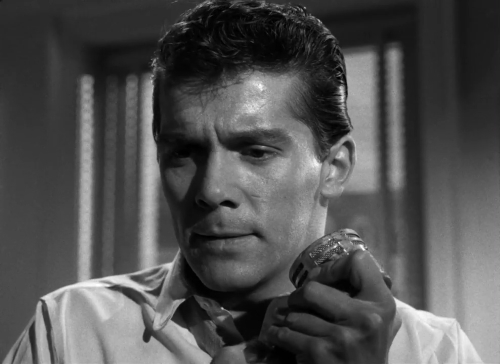
In all honesty, however, I don’t see how a movie like this would be made at all nowadays. The cast is almost exclusively male and middle-aged at that. There is nothing remotely glamorous about leads such as Dean Jagger and Leo McKern, but what they do bring is a sense of calm authority and a reassuring coziness (and I use that term without any pejorative undertones) amid all the mayhem. The source of the danger is kept out of sight for most of the running time, only glimpsed very briefly before the one hour mark and sparingly and sporadically thereafter. It works on the principle that what exists in the mind’s eye is apt to be more unsettling than full exposure to creaky effects. A modern version would feel obliged to conjure up and highlight some effect that would undoubtedly dazzle yet would also be less likely to capture the suspense that comes from dread unseen.

Hammer had just made and enjoyed success with their version of Nigel Kneale’s  The Quatermass Xperiment and so were looking to capitalize on that with a follow up. Kneale appears to have objected to the name of his lead scientist being used and so Jimmy Sangster’s script has Adam Royston rather than Bernard Quatermass desperately seeking a way to battle the terror seeping from the Earth. Had Kneale been involved, it seems likely the plot would have involved some kind of alien presence or interference. That would undoubtedly have been a literate and intelligent approach, but I have to say I rather like the fact that what we got is a wholly terrestrial and primal threat – somehow the notion of danger emanating from that which we know best and which is dearest to us adds an attractive twist to it all. If you’ll forgive the pun, it serves to ground the story. While I wouldn’t quite categorize it as an early Eco-thriller, it does raise questions about our symbiotic relationship with the planet itself. Leslie Norman directs efficiently and briskly enough, though it is tempting to wonder how it might have turned out had first choice Joseph Losey not dropped out. It has been said that the blacklisted Losey was removed at the insistence of Jagger, but there are also claims that it was actually down to a health problem suffered by the director.

X the Unknown was given a Blu-ray release in the US back in 2020. I’ve only seen some images from that version and they look appealing, sharp and in a 1.75:1 ratio. My own copy is a long out of print UK DVD that appears to be open matte. While it won’t have the crispness of the BD, it’s not a bad effort and, in my opinion anyway, remains perfectly watchable. This is the kind of Sci-Fi I adore, modest in scale yet expansive enough in vision and imagination to override its technical limitations.

Caught

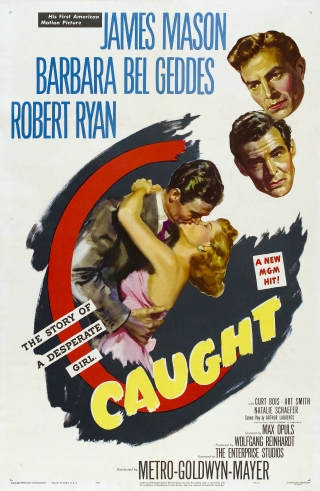
Seeing as Max Ophuls came up in some of the comments on the previous post, I decided to go back and have another look at one of his movies that I have struggled with in the past, namely the 1949 production of Caught. As a rule, I have enjoyed what I have seen of the director’s work, but this film has never worked for me. Anyway, with his name fresh in my mind, as well as the knowledge that the movie seems to be well regarded by many other viewers, I thought I should give it another chance. In brief, and this will be one of my shorter posts, I still have major issues with the movie. To be honest, the fact that I made it to the end was as much through a sense of obligation as anything.

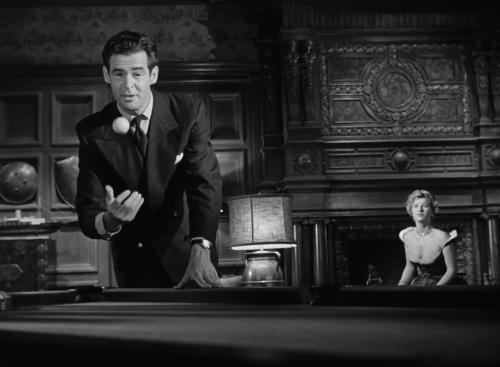
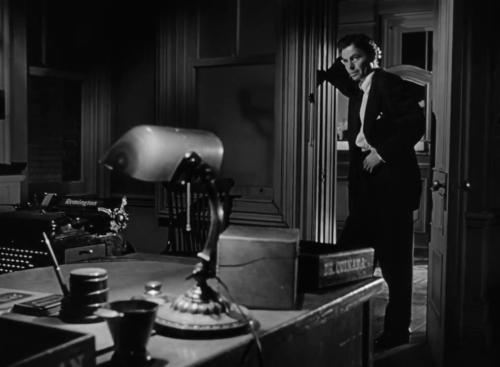
The whole thing is an examination of wish fulfillment and the consequent importance of being very careful indeed of what one wishes for. It opens with two sisters in a shabby tenement mooning over glossy magazines and browsing for dreams, a gem encrusted necklace here, a platinum bracelet there, and so on. As ever, money and the power it bestows matters very much to those who have little of it. Leonora (Barbara Bel Geddes) wants the security and the comfort that comes with wealth, and it does come her way as the result of an invitation to a party on a yacht, an invitation she very nearly turns down. This is the thing with Leonora – she wants things and then doesn’t want them when their real cost becomes apparent. When she makes the acquaintance of Smith Ohlrig (Robert Ryan), a tycoon with a deeply disturbed character, she is soon on the fast track towards the high life on Long Island. However, this is where it all goes wrong for just about everyone involved. Ohlrig is a domineering, controlling and cruel man, an obsessive soul at war with himself and the world in general. Leonora soon comes to see the stew she’s landed herself in and, wisely one would say, moves out and ends up working as a receptionist in a slum neighborhood for Dr Quinada (James Mason). From here the movie devolves into a series of sorties back and forth for Leonora as her indecision along with a deep-seated conviction that she has to “improve herself” at all costs winds up being a good deal more expensive in emotional and physical terms than she’d bargained for.

Max Ophuls’ direction is a pleasure – his camera swooping, swinging and panning, following his characters and sometimes sweeping past them to draw attention to the variously opulent or cheap surroundings while they debate, argue or simply muse out of shot. It’s a distinctive style and Lee Garmes’ cinematography adds to the eye-catching visuals. Attractive as all this may be, it’s not enough to paper over the paucity of genuine character at the heart of the movie. Robert Ryan’s Howard Hughes inspired sociopath is a showy piece of work, neurotic and foul and yet also somehow pitiful in his inadequacy. However, there’s a big hole in the middle of it all for me, and that’s the result of the role played by Barbara Bel Geddes. I started off feeling for her as she struggled to dig herself out of the poverty trap. The fact is though that she’s a playing a woman with essentially no character, a whiny, vacillating type who seems to revel in helplessness and indecision. This is the person who is the main focus and it’s very hard to like a movie where the central role presents such a moral vacuum. And the less said about the “happy ending” we’re asked to buy into, the better. James Mason’s first Hollywood starring role is fair, but he’s given little to do to stretch him –  he does have at least one good scene in the garage confrontation with Ryan and Bel Geddes. The support is mainly an attractively homespun turn from Frank Ferguson and a well observed peek at degradation and dissipation by Curt (“Tough, darling, tough.“) Bois.

Max Ophuls made far better films than this – The Reckless Moment, again with Mason, came shortly afterwards and is superior in every respect, and there are his great French movies such as  The Earrings of Madame de… and La Ronde. I honestly wish I could like this film more, but it just does not do it for me.

River Lady

Movies that exist at the periphery regularly catch my attention. They may be movies that occupy a place on the margins of a particular genre, they may be transitional efforts that straddle different eras, or they may even be a bit of both. Such is the case with River Lady (1948) a film which is not entirely successful, partly as it’s difficult to pin down the genre – a hint of the western, a dash of riverboat melodrama, and a pinch of the frontier adventure – and partly due to the time it was made. While it might not be the kind of movie that broke new ground or made a strong enough impression to encourage frequent revisits, it is still engaging in the way so many of George Sherman’s titles are.

I’ve lost count of how many westerns have turned a spotlight on the encroachment of civilization on the frontier. Sometimes it’s a matter of the railroad hammering out an iron clad tattoo across the plains and relentlessly shoving the old world to one side. At other times it is the stringing of the telegraph line, or the gradual extension of the reach of the law itself. River Lady concerns itself with the expansion of organized business interests, in particular the conflict between small, independent logging outfits and the hungry syndicates. Nevertheless, corporate kerfuffles of any type have a limited appeal at best and it’s always advisable to bring the human drama and the human faces of the players and antagonists to the fore. So it is that attention is focused on a roughneck logger called Dan Corrigan (Rod Cameron) and Sequin (Yvonne De Carlo), the owner of the titular paddle boat and undisclosed boss of the syndicate which is buying up all the struggling outfits on the river. This allows for a double-edged conflict, both the tangled business affairs and the romantic tug-of-war between a hardheaded free spirit such as Corrigan and the ambitious and manipulative Sequin. And any time the mixture looks like drifting off the boil the silky and stealthy Beauvais (Dan Duryea) is on hand to stoke it up once again.

As has been stated, in terms of genre, there’s a fluidity to the movie that mirrors the flow of the timber down the river. I guess that could be seen as versatility in the script, or even as a determination to resist the imposition of boundaries on the part of the filmmakers. However, it makes it hard to get a handle on the movie, a situation I’ve found can crop up from time to time in mid to late 1940s westerns, where it’s possible to detect elements of breezier B pictures rubbing shoulders with themes that carried a bit more weight. One could even say something similar about George Sherman’s career trajectory itself at this point. The rights to the story drifted around Universal for many years before the movie was finally made and perhaps this fairly lengthy gestation period has something to do with the feeling that the finished product imparts.

Rod Cameron is third billed but has the leading role. He provides a strong physical presence, although he does end up on the receiving end of a terrific beating meted out by Duryea at one stage. His acting is adequate overall, but the way his character is written is problematic. I think it’s clear enough that the intention is for a redemptive arc to be traced, which is fine as far as it goes. The thing is though that, as written, Corrigan isn’t really a likeable figure for much of the film’s running time. He’s not just a man who is on a learning curve, he’s downright unpleasant to the women in his life and comes across as spoiled and petulant instead of grittily independent. Duryea, as the villain of the piece, actually brings more nuance and therefore more interest to his part. I suppose it comes down to the fact that Duryea, even when we was showboating shamelessly or backstabbing with the worst of them, had a soulful air about him. Top billing went to Yvonne De Carlo but she is off screen for far too long and her role ends up largely undeveloped. Helena Carter is her romantic rival for Cameron’s affections and actually gets the more rewarding part. In support, John McIntire, Florence Bates and Jack Lambert all have their moments.

As a Technicolor production, River Lady might be expected to look better than it does. I have a German DVD that is acceptable all told, but there is a certain muddiness to it too. Perhaps the fact the movie is part of a George Sherman box that has it packaged alongside solid Blu-ray versions of The Last of the Fast Guns and Red Canyon serves to draw attention to its weaknesses.

Viewing notes – in brief

Just a few very brief comments to ensure the place doesn’t stagnate completely, which I’ve posted elsewhere, all on some movies I’ve been revisiting lately. Normal service should be resumed soon. I hope.


The Magnificent Seven (1960)

God knows how many times I’ve seen this over the years. Even so, as soon as Bernstein’s famous score kicks in there’s that same tingle of excitement and anticipation I first experienced as a child. Even though John Sturges is almost certainly best remembered for his longer movies such as this and The Great Escape, I think he did his most effective work on the shorter and more tightly structured films he made in the previous decade. While the first half of this one has some terrific scenes and moments – Calvera’s initial appearance, the ride up to Boot Hill and back etc – there is padding there too.
Something else I’ve become aware of over time is the way Steve McQueen’s “look at me” performance has lost a lot of its appeal. I find it very self-conscious, mannered and less satisfying every time I see it. On the other hand, Brynner’s work stands up well while Bronson is crafty, subtle and quite affecting.


The 39 Steps (1935)

Donald Spoto reckoned this movie improved with age and familiarity and I fully agree. It’s the best version of Buchan’s story (not the most faithful by any means, but that’s neither here nor there) and I consider it the best of Hitchcock’s British movies. The Lady Vanishes might run it close, but it’s the little moments, what John Ford would refer to as grace notes, such as Peggy Ashcroft’s aching wistfulness or Lucie Mannheim’s doomed spy that elevate it.


The Wrong Man (1956)

More Hitchcock and this time a man trapped in the relentless and merciless machine that is the justice system. I’ve a hunch I only saw this film once before, and that was a very long time ago. In some ways it is atypical Hitchcock, stylistically anyway – measured, sober, with a gritty realism. In another sense, thematically, it’s very characteristic with the title itself telling us that and it’s also very Catholic, even more so than I Confess.

My memory was of a rather harsh and decidedly grim picture and that’s exactly what it is, and it’s possibly the reason why it’s so long since I revisited it. Still, it’s a terrific movie which is held together by two fine, understated performances. Henry Fonda was always an immensely dignified actor, even down to his posture and gait, that quality adding much to his portrayal of a shell-shocked regular guy. Of course the real gut punch comes from what happens to Vera Miles, something which can’t be easy to convey in such a controlled way.

A Trio of TV Episodes – Take 2

As I’ve been taking a short break from posting, or at least not posting just as regularly as I usually like to, I’m happy to have regular visitor and commenter Gordon Gates share some of his extensive knowledge of vintage TV once again.

First up is an episode of the western series. TrackdownThe Marple Brothers” from 1957.

This is the first episode of the 1957 to 1959 western series, Trackdown. Robert Culp stars as a Texas Ranger who wanders the State putting the grab on various wanted types. The series ran for a total of 70 episodes.Texas Ranger Robert Culp is on the trail of four wanted brothers, the Marples. Culp and another Ranger had caught up with them a while back and wounded one of the foursome. Culp’s fellow Ranger though had been fatally wounded.Culp has now tracked the Marple brothers to the small town of Stockton. The men have holed up in the town church. They have hostages, the local Sunday school group. They want a doctor pronto like or bodies of the Sunday school bunch will start to pile up. They have already killed one man to make their point.Ranger Culp now arrives on the scene and takes charge. He has the local Sheriff, Roy Engel, keep an eye on the local men to make sure they do not do something stupid. Culp heads to the church to see about the women and kids being held inside.A deal is reached with the villains to get the wounded brother to the town doctor. James Griffith, the eldest brother, tells Culp everyone will be okay if the townsfolk play ball. They just want their brother patched up and a head start on a getaway.Needless to say, several of the local men decide to make a stab at a rescue. The fat is soon in the fire and bullets are flying every which way with a few finding live targets. After the smoke clears, three of the outlaw brothers are toes up, ready for Boot Hill and the other in cuffs.This is a pretty nifty episode for a series starter. The cast is all top flight and includes, besides, Griffith and Engel, James Best, Jan Merlin, Gail Kobe and Tom Pittman.Behind the camera, we have a pair of b film and television veterans, director, Thomas Carr and cinematographer, Guy Roe. Fans of film noir will know Roe from the excellent B noir, Trapped, Railroaded, The Sound of Fury, In This Corner and Armored Car Robbery.

Next up is an episode of,  Meet McGrawMcGraw in Reno” from 1957.

Meet McGraw was a Private Investigator television series that starred Frank Lovejoy as P.I. McGraw. The show started as a stand-alone episode of the popular Four Star Playhouse in 1954. It took until 1957 before the actual series hit the airwaves. It ran for 42 episodes between 1957 and 1958. This particular episode is the 23rd of the series run.While visiting Reno, Private Investigator McGraw (Lovejoy) is hired by mobbed up gambler, Harry Landers. Landers would like McGraw to keep an eye on his wife, Angie Dickinson. Landers tells Lovejoy that Dickinson had seen a killing back in Detroit and she is in danger. A fistful of hundreds tossed on the table quickly find their way to Lovejoy’s wallet.Lovejoy introduces himself to Dickinson and explains that her husband has hired him as a bodyguard. Dickinson is not impressed and tells Lovejoy to blow. It seems that Dickinson is in town to get a quickie divorce from Landers. Dickinson and a friend, Jeanne Bates are staying in town till the divorce is settled.Lovejoy takes his job seriously and sticks like glue to Dickinson. Dickinson however pulls a fast one and bolts out of the hotel garage in her car. Lovejoy follows the woman up into the hill country. There, he sees another car run Dickinson’s automobile off a handy cliff. The car needless to say goes up in a big blaze, leaving little to id the corpse.The Police are called and are not sure what to make of Lovejoy’s story of another car. They write the incident off as a spot of poor driving by Dickinson. Lovejoy of course smells a rather smelly rodent in the old cheese cupboard. He roots around tracking down various leads.He discovers that Dickinson is very much alive and staying at a country cabin. The crispy critter in the car had been her friend, Jeanne Bates. It appears that the whole thing was a play by Landers to kill his soon to be ex-wife. He could not handle that she was dumping him. He had run Bates off the road thinking it was Dickinson in the car. The Police are summoned and Landers is soon up for a long fall with a short rope.A pretty good episode that has a few nice curves tossed at the viewer. William F Claxton directs with Joe Novak handling the cinematography duties.Interesting to see Dickinson before she went blonde, the dark hair suits her very well. The then 26 year old is quite the looker!
Last on the bill is an episode of, Four Star PlayhouseA Spray of Bullets” from 1955.

Dick Powell headlines this episode of the top flight anthology series, Four Star Playhouse. This series ran for 130 episodes between 1952 and 1956. Each week, one of either, Dick Powell, Charles Boyer, David Niven or Ida Lupino would be the lead in the episode. This one is the 5th episode of season 4.In this episode, a western, Dick Powell rides into a small town and ties up his horse. A local, Raymond Hatton, recognizes him as a fast with the gun Lawman. Hatton figures there is going to be trouble in town, as just a few hours earlier Robert J. Wilke had ridden into town. Wilke is also a fast gun, but he is anything but a law abiding type.The town Sheriff, Art Space is soon calling. It turns out that Sheriff Space and Powell are friends. They had worked together years before. Powell and Space’s daughter, Jean Howell had been an item for a while. Powell tells Space that he is no longer a Lawman. He is just in town on a personal matter. He did not even know that Space and Howell were in town. He also adds that he wants nothing to do with gunman Wilke.We now find out that Powell is in town to see an eye doctor. His sight is going and everything over 20 yards away is a blur. This is why he quit being a lawman. Now Powell and Wilke bump into each other. Wilke asks Powell to have a drink with him. Powell says maybe later. Wilke wonders why the man is in town.Local Raymond Hatton, tells Wilke that he saw Powell pay a visit to the eye doctor. This of course gets Wilke to thinking. While Wilke is pondering this bit of info, Powell is paying his former girl, Howell a visit. He tells the pretty Howell that he is there to get a set of glasses. He wants nothing to do with gun play anymore. He is willing to settle down.Needless to say this plan goes south in a hurry. Gunman Wilke decides to call Powell out for a quick draw. He figures that killing Powell will help his reputation as a top drawer gun hand. Wilke intends to keep a fair distance between himself and Powell. Guns are pulled and Powell, the quicker of the two, fans his gun and sprays lead towards the blur. The smoke clears and Wilke is face down in the dust, gun beside him. It looks like Powell lucked out. He walks off arm and arm with Howell.There are shades of Liberty Valance here as the viewer finds out that maybe someone else had fired the killing shot.This is a top notch episode all around. The always villainous Robert Wilke, as usual, is in great form as the gunman. Well worth a look.

Gordon Gates

Barbara Stanwyck – The Miracle Woman

There was a time when writing on the cinema was a bit thin on the ground. Then movie writing, criticism, and frankly anything related to the screen seemed to explode. Genres were hashed, rehashed and dissected, sometimes in celebration and sometimes in condemnation, theories were propounded and expounded, and reputations were analyzed, constructed and dismantled. That issue of reputations was and indeed is most noticeable in the writing of biographies. The movie biography, with its focus on those who have lived out their lives under the typically remorseless and unforgiving glare of publicity can prove problematic. Let’s face it, everyone writing a book wants people to read it and in the field of movie biographies the temptation to angle for readers using the promise of juicy personal revelations as bait must be a powerful one. Personally, I’m not all that interested in how well or badly individuals behaved in their personal lives – it is the public persona, or the screen work to be more accurate, which would have drawn my attention in the first place. As such, I often approach biographies with caution – too much gossip and too little appraisal of someone’s body of work doesn’t really appeal to this reader. Happily Dan Callahan’s book on Barbara Stanwyck, first published in hardback in 2011 and recently reissued in paperback by the University Press of Mississippi, does not go down that route , although there are some other issues present.

The book is not a standard bio, it’s an examination of the person via their screen, and to a lesser extent, their stage work. Callahan divides his study into seventeen chapters, each focusing on a different aspect of Stanwyck’s career. While it’s not a strictly chronological journey the chapters themselves do look at her performances and projects in that way. It begins with a short look at the star’s beginnings in life itself and her first steps as a performer. Callahan devotes separate chapters to the films she made for Frank Capra, Preston Sturges, Billy Wilder, Douglas Sirk, to her appearances in films noir, in westerns and in screwball comedies. There is also an in depth look at what the author sees as one of her defining roles in King Vidor’s Stella Dallas. This is an approach which I think makes sense as it attempts to unravel common threads running through movies that, either as a result of the genre or the filmmakers involved, tend to have a shared sensibility. All the major films receive attention and Callahan offers his own take on their strengths and weaknesses.

In terms of structure and organization, the book is very appealing. Added to that is the fluid style of writing, one which is largely engaging and never overburdened with jargon or the kind of impenetrable formality that tends to afflict more academic texts. These are all positive aspects. However, as was mentioned above, there are other points which I have a few reservations about. I think the easiest way to express this is to note that the book is the work of someone who is clearly a fan of the actress. People may be wondering why that’s used as a lead-in to some of the book’s weaknesses, so let me expand a little. I feel the author is a fan of the actress above all, to the extent where he is frequently dismissive, or at least ungenerous with regard to some of the films she appeared in and the people she collaborated with. Frank Capra and Peter Godfrey both come in for some strong criticism, the former for his approach or vision, and the latter for his filmmaking in general. Those are just a couple of examples, but the writer regularly praises the quality of Stanwyck’s work, occasionally drawing inferences from events in her personal life and how they may have affected her screen work. In itself, that’s fine, but, more often than I feel is necessary, I detect a strong tendency to denigrate films and some other performers and artists in order to highlight his subject’s talents. The films that are slated and those which earn praise seem to be selected on a puzzling basis too. I was pleased to see only one chapter dedicated to her personal life, and at least some effort made to tie that into her career development as well. Stanwyck’s first husband Frank Fay comes off quite badly; it has to be said I’ve never heard anyone have a good word to say about the man so that’s hardly surprising. I did find it odd though to see the author take such a virulent dislike to Robert Taylor, both as an actor and as a person.

So, I found Callahan’s book a bit of a mixed bag. It is informative and offers some detailed analysis of Stanwyck’s movies, is organized and presented in a satisfying way, comes with a complete filmography and an index, but I would have preferred if he could have reined in or disciplined his fandom and enthusiasm and allowed more fairness in certain assessments.

Barbara Stanwyck – The Miracle Woman by Dan Callahan

252 pages. Paperback edition published 2023 by University Press of Mississippi